8 Sage Green Bedroom Ideas That Create a Restful Retreat
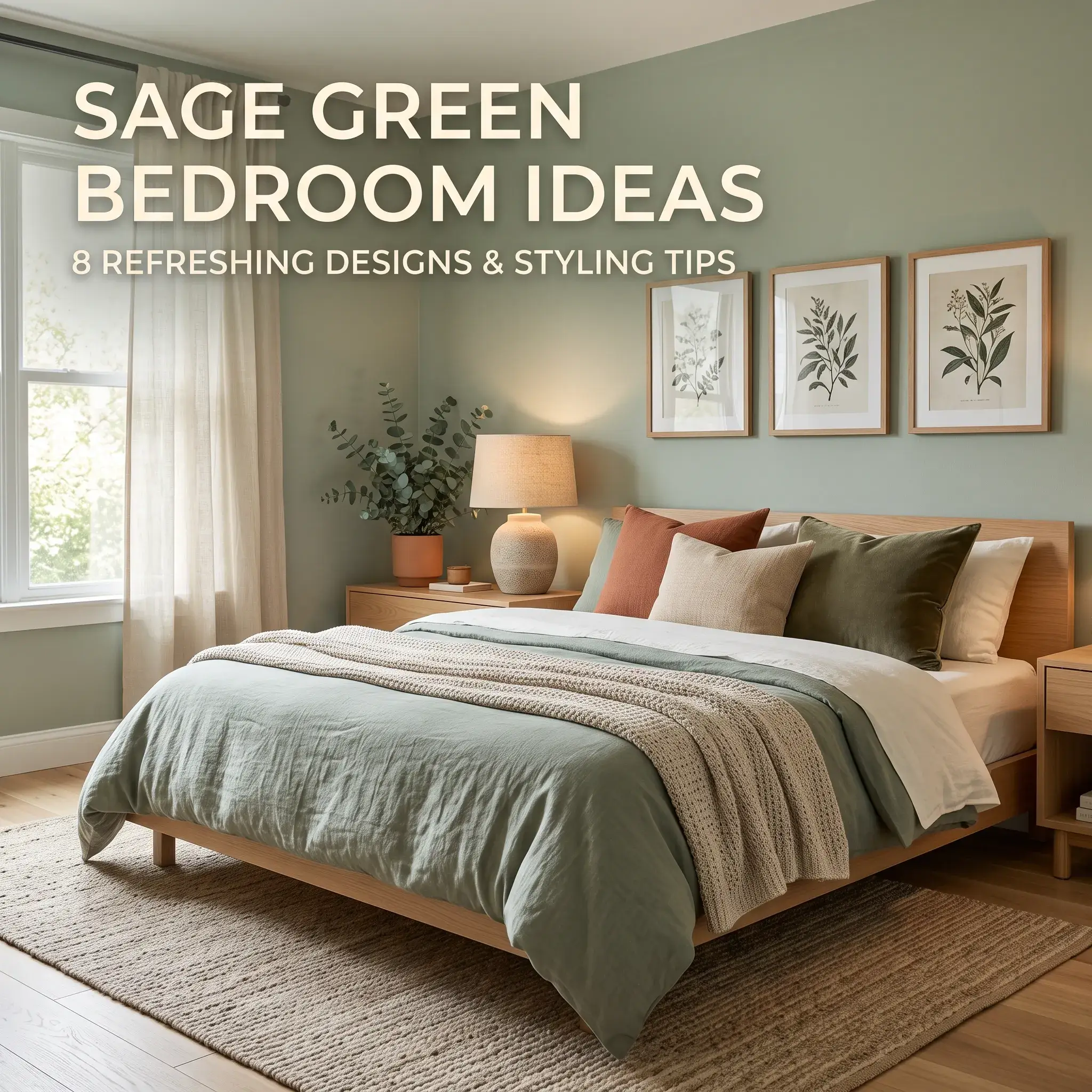
Sage green bridges the gap between outdoor nature and indoor comfort. Unlike cold grays that feel sterile or standard beiges that fall flat, sage provides a quiet, restorative backdrop. It calms the eyes without demanding attention.
However, getting this shade right takes careful planning. Sage contains a mix of green, gray, and subtle hints of yellow or blue. If you pick the wrong undertone, northern window light can turn your walls into a cold, institutional gray. On the other hand, harsh light can wash the color out completely.
This guide delivers 8 designer-tested bedroom ideas designed for everyday living. You will find exact paint names, matching furniture pieces, lighting recommendations, and color pairing rules.
8 Practical Sage Green Bedroom Ideas
1. The Japandi Earth and Low-Oak Sanctuary
This layout blends Japanese minimalism with Scandinavian comfort. A low-profile platform bed keeps sightlines clear and open. Muted, mineral-washed sage walls quiet the space, while natural oak casework prevents the room from feeling sterile.
- Best Room Exposure: South-facing or bright west-facing rooms.
- Paint Pairing: Benjamin Moore October Mist 1495 (Matte finish).
- The Design Rule: Keep furniture low to the ground to maximize perceived ceiling height and open wall space.
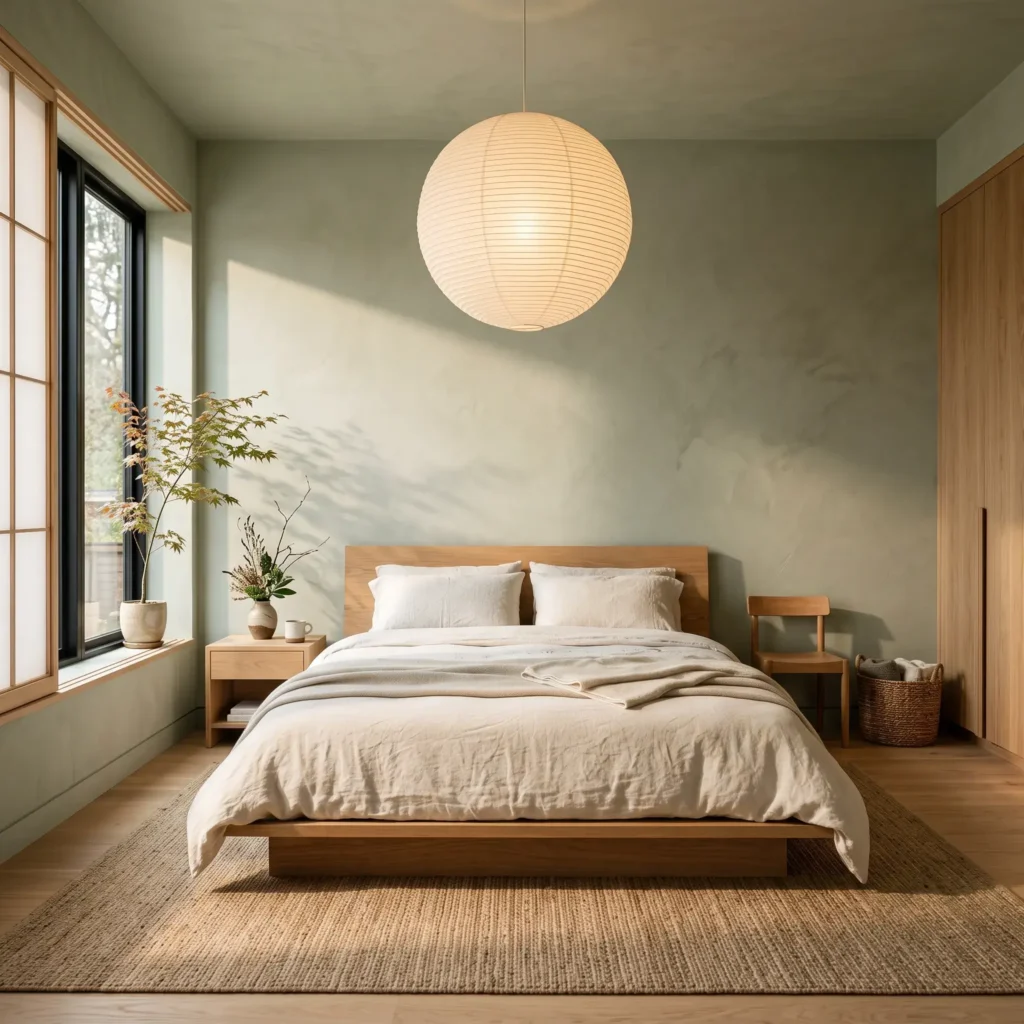
Curated Product List:
- Low-profile solid white oak platform bed frame
- Tatami-style flatweave natural jute rug (8×10 feet)
- Pre-washed European flax linen duvet cover set in bone white
- Ribbed ceramic bedside table lamp with oatmeal linen drum shade
- Ribbed stone catchall tray
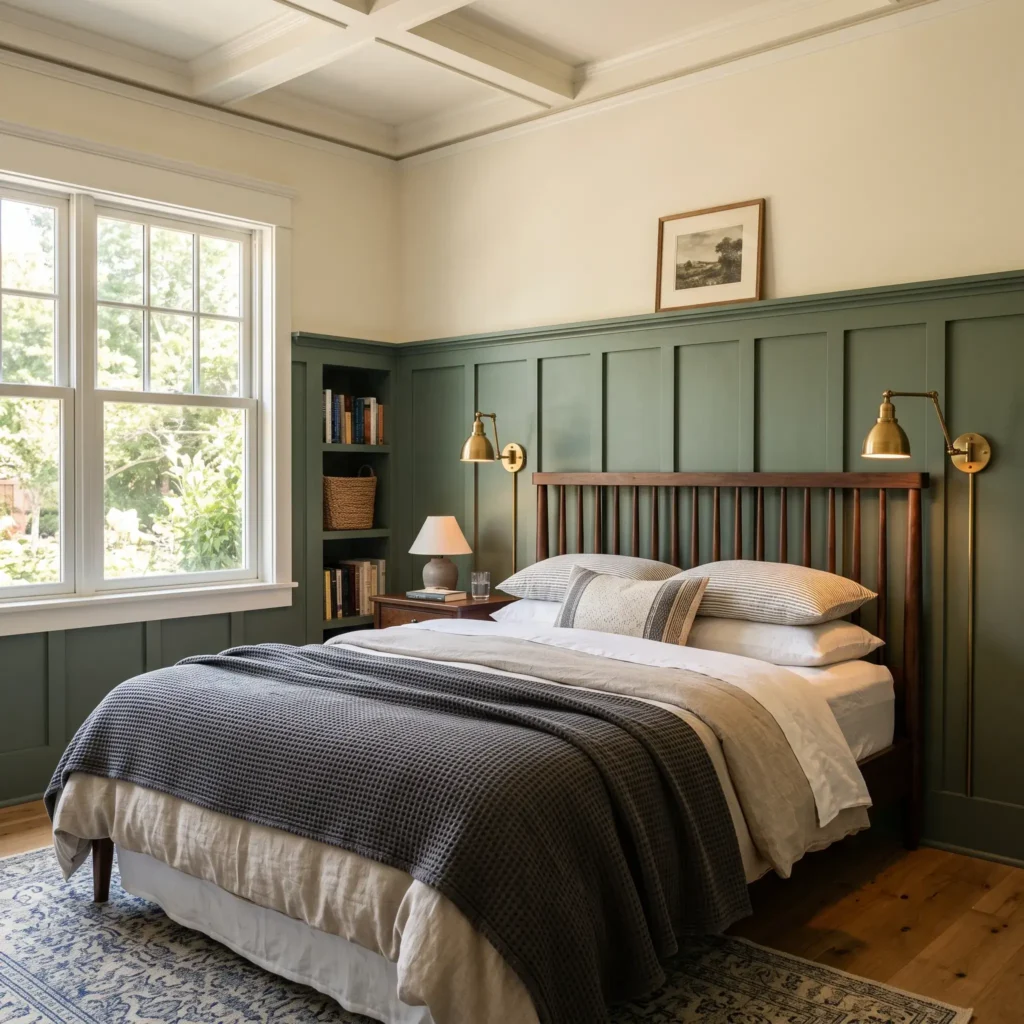
2. The Traditional Wainscoted Suite
Adding Shaker-style board and batten paneling on the lower two-thirds of the wall creates architectural weight. Coating the woodwork in a deep herbal sage grounds the room. Painting the upper drywall in a soft, creamy white reflects natural light back across the ceiling.
- Best Room Exposure: North-facing or transitional spaces.
- Paint Pairing: Benjamin Moore Saybrook Sage HC-114 (Eggshell on millwork) with Benjamin Moore White Dove OC-17 (Flat on upper wall).
- The Design Rule: Paint the baseboards and millwork the same green shade to avoid visual clutter.
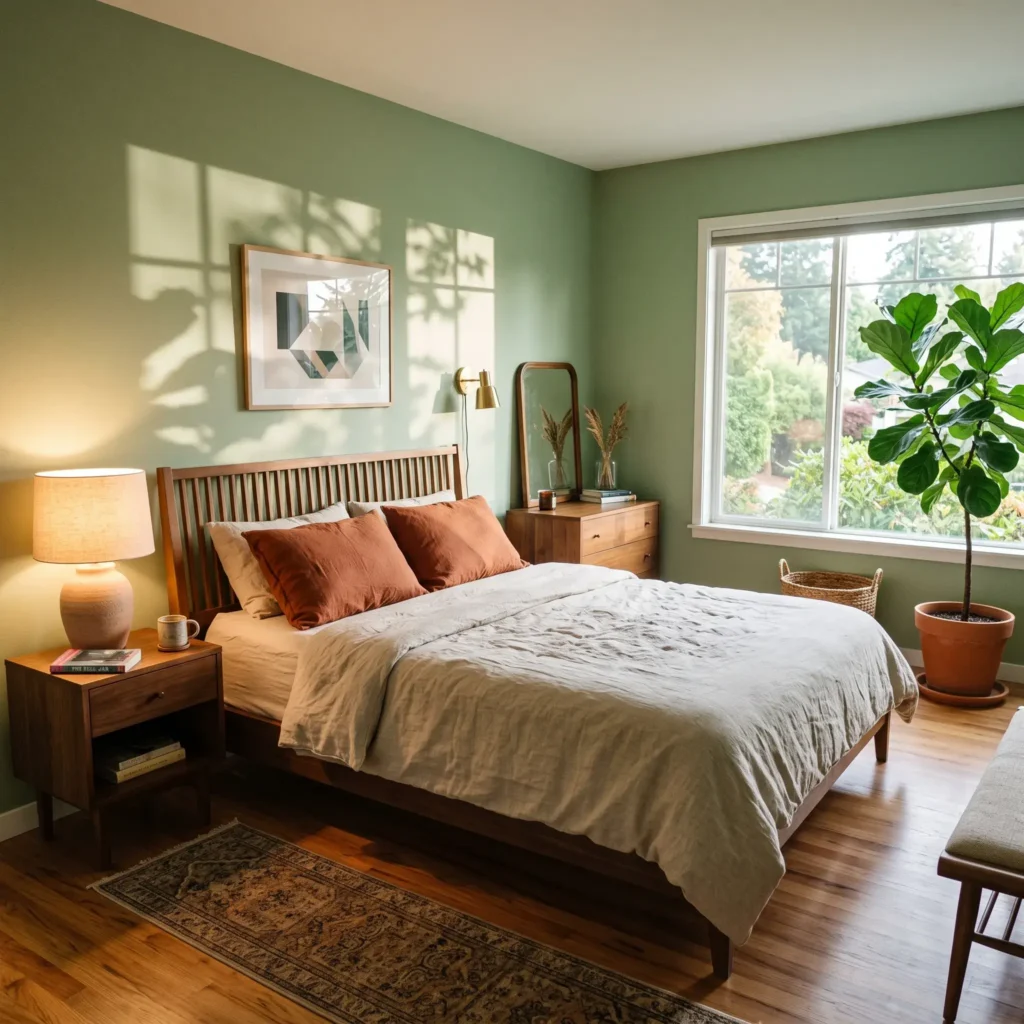
Curated Product List:
- Four-panel Shaker wainscoting trim kit
- Turned-spindle wood headboard in warm walnut
- Heavyweight waffle-weave cotton blanket in sage green
- Antique brass adjustable wall-mounted reading sconce
- Framed vintage botanical sketches with cream mats
Check out more Home Decor Ideas By Color
3. The Renter-Friendly Linen and Canopy Layer
You do not need to paint your walls to bring sage into your room. If your rental agreement requires standard white walls, build your color story entirely through bedding and window drapery. This approach gives you high flexibility with zero deposit risk.
- Best Room Exposure: Works in all light conditions.
- Paint Pairing: Existing rental white or Sherwin-Williams Alabaster SW 7008.
- The Design Rule: Stack three distinct green tones across pillows, duvets, and throws so the bed does not look like a flat block of color.
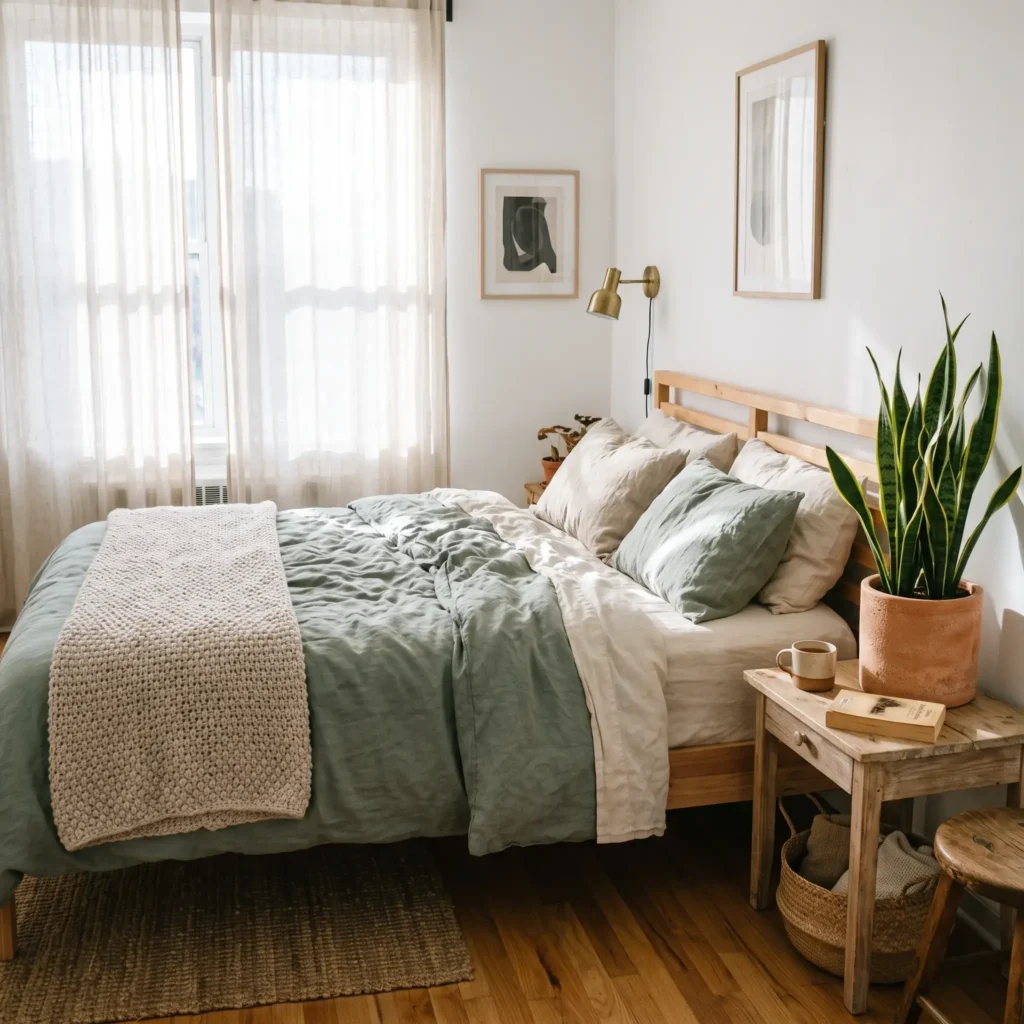
Curated Product List:
- Washed Belgian flax linen duvet cover in deep sage green
- Off-white crisp cotton percale sheet set
- Chunky wool knit throw blanket in warm oat
- Ceiling-track linen curtains hung high and wide
- Large terracotta bedside planter with a living snake plant
4. The Monochromatic Color-Drenched Cocoon
Color drenching wraps the entire room in a single hue. You paint the walls, baseboards, window trim, doors, and ceiling the exact same color. This removes high-contrast borders and helps small or low-ceiling bedrooms feel calm and unified.
- Best Room Exposure: Universal, especially small or low-light bedrooms.
- Paint Pairing: Sherwin-Williams Evergreen Fog SW 9130 (Matte on ceiling and walls, satin on trim and doors).
- The Design Rule: Vary the paint sheen slightly between the walls (dead flat or matte) and woodwork (satin) to create subtle tactile interest.
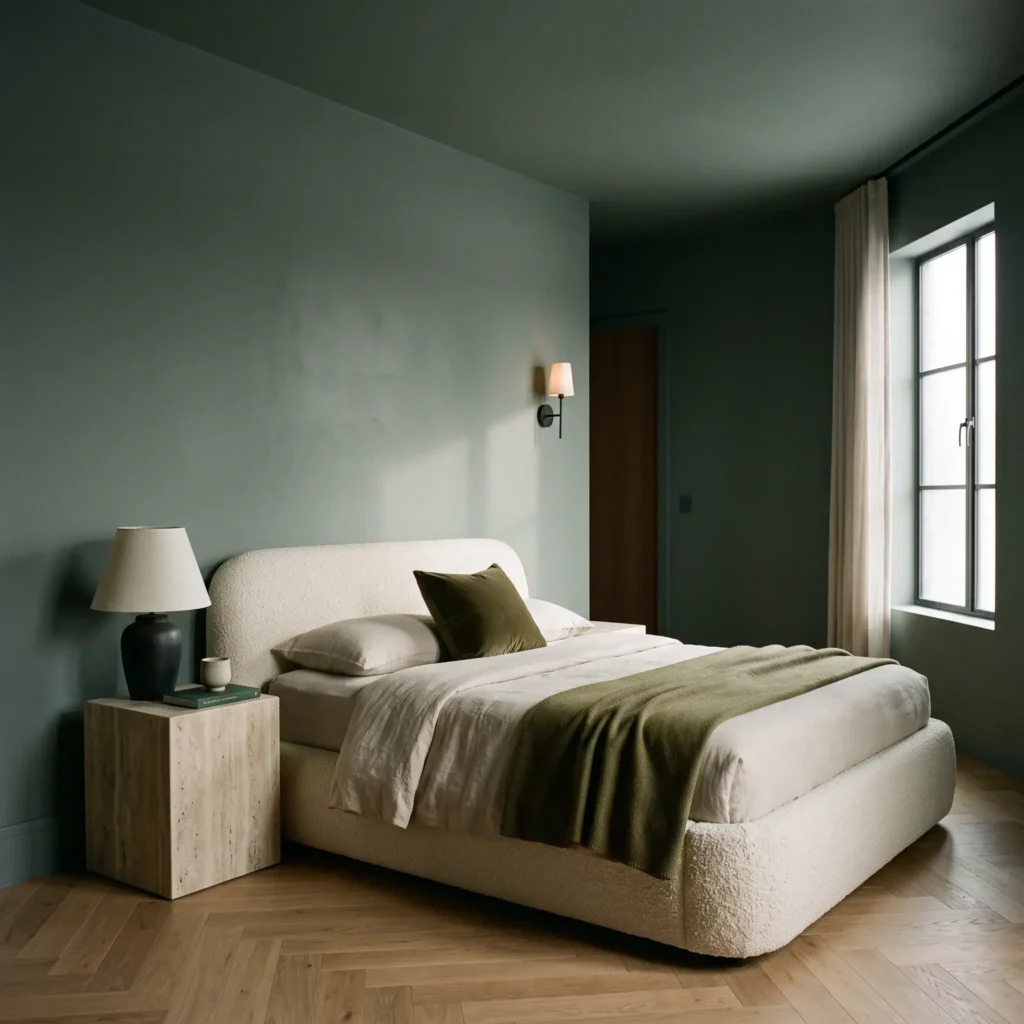
Curated Product List:
- Fully upholstered curved headboard in textured cream bouclé
- Travertine stone drum side table
- Flush-mount plaster ceiling fixture with warm 2700K LED bulb
- Matte black metal curtain rod with matching rings
- Olive green velvet lumbar pillow (14×36 inches)
5. The Warm Terracotta and Botanical Accent
Sage green and baked terracotta sit opposite each other on the color wheel, creating natural visual balance. Sage brings cool, herbal quiet, while terracotta adds sun-baked warmth. This combination prevents green walls from feeling sterile or clinical.
- Best Room Exposure: East-facing rooms with cool afternoon light.
- Paint Pairing: Sherwin-Williams Clary Sage SW 6178.
- The Design Rule: Limit bright rust and terracotta tones to exactly 10% of the room to avoid visual competition.
Curated Product List:
- Mid-century modern acorn wood bed frame
- Hand-thrown terracotta clay table lamp base
- Rust-toned washed linen pillow shams
- Large potted fiddle leaf fig tree in a braided seagrass basket
- Hand-knotted wool runner with subtle desert earth motifs
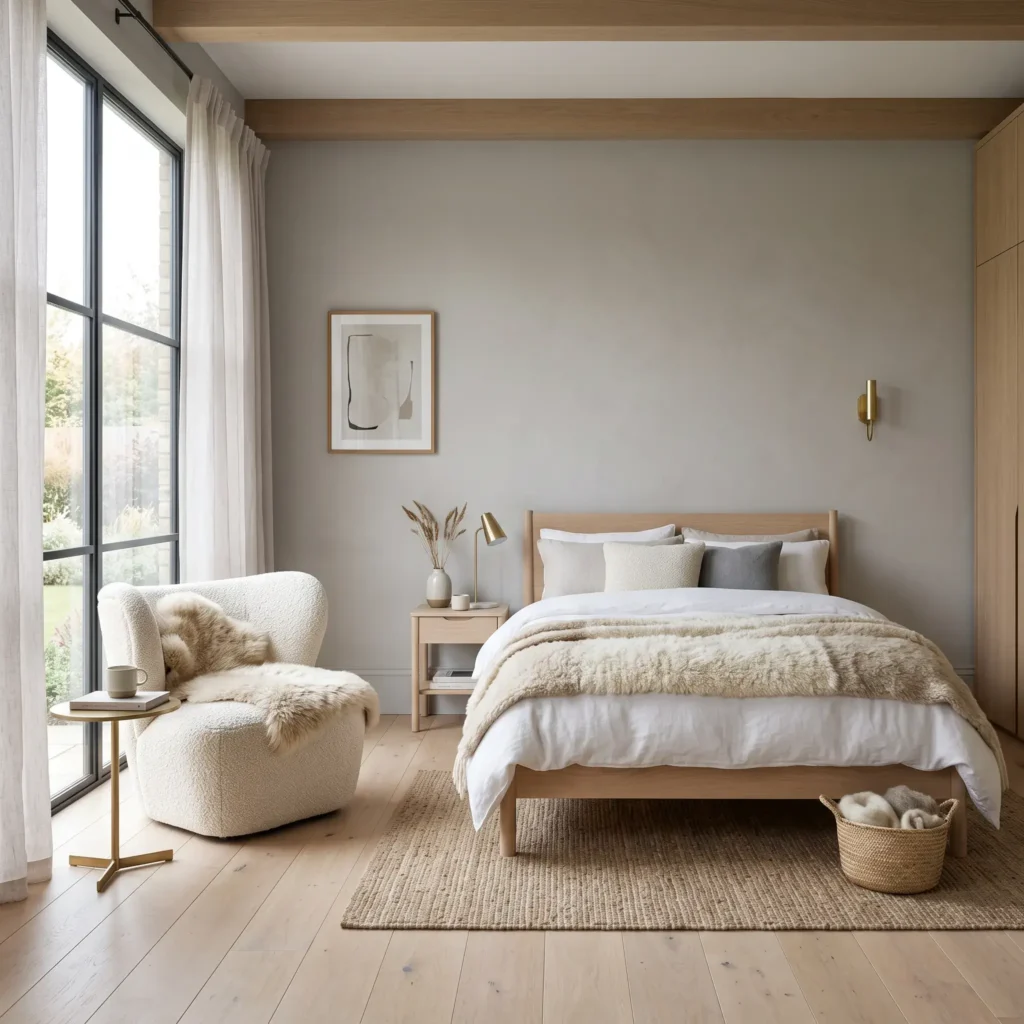
6. The Scandi Light Oak and Bouclé Suite
Scandinavian design relies on pale timber to maximize available light. Sage green acts as a soft backdrop that makes blonde oak furniture pop. Layering nubby bouclé fabrics and cable knits brings warmth to clean lines.
- Best Room Exposure: North-facing bedrooms that need visual warmth.
- Paint Pairing: Farrow & Ball French Gray No. 18.
- The Design Rule: Pair cool green walls with warm honey or bleached white oak furniture to balance room temperatures.
Curated Product List:
- Rift-sawn white oak spindle bed
- Upholstered bouclé accent armchair in soft ivory
- Heavy ribbed wool blanket in natural sheep white
- Brushed brass table sconces with downward milk glass shades
- Bleached oak two-drawer nightstands
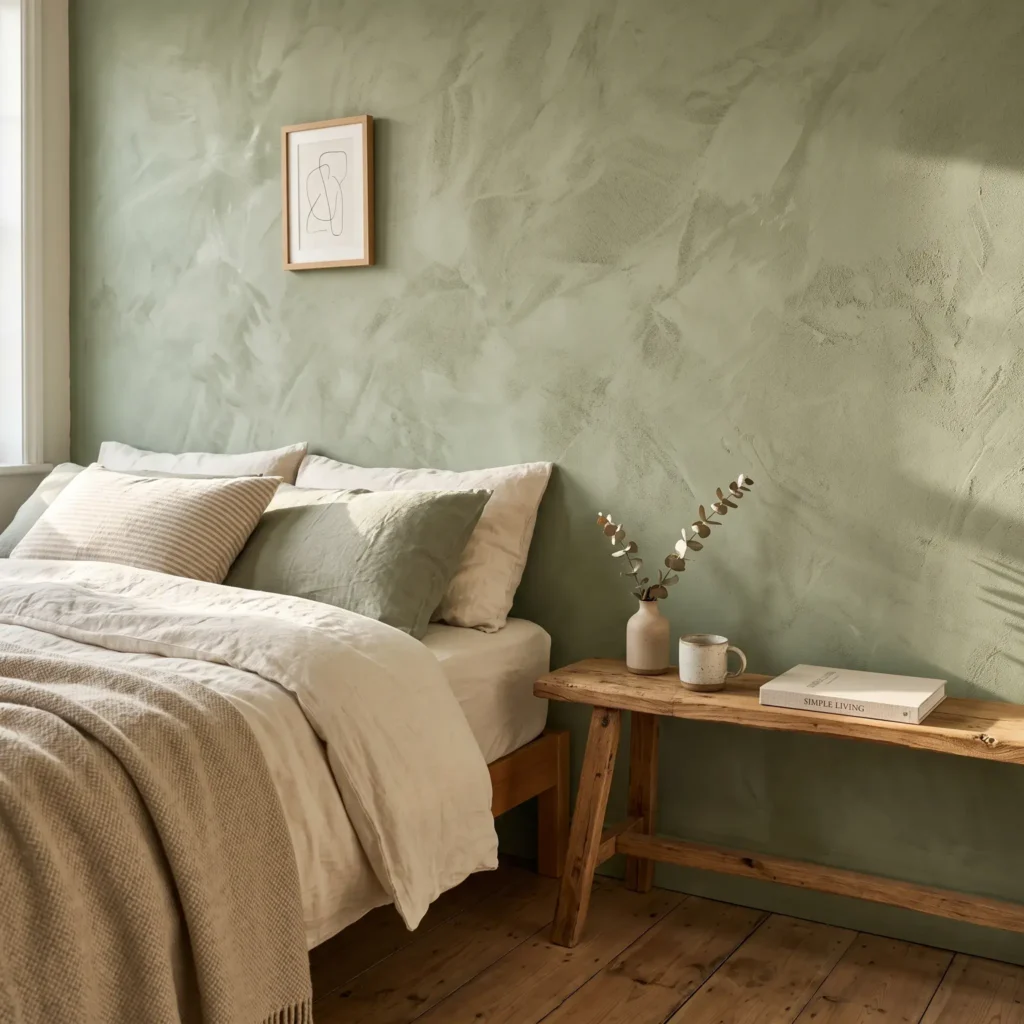
7. The Limewash Organic Texture Retreat
Flat drywall can sometimes make muted paint shades look one-dimensional. Using mineral-based limewash or Roman clay introduces a chalky, suede-like finish. The subtle movement across the wall catches soft daylight, turning a simple accent wall into a focal point.
- Best Room Exposure: South-facing or bright western exposures.
- Paint Pairing: Mineral limewash paint in custom botanical sage tint.
- The Design Rule: Keep wall decor minimal so the textured brushwork remains the main attraction.
Curated Product List:
- Limewash interior mineral paint with wide application brush
- Low-profile charcoal blackened-ash platform frame
- Raw flax seed-colored linen drapery panels
- Cast bronze abstract wall hook for robe hanging
- Rough-hewn wooden bench for the foot of the bed
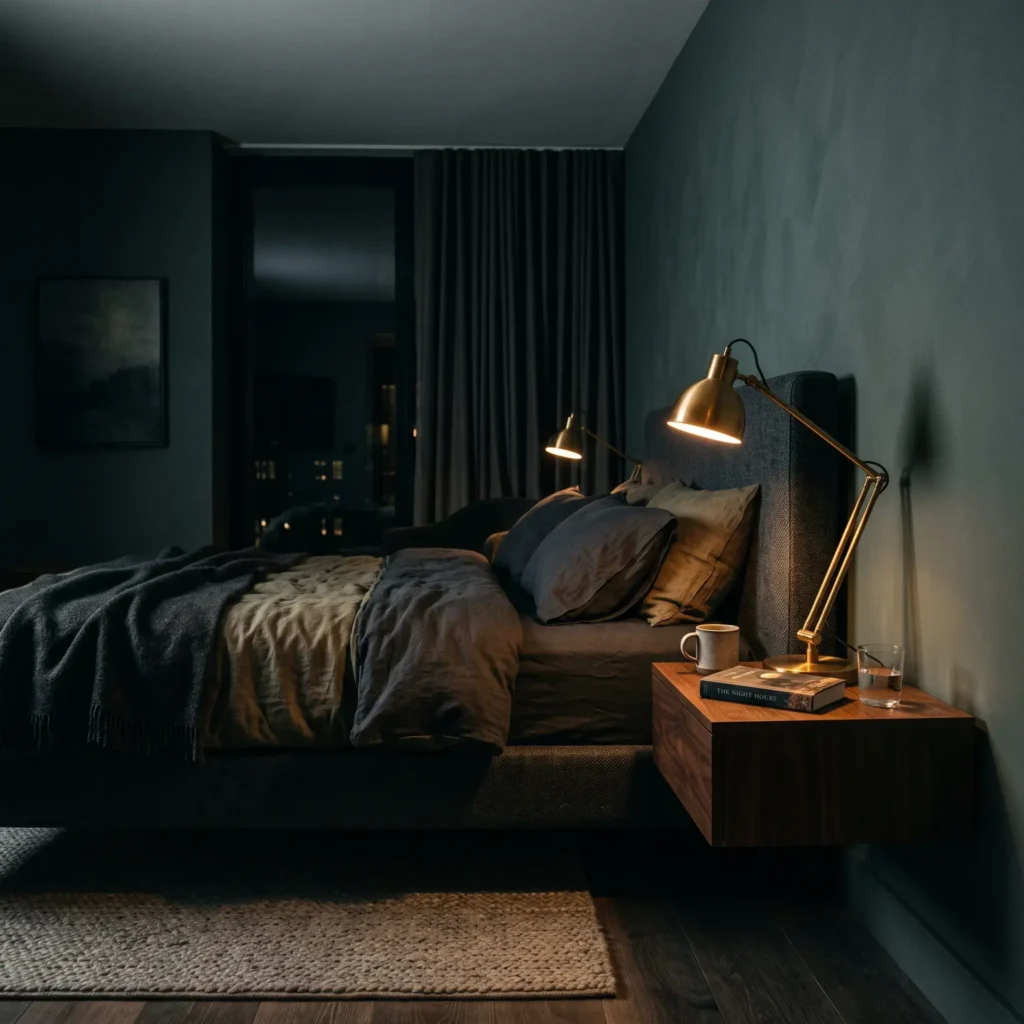
8. The Moody Slate-Infused Elevation
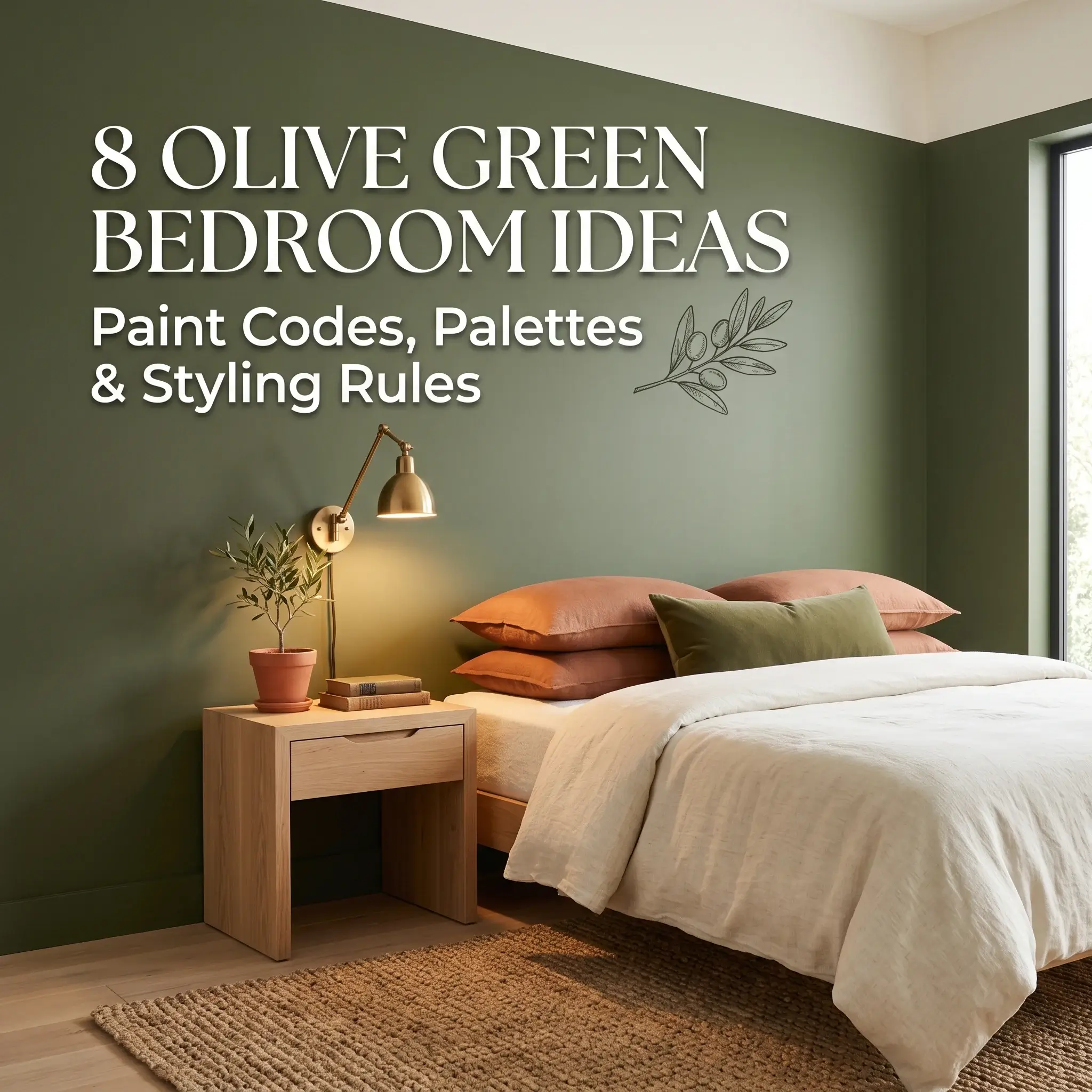
If you prefer deep, dramatic sleeping spaces, pick a sage infused with charcoal and slate blue undertones. This color recedes into the shadows, creating an intimate, cave-like retreat that blocks glare and promotes deep sleep.
- Best Room Exposure: South-facing rooms with abundant midday light.
- Paint Pairing: Sherwin-Williams Retreat SW 6207.
- The Design Rule: Add aged brass fixtures to bounce warm metallic highlights off the dark walls.
Curated Product List:
- Upholstered charcoal gray linen headboard
- Unlacquered solid brass task lamps
- Dark slate gray stonewashed cotton sheets
- Walnut floating nightstand with concealed wire management
- Charcoal wool area rug with low pile
How to Choose the Right Sage Green Paint: Light and Undertones
Paint never looks the same on your wall as it does on a paper swatch. The direction your bedroom windows face alters the color throughout the day.
| Window Direction | Natural Light Quality | What Happens to Sage | Recommended Formula | Top Paint Choice |
|---|---|---|---|---|
| North-Facing | Cool, gray, indirect daylight | Cool blue-gray undertones take over, making walls feel chilly | Look for sage with warm yellow or olive undertones | Sherwin-Williams Clary Sage |
| South-Facing | Intense, golden all-day light | Warm undertones get amplified, sometimes looking yellowish | Choose cooler sages with slate or charcoal bases | Sherwin-Williams Oyster Bay |
| East-Facing | Warm golden mornings, cool shadowed afternoons | Shifts from botanical green at dawn to neutral gray by 2 PM | Pick a balanced silver-green to stay steady across light shifts | Benjamin Moore October Mist |
| West-Facing | Dull morning light, hot red-orange sunset glare | Sunset warmth can turn green muddy or overly yellow | Use an earthy sage with gray grounding to absorb the heat | Farrow & Ball French Gray |
Understanding Light Reflectance Value (LRV)
Light Reflectance Value measures how much light a paint reflects back into the room on a scale from 0 to 100.
For bedrooms, keep your paint within the 30 to 55 LRV range. This creates a cozy, restful feeling without making the room feel like a tight box. Paints with an LRV below 25 should stay on single accent walls. Anything above 55 reads as a pale pastel rather than true sage.
Artificial Lighting Rules for Sage Green Walls
Installing the wrong light bulbs will ruin your paint choice after sunset.
Commercial LED bulbs rated at 4000K or 5000K emit harsh blue-white light. This spectrum washes out earthy green pigments, turning your room into an institutional gray after dark.
Follow these two lighting rules:
- Stick to 2700K to 3000K: Warm white bulbs bring out the natural botanical pigments in your paint.
- Prioritize High CRI (90+): The Color Rendering Index shows how accurately a bulb reveals true pigment shades. Standard bulbs have an 80 CRI. Upgrading to 90+ CRI LED bulbs ensures your green stays rich and saturated under lamps.
Avoid relying on a single bright ceiling light. Instead, place light at three levels:
- Low: Bedside table lamps fitted with dense linen shades that push warm pools of light downward.
- Mid: Wall sconces positioned beside mirrors or artwork to wash light across wall surfaces.
- Window: Sheer curtains that diffuse bright morning sun into a soft, room-wide glow.
The 60-30-10 Color Balance Formula
A successful bedroom palette relies on balanced proportions. If you use too much green, the space feels heavy. If you add too many accent colors, the room feels cluttered.
Use this distribution formula:
- 60% Dominant Color (Sage Green): Your main background envelope. This covers your painted walls, wallpaper, or primary duvet cover.
- 30% Secondary Neutral (Creams and Light Wood): The stabilizing base. This covers your area rug, case goods, bed frame, trim work, and window drapes.
- 10% Accent Color (Warm Contrast): The visual spark. This includes terracotta pottery, aged brass hardware, or dark olive cushions.
Mistakes That Ruin a Sage Green Bedroom
- Pairing Sage with Stark White Trim: Pure, un-tinted white paint creates a harsh visual border. This sharp contrast makes sage green look dirty or muddy by comparison. Always pair sage with warm off-whites like Benjamin Moore White Dove or Sherwin-Williams Alabaster.
- Using All Flat Textures: If your walls, synthetic sheets, and furniture all share the same smooth finish, the room will look flat. Mix textures: rough linen, nubby bouclé, natural jute, and smooth wood.
- Adding Shiny Chrome Hardware: Polished silver and chrome metals reflect cold light, clashing with the warmth of sage. Choose unlacquered brass, antique bronze, or matte black hardware instead.
- Using Glossy Paint Sheens: Never apply satin, semi-gloss, or high-gloss paint to primary bedroom drywall. High sheens create distracting glares and reveal every tape seam and wall dent. Choose matte or flat finishes for ceilings and walls, and save eggshell for trim that needs regular wiping.
Frequently Asked Questions
What color bedding looks best with sage green walls?
Crisp off-white, oatmeal, and bone linen bedding provide the cleanest balance against sage walls. If you want subtle contrast, add accent pillows in dusty terracotta, rich rust, or deep forest green. Avoid cool gray bedding, which dulls the natural green base.
Does sage green make a small bedroom look smaller?
No. Muted sage green recedes visually, which helps blur room corners. When paired with light oak furniture, cream ceilings, and warm 2700K lighting, sage green can make a compact bedroom feel open and comfortable.
What wood finishes pair best with sage green?
White oak, natural birch, and warm American walnut work best. The golden and honey undertones in these woods balance the cool gray pigments in the paint. Avoid red-toned cherry stains or cool gray-washed finishes.
Is sage green considered a warm or cool color?
Sage is a tertiary color that can lean either warm or cool depending on its base pigments. Sages with yellow or olive undertones lean warm, while formulations with slate, silver, or blue foundations behave as cool neutrals.