7 Moody Green Bedroom Ideas: Paint Colors, Lighting, and Decor
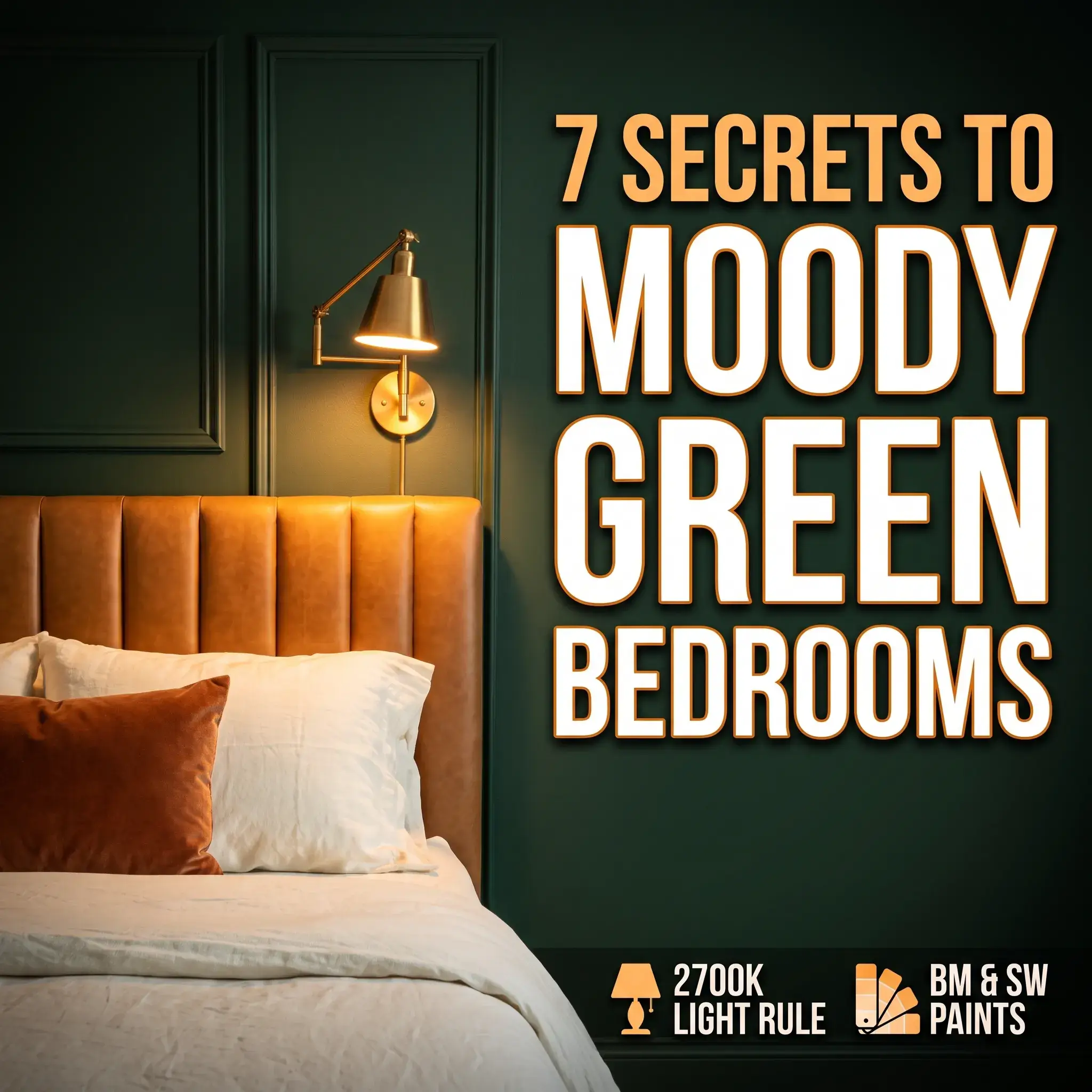
Dark green walls create an intimate, calming retreat inside your home. Moving away from stark white drywall and cold gray tones, deep verdant colors surround you in natural warmth.
Many homeowners worry that dark paint will turn a room into a gloomy cave. In reality, deep green recedes from your eyes. When you balance saturated walls with warm lighting, natural timber, and tactile bedding, the room feels larger and more restful.
Here are 7 practical design ideas you can replicate. Each room concept includes exact paint codes, styling notes, an ultra-realistic image prompt, and a list of key decor products.
7 Practical Moody Green Bedroom Ideas
1. The Color-Drenched English Heritage Suite
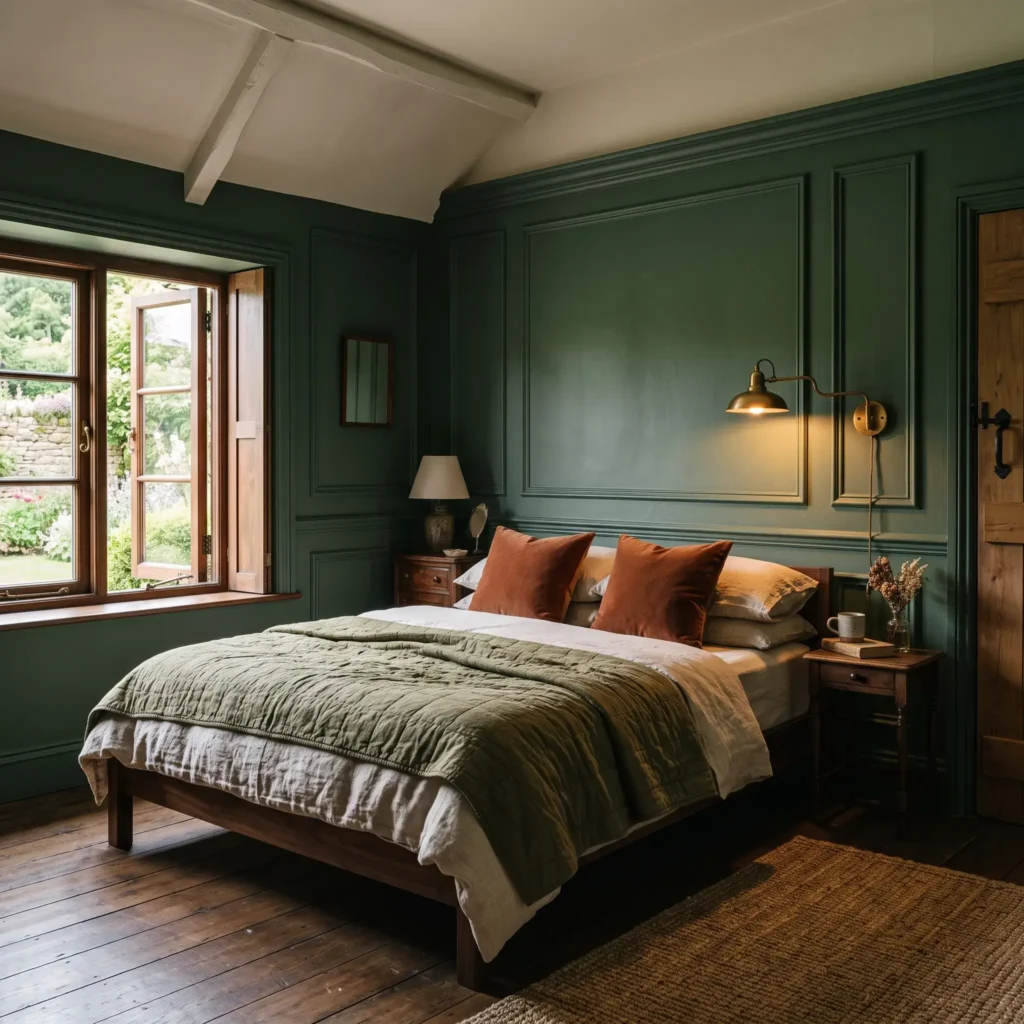
This design coats the walls, ceiling, baseboards, and window casings in one uniform forest green. Painting all trim to match the walls erases sharp break lines. This technique visually softens room borders, which makes lower ceilings feel taller. Dark walnut furniture and warm brass balance the deep botanical paint.
- Key Products in This Room:
- Wall and Trim Paint: Benjamin Moore Essex Green (HC-188) in matte finish for walls, satin finish for trim.
- Bed Frame: Solid American walnut spindle platform bed.
- Bedding: Washed European flax linen duvet set in unbleached oatmeal with a cinnamon waffle blanket.
- Lighting: Wall-mounted unlacquered brass swing-arm reading sconce with an off-white pleated fabric shade.
- Hardware: Antiqued brass door levers and cabinet knobs.
2. The Modern Organic Olive Sanctuary
This design combines soft olive tones with light oak and tactile fabrics. The muted green paint carries yellow and brown undertones. These warm pigments keep the room bright on cloudy days. Light wood furniture and cream bouclé seating add soft contrast without creating jarring color breaks.
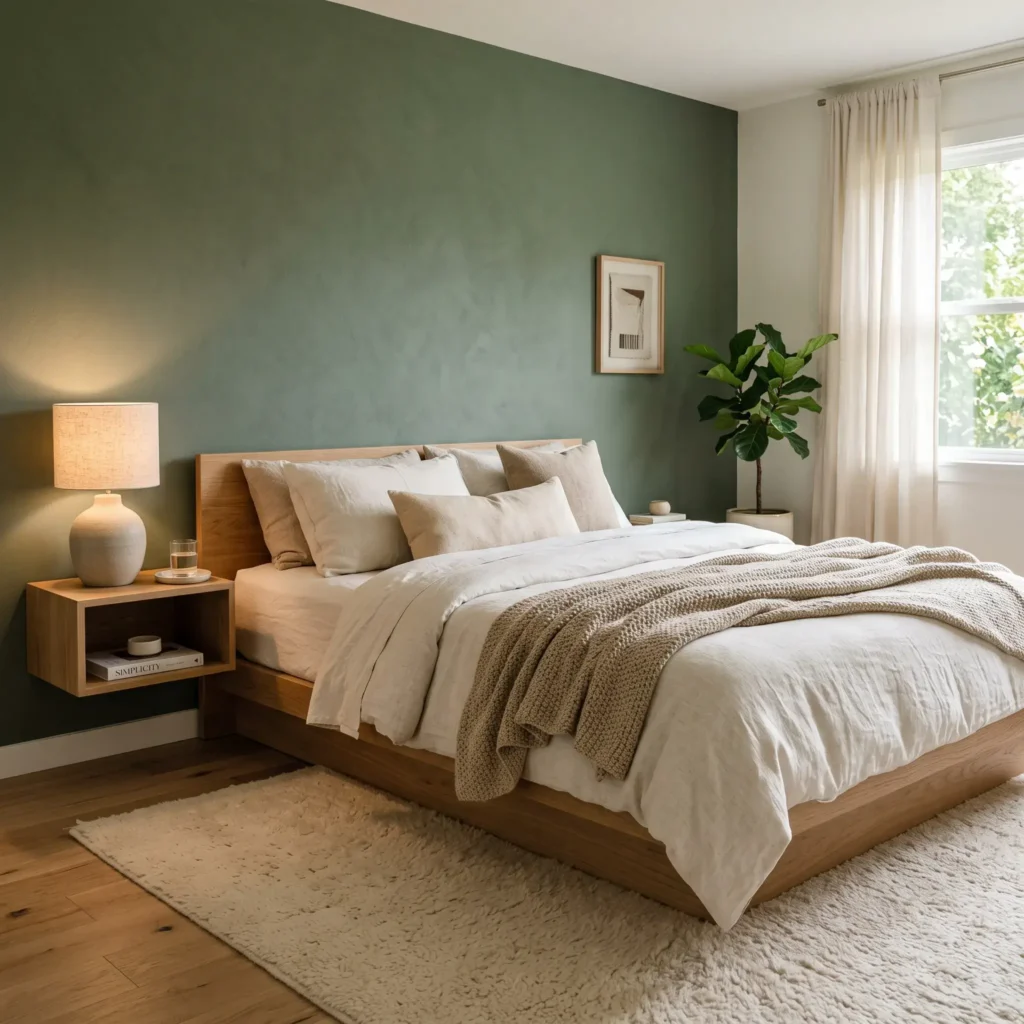
- Key Products in This Room:
- Wall Paint: Sherwin-Williams Rosemary (SW 6187) in a matte finish.
- Furniture: Wire-brushed white oak platform bed frame and matching floating bedside tables.
- Bedding: Ivory washed percale sheets, camel wool fringe throw, and textured bouclé accent cushions.
- Lighting: Handcrafted ceramic table lamp with a natural grasscloth drum shade.
- Area Rug: Hand-knotted high-pile wool rug in ivory with faint gray lines.
Check out more Home Decor Ideas By Color
3. The Dark Academia Library Bedroom
Inspired by historic study halls, this room uses near-black forest green to build a quiet sanctuary. Dark wood bookshelves surround the headboard wall. Warm lighting pools across vintage textiles and framed prints. The dark wall finish absorbs light glare, making it a reliable pick for deep sleep.
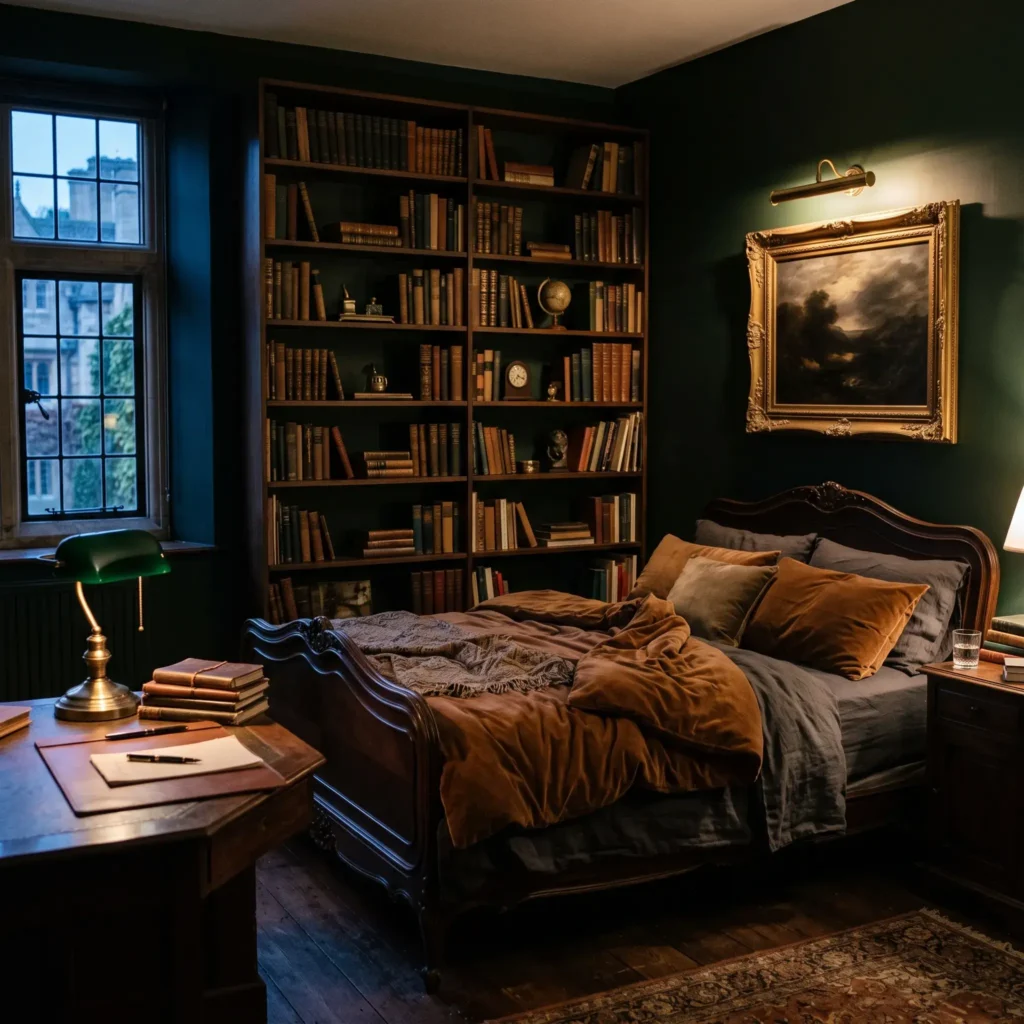
- Key Products in This Room:
- Wall Paint: Farrow & Ball Studio Green (No. 93) in Estate Emulsion.
- Shelving: Built-in oak bookshelves stained in espresso or dark walnut.
- Seating: Cognac brown top-grain leather reading chair.
- Accent Lighting: Hardwired antique brass picture light with warm 2400K LED illumination.
- Rug: Distressed vintage Persian wool runner with ruby and navy accents.
4. The Earthy Terracotta and Deep Forest Suite
Green and orange sit across from each other on the color wheel. Pairing rich pine green walls with warm terracotta, rust, and saddle leather creates instant harmony. The warm earth tones break up the dark green surfaces, bringing relaxed energy into the room.
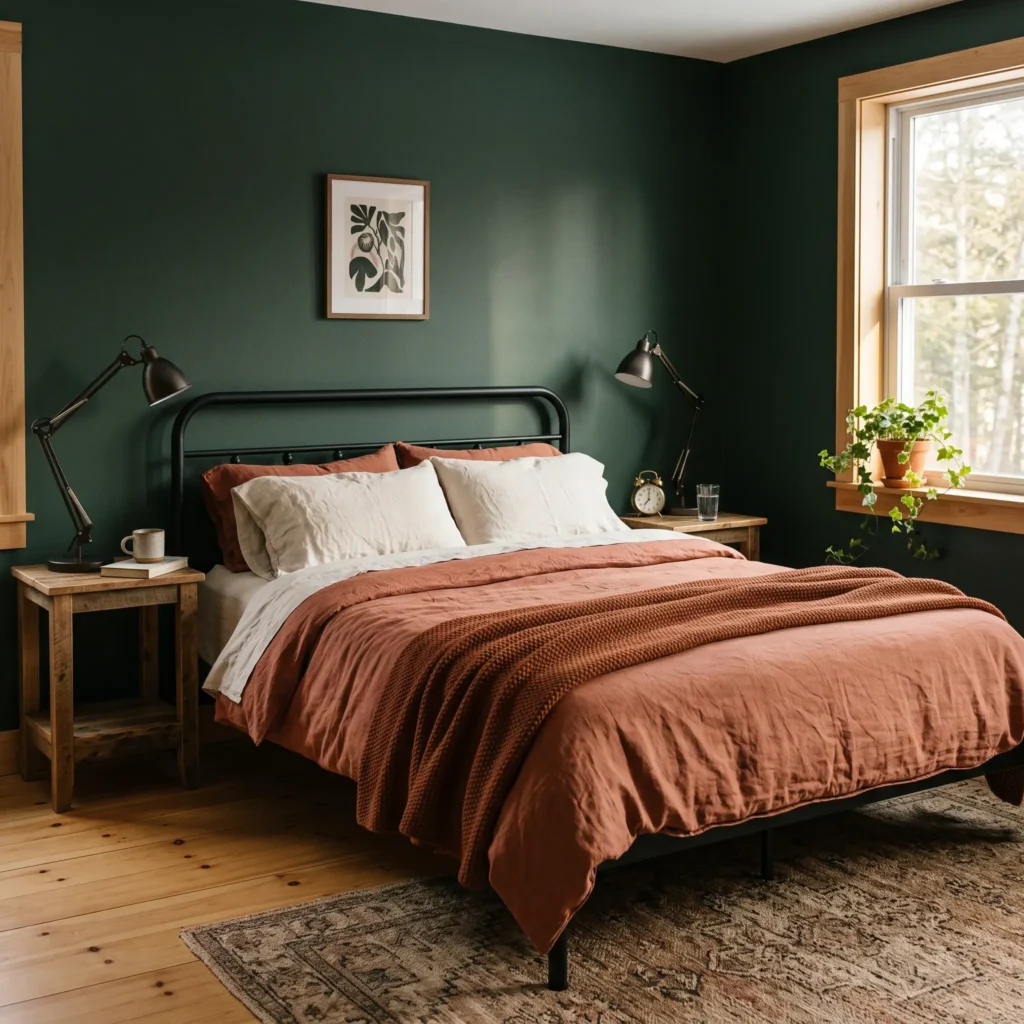
- Key Products in This Room:
- Wall Paint: Benjamin Moore Backwoods (469) in dead-flat sheen.
- Bedding: Pure French flax duvet set in burnt terracotta and rust clay.
- Bed Frame: Traditional matte black wrought-iron spindle bed.
- Nightstands: Reclaimed pine or natural teak bedside tables.
- Decor: Handmade terracotta planters and matte black ceramic vases.
5. The Contemporary Slate Green Retreat
If you favor crisp angles, slate green offers a restrained, modern backdrop. This color blends deep forest green with cool charcoal pigments. Because it carries gray undertones, it works naturally with black metal frames, concrete tables, and modern fixtures.
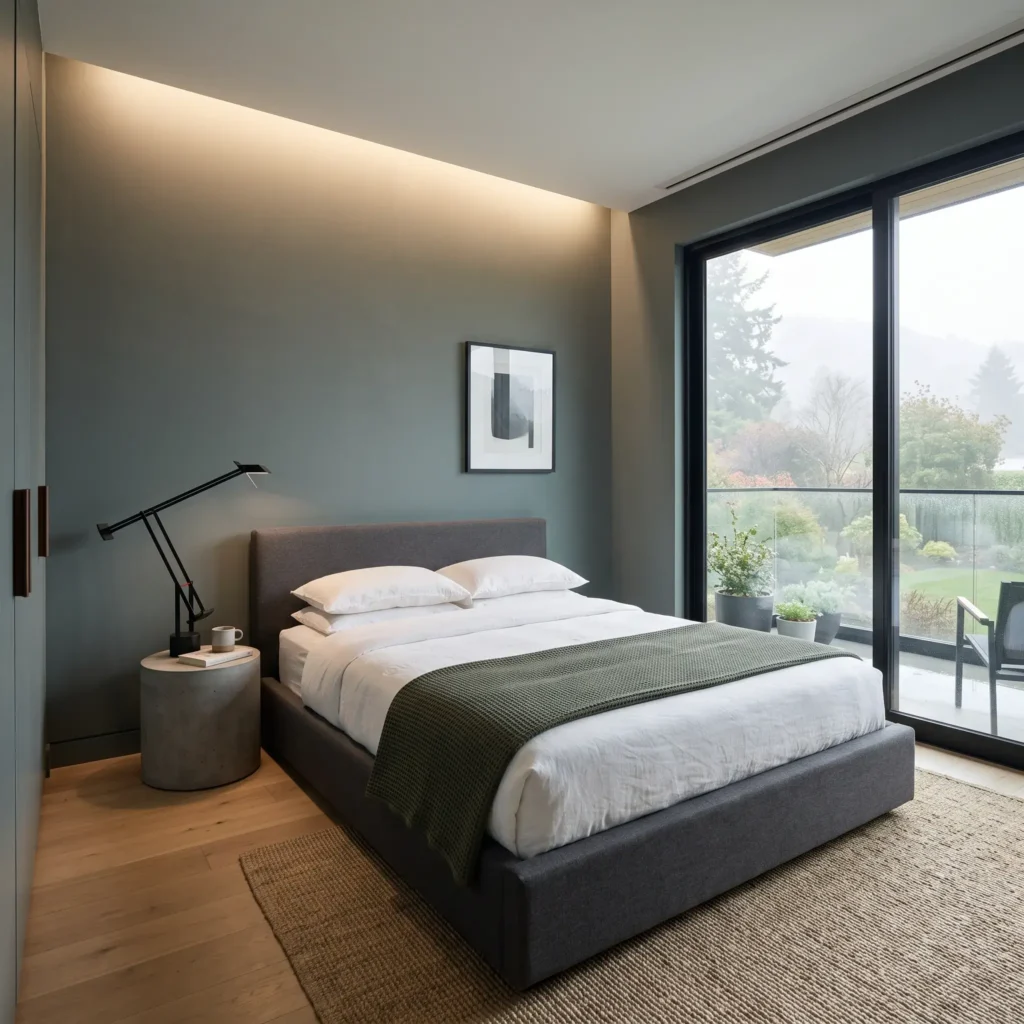
- Key Products in This Room:
- Wall Paint: Sherwin-Williams Pewter Green (SW 6208).
- Bed: Low platform bed upholstered in charcoal gray woven fabric.
- Bedside Tables: Fluted cast-concrete pedestal tables.
- Lighting: Matte black swing-arm sconces with directional task lighting.
- Window Coverings: Ceiling-recessed ripple-fold curtains in charcoal linen.
6. The Victorian Revival Botanical Bedroom
This design pairs heritage smoky green walls with historical botanical prints. Installing wallpaper above a painted picture rail softens the dark walls. It brings a collected, historic character that suits older homes, townhouses, and cottages.
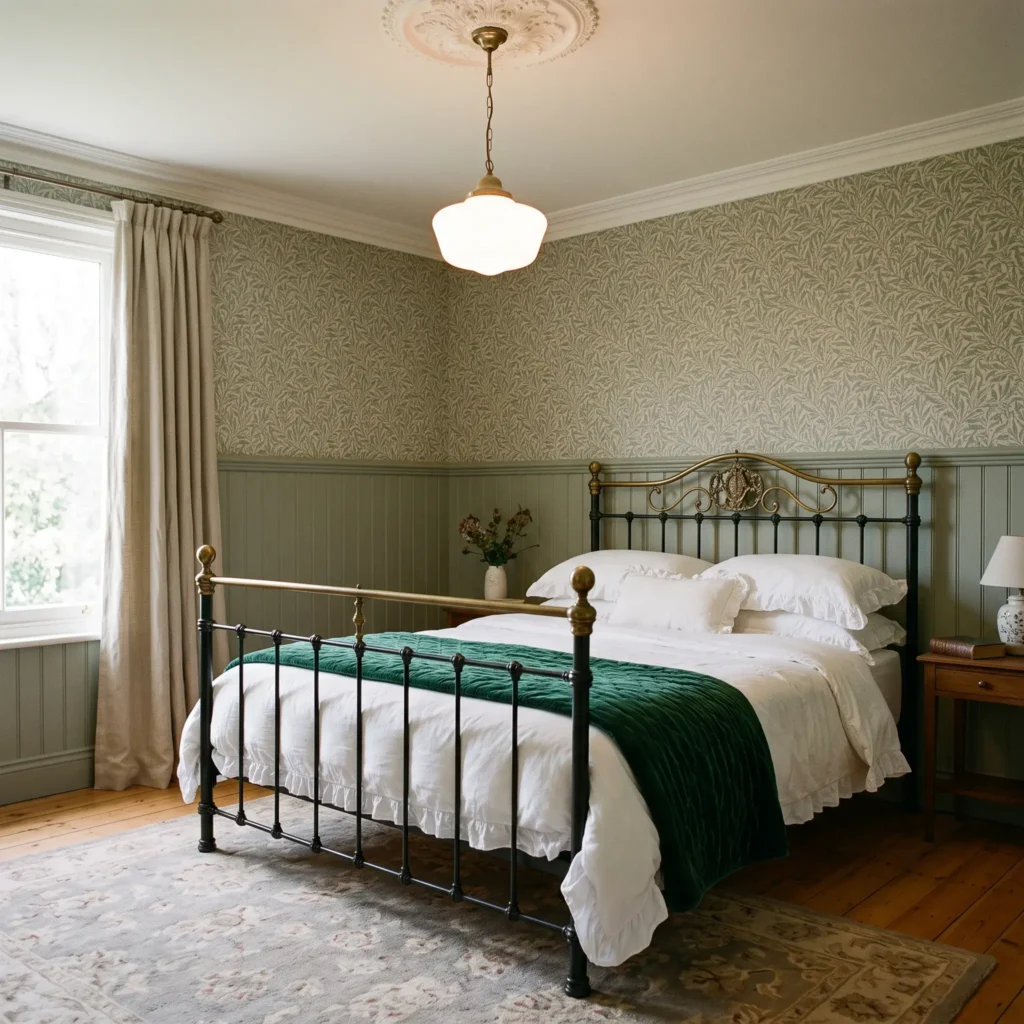
- Key Products in This Room:
- Paint: Farrow & Ball Green Smoke (No. 47) on wood paneling and trim.
- Wallpaper: William Morris willow foliage pattern or acorn branch print.
- Bed Frame: Antique-style iron and brass spindle headboard.
- Ceiling Fixture: Milk-glass schoolhouse pendant with polished nickel accents.
- Drapery: Floor-length moss green velvet curtains with pinch-pleat headers.
7. The Midnight Teal-Emerald Chamber
This palette uses a blackened blue-green for maximum evening mood. In dim daylight, the walls read as a soft off-black. Under warm interior lamps, rich green and teal undertones surface. It creates a dark, quiet room made for deep evening rest.
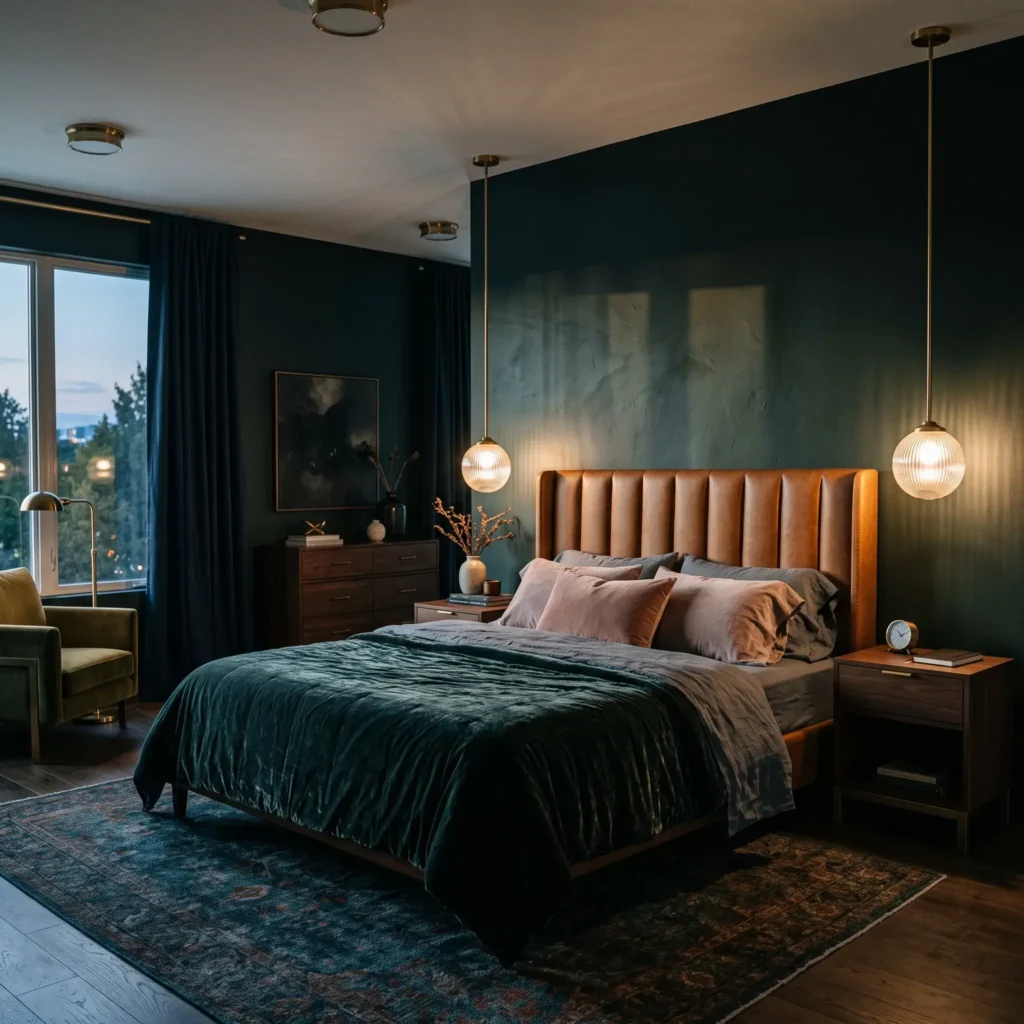
- Key Products in This Room:
- Wall Paint: Benjamin Moore Salamander (2050-10).
- Headboard: Vertical channel-tufted caramel leather headboard.
- Bedding: Slate gray linen sheet set paired with a dark emerald velvet coverlet.
- Lighting: Fluted glass globe pendants suspended by brass cords.
- Nightstands: Honed travertine stone cube side tables.
Designer Paint Guide: Undertones and Light Performance
Choosing the right paint shade is the most important step in your project. Dark paint behaves differently than pale neutrals. Because dark shades absorb light, they show their underlying pigments quickly under lamps and sunlight.
What Is Light Reflectance Value (LRV)?
Light Reflectance Value tells you the percentage of light a paint color reflects on a scale from 0 to 100. Absolute black has an LRV of 0, while pure white has an LRV near 100.
Most successful dark bedrooms use paint with an LRV between 5 and 15. Colors in this bracket absorb glare and soften sharp shadows. If you select an LRV above 20, your room will read as a bright sage. If you pick an LRV below 5, the paint looks like standard chalkboard black.
Best Dark Green Paint Formulations
The table below compares top dark green paint colors by manufacturer, LRV rating, and base undertones.
| Paint Color & Number | Brand | LRV | Dominant Undertones | Best Light Exposure |
| Salamander (2050-10) | Benjamin Moore | 5.7 | Blackened blue-green | South-facing rooms, evening spaces |
| Essex Green (HC-188) | Benjamin Moore | 5.6 | Deep forest green with ivy base | East and west-facing windows |
| Studio Green (No. 93) | Farrow & Ball | 8.0 | Deep black with olive resin | Rooms with large windows and direct sun |
| Ripe Olive (SW 6209) | Sherwin-Williams | 6.0 | Deep olive with warm yellow base | North-facing rooms needing warmth |
| Vintage Vogue (462) | Benjamin Moore | 11.8 | Smoky olive-gray | Balanced for any room exposure |
| Pewter Green (SW 6208) | Sherwin-Williams | 12.0 | Slate gray and cool sage | South-facing rooms with warm daylight |
| Backwoods (469) | Benjamin Moore | 12.7 | Earthy moss with herbal tones | North and east-facing windows |
| Rosemary (SW 6187) | Sherwin-Williams | 14.0 | Muted gray-green | Smaller bedrooms with average daylight |
| Green Smoke (No. 47) | Farrow & Ball | 19.0 | Weathered blue-gray patina | Low-light rooms and historic homes |
How Window Exposure Alters Your Paint
Natural daylight changes temperature throughout the day. Check your window direction before painting:
- North-Facing Rooms: North light is indirect, cool, and slightly blue. It washes out cool paint. Avoid greens with heavy slate or blue undertones, as they turn gray and cold. Pick warm olive greens with yellow undertones, like Sherwin-Williams Ripe Olive or Benjamin Moore Backwoods.
- South-Facing Rooms: Southern windows let in golden, direct daylight all afternoon. This warm light enlivens cool paints. You can safely use deep tones like Benjamin Moore Salamander or Farrow & Ball Studio Green.
- East and West-Facing Rooms: Eastern windows catch clear morning sun and cool afternoon shadows. Western exposures give you soft morning light followed by warm late-afternoon sun. Balanced shades like Benjamin Moore Essex Green or Sherwin-Williams Pewter Green adapt smoothly to these shifts.
The Paint Sheen Strategy: Stopping Surface Glare
When you paint an entire room dark green, graduate your paint finishes across different architectural planes. Using one single sheen across every surface makes a dark room feel flat and plastic.
Graduating the gloss level between ceilings, walls, and trim adds subtle depth to your architecture.
1. Ceiling Plane: Dead Flat Finish (0% to 3% Gloss)
Ceiling surfaces need an ultra-flat finish. Overhead light fixtures bounce harsh glare off shiny dark paint. A dead-flat finish absorbs light rays, hides minor drywall patches, and softens room edges.
2. Vertical Wall Plane: Matte or Low-Eggshell Finish (3% to 7% Gloss)
Drywall surfaces perform best with a matte finish. Matte paint gives dark green a suede-like texture that disperses lamp light across the room. It also allows you to wipe away minor scuffs without leaving shiny marks.
3. Trim, Baseboards, and Doors: Satin Finish (20% to 30% Gloss)
Coat moldings, door frames, and baseboards in satin paint. This sheen difference creates soft light reflections along wood edges. It defines the architecture of the room cleanly without needing bright white trim.
Lighting Architecture: Color Temperature and Layering
Lighting controls how you experience a dark bedroom. The most common mistake is using bulbs with high color temperatures that emit cold, blue-tinted light.
Cool white bulbs (3500K to 5000K) ruin dark green paint. They make rich olive and forest walls look clinical and dull. To highlight the warm pigments in your paint, use light bulbs rated strictly between 2400K and 2700K.
The 3 Essential Lighting Layers
- Ambient Layer (General Warmth): Skip harsh recessed ceiling cans that shine straight down. Use a dimmable central pendant with a frosted glass globe or woven linen drum. This scatters soft, indirect light outward across the ceiling.
- Task Layer (Bedside Reading): Mount reading lamps on the wall roughly 30 to 36 inches above the top of your mattress. Pick fixtures with pleated silk, linen, or heavy parchment shades. Opaque fabric shades direct light down onto your book while keeping bright glare out of your eyes.
- Accent Layer (Perimeter Glow): Place small accent lights in darker corners. An antique brass picture light over artwork or a slim floor canister behind a plant brightens empty shadows.
Helpful Tip: Install rotary dimmers on every bedroom light switch. You need the flexibility to shift from bright morning dressing light to soft evening relaxation.
Material and Texture Rules: Balancing Dark Walls
Because dark green walls absorb light, your furniture and decor must reflect it gently back into the room. A room filled with green walls, green bedding, and dark rugs feels heavy. Layer contrasting materials to bring air and warmth into the space.
1. Wood Selection
- American Walnut: Walnut features a natural chocolate-brown base with warm amber grain lines. It harmonizes with forest and olive tones without competing for attention.
- White Oak: Wire-brushed or rift-sawn white oak adds light, organic contrast. Its honey-tan color lifts dark walls while keeping the room earthy.
- Woods to Avoid: Gray-stained laminate or red-orange cherry can clash against dark green surfaces.
2. Metals and Hardware
- Unlacquered Brass: Raw brass is the standard match for dark green. It develops a rich natural patina over time and reflects warm light under lamps.
- Burnished Bronze: Oil-rubbed bronze works well in historic or scholarly spaces. It blends smoothly into dark woodwork for a understated look.
- Metals to Avoid: Polished chrome emits a cool, blue-white reflection that feels sterile against botanical walls.
3. Bedding Assembly
Never match your duvet directly to the wall paint. Layer your bedding across three distinct tiers:
- Base Tier: Anchor the bed with washed linen or cotton percale sheets in warm ivory, oatmeal, or unbleached chalk white. This reflective center brightens the middle of the room.
- Mid-Weight Tier: Lay down a quilted coverlet or waffle blanket in camel, warm taupe, or soft biscuit.
- Top Accent Tier: Top the bed with two velvet pillows or a wool throw blanket in terracotta, cognac, or dark mustard yellow.
Final Project Checklist Before You Paint
Before ordering your paint supplies, run through this practical planning checklist:
- Test large swatches: Paint two coats of green onto large sample boards. Move them to different walls to check undertone shifts under morning, afternoon, and lamp light.
- Remove stark white trim: Plan to color-drench your trim in the same green or choose a tinted warm cream. Avoid plain base white.
- Check your light bulbs: Replace cool daylight bulbs with 2700K warm white LED bulbs that carry a Color Rendering Index (CRI) of 90 or higher.
- Select warm wood accents: Add natural timber through your bed frame, nightstands, or floating shelves to break up painted surfaces.
- Layer your bedding: Pick out an ivory or oatmeal linen duvet cover, paired with warm terracotta or caramel accent pillows, to create an inviting focal point.
Frequently Asked Questions
Does a dark green bedroom make a room look smaller?
No. Deep green makes wall borders visually recede. If you color-drench the baseboards, doors, and trim in the same green hue, you remove high-contrast break lines. The eye cannot identify where the walls end and the ceiling starts, which makes compact rooms feel cozy rather than small.
What color bedding looks best with dark green walls?
Warm oatmeal, unbleached linen, and soft cream look best. Optic white sheets create too much contrast, which disrupts the restful mood. For colored accents, choose earthy tones like burnt terracotta, rust, camel, or dusty rose.
Should you paint the ceiling dark green as well?
Painting the ceiling dark green works well in bedrooms with ceilings under nine feet tall, or in rooms reserved strictly for evening sleep. If you want a brighter ceiling, avoid untinted white. Use a warm cream like Sherwin-Williams Alabaster or dilute your green wall paint formula by seventy-five percent with white base paint.
What is the best paint finish for dark green bedroom walls?
Matte or dead-flat finish works best for drywall. High-gloss finishes reflect unwanted light glare and highlight minor bumps in the plaster. Reserve satin finishes for doors, baseboards, and window trim.