7 Curtains That Make a Room Look Finished Without Custom Drapes
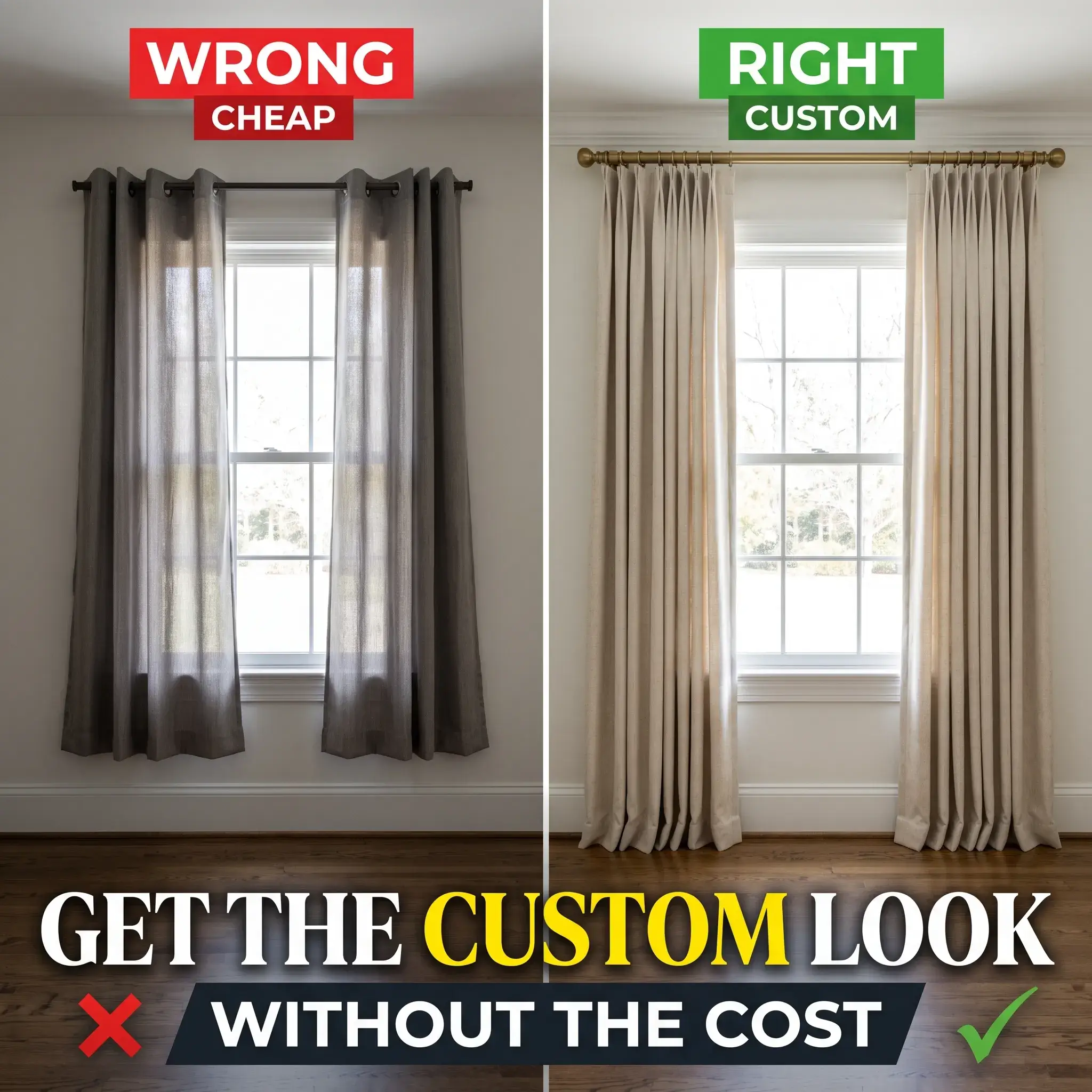
Custom drapery often costs upwards of $2,000 per room. Most homeowners buy store-bought curtains to save money, only to end up disappointed. The fabric hangs limp, the rod sags in the center, and the panels float awkwardly above the floor. The room still feels bare and unfinished.
The issue rarely comes down to the fabric price tag. True bespoke window treatments look high-end because of spatial geometry, fabric fullness, architectural hardware, and post-installation tailoring. When you apply workroom formulas to store-bought panels, you eliminate the cheap look entirely.
Below are seven practical curtain designs you can recreate at home, followed by the exact measurements, fabric specs, and tailoring steps needed to pull them off.
7 Practical Curtain Setups That Look Custom
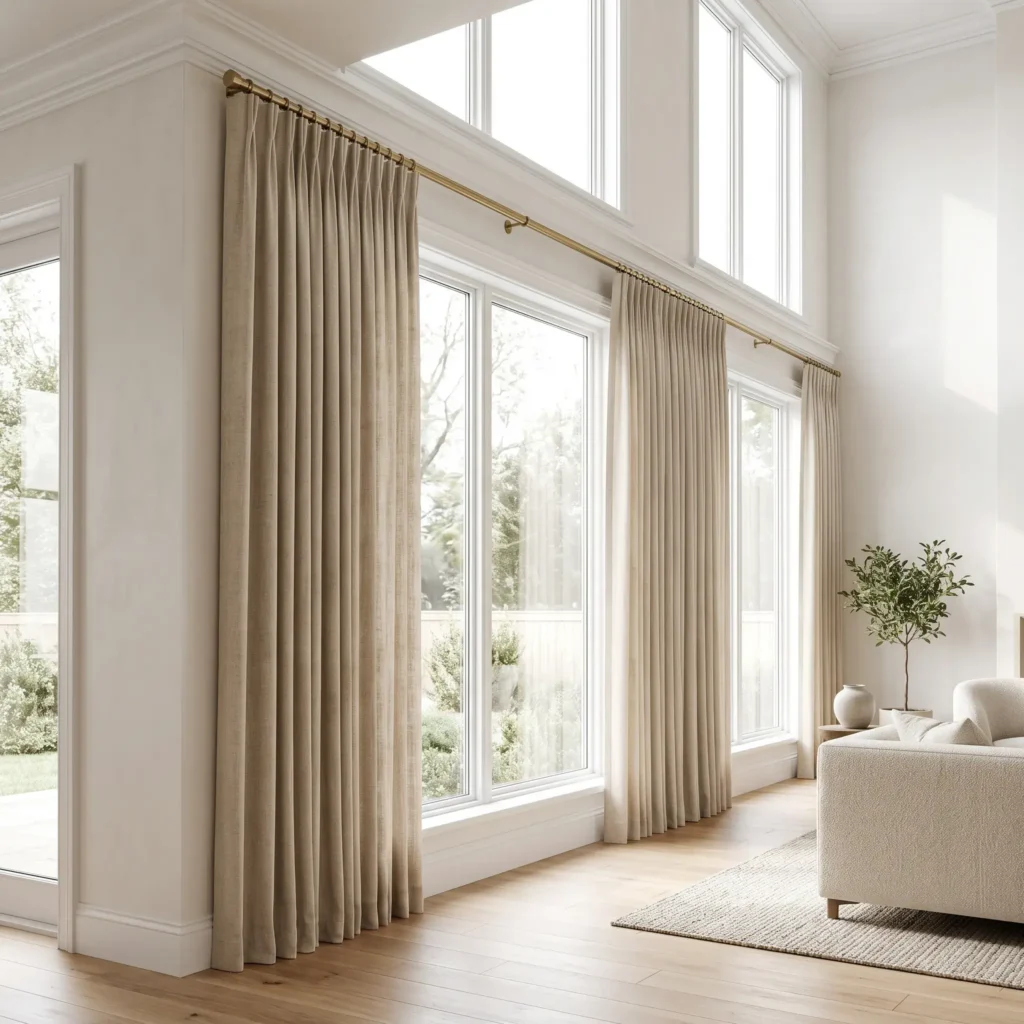
1. The Tailored Euro Pleat in Warm Linen
This setup uses heavyweight faux linen panels with pinched tops hung from solid brass rings. The fabric lightly brushes the hardwood floor, giving a formal living space an orderly, architectural frame without heavy visual bulk.
- Products Used in This Setup:
- Panels: TwoPages Liz Linen Drape in Oatmeal (Euro Pleat, Privacy Lining).
- Rod: 1.25-inch solid brass rod with low-profile end caps.
- Rings: Matching brass curtain rings with small eyelet holes.
- Hardware: Adjustable nylon drapery pin hooks.
- Hemming: Heat-activated fusible bonding web for an exact floor kiss.
2. The Blackout Velvet French Return
French return rods curve directly into the wall, eliminating side light leaks. Paired with dense cotton velvet, this design frames bedroom windows with deep, dramatic shadows and total privacy.

- Products Used in This Setup:
- Panels: Half Price Drapes Signature Cotton Velvet in Forest Olive.
- Rod: 1-inch matte black French return curved metal rod.
- Rings: 1.5-inch flat black metal rings with eyelets.
- Weights: 50mm lead disc weights hand-tacked into the lower hem corners.
- Hardware: Heavy-duty metal drapery pin hooks.
Check out more Shopping Guides
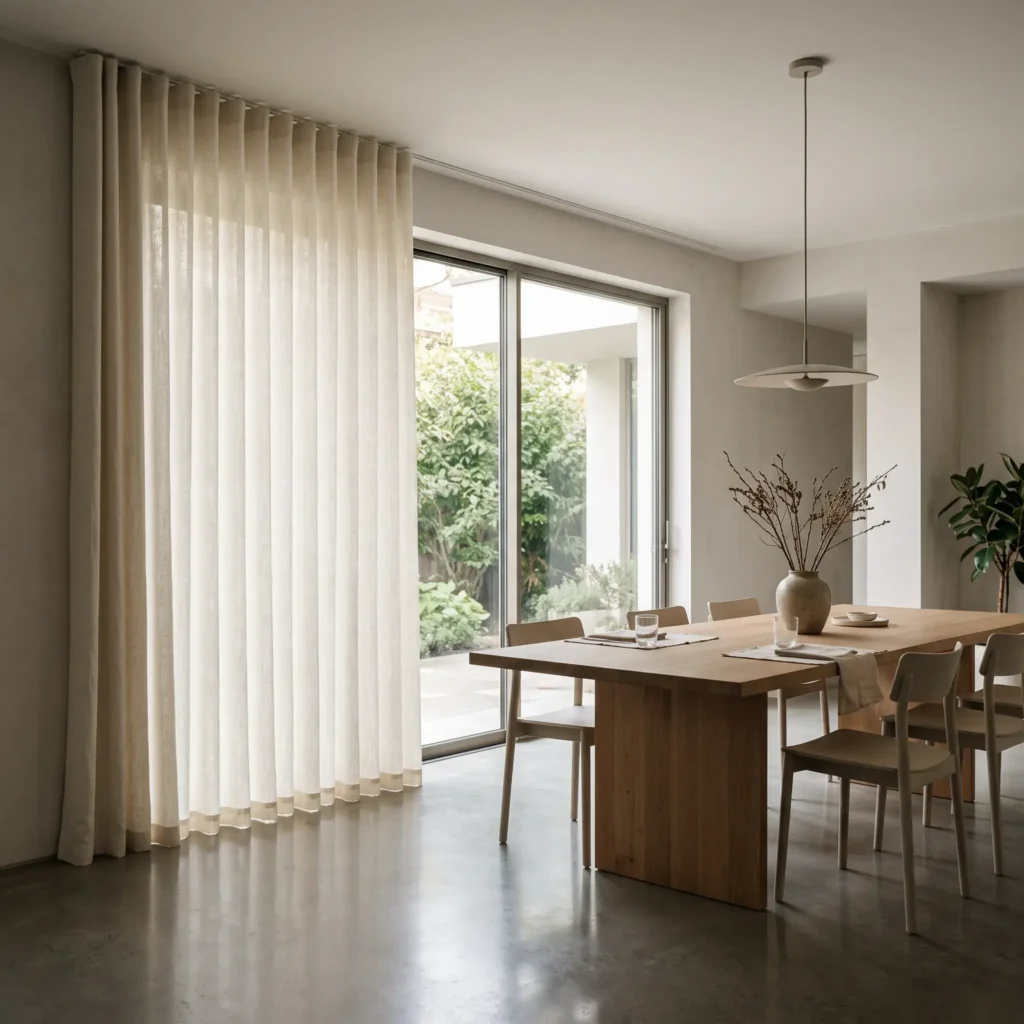
3. The Recessed Ceiling-Track Wave
Mounting an ultra-thin aluminum track directly onto the ceiling makes walls feel noticeably taller. This clean layout lets linen-blend panels glide across wide glass doors without visible brackets or bulky rings.
- Products Used in This Setup:
- Panels: Custom-length unlined natural flax linen panels with back buckram tape.
- Track: Low-profile white aluminum ceiling track system with ball-bearing wheeled carriers.
- Hooks: Deep-hook drapery pins set 4 inches apart.
- Ballast: Continuous lead-free bottom hem bead chain.
4. The Budget IKEA Ritva Pinch-Pleat Conversion
This setup transforms affordable off-the-rack cotton-blend panels into structured triple pleats. Using four-prong pleater hooks inside the factory header tape creates deep, tailored folds for a fraction of bespoke pricing.
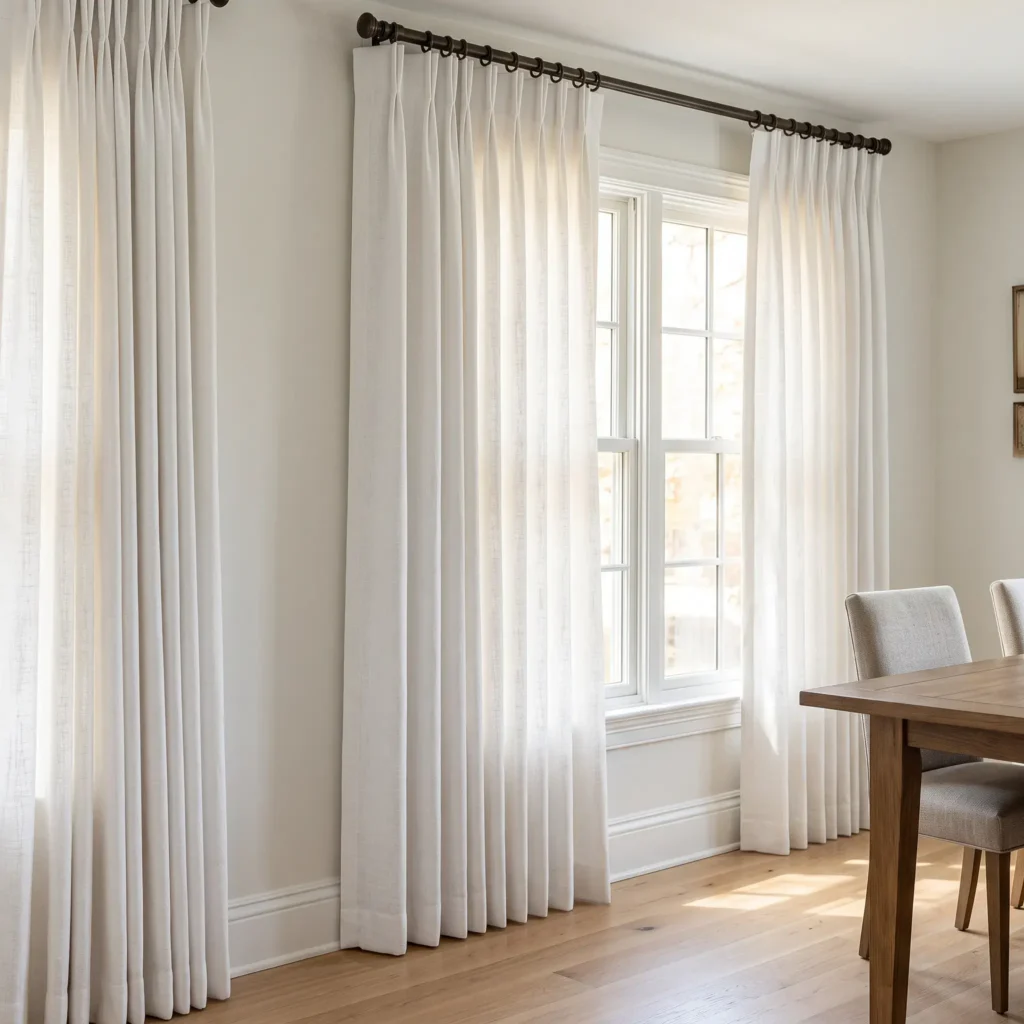
- Products Used in This Setup:
- Panels: IKEA Ritva Curtains in White (98-inch or 118-inch length).
- Hooks: Dritz 4-Prong Heavy Duty Pleater Hooks.
- Rings: 1.25-inch black cast-iron rings with eyelets.
- Rod: 1-inch heavy-gauge black steel curtain rod.
- Accessories: Cotton twill ties and handheld upright steamer for fold training.
5. The Layered Belgian Linen and Privacy Sheer
Layering semi-sheer linen behind heavy textured panels gives you flexible light control and rich depth. Using a double rod setup creates a boutique hotel look that softens the whole room.
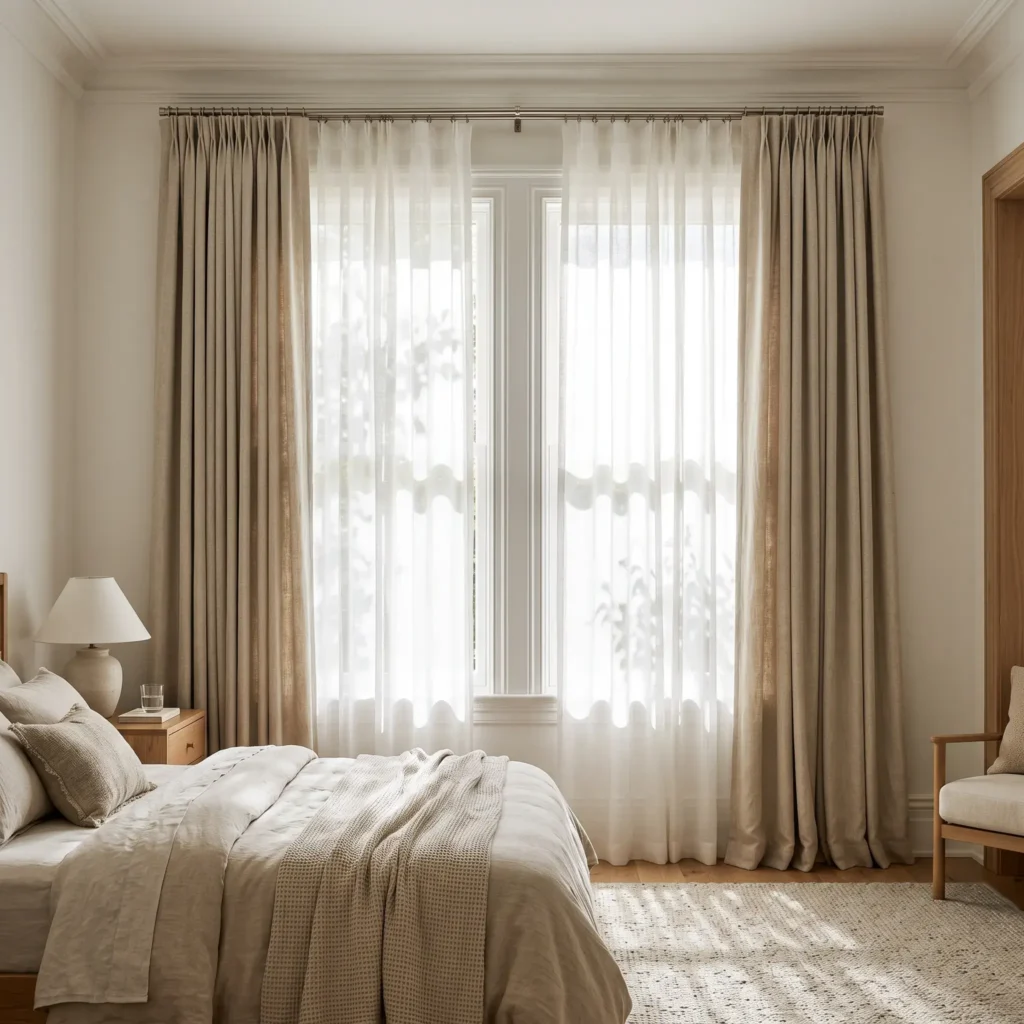
- Products Used in This Setup:
- Front Panels: Quince European Flax Linen Curtains in Natural (Cotton Lined, 240 GSM).
- Rear Panels: Semi-sheer Belgian flax linen panels in Soft White.
- Rod: Heavy-duty double rod system in satin nickel.
- Rings: Satin nickel rings with eyelets for both front and back layers.
- Pins: Steel drapery pins inserted into back tabs.
6. The Relaxed Trouser-Break Belgian Flax
A trouser break lets curtains pool forward slightly on the floor by one inch. It gives relaxed spaces like home offices or casual dens a lived-in, European look while hiding uneven baseboards.
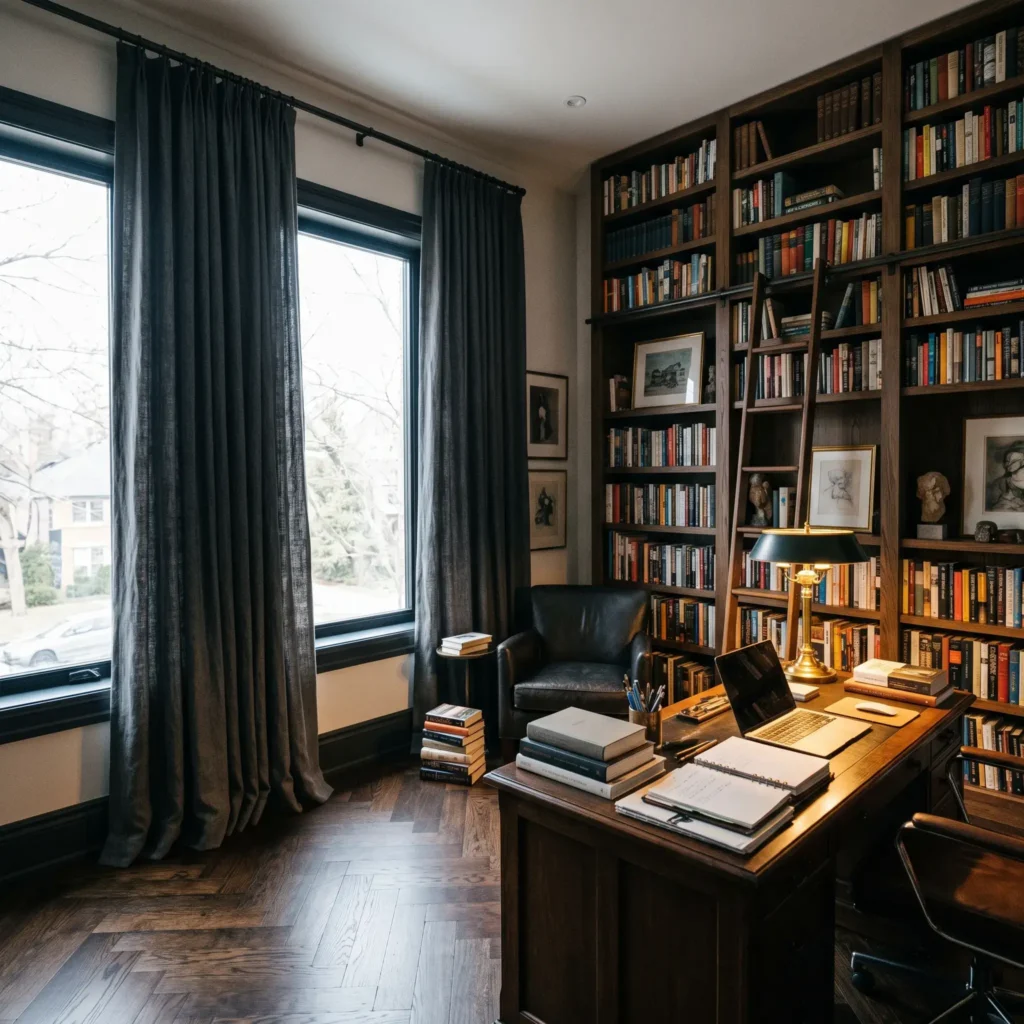
- Products Used in This Setup:
- Panels: West Elm Belgian Flax Linen Curtains in Slate Charcoal (Blackout Lined).
- Rod: 1.25-inch gunmetal steel rod.
- Rings: Matching gunmetal rings with silent interior nylon glides.
- Hemming: Hand-tacked hem set exactly 1 inch longer than floor distance.
7. The Double-Wide Fluted Wall Span
Hanging multiple panels joined together across a wide wall turns small windows into an impressive focal point. Extending the rod far past the window frame tricks the eye into seeing a much wider room.
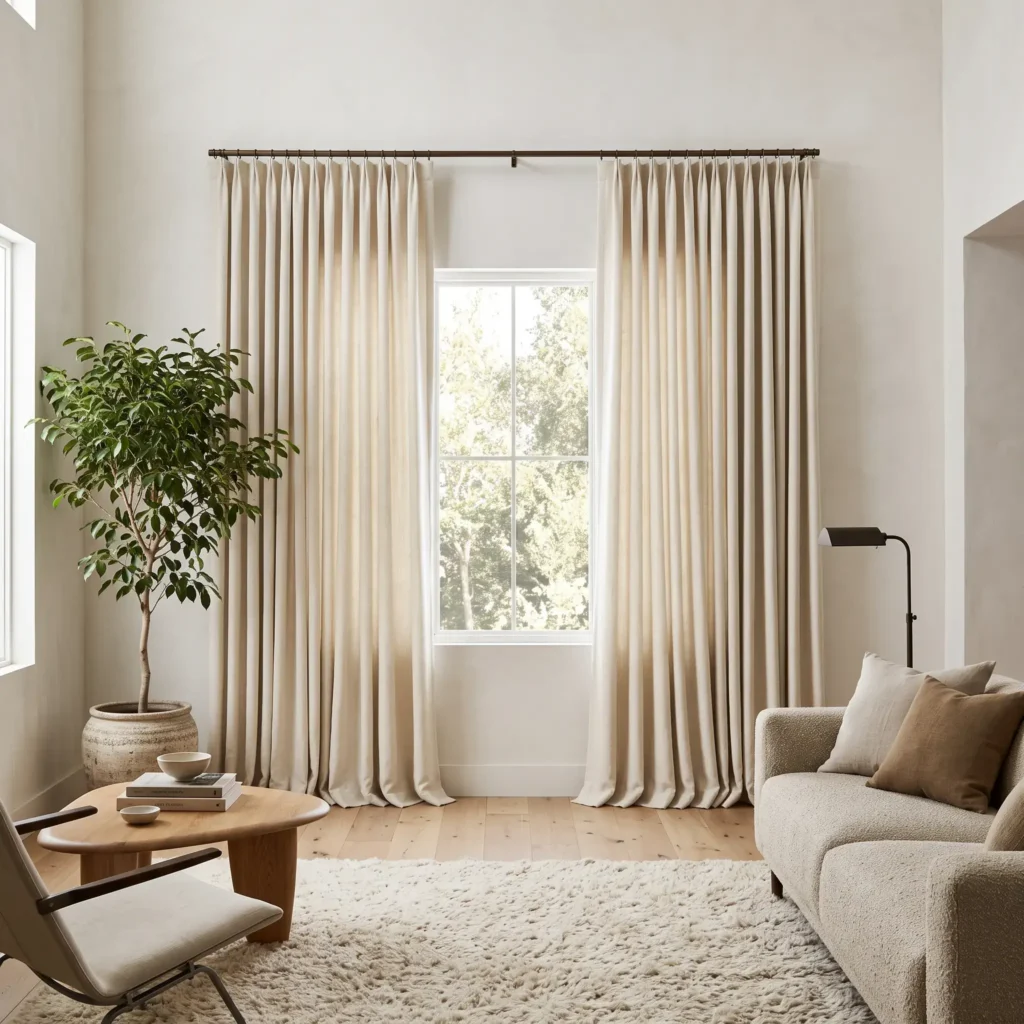
- Products Used in This Setup:
- Panels: Four 50-inch wide panels (two per side) joined using iron-on seam tape.
- Rod: Extra-wide 120-inch heavy-duty steel rod with center support bracket.
- Rings: 1.5-inch bronze rings with eyelets.
- Finish: Bottom hem coin weights on every outer and inner seam corner.
The Core Problem: Why Off-the-Shelf Curtains Look Cheap
Retail stores sell products designed for quick convenience rather than proper room scale. Most buyers pick up two 84-inch panels, slide them onto a skinny rod through metal grommets, and screw the brackets directly into the window trim.
That approach ruins your room’s proportions in three ways:
- Shortened Walls: Mounting the rod right above the window frame cuts the wall in half visually, making average eight-foot ceilings feel cramped.
- Blocked Daylight: When curtains hang directly over the glass frame, the bunched fabric blocks incoming light and makes windows look small.
- Flatsheet Effect: A single pair of 50-inch panels stretched across a standard 60-inch window pulls completely flat when closed. Real drapery needs deep, rolling folds.
Hanging Geometry: The High and Wide Rule
Professional window design treats the curtain rod as an architectural line that shapes the whole room.
Vertical Placement (Hang High)
- Standard 8- to 9-Foot Ceilings: Mount your rod 4 to 6 inches above the window trim, or 2 to 3 inches below the ceiling crown molding. Running the fabric close to the ceiling draws the eye upward, giving standard rooms an airy, open feel.
- Ceilings 10 Feet and Taller: Avoid mounting hardware directly against very tall ceilings. That leaves an awkward empty wall space above the window glass. Instead, mount the rod halfway between the top of the window trim and the ceiling.
Horizontal Placement (Hang Wide)
- The Stack-Back Rule: Extend your curtain rod 6 to 12 inches past the outer window casing on each side.
- The Purpose: When you open the curtains, the gathered fabric rests on the drywall rather than covering the glass. Your window appears twice as wide, and your room receives maximum natural light.
Fabric Math: How to Calculate Fullness
Skimpy fabric instantly reveals budget curtains. Professional workrooms use a fullness multiplier of 2.0x to 2.5x. That means your total curtain fabric width must equal more than double the width of your rod.
Use this simple formula:
Total Fabric Width=(Window Width+Rod Extensions)×2.0 to 2.5
Standard store-bought curtain panels measure roughly 50 inches wide. Here is how many panels you need based on your window size:
| Window Width | Total Rod Span (With Extensions) | Minimum Fabric Width (2.0x) | Luxe Fabric Width (2.5x) | Panels to Buy (50″ Standard Width) |
|---|---|---|---|---|
| 36 inches (Single) | 48 to 60 inches | 96 to 120 inches | 120 to 150 inches | 2 panels (1 panel per side) |
| 72 inches (Double) | 84 to 96 inches | 168 to 192 inches | 210 to 240 inches | 4 panels (2 joined per side) |
| 108 inches (Slider/Triple) | 120 to 132 inches | 240 to 264 inches | 300 to 330 inches | 6 panels (3 joined per side) |
Pro Tip: Never hang a single 50-inch panel on a double window. Buy two pairs, hang two panels per side, and join their vertical seams using iron-on hem tape.
Floor Terminations: Kiss, Float, Break, or Puddle
The way your hem interacts with the floor establishes the tailoring quality of your room. Always buy the next longest standard curtain length (96″, 108″, or 120″) and hem them in place to match your space.
| Style | Floor Clearance | Best Use Case | Maintenance Level |
|---|---|---|---|
| The Crisp Float | 41 to 21 inch above floor | High-traffic patio doors, robot vacuums, humid climates | Very Low |
| The Tailored Kiss | Exactly 0 inches (grazes floor) | Formal living rooms, bedrooms, transitional spaces | Medium |
| The Trouser Break | 1 inch excess fabric on floor | Belgian linen drapes, slightly uneven floors | Low |
| The Formal Puddle | 2 to 4 inches pooled on floor | Heavy velvet panels, formal historic rooms | High (catches dust) |
Fabric Weight and Lining Specs
Bespoke drapery looks substantial because of its mass and inner structure. Light shining through unlined curtains exposes raw seams, washes out colors, and highlights thin threads.
- Target Fabric Density: Look for natural linen or linen-cotton blends weighing between 180 and 250 GSM (grams per square meter). This weight falls naturally under its own gravity.
- Cotton Velvet: Choose cotton-faced velvet rather than cheap polyester velvet. Cotton velvet absorbs directional light, creating deep, matte shadow lines within each fold.
- The Interlining Secret: High-end drapes contain an inner layer of cotton flannel sandwiched between the face fabric and the backing. For store-bought panels, buy separate blackout liners and hook them behind your curtains. This thickens the fabric edge and softens every fold.
Hardware Standards: Rods, Rings, and Returns
Flimsy hardware ruins expensive fabric. Skip thin telescoping rods that bend in the middle.
1. French Return Rods
French return rods curve 90 degrees back to the wall surface. This design seals side light gaps, hides mounting brackets, and lets your panels wrap cleanly against the drywall.
2. Rod Diameter
Never use curtain rods under 1 inch in diameter. For spans wider than 80 inches or heavy lined velvet, step up to a 1.25-inch or 1.5-inch rod with a sturdy center support bracket.
3. Rings Over Clips
Spring clips clamp onto the top edge of fabric, causing thin materials to sag between connection points. Use solid metal rings with integrated eyelets. Insert steel drapery pins into the back of your curtain pleats, then hook them directly through the ring eyelets.
3 Workroom Tailoring Protocols Anyone Can Do
1. The 4-Prong Pleater Hook Retrofit
Inexpensive panels like the IKEA Ritva feature built-in buckram tape along the top header. You can turn them into formal triple pinch pleats without sewing:
- Buy metal four-prong pleater hooks online or at a local craft store.
- Slide the four prongs into adjacent pocket slots along the rear header tape.
- The tension pulls the flat fabric into a crisp triple pleat.
- Space the hooks 4 to 6 inches apart to create 10 to 12 pleats per panel.
2. Hem Ballast Weights
Lightweight curtains often curl outward at the edges because of side seam tension.
- Slide 25mm to 50mm covered lead or zinc disc weights inside the bottom hem corners.
- Hand-tack the weight to the inside seam allowance. The downward pull forces the vertical edges to hang straight down.
3. The 48-Hour Memory Fold Routine
New curtains arrive with factory creases and puff out irregularly. Train them into neat columns with this routine:
- Hang your curtains on the rod.
- Steam the panels vertically from top to bottom using an upright garment steamer.
- While the fibers are warm and damp, fold the fabric into neat accordion folds by hand.
- Tie three or four soft fabric strips loosely around each gathered panel (top, middle, and bottom).
- Leave the ties in place for 48 to 72 hours. Once released, the fabric will remember its shape and fold back neatly whenever opened.
Brand Comparison: Ready-Made Curtains That Look Custom
| Brand & Line | Starting Price (Pair) | Header Style | Lining Included | Notes |
|---|---|---|---|---|
| TwoPages (Liz Linen) | $120 – $280 | Euro or Pinch Pleat | Optional Blackout/Privacy | Factory pleats with adjustable ratchet hooks. Ready to hang right out of the box. |
| Quince (European Flax) | $160 – $240 | Rod Pocket / Back Tab | Cotton + Room Darkening | Genuine 240 GSM European flax. Great tactile hand feel; requires pin hooks for rings. |
| Half Price Drapes (Signature) | $140 – $300 | Back Tab with Hook Belt | Weighted Privacy Lining | Substantial velvet and faux linen options. Includes hook belts for clean pin placement. |
| IKEA (Ritva) | $40 – $60 | Multi-Way Header Tape | Unlined (Add separate liner) | The best budget canvas. Stiff buckram header accepts four-prong pleater hooks easily. |
| West Elm (Belgian Flax) | $260 – $480 | Back Tab / Hidden Loops | Unlined or Blackout | Premium linen weave with rich texture. Higher price point per panel. |
Common Mistakes That Ruin the Custom Look
- Using Metal Grommets: Grommets look casual and industrial. They flare unevenly and expose the rod through the fabric face. Choose pinch pleats, Euro pleats, or hidden back tabs instead.
- Buying 84-Inch Lengths: Standard 84-inch curtains rarely reach the floor once you mount the rod at the proper height. Always buy 96-inch or 108-inch panels and hem them to fit your wall.
- Exposing Clip Rings: Clamping metal clips over the top edge cheapens the look. Use pin hooks tucked behind the header so only the ring slides along the rod.
- Ignoring the Steamer: Packing creases make even expensive linen look cheap. Always steam out shipping folds after hanging your panels.
Frequently Asked Questions
How high above the window frame should curtain rods hang?
Mount the rod 4 to 6 inches above the window trim in standard eight-foot rooms. If your ceiling has crown molding, place the rod 2 to 3 inches below the molding for maximum vertical height.
Can you put drapery hooks on regular back-tab curtains?
Yes. Insert pointed steel drapery pins directly through the sturdy vertical fabric loops on the back of the panel. Then slide the pin hooks into the eyelets of your curtain rings.
What is the difference between a pinch pleat and a Euro pleat?
A traditional pinch pleat joins the folds 2 to 3 inches below the top header, letting the top fan outward. A Euro pleat tacks the folds at the very top edge, letting the fabric cascade down in clean, modern vertical columns.
How do I make cheap curtains hang straight without flaring?
Insert 25mm to 50mm disc weights inside the bottom hem corners. Steam the fabric thoroughly, fold it into accordion pleats, tie it loosely with ribbon, and let it dry for 48 hours to set the folds.
How wide should my curtains be compared to my window?
Your total curtain fabric width should measure 2.0 to 2.5 times the width of your curtain rod. For a 72-inch rod, you need roughly 168 to 192 inches of total fabric, which equals four standard 50-inch panels.
Final Recommendation
You do not need to spend thousands of dollars at a custom drapery workroom to make your home feel finished. Invest your budget into a sturdy 1-inch or 1.25-inch French return rod, buy twice as much fabric width as your window span, and mount your hardware high and wide. Take an afternoon to insert corner hem weights and train your pleats with steam. Those small structural adjustments turn budget retail panels into tailored, architectural window treatments that transform your entire room.