
Peel-and-Stick Wallpaper Patterns That Do Not Read as Temporary
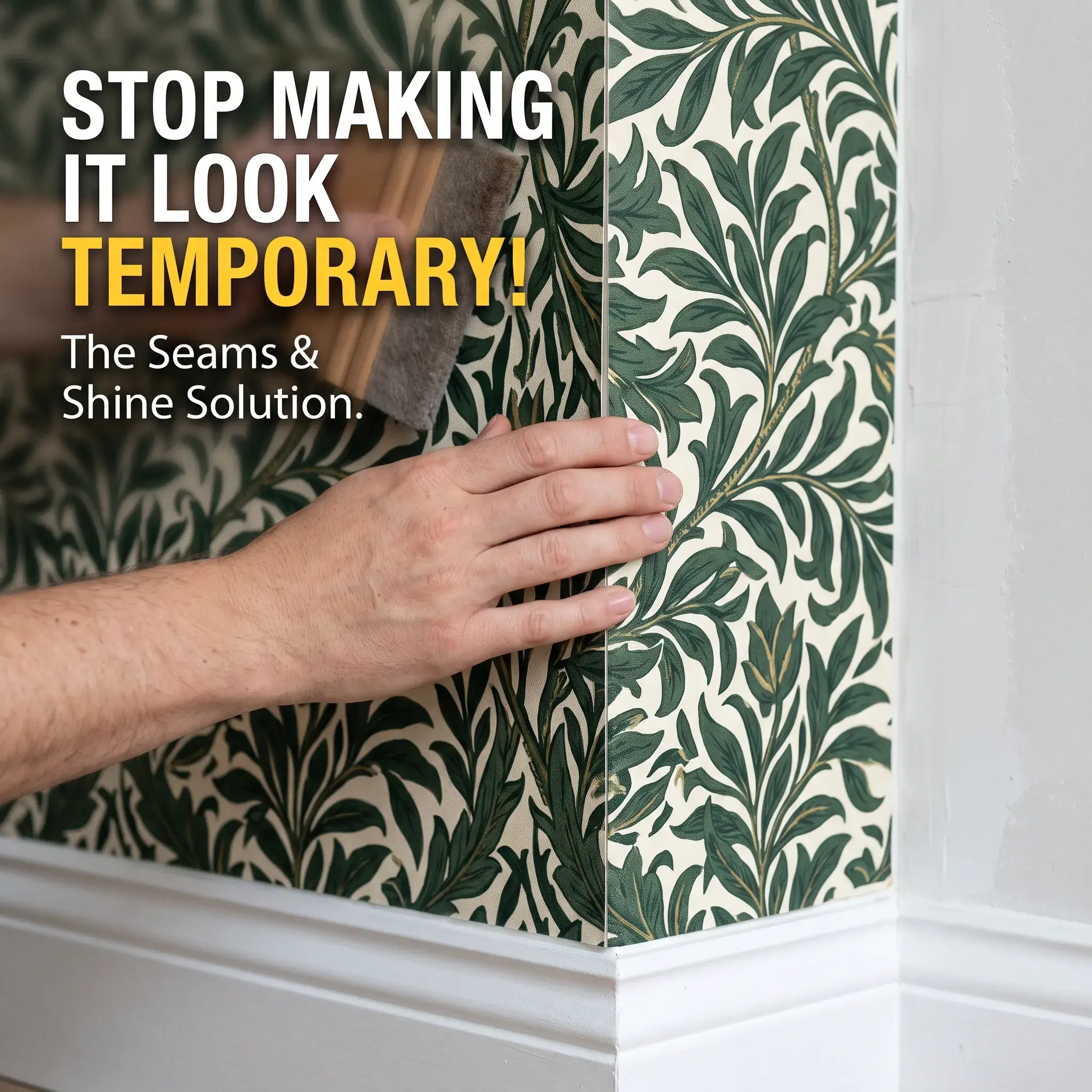
Most peel-and-stick wallpaper looks fake the moment sunlight hits it. Thin vinyl reflects room lights like plastic wrap. Short pattern repeats tile across the wall like cheap bathroom flooring. Within a month, shrinking edges expose white drywall gaps at every joint.
You do not need paste and water trays to get a custom look. Removable wallcoverings look permanent when they manage light reflection, hide panel joints, and respect room architecture.
Here are seven design concepts that trick the eye, followed by the material standards and installation rules that make them work.
7 Peel-and-Stick Patterns That Look Built-In
1. Hand-Troweled Faux Roman Clay in Warm Taupe
Flat walls show every bump beneath self-adhesive sheets. A pattern that mimics hand-applied Roman clay or limewash turns those surface variations into an asset. The subtle mineral gradations and tonal shifts break up light across the wall face. Because the pattern lacks sharp lines, vertical joints disappear completely.
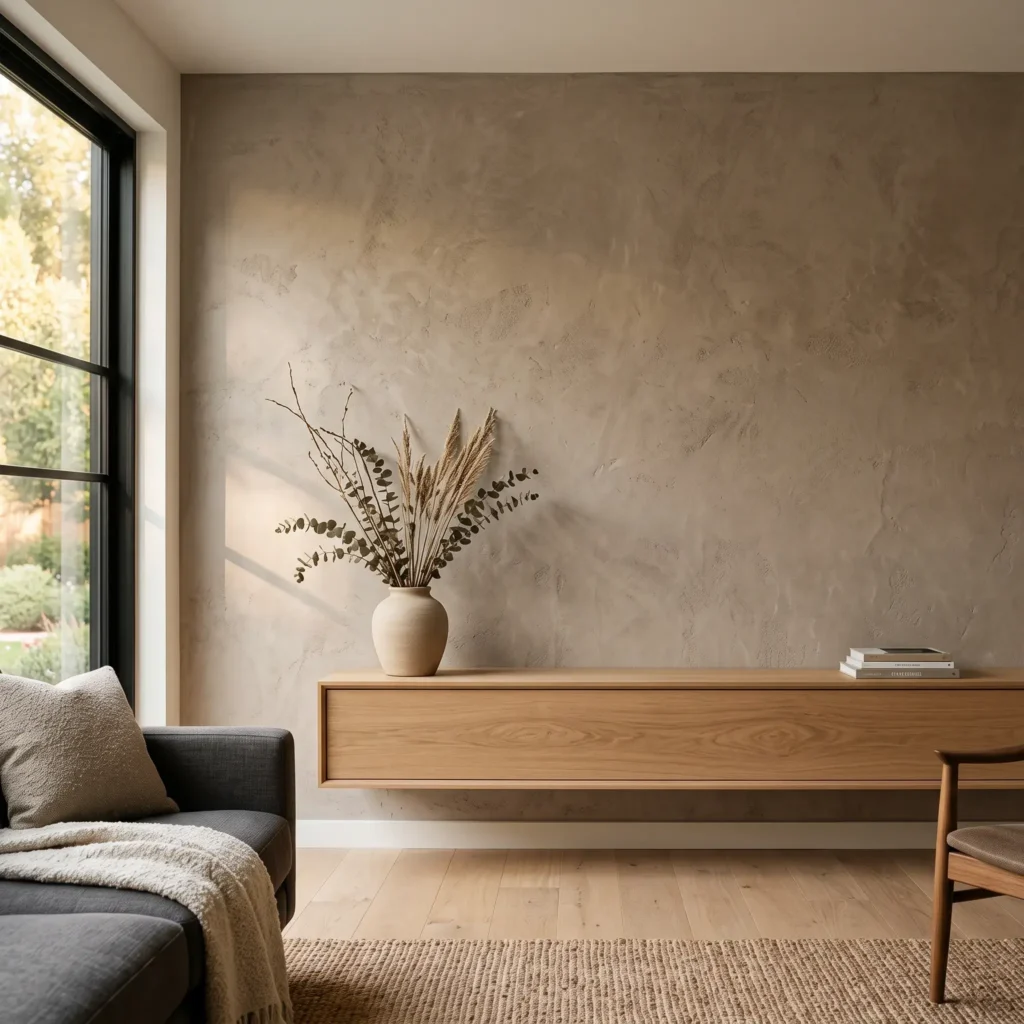
- Products Used in Concept:
- Wallpaper: Tempaper x Pure Salt Faux Roman Clay in Warm Sand (matte finish)
- Molding: Pre-primed wood baseboard painted in a matching warm beige
- Lighting: Ceramic cone wall sconces with warm 2700K bulbs
- Furniture: White oak floating console table
2. Archival William Morris Acanthus Foliage
Dense historical patterns confuse the human eye. When foliage interlocks across panel edges, the brain tracks the curving leaves instead of scanning for vertical seam lines. English Arts and Crafts motifs also carry historical authority. People associate these patterns with historic manor houses and pasted British paper, not temporary rentals.
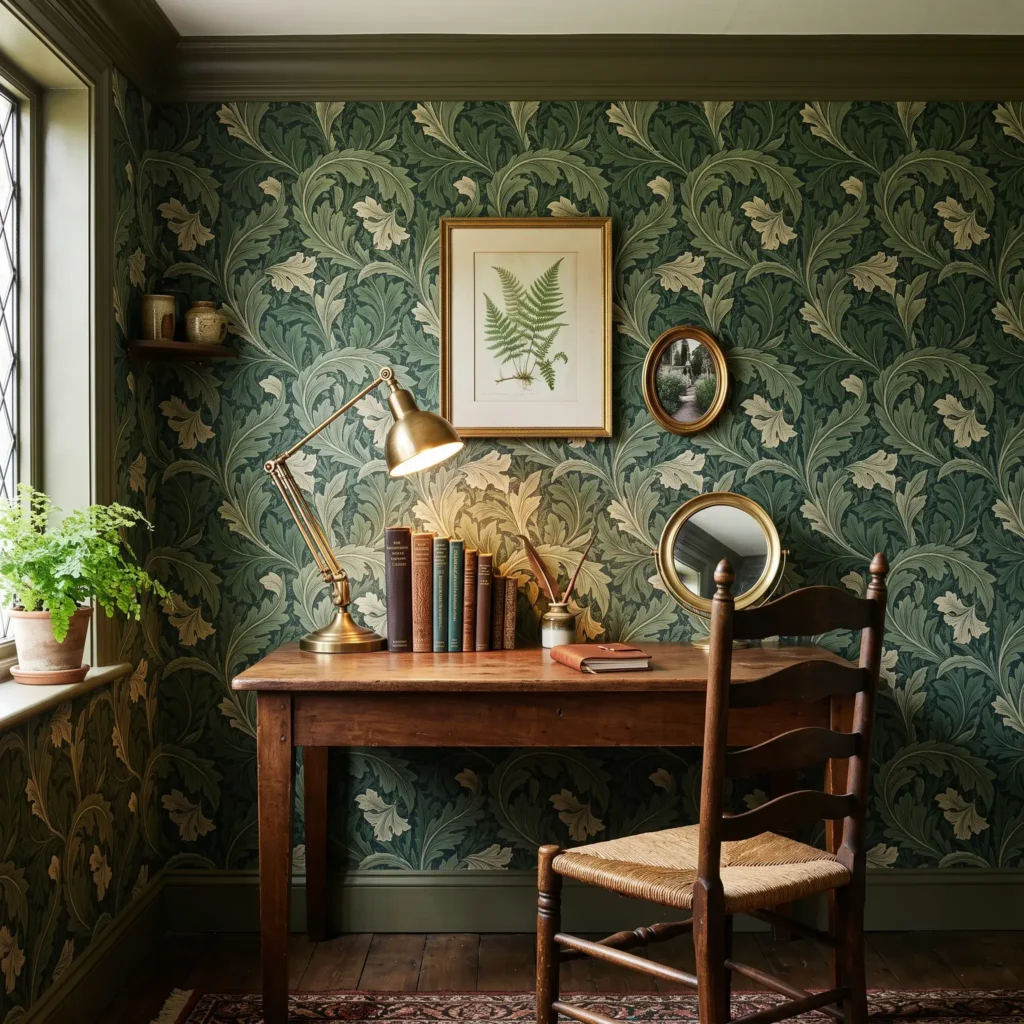
- Products Used in Concept:
- Wallpaper: York Wallcoverings Morris & Co. Acanthus Peel-and-Stick (Forest Green colorway)
- Millwork: Picture rail installed two inches below the ceiling, painted dark olive
- Hardware: Antiqued brass curtain rod with pleated linen drapery
- Furniture: Vintage walnut writing desk
Check out more Shopping Guides
3. Continuous Woodland Scenic Mural
Standard rolls repeat every 12 to 24 inches. That repetition tells the viewer they are looking at mass-produced roll goods. A full-scale scenic mural removes pattern repetition entirely. Printed across numbered panels, the continuous horizon and soft gradient trees create architectural depth that reads like hand-painted wall art.
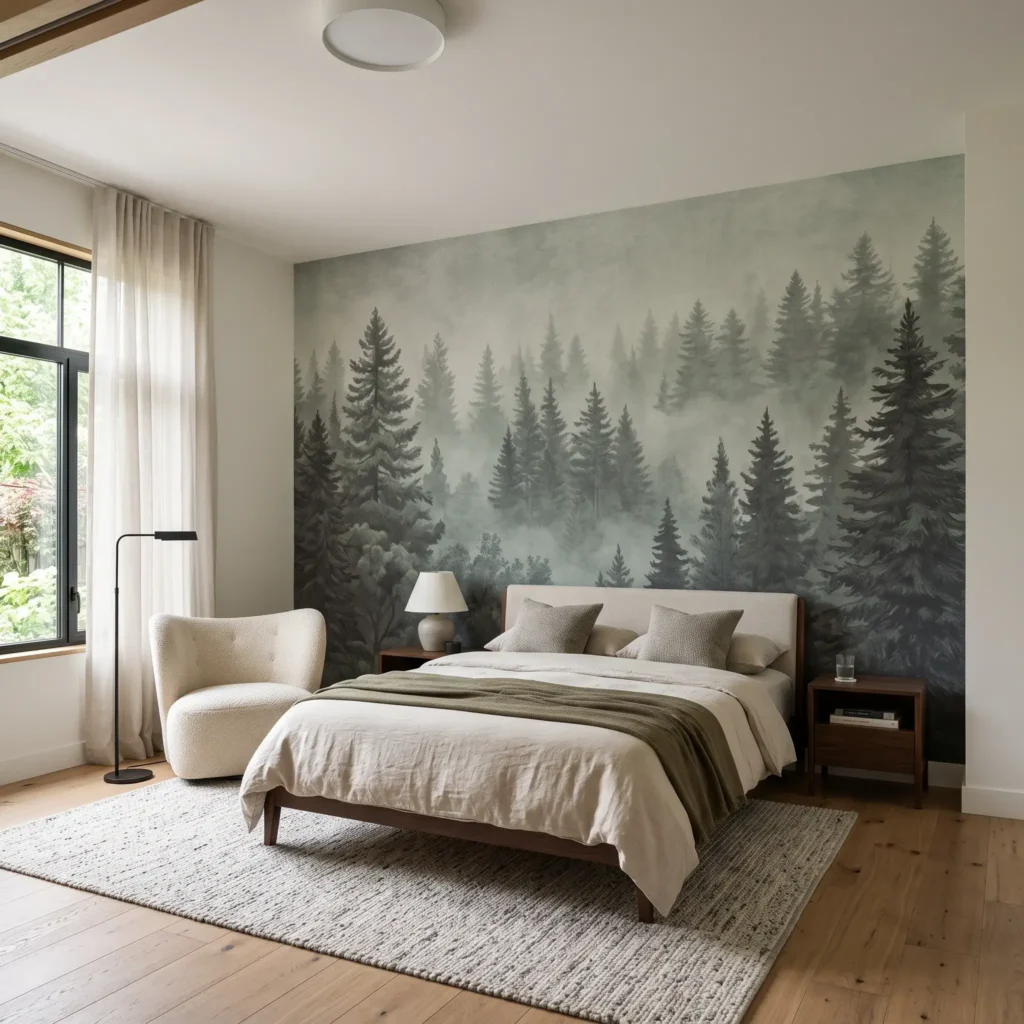
- Products Used in Concept:
- Wallpaper: Rebel Walls Bellewood Scenic Mural (matte non-woven substrate)
- Ceiling: Flat white ceiling paint meeting the top mural edge cleanly
- Furniture: Curved cream bouclé armchair
- Lighting: Matte black slender floor reading lamp
4. Faux Sisal Grasscloth with Tactile Horizontal Slubs
Authentic grasscloth made from natural jute or sisal never matches at the seams. Hand-tied plant fibers vary in thickness, making every panel seam visible by design. A high-quality peel-and-stick paper with a raised woven texture leans into this reality. Instead of looking like a bad seam, panel joints look like the natural breaks of artisan-woven textiles.
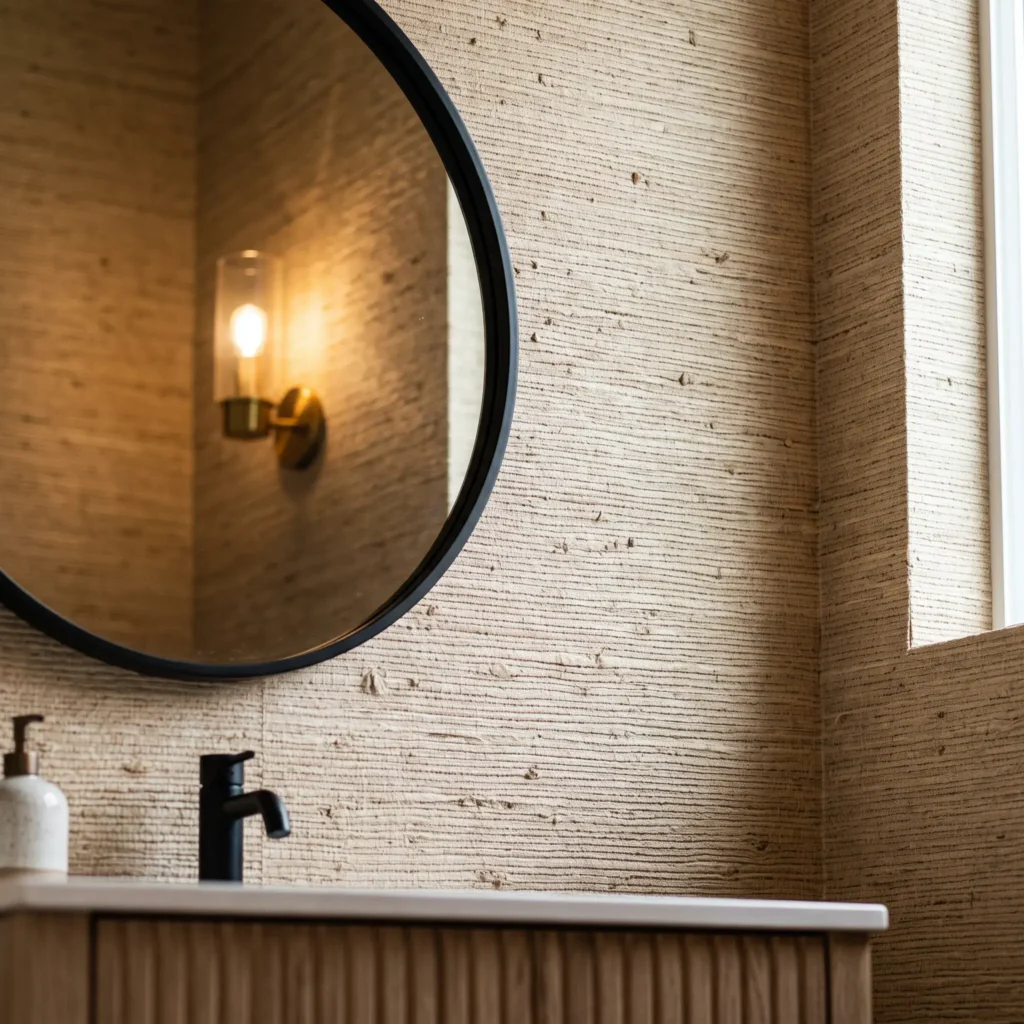
- Products Used in Concept:
- Wallpaper: Tempaper x Jeremiah Brent Hoffmann Sisal (textured embossed vinyl)
- Vanity: Floating fluted oak powder room vanity
- Fixtures: Matte black wall-mounted faucet and circular mirror
- Accents: Woven waffle-weave linen hand towel
5. Monochrome Toile de Jouy Set Inside Boiserie Frames
Letting removable wallpaper end abruptly on an open drywall corner immediately exposes its temporary nature. Mounting a classic French toile inside picture frame wall molding anchors the design. The wooden trim covers the outer edges, hides hand-trimmed borders, and transforms the paper into framed textile art.
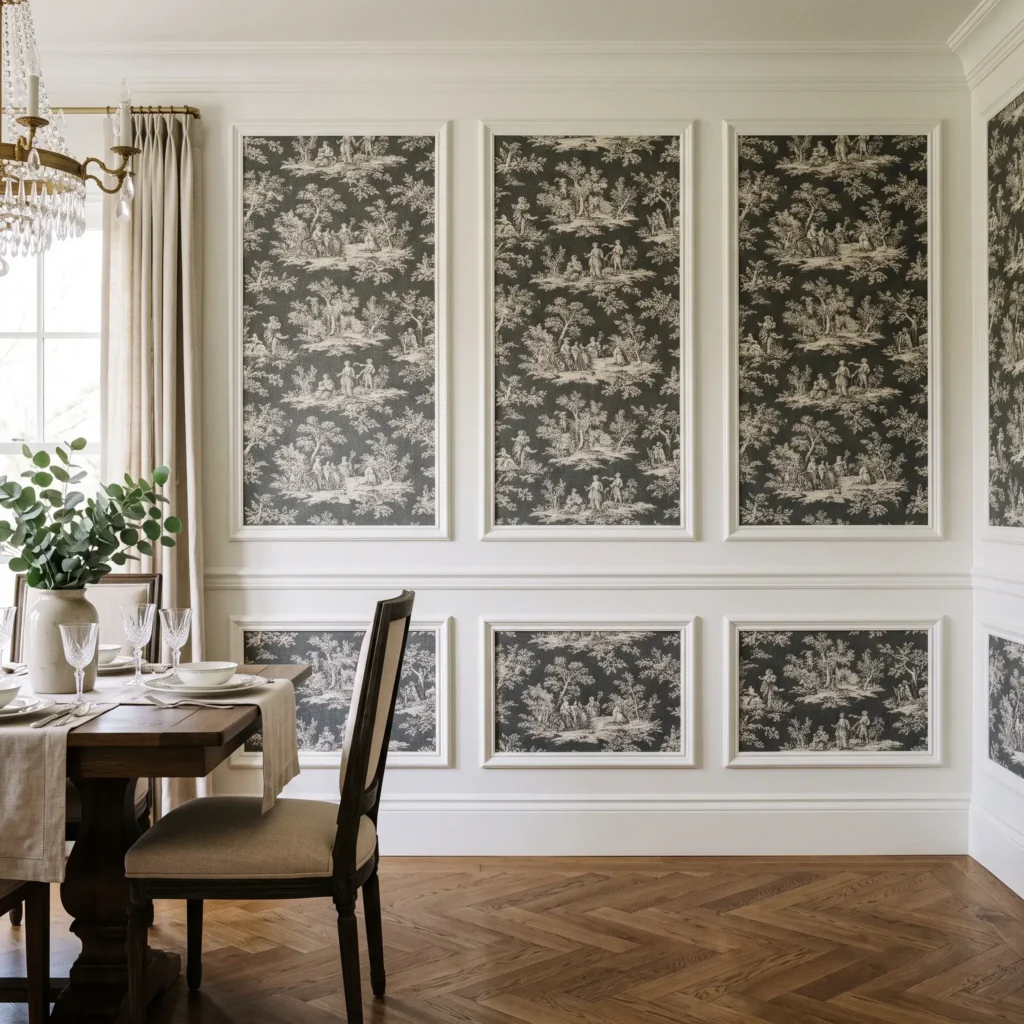
- Products Used in Concept:
- Wallpaper: Chasing Paper French Toile in Charcoal (woven poly-fabric)
- Wall Trim: Polyurethane picture frame molding painted in semi-gloss off-white
- Side Table: Small round marble-topped drink table with a brass base
- Flooring: Light European white oak herringbone wood floors
6. Archival Scalamandré Zebra Safari in a Moody Powder Room
High-contrast heritage prints command attention. The iconic 1945 Scalamandré jumping zebra pattern fills the field of view with dynamic motion. Because the graphic elements carry so much visual energy, the viewer focuses on the design rather than checking the seams. Pairing this pattern with saturated paint completes the look.
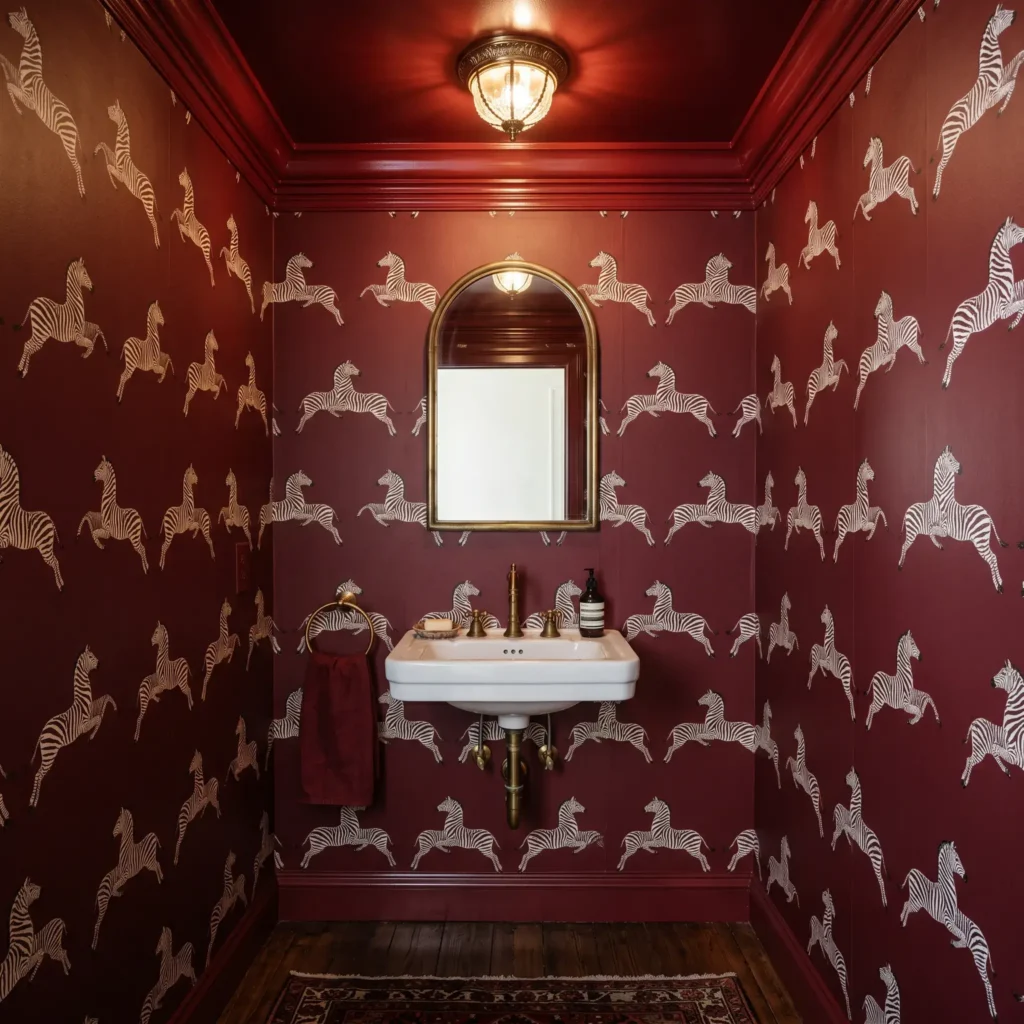
- Products Used in Concept:
- Wallpaper: Scalamandré Zebra Safari by NuWallpaper in Masai Red (embossed finish)
- Trim and Ceiling: Benjamin Moore deep wine red paint in satin enamel
- Sink: Compact wall-hung white porcelain basin with unlacquered brass taps
- Mirror: Vintage brass arched wall mirror
7. Painterly Ticking Stripe on Woven Fabric
Machine-printed geometric patterns require laser-straight lines. If your ceiling dips by a quarter inch, crisp stripes drift out of plumb and expose crooked drywall. A hand-drawn ticking stripe with soft, watercolor edges forgives minor wall runout. The eye reads the soft variations as intentional artisan textile work.
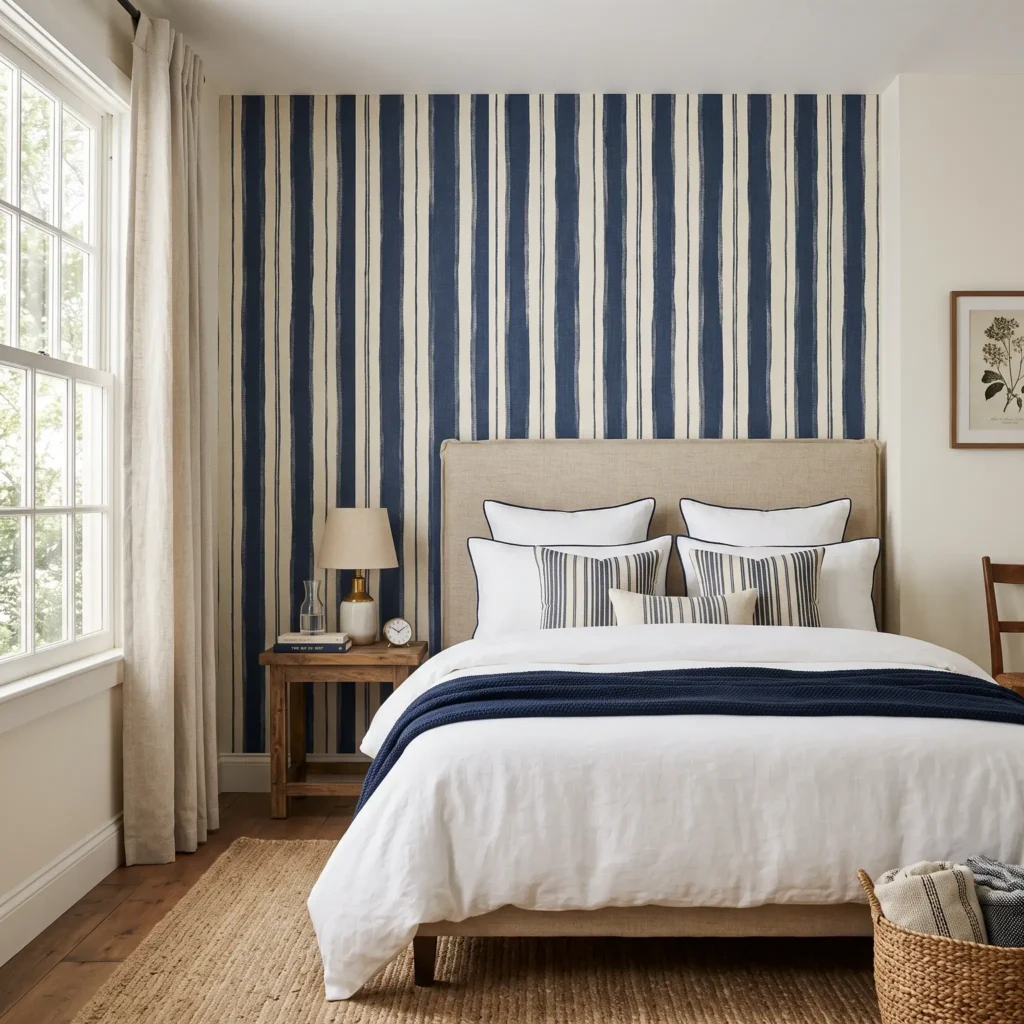
- Products Used in Concept:
- Wallpaper: Chasing Paper Classic Ticking Stripe in Navy (poly-woven textile)
- Bedding: Washed flax linen duvet cover in slate blue
- Headboard: Upholstered natural oatmeal linen headboard
- Lighting: Swing-arm brass reading lamp mounted to the adjacent wall
Why Cheap Removable Wallpaper Looks Fake
Self-adhesive paper fails visually for two reasons: poor material choice and optical repetition.
The Problem with Specular Glare
Cheap entry-level papers use thin calendered PVC vinyl. This plastic film acts like a mirror. When sunlight or recessed ceiling cans hit the wall, the surface produces hot spots and glare.
True high-end wallcoverings use clay coatings, non-woven wood pulp, or woven polyester. These materials scatter light evenly across the wall face, creating a chalky, dead-matte finish that absorbs light naturally.
Plasticizer Migration and Shrinkage
Monomeric PVC contains liquid plasticizers that keep the vinyl flexible. Over time, warm indoor temperatures cause these plasticizers to evaporate.
As the material dries out, it shrinks. A panel that aligned tightly on day one will pull back by one millimeter over three months. That tiny gap exposes a bright white vertical line of bare drywall.
The Wallpaper Grid Trap
When a pattern repeats every 12 inches, the human brain spots the grid immediately. Your visual cortex registers the recurring shapes at eye level and flags the surface as cheap roll goods. Large pattern drops, scenic murals, and organic slubs break this visual loop.
Substrate Comparison: Choosing the Right Base
Before looking at patterns, check the product specifications. The base material matters far more than the brand name.
| Substrate | Material Base | Finish and Sheen | Dimensional Stability | Best Room Application |
| Poly-Woven Fabric | 100% Woven Polyester Textile | Dead-matte; zero glare | Superior; zero drying shrinkage | Living rooms, bedrooms, dining spaces |
| Non-Woven Fiber Mat | Wood pulp and polyester blend | Velvet matte; paper feel | High; resists tensile stretching | Formal dining rooms, libraries, home offices |
| Heavy Canvas Vinyl | Polymeric vinyl with deep emboss | Low-luster eggshell | Moderate; resists moisture | Powder rooms, kitchens, entry mudrooms |
| Calendared PVC | Monomeric thin vinyl film | Satin to high-gloss plastic | Poor; contracts and curls at seams | Short-term staging, craft projects |
Look for substrates weighing between 8 and 13 ounces per linear yard (roughly 250 to 370 GSM). Heavy papers bridge minor drywall bumps and block dark paint from bleeding through from behind.
Professional Installation Steps for Invisible Seams
Even archival Morris & Co. prints look like contact paper if installed with sloppy overlaps or misaligned edges. Professional installers use four specific steps to guarantee a permanent finish.
Step 1: Allow Fresh Wall Paint to Cure
Never apply adhesive paper over paint dried for only a few days. Modern latex paint off-gasses solvents for 21 to 28 days.
If you seal those solvents behind adhesive film, trapped gases create bubbles and destroy the glue. Let your walls cure for a full month before installing paper. Walls also need a Level 4 or Level 5 smooth drywall finish.
Step 2: Paint the Seam Lines
Before peeling the backing, mark your plumb lines where each panel seam will land. Roll a two-inch vertical band of dark acrylic paint directly down that line, matching the background color of your wallpaper.
If the paper shrinks a fraction of a millimeter during winter humidity drops, the wall behind matches the paper. You will never see a flashing white gap.
Step 3: Use the Double-Cut Splice Technique
Most DIY instructions tell you to overlap panels by half an inch. Leaving that ridge creates a heavy vertical shadow line that screams temporary installation. Instead, use the double-cut method:
- Overlap the two panels by three-quarters of an inch to match the pattern.
- Place a rigid stainless steel straightedge down the center of that overlap.
- Draw a fresh 30-degree carbon steel snap-off knife through both layers of paper in one continuous cut.
- Remove the outer strip of waste paper.
- Lift the edge slightly to peel out the inner waste strip from underneath.
- Smooth both panels back down with a felt-edge squeegee.
The two cuts match down to the micron, creating a flat butt joint with zero ridge line. Snap off a fresh razor blade after every single vertical cut to keep edges clean.
Step 4: Split Your Inside Corners
Rooms are rarely square. If you try to wrap a single sheet through an inside corner, wall tension will pull the paper loose within weeks.
Cut the panel so it turns the corner by only one-quarter of an inch onto the adjacent wall. Smooth it firmly into the angle. Next, project a fresh laser plumb line on the new wall and start your next panel directly in the corner, overlapping that small quarter-inch tab. This isolates settling movement between wall planes.
Architectural Framing and Color Drenching
A luxury wallcovering should belong to the room, not float on an isolated drywall partition. Use surrounding millwork to anchor the installation.
Color Drenching the Trim
High contrast between dark wallpaper and builder-grade white baseboards breaks the illusion instantly. Match your trim paint directly to the secondary background color of the wallpaper.
Paint the baseboards, door casings, window trim, and crown molding in a durable satin enamel. The unified color story integrates the paper directly into the architecture of the home.
Picture Frame Molding (Boiserie)
If you live in a rental apartment with restrictions against wall modification, install lightweight polystyrene picture frame molding using heavy-duty removable mounting strips.
Hang your peel-and-stick paper inside the framed boxes. The raised profile of the molding covers your cut paper edges and mimics 18th-century French architectural paneling.
Frequently Asked Questions
Does peel-and-stick wallpaper damage drywall upon removal?
Peel-and-stick paper will not damage drywall if the wall was primed and painted correctly. The drywall beneath must have a sound, cured coat of satin or semi-gloss paint. If you install removable paper over chalky builder-grade flat paint or unprimed drywall repairs, the adhesive can pull off the top paper face of the drywall when removed.
How do you hide visible vertical seams in peel-and-stick paper?
To hide vertical seams, use the double-cut splice method instead of overlapping panels. Paint a two-inch vertical stripe on the wall behind each seam matching the paper’s darkest tone. Finally, choose patterns with dark grounds or fibrous, organic textures like faux grasscloth or dense acanthus leaves.
Can you put peel-and-stick wallpaper in a bathroom with a shower?
You can use peel-and-stick wallpaper in a full bathroom if you select heavy, canvas-textured polymeric vinyl and run a bathroom exhaust fan during showers. Avoid poly-woven fabric papers in wet zones, as moisture can soak through the woven fibers and weaken the adhesive backing over time.
Why does peel-and-stick wallpaper pull apart and shrink after a few weeks?
Adhesive vinyl shrinks because the liquid plasticizers in the film evaporate into warm indoor air, causing the material to contract. Seasonal drops in indoor humidity also cause cheap vinyl films to tighten and pull away from panel joints. Using poly-woven fabric or dimensionally stable non-woven paper prevents this issue.
What is the difference between vinyl and woven peel-and-stick wallpaper?
Vinyl wallpaper uses thin calendered PVC plastic film that reflects light and shrinks over time. Woven peel-and-stick wallpaper uses a woven polyester fabric backing. Woven fabric offers a dead-matte finish, breathes well, does not stretch during installation, and will not shrink after application.
The difference between a cheap sticker and a permanent wallcovering comes down to light and scale. Focus your search on heavy, non-woven and poly-woven papers that scatter light naturally. Choose archival motifs, continuous landscape murals, or slubbed weaves that break up straight lines. Frame the panels with matching paint, take your time with the double-cut method, and no one walking into the room will ever guess your walls are temporary.