
Tired of Heavy Winter Rooms? 8 Spring Home Decor Ideas That Work

Winter leaves homes feeling dark, heavy, and closed in. Thick wool throws collect dust. Dense fabrics block natural light. Many seasonal decorating guides suggest filling that void with cheap plastic accents and neon pastels.
True seasonal styling works differently. It is an intentional reset. You remove winter weight, let daylight travel across bare surfaces, and introduce living botanical elements.
The following eight practical concepts show you how to refresh your living space for spring using durable materials, intentional negative space, and grounded seasonal colors.
1. The Butter Yellow and Raw Linen Living Room Reset
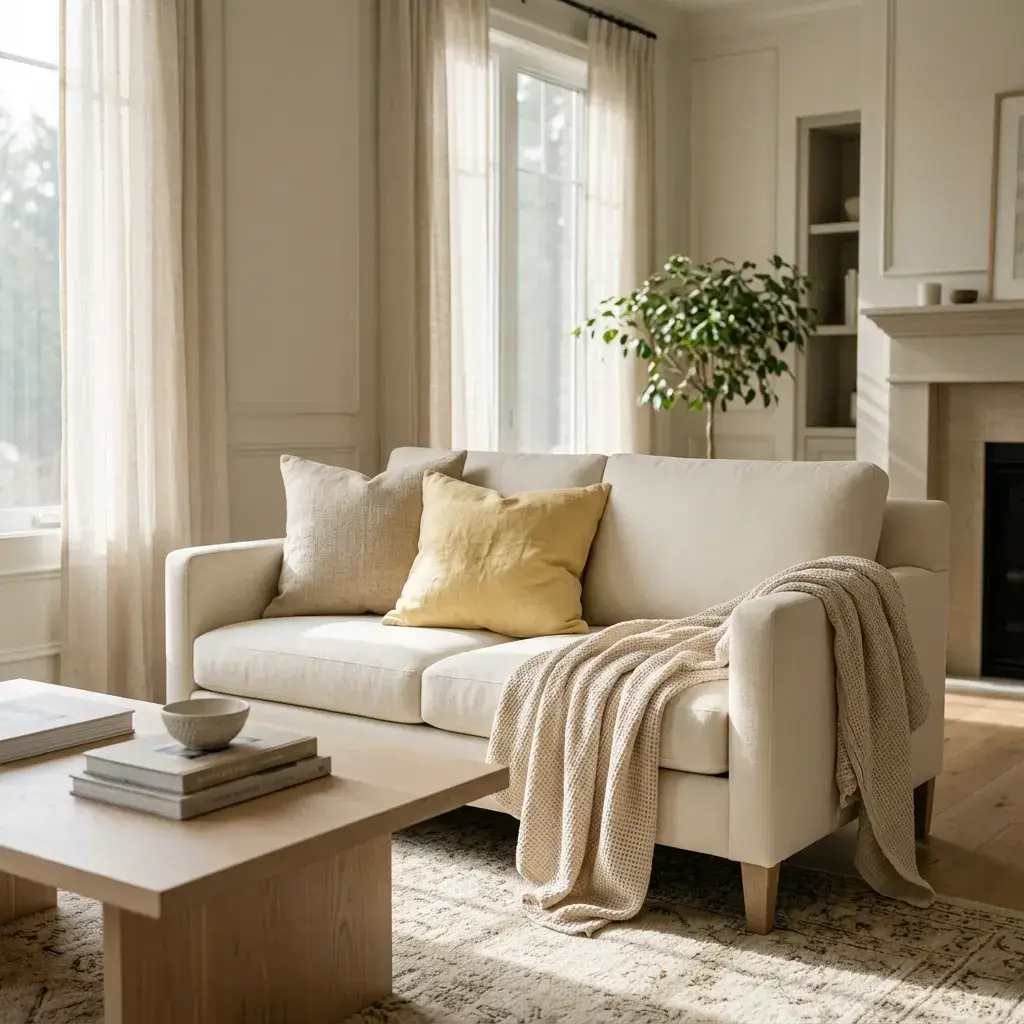
Replace heavy velvet cushions and dark wool blankets with lightweight, breathable textiles. Butter yellow works as a warm, light-reflecting neutral rather than a bright accent. Pair it with soft oat and chalk-white slubbed linen to brighten seating areas without making the room feel sterile.
The Pillow and Throw Formula:
- Layer two 22×22 neutral linen base pillows at the back.
- Place one 18×18 butter yellow accent pillow in front.
- Drape one lightweight open-weave waffle blanket loosely over the sofa arm.
- Keep the surrounding coffee table clear of clutter so light reaches the seating area.
How to Style It:
- Strip dense covers from existing down inserts.
- Slide on washed French linen covers in pale buttermilk and warm stone tones.
- Fold a loose-weave slub cotton throw over one sofa arm to maintain comfort during cool spring mornings.
- Leave adjacent side tables clear of unnecessary decorative objects.
Key Products to Source:
- Washed European flax linen pillow covers in Butter Yellow (18×18 inches)
- Slubbed cotton cushion covers in Chalk White (22×22 inches)
- Open-weave cotton waffle throw blanket in Natural Oat
- Natural white oak side table with exposed wood grain
2. Architectural Forcing Branches in a Weighted Stoneware Urn
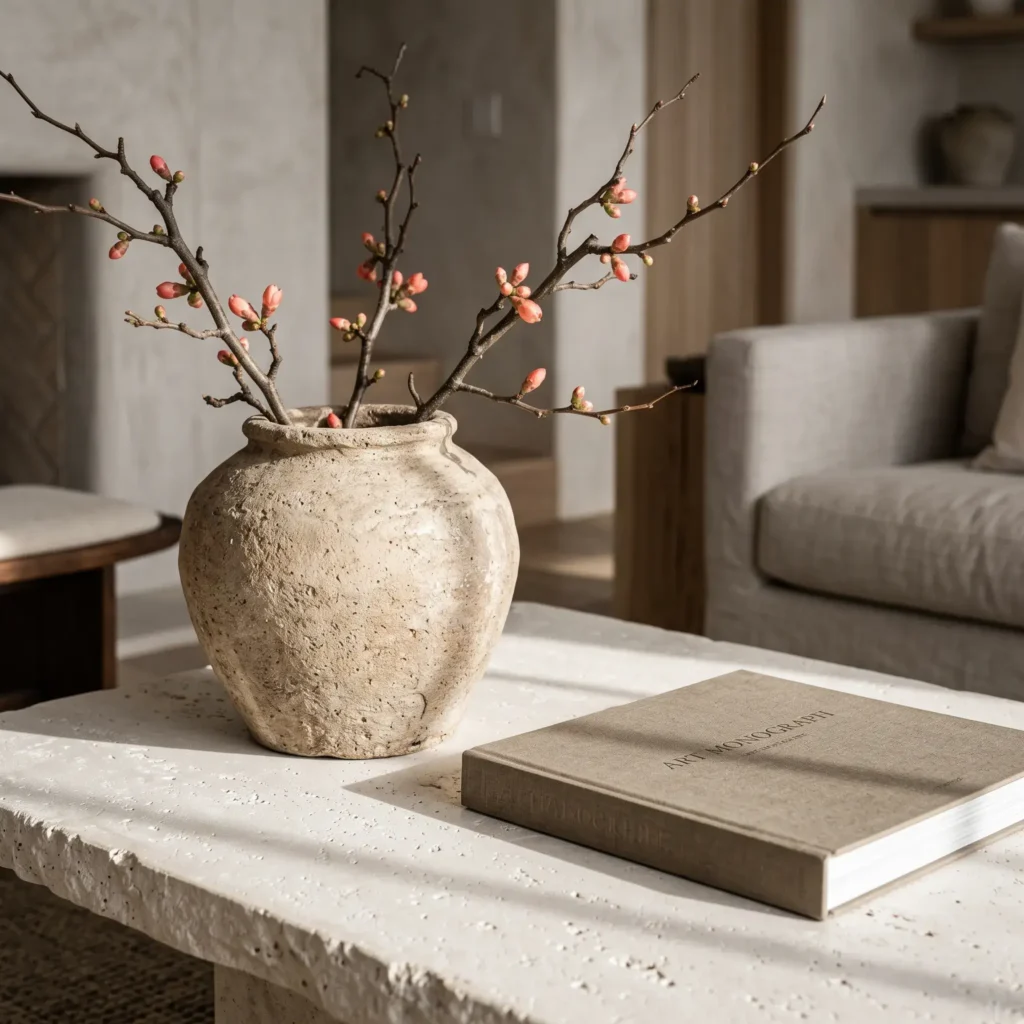
Skip small, dense bouquets on central tables. A single branch arrangement adds height and architectural interest. It celebrates the start of the season using sculptural, bare wood stems with opening buds.
The Height Ratio:
- Keep your branch height roughly 1.5 times the total height of your urn.
- Strip all foliage and side shoots from the bottom four inches of each stem.
- Position the urn on one side of your table rather than dead center.
How to Style It:
- Select three to five branches of flowering quince, forsythia, or saucer magnolia.
- Cut each branch base at a 45-degree angle under water.
- Set the stems into an unglazed, heavy ceramic urn filled with room-temperature water.
- Position the urn on one side of your coffee table to maintain sightlines across the room.
Key Products to Source:
- Hand-thrown stoneware vase with unglazed, textured matte finish (10 to 12 inches tall)
- Fresh-cut flowering quince or saucer magnolia branches
- Heavy brass floral shears
- Solid travertine display saucer
Check out more Spring Decor Ideas
3. Layered Threshold Entryway with Coir and Awning Stripes
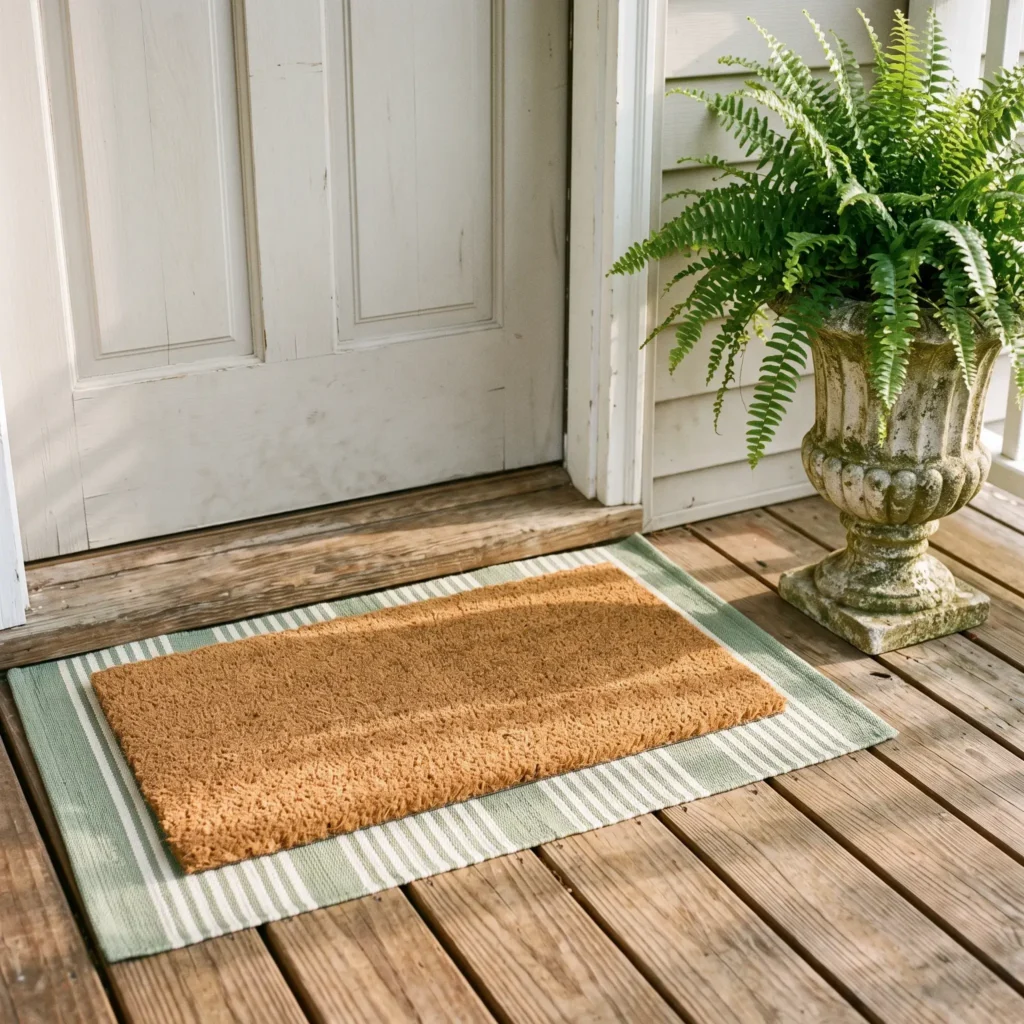
The transition from outside sets the tone for your whole home. Replace winter mud mats with natural coir and an outdoor-safe striped flatweave base. This combination protects interior floors while adding clean visual lines.
The Rug Stacking Rule:
- Base Layer: Weather-resistant flatweave rug (24×36 or 30×48 inches) with sage or charcoal stripes.
- Top Layer: High-density natural coconut coir doormat (18×30 inches) placed dead center.
- Side Accent: One large composite stone planter placed beside the door frame.
How to Style It:
- Lay down a thin, water-safe flatweave rug with soft charcoal or sage awning stripes.
- Center a thick, high-density plain coir mat directly on top.
- Place a fluted cast stone planter on the latch side of the door.
- Plant the container with cold-hardy Boston ferns or emerging boxwoods.
Key Products to Source:
- High-density plain natural coconut coir doormat (18×30 inches)
- Weather-resistant flatweave accent rug with sage green stripes (24×36 or 30×48 inches)
- Fluted composite stone urn planter in antique gray
- Potted upright Boston fern
4. Tripartite Asymmetrical Console Styling
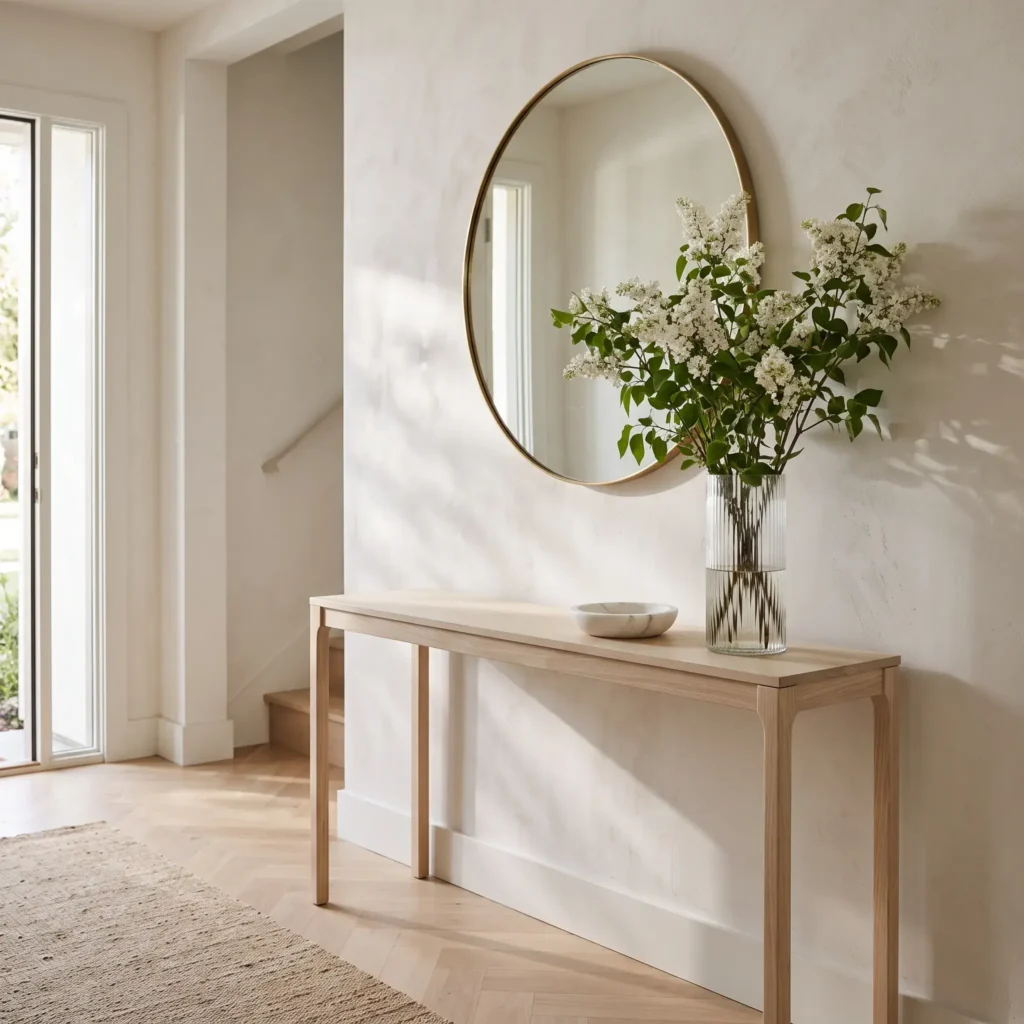
Entryway tables often collect mail and keys during winter. Clear the surface completely. Rebuild it using a three-point balance system that balances height, light reflection, and small storage.
The Three-Point Placement:
- Left Side: Large round wall mirror mounted slightly off-center to catch outdoor daylight.
- Right Side: Tall fluted clear glass cylinder vase holding seasonal lilacs or leafy branches.
- Center / Low Space: Shallow carved marble or travertine dish to organize everyday keys and mail.
How to Style It:
- Hang or lean a round mirror slightly off-center to bounce natural light down the hallway.
- Place a tall fluted glass vase on the opposite side to balance the mirror.
- Fill the vase with foraged leafy branches or white lilacs.
- Anchor the middle space with a low marble catchall tray for daily essentials.
Key Products to Source:
- Thin-frame blackened iron or warm brass round wall mirror (30-inch diameter)
- Fluted clear glass cylinder vase (11 inches tall)
- Carved white Carrara marble shallow catchall dish
- Slim entryway console table in bleached oak or natural ash
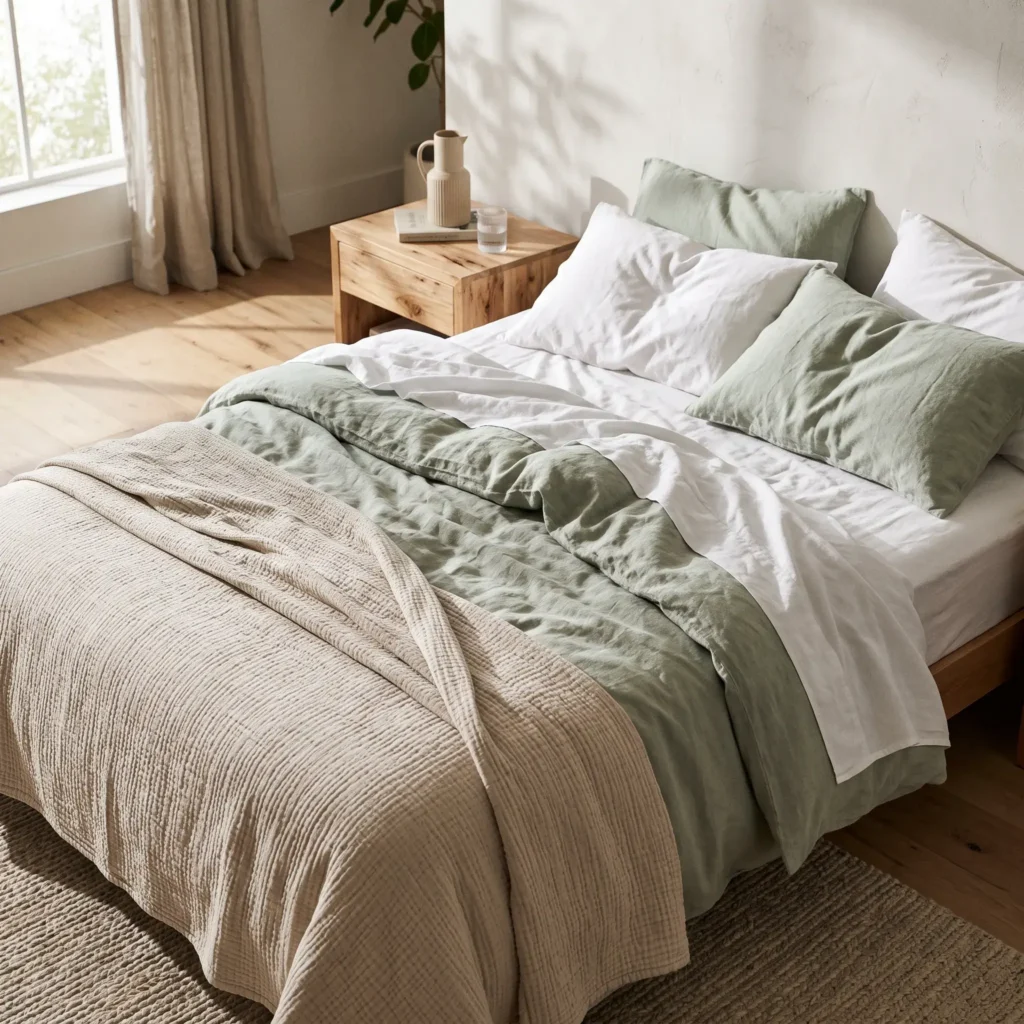
5. Breathable Three-Tier Primary Bedding Assembly
Heavy winter down duvets trap excess heat as temperatures rise. Switch to a layered system that regulates temperature while introducing soft, rumpled spring texture.
The Bedding Stack:
- Base Sheet: Cool 300-thread-count cotton percale fitted sheet in crisp chalk white.
- Middle Cover: Washed European flax linen duvet in soft sage green.
- Foot Coverlet: Textured slub cotton or waffle blanket folded across the bottom third of the bed.
How to Style It:
- Fit the mattress with cool, matte cotton percale sheets in chalk white or oat.
- Encase a medium-weight insert in a washed linen duvet cover in soft sage.
- Fold a slub-cotton coverlet across the bottom third of the mattress.
- Use two standard sleeping pillows flat, topped with two linen shams matching the duvet.
Key Products to Source:
- 100% long-staple cotton percale sheet set in Chalk White
- Pure European flax washed linen duvet cover in Sage Green
- Waffle-weave lightweight cotton coverlet in Soft Sand
- Ceramic bedside carafe with integrated tumbler
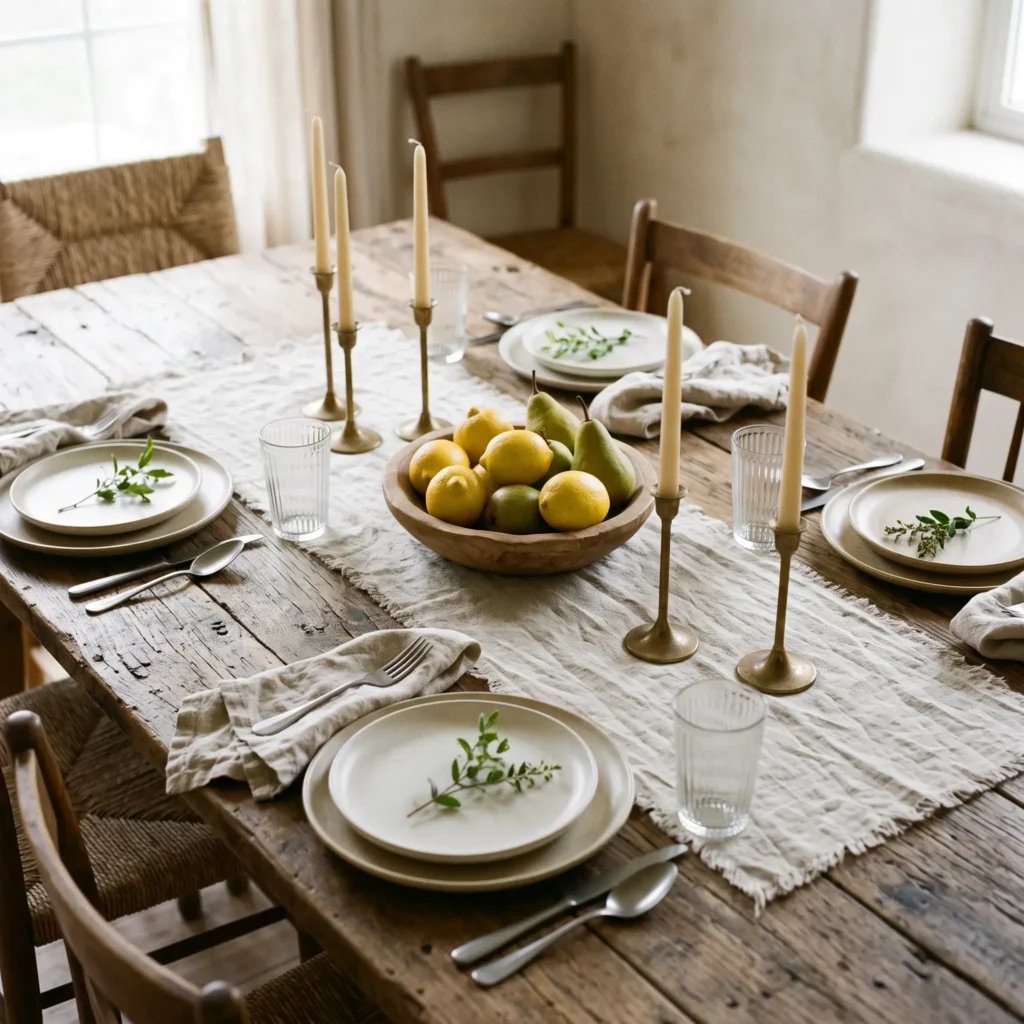
6. Raw-Hem Linen Runner and Citrus Centerpiece Tablescape
Formal tablecloths can feel stiff and heavy for spring dining. Expose your dining table surface using a narrow runner. Then, anchor the center with fresh fruit and low candlelight to encourage conversation.
The Centerpiece Arrangement:
- Center Spine: Narrow, unpressed natural flax linen runner with raw fringe edges.
- Middle Anchor: Low, hand-carved paulownia wood bowl filled with unpeeled green pears and fresh lemons.
- Sides: Slender unlacquered brass candlesticks arranged at varied heights.
How to Style It:
- Lay a narrow, unpressed linen runner down the center of the table, leaving the wood edges visible.
- Place a shallow carved wood dough bowl in the middle.
- Fill the bowl with unpeeled green pears and whole lemons.
- Place antique brass taper candlesticks of varying heights around the fruit bowl.
- Use clear recycled glass tumblers and simple unglazed ceramic plates at each seat.
Key Products to Source:
- Raw-hem European linen table runner in Natural Flax (14×90 inches)
- Hand-carved paulownia wood shallow pedestal bowl
- Solid unlacquered brass thin taper candle holders (assorted heights)
- Pure beeswax ivory taper candles
- Ribbed clear glassware tumblers
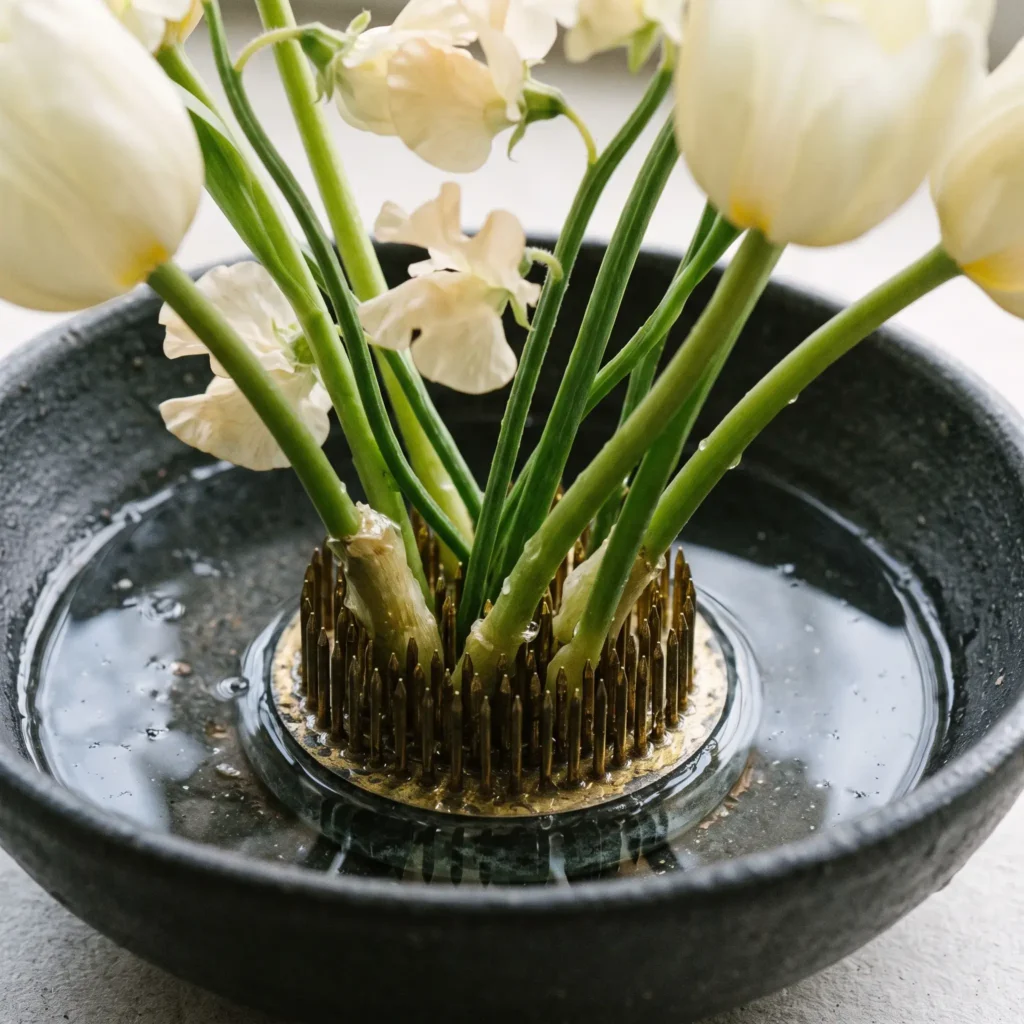
7. Japanese Kenzan Minimalist Floral Study
Traditional floral foam harms the environment and packs flowers too close together. A Japanese kenzan, or brass flower frog, lets you build an airy, structural display using just a few stems.
The Placement Technique:
- Foundation: Heavy brass kenzan placed inside a wide, shallow ceramic dish.
- Water Level: One to two inches of clear, cold water covering the pins.
- Stem Geometry: Three to five tulips or ranunculus cut at varying heights and angled outward.
How to Style It:
- Place a heavy brass kenzan inside a shallow ceramic dish or soapstone tray.
- Pour one inch of cold water into the container.
- Cut tulip or ranunculus stems to different heights using clean diagonal cuts.
- Press the stem ends firmly onto the brass pins at varied angles.
- Leave open space between the blooms so each flower stands out clearly.
Key Products to Source:
- Solid brass Japanese kenzan flower frog (2.5-inch diameter)
- Hand-thrown shallow stoneware bowl with reactive glaze
- Fresh French tulips or mixed ranunculus stems
- Traditional Japanese Ikebana shears
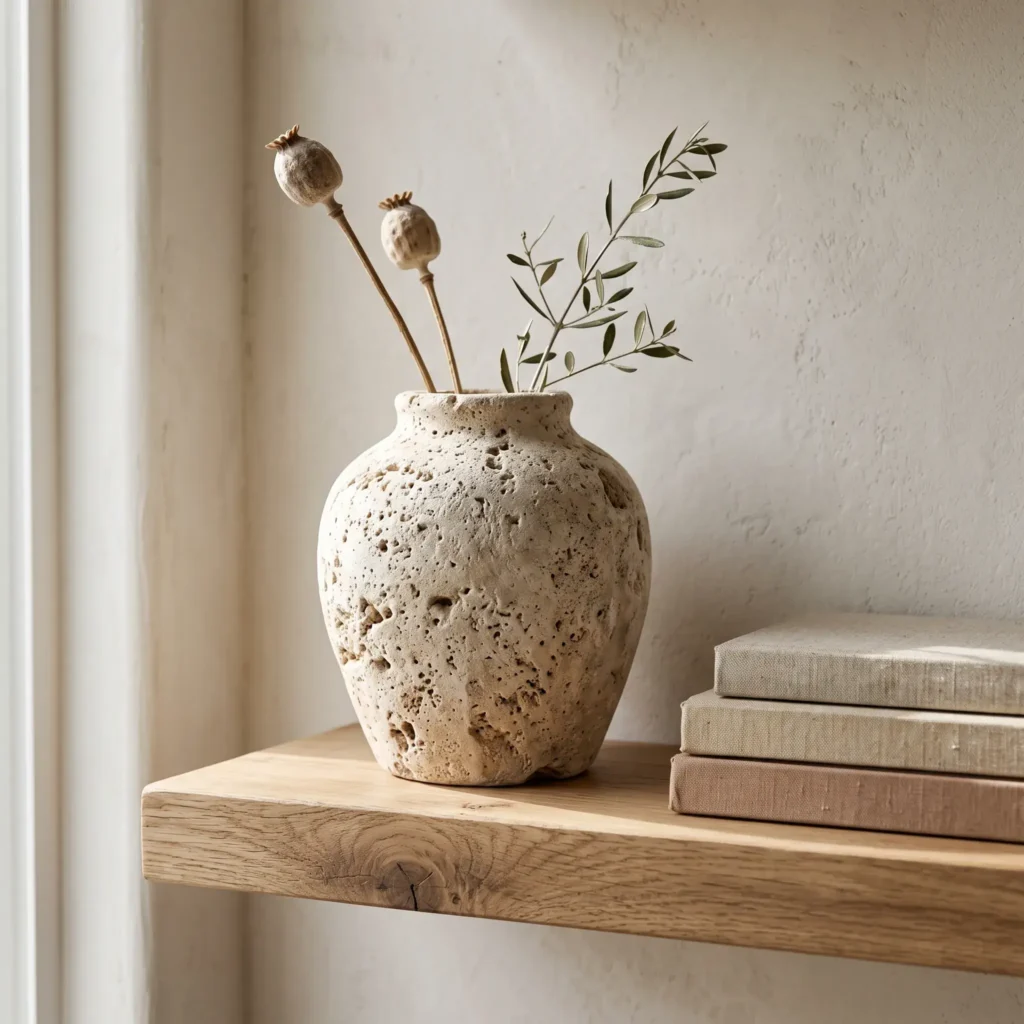
8. Upcycled Faux-Stone Textured Vessel Vignette
Transform thrifted glass jugs or cheap vases into textured, stone-look containers without buying expensive pottery. A simple mixture of paint and baking soda creates a durable, matte mineral finish.
The Application Process:
- Surface Prep: Clean glass with rubbing alcohol and scuff with 220-grit sandpaper.
- Mixing: Combine two parts neutral latex paint with one part baking soda.
- Layering: Brush one base coat horizontally. Stipple a second coat with a sea sponge for surface pitting.
How to Style It:
- Clean a smooth glass vase with rubbing alcohol and scuff it lightly with 220-grit sandpaper.
- Mix two parts neutral beige latex paint with one part baking soda until it forms a light paste.
- Brush on the base coat and let it dry for one hour.
- Dab on a second coat using a natural sea sponge to build texture and pitting.
- Let it cure for 24 hours.
- Slide a smaller glass container inside to hold water, protecting the outer finish from moisture.
Key Products to Source:
- Upcycled thrifted glass vessel or wide-mouth bottle
- Matte interior latex paint sample in Warm Bone or Limewash Taupe
- Pure arm and hammer baking soda
- Natural sea wool sponge for stippling
- 220-grit fine sanding sponge
The Seasonal Color and Material Palette
Successful seasonal styling uses subtle shifts in material and color temperature. Instead of bright seasonal accents, choose colors inspired by the natural transition from cold ground to early green shoots.
| Hue Family | Core Colors | Matching Materials | Ideal Room Application |
|---|---|---|---|
| Grounded Greens | Sage, Moss, Celadon | White oak, unlacquered brass | Accent chairs, perimeter curtains |
| Warm Luminaries | Butter yellow, Oat | Travertine, cane webbing, raw linen | Accent pillows, table ceramics |
| Earth Minerals | Dusty peach, Terracotta | Matte earthenware, blackened iron | Decorative urns, small accent rugs |
| Light Neutrals | Chalk, Bone, Warm Taupe | Jute, slubbed cotton, open-pore ash | Area foundations, primary sofa covers |
Butter yellow works well as a replacement for cool gray or stark white. It captures the look of low-angled spring sunlight. Use it in small doses: a single cushion, a linen napkin, or a ceramic bowl.
Pair these warm tones with porous, tactile surfaces. Trade smooth plastic and lacquered tables for natural travertine, honed limestone, and pale woods with visible grain. These surfaces soften incoming daylight and make rooms feel grounded.
Botanical Science: The Mechanics of Cut Tulips and Branch Forcing
Living branches and bulb flowers provide an immediate connection to the changing season. Understanding how these plants grow indoors helps your displays last longer.
The Science Behind Drooping Tulips
Tulips continue growing even after you cut them. They can stretch more than an inch in a vase. This growth happens through cell division directly beneath the flower head.
They also react to gravity and light, causing stems to curve and lean toward windows. To keep them upright and fresh:
- Cut stems at a sharp 45-degree angle under running water.
- Use only two to three inches of clean, cold water in the vase. Deep water softens the stem tissue and accelerates rapid growth.
- Prick a small sewing needle horizontally through the stem half an inch below the bloom. This tiny puncture causes minor stress that slows cellular elongation, helping the bloom stay upright.
- Change the water and trim a quarter-inch off the stems every two days.
Woody Branch Forcing Schedule
Forcing lets you bring flowering branches indoors to bloom weeks before they open outside.
Harvest branches on a morning when outside temperatures rise above freezing. Pick branches with plump, round flower buds rather than slim leaf buds. Cut the stem bases at an angle, then carve a one-inch vertical slit up the center of the base to help the branch drink water. Never crush the ends with a hammer. Broken wood fibers invite bacteria that foul the water.
| Plant Species | Best Harvest Date | Indoor Bloom Time | Expected Vase Life |
|---|---|---|---|
| Forsythia | Late January | 7 to 14 days | 10 days |
| Flowering Quince | Early February | 14 to 21 days | 14 days |
| Saucer Magnolia | Mid February | 21 to 28 days | 7 to 10 days |
| Flowering Cherry | Late February | 14 to 21 days | 10 days |
| Dogwood | Early March | 14 to 28 days | 12 days |
Submerge the cut branches horizontally in a tub of lukewarm water overnight to hydrate the dry bark. Move them into a deep vase in a cool room out of direct sun. Mist the swelling buds every two days until the petals open.
DIY Mineral Finishes: The Paint and Baking Soda Formula
You can give basic glass bottles and ceramic jars the look of antique European stone using kitchen baking soda and leftover latex paint. The baking soda reacts with water-based paint to create a thick, matte mixture that dries with realistic stone texture.
| Desired Finish | Paint to Baking Soda Ratio | Surface Texture Type | Best For |
|---|---|---|---|
| Fine Chalk Finish | 1 cup paint : 1 tbsp soda | Smooth, matte eggshell | Thin bud vases and smooth bottles |
| Travertine / Stone | 2 parts paint : 1 part soda | Pitted, porous stone look | Medium tabletop vases |
| Heavy Rustic Clay | 1 part paint : 1 part soda | Thick, hand-thrown clay | Wide cachepots and floor urns |
| Coarse Cast Stone | 4 parts paint : 2 parts soda : 1 part fine sand | Granular, heavy cast concrete | Large architectural vessels |
Step-by-Step Application:
- Clean the outside of the vessel with rubbing alcohol to remove oils.
- Sand smooth glass lightly with 220-grit sandpaper so the paint adheres securely.
- Stir the paint and baking soda together until the mixture turns into a light paste.
- Paint a thin, even coat horizontally across the vase and let it dry for one hour.
- Apply a second coat. While it remains wet, tap the surface with a natural sea sponge to build small ridges and pockets.
- Let the vessel dry undisturbed for 24 hours.
Baking soda weakens the moisture resistance of paint. Never let water sit directly against the painted exterior. Keep the water for your flowers inside a separate, smaller glass jar placed inside your textured container.
Subtractive Spatial Editing: The Pre-Decorating Rule
The most effective step in seasonal decorating involves removing items rather than adding new ones. Winter interiors gather visual clutter: heavy blankets, dark candles, and crowded surfaces meant to create a cozy feeling. Spring styling relies on open space.
The 60/40 Negative Space Rule
Clear flat surfaces like dining tables, mantels, and coffee tables down to bare wood or stone.
When you put decor back, keep 60 percent of the surface area completely open. Group your decorative pieces within the remaining 40 percent. This contrast draws attention to the items you choose to keep, letting natural light bounce freely across the room.
Light and Window Adjustments
- Take down heavy velvet or dark thermal drapes. Hang unlined linen or cotton panels that let natural light filter through while preserving privacy.
- Mount curtain rods high and wide beyond the window trim. This keeps fabric off the glass and maximizes natural daylight.
- Check your light bulb temperatures. Winter rooms often rely on amber 2200K bulbs. For spring, switch to warm-white 2700K to 3000K bulbs. This range pairs naturally with longer daytime light without making rooms look clinical.
Frequently Asked Questions
When should I start decorating my home for spring?
Early March is the ideal time to start your seasonal refresh. Begin by packing away heavy winter textiles, dark wool blankets, and scented holiday candles in late February. You can then bring in lightweight linen accents, bare branches, and fresh botanical arrangements throughout March as daylight hours increase.
How can I make my home feel like spring on a budget?
Focus on editing surfaces and using foraged elements before buying anything new:
- Clear 60 percent of your coffee table and kitchen island surfaces.
- Cut budding branches from your garden shrubs and force them in water indoors.
- Update thrift-store glass vases using a mix of baking soda and leftover paint to create stone-like vessels.
- Swap dark winter pillow covers for lightweight, neutral cotton or linen covers while reusing your existing down cushion inserts.
How do you keep cut tulips upright in a vase?
Cut stem ends at a sharp 45-degree angle under cold water to keep air bubbles out of the stem. Fill the vase with only two to three inches of cold water; deep water weakens soft stem walls and makes blooms droop faster. Prick a sewing needle through the upper stem half an inch below the flower head to slow rapid stem elongation.
What colors replace dark winter tones without looking overly bright?
Choose soft, nature-derived tones instead of saturated pastels:
- Use warm butter yellow instead of bright primary yellow.
- Choose soft sage, pea green, or gray-toned celadon instead of bright emerald.
- Pair these colors with grounding neutrals like oat, warm alabaster, chalk white, and unbleached linen to create a calm, balanced look.
Final Takeaway
A successful spring home refresh does not require buying sets of disposable decor or filling rooms with bright pastels.
Start with subtraction. Pack away heavy winter wools, open your window views, and give your surfaces breathing room. Then, add tactile materials like raw linen, porous stone, and structural botanical branches. These grounded updates welcome the lighter season ahead with balance, texture, and understated style.
