Closet Storage: 10 Genius Ideas for an Organized Home
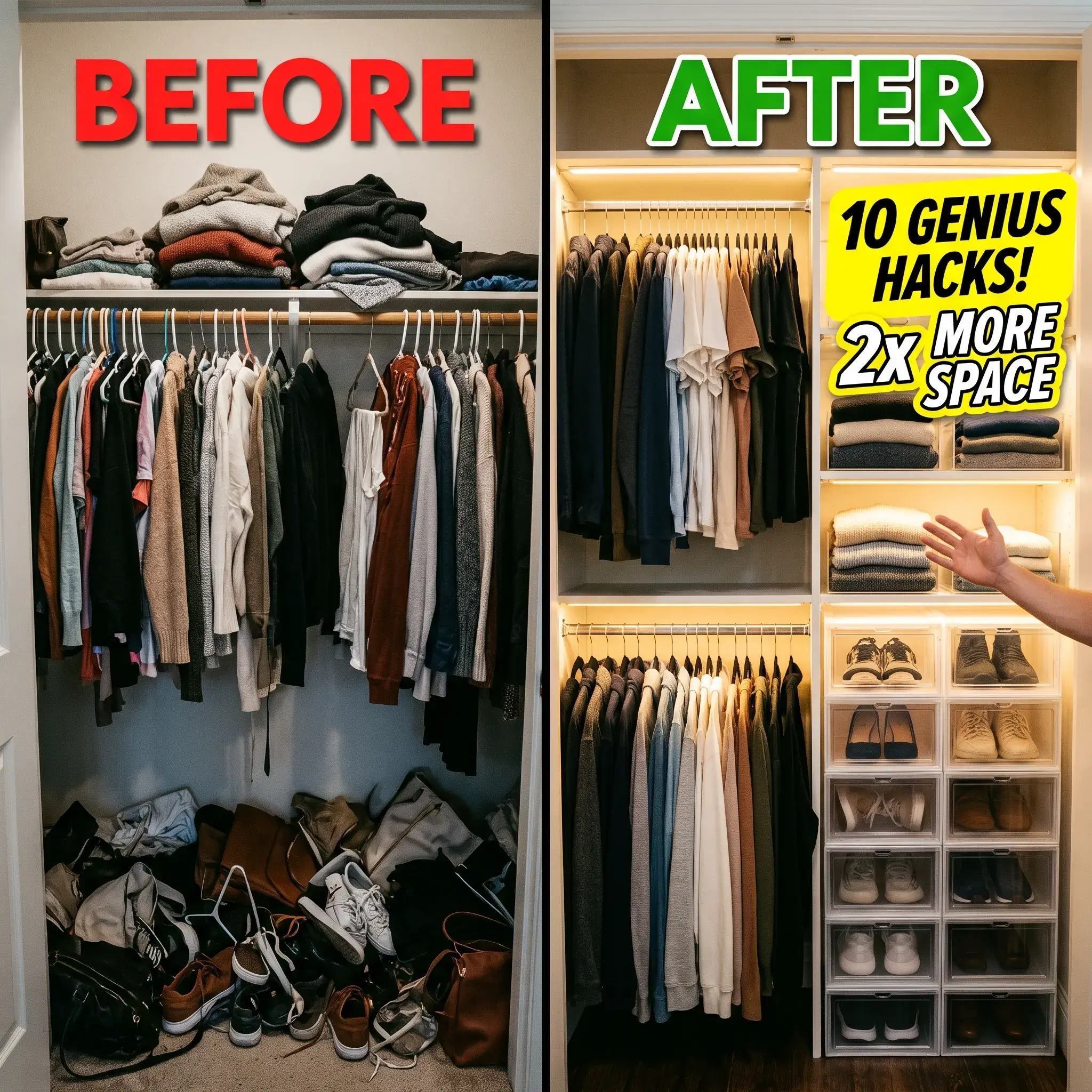
Living with a cluttered closet makes every morning harder than it needs to be. Clothes fall off flimsy hangers, shoes pile up across the floor, and folded sweaters tumble off high shelves. Most people assume their bedroom simply lacks square footage. In reality, standard reach-in closets waste up to 40 inches of vertical space.
Fixing this problem does not require thousands of dollars for custom carpentry. You only need to align your layout with your daily routine and choose the right hardware.
Here are 10 practical closet storage ideas to help you reclaim your space, protect your wardrobe, and build a stress-free morning routine.
1. Install Dual-Tier Hanging Rods and Pull-Down Lifts
Standard closets feature a single clothes rail mounted 66 inches above the floor. Unless you hang floor-length ballgowns every day, this single rail creates dead space beneath your shirts.
Dividing your vertical space into two separate tiers doubles your hanging capacity along the exact same wall. Mount your lower rail between 40 and 42 inches from the finished floor. Place your upper rail between 80 and 84 inches. This spacing gives shirts, button-downs, and folded trousers 38 to 40 inches of clear drop so fabric hems never bunch up. Reserve a narrow single-pole section at 65 inches for long coats and maxi dresses.
If your ceilings reach 9 or 10 feet high, install a hydraulic wardrobe lift. These units mount to the side walls and support 30 to 45 pounds. You simply pull a center handle to bring elevated clothes down to chest level.
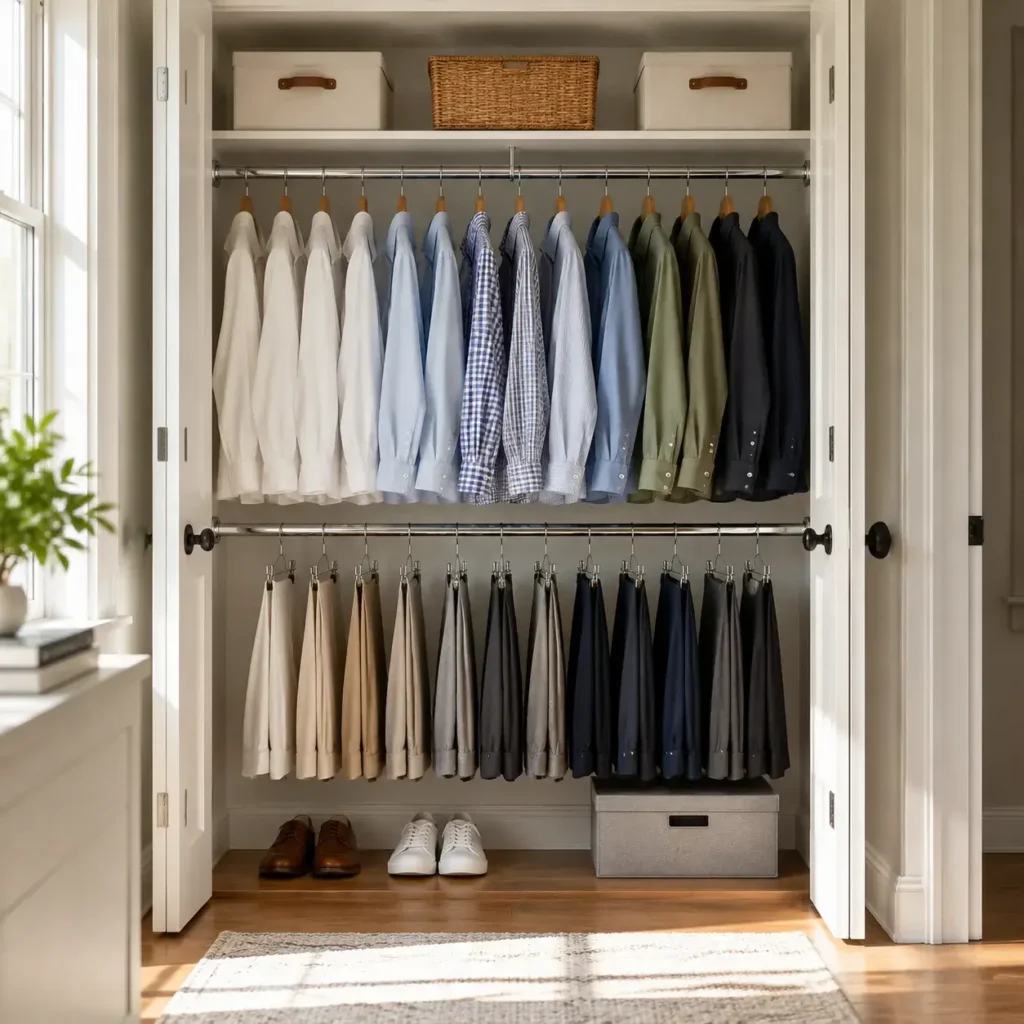
- Products Used in This Setup: Heavy-duty chrome adjustable double hanging rod, side-mount hydraulic pull-down wardrobe lift, zinc wall brackets.
2. Match Hanger Profiles to Specific Garments
Using a random mix of wire, plastic, and bulky wooden hangers wastes space and ruins your clothes. Different hanger heights create visual chaos and cause clothes to snag on each other.
Switch your daily shirts, blouses, and lightweight dresses to slim velvet hangers. Measuring just 0.25 inches thick, these slim profiles free up to 40 percent of your rail width compared to wide wooden styles. The nylon velvet coating creates light friction that stops silk tops and wide collars from sliding onto the floor.
Keep wide hardwood hangers for heavy garments. Structured blazers, trench coats, and wool jackets need contoured wood shoulders between 1.0 and 1.75 inches wide. Thin wire or velvet frames bend under heavy winter wools, creating unsightly shoulder bumps that damage internal garment padding.
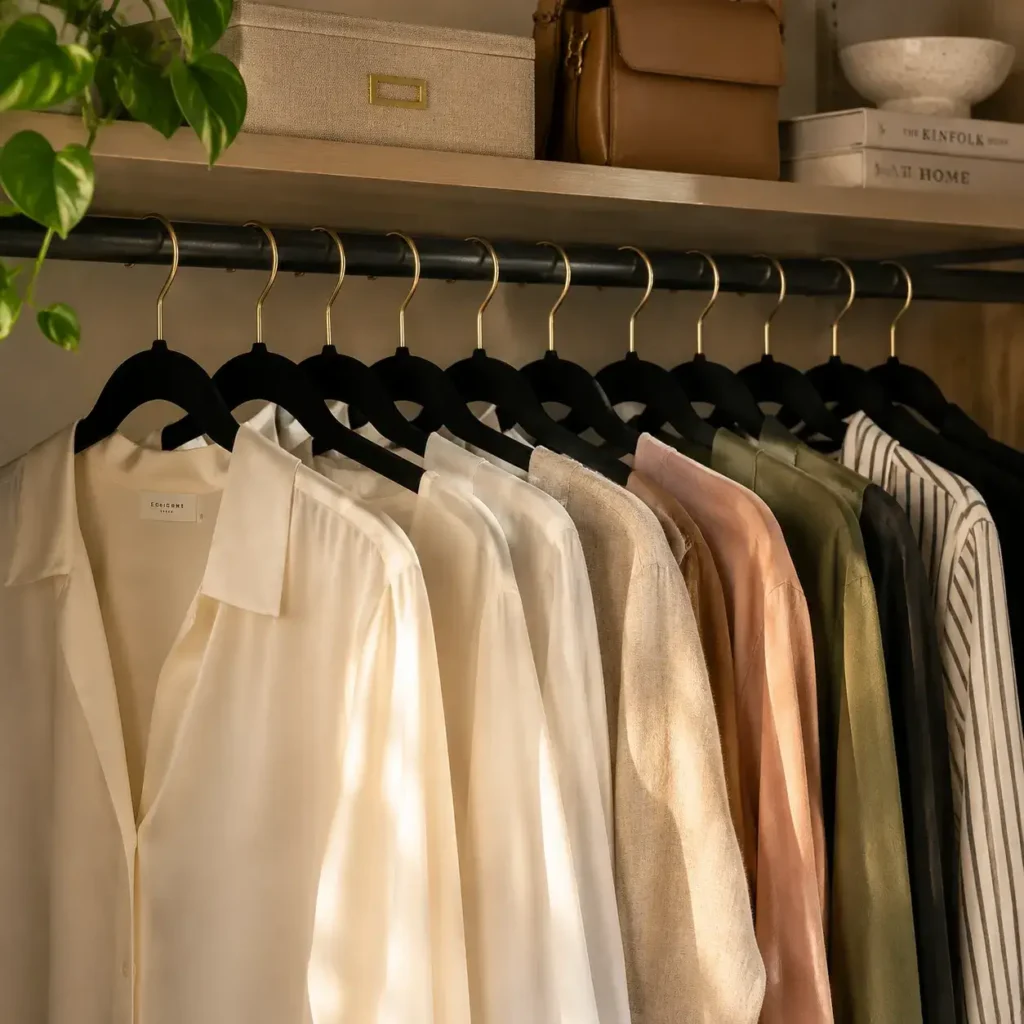
- Products Used in This Setup: Non-slip slim black velvet hangers with swivel hooks, contoured natural cedar coat hangers with wide shoulder rests.
Check out more Small Spaces Ideas
3. Stabilize Stacks with Clear 5mm Acrylic Shelf Dividers
Open shelves often turn into messy piles within days. When you pull a pair of jeans from the bottom of an undivided shelf, the entire stack tilts, falls over, and wrinkles.
Clear acrylic shelf dividers create rigid vertical walls without blocking your view. Choose dividers made from 5-millimeter thick acrylic that slide over standard 0.75-inch wooden shelves using tension clips. Flimsy wire or fabric bins hide your clothes, but transparent acrylic lets you see everything at a glance.
Space your dividers 10 to 12 inches apart for folded jeans, fleece tops, and knitwear. Keep stacks capped at three or four garments high to prevent the bottom items from flattening. For purses and structured totes, set dividers 6 to 9 inches apart. This keeps leather bags standing upright so they maintain their shape without scuffing against each other.
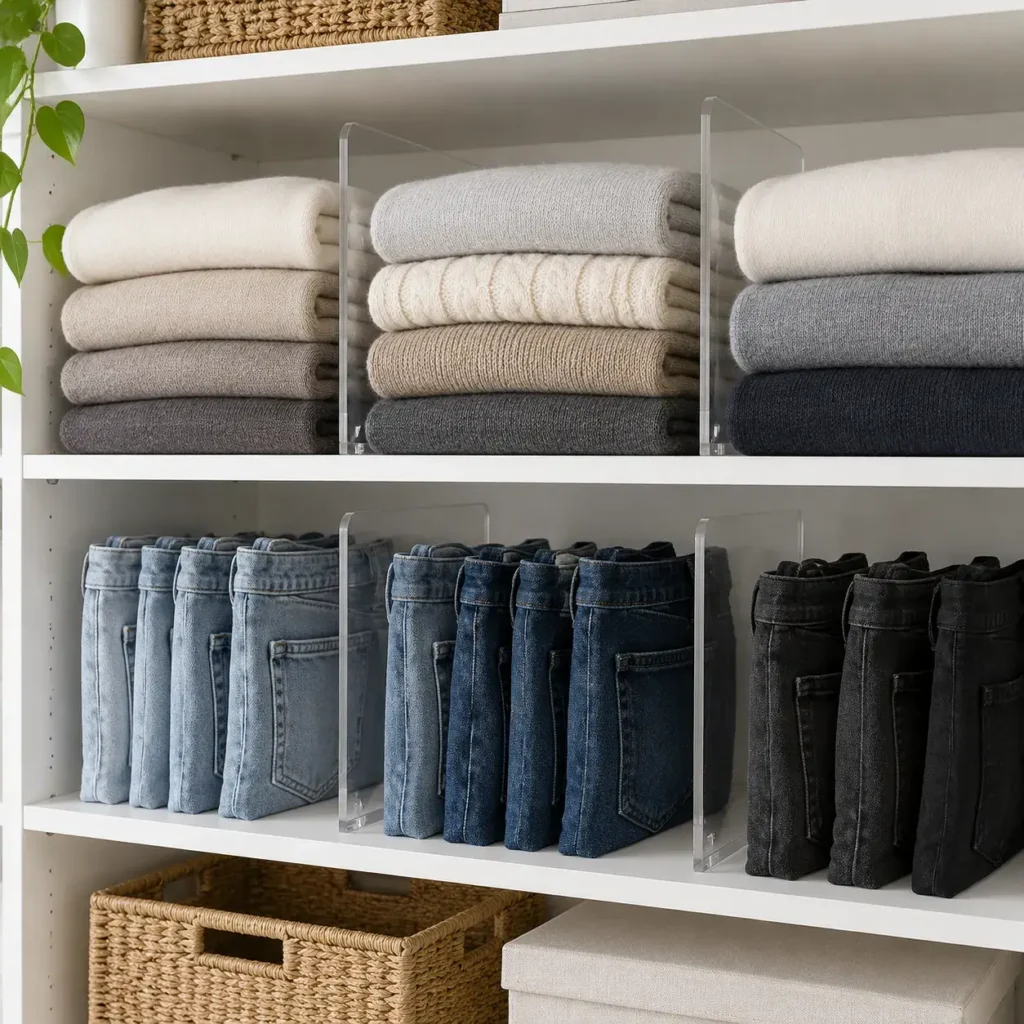
- Products Used in This Setup: Slip-on 5mm clear acrylic shelf dividers with tension base clips, felt shelf scratch protectors.
4. House Footwear in Drop-Front Stackable Cases
Leaving shoes on the closet floor wastes floor space and invites dust. Stacking traditional cardboard shoe boxes is just as bad, since grabbing a pair from the bottom requires moving the entire tower.
Upgrade to rigid, clear plastic drop-front shoe containers. High-quality cases feature magnetic front doors that fold down with one hand. You can pull out running shoes or dress heels without touching the boxes stacked above or below. Look for cases with interlocking plastic pins and rear air vents to stop moisture build-up.
For built-in flat shelves, use two-tier incline shoe slots. These wedge-shaped plastic brackets hold one shoe directly above its mate. The bottom shoe rests flat while the top shoe angles upward, cutting the shelf space per pair from 8 inches down to 4 inches.
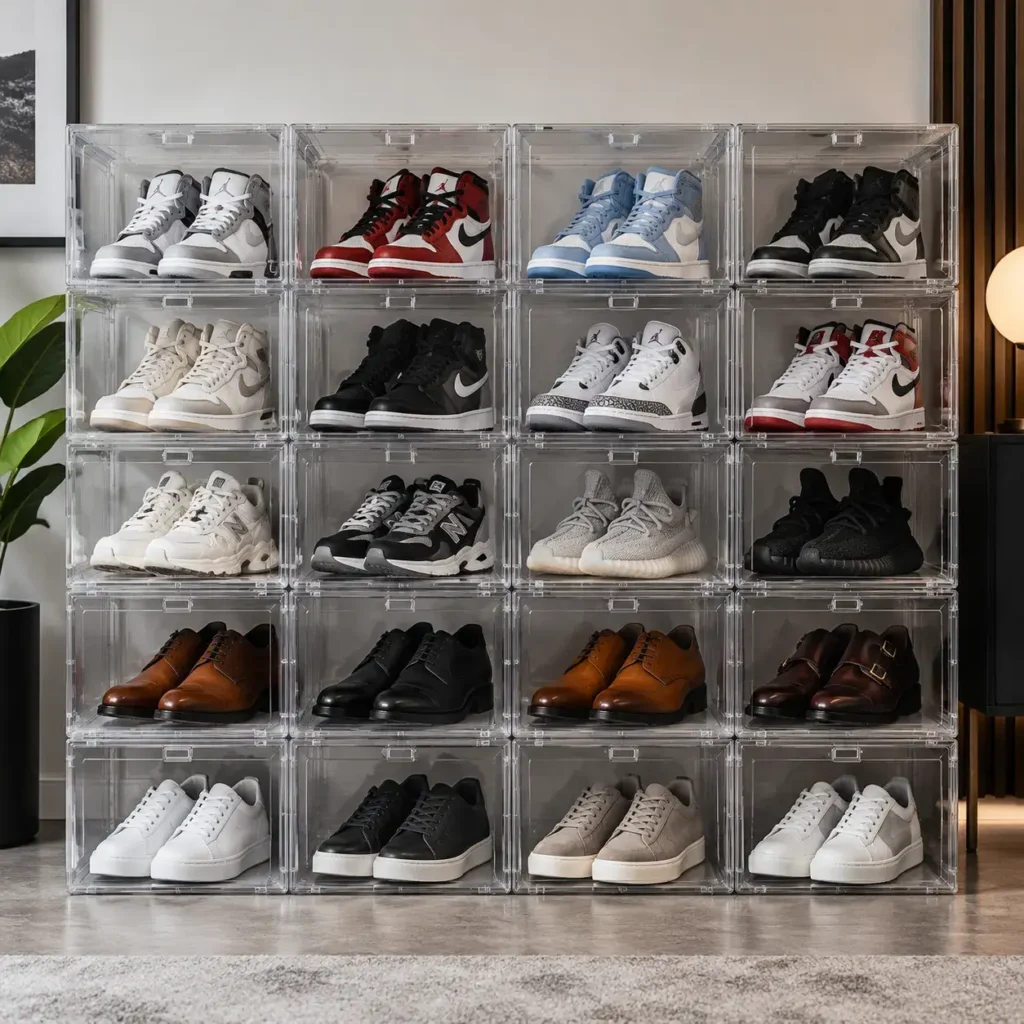
- Products Used in This Setup: Stackable clear acrylic drop-front shoe display cases with magnetic doors, adjustable space-saving shoe slot organizers.
5. Add an Architectural Over-the-Door Track System
The inside face of your closet door offers roughly 15 square feet of vertical space that usually goes to waste. Flimsy hanging shoe bags with loose pockets swing around and slam into doorframes.
Install a solid steel vertical spine directly onto the door panel. Snap-in wire and mesh baskets lock into the track at whatever heights you need. This setup stays completely rigid when opening and closing the door.
Use these door baskets for small daily accessories that easily get lost in deep drawers. It provides an ideal home for sunglasses, rolled leather belts, baseball caps, fabric lint rollers, and hair accessories. Placing these quick-grab items at eye level keeps bedroom counters completely clear.
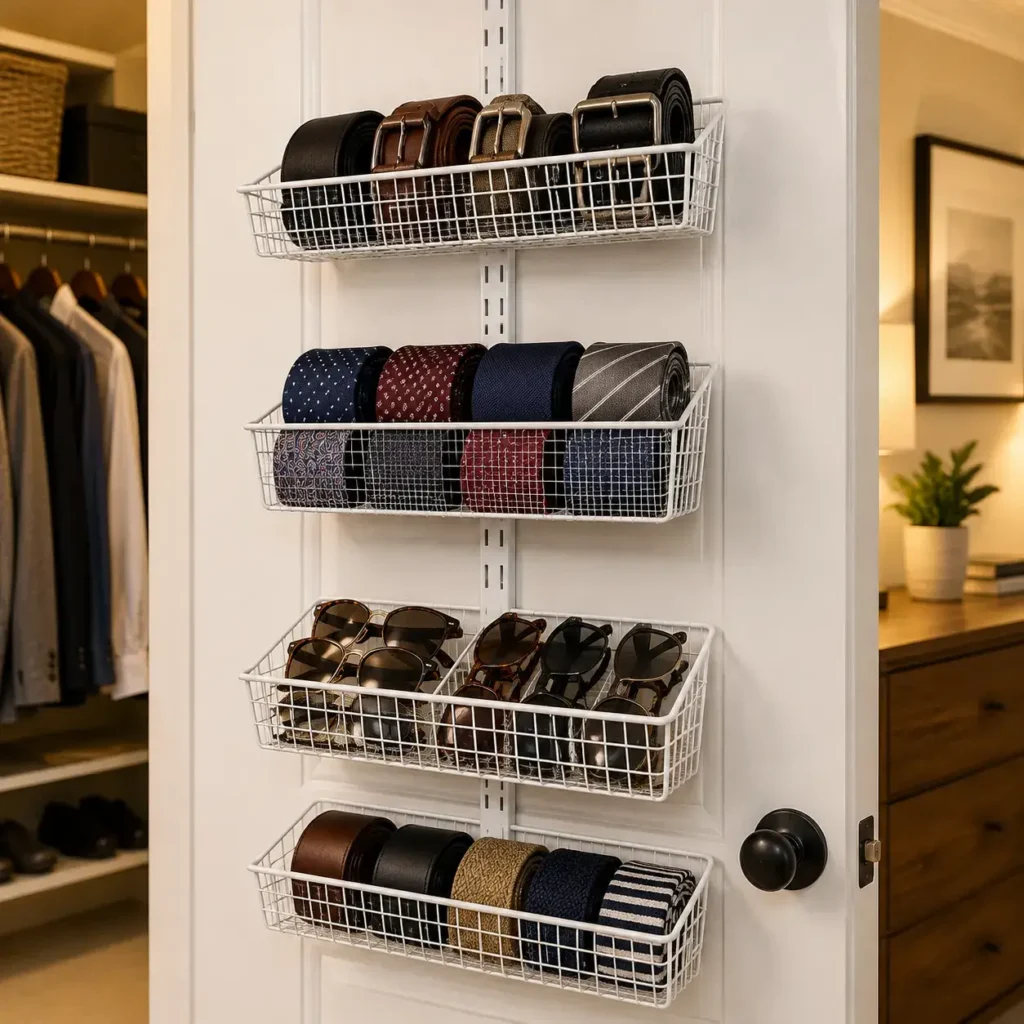
- Products Used in This Setup: Solid steel wall and door utility track rack, snap-on epoxy-coated wire baskets, heavy-duty door mounting brackets.
6. Organize Drawers with the Vertical File-Fold Method
Piling t-shirts and activewear flat inside a deep dresser drawer hides half your clothes. You wear the top three shirts repeatedly while bottom items sit forgotten and creased.
Switch to vertical file-folding, often called the KonMari fold. Fold your shirts, shorts, and activewear into compact, self-supporting rectangles that stand upright inside the drawer. When you open the drawer, you see every garment immediately. You can pull any piece out cleanly without disturbing its neighbors.
Keep your file-folded rows straight with spring-loaded bamboo dividers or fabric honeycombs. Match your drawer depths to your garments:
- Use 5 to 6-inch drawer heights for socks, underwear, and rolled ties.
- Use 7 to 9-inch drawer heights for t-shirts and workout sets.
- Use 10 to 12-inch drawer heights for thick denim and wool sweaters.
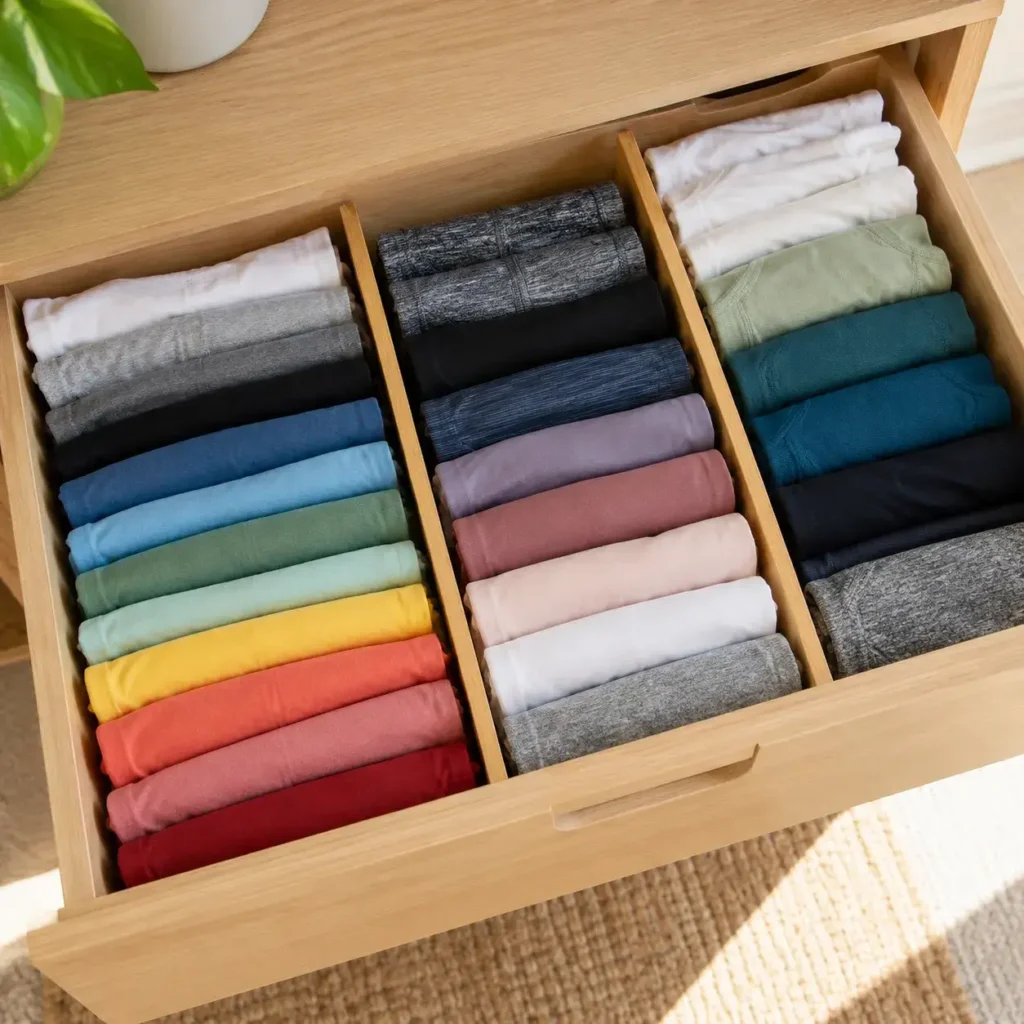
- Products Used in This Setup: Spring-loaded expandable bamboo drawer dividers, honeycomb fabric sock and tie organizers.
7. Store Seasonal Garments in Breathable Linen Bins
The shelf above 80 inches often becomes a dusty dumping ground. While vacuum-compression bags save space, sealing clothes in airtight plastic bags can permanently ruin natural fabrics.
Compression bags squeeze out air and work well for synthetic coats, polyester throws, and denim. However, vacuum sealing breaks fragile down feathers, mats delicate cashmere fibers, cracks leather jackets, and leaves deep permanent creases in real silk.
Store delicate out-of-season clothing in structured, breathable linen or cotton boxes. Natural fabrics block falling dust while permitting healthy airflow, preventing trapped moisture and mold. Choose boxes with drop-down front access panels and clear label holders so you never have to guess what is stored inside.
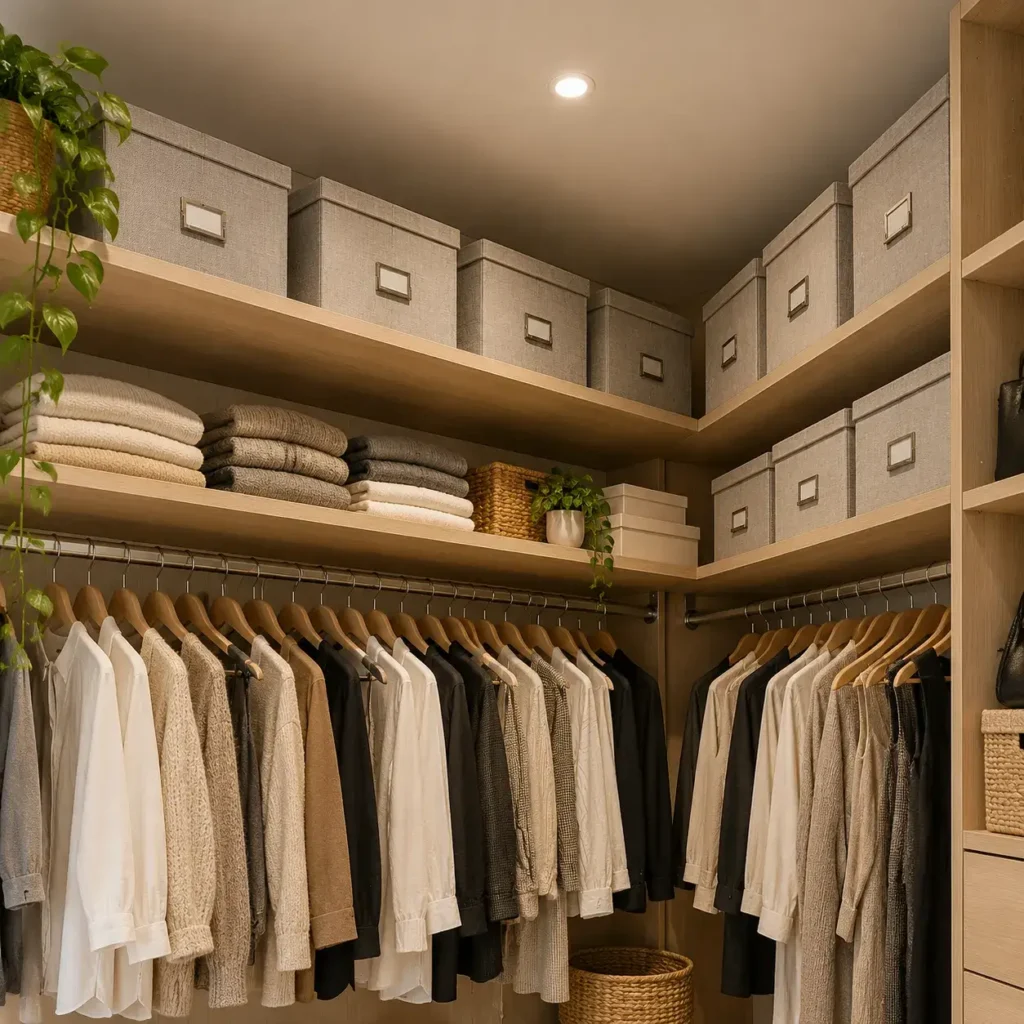
- Products Used in This Setup: Breathable linen closet storage boxes with clear label frames, cotton garment bags for hanging coats.
8. Mount a Retractable Cantilever Valet Rod
Clutter builds up quickly when you lack a temporary spot to stage clothes. Morning outfits get tossed across chairs, dry cleaning sits on the bed, and items waiting for a steamer hang from door handles.
A retractable valet rod solves this problem. These aluminum or steel rods mount flush against the side panel of a shelving unit or closet partition. When you need it, the rod slides out smoothly on ball bearings to give you 10 to 14 inches of temporary hanging space that supports 30 to 35 pounds.
Use the extended valet rod to assemble tomorrow’s outfit, inspect dry cleaning, or hang clothes while steaming. When you finish, slide the rod back inside where it hides completely flush with your shelving.
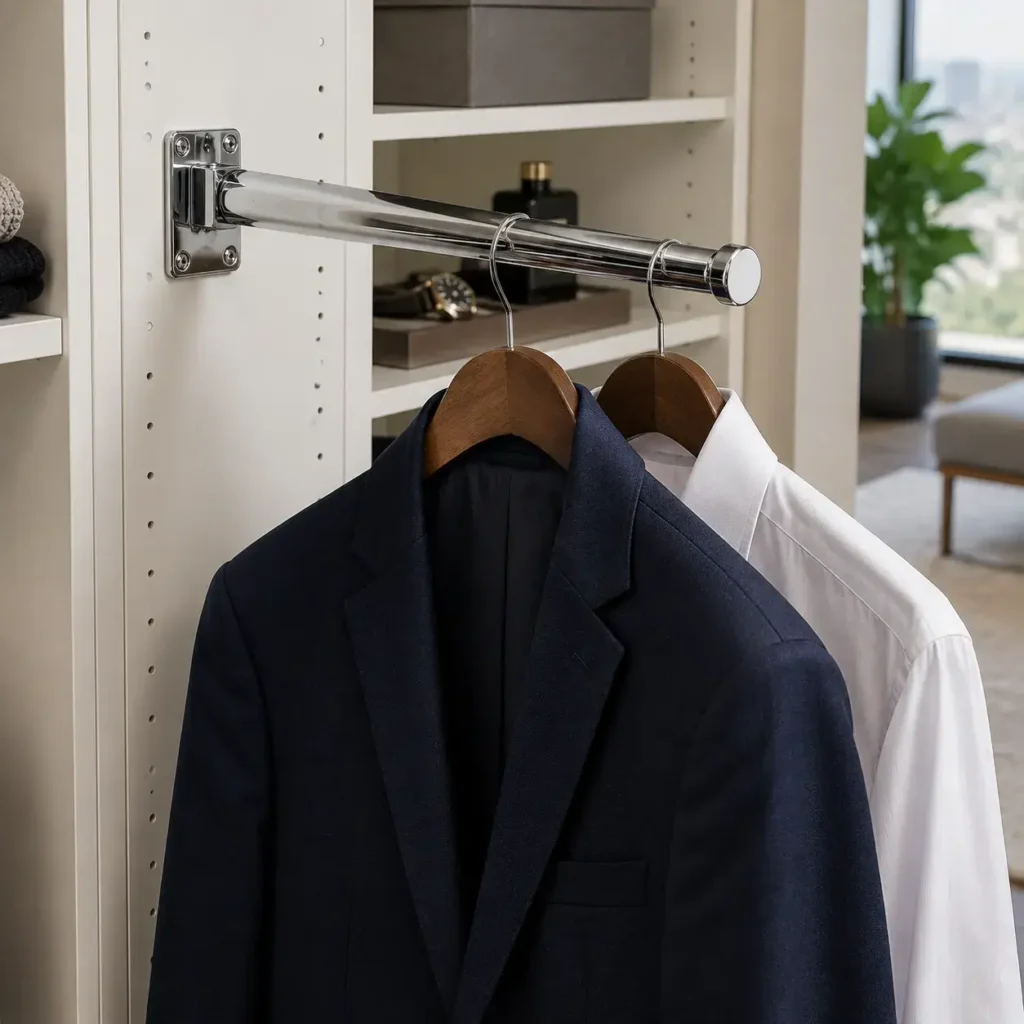
- Products Used in This Setup: Full-extension chrome pull-out valet rod, heavy-duty ball-bearing slide hardware.
9. Reclaim Dark Corners with Tiered Turntables
The 90-degree corner shelf in an L-shaped walk-in or deep reach-in closet is notoriously hard to reach. Bags and accessories pushed into these rear corners disappear into dark voids.
Place a 12 to 18-inch two-tier rotating turntable right in that awkward corner. A quick spin brings items stored at the back directly to the front. You never have to knock over other bottles or stretch into dark recesses again.
Use turntables to display small leather goods, clutches, perfumes, watch boxes, and everyday jewelry trays. Look for heavy-duty models with raised outer rims and non-slip silicone bases to keep items steady while rotating.

- Products Used in This Setup: Two-tier heavy-duty clear acrylic turntable with stainless steel ball bearings, non-slip base pad.
10. Install 90+ CRI LED Bars and Natural Red Cedar
Dim lighting causes visual strain and makes it nearly impossible to tell black clothes from dark navy. Poor air circulation can also leave enclosed spaces smelling musty.
Brighten dark corners with rechargeable magnetic LED light bars. Choose fixtures with a Color Rendering Index of 90 or higher, paired with a neutral color temperature between 3000K and 3500K. This lighting mimics natural sunlight, rendering true fabric shades accurately. Magnetic mounting strips let you pull the light bars down every few months for quick USB charging.
Pair your lighting with solid American Red Cedar blocks. Cedar wood naturally repels fabric-eating clothes moths and absorbs excess humidity. Remember to refresh your cedar every year: sand the wood lightly with 200-grit sandpaper to open up its pores and release fresh aromatic oils.
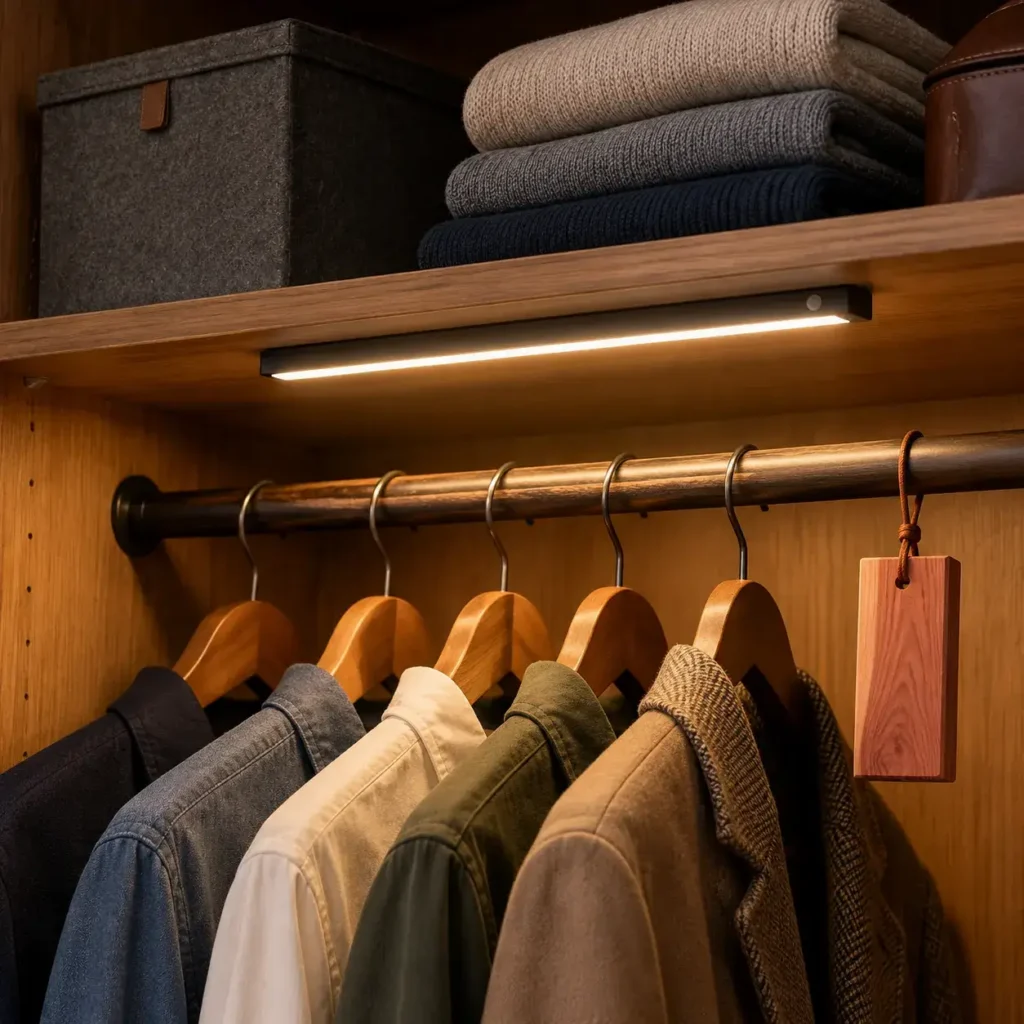
- Products Used in This Setup: Rechargeable magnetic motion-sensor LED light bars (3500K, 90+ CRI), solid American red cedar hanging blocks and drawer balls.
The 3-Step Closet Reset Before Adding Hardware
Do not buy storage bins or dividers until you take inventory of your wardrobe. Buying containers before sorting your clothes simply creates organized clutter. Set aside an hour for a quick three-pile audit:
- Keep: Items that fit your body comfortably today and have been worn within the last six months. Return these pieces to your primary hanging and drawer space.
- Tailor or Repair: Quality garments that need minor button replacements, hem adjustments, or dry cleaning. Place these directly into a staging tote and schedule a repair trip this week.
- Donate or Consign: Pieces in good condition that no longer match your personal style or fit your daily life. Pack them into sturdy bags and drop them off immediately so they do not creep back onto your hangers.
Two Daily Habits to Keep Closets Clean Year-Round
Physical hardware provides structure, but daily habits keep clutter from returning. Use these two simple systems to maintain order:
The Reverse Hanger Decluttering Routine
Turn every hanger on your closet rail backward so the hook points toward you. Whenever you wear an item, wash it, and put it away, hang it back up with the hook facing forward like normal.
Check your rails after six months. Clothes on forward-facing hangers represent your genuine daily rotation. Clothes on backward hooks sat untouched across an entire season. This visual evidence makes it easy to donate unworn pieces without emotional second-guessing.
The Bedsheet Bundle Technique
Fitted sheets with elastic corners rarely fold into clean, flat rectangles. Stacking them directly on open linen shelves often leads to wobbly piles that slide onto the floor.
Fold your fitted sheet, flat sheet, and one pillowcase into compact rectangles. Slide those three pieces flat inside the set’s second matching pillowcase. This trick turns your bedding into a self-contained fabric envelope. You can stack these uniform packages by room size, and grabbing fresh bedding takes a single clean pull without disrupting neighboring sets.
Frequently Asked Questions
What is the most effective way to organize a small reach-in closet?
Focus on vertical drop space and door clearance. Replace mismatched hangers with slim velvet models to free up to 40 percent of your rail width. Add a secondary hanging rod for shirts and folded pants, and mount a vertical steel rack to the back of the door to clear accessories off your floor.
Should you fold or hang sweaters?
Always fold heavy knitwear, cashmere, and wool sweaters. Hanging heavy knits pulls down on the weave, causing fabric stretching and leaving unsightly shoulder bumps. Store folded sweaters on eye-level shelves separated by acrylic dividers to keep stacks upright.
How do you prevent closet shelves from bowing under heavy clothes?
Standard 0.75-inch particleboard or MDF shelves should have vertical support brackets installed at least every 30 to 36 inches. For storing heavy stacks of denim or heavy winter blankets, switch to solid plywood shelving supported by continuous metal cleats along the back wall.
Why do black and navy clothes look identical inside a closet?
Standard home light bulbs often have a low Color Rendering Index below 80, casting a yellow tint that hides subtle fabric dyes. Installing LED lights with a 90+ CRI and a 3500K neutral white temperature reveals true fabric colors accurately.
A functional closet does not depend on sprawling square footage or expensive custom cabinetry. Focus on reclaiming dead vertical clearance, selecting uniform hanging hardware, and protecting your fabrics with proper air circulation. Choose one idea from this guide—like doubling your hanging rods or adding clear shelf dividers—and tackle that single upgrade this weekend.