
7 Cozy Outdoor Winter Front Porch Ideas for After Christmas

Taking down your holiday decorations often leaves your front porch looking cold, bare, and deserted. The bright ribbons and festive lights are packed away, yet spring is still months away.
You do not need to leave your entryway empty until March. You also do not need to buy an entire collection of brand-new decor.
Winter has its own quiet beauty. By focusing on organic evergreens, sculptural branches, textured neutrals, and warm ambient light, you can create a welcoming entrance that stands up to freezing temperatures.
Here are 7 practical front porch designs to inspire your post-holiday refresh, along with the exact items you need to recreate them.
1. The Birch and Conifer Urn Duo
This arrangement frames your front door with balanced height and rich winter texture. Natural white paper birch poles stand tall in the center of heavy black urns, drawing the eye upward. Dense sprays of noble fir and white pine create a full skirt around the base, while weeping incense cedar spills softly over the container edges. The stark white bark provides a clean, snowy contrast against dark green needles and brick or siding.
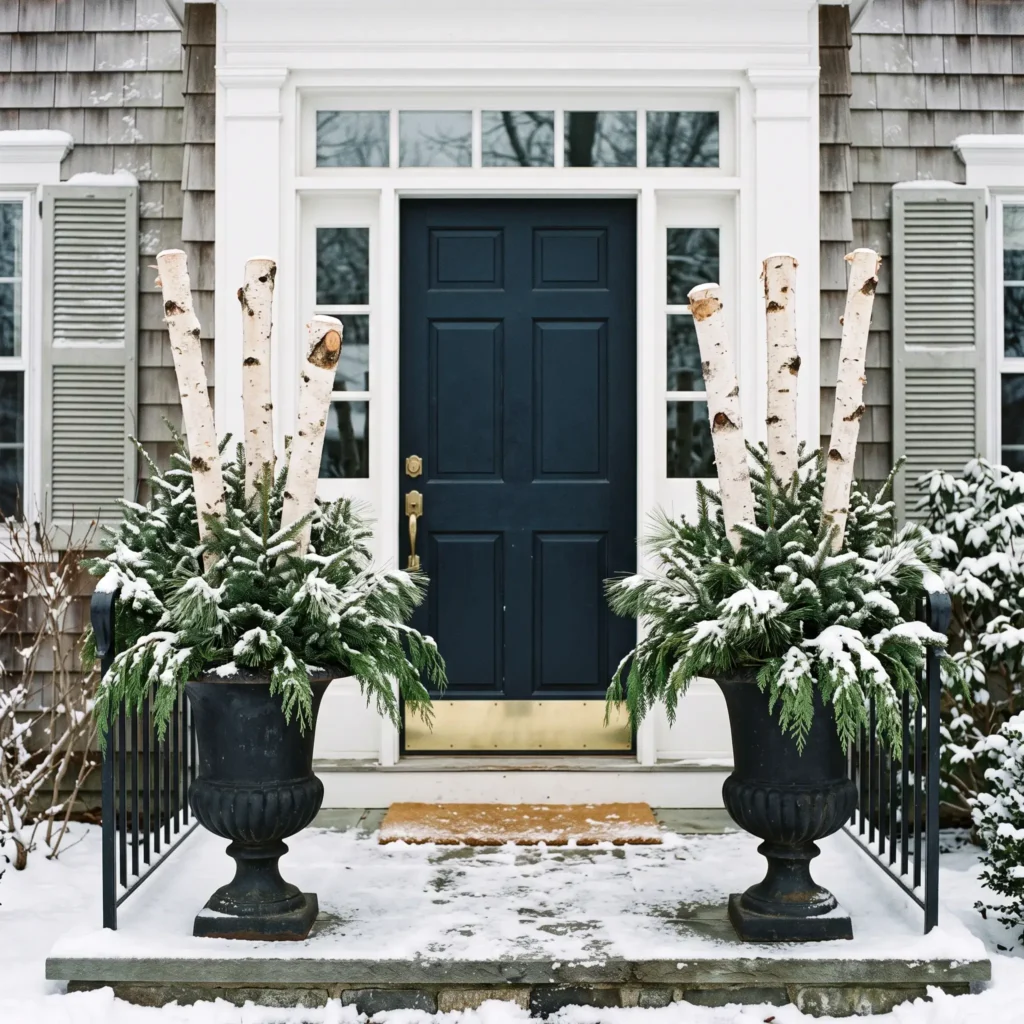
- Products Used in This Setup:
- Two 24-inch matte black cast-iron or resin pedestal urns
- Six natural white paper birch poles (4 to 5 feet tall)
- Fresh cut noble fir and white pine branches
- Weeping incense cedar sprigs
- Coarse builder’s sand (to anchor stems and freeze in place)
2. The Farmhouse Sled and Lantern Vignette
If you have an empty corner on your porch, build a cozy side vignette using vintage elements. Lean an antique wooden Flexible Flyer sled against the exterior wall. Pair it with an aged pair of leather figure skates tied with natural jute twine. At the base of the sled, group two black metal lanterns of staggered heights. This setup adds nostalgic winter charm without relying on holiday iconography.
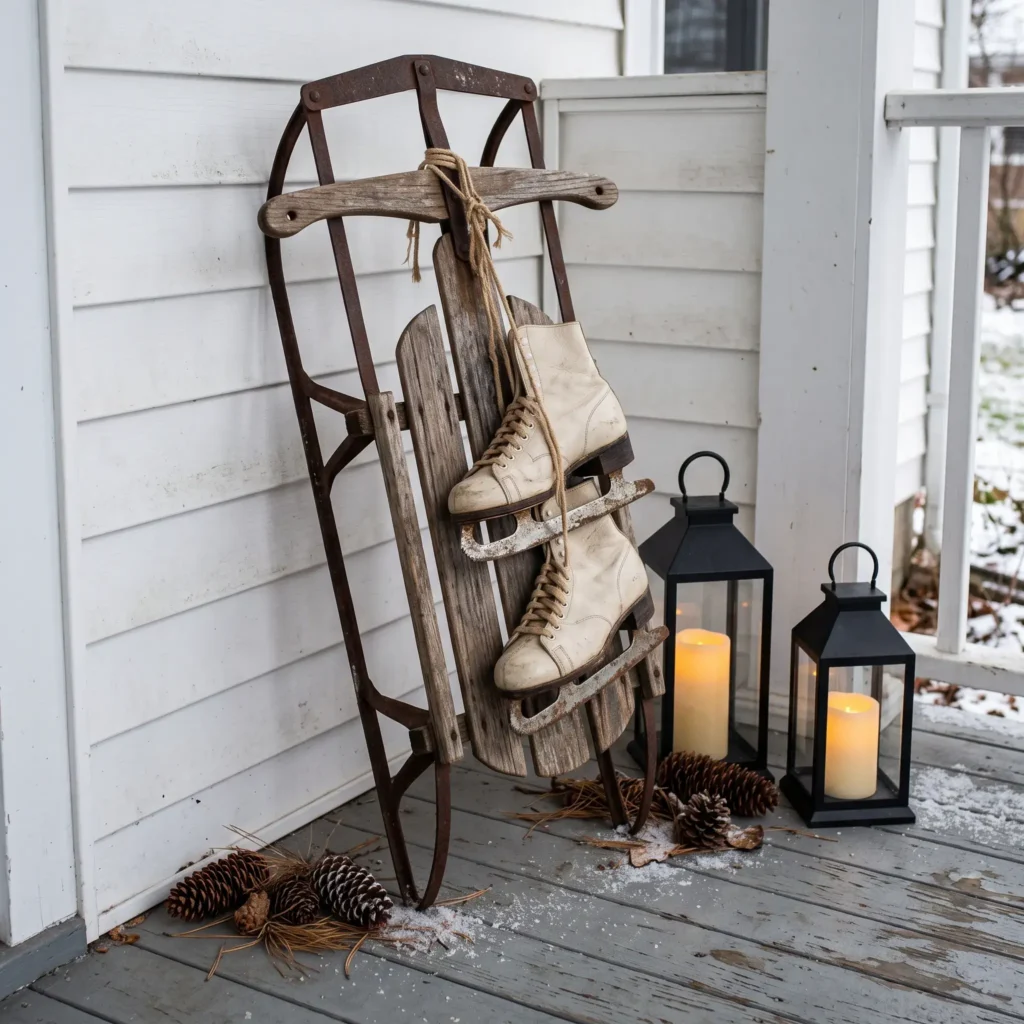
- Products Used in This Setup:
- Vintage wooden toboggan or Flexible Flyer sled
- Classic worn leather ice skates
- Two heavy black metal outdoor lanterns (18-inch and 12-inch)
- Two weather-resistant LED flameless pillar candles (warm amber glow)
- Natural sugar pinecones
Check out more Winter Decor Ideas
3. The Minimalist Scandinavian Stoop
Designed for compact entryways and modern townhomes, this concept avoids clutter and highlights clean lines. A single potted Dwarf Alberta Spruce sits in a smooth, cylindrical fiberstone pot beside the door. Ground the space with a plain, heavy-duty coir mat. Wrap a discrete strand of warm micro fairy lights through the spruce needles to cast a soft glow on snowy evenings. It delivers a clean, calm entrance that feels intentional.
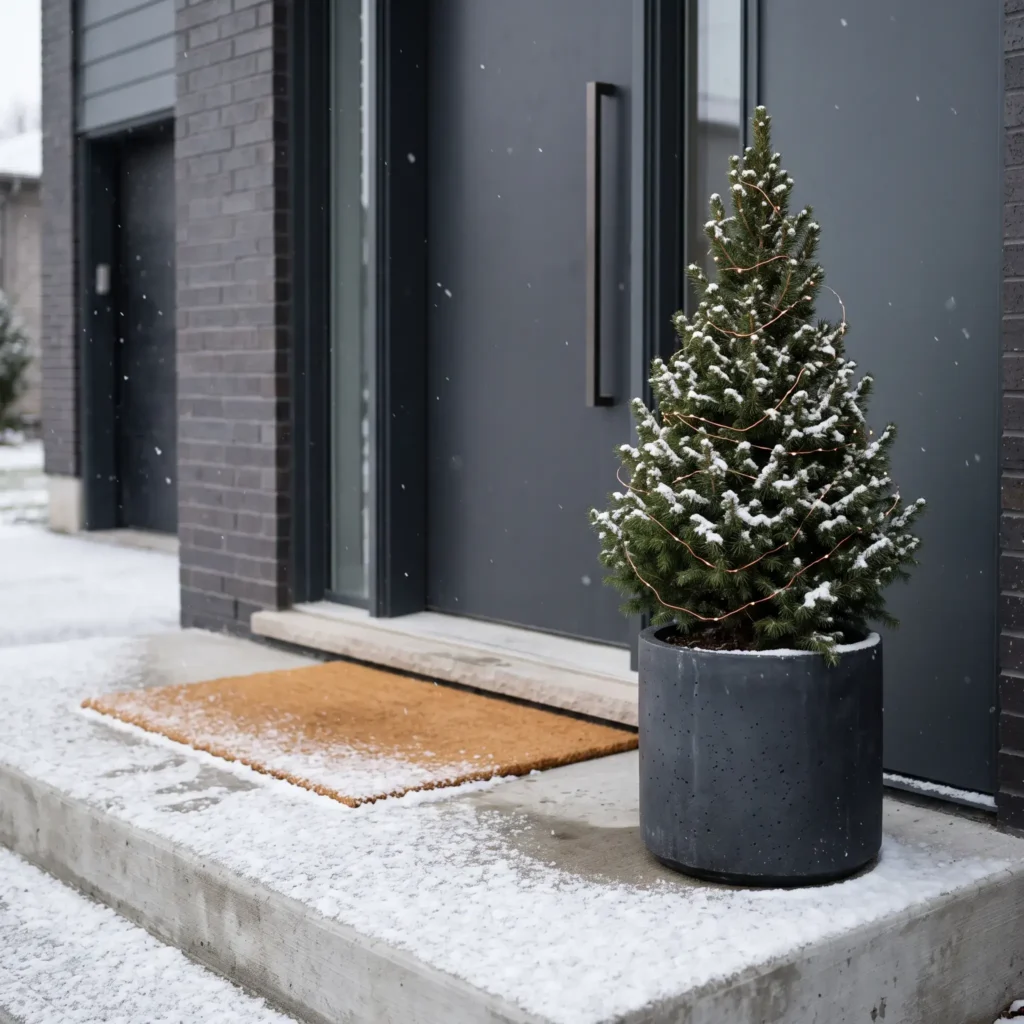
- Products Used in This Setup:
- One potted Dwarf Alberta Spruce (Zone 2 hardy)
- One modern dark gray fiberstone or concrete pot (16-inch diameter)
- One strand of outdoor battery-operated copper wire micro-LED lights (warm 2700K)
- One extra-thick natural coir doormat (no text or pattern)
- Ceramic pot feet (to lift the planter off cold concrete)
4. The Layered Neutral Doorway
Your front door itself is the primary visual anchor of the porch. Remove the bright red holiday wreath and replace it with a simple grapevine ring accented with eucalyptus, juniper, and a charcoal gray velvet ribbon. At the doorstep, layer your mats for depth and practical protection. Place a wide, flatweave buffalo check rug in muted black and cream underneath a heavy, dirt-trapping coir mat.
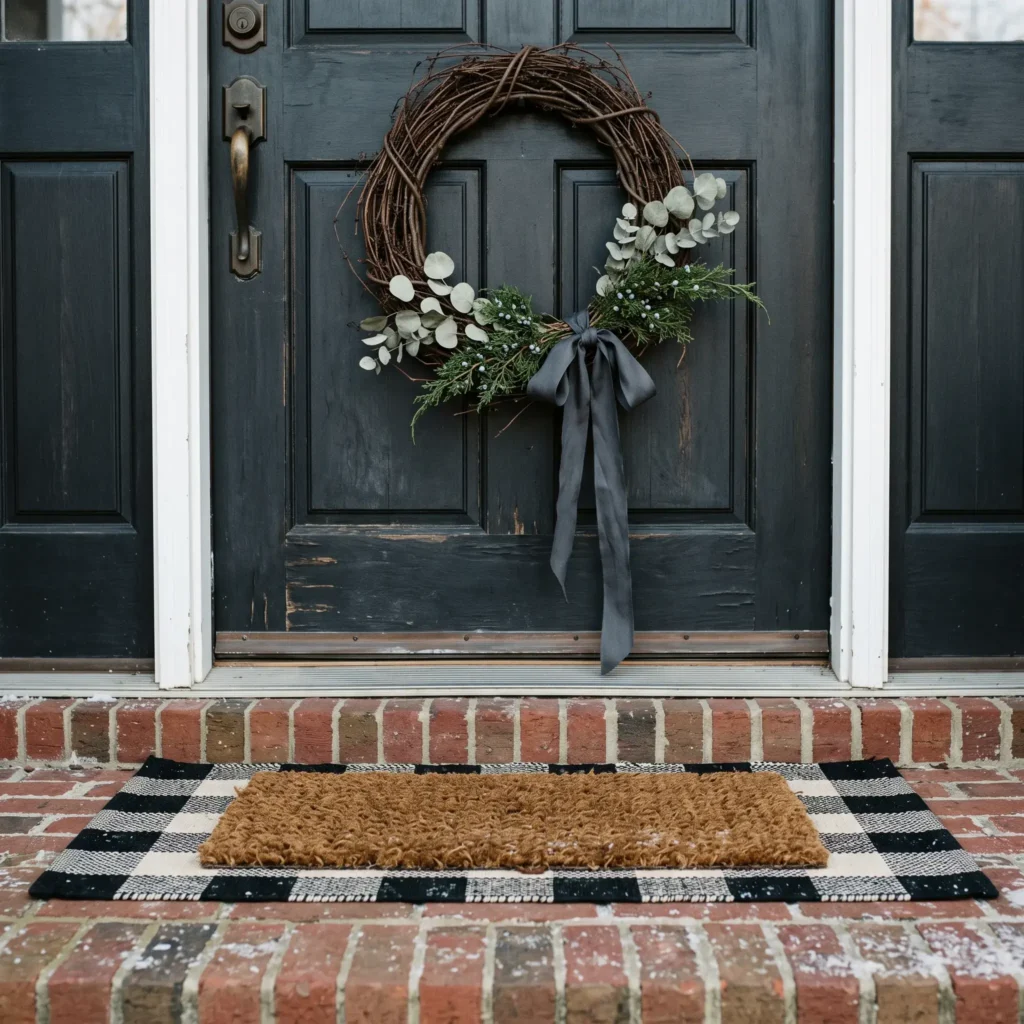
- Products Used in This Setup:
- Natural 22-inch grapevine wreath base
- Preserved seeded eucalyptus and fresh juniper cuttings
- 2-inch wide charcoal or slate gray wired velvet ribbon
- Large outdoor base rug (30×48 inches) in neutral black and cream check
- Heavy-duty natural coir doormat (18×30 inches)
5. The Alpine Firewood Bench
Turn your existing porch seating into a winter focal point. Dress a wooden bench or porch swing with an all-weather cable-knit throw blanket in oatmeal or soft cream. Add two outdoor accent pillows made from durable, solution-dyed acrylic in forest green or charcoal. Below the bench, stack freshly cut birch firewood inside a low wire or zinc basket. This arrangement looks purposeful, cozy, and distinctly wintry.
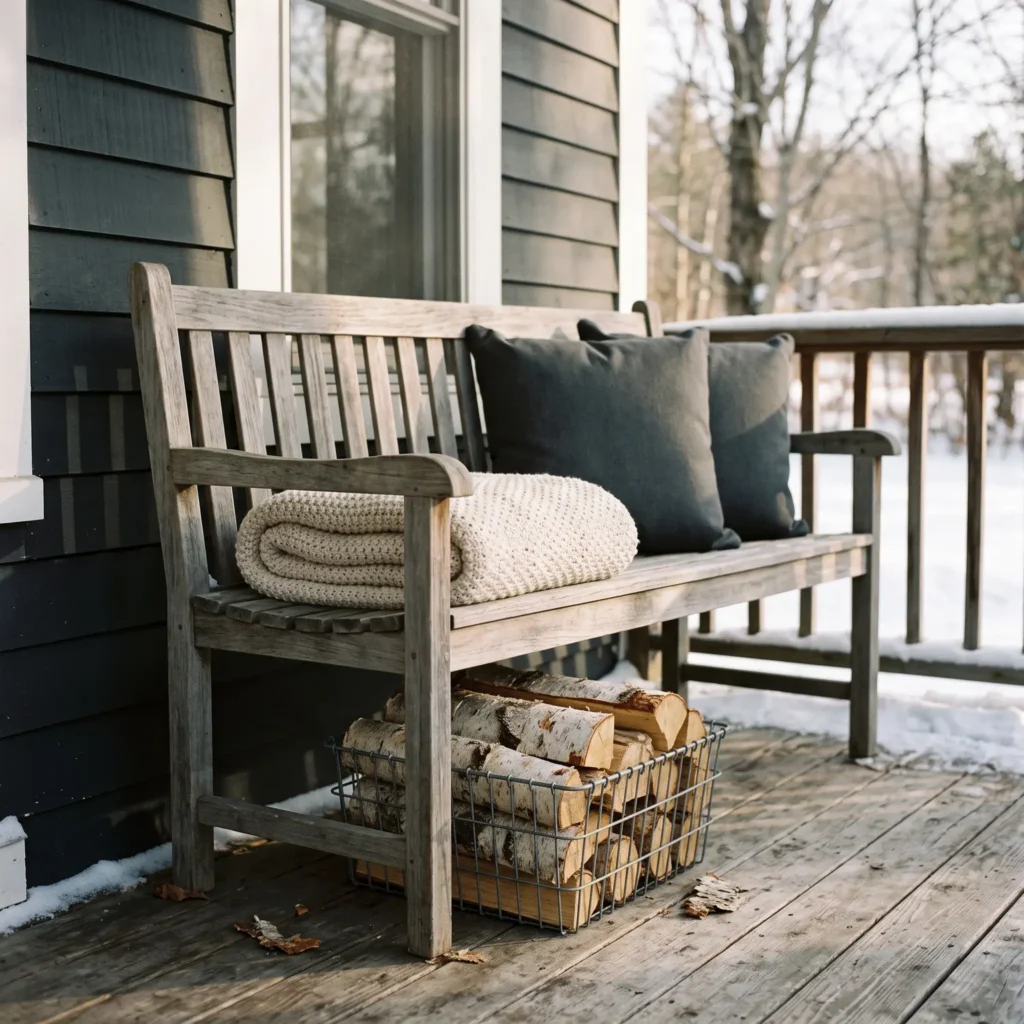
- Products Used in This Setup:
- Weatherproof wooden garden bench or rocking chair
- Heavy outdoor knit throw blanket (polypropylene or solution-dyed acrylic)
- Two 18-inch outdoor throw pillows in charcoal or olive green
- Matte black metal log hoop or low wire basket
- Split white birch firewood logs
6. The Winterberry and Cedar Window Box
Do not leave your porch window boxes empty after clearing out your holiday plants. Fill the soil with flat sprays of western red cedar that cascade over the front sill. Insert upright stems of scarlet winterberry holly and red-osier dogwood into the back of the box. The deep red twigs catch the eye against snowy backdrops, while the cedar provides lush greenery all season long.
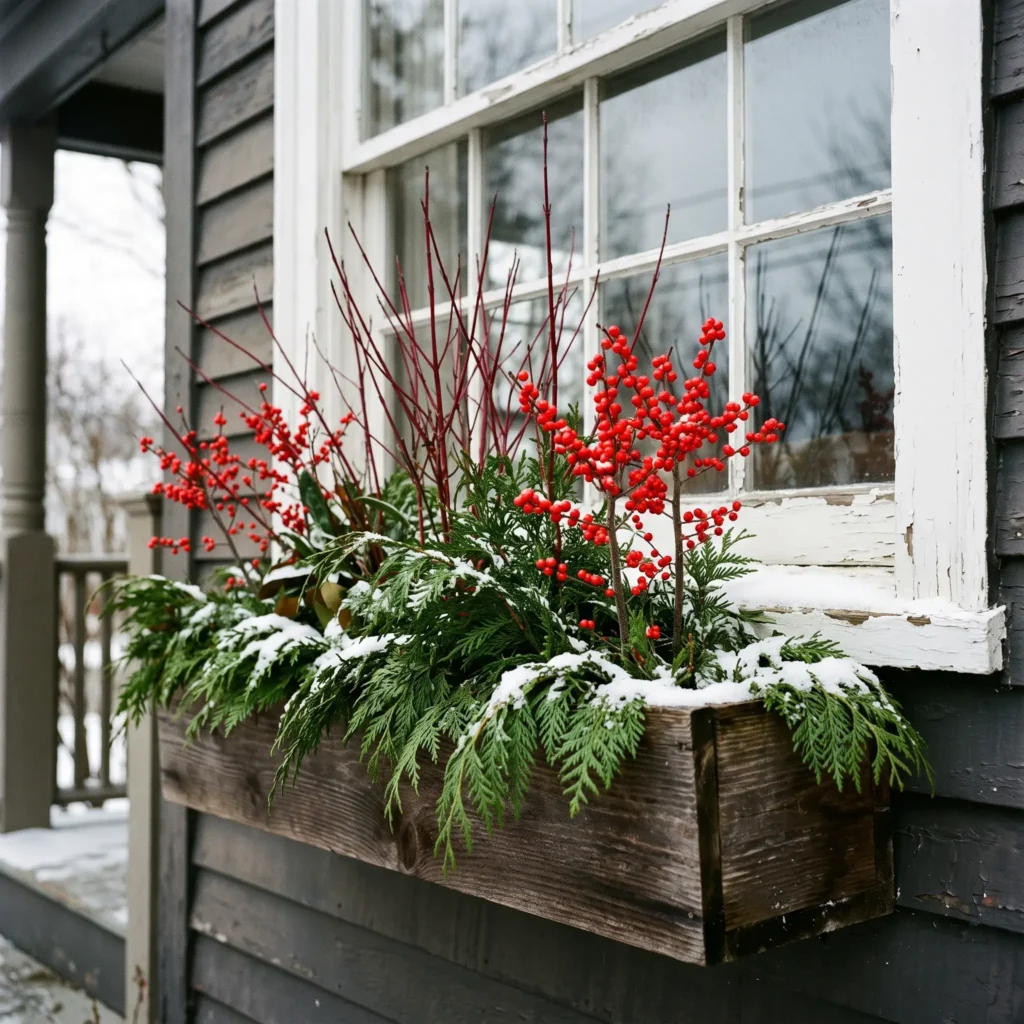
- Products Used in This Setup:
- Standard exterior window box with drain holes
- Cut stems of red-osier dogwood (Cornus sericea)
- Fresh cut western red cedar boughs (Thuja plicata)
- Natural winterberry branches (Ilex verticillata)
- Moist garden soil or floral foam packed tight
7. The Soft Glow Lantern Stairway
Winter afternoons get dark early. Guide guests to your door with a staggered arrangement of glass lanterns lining your porch steps. Place lanterns on alternating sides of the stairs to keep the walking path clear and safe. Inside each lantern, use battery-operated candles with built-in timers. Set them to turn on at dusk, casting a warm amber puddle of light on every step.
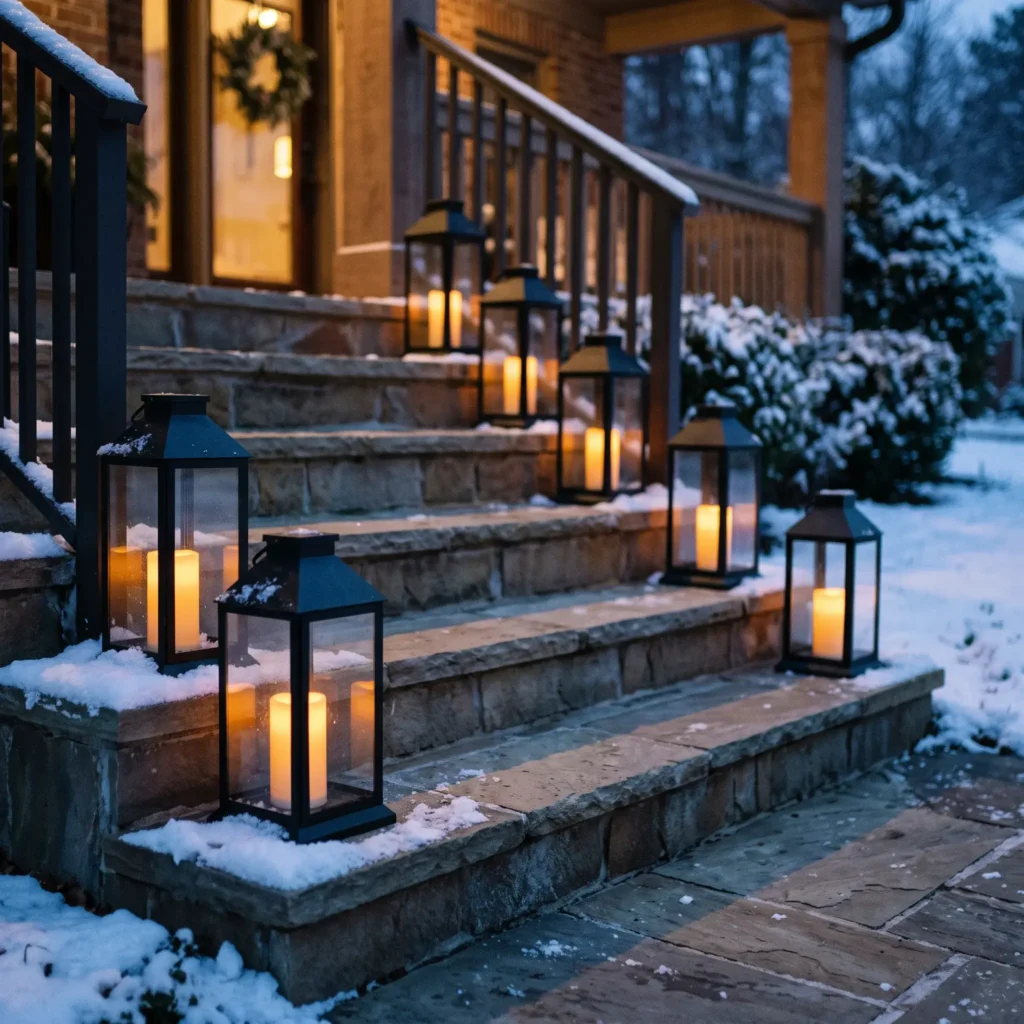
- Products Used in This Setup:
- Four to six black powder-coated steel lanterns (varying heights from 10 to 18 inches)
- Weather-resistant outdoor LED pillar candles (IP65 rated with auto-timers)
- Energizer Ultimate Lithium AA batteries (for cold-temperature longevity)
- Heavy stone steps or risers
The Post-Holiday Subtraction Strategy: What to Stash vs. What to Keep
Transitioning your porch from Christmas to winter does not require starting from scratch. Professional exterior decorators use subtractive styling. You strip away the holiday-specific decorations and leave the cold-hardy, structural pieces in place.
Here is a simple checklist to guide your cleanup:
| Christmas Decor Element | Action to Take | Winter Replacement or Repurposed Use |
|---|---|---|
| Bright Red Bows & Ribbons | Pack Away | Swap for cream burlap, camel wool, raw linen, or charcoal velvet. |
| Santa, Reindeer, & Nutcrackers | Pack Away | Replace with rustic wooden sleds, snowshoes, or antique ice skates. |
| Shiny Glass Baubles & Tinsel | Pack Away | Swap for oversized sugar pinecones, antler sheds, or raw birch logs. |
| Holiday Door Signs & Plaques | Pack Away | Hang a simple wild grapevine, boxwood, or asymmetrical cedar swag. |
| Live & Faux Evergreen Garlands | Keep | Strip out artificial berries and red accents; keep lush green boughs on railings. |
| Front Door Lanterns | Keep | Remove holiday ribbon; fill bases with pinecones, moss, or battery candles. |
| Porch Urns & Planters | Keep & Refresh | Remove red picks; insert tall white birch poles and red dogwood branches. |
By eliminating bright holiday crimson, your palette shifts to a calming winter mix: deep forest greens, crisp birch whites, warm wood tones, and slate gray.
Horticultural Rules for Winter Planters That Last
Cut branches and outdoor potted plants face brutal conditions in January and February. Freezing winds pull moisture out of leaves, while frozen soil prevents root systems from taking up water. Follow these three rules to keep your botanical arrangements fresh until spring.
1. Anchor Cut Boughs in Sand, Not Potting Mix
Standard peat-based potting soil shrinks, dries out, and turns light in winter. High winds will easily blow top-heavy birch poles out of a standard dry potting mix.
Instead, fill your winter planters with coarse builder’s sand or a dense sand-topsoil blend. Dampen the sand thoroughly before inserting your branches. The wet sand holds heavy wood poles firmly in place. When temperatures drop below freezing, the moisture inside the sand freezes solid. This locks your branches into a concrete-like base that wind cannot budge.
2. The 2-Zone Hardiness Rule for Potted Plants
If you want living potted plants on your porch rather than cut branches, you must protect their roots. In the ground, soil acts as a massive geothermal insulator. In an above-ground pot, sub-freezing air surrounds the root ball on all sides, divided only by a thin container wall.
Always choose living plants rated at least two USDA hardiness zones colder than your geographic location. For example, if your home is in USDA Zone 6, choose plants rated for USDA Zone 4 or colder.
- Dwarf Alberta Spruce (Picea glauca ‘Conica’): Hardy down to Zone 2. Survives severe freezes easily.
- Winter Gem Boxwood (Buxus microphylla): Hardy to Zone 4. Holds deep green foliage when shielded from harsh midday sun.
- Christmas Rose (Helleborus niger): Hardy to Zone 4. Blooms with white petals straight through snow and frost.
3. Anti-Transpirant Spray: The Blue Spruce Exception
Winter foliage turns brown because of desiccation, not cold temperatures. Strong winds evaporate water through needle pores. Spraying your cut evergreen boughs with an anti-transpirant (such as Wilt-Pruf) forms a clear, protective coating that seals in moisture for months.
However, never spray anti-transpirants on Colorado Blue Spruce or blue-tinted junipers. The protective wax that gives these evergreens their powdery blue-silver color dissolves in pine-resin sprays. An anti-transpirant will instantly turn your blue spruce into a flat, muddy green. Reserve the spray for firs, cedars, and pines only.
Container Thermodynamics: Stop Pots from Cracking in Freezes
Nothing ruins an outdoor porch display faster than a cracked, shattered planter pot in mid-January.
When water freezes, it expands by roughly 9 percent. Porous materials like unglazed terracotta, earthenware, and low-fire ceramics absorb moisture from rain and melting snow. When that absorbed water freezes inside the clay walls, the internal pressure cracks the pot.
Planter Material Comparison Guide
| Container Material | Frost Resistance | Durability Rating | Winter Styling Advice |
|---|---|---|---|
| High-Density Polyethylene (HDPE) | Impervious | Exceptional (-30°F to 120°F) | Ideal for window boxes and front urns exposed to direct snow. |
| Cast Iron & Powder-Coated Steel | Superior | Exceptional | Heavy weight prevents wind tip-overs; cannot crack from frost. |
| Fiberstone & Cast Concrete | High | Very Good | Thick walls insulate roots; seal the interior to prevent surface flaking. |
| Glazed High-Fire Stoneware | Moderate | Fair | Use only under covered porches, and always insert a plastic liner pot. |
| Standard Terracotta | Extremely Poor | Fails in Freezes | Never leave outdoors in freezing zones. Clean and store indoors. |
Always Use Pot Feet
Never place large winter containers completely flush against cold concrete, bluestone, or brick porch floors.
Flush placement creates thermal bridging, pulling cold temperatures straight from the stone into the container base. It also traps moisture underneath, causing drainage holes to freeze shut with ice. When drainage holes block, trapped water freezes inside the container and bursts the pot walls.
Place non-porous composite, stone, or ceramic pot feet underneath your planters. Lifting containers just one inch off the porch floor keeps drainage paths clear and prevents the base from freezing directly to the ground.
Winter Porch Lighting: Warmer Kelvins and Reliable Power
With short daylight hours, porch illumination defines your home’s curb appeal from late afternoon into the evening.
Stick to Warm Light Temperatures
Avoid cool white LED bulbs (5000K to 6500K) on your post-holiday porch. Cool white lighting gives off a sterile, icy blue cast that makes cold winter nights feel even colder.
Choose warm amber lighting between 2200K and 2700K. This warm spectrum creates a cozy, cabin-like glow that highlights the natural grain of birch bark, brickwork, and evergreen needles.
Cold-Weather Battery Selection
Standard alkaline batteries suffer severe voltage drops in sub-freezing temperatures. If you leave battery-operated lanterns outside in 15°F weather, alkaline batteries will often die within three to four days.
Equip your outdoor flameless candles with Energizer Ultimate Lithium batteries. Lithium batteries perform reliably in temperatures as low as -40°F. Select flameless candles made from hard ABS plastic or heavy acrylic with an IP65 waterproof rating. Real paraffin wax candles turn brittle and split in heavy freezes, and open flames present a major safety risk near dry evergreen boughs.
Frequently Asked Questions
Can I leave outdoor twinkle lights up after Christmas?
Yes, you can keep lights on your porch through January and February if they are warm white. Remove any multi-colored strands, flashing controllers, and cool-toned icy white lights. A steady, warm white strand woven through railing garlands or urn greenery provides cheerful visibility during the dark weeks of winter.
What colors work best for front porch decor after Christmas?
Shift away from bright holiday red and shiny metallics. Focus on a natural winter palette built around conifer greens, chalky birch white, slate blue, deep charcoal, and natural wood tones. These colors mirror the winter environment while keeping your entryway bright and welcoming.
How do I keep my outdoor winter wreaths from blowing away?
Avoid hanging lightweight wreaths on plastic stick-on hooks, which lose their grip in freezing weather. Use a heavy-duty metal over-the-door hanger with a felt backing to protect your paint. For windy, exposed porches, anchor the bottom of the wreath to the door using clear fishing line tied to a discreet lower anchor point.
What can I put in porch planters if I do not want living plants?
Fill containers with cut woody branches and evergreen stems. Combine tall white birch logs, red-osier dogwood twigs, sugar pinecones, and mixed fir boughs anchored into wet sand. They require zero watering, look full all season, and easily withstand heavy snowstorms.
When should I transition my porch decor from winter to spring?
Late February or early March is the ideal window. As severe freezes ease, remove weathered evergreen boughs and replace them with fresh pussy willow stems, flowering forsythia branches, and cold-hardy pansies or potted dwarf daffodils.
Final Takeaway: Refresh Your Entryway Today
A welcoming winter front porch does not require expensive hauls or complicated installations.
Start by packing away holiday-specific figurines and red ribbons. Keep your evergreen garlands, add tall birch poles into your urns, and set a pair of warm lanterns by the door. With durable materials and textured neutrals, your entryway will remain warm, inviting, and resilient until spring arrives.
