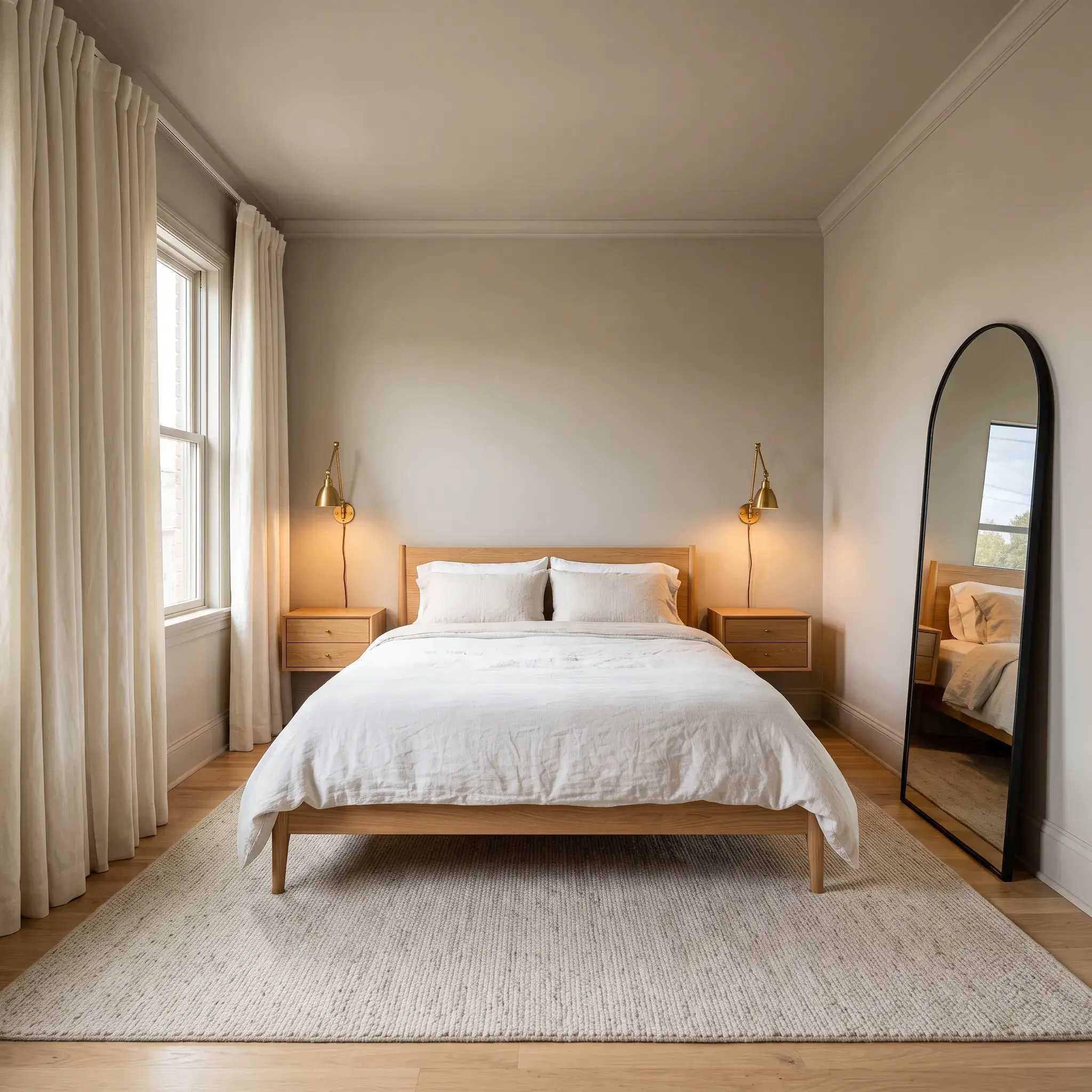
8 Small Bedroom Color Palettes That Make Tiny Spaces Feel Expansive

A small bedroom should feel like a restful retreat, not a tight shoebox.
Many homeowners default to pure white paint because they believe it makes rooms look larger. In reality, stark white paint often falls flat in compact bedrooms. Without abundant natural daylight, pure white turns chalky and highlights cramped corners.
Changing the perceived size of a room comes down to surface light physics. When you balance Light Reflectance Value, undertones, and natural window exposure, you change how your eyes read room boundaries.
Here are 8 curated bedroom color palettes with exact manufacturer paint codes, product styling lists, and realistic design prompts you can use right away.
1. The Warm Cloud Neutral Palette
This palette dissolves perimeter shadow lines without making the room feel sterile. It works exceptionally well in bedrooms with standard eight-foot ceilings.
- Main Wall Color: Sherwin-Williams Alabaster (SW 7008), LRV 82, Eggshell Finish
- Trim and Moldings: Sherwin-Williams Pure White (SW 7005), LRV 84, Satin Finish
- Ceiling: Sherwin-Williams Alabaster (SW 7008), Flat Finish
- Focal Accent: Sherwin-Williams Dried Thyme (SW 6186), LRV 21, Satin Finish on doors or headboard wall
- Secondary Accents: Natural white oak wood and warm brushed brass
Why This Palette Works in Small Bedrooms
Alabaster contains soft beige undertones. It bounces ambient light cleanly while keeping north-facing and east-facing shadows from reading as cold gray. Painting the ceiling in the same hue blurs the top perimeter line, which makes low ceilings appear taller.
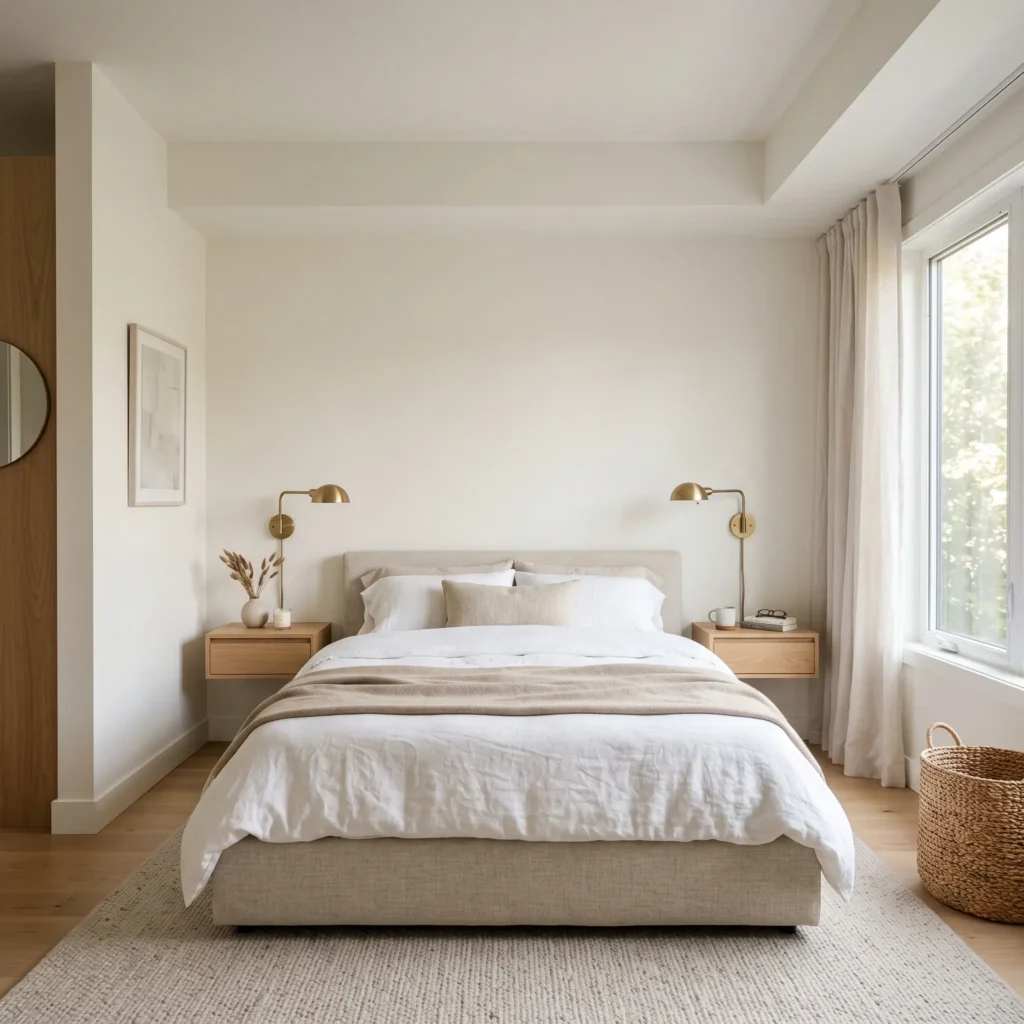
Products Used in This Room Design
- Low-profile platform bed upholstered in oatmeal woven linen
- Floating white oak bedside tables with soft-close drawers
- Wall-mounted brushed brass reading sconces with frosted glass globes
- Waffle-weave ivory cotton bed coverlet with washed flax sheet set
- Floor-to-ceiling ivory linen drapery panels hung directly beneath the ceiling line
2. The Receding Coastal Slate Palette
Cool paint tones reflect light on shorter optical wavelengths. This causes perimeter walls to visually recede, making the bedroom feel wider than its physical square footage.
- Main Wall Color: Sherwin-Williams Sea Salt (SW 6204), LRV 63, Matte Finish
- Trim and Doors: Sherwin-Williams Pure White (SW 7005), LRV 84, Satin Finish
- Ceiling: Sherwin-Williams Pure White (SW 7005) tinted with 15 percent Sea Salt, Flat Finish
- Focal Accent: Sherwin-Williams Iron Ore (SW 7069), Satin Finish for hardware and frames
- Secondary Accents: Washed ecru linen and bleached ash wood
Why This Palette Works in Small Bedrooms
Sea Salt balances cool slate blue with muted sage green. It softens sharp corners and pairs effortlessly with strong southern daylight, preventing harsh glare while maintaining an airy atmosphere.
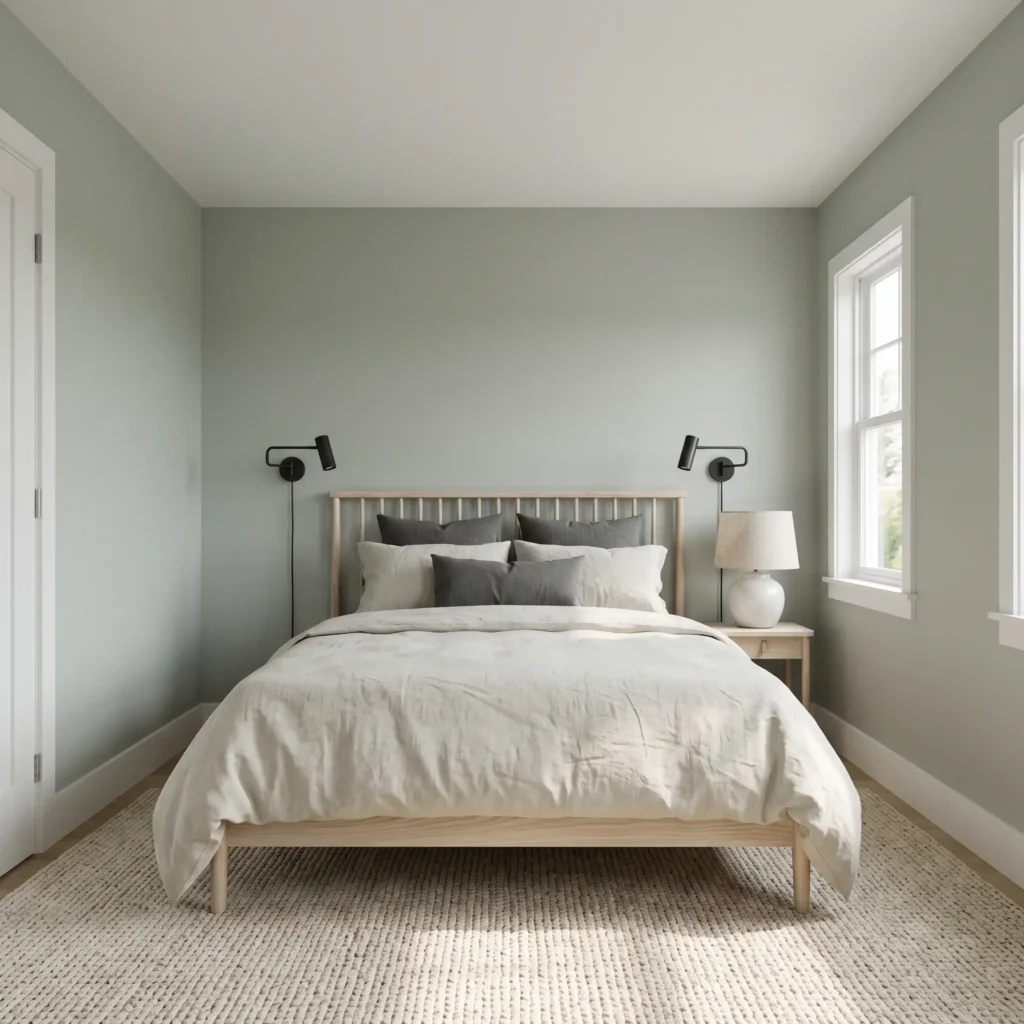
Products Used in This Room Design
- Spindle headboard bed frame made from bleached natural ash wood
- Washed ecru Belgian flax linen duvet cover and pillow shams
- Matte black tubular metal reading lights mounted to the wall
- Glazed off-white ceramic bedside table lamp with textured linen drum shade
- Chunky hand-woven bleached jute area rug
Check out more Small Spaces Ideas
3. The Deep Navy Cocoon Palette
Painting a compact room in dark colors feels counterintuitive, but deep tones absorb shadow lines. By concealing room corners, dark paints create an illusion of boundless depth.
- Main Wall Color: Benjamin Moore Hale Navy (HC-154), LRV 8.4, Ultra-Matte Finish
- Trim and Millwork: Benjamin Moore Hale Navy (HC-154), Satin Finish
- Ceiling: Benjamin Moore Swiss Coffee (OC-45), LRV 81, Flat Finish
- Focal Accent: Benjamin Moore Cheating Heart (1617), Satin Finish on interior doors
- Secondary Accents: Warm cognac saddle leather and aged antique bronze
Why This Palette Works in Small Bedrooms
Hale Navy absorbs harsh light reflections. Drenching the walls and baseboards in the identical shade removes the boxy visual frame of the room. This turns tight square footage into an intimate, high-end sanctuary.
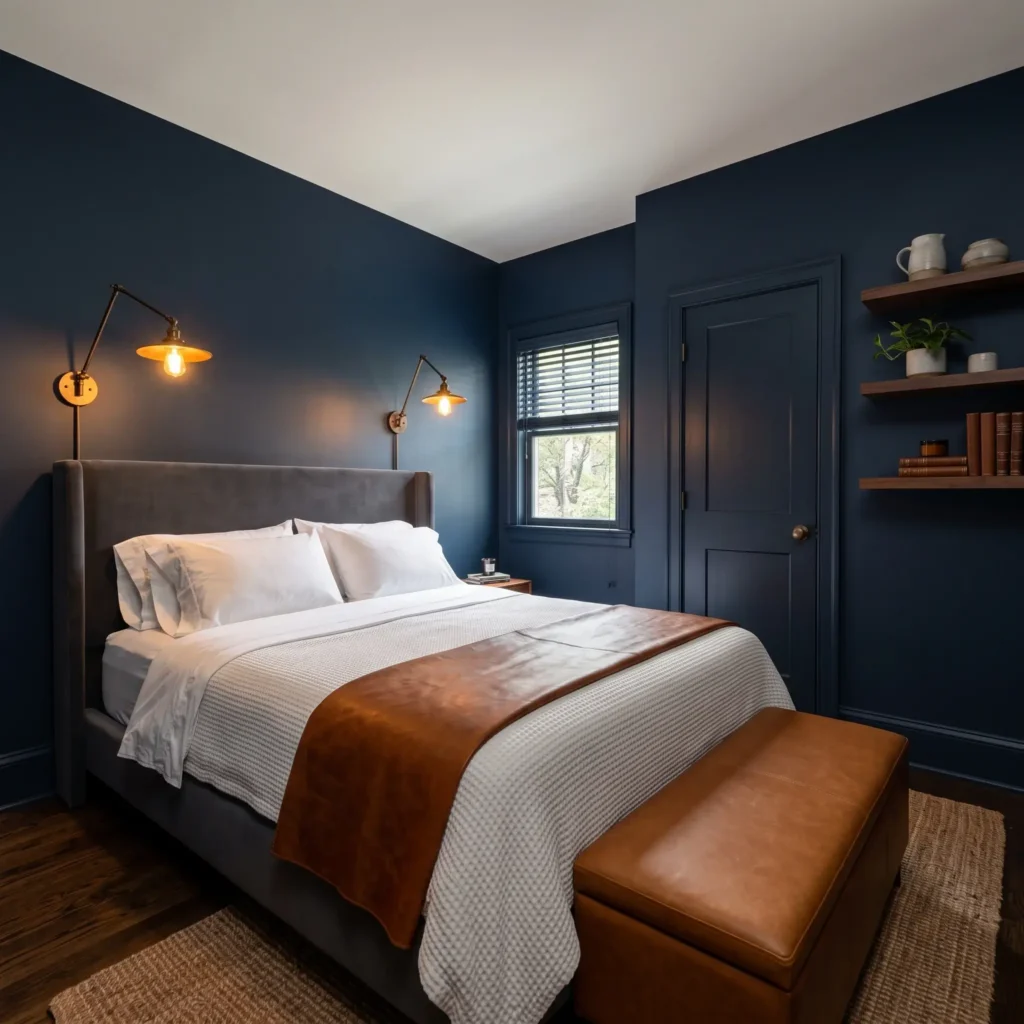
Products Used in This Room Design
- Tailored charcoal gray velvet upholstered headboard
- Warm cognac leather storage bench placed at the foot of the bed
- Crisp 400-thread-count white cotton percale sheets with folded waffle blanket
- Aged antique bronze articulating wall lamps with warm amber bulbs
- Floating dark walnut shelves with handmade ceramic stoneware
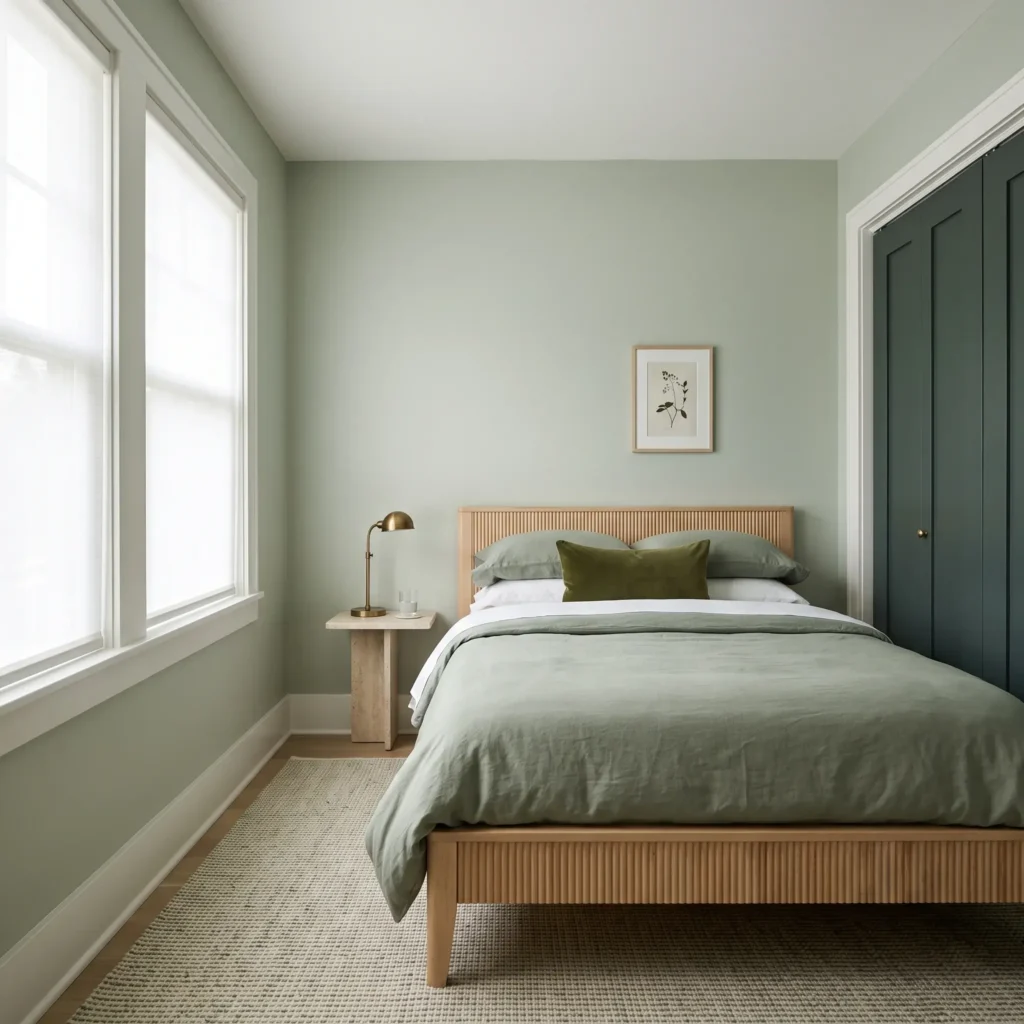
4. The Restorative Biophilic Sage Palette
Soft greens bring outdoor nature indoors. This palette reduces visual strain, slows heart rate, and gives small bedrooms an organic, calm foundation.
- Main Wall Color: Benjamin Moore Healing Aloe (1562), LRV 68.2, Eggshell Finish
- Trim and Baseboards: Benjamin Moore White Dove (OC-17), LRV 83.2, Satin Finish
- Ceiling: Benjamin Moore White Dove (OC-17), Flat Finish
- Focal Accent: Benjamin Moore Vintage Vogue (462), LRV 11.5, Satin Finish for closet doors
- Secondary Accents: Fluted natural maple wood and unlacquered antique brass
Why This Palette Works in Small Bedrooms
Healing Aloe shifts gently with natural light. In dim morning light, it appears as a quiet neutral. In bright midday sun, it reveals a soft herbal tint that makes tight bedrooms feel peaceful.
Products Used in This Room Design
- Natural fluted maple wood bed frame with integrated low headboard
- Sage green washed organic cotton duvet cover with olive green velvet accent pillow
- Antique brass pharmacy-style bedside task lamps
- Travertine stone catchall tray sitting on a slender floating nightstand
- Flat-weave wool and cotton runner rug in ivory and muted moss tones
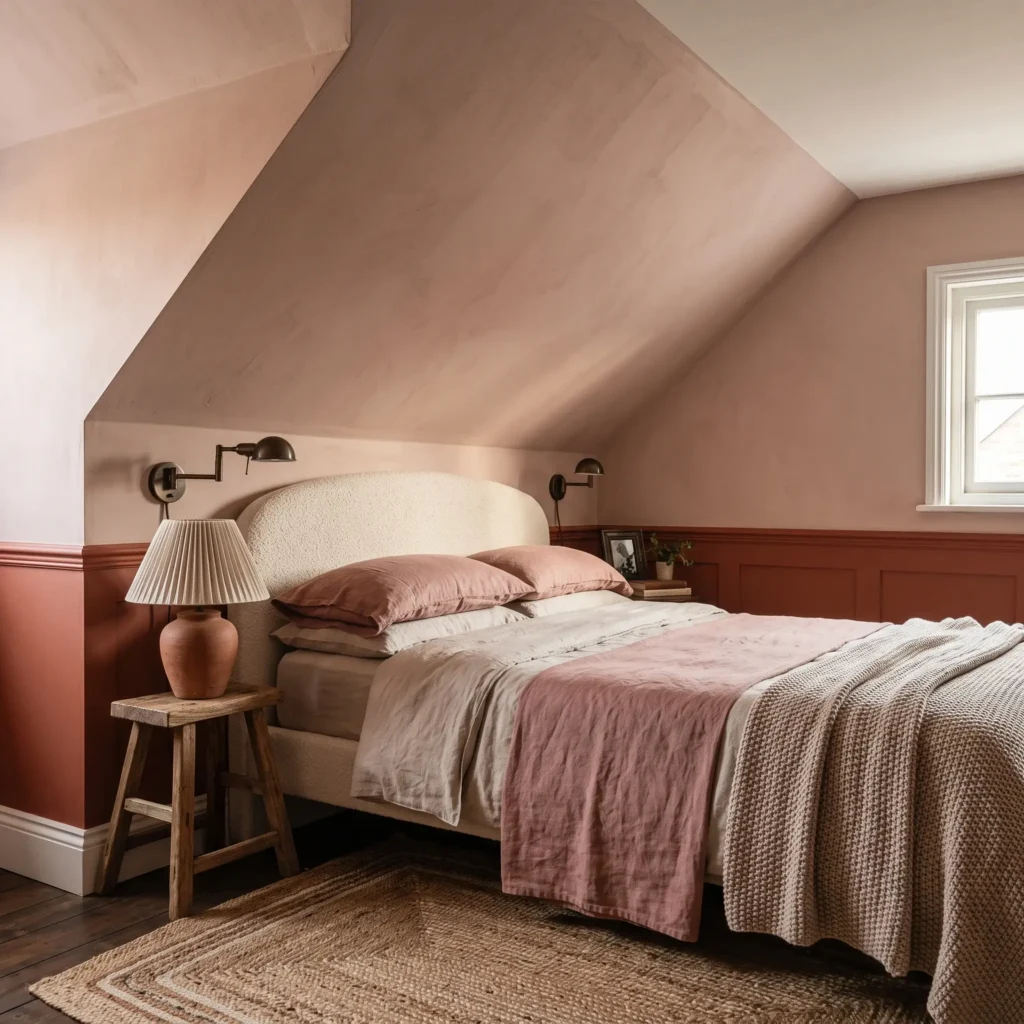
5. The Grounded Plaster Blush Palette
Plaster pink acts as a sophisticated neutral. Unlike sweet pastel pinks, a dusty plaster shade contains gray and clay undertones that add welcoming warmth to low-light rooms.
- Main Wall Color: Farrow and Ball Setting Plaster (No. 231), LRV 51, Estate Emulsion
- Trim and Baseboards: Farrow and Ball School House White (No. 291), LRV 74, Estate Eggshell
- Ceiling: Farrow and Ball School House White (No. 291), Dead Flat Finish
- Focal Accent: Farrow and Ball Red Earth (No. 64), LRV 23, Satin Finish for wainscoting or desk
- Secondary Accents: Textured cream bouclé and dark antique bronze
Why This Palette Works in Small Bedrooms
Setting Plaster counteracts the cool, bluish cast common in north-facing windows. It replicates the warm glow of evening light throughout the day, preventing small rooms from feeling cold or damp.
Products Used in This Room Design
- Curved cream bouclé upholstered headboard
- Antique bronze swing-arm reading lamp mounted on the wall
- Terracotta ceramic bedside lamp with pleated raw linen shade
- Dusty rose washed flax linen bed runner
- Natural woven jute rug with braided border detail
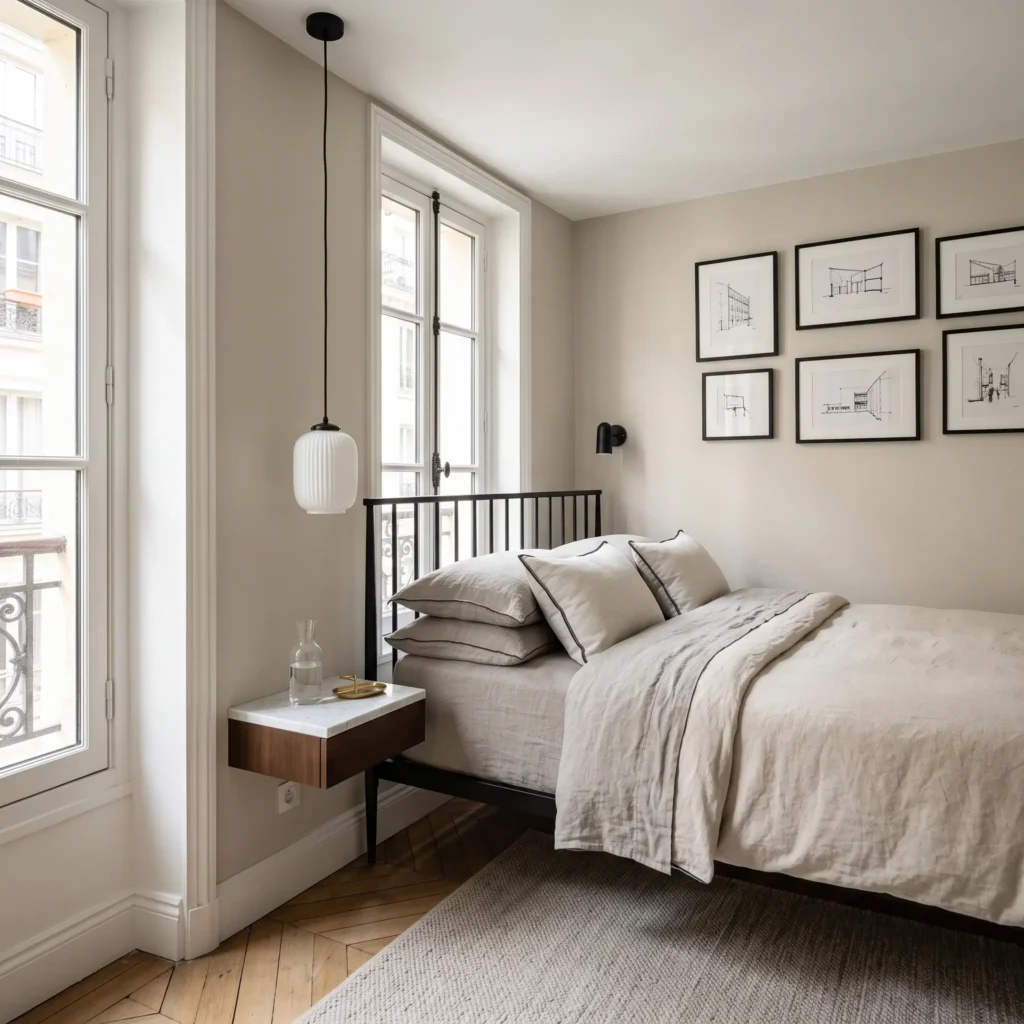
6. The Modern Parisian Greige Palette
Greige combines the crispness of gray with the comfort of beige. It provides clear architectural definition without making small layouts feel boxed in.
- Main Wall Color: Benjamin Moore Edgecomb Gray (HC-173), LRV 63.8, Matte Finish
- Trim and Doors: Benjamin Moore Chantilly Lace (OC-65), LRV 90, Satin Finish
- Ceiling: Benjamin Moore Chantilly Lace (OC-65), Flat Finish
- Focal Accent: Benjamin Moore Wrought Iron (2124-10), Satin Finish on window mullions or frames
- Secondary Accents: Carrara marble surfaces and slim matte black steel
Why This Palette Works in Small Bedrooms
Edgecomb Gray maintains its balance in changing daylight. It provides enough contrast against crisp white trim to delineate room lines cleanly without visually segmenting the room.
Products Used in This Room Design
- Slim black cast-iron spindle bed frame
- Gray-beige flax linen sheet set with charcoal piping details
- Floating wall-mounted nightstand with white Carrara marble top
- Ribbed milk-glass bedside pendant light with black cord
- Minimalist black-and-white architectural sketch art prints in thin frames
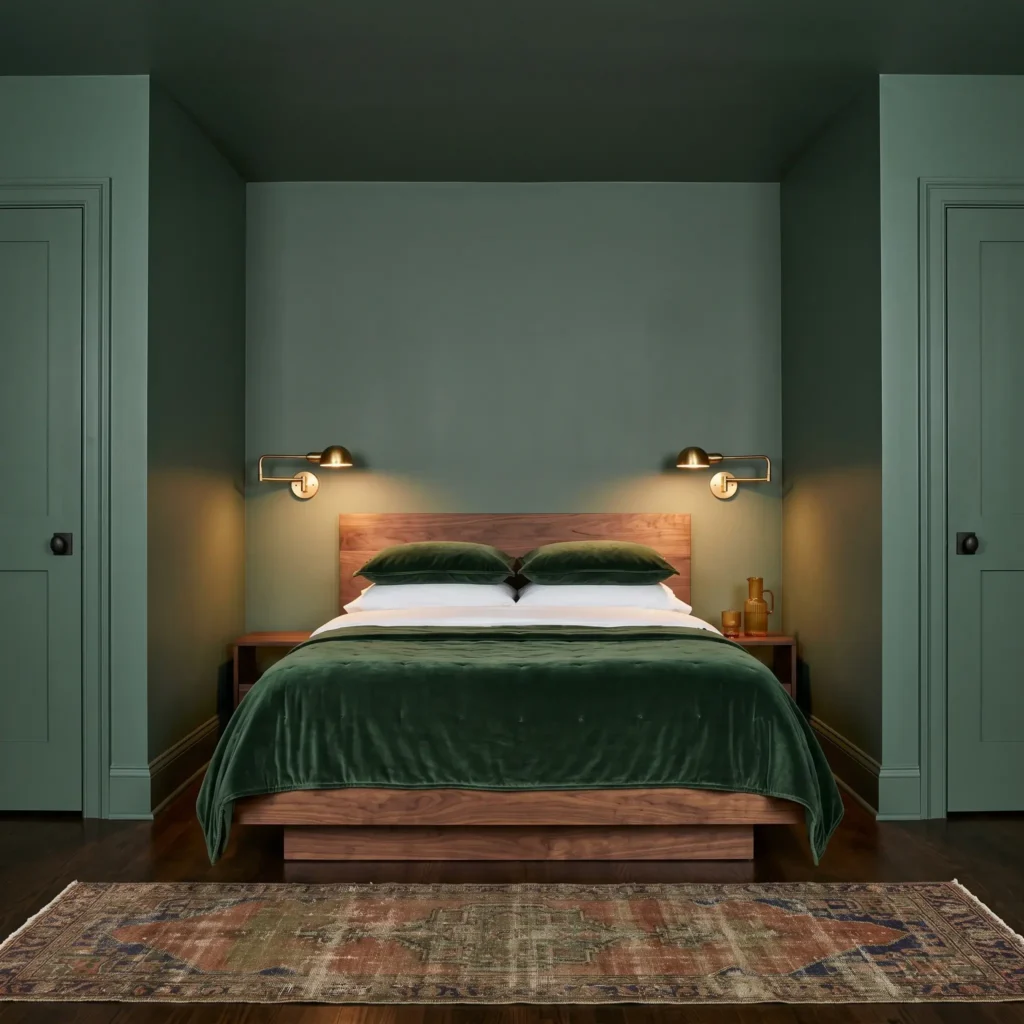
7. The Heritage Forest Hideaway Palette
Deep smoky green adds instant character to plain rooms. When combined with dark wood and warm brass, it creates a cozy, boutique hotel aesthetic.
- Main Wall Color: Farrow and Ball Green Smoke (No. 47), LRV 19, Estate Emulsion
- Trim and Baseboards: Farrow and Ball Green Smoke (No. 47), Modern Eggshell
- Ceiling: Farrow and Ball Green Smoke (No. 47), Dead Flat Finish
- Focal Accent: Little Greene Lamp Black (No. 228), Satin Finish for accent furniture
- Secondary Accents: American dark walnut and unlacquered polished brass
Why This Palette Works in Small Bedrooms
Color drenching the ceiling, walls, and baseboards in the same deep green erases room corners. The eye travels smoothly across every plane, giving small rooms an intimate, sheltered feel.
Products Used in This Room Design
- Low-profile solid American walnut platform bed frame
- Moss green velvet duvet cover layered over crisp white cotton percale sheets
- Unlacquered brass wall sconces with adjustable swing arms
- Distressed vintage Persian wool runner rug in faded rust and olive tones
- Fluted amber glass water carafe and drinking glass set
8. The Scandinavian Sky Morning Palette
Pale blue mimics open sky and morning light. It clears visual clutter and creates a crisp, refreshing backdrop for compact rooms.
- Main Wall Color: Farrow and Ball Skylight (No. 205), LRV 61, Estate Emulsion
- Trim and Moldings: Farrow and Ball Wimborne White (No. 239), LRV 84, Estate Eggshell
- Ceiling: Farrow and Ball Wimborne White (No. 239), Dead Flat Finish
- Focal Accent: Farrow and Ball Inchyra Blue (No. 289), Satin Finish for nightstands or doors
- Secondary Accents: Natural blonde birch wood and crisp white waffle cotton
Why This Palette Works in Small Bedrooms
Skylight contains gray undertones that keep it grounded. It avoids reading as nursery pastel, providing a crisp, peaceful atmosphere that bounces morning sunlight across the room.
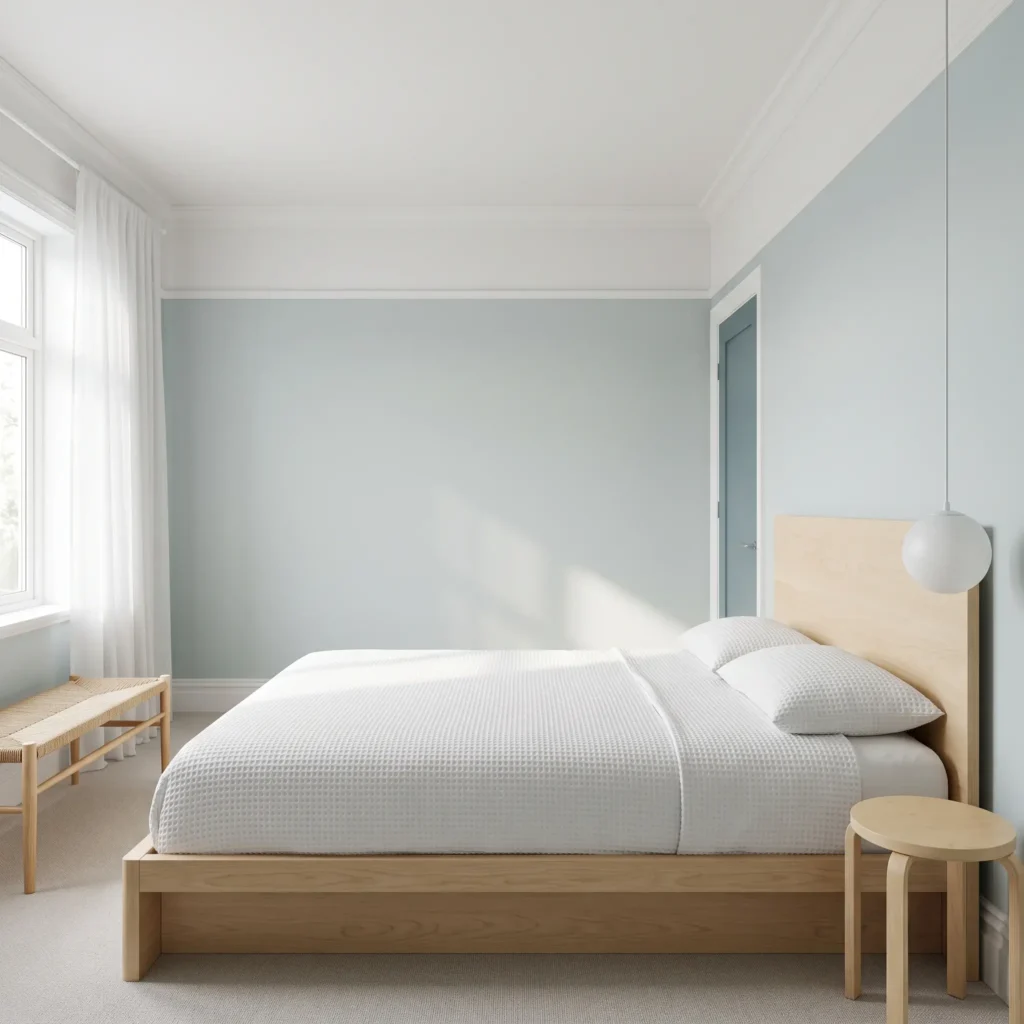
Products Used in This Room Design
- Minimalist natural birch platform bed with clean headboard panel
- Crisp white waffle-weave cotton bedspread and pillow covers
- Frosted white glass globe pendant light suspended over the nightstand
- Round blonde birch wood side stool used as a bedside table
- Hand-woven paper cord bench placed near the window
How Window Orientation Changes Paint Colors
The direction your windows face changes how paint looks on your walls. A shade that looks warm in a store can read cold gray or overly yellow in your home.
Use this natural light guide to match your room orientation with the correct undertones:
| Window Direction | Natural Light Profile | Common Undertone Problem | Strategic Paint Solution | Top Recommended Swatch |
| North-Facing | Cool, indirect, consistent bluish cast all day | Cool whites and grays turn dingy, flat, and cold | Use paints with warm cream, yellow, or pink bases | Benjamin Moore White Dove (OC-17) |
| South-Facing | Warm, golden, intense light all day | Warm whites and beiges turn overly yellow | Use cool mineral undertones, soft blues, and grays | Sherwin-Williams Repose Gray (SW 7015) |
| East-Facing | Bright warm light at dawn, cool shade by midday | Pastels wash out at 7 AM and feel cold by 3 PM | Use balanced neutrals that hold depth in shade | Benjamin Moore Cloud White (OC-130) |
| West-Facing | Dull morning shadow, fiery orange light at sunset | Warm reds and beiges become uncomfortably hot | Use desaturated cool grays and muted greens | Sherwin-Williams Sea Salt (SW 6204) |
Light Reflectance Value and the White Paint Myth
Light Reflectance Value measures the percentage of visible light that a painted surface reflects. The scale runs from 0 (total light absorption) to 100 (complete reflection).
The High-LRV Fallacy
Many people assume painting a small room pure white (LRV 85 or higher) makes it feel bigger. This only works if the room has huge windows and continuous sunlight.
High-LRV paint needs ambient light to bounce. When a small bedroom lacks strong daylight, white paint cannot reflect light. Instead, the walls turn a shadowy, uninviting cement gray.
The Low-LRV Depth Strategy
Paints with an LRV below 20 work through light absorption. Dark colors like Benjamin Moore Hale Navy or Farrow and Ball Hague Blue hide the sharp corners where two walls meet.
By blurring these physical perimeter lines, dark paints give walls an illusion of infinite depth, making the bedroom feel like a cozy, expansive alcove.
Sleep Biology: Colors That Induce Restful Sleep
Your wall color interacts directly with your natural circadian rhythm.
The human retina contains specialized ganglion cells that react to light through a photopigment called melanopsin. This photopigment is sensitive to blue wavelengths between 460 and 490 nanometers.
- Calming Pigments: Muted, desaturated hues like sage green, soft slate, and warm taupe activate your parasympathetic nervous system. They lower heart rate and reduce stress before sleep.
- Stimulating Pigments: Highly saturated reds, bright yellows, and neon tones stimulate the sympathetic nervous system. They elevate alertness and delay sleep onset.
- The Artificial Light Rule: Even calming wall paint will not help if you use cold overhead lights. Always use warm LED bulbs rated at 2700K or lower in your bedside lamps to support natural melatonin production.
Professional Painting Techniques for Small Spaces
How you apply your paint alters spatial perception just as much as the color itself.
1. Planar Color Drenching
Color drenching means painting your walls, baseboards, door frames, and doors in the exact same color.
Contrasting white baseboards outline the room, highlighting its small size. Drenching removes these harsh dividing lines. Your eyes move across the room without stopping, which makes boundaries feel softer.
- Ceilings: Use flat paint to hide drywall flaws and prevent harsh light reflection.
- Walls: Use eggshell or matte paint to diffuse natural light softly.
- Woodwork and Doors: Use satin paint for durability and gentle surface contrast.
2. Ceiling Height Illusions
A stark white ceiling paired with dark walls creates a hard visual line overhead, making low ceilings feel lower.
- The 15 Percent Mix: Blend 15 percent of your wall paint into flat white ceiling paint. This softens the transition line and makes the ceiling feel higher.
- The Sky Blue Technique: Paint the ceiling in a pale, high-LRV sky blue like Farrow and Ball Borrowed Light. This creates a soft receding effect that draws the eye upward.
3. The 60-30-10 Rule for Compact Bedrooms
Balance your color choices using this classic proportion:
- 60 Percent Base Color: Your primary wall color across the main drywall surfaces.
- 30 Percent Secondary Color: Bedding, curtains, and large area rugs. Keep these close in tone to the walls to reduce visual breaks.
- 10 Percent Accent Color: High-contrast accents on bedside lamps, throw pillows, and art frames to establish focal points.
Direct Paint Brand Specification Matrix
| Brand Name | Shade Name and Code | LRV | Undertone Profile | Ideal Room Condition |
| Sherwin-Williams | Alabaster (SW 7008) | 82.0 | Warm Cream and Beige | Low-light rooms needing warmth |
| Sherwin-Williams | Sea Salt (SW 6204) | 63.0 | Muted Slate and Pale Sage | South-facing rooms with warm sun |
| Sherwin-Williams | Accessible Beige (SW 7036) | 58.0 | Balanced Golden Greige | Rooms with mixed daytime light |
| Benjamin Moore | White Dove (OC-17) | 83.2 | Soft Cream and Pale Umber | North-facing rooms with cool cast |
| Benjamin Moore | Healing Aloe (1562) | 68.2 | Pale Green and Gray | Guest rooms and calming nurseries |
| Benjamin Moore | Hale Navy (HC-154) | 8.4 | Classic Navy and Slate | Cozy, color-drenched master rooms |
| Farrow and Ball | Setting Plaster (No. 231) | 51.0 | Dusty Rose and Warm Clay | Rooms needing soft evening glow |
| Farrow and Ball | Green Smoke (No. 47) | 19.0 | Smoky Olive and Muted Sage | Small rooms using color drenching |
| Farrow and Ball | Skylight (No. 205) | 61.0 | Soft Mineral Cyan and Gray | Rooms with morning east daylight |
Practical 5-Step Painting Action Plan
- Identify Window Direction: Check whether your windows face North, South, East, or West to pick the correct warm or cool undertones.
- Select Your Spatial Strategy: Decide if you want to expand space with high-LRV tones (LRV 65 to 85) or build an intimate sanctuary with deep hues (LRV below 20).
- Pick Matching Finishes: Use flat finish on the ceiling, matte or eggshell on walls, and satin on trim.
- Unify the Perimeter: Paint baseboards and window frames in the wall color to eliminate contrasting borders.
- Adjust Your Lighting: Replace cool white bulbs with warm 2700K LED bulbs to support relaxing evening rest.
Frequently Asked Questions
Does painting a small bedroom dark make it feel smaller?
No. Dark paint absorbs light and conceals the corners where walls meet. In compact spaces, deep tones like charcoal, dark green, and navy create an illusion of depth, making perimeter walls feel farther away.
What is the best paint sheen for small bedroom walls?
Matte or low-luster eggshell works best on bedroom drywall. These finishes scatter light evenly without creating glare. Use satin finish on baseboards and doors for scuff protection and easy cleaning.
How do I stop a white bedroom from looking cold?
Avoid pure bright whites with blue bases. Choose warm whites with yellow, cream, or beige undertones like Sherwin-Williams Alabaster or Benjamin Moore White Dove. Add natural textures such as white oak furniture, linen bedding, and brass light fixtures.
Should baseboards match the wall color in a small bedroom?
Yes. Painting baseboards the same color as the walls is called color drenching. It removes high-contrast horizontal borders that outline the floor, helping the space feel unified and open.
How many paint samples should I test before choosing?
Test at least two or three sample swatches using 12×12 inch peel-and-stick sheets. Move them across different walls over 48 hours to observe how the color shifts under morning sun, afternoon shade, and evening lamp lighting.