
Seasonal Decorating: 10 Stunning Ideas for Every Season

Most seasonal decorating advice pushes you to buy plastic tubs of cheap holiday items. Two weeks later, the holiday passes. You pack everything into boxes, haul them to the attic, and repeat the cycle.
Real seasonal decorating is different. It is not about holiday clutter. It is about aligning your home with the natural rhythm of the year. When outdoor daylight and temperatures shift, your living spaces should respond. A thoughtful seasonal update changes how a room feels, breathes, and supports your everyday comfort.
The simplest way to achieve this is the capsule decor method. You keep ninety percent of your foundational furniture and wall paint neutral. Then, you rotate a small ten percent layer of textiles, botanicals, lighting, and accents.
Here are ten practical, designer-approved decorating ideas you can use to transition your home through spring, summer, autumn, and winter.
10 Stunning Seasonal Decorating Ideas for Every Season
1. The Capsule Entryway Console
Your entryway sets the tone the moment you step inside. Instead of crowding the console table with holiday signs, build a permanent three-piece base: a large wall mirror, an accent lamp, and a catchall dish. Rotate only the vessel and organic foliage to reflect the calendar.
- Spring: Place pale pink cherry blossom cuttings in a clear glass jug alongside a bone-inlay tray.
- Summer: Style a broad fan palm frond in a scrubbed white stoneware pot with a bleached wood dish.
- Autumn: Fill a heavy salt-glazed crock with turning copper beech branches and a small brass tray.
- Winter: Set a potted dwarf spruce tree in an aged concrete planter with an unlacquered brass bowl.
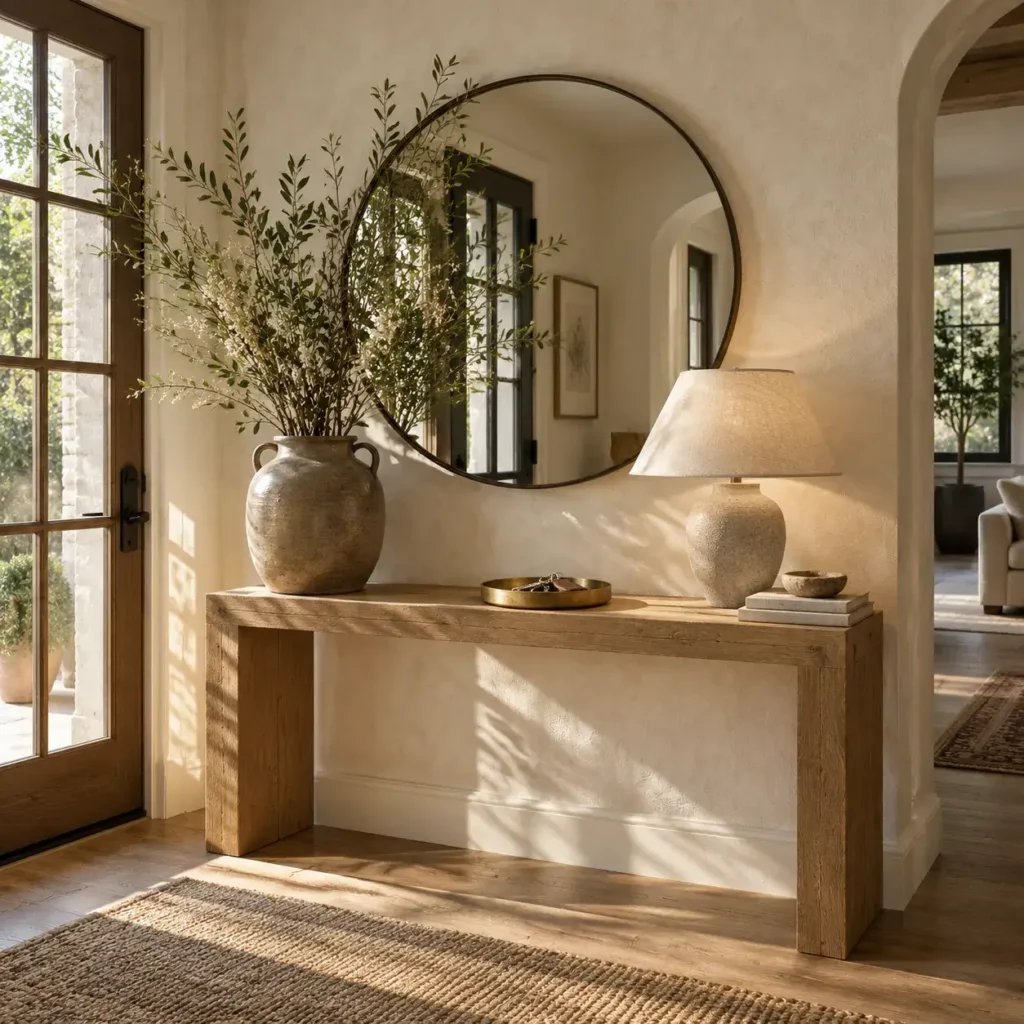
Products Used in This Look:
- White oak entryway console table with lower shelf
- Aged salt-glazed stoneware crock (14 inches tall)
- Foraged seasonal branches (cut cherry blossom, beech, or pine)
- Solid unlacquered brass key dish
- Woven water hyacinth storage basket for lower shelf
- Tall round mirror with a thin black iron frame
2. The Multi-Textural Pillow and Slipcover Swap
Storing dozens of bulky accent pillows quickly fills your closet storage. Buy high-quality feather down inserts once. Then, swap out zippered pillow covers as the outdoor weather turns. This single adjustment changes the visual weight and comfort of your living room sofa.
- Spring: Washed slubbed linen covers in pale moss green, soft sky blue, or butter yellow paired with crisp ivory cotton.
- Summer: Raw open-weave gauze and bleached flax covers that feel cool and breathable against bare skin.
- Autumn: Heavy cotton corduroy, warm ochre wool blends, and ribbed rust velvet that add visual warmth.
- Winter: Creamy shearling wool covers, charcoal bouclé, and deep spruce velvet paired with heavy knit throws.
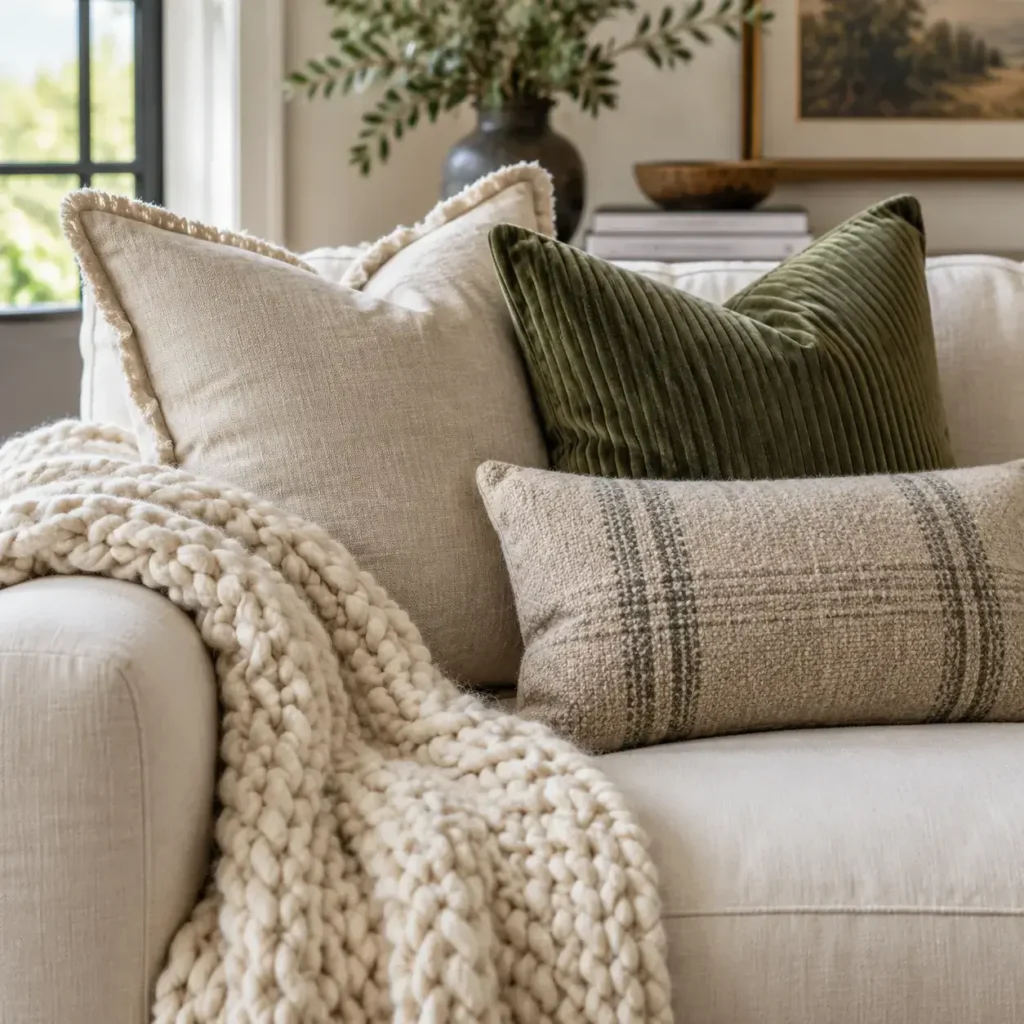
Products Used in This Look:
- Cream-colored performance linen sectional sofa
- 22×22 inch down feather pillow inserts
- Washed Belgian linen pillow covers with exposed flange edges
- Ribbed cotton velvet lumbar pillow cover (14×36 inch)
- Chunky hand-woven wool throw blanket with fringe detail
Check out more Decor Styles
3. The 3-Tier Coffee Table Landscape
A cluttered coffee table makes an entire living room feel disordered. Keep coffee table surfaces clean by following a simple three-tier design rule: flat books create base height, a low tray corrals small objects, and an organic element brings life.
- Spring: Stack oversized linen art books beside a shallow marble bowl filled with moss spheres and fresh white tulips.
- Summer: Use a low bleached rattan tray holding sea glass tumblers, smooth river stones, and a sliced citrus candle.
- Autumn: Set an unvarnished wood tray with a cluster of speckled stoneware pots, brass matches, and dried wheat stalks.
- Winter: Arrange a dark cast-iron tray with three ribbed pillar candles and a small bowl of whole walnuts.
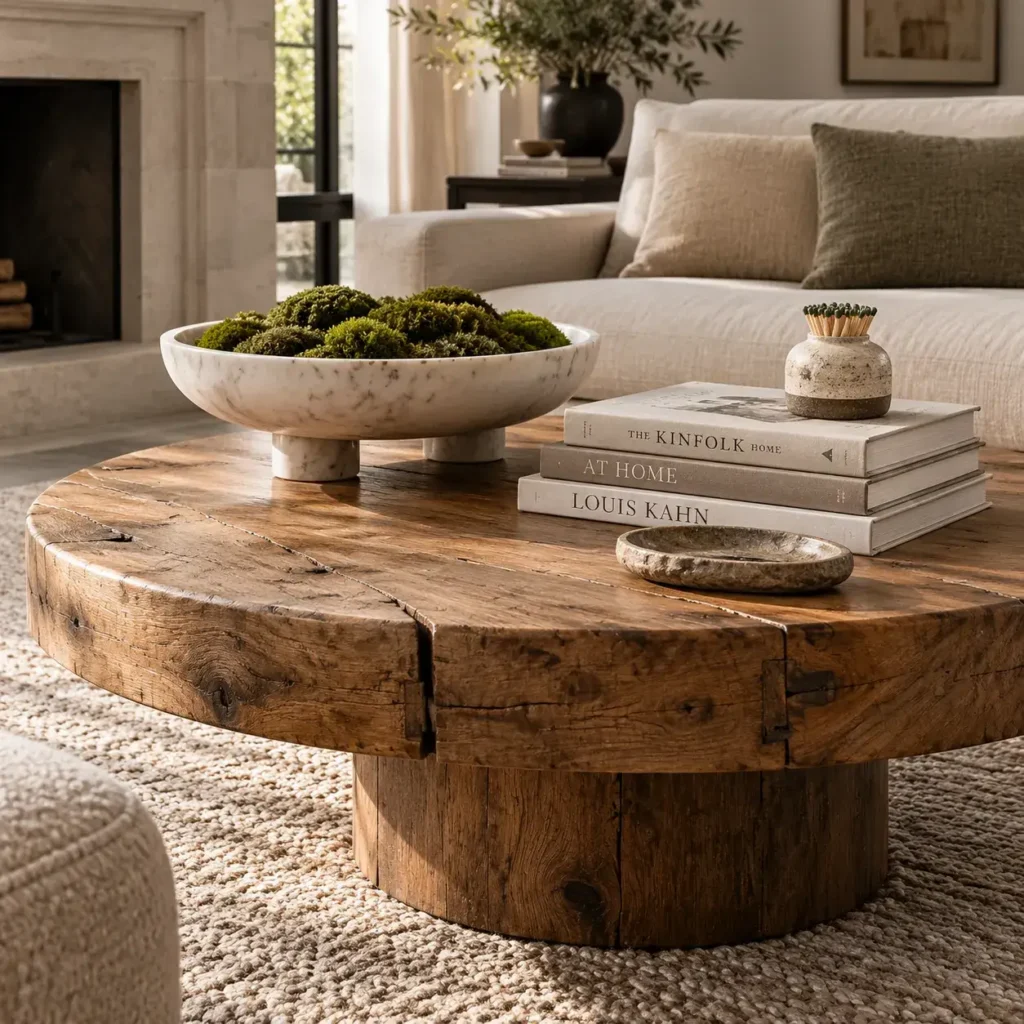
Products Used in This Look:
- Reclaimed elm round coffee table
- Hand-carved white marble footed bowl
- Hardcover architectural and landscape photography books
- Ribbed unscented pillar candles of varying heights
- Match striker made of unglazed ceramic
4. Architectural Branches Over Small Flowers
Standard cut flower bouquets often look lost in open spaces and wilt within a week. Swap them for five-foot branches clipped directly from seasonal trees or purchased from a local florist. Tall branches introduce structural height and draw the eye upward toward your ceiling.
- Spring: Flowering dogwood, quince branches, or flowering cherry branches with buds that open indoors over several weeks.
- Summer: Long stems of silver dollar eucalyptus, cut leafy olive branches, or large single monstera fronds.
- Autumn: Red oak branches with turning copper leaves, wild sumac, or branches displaying persimmons or crabapples.
- Winter: Bare winterberry branches loaded with bright red berries, or clippings of fragrant noble fir and white pine.
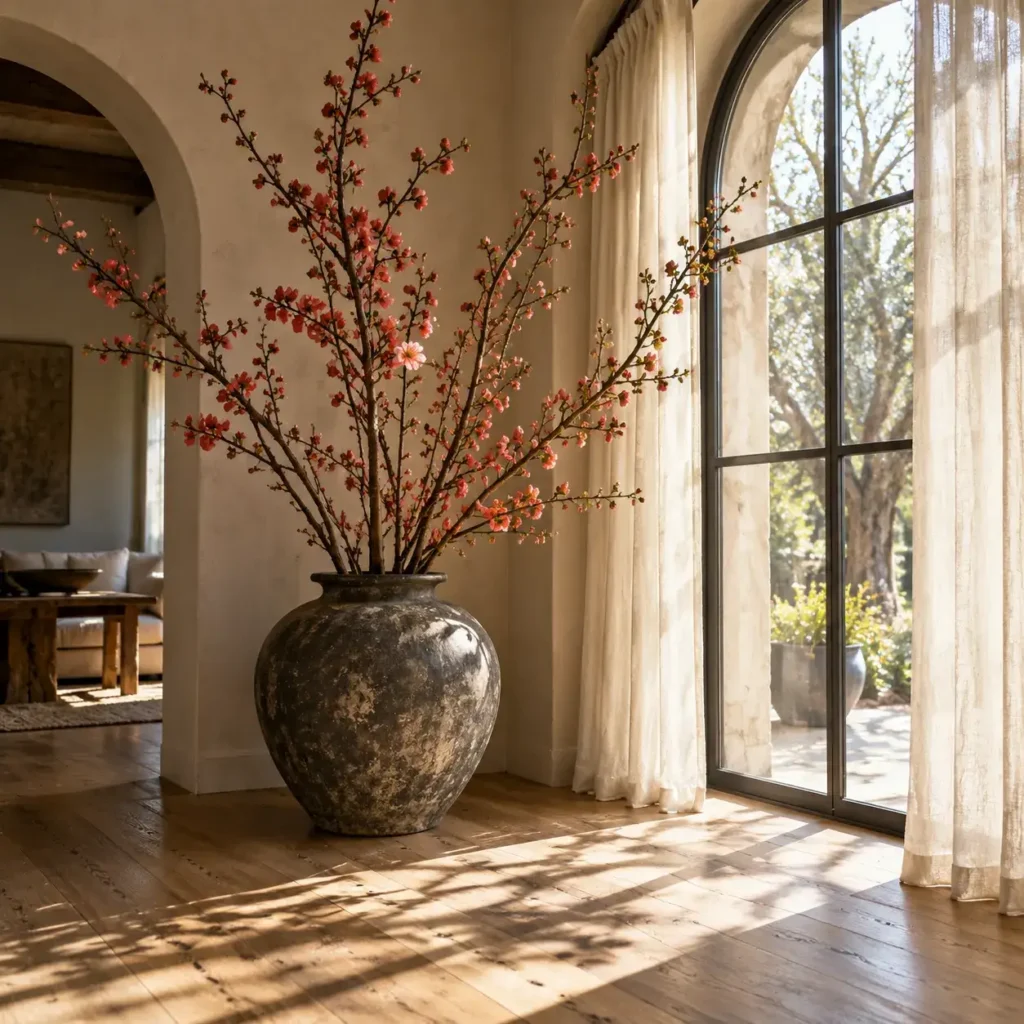
Products Used in This Look:
- Heavy unglazed charcoal ceramic amphora vase (18 inches tall)
- Freshly clipped flowering quince branches (approx. 5 feet tall)
- Natural oak hardwood flooring with matte finish
- Off-white linen curtains hanging in the background
5. Asymmetrical Fireplace Mantel Architecture
Avoid lining up identical objects symmetrically across your fireplace mantel. Symmetrical arrangements feel stiff and formal. Instead, place your visual weight on one side and let the composition taper off naturally toward the other.
- Spring: Lean a framed landscape oil painting on the left side, balanced by an aged terracotta pot holding wild maidenhair fern on the right.
- Summer: Keep the mantel open and clean with a single piece of bleached white sea coral anchored on one corner and clear glass candle hurricanes across the base.
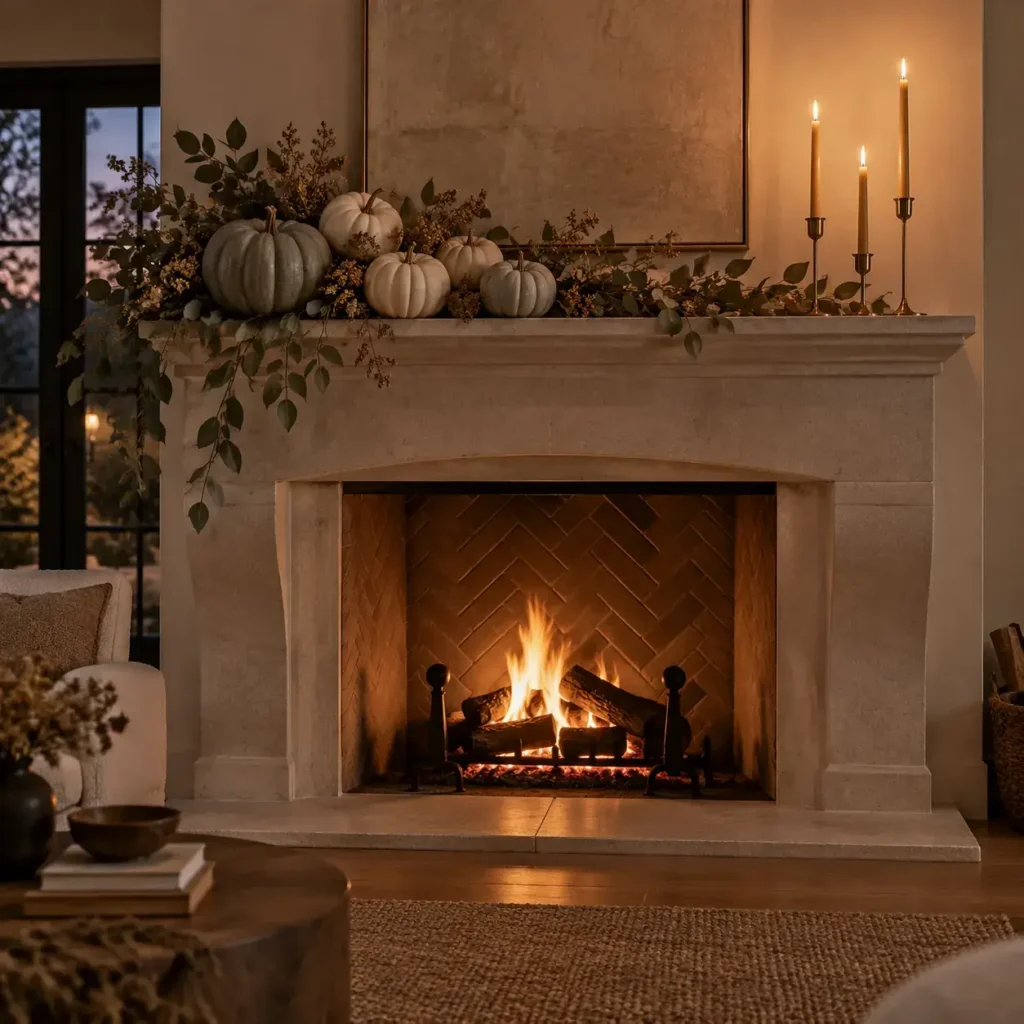
- Autumn: Arrange an organic cluster of heirloom green and white pumpkins on the left, trailing into dried eucalyptus and slender taper candles on the right.
- Winter: Layer mixed noble fir and southern magnolia boughs along the full shelf, allowing the bronze undersides of the leaves to drape off the side.
Products Used in This Look:
- Carved limestone fireplace surround
- Real heirloom Jarrahdale and white Casper pumpkins
- Preserved dried eucalyptus branches
- Solid brass taper candle holders of graduated heights
- Beeswax taper candles in natural honey color
6. Circadian Lighting and Amber Glow Calibration
Lighting dictates the emotional feel of your room more than furniture. As external daylight shortens through the calendar year, adjust your internal bulbs and accent lamps. Never rely on harsh overhead can lights to create a relaxing home environment.
- Spring: Open window shades completely to capture 3000K natural daylight. Use thin white paper lantern shades for gentle evening diffusion.
- Summer: Install woven wicker or rattan pendant lamps that cast breezy, geometric shadows across light-colored walls during late twilights.
- Autumn: Switch accent lamps to warm 2400K LED filament bulbs. Add small cordless accent lamps with fluted amber glass shades to kitchen counters and bookshelves.
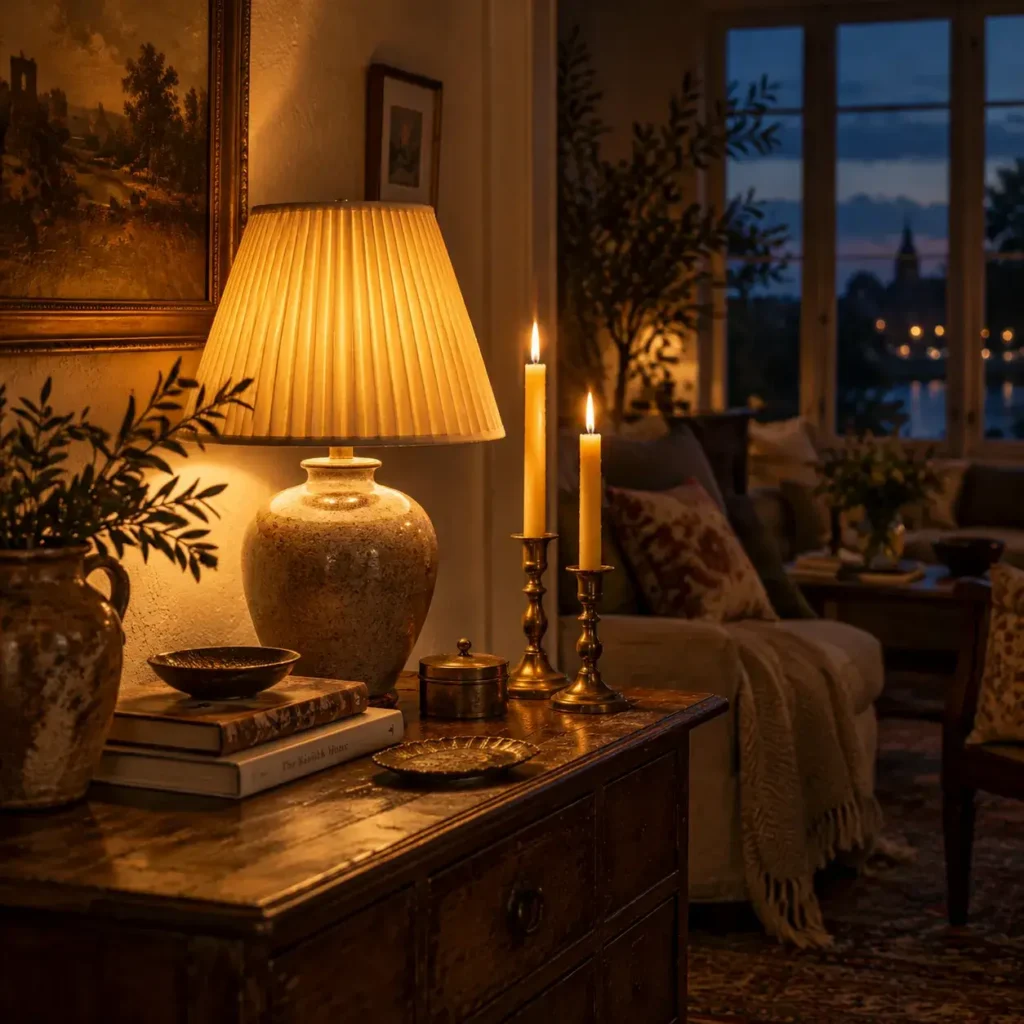
- Winter: Rely on secondary eye-level lighting. Cluster tall beeswax taper candles and low frosted glass votives to create pools of warm 2200K golden light.
Products Used in This Look:
- Fluted amber glass cordless accent lamp
- 2400K warm filament LED bulbs
- Solid unlacquered brass candlestick holders
- 100% pure hand-dipped beeswax taper candles
- Pleated fabric table lamp shade on a ceramic base
7. The Rotating Kitchen and Dining Tablescape
Your dining table and kitchen island need practical styling that can stay in place during everyday meals. Avoid elaborate centerpieces that block sightlines or get pushed aside when dinner arrives. Use functional, food-centric displays.
- Spring: Run an unironed raw linen runner down the center with three small terracotta pots of live culinary herbs like rosemary, mint, and thyme.
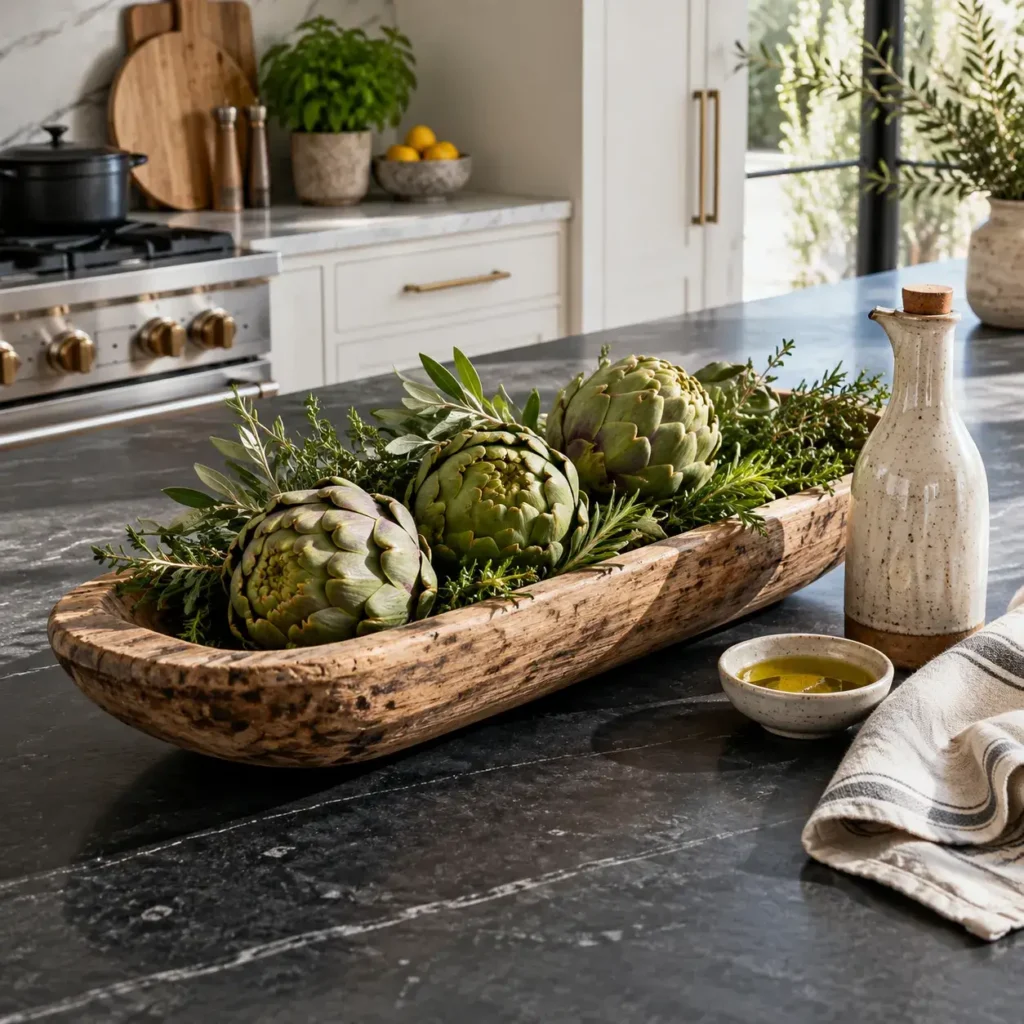
- Summer: Fill a broad, shallow hand-turned wood bowl with fresh green artichokes, ripe limes, and leafy Meyer lemons.
- Autumn: Place a thick vintage French cutting board on your island centered with dark olive oil bottles, sea salt flakes, and a compote of Bosc pears.
- Winter: Cover the table with a charcoal washed linen cloth, matte black iron candleholders, and a footed brass compote filled with whole pomegranates.
Products Used in This Look:
- Hand-carved reclaimed wood dough bowl (24 inches long)
- Fresh green globe artichokes and organic lemons
- Stoneware olive oil cruet with pouring spout
- Natural Belgian linen table runner with hemstitch detail
- Turned wooden pepper mill
8. Seasonal Bedding Architecture
Your bed is the largest textile surface in your home. Adjusting the weight, drape, and material of your bedding immediately aligns your bedroom with seasonal climate changes while keeping you sleeping comfortably.
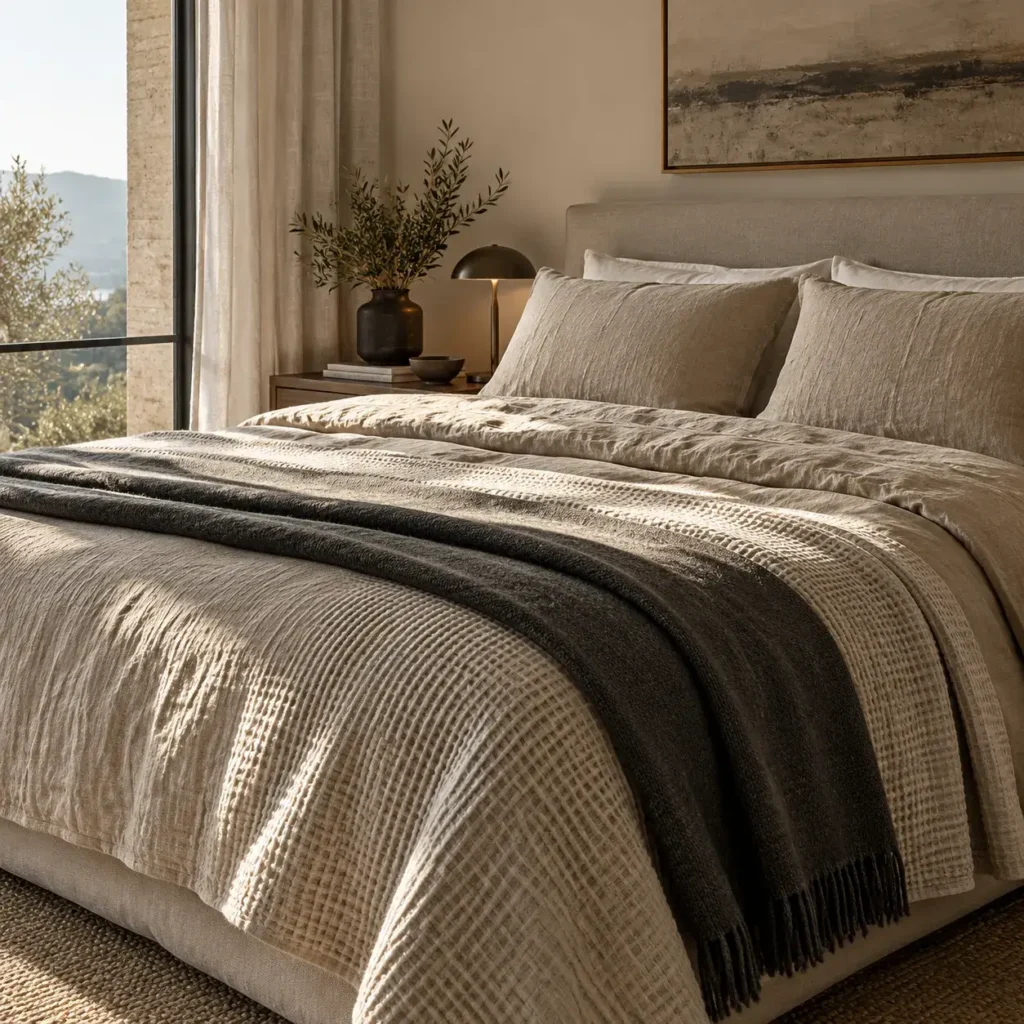
- Spring: Crisp 300-thread-count cotton percale sheets topped with a lightweight cotton waffle blanket in soft pale sage or oat.
- Summer: A French flax linen duvet cover used without an insert, creating a breathable, casually rumpled layer that keeps hot nights cool.
- Autumn: Medium-weight down alternative duvet paired with an earthy herringbone wool blanket folded at the foot of the bed.
- Winter: Layered flannel sheeting beneath a heavy washed velvet quilt in dark olive or espresso, finished with a genuine sheepskin pelt beside the bed.
Products Used in This Look:
- Washed French flax linen duvet cover in oatmeal
- 100% cotton waffle-weave blanket in warm taupe
- Washed percale cotton sheet set in ivory
- Heavyweight wool herringbone bed runner
- Upholstered linen headboard in natural sand
9. Natural Room Scentscaping
Scent acts as an invisible decorating layer. The moment someone steps into a room, fragrance triggers memory and comfort faster than visual cues. Skip artificial synthetic room sprays and switch to soy wax, pure essential oils, and organic botanicals.
- Spring: Diffuse essential oils of sweet bergamot, cut grass, petitgrain, and blooming neroli blossoms.
- Summer: Light clean coconut wax candles scented with crushed fig leaf, sea salt, driftwood, and lemon rind.
- Autumn: Simmer dried orange wheels, whole cinnamon sticks, star anise, and cloves on the stovetop, or burn candles with notes of dry tobacco and cedar.
- Winter: Fill the home with natural aromas of fresh balsam fir needles, frankincense, Siberian pine resin, and smoky birchwood.
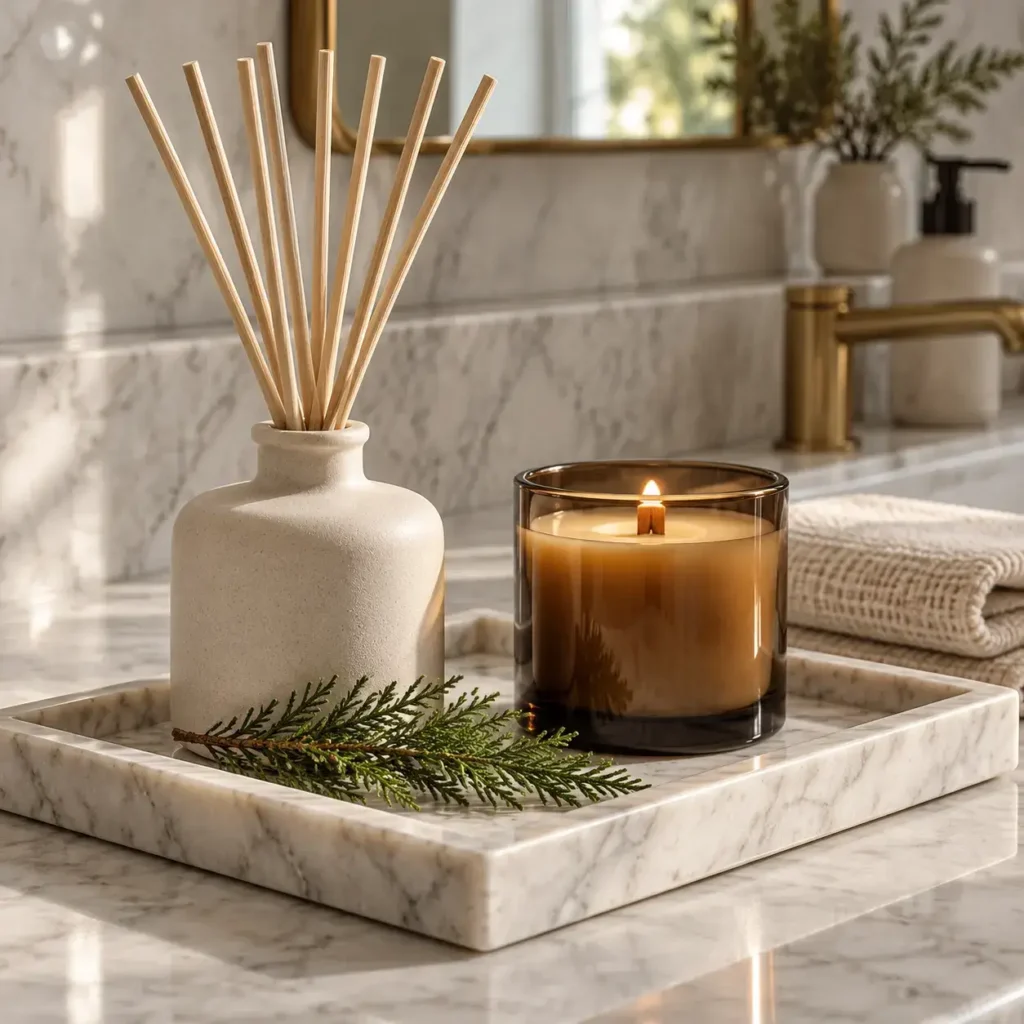
Products Used in This Look:
- Matte ceramic essential oil reed diffuser
- Hand-poured soy wax candle in an amber glass jar with wooden wick
- Small oval marble catchall tray
- Foraged sprig of fresh evergreen pine
10. The Curated Front Porch Threshold
Do not stop your seasonal design at your interior walls. Your front door and porch create the welcome threshold for your family and guests. Ground the outdoor entrance with hardy natural planters and durable layered flooring.
- Spring: Layer an indoor-outdoor striped rug beneath a thick natural coconut coir doormat. Flank the door with twin stone planters filled with white violas and lavender.
- Summer: Hang lush Boston ferns in moss-lined wire baskets and style comfortable teak chairs with UV-resistant striped throw pillows.
- Autumn: Cluster heirloom Cinderella pumpkins in muted peach, slate green, and cream up the steps, paired with rust chrysanthemums in weathered metal buckets.
- Winter: Place two small potted Alberta spruce trees framing the front door, finished with a fresh cedar and juniper door wreath tied with raw velvet ribbon.
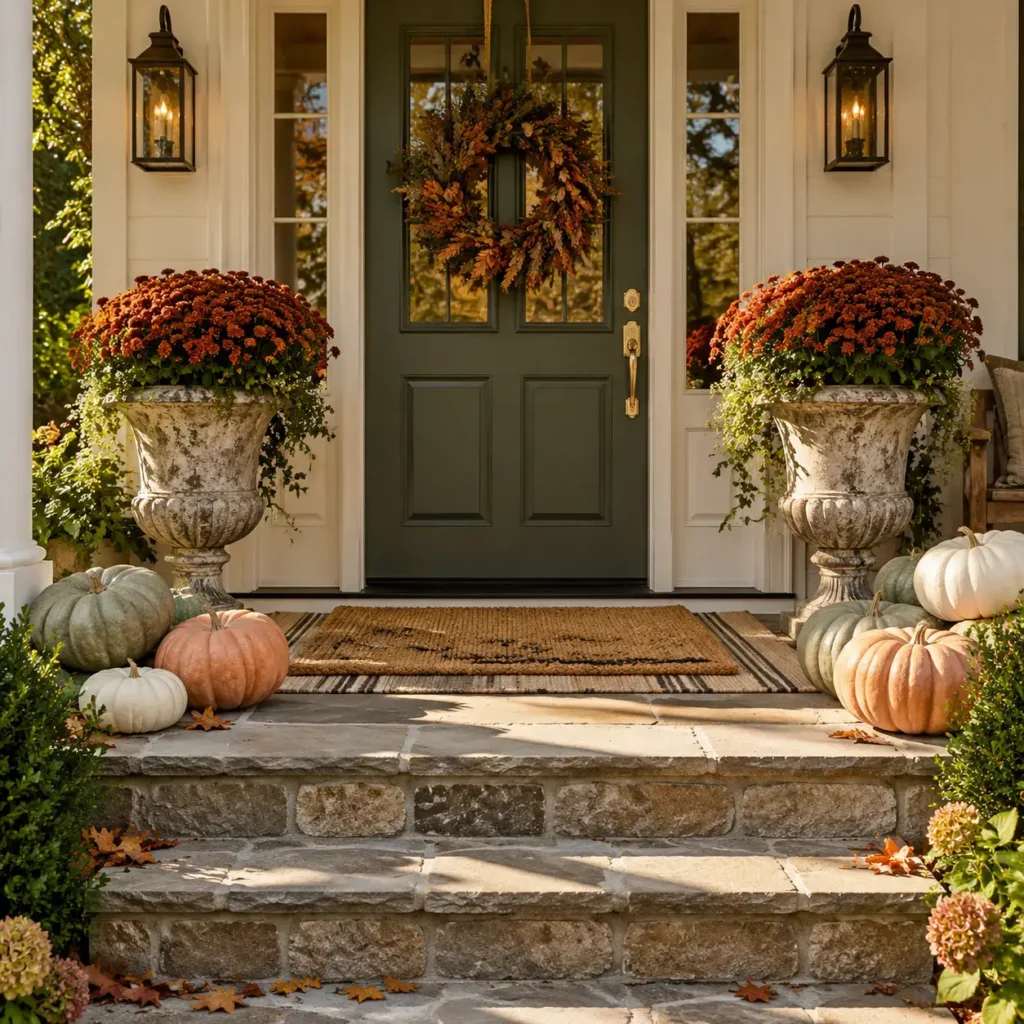
Products Used in This Look:
- Thick natural coconut coir front door mat (24×36 inch)
- Black and white woven outdoor accent rug for layering (3×5 foot)
- Assorted heirloom pumpkins (Cinderella, Jarrahdale, and white ghost)
- Fluted weathered stone planters
- Fresh potted bronze chrysanthemums
The 60-30-10 Rule for Year-Round Seasonal Decorating
The biggest obstacle to seasonal decorating is the feeling that you must redesign your whole house four times a year. That approach wastes money, generates clutter, and causes design fatigue.
Professional interior designers use a structural ratio to keep homes balanced throughout the calendar year:
- The 60% Architectural Foundation: This includes your wall paint, baseboards, primary flooring, window casing, and architectural trim. Keep this layer grounded in timeless, desaturated neutral shades such as alabaster, warm limestone, pale chalk, or greige. This envelope stays constant year-round.
- The 30% Permanent Investments: This tier covers your large furniture pieces. Your sofa frames, dining room tables, storage credenzas, and large area rugs belong here. Investing in quality wood, neutral linen upholstery, and natural wool carpets ensures your core rooms never clash with seasonal shifts.
- The 10% Agile Accent Layer: This is the only part of your home that rotates. It includes pillow covers, throw blankets, botanical vessels, candleholders, tabletop runners, and scent diffusers.
Because ninety percent of your home remains calm and consistent, that rotating ten percent can change personality completely without disrupting the harmony of your home.
Room-by-Room Seasonal Transition Guide
Transitioning between seasons is about subtraction before addition. When you update a room, clear your surfaces first. Wipe down the bare surfaces, wash the window glass to let natural light in, and remove items that feel out of sync with the outdoor climate.
Living Room Transitions
- Warm Seasons (Spring and Summer): Swap in light linen pillow covers, uncover wood floors or lay down flat-woven jute rugs, and bring in fresh green branches.
- Cold Seasons (Autumn and Winter): Add ribbed velvet pillows, drape heavy wool throws, place high-pile sheepskins on chairs, and switch lamps to warm 2400K lighting.
Dining Room Transitions
- Warm Seasons (Spring and Summer): Leave the wood table surface bare, run raw linen down the center, display bowls of fresh citrus, and set out clear fluted glassware.
- Cold Seasons (Autumn and Winter): Lay heavy linen tablecloths, add slender taper candles in brass holders, introduce textured stoneware, and fill compote bowls with pomegranates or mini squash.
Master Bedroom Transitions
- Warm Seasons (Spring and Summer): Sleep with crisp percale cotton sheets, a lightweight linen duvet, and light-filtering sheer curtains that catch morning breezes.
- Cold Seasons (Autumn and Winter): Change to brushed flannel sheets, layer a heavy velvet quilt, fold a wool blanket at the foot of the bed, and turn on warm bedside lamps.
Entryway Transitions
- Warm Seasons (Spring and Summer): Set out clear glass jugs holding budding branches, a bone-inlay catchall tray, and woven straw market bags.
- Cold Seasons (Autumn and Winter): Use stoneware crocks filled with beech branches, plant dwarf evergreens in concrete urns, and set out unlacquered brass accents.
How to Store Seasonal Decor Without Adding Clutter
You do not need an oversized basement or five garage shelving racks to maintain seasonal decor. A disciplined system keeps your home neat and makes your quarterly swaps take less than one hour.
1. Store Pillow Covers, Not Pillows
Never buy a completely new accent pillow with attached stuffing for a seasonal change. Buy quality feather down inserts in standard sizes (20×20 and 22×22 inches). When the season ends, unzip the pillow covers, clean them, fold them flat, and store them in a single shallow dresser drawer.
2. Use Vacuum Compression Bags for Bulky Blankets
Heavy winter wool throws and velvet quilts take up massive closet volume. Place freshly laundered seasonal bedding into airtight vacuum seal bags. Compress the air out with a vacuum cleaner hose. Four heavy winter quilts will compress down to the height of a single folded blanket.
3. Organize by Room, Not by Holiday
Most people sort bins by holiday, labeling them “Halloween” or “Easter.” This forces you into rigid two-week decorating cycles. Instead, label clear plastic storage containers by room and seasonal temperature: “Living Room: Autumn and Winter Warmth” or “Dining Room: Spring and Summer Linens.” When the weather shifts, pull down the single box for that room, swap your ten percent accents, and put the out-of-season items directly into the newly emptied bin.
Frequently Asked Questions About Seasonal Decorating
What is the difference between holiday decor and seasonal decor?
Holiday decor focuses on specific calendar celebrations like Halloween, Christmas, or Valentine’s Day. It usually features novelty items, holiday symbols, and bright festive colors meant to stay out for two to three weeks. Seasonal decor draws inspiration from the natural three-month climate shift of nature. It focuses on textile weights, room scent, natural foliage, and lighting levels that keep a room comfortable and stylish for an entire quarter.
How do I decorate for seasons without spending a lot of money?
Focus on foraging and textile swaps. You can clip tall branches, wild grasses, pinecones, and seasonal greenery directly from your yard or local public pathways for zero dollars. For soft accents, invest in inexpensive pillow covers made from natural linen and velvet that fit over your existing inserts. Repurpose kitchen cutting boards, stone bowls, and glass food jars as vessels rather than buying specialized decor items.
When should I transition my home decor for each season?
Follow nature and daylight rather than retail store schedules:
- Spring: Transition in early to mid-March as daylight hours stretch and winter thaws.
- Summer: Refresh in late May around Memorial Day weekend when temperatures turn hot.
- Autumn: Transition in late September when evening temperatures cool and leaves start turning.
- Winter: Shift in late November or early December, introducing warm woods, evergreens, and cozy textiles that carry your home smoothly through January and February.
How do I decorate for winter after Christmas is over?
Pack away holiday-specific symbols like Santa figurines, red ribbons, ornaments, and stockings right after the New Year. Keep the cozy winter elements out: fresh or faux evergreen pine boughs, pinecones, white birch logs, textured cream bouclé pillows, thick wool throws, and warm candlelight. This prevents your living spaces from looking empty or cold while maintaining a cozy retreat through the coldest months of January and February.
Styling your home for the seasons does not require endless shopping trips or cluttered storage bins. When you anchor your living spaces in durable neutral furniture and treat decorating as an intentional sensory practice, refreshing your rooms becomes a calming, natural routine. Focus on swapping tactile fabrics, bringing clipped branches indoors, and warming up your evening lighting. Your home will feel balanced, comfortable, and welcoming every single day of the year.