Cottagecore Decor Ideas: 7 Cozy Ways to Style Without the Clutter

A home filled with vintage charm should feel calm and welcoming, not chaotic. Many homeowners and renters try to capture the warmth of an English countryside cottage, but they end up with rooms that look like cluttered secondhand stores. Cheap plastic replicas from fast-furniture retailers make spaces look cheap rather than historic.
Authentic cottagecore design focuses on slow living, natural materials, and functional history. It draws inspiration from nineteenth-century farmsteads and the historic Arts and Crafts movement. You do not need an English manor or a huge budget to get this look. You only need honest textures, warm lighting, and a few storied pieces chosen with care.
Here are seven practical room concepts designed for modern living, followed by paint formulas, lighting rules, and easy DIY projects.
7 Practical Cottagecore Decor Ideas for Real Homes
1. The Layered Linen Reading Corner
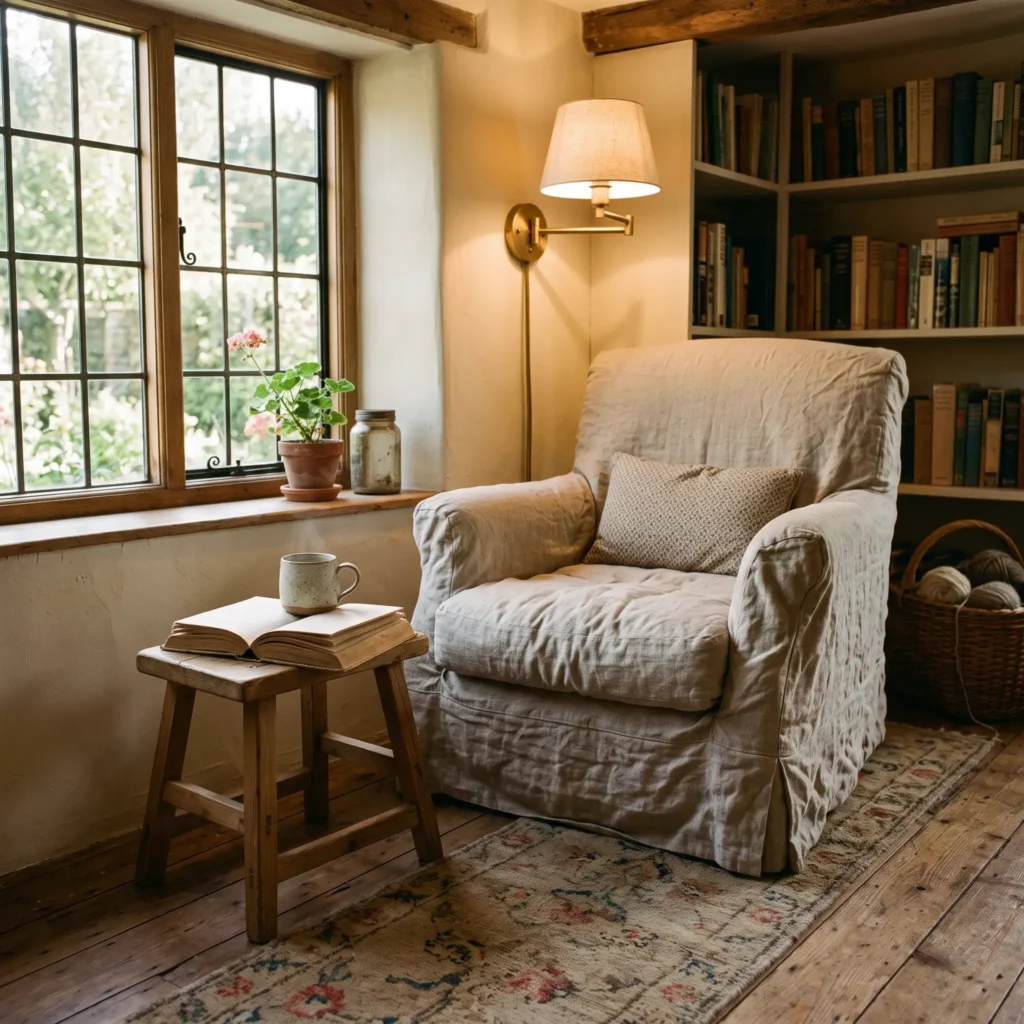
Turn an unused corner into a quiet reading retreat. Place a deep armchair with a relaxed linen slipcover near a sunny window. Layer a wool cable-knit throw blanket over the arm and anchor the floor with a faded vintage runner. Mount an adjustable brass wall lamp at shoulder height for evening reading. Set a small, raw wood stool next to the chair to hold a ceramic tea mug and secondhand books.
- Sourcing and Decor Checklist:
- Washed flax linen slipcovered armchair in oatmeal or cream
- Hand-knitted wool cable throw blanket
- Turned pine milk stool or antique side table
- Antique brass plug-in swing-arm wall lamp
- Faded Turkish or Persian wool runner rug
- Hand-thrown ceramic tea mug
2. The Forged Iron and Patchwork Bedstead
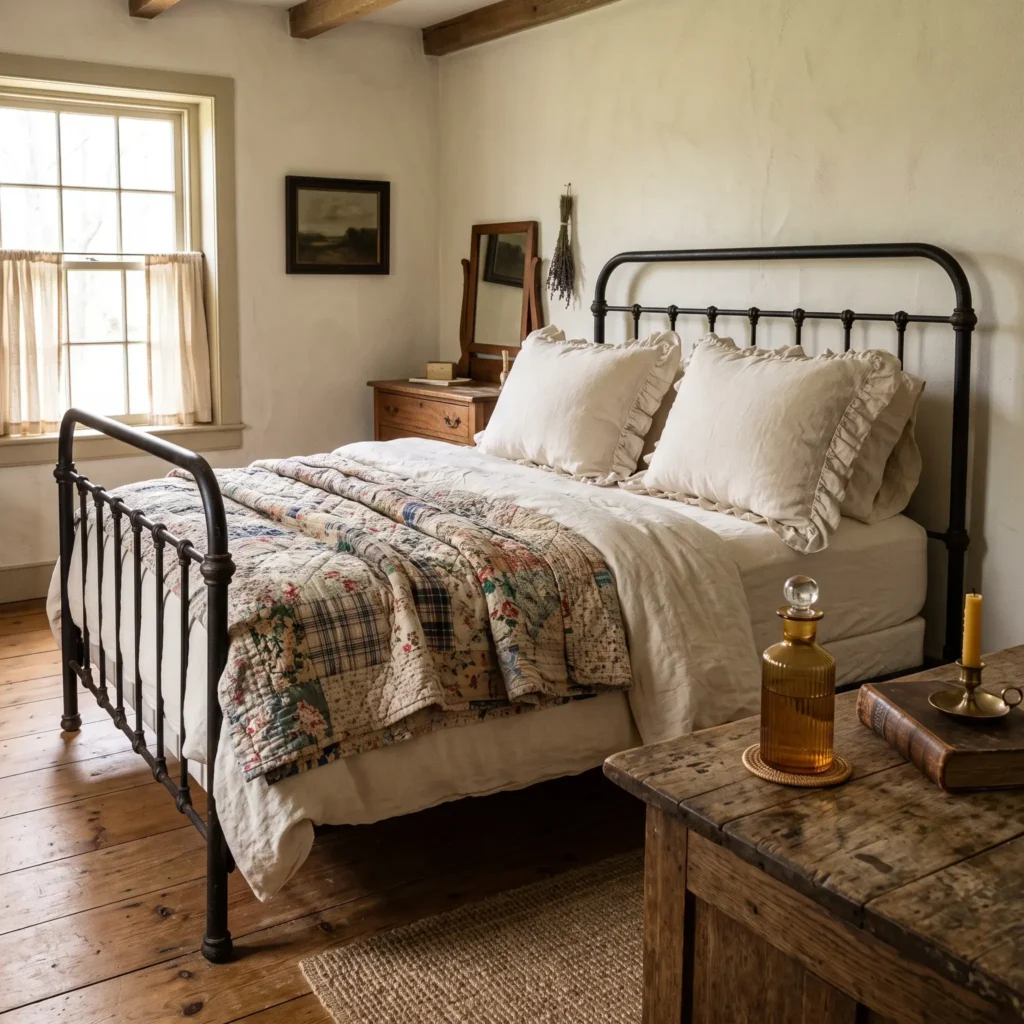
Make your bed the visual focal point of your bedroom. Choose a forged wrought-iron bed frame with vertical spindles or simple curves. Dress the mattress in breathable, washed cotton percale sheets in bone white. Fold a hand-stitched floral patchwork quilt across the foot of the bed. Add two large down pillows encased in ruffle-trimmed linen pillowcases. Keep your bedside tables mismatched by using an antique wood washstand on one side and a painted wooden chair on the other.
- Sourcing and Decor Checklist:
- Matte black wrought-iron spindle bed frame
- Washed cotton percale sheets in off-white
- Vintage or reproduction hand-stitched patchwork quilt
- European square pillowcases with ruffled fabric edges
- Reclaimed wood washstand used as a nightstand
- Amber glass water carafe with matching drinking cup
Check out more Decor Styles
3. The Open Oak and Ironstone Pantry Wall
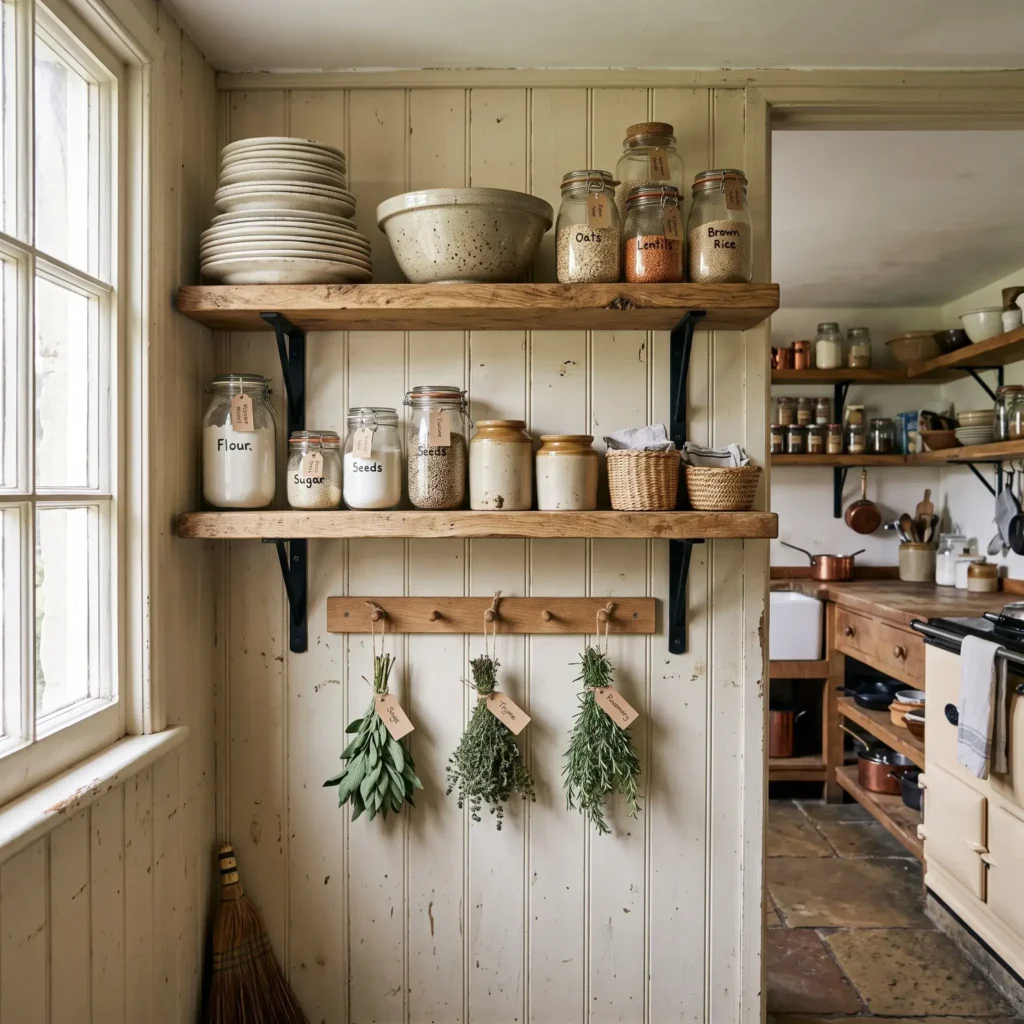
Replace bulky modern upper cabinets with an open pantry wall. Mount two thick, salvaged oak planks on black iron brackets against a painted beadboard wall. Display functional everyday kitchen items instead of random decorative trinkets. Stack white ironstone dinner plates, yellow-ware mixing bowls, and clear glass jars filled with dry grains. Hang bundles of dried thyme, sage, and lavender from a wooden shaker peg rail mounted below the bottom shelf.
- Sourcing and Decor Checklist:
- Reclaimed white oak floating shelves with an oil finish
- Heavy forged-iron shelf brackets
- Antique English ironstone plates and serving platters
- Heavy stoneware mixing bowls
- Glass pantry jars with natural wood lids
- Bundles of dried culinary herbs tied with jute twine
4. The Continuous Shaker Peg Entryway
Give an entryway historic charm while solving daily clutter problems. Install a continuous wooden peg rail across the entire length of your hallway at eye level. Paint the rail and the lower wall in a soft historic gray-green. Use the pegs to store daily outdoor gear: a woven market basket, a wide-brim straw hat, a canvas gardening apron, and forged iron garden shears. Set a metal boot tray filled with smooth river stones on the floor below.
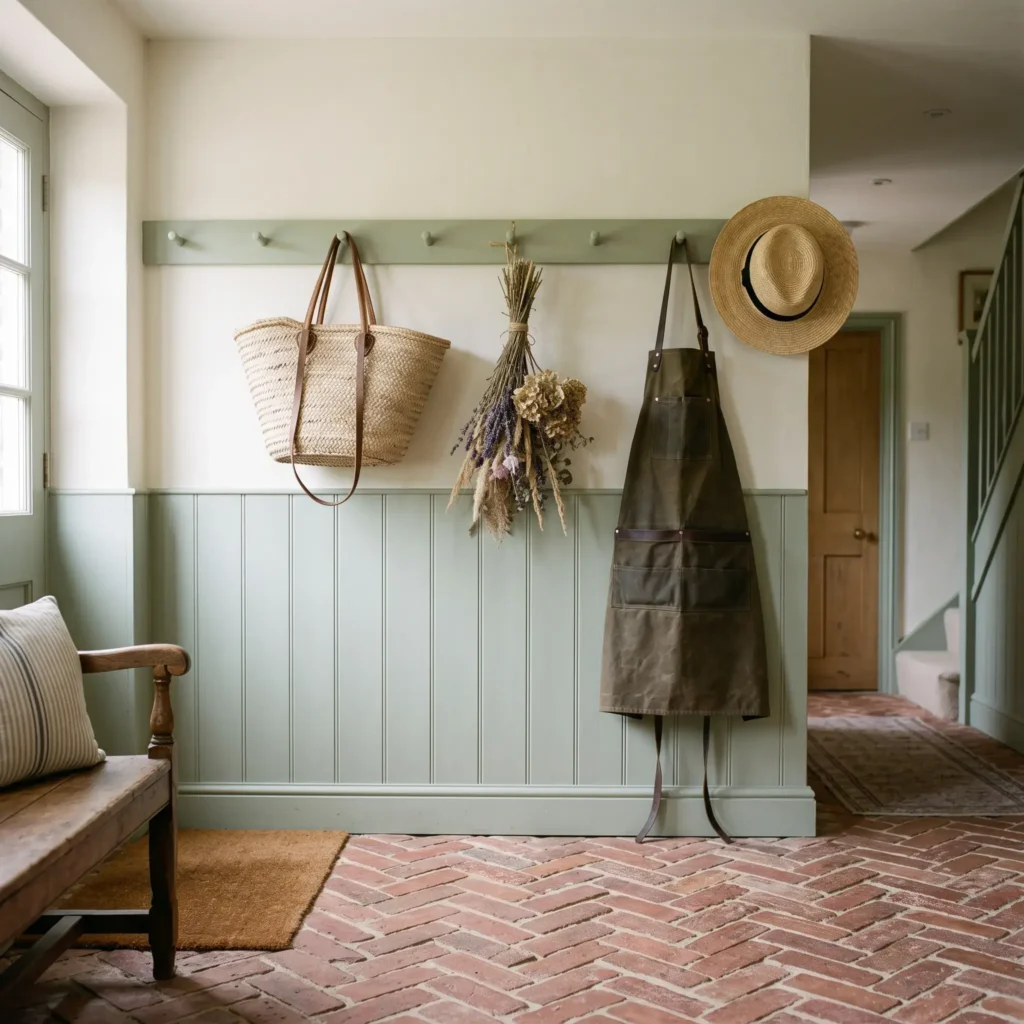
- Sourcing and Decor Checklist:
- Solid maple or birch shaker peg rail
- Matte interior paint in soft sage green
- Handwoven willow market basket with leather straps
- Natural straw sun hat
- Waxed cotton gardening apron
- Metal boot tray filled with river pebbles
5. The Weathered Terracotta Herb Windowsill
Bring nature indoors with an authentic botanical windowsill display. Skip modern glazed pots and shiny plastic planters. Collect mismatched terracotta pots that show natural mineral marks and aged white salt crusting. Fill them with fragrant culinary herbs like rosemary, common thyme, and scented geraniums. Place the pots along a wide wooden windowsill alongside a vintage brass plant mister and carbon-steel pruning snips.
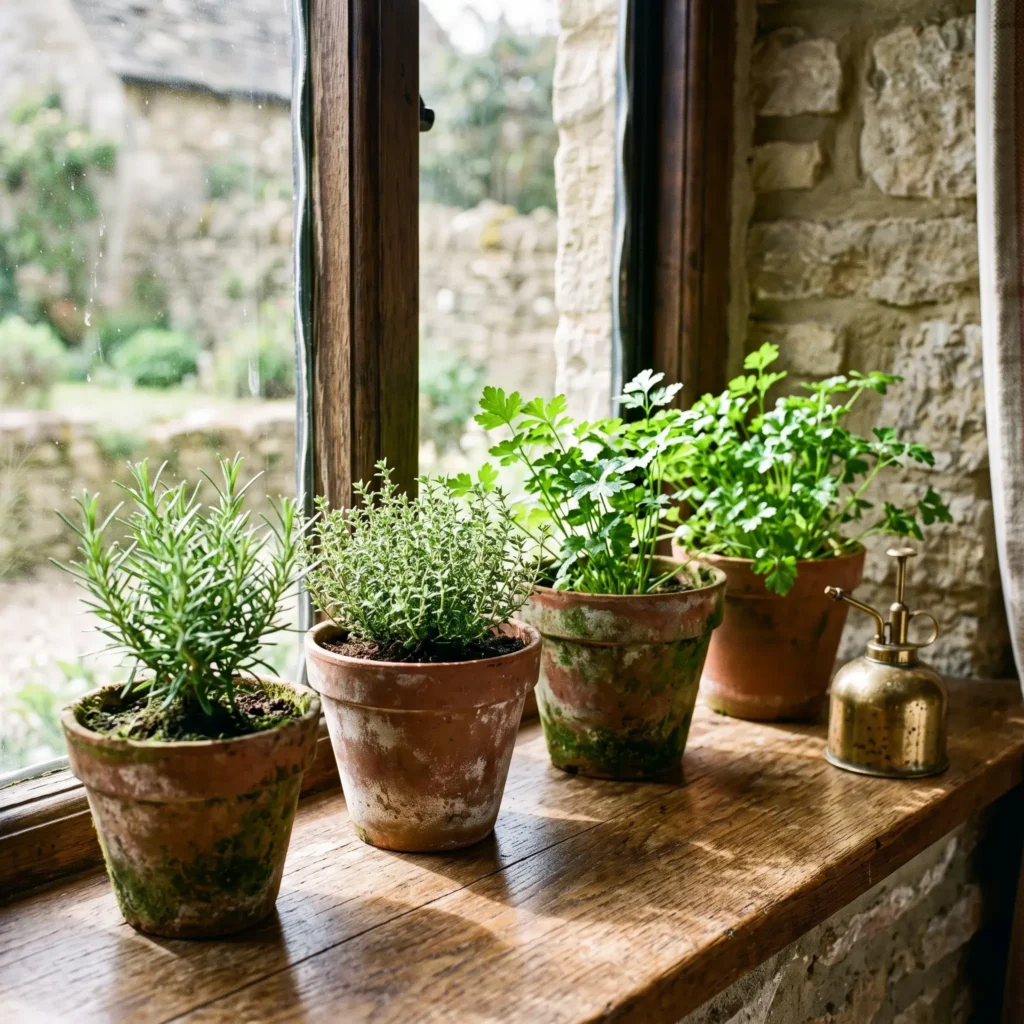
- Sourcing and Decor Checklist:
- Unglazed terracotta pots showing natural white mineral patina
- Fresh culinary herbs like rosemary, thyme, and mint
- Solid brass water mister with thumb pump
- Traditional carbon-steel florist snips
- Turned wood plant coasters or small stoneware saucers
6. The Gathered Ticking-Stripe Sink Skirt
Soften harsh lines in a powder room or kitchen by replacing hard cabinet doors with fabric. Install an unlined curtain panel made from heavy ticking-stripe cotton or medium-weight linen beneath a ceramic sink. The soft folds hide cleaning supplies, laundry baskets, and open plumbing. Pair the fabric skirt with an unlacquered brass bridge faucet and a vintage wood medicine cabinet with an aged mirror door.
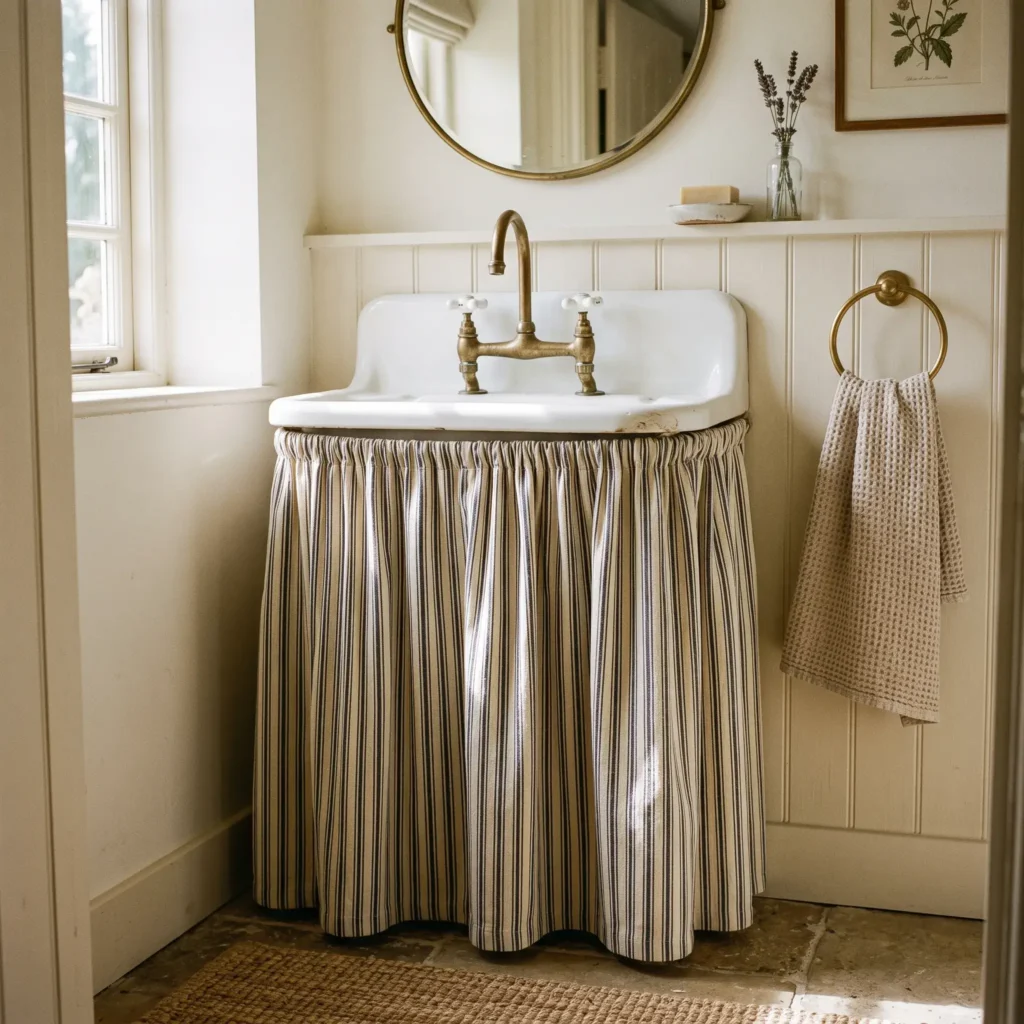
- Sourcing and Decor Checklist:
- Heavy cotton duck fabric in blue and cream ticking stripe
- Spring-loaded brass tension rod
- Wall-mounted white ceramic basin
- Unlacquered brass bridge faucet with porcelain cross handles
- Vintage wood medicine cabinet with beveled mirror
- Natural waffle-weave linen hand towel
7. The Gilt-Framed Gallery Wall with Hidden Television
Do not let a modern black screen disrupt your historic living room wall. Mount a slim television with a matte, glare-free screen flush against the wall. Add a custom antiqued gold wood frame around the borders. Surround the screen with framed vintage oil landscapes, pressed botanical specimens, and small oval portraits. When set to display classic art in standby mode, the screen blends into your art collection.
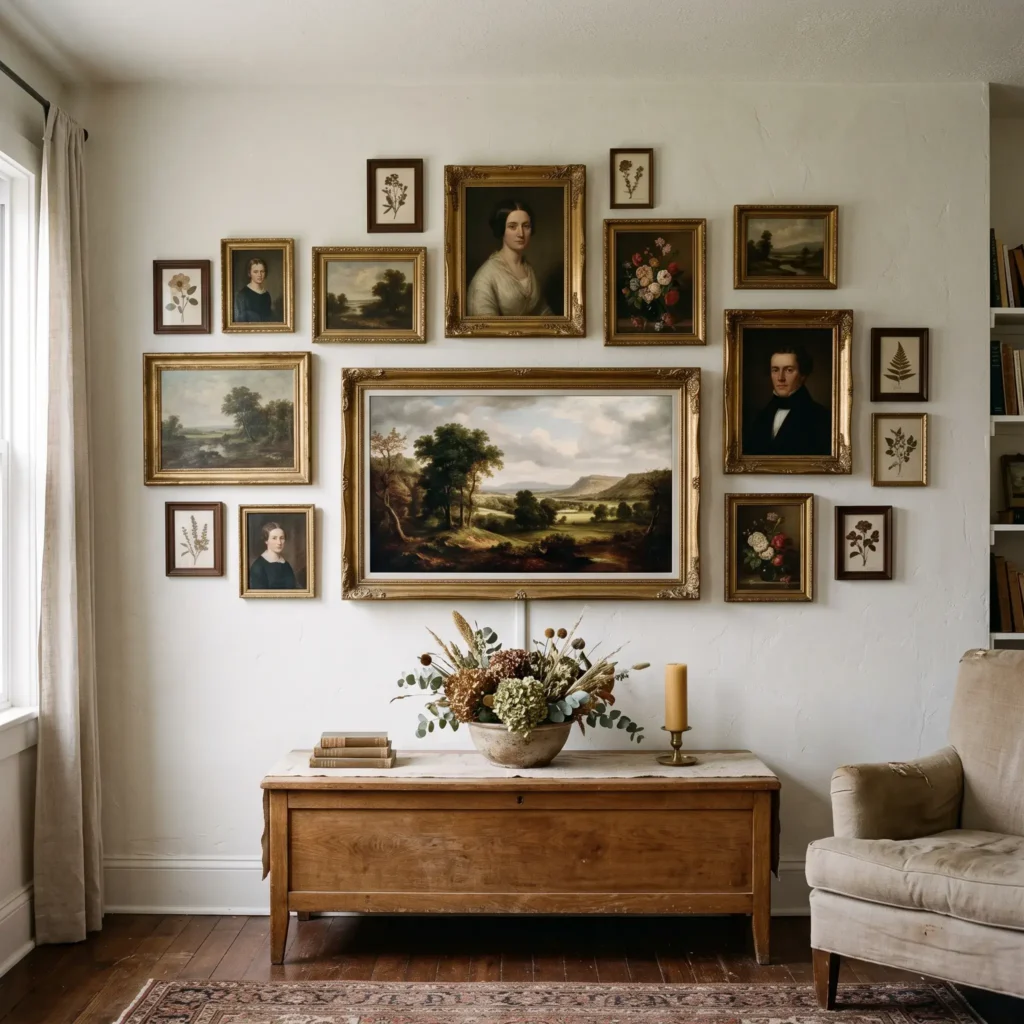
- Sourcing and Decor Checklist:
- Slim television with anti-glare matte display
- Antiqued gold wood frame custom-fitted to the television
- Secondhand framed oil landscape paintings
- Pressed botanical specimens mounted between glass panes
- Aged brass picture-hanging hooks and braided wire
- Antique oak credenza for bottom visual balance
Historical Color Palettes and Pigment Selection
Cottagecore color schemes avoid cold, blue-tinted whites. Harsh modern whites reflect light aggressively and clash with the warm tones of aged wood and patinated metals. Traditional cottage interiors rely on low-saturation, nature-derived neutrals that mimic weathered agricultural landscapes.
| Color Category | Recommended Paint Shades | Undertone Focus | Best Placement |
|---|---|---|---|
| Warm Base Neutrals | Farrow & Ball Pointing, White Tie | Warm cream, yellow, bone | Living room walls, bedrooms, ceilings |
| Botanical Mid-Tones | Farrow & Ball French Gray, Pigeon | Muted sage, moss, dried herb | Beadboard, interior doors, kitchen cabinets |
| Moody Accents | Farrow & Ball Card Room Green, Treron | Deep forest green, blackened umber | Powder rooms, cozy studies, picture rails |
To build an authentic space, ground your walls in these time-tested historic paint formulas:
- Warm Base Whites: Choose creams with yellow or red undertones. These pigments give walls a gentle, candlelit glow even during cloudy winter afternoons.
- Botanical Neutrals: Muted greens mimic the tone of dried herbs. They shift color depending on the light, reading as green in direct sun and soft gray in the evening.
- Moody Tones for Dark Cottagecore: If you prefer a moodier pastoral style, choose deep, enveloping colors. Paint wainscoting and trim in deep forest tones. These saturated hues pull wall perimeters inward, making reading rooms feel cozy and protected.
Furniture Refinishing: Milk Paint vs. Chalk Paint
Furnishing a cottagecore room relies heavily on secondhand finds, yard sales, and estate auctions. However, standard modern latex paint ruins the character of vintage pieces. You need finishes that wear naturally with time.
| Finishing Medium | Base Ingredients | Surface Prep Required | Distressing Style | Best Use Case |
|---|---|---|---|---|
| Casein-Based Milk Paint | Milk protein (casein), lime, earth pigments | Raw, porous wood only; slick finishes need a bonding agent | Authentic, random chipping along grain lines and natural wear edges | Salvaged pine tables, primitive chairs, raw wood stools |
| Chalk-Style Mineral Paint | Calcium carbonate, acrylic base | Minimal prep; bonds mechanically without stripping old coats | Smooth, feathered wear created with fine sanding pads | Finished nightstands, bookcases, turned-leg dressers |
| Tinted Finishing Wax | Beeswax, carnauba wax, umber pigment | Apply only over cured matte paint | Settles into carvings and scratches to simulate decades of handling | Highlighting wood turnings and sealing chalk paint |
The Beeswax Resist Method for Authentic Chipping
If you want the authentic, worn finish seen on old farm tables, use milk paint with a natural wax resist:
- Find Natural Wear Points: Rub a block of beeswax or raw hemp oil along edges, corners, and drawer pulls where hands naturally touch the piece.
- Apply the Paint: Brush two coats of mixed milk paint over the entire piece, including the waxed spots.
- Trigger the Flaking: As the paint dries, it bonds to raw wood but releases from the waxed areas. The paint curls and chips away on its own.
- Seal the Surface: Brush off loose flakes with a stiff brush. Lock in the remaining paint with raw hemp oil or clear paste wax to protect against moisture.
DIY Project: How to Sew a Gathered Sink Skirt
A fabric sink skirt softens hard kitchen and bathroom surfaces. It eliminates the need for expensive custom cabinetry while keeping plumbing easily accessible.
The Measurement Formulas
- Cut Width: Measure the cabinet opening width (W). Multiply this number by 1.5 for gentle folds, or by 2.0 for traditional, full cottage gathering. For a 30-inch opening, cut your fabric between 45 and 60 inches wide.
- Cut Length: Measure the height (H) from the mounting rod down to the floor. Add 2 inches to this measurement. This gives you one inch for the bottom hem and one inch for the top rod casing.
Fabric Selection
Pick medium-weight woven fabrics that hang in soft, heavy folds. Pre-washed European linen, cotton ticking-stripe duck cloth, and unbleached cotton calico drape naturally. Avoid thin synthetic polyester fabrics, which look flat and cling with static. Skip heavy upholstery brocades, which bunch up and refuse to slide along a rod.
Step-by-Step Assembly
- Hem the Side Edges: Fold both vertical side edges inward by half an inch, press with a hot iron, and stitch in place.
- Sew the Bottom Hem: Fold the bottom edge up by one inch, press flat, and run a straight lockstitch along the top fold.
- Sew the Rod Pocket: Fold the top edge down by one and a quarter inches. Stitch one-eighth of an inch from the bottom fold. This creates a clean tunnel large enough for a standard tension rod.
- Mount the Rod: Thread a slim brass tension rod through the pocket, gather the fabric evenly across the rod, and secure it firmly inside your cabinet frame.
Atmospheric Lighting: The 2200K to 2700K Rule
Harsh modern lighting ruins vintage decor faster than anything else. Bright 4000K or 5000K LED bulbs mimic commercial offices. They flatten natural wood grain, turn warm cream walls into sterile gray, and kill the cozy atmosphere.
| Color Temperature | Visual Atmosphere | Cottagecore Recommendation |
|---|---|---|
| 2200K – 2700K | Warm amber, candlelight glow | Recommended for all cottagecore living rooms and bedrooms |
| 3000K – 3500K | Crisp neutral white | Acceptable for task lighting in utility rooms, but lacks warmth |
| 4000K – 5000K | Cool daylight, commercial blue | Avoid completely; flattens wood grain and creates glare |
Keep Color Temperature Low
Keep every bulb in your home between 2200K and 2700K. This spectrum matches the amber warmth of historical gaslight, carbon-filament bulbs, and open flame. It brings out the rich golden undertones in antique oak and pine furniture.
Eliminate Overhead Glare
Turn off harsh recessed ceiling lights. Instead, layer soft light at eye level throughout the room:
- Choose the Right Lampshades: Pair stoneware or turned-wood table lamps with empire shades made from pleated linen, floral fabric, or scalloped paper. These shades cast light downward across surfaces and soften side glare.
- Add Eye-Level Sconces: Install plug-in brass wall lamps next to reading chairs, beds, and above kitchen sinks.
- Burn Real Candles: Natural flame adds dynamic, flickering shadows to a room. Burn unscented, hand-dipped beeswax taper candles in mismatched pewter, iron, or brass holders during evening meals.
How to Disguise Modern Electronics
Modern digital devices cause visual friction in a historic space. Black glass screens, blinking router lights, and tangled plastic cords disrupt an old-world aesthetic. Use these physical styling strategies to integrate technology cleanly:
- Television Screens: Mount a slim, matte-display television flush against the wall. Add an antiqued gold wood picture frame around the edges. When you are not watching a show, set the screen to display classic oil landscapes. For smaller spaces, place regular screens inside a freestanding antique armoire fitted with bi-fold doors.
- Cables and Power Strips: Run electrical wires down the back edges of table legs using adhesive cloth clips. Place power strips and Wi-Fi routers inside ventilated, lidded willow storage baskets. Cut a small slot in the back of the basket for cables and ventilation.
- Kitchen Counter Appliances: Small appliances like microwaves, drip coffee makers, and blenders clutter counter spaces. Store them inside a dedicated appliance cabinet with sliding pocket doors, or place them behind gathered linen skirts on open lower pantry shelves.
Curatorial Editing: The Anti-Clutter System
The biggest mistake in cottagecore decorating is collecting too many small objects. Without clear boundaries, a room quickly feels chaotic and messy. Use these three professional rules to keep your vintage collections organized:
1. The Rule of Odds
Group small decorative items in clusters of three or five. Combine pieces with different shapes and heights. For example, style an antique fireplace mantel with a tall brass candlestick, a medium stoneware jug filled with wild branches, and a small, round cast-iron box. This uneven grouping creates visual interest without feeling rigid.
2. The Grounding Tray Method
Do not scatter perfume bottles, vintage matchboxes, or keys across wide furniture surfaces. Place small items inside clear boundaries. Use footed wooden trays, woven rush baskets, or large antique ironstone platters. Keeping smaller items on a tray turns loose clutter into an intentional, organized display.
3. Deliberate Negative Space
Every shelf, table, and wall needs breathing room. Do not cover every square inch of your walls with art or pack bookshelves tight from end to end. Leave 20 to 30 percent of a surface bare. This open space creates visual rest and lets your favorite heirloom pieces stand out.
Frequently Asked Questions
How do I decorate cottagecore on a tight budget?
Shop secondhand first. Visit local estate sales, flea markets, and thrift shops to find solid-wood side tables, brass candle holders, and ironstone dishes at low prices. On Facebook Marketplace, use specific search terms like turned pine table, spindle chair, washstand, or transferware instead of generic keywords like vintage decor. You can also update dated furniture using low-cost milk paint, and sew simple sink skirts using inexpensive cotton duck fabric.
What is the difference between Farmhouse and Cottagecore design?
Modern farmhouse design relies on high-contrast black-and-white palettes, sleek industrial metals, and mass-produced typography signs. Cottagecore focuses on low-contrast warmth, muted botanical tones, floral textiles, and collected antiques. Cottagecore emphasizes slow living, English country charm, and handcrafted domestic items over the stark, modern look of contemporary farmhouse decor.
What are the best indoor plants for a cottagecore look?
Choose classic heirloom plants and culinary greenery rather than tropical plants like monsteras or fiddle-leaf figs. English ivy, string of pearls, Boston ferns, and scented geraniums fit the aesthetic naturally. Planting culinary herbs like rosemary, common thyme, and chives in weathered terracotta pots along kitchen windowsills also connects your indoor space to everyday cooking.
Can renters use cottagecore style without losing their security deposit?
Yes. Use non-damaging updates to add historic character to a rental. Install peel-and-stick wallpaper with botanical patterns on an accent wall. Hang cafe curtains and gathered sink skirts using spring-loaded tension rods that require no drilling. Replace cold modern light bulbs with 2400K warm-amber bulbs. Lean thrifted gold mirrors against walls instead of hanging heavy hardware, and cover rental flooring with large woven jute or vintage wool rugs.
Creating a cozy country home is a slow, rewarding process. You do not need to furnish every room in a single weekend. Focus on bringing in authentic, well-made pieces that carry a personal story, layer honest textiles, and keep your lighting warm. Over time, your space will become a calm, comfortable retreat that stands up to daily living.