8 Practical Coffee Table Styling Ideas and Designer Rules
A bare coffee table leaves a living room feeling unfinished. At the same time, an overcrowded table gets in the way of daily life. The secret to styling this central surface lies in balancing visual weight, varying heights, and keeping enough open space for your coffee mug.
Below, you will find eight complete coffee table styling ideas with exact object formulas. Each idea includes a photorealistic design prompt and a curated product list so you can recreate the look at home.
8 Practical Coffee Table Styling Ideas
1. The Linear Thirds Formula (For Rectangular Tables)
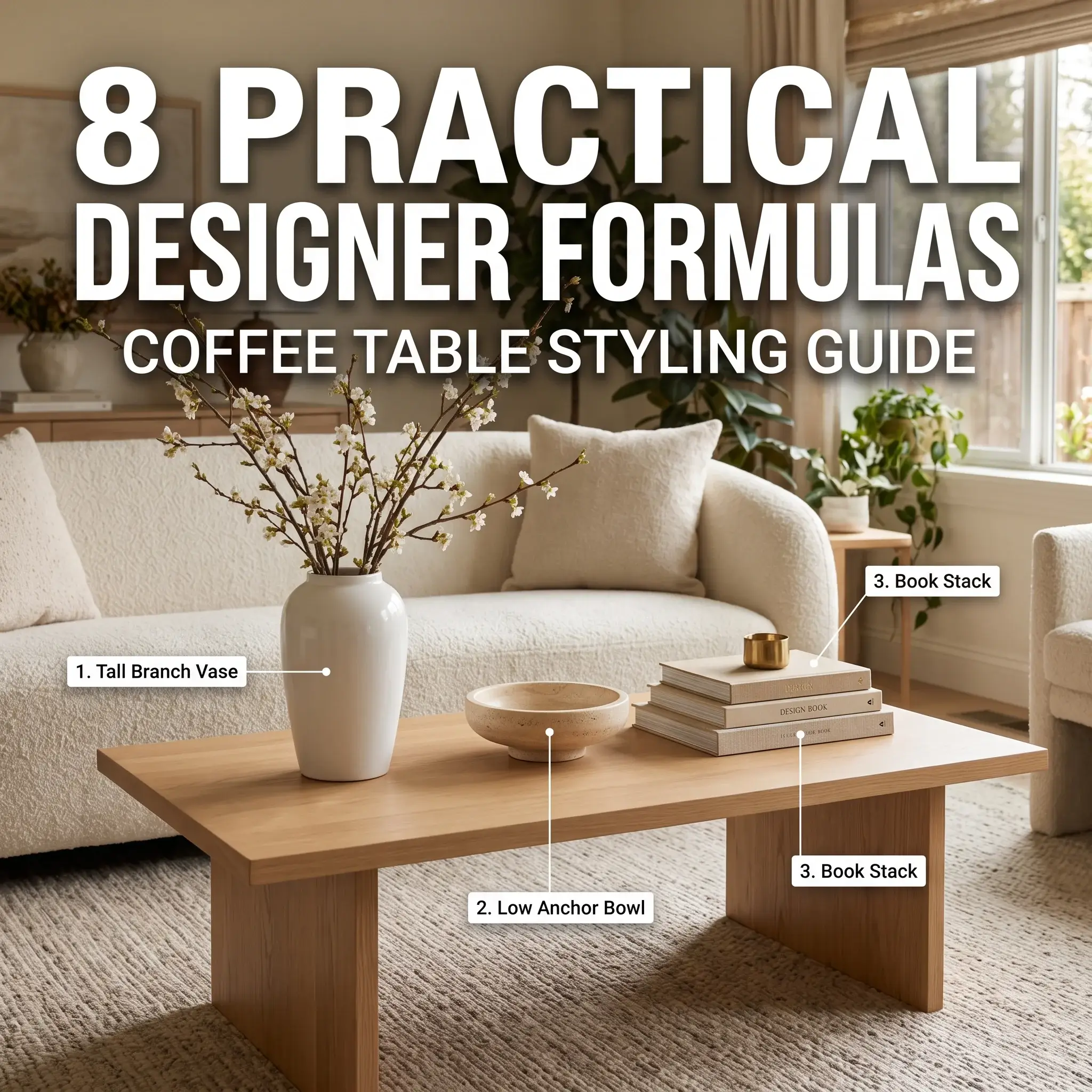
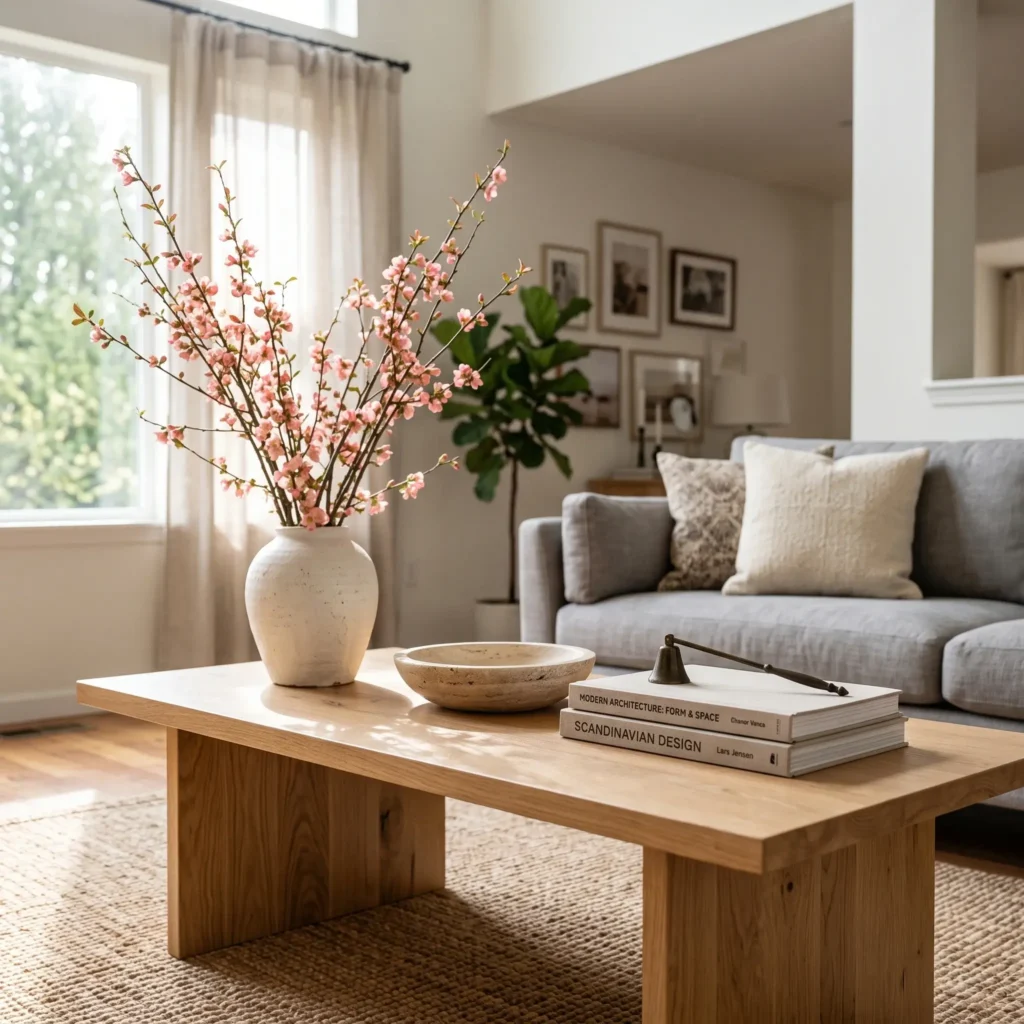
This layout divides a rectangular surface into three distinct visual zones. It balances a tall botanical branch on one side with a low, heavy anchor on the other, leaving the middle open or subtly grounded.
- The Layout: Place a tall ceramic vase with flowering branches on the left third. Set a low, wide travertine bowl in the center. Stack two design books on the right third, topped with a small brass candle snuffer.
- Why It Works: It distributes weight evenly across the length of the table without creating a rigid, symmetrical wall.
- Products Used in This Design:
- 10-inch off-white textured stoneware vase
- Fresh or high-end faux flowering branches (dogwood or quince)
- 12-inch shallow honed travertine bowl
- 2 large hardcover architecture books with neutral linen spines
- Cast brass vintage-style candle snuffer
2. The Off-Center Radial Triangle (For Round Tables)
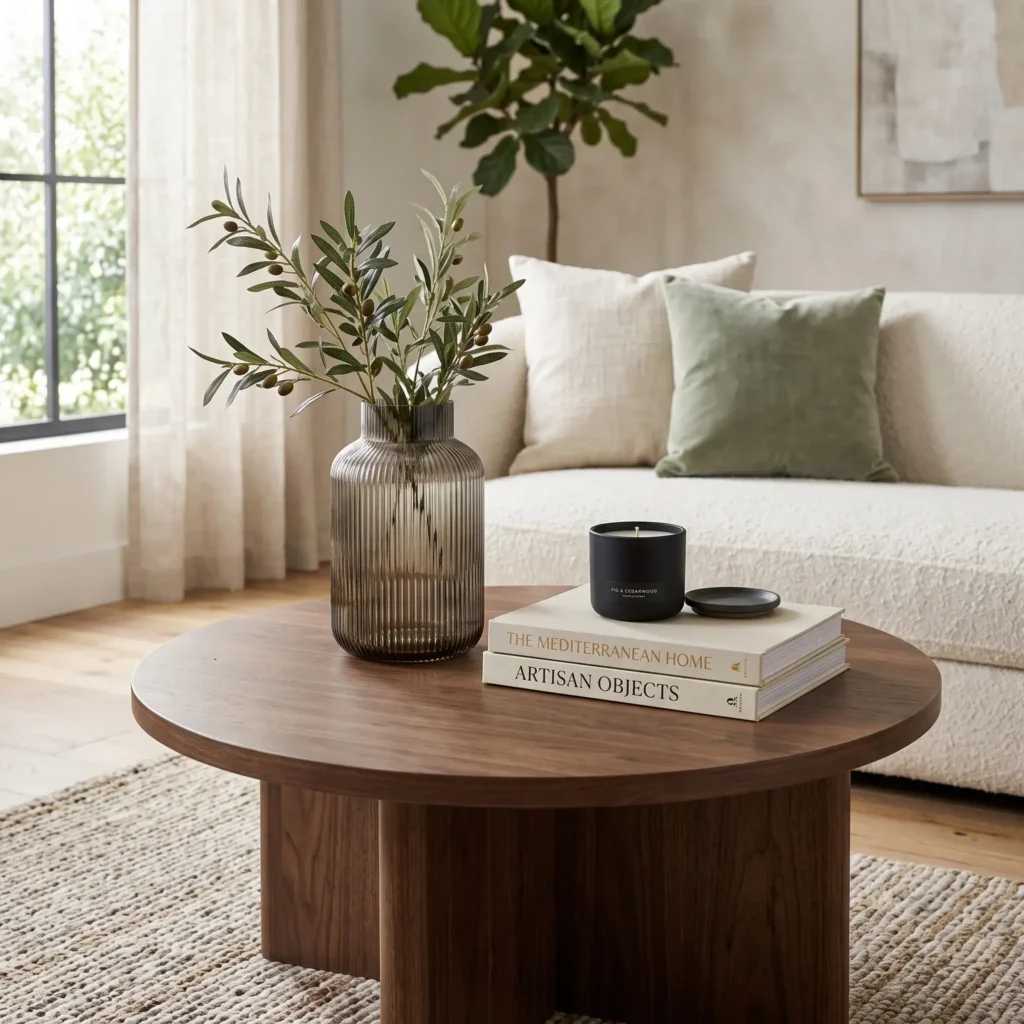
Round tables lack straight edges, which causes perimeter decor to look scattered. This layout clusters three items of contrasting heights into an asymmetrical scalene triangle near the center.
- The Layout: Place a tall, narrow smoked-glass vase at point one. Set a medium stack of two hardcover books at point two. Add a low, scented candle in a textured ceramic container at point three.
- Why It Works: The three points create organic movement. Your eye tracks smoothly around the circle while leaving the outer rim open for drinks.
- Products Used in This Design:
- 12-inch fluted smoked-glass cylinder vase
- 3 fresh olive branch cuttings
- 2 photography hardcovers with cream covers
- Matte black ceramic tumbler candle with cedar and amber notes
Check out more Styling Ideas
3. The 4-Quadrant Grid (For Oversized Square Tables)
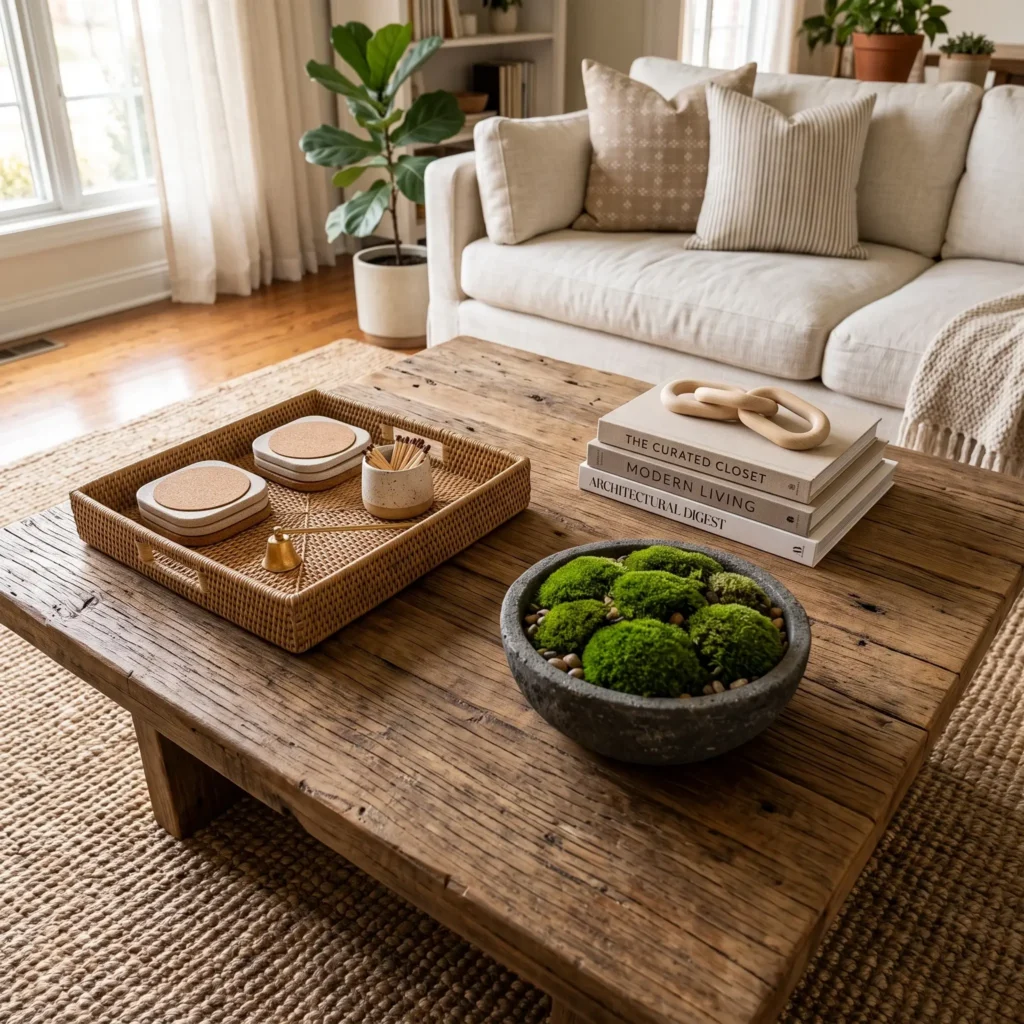
Large square tables often end up with an isolated centerpiece that leaves awkward, empty corners. This formula mentally divides the tabletop into four equal squares.
- The Layout:
- Quadrant 1 (Top Left): An oversized square woven tray containing two small amber glass match bottles and a coaster stack.
- Quadrant 2 (Top Right): A substantial stack of three fashion monographs topped with a carved wood chain link.
- Quadrant 3 (Bottom Left): Completely empty space for daily use, drinks, and snacks.
- Quadrant 4 (Bottom Right): A heavy, low-slung stoneware pot holding fresh green moss spheres.
- Why It Works: It balances high-density decorative zones against open functional space, preventing visual chaos.
- Products Used in This Design:
- 16-inch square low-rim woven rattan tray
- 4 tumbled limestone drink coasters
- Glass match striker cloche with white matches
- 3 neutral fashion monographs
- Hand-carved white pine decorative chain link (3 links)
- 8-inch dark charcoal clay bowl filled with preserved green moss
4. The 3-2-1 Book Stack with Sculptural Accent
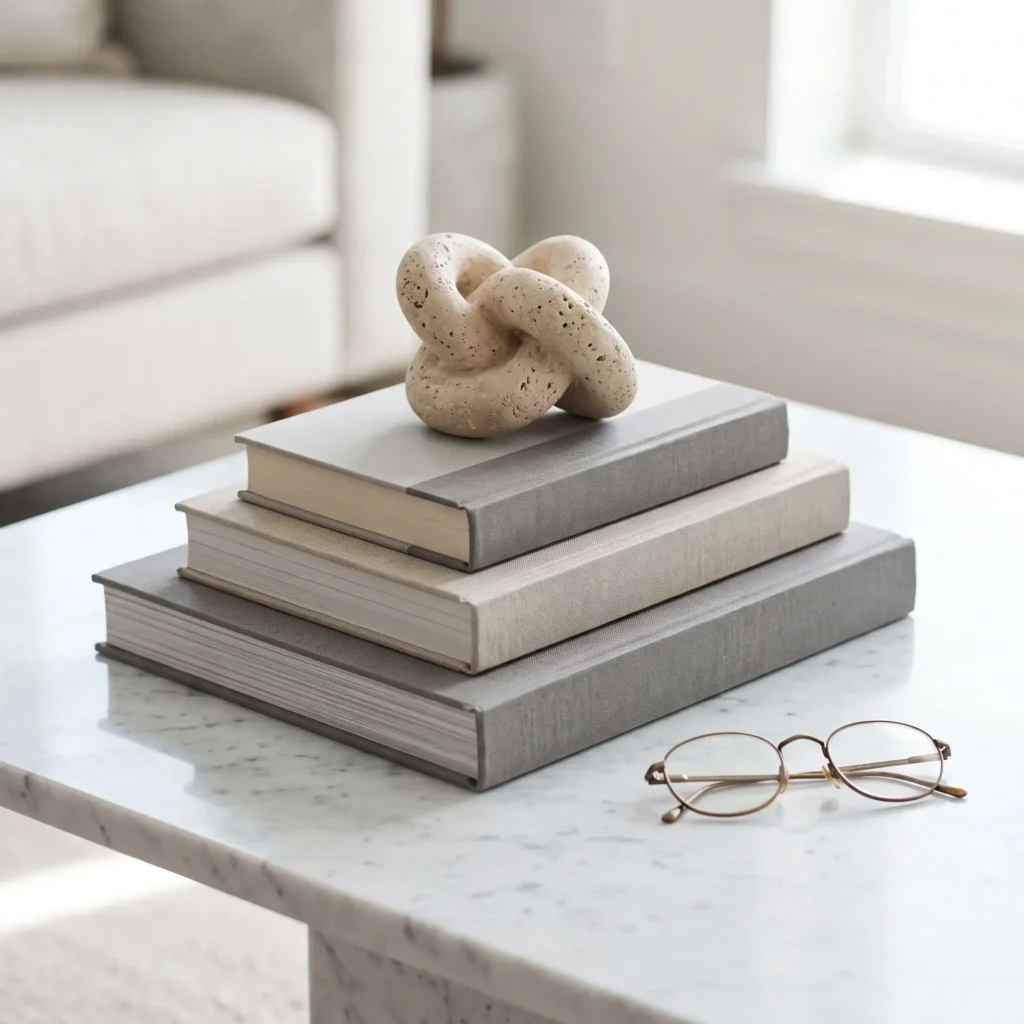
This focused setup is ideal for compact spaces, narrow cocktail tables, or minimalist rooms where you want zero clutter.
- The Layout: Build a base of three hardcovers stacked from largest on the bottom to smallest on top. Limit the covers to two harmonious colors. Crown the top book with one distinct sculptural artifact.
- Why It Works: The 3-2-1 rule creates a stable, architectural mini-pedestal that turns reading material into a deliberate design piece.
- Products Used in This Design:
- 3 hardcover books on travel and design with cloth-bound spines
- 5-inch carved natural beige travertine knot sculpture
- Vintage brass wire-rim reading glasses as an intentional accent
5. The Rigid Tray Anchor (For Tufted Ottomans)
Soft, cushioned ottomans present a challenge because glasses and decor can easily tip over. This setup provides stability while keeping the cozy look of upholstery.
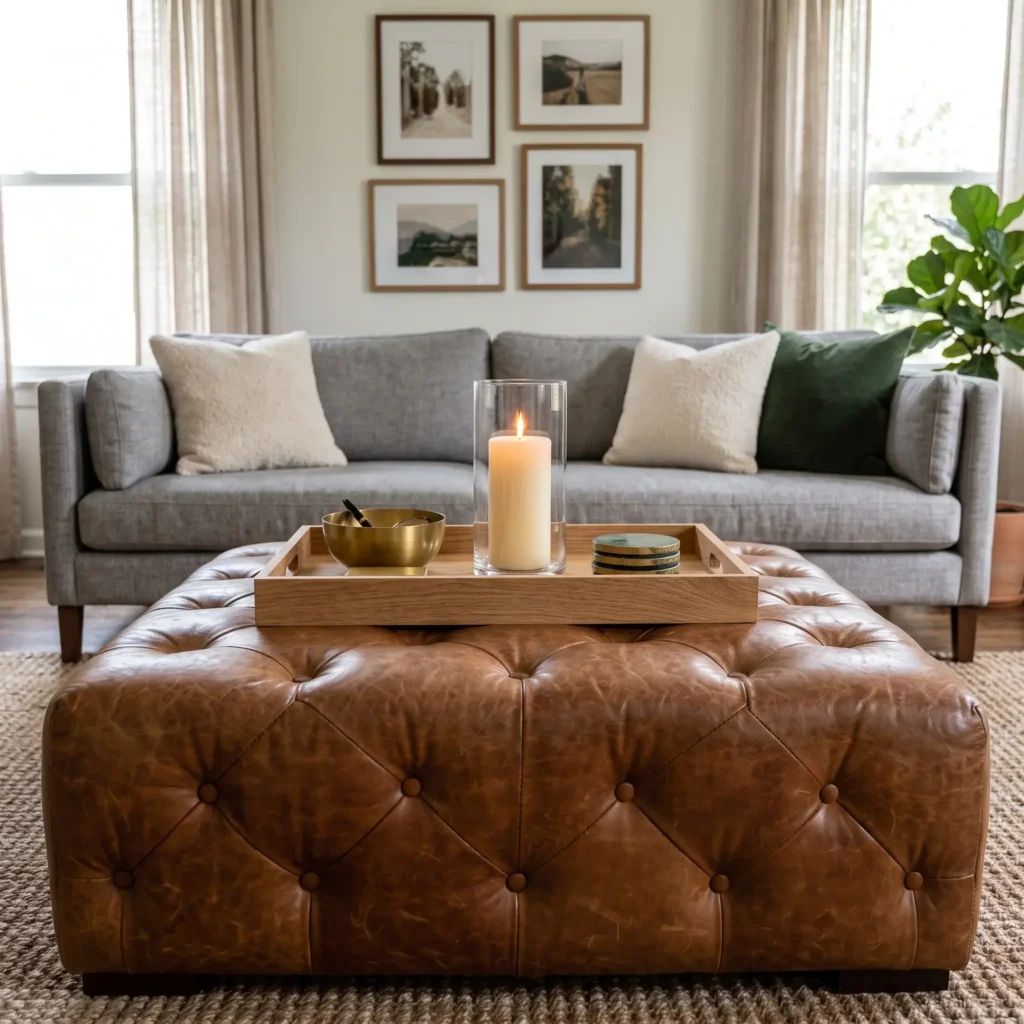
- The Layout: Center a heavy, flat-bottomed rectangular wooden tray across the tufting. Inside the tray, place a wide brass bowl for small accessories, a low glass hurricane candle holder, and a stack of marble coasters.
- Why It Works: The tray spans the button tufting, creating a level foundation. It also allows you to lift the entire display away in one movement when you want to put your feet up.
- Products Used in This Design:
- 18×24-inch solid white oak serving tray with 2-inch perimeter lip
- 6-inch brushed brass shallow catch-all dish
- 8-inch heavy glass hurricane candle cylinder
- 3×6-inch unscented ivory pillar candle
- Set of 4 forest green polished marble coasters
6. The Opaque Island (For Clear Glass & Lucite Tables)
Clear glass tables reflect overhead lights and expose the rug and floor beneath them. Loose accessories placed directly on glass can appear to float without an anchor.
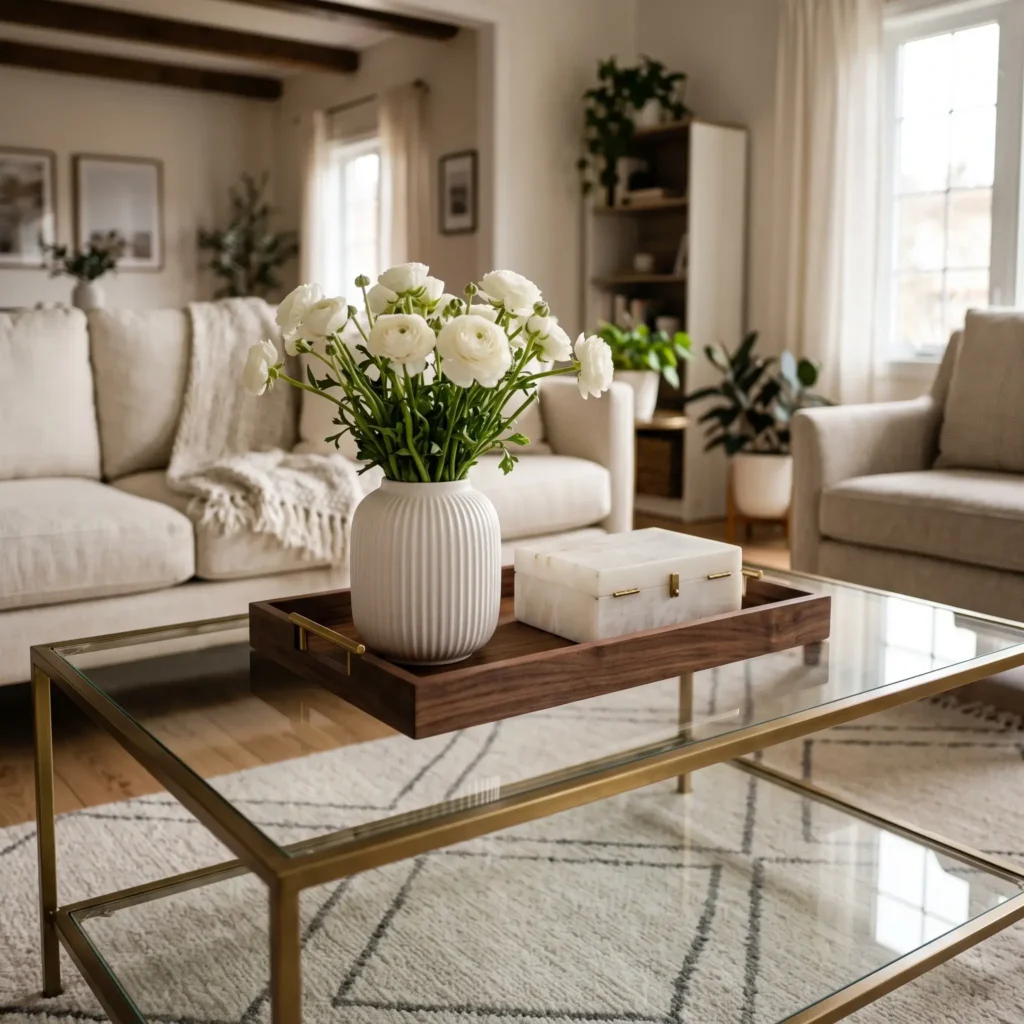
- The Layout: Ground the surface with a solid, opaque tray made of dark walnut or brushed metal. Place a small ribbed ceramic vase with fresh white ranunculus inside the tray, along with an alabaster keepsake box.
- Why It Works: The solid tray creates an opaque boundary that blocks visual clutter from the rug below. It gives your eyes a clear resting place.
- Products Used in This Design:
- 14×20-inch solid dark walnut wood tray
- 7-inch matte white ribbed ceramic bud vase
- Fresh white ranunculus blooms
- 6-inch polished white alabaster storage box with brass hinge
7. The Minimalist Rule of One (For Small Spaces & Honed Stone)
When your table has an expressive material like heavily veined marble or fluted concrete, adding too many accessories creates visual noise.
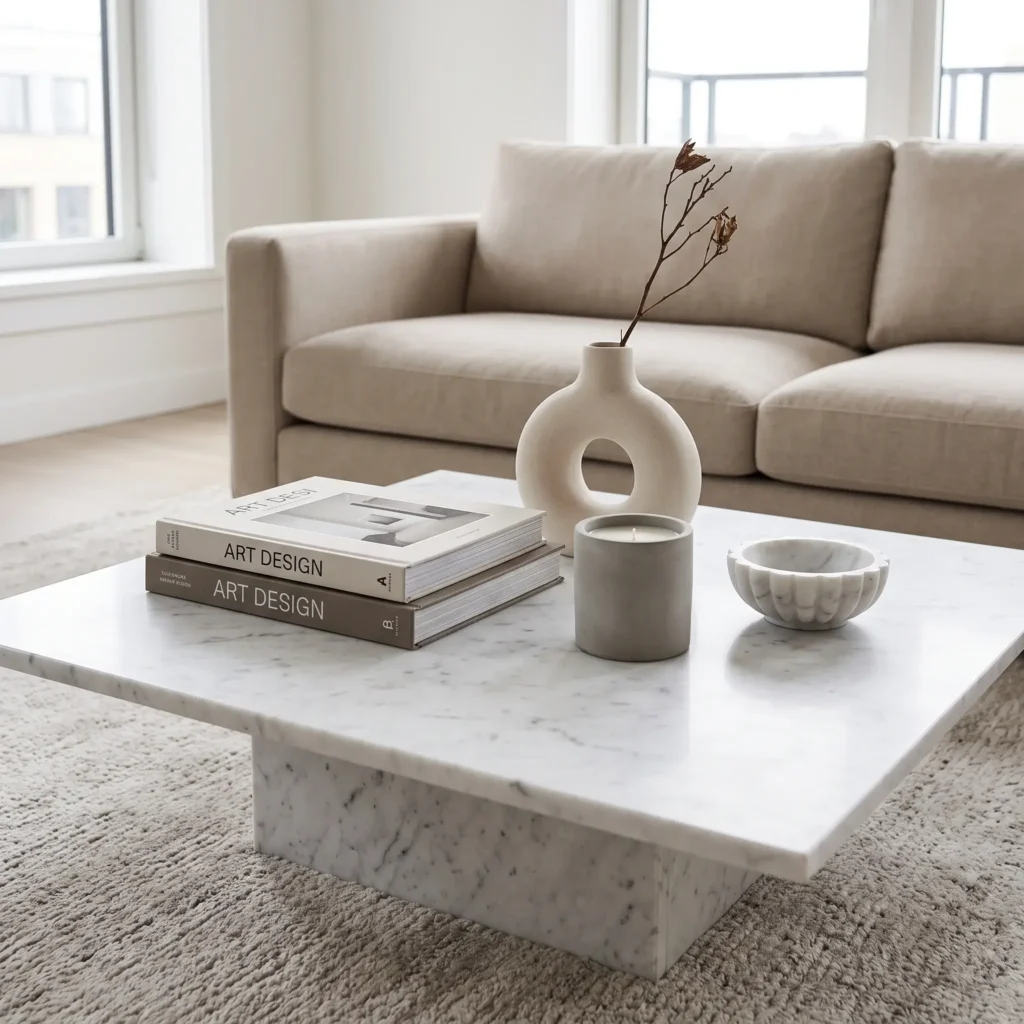
- The Layout: Place a single, substantial statement piece slightly off-center. Choose a hand-carved, dark paulownia wood vessel or an asymmetrical ceramic pedestal dish.
- Why It Works: It honors the craftsmanship of the table itself while keeping seventy percent of the surface completely clear for everyday use.
- Products Used in This Design:
- 14-inch hand-carved black stained paulownia wood shallow bowl
8. The Family-Friendly Hidden Storage Vignette
Family living rooms need styling that handles remote controls, gaming accessories, and daily clutter without looking messy.
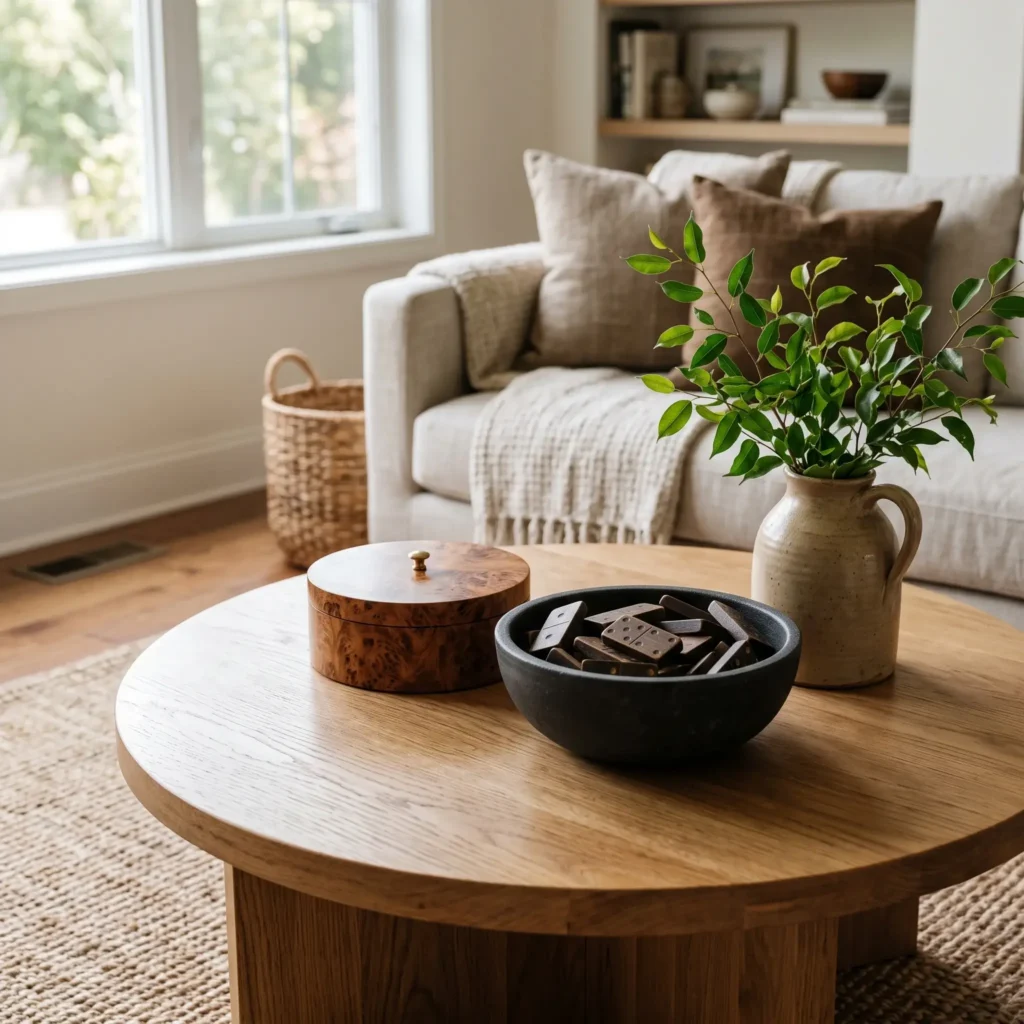
- The Layout: Use an elegant burl wood or bone-inlay lidded box to enclose remotes. Pair it with a durable, low-profile stoneware bowl holding wooden dominoes, and finish with a durable faux ficus stem in an earthenware jug.
- Why It Works: It keeps loose tech hidden while using shatter-resistant, weighted items that will not tip over during busy household routines.
- Products Used in This Design:
- 8×6-inch burled wood decorative storage box with felt-lined interior
- 10-inch heavy charcoal stoneware dish
- Set of handcrafted wooden dominoes or game tiles
- 9-inch beige textured ceramic jug with artificial leafy ficus branch
The Core Architectural Rules and Ergonomics
A coffee table vignette must work with the furniture surrounding it. Follow these standard spatial dimensions to ensure your layout feels balanced and comfortable.
Sofa and Coffee Table Ergonomic Ratios
- Table Length Ratio: Match table length to 1/2 or 2/3 of your sofa length.
- Walking Clearance: Leave 16 to 18 inches between the sofa cushion and the table rim.
- Tabletop Height: Keep the surface flush with, or up to 4 inches below, the seat cushion crown.
- Decor Sightline Ceiling: Keep solid centerpieces under 14 inches tall from the tabletop.
3. Perimeter Spacing
Leave 16 to 18 inches of open walking space between the edge of the sofa and the rim of the table. This gives you enough legroom while keeping drinks within an easy arm’s reach. For major walkways leading across the room, leave 24 to 30 inches of clear floor space.
4. The 14-Inch Sightline Ceiling
Seated eye level in standard living room furniture falls between 38 and 42 inches from the floor. Keep solid, opaque centerpieces below 14 inches from the tabletop. Taller solid objects cut off eye contact between people seated across from each other and block views of the television. If you want dramatic height, choose tall, airy branches with narrow stems that you can easily see through.
5. The 60/40 Usability Metric
Dedicate roughly 60 percent of your tabletop surface to decorative vignettes. Reserve the remaining 40 percent as open space. This bare area frames your decor and provides room for laptops, books, and coffee cups.
Styling by Coffee Table Shape and Material
Different shapes and materials require specific layout techniques.
Round and Oval Tables
Curved tables soften rooms filled with angular sectionals and boxy cabinetry. Because they have no straight edges, items set near the perimeter can look disconnected.
Anchor your decor near the center using a triangulated arrangement or an oversized circular tray. Combine straight-edged items, like hardcover books, with rounded ceramics to balance the curves of the table.
Square Tables
Square tables offer ample surface area, but centering a single small tray leaves wide, empty edges. Divide square tables measuring 36 inches or larger into four visual quadrants.
Fill three of the quadrants with different items: a book stack, a tray, and a sculptural bowl. Leave the fourth quadrant completely bare. This deliberate asymmetry feels intentional and avoids a stiff, checkerboard look.
Rectangular Tables
Rectangular tables work best when styled using the rule of thirds. Arrange your items into two or three distinct stations along the table length.
Place your tallest item on one end, a low tray in the center, and a medium book stack on the opposite end. Keep items staggered slightly forward and backward rather than lining them up in a flat row.
Glass and Lucite Surfaces
Clear glass reflects overhead light and shows everything underneath, including rug patterns and floor vents. Items placed directly on glass can appear to float without purpose.
Use solid trays made of woven rattan, white oak, or brushed metal to create an opaque foundation. If your table sits over a busy patterned rug, choose solid, calming decor elements to prevent visual confusion.
Natural Marble and Travertine
Richly veined stones, such as Arabescato or Calacatta marble, carry strong visual character on their own. Intricate displays compete with the natural patterns of the stone.
Limit your accessories to two or three solid-toned objects with clean profiles. Avoid clear glass vessels on heavily patterned marble, as optical distortion through the glass can make the surface look busy. Use felt-backed leather or stone coasters to protect porous stone surfaces from acidic stains and rings.
Two-Tier Tables
Tables with an integrated lower shelf offer convenient storage, but decorating both levels equally makes the piece look heavy. Treat the two tiers as opposites.
Keep the top surface light and open with a single vase and generous negative space. Use the bottom shelf to anchor visual weight with two neat stacks of oversized art books or a pair of flat storage baskets.
| Table Type | Primary Challenge | Recommended Styling Fix |
| Round / Oval | Perimeter items look unanchored | Radial triangle or central tray |
| Large Square | Awkward, empty corner space | 4-quadrant layout (fill 3, open 1) |
| Glass / Acrylic | Exposes underside and rug | Opaque wood or woven tray anchor |
| Veined Stone | High visual pattern competition | Minimal solid objects, zero glass |
| Tufted Ottoman | Unstable, cushioned surface | Heavy rigid tray, min. 2-inch rim |
Living-Room Reality: Concealment and Durability
A styled coffee table must handle the realities of everyday family life.
Concealing Tech and Cables
Black plastic remote controls and charging cords quickly disrupt a curated space. Keep them tucked inside lidded decorative boxes made of burled wood, horn, or woven cane. A shallow bronze or stone dish also serves as a tidy landing spot for reading glasses, matches, and small items.
Child-Safe and Pet-Friendly Setups
If you have young children or pets, choose round or oval tables to eliminate sharp corners. Replace fragile glassware with durable stoneware, cast iron, brass, or sculpted wood links that will not shatter if dropped.
A high-sided wooden tray makes cleanup easy: you can lift the entire decorative arrangement and move it to a high shelf whenever floor space is needed for play.
Seasonal Rotation Without Buying New Furniture
You do not need to purchase new accessories every few months. Keep your foundation pieces constant, including your trays, core vessels, and book stacks. Refresh the vignette each season by swapping botanicals, scents, and small accents.
- Spring: Bring in fresh flowering stems like cherry blossoms, dogwood, or tulips in pale unglazed ceramics. Switch to candles with fresh botanical scents like tomato vine, citrus blossom, or wild mint.
- Summer: Increase negative space to roughly 50 percent for a lighter, breezy look. Use airy olive branches, smooth river stones, or woven seagrass accents that complement natural summer light.
- Autumn: Introduce warm, earthy textures like carved walnut trays, amber glassware, and terracotta pots. Swap branches for dried oak leaves or rust-toned foliage, paired with warm cedarwood or amber candles.
- Winter: Use architectural winter branches, pine cuttings, or bare structural stems in dark stoneware. Add polished brass candle holders or votives to bring cozy, warm light into the room during shorter days.
5 Common Coffee Table Styling Mistakes to Avoid
- Matching the Decor Material to the Table Top: Setting a black metal bowl on a black metal table looks flat. Build contrast by pairing smooth marble with rough wood, or pairing clear glass with woven fibers.
- Exceeding the Sightline Ceiling: Centerpieces taller than 14 inches cut off conversation and block views of the TV. Save tall floral arrangements for dining tables or sideboards.
- Filling the Surface with Small Trinkets: A dozen tiny souvenirs make a table look messy. Instead, use three to five larger, substantial items that carry clear visual weight.
- Covering Every Square Inch: Pushing decor to every edge leaves no room to set down drinks or open a laptop. Keep at least 40 percent of the surface completely bare.
- Setting All Items at the Same Height: Grouping items of identical height flattens your display. Always mix three elevation levels: low books, a mid-sized bowl, and a taller branch or candle.
Summary Checklist for Coffee Table Styling
- [ ] Measure your sofa to confirm the table length falls between one-half and two-thirds of the sofa width.
- [ ] Verify the tabletop height sits level with or up to four inches below your sofa cushions.
- [ ] Keep solid centerpieces below the 14-inch sightline limit.
- [ ] Apply the 3-2-1 book stacking rule: three books, two colors, one sculptural top piece.
- [ ] Leave at least 40 percent of the table surface completely clear for everyday use.
- [ ] Hide remotes, cords, and small items inside a dedicated lidded box.
Frequently Asked Questions
What should you not put on a coffee table?
Avoid oversized, solid floral arrangements taller than 14 inches that block views across the room. Keep fragile, featherweight glass items off tables in homes with active pets or young children. Do not leave loose paper, bills, or plastic remotes scattered across the table; place utility items inside a lidded decorative box.
How do you style a coffee table so it is still functional?
Follow the 60/40 negative space guideline. Dedicate 60 percent of the tabletop to styled items grouped within a tray or around a book stack, and leave 40 percent completely open. This reserves clear space for drink coasters, books, and feet.
How many items should be on a coffee table?
Most tables look best with three to five intentional objects. For compact tables, use the four-object formula: one grounding base, like a book stack or tray, supporting three smaller accessories of varying heights.
Should you use a tray on a round coffee table?
Yes, but scale is key. Use a round or curved tray that measures roughly one-third of the total table diameter. A square tray on a round table often looks awkward and wastes corner space.
How tall should coffee table decor be?
Keep opaque decorations under 14 inches from the tabletop surface. If you want more height, use airy, delicate botanical branches with slender stems that allow sightlines and conversation to pass through easily.