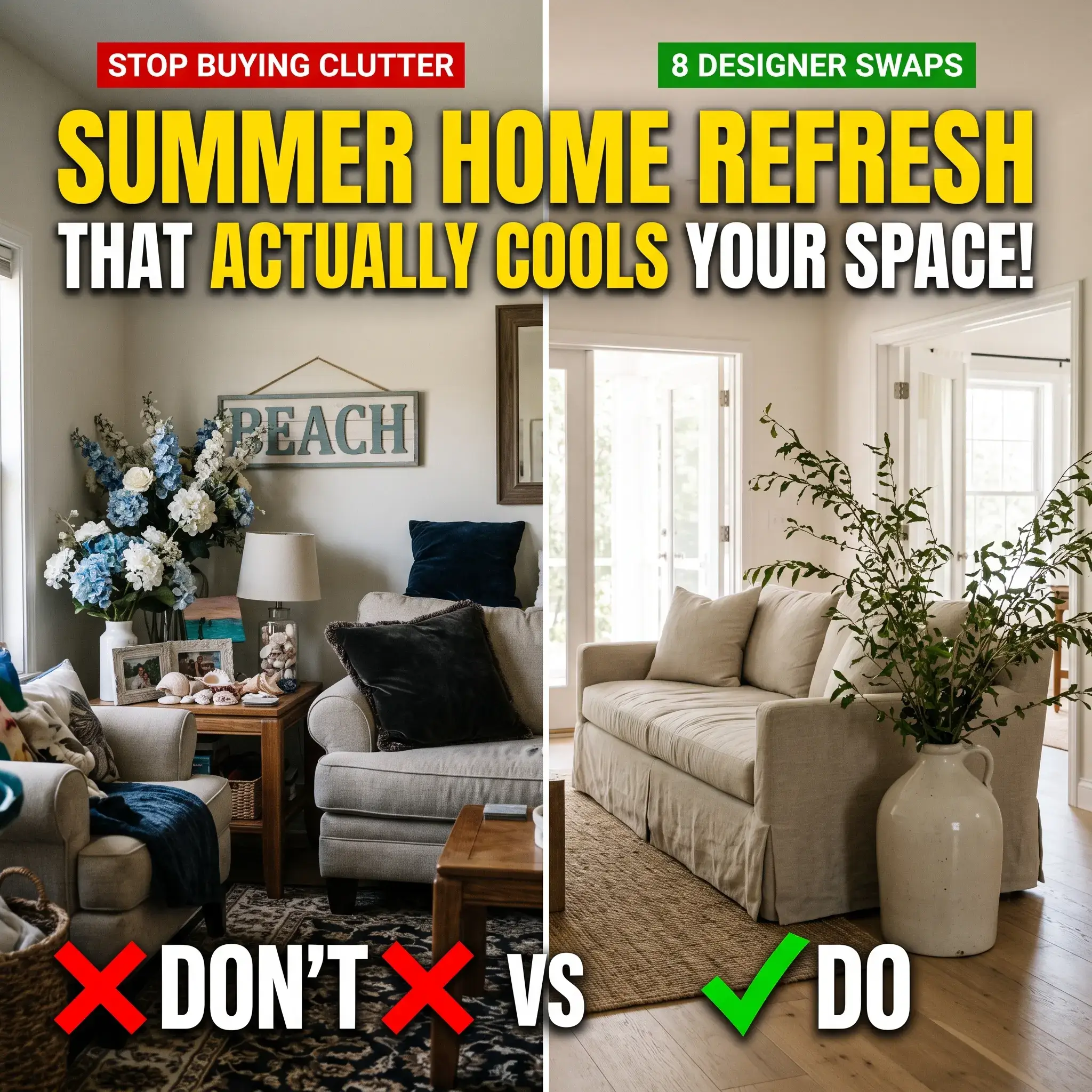
Simple Summer Decor: 8 Easy Swaps That Actually Beat the Heat
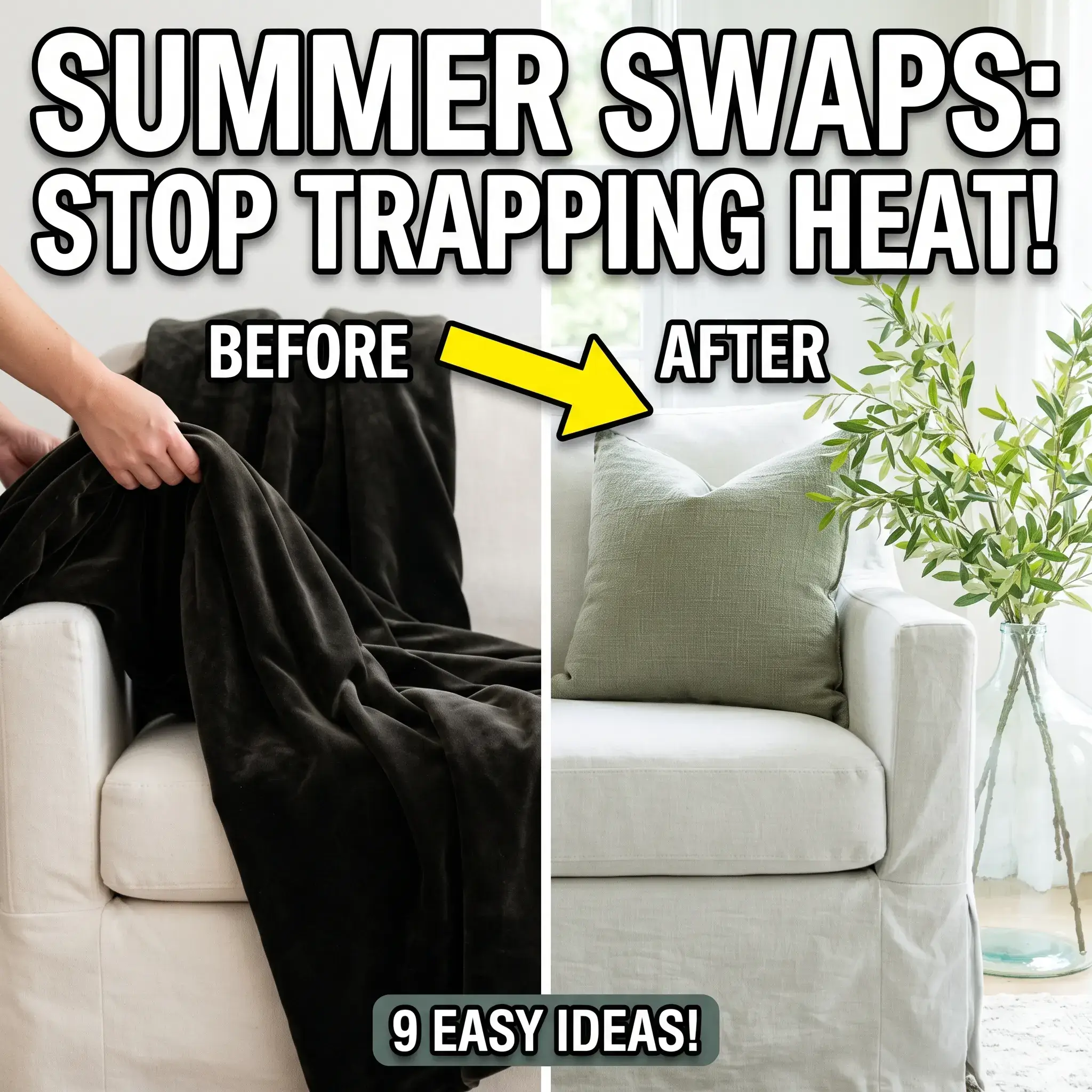
When warm weather arrives, heavy wool rugs, thick velvet blankets, and dark accents trap physical heat. They also make rooms feel crowded and stuffy.
True seasonal styling does not require buying novelty plastic knickknacks or spending thousands on new furniture. The most effective summer reset focuses on subtraction. You take away visual clutter, open up pathways for natural airflow, and switch out dense winter textiles for light, breathable plant fibers.
Here are eight practical, room-by-room summer decor setups you can put to work immediately.
8 Practical Summer Decor Ideas for Every Room
1. The Washed Linen Slipcover and Pillow Reset (Living Room)
Heavy upholstery fabrics like velvet, wool bouclé, and dark leather hold ambient heat. You can drop the visual and physical temperature of your seating area by swapping dark accents for breathable vegetable fibers.
Cover dark couches with a washable, relaxed slipcover made of unbleached flax linen or light cotton canvas. Remove half of your decorative accent pillows. Replace the remaining pillows with lightweight linen covers in sea-glass green, soft sage, or muted bone.
- How to style it: Fold away heavy knit blankets. Place one lightweight waffle-weave cotton throw over the back of the sofa. Expose your hardwood or tile floors around the edges to let hard surfaces stay cool underfoot.
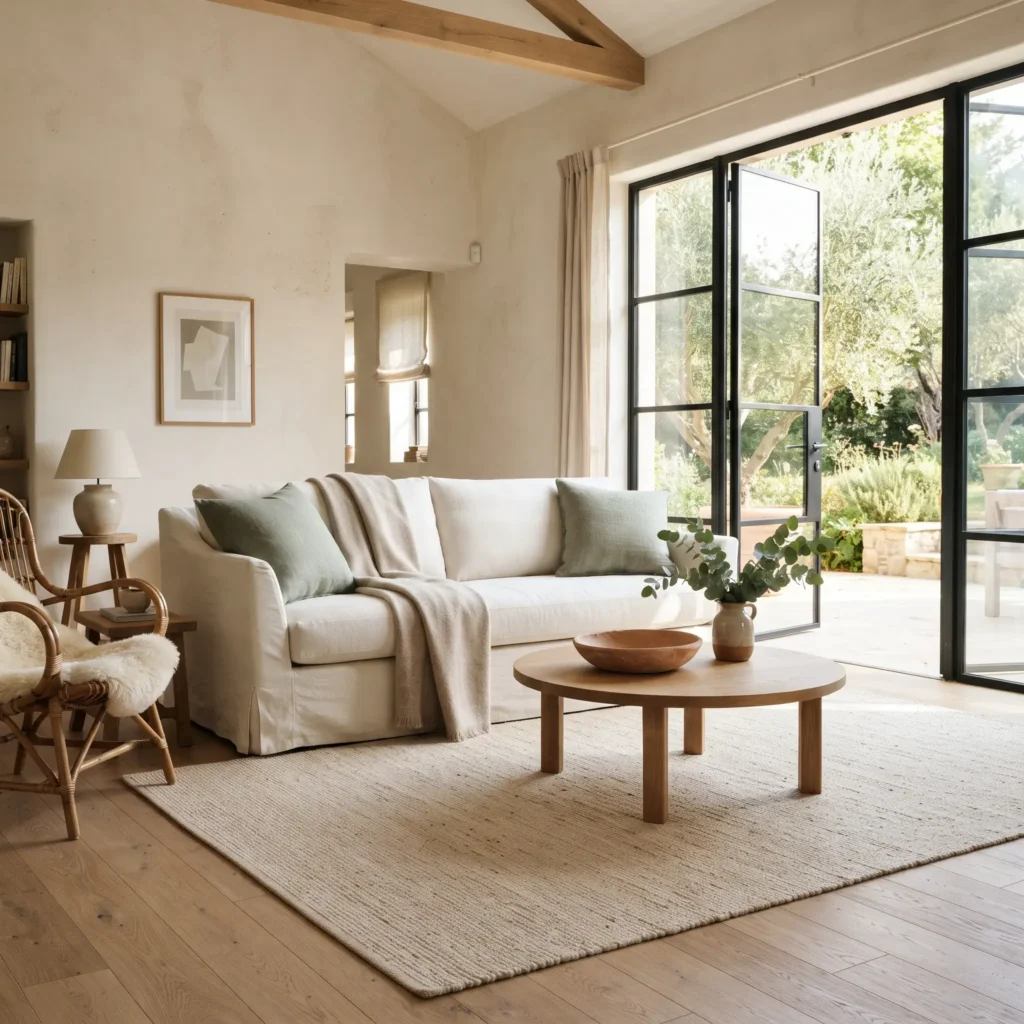
- Products Used in This Setup:
- Ivory washed flax linen sofa slipcover
- Sage green and bone slub-cotton pillow covers (20×20 inches)
- Round bleached jute area rug (8×10 feet)
- Shallow unglazed terracotta centerpiece bowl
2. The Layered Threshold Entrance (Entryway and Foyer)
A standard small doormat looks lost in front of a wide door frame and fails to catch summer yard debris. Layering two complementary mats creates an architectural entrance while protecting interior floors from tracking in sand and garden soil.
Pair a larger, flat-weave outdoor rug with a dense, natural coconut coir mat on top. Add a wooden wall peg rail nearby to keep seasonal accessories organized and off flat surfaces.
- How to style it: Center a 3×5 foot flat-weave rug featuring a simple ticking stripe or geometric pattern directly in front of the door. Center a thick 2×3 foot natural coir mat over it. Hang woven straw sun hats and lightweight tote bags on the peg rail to serve as functional wall decor.
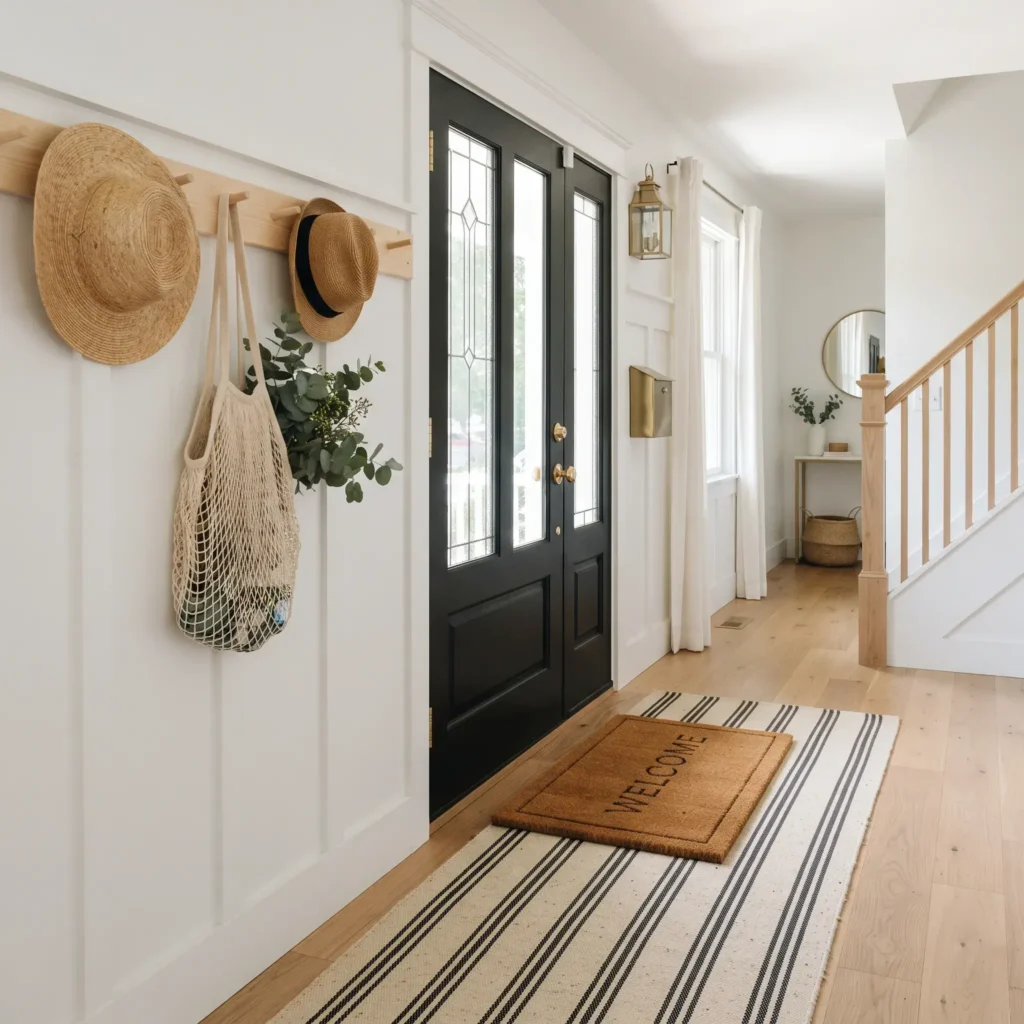
- Products Used in This Setup:
- 3×5 foot weather-resistant ticking stripe flatweave rug
- 2×3 foot thick natural coconut coir door mat
- Unfinished pine shaker peg rail
- Woven French straw market basket with leather handles
Check out more Summer Decor Ideas
3. The Fresh Citrus and Living Herb Centerpiece (Kitchen)
Cut flower bouquets decompose quickly in warm kitchens, producing cloudy water and unpleasant odors within days. Long-lasting culinary produce and living potted herbs offer a smarter, heat-resistant alternative.
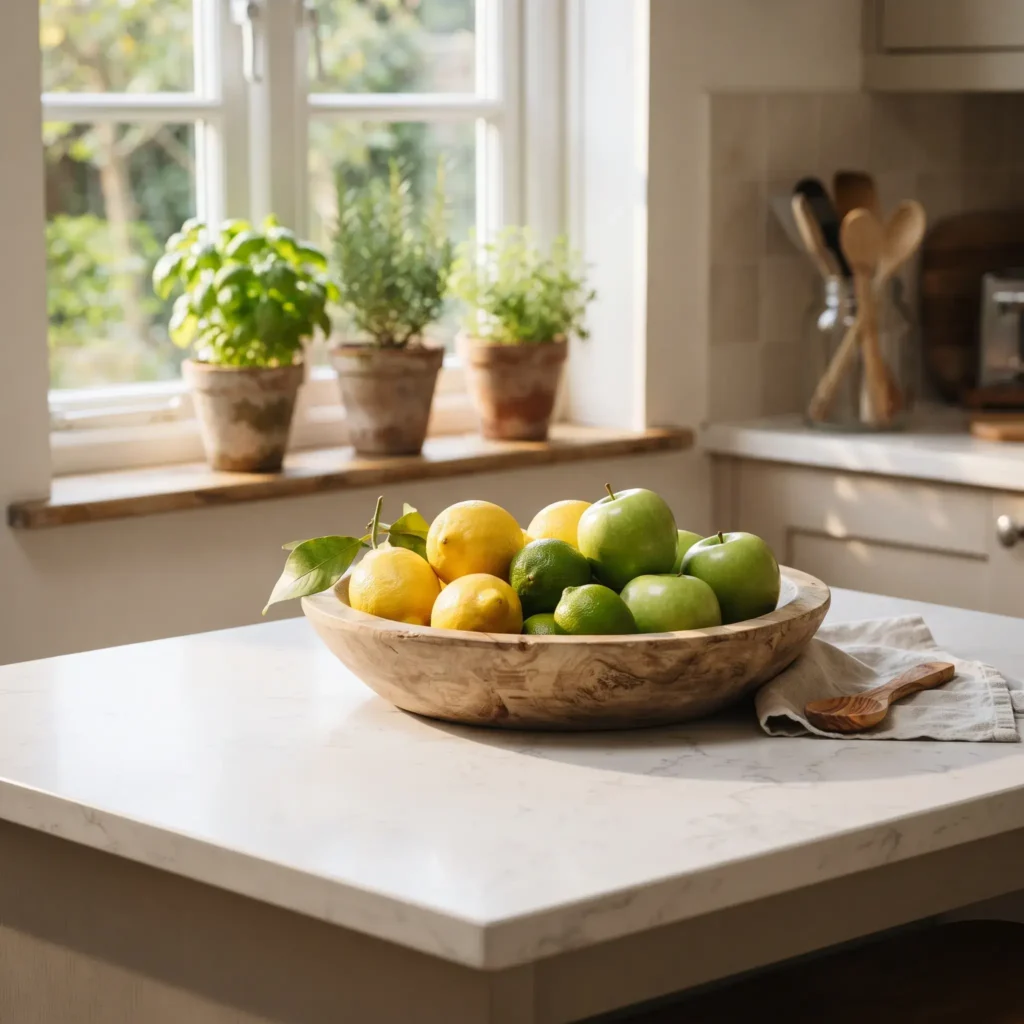
Clear small appliances off your kitchen counters to create visual breathing room. Group edible fruits inside a wide, shallow bowl, and place small pots of fresh herbs near natural light sources.
- How to style it: Place a shallow wooden dough bowl or footed marble compote on the kitchen island. Fill it with whole lemons, Persian limes, and green orchard apples. Place three small, aged clay pots containing sweet basil, mint, and rosemary on the windowsill.
- Products Used in This Setup:
- Hand-carved paulownia wood shallow pedestal bowl
- 4-inch aged terracotta miniature plant pots
- Amber glass dish soap dispensers with bamboo pumps
- Natural slub-cotton striped kitchen tea towels
4. The Percale and Muslin Cooling Bedscape (Bedroom)
Heavy synthetic comforters and thick down inserts trap body heat, disrupting natural sleep cycles during warm nights. A low-mass, moisture-wicking textile setup keeps your bed feeling fresh and breathable.
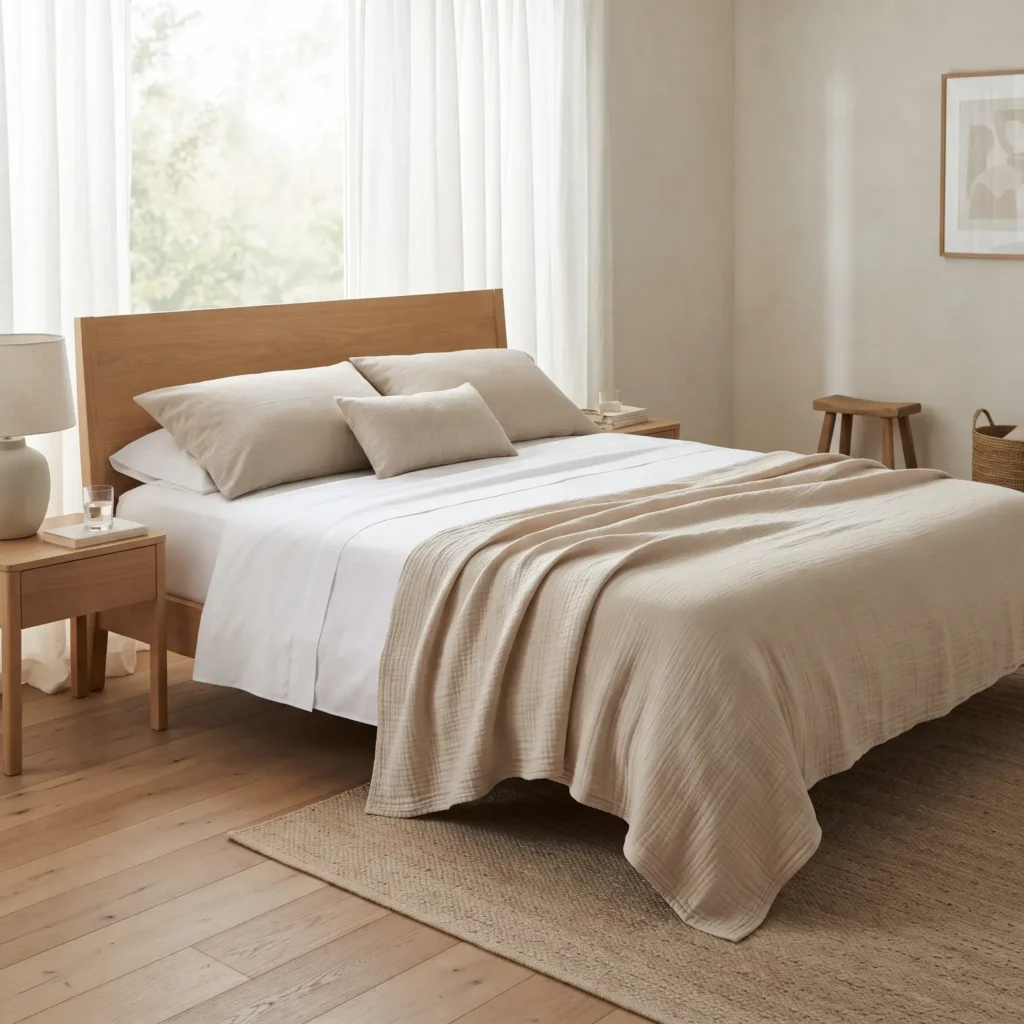
Remove winter duvets and synthetic microfibers. Dress the mattress with 100% long-staple cotton percale sheets. Percale features an open, crisscross weave that allows body heat to escape quickly.
- How to style it: Use white or cream percale sheets as the primary sleeping surface. Fold a lightweight, four-layer cotton muslin gauze blanket loosely across the bottom third of the bed. Leave pillow shams slightly relaxed instead of tightly tucked to establish an informal, breezy atmosphere.
- Products Used in This Setup:
- 100% long-staple cotton percale sheet set (250 thread count)
- Four-layer cotton muslin gauze blanket in oatmeal
- Washed French flax linen king pillowcases in sand
- Ribbed glass bedside water carafe with matching tumbler
5. The Mediterranean Hammam Bath Refresh (Bathroom)
Standard plush terry cloth towels stay damp for hours in humid summer air, creating unpleasant mildew smells. Flat-woven Turkish towels dry rapidly and keep bathrooms smelling clean.
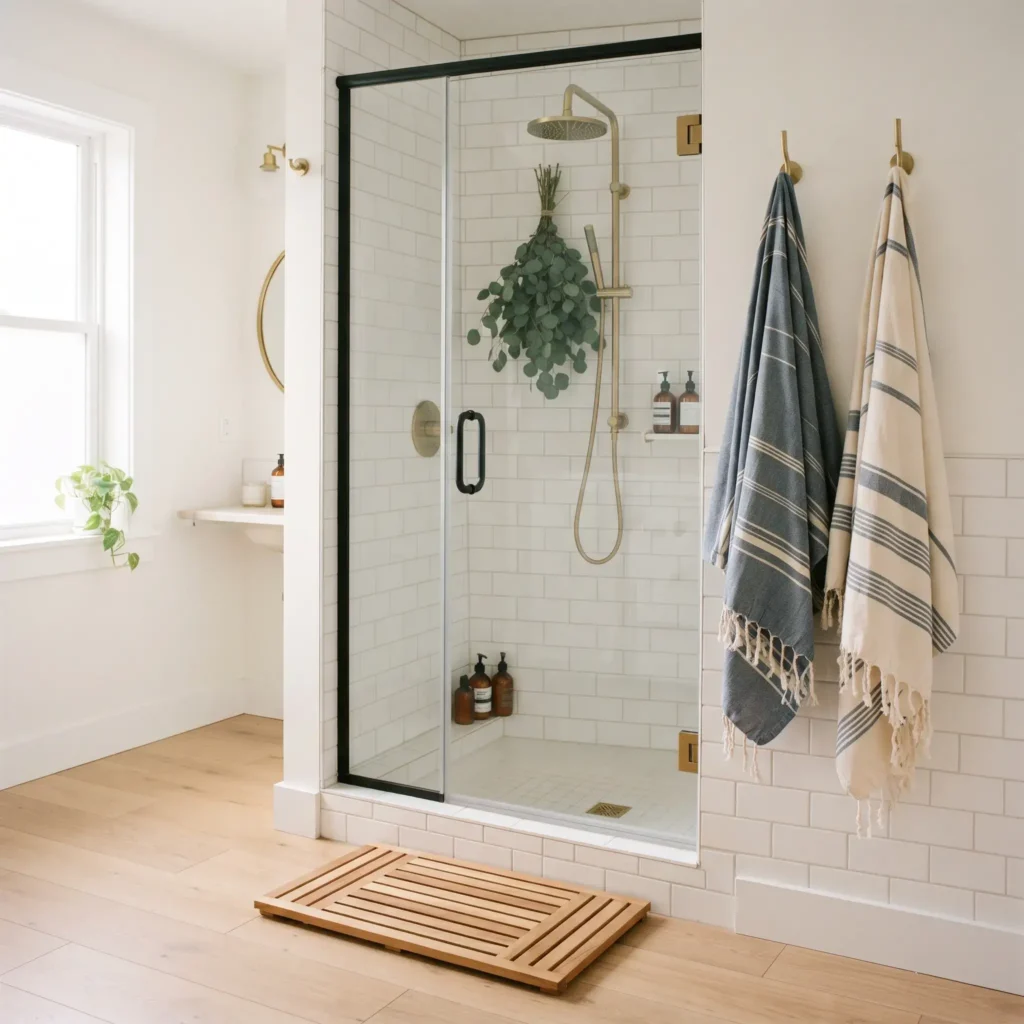
Retire heavy bath rugs and plush loops. Replace them with slatted wood floor mats and lightweight Turkish peshtemal cotton towels.
- How to style it: Hang striped Turkish towels from wall hooks or roll them inside open seagrass baskets. Place a water-resistant slatted teak duckboard directly outside the shower door. Tie a bundle of fresh silver-dollar eucalyptus branches behind the showerhead with jute twine to release natural oils as shower steam rises.
- Products Used in This Setup:
- Flat-woven Turkish peshtemal bath towels with knotted fringe
- Slatted natural teak wood bath mat
- Fresh silver-dollar eucalyptus shower bundle
- Clear glass pump bottles with waterproof minimalist labels
6. The Rule-of-Three Coffee Table Vignette (Living Room)
A crowded coffee table makes an entire living space feel visually heavy. Applying a strict three-piece styling rule keeps the surface functional while introducing seasonal, organic texture.
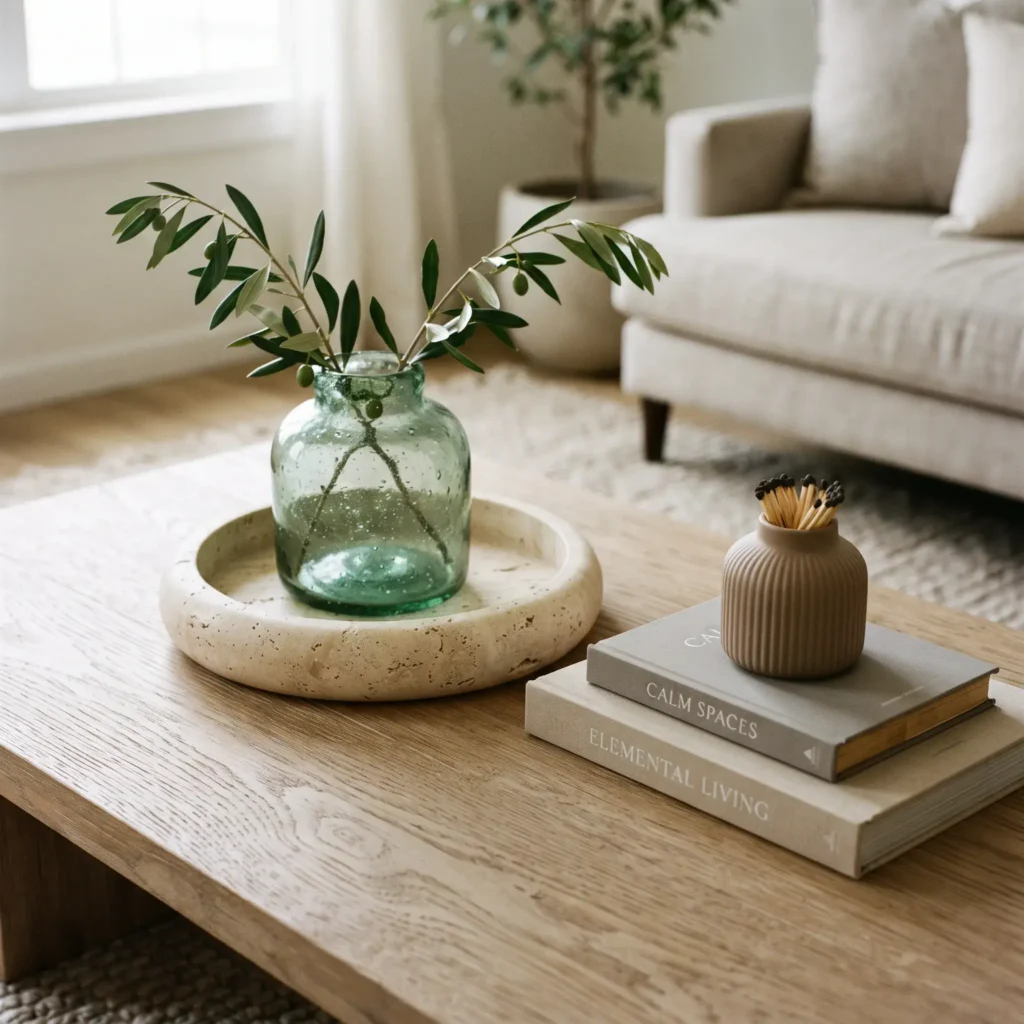
Clear away old magazines, remote controls, and dense candle holders. Use three simple elements: a natural stone or unglazed ceramic tray, a stack of two light-colored books, and a glass vase with yard clippings.
- How to style it: Place a round travertine stone tray in the center of the table. Top it with an unglazed ceramic match striker. Beside the tray, stack two neutral-cover art or nature books. Finish with a clear recycled glass jug holding a single branch cut from an outdoor tree or shrub.
- Products Used in This Setup:
- Round honed travertine stone tray (12-inch)
- Recycled clear Spanish glass jug vase
- Linen-bound architectural and nature coffee table books
- Ribbed white ceramic match striker
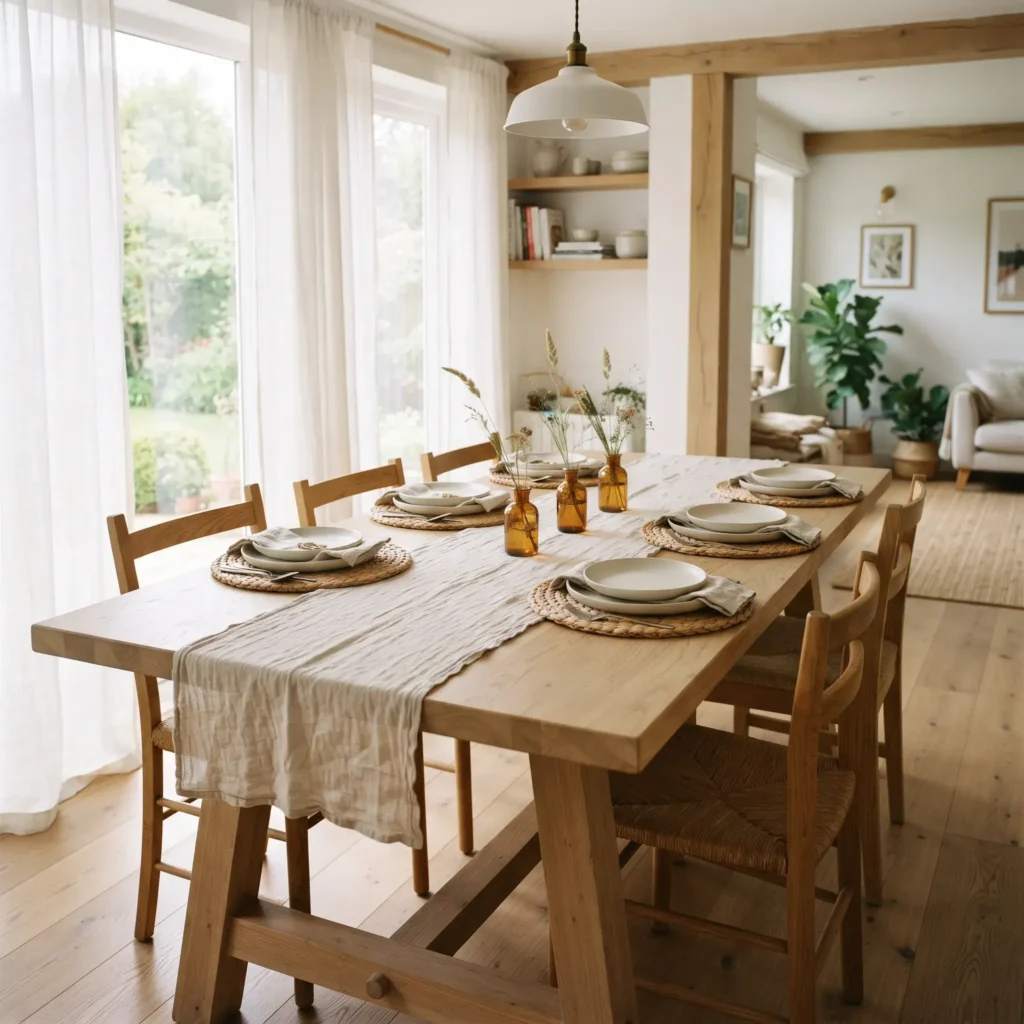
7. The Bare Wood Dining Table with Crinkled Linen (Dining Room)
Formal tablecloths feel stiff and suffocating during warm months. Removing heavy drapes and tablecloths allows hard furniture surfaces to breathe and reflect natural light.
Expose the natural grain of your dining table. Run a narrow, un-ironed crinkled linen runner down the center to add soft texture without covering the entire tabletop.
- How to style it: Lay down an un-ironed natural flax runner. Add woven water hyacinth or braided seagrass placemats at each seat. Down the center line, position three vintage amber glass apothecary bottles, each holding a single dry wild grass stem.
- Products Used in This Setup:
- Crinkled 100% French flax linen table runner in natural oat
- Braided water hyacinth round placemats (15-inch)
- Vintage amber glass apothecary bud vases
- Off-white matte ceramic dinner plates
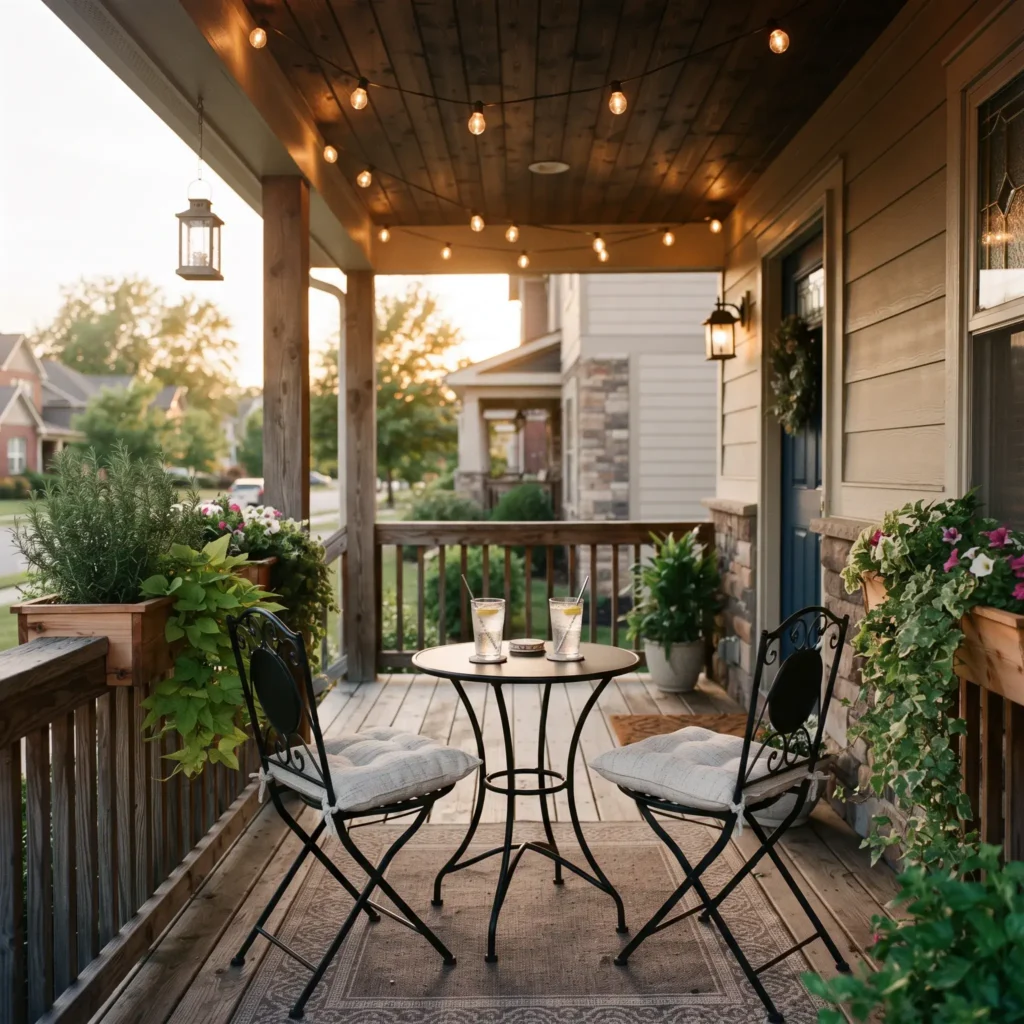
8. The Shaded Veranda and Compact Balcony Lounge (Outdoor Spaces)
Bulky outdoor sectionals choke off narrow porches and small balconies, trapping stagnant air against exterior walls. Open-frame furniture allows summer breezes to circulate freely.
Choose lightweight metal bistro seating or open-weave rope chairs. Add vertical plant arrangements to railings and walls to shield your outdoor area from strong afternoon sun.
- How to style it: Set up a folding black iron bistro set with tie-on cotton cushions. Mount cedar planters along the outer railing and fill them with cascading sweet potato vines and rosemary. Hang a strand of warm-white commercial Edison string lights overhead for soft evening ambiance.
- Products Used in This Setup:
- Powder-coated black iron folding bistro set
- Natural cotton slub tie-on chair cushions
- Cedar wood railing planter boxes
- Commercial-grade outdoor warm white string lights
The Subtraction Principle: Why Less Decor Makes Rooms Feel Cooler
Most people assume decorating requires bringing new items into a house. In summer, the opposite rule applies. Removing items is the fastest way to make your home feel fresh.
Physical objects hold heat. Thick wool rugs, heavy velvet cushions, and piles of books on tabletops act as thermal reservoirs, absorbing warmth during the day and radiating it into the room at night.
Dense decor also blocks natural ventilation routes. When corners and surfaces are crowded with items, air cannot move freely between open doors and windows.
Start your seasonal reset by packing away forty percent of your tabletop knickknacks, heavy floor rugs, and thick throws. Leaving negative space around furniture and on wall surfaces creates an instant psychological sensation of calm, open coolness.
The Science of Summer Fabrics: What to Keep and What to Store
Different fabric fibers manage heat, humidity, and airflow in distinct ways. Synthetic microfibers like polyester trap moisture and heat against your body. Natural plant fibers allow heat to disperse quickly.
Use this quick textile reference guide when rotating fabrics throughout your home:
| Fabric Type | Fiber Origin | Airflow Permeability | Moisture Management | Best Summer Use |
|---|---|---|---|---|
| Flax Linen | Natural plant | High (open weave) | Wicks sweat instantly | Sofa slipcovers, table runners, pillowcases |
| Cotton Percale | Natural plant | Moderate to high | Cool to the touch | Base sheets and primary pillowcases |
| Cotton Muslin | Natural plant | High (gauze layers) | Light thermal layer | Summer bed blanket, sofa throw |
| Jute and Sisal | Natural plant | High | Does not hold heat | Ground area rugs and runner mats |
| Velvet / Chenille | Synthetic or dense silk | Very low | Traps body heat | Store until late autumn |
| Wool Bouclé | Animal fiber | Low | Acts as an insulator | Store until late autumn |
Natural Passive Cooling: Easy Window and Airflow Habits
You can lower your indoor temperature without running mechanical air conditioning at maximum power all day. Strategic window management allows you to capture cool outdoor air while blocking solar heat gain.
1. Stack Ventilation (The Chimney Effect)
Warm air naturally rises toward your ceilings, while cool air stays low to the ground. If your home has two stories or high ceilings, exploit this physical principle:
- Open shaded ground-floor windows slightly on the coolest side of your house.
- Open upper-floor windows or attic skylights wider on the opposite side.
- This creates a vertical vacuum loop, pulling cool air across your lower living spaces while venting built-up heat out through the roof.
2. Strategic Window Shading
Sunlight entering through unprotected glass warms floors and furniture quickly.
- South and West Windows: Deploy light-colored cellular honeycomb shades or exterior bamboo blinds during peak afternoon hours (12 PM to 5 PM) to reflect radiant heat before it enters the glass.
- North Windows: Hang floor-length open-weave sheer linen panels. These panels diffuse harsh outdoor glare into soft light while moving with slight indoor drafts.
Sensory Summer Styling: Scents and Sounds
Seasonal atmosphere extends beyond what you see. It involves what you smell and hear inside your living environment.
Heavy home fragrances featuring vanilla, cinnamon, amber, and musk feel heavy in humid air. Switch to essential oils and clean-burning soy candles containing:
- Crushed sweet basil and mint leaves
- Italian bergamot and neroli
- Sea salt and coastal sage
- Cut eucalyptus and pink grapefruit
For sound, take advantage of natural cross-breezes. Hang a light bamboo or metal chime outside an operable window. Position sheer curtains where gentle drafts cause them to rustle softly against window frames, reinforcing the psychological sensation of moving air.
Three Zero-Cost Upcycling Projects for Summer
You do not need to visit a home decor boutique to create high-end organic accents. You can assemble unique seasonal pieces using materials found outside or inside your kitchen cabinets.
1. The Aged Terracotta Pot Wash
Inexpensive commercial terracotta pots often look too bright and orange. You can give them an antique, European garden look in an afternoon:
- Stir two tablespoons of plain organic yogurt into a half-cup of water.
- Brush the mixture generously over the outside of a clean clay pot.
- Place the pot in a shady, damp garden corner for two weeks.
- Natural bacteria and minerals will create a soft, weathered patina across the clay surface.
2. Recycled Glass Specimen Jars
Collect clear glass sauce jars and olive oil bottles. Soak them in warm soapy water to remove paper labels cleanly.
- Fill the bottom inch of each jar with dry play sand or gathered beach sand.
- Drop in a few small, smooth river pebbles or sea-glass shards.
- Place three varied jars along a deep window sill so the glass catches and scatters morning sunbeams across your room.
3. The Driftwood Wall Hook Rail
Find a smooth, dry piece of sun-bleached driftwood at a local lake or beach. Clean away loose debris with a stiff bristle brush.
- Screw three small brass cup hooks into the underside of the wood branch, spacing them five inches apart.
- Fasten braided jute twine to each end of the wood.
- Hang the assembly on your entryway wall to hold sunglasses, keys, and sun hats.
Frequently Asked Questions
When should you start decorating your home for summer?
Mid-May is the ideal time to complete your seasonal switch. Transitioning your textiles and decor before Memorial Day weekend ensures your home is light, uncluttered, and ready for hot weather before the first intense heat waves arrive.
How do you make a dark room feel like summer?
Begin by removing heavy dark drapes and replacing them with semi-sheer linen panels. Hang a large wall mirror directly opposite a window to bounce natural daylight deeper into the room. Swap out warm 2700K light bulbs for 3000K neutral bulbs to mimic the clean clarity of natural summer sunshine.
What are the best paint and accent colors for a summer home?
Choose chalk whites, bleached bone, soft sage green, pale sky blue, and warm terracotta. Cool blues and greens visually lower ambient room temperatures, while pale earth tones soften intense afternoon light without feeling dark.
How can you decorate for summer on a tight budget?
Focus on items you already own. Store heavy blankets and clutter to open up floor space. Clip leafy green branches from your yard to display in clear water pitchers. Fill a wide fruit bowl with grocery store lemons and limes instead of buying expensive floral arrangements.
What is the difference between linen and percale bedding in hot weather?
Cotton percale offers a crisp, cool hand that feels cold to the touch when you first slide into bed. Flax linen has a looser, textured weave that breathes exceptionally well and pulls moisture away from your skin throughout humid nights. Both materials perform well in summer and work best when paired together.
Refreshing your home for summer is an exercise in editing. Pick one room to start, whether that means stripping your bed down to crisp percale sheets or clearing your kitchen counters for a simple bowl of fresh citrus. Focus on open airflow, breathable natural fibers, and clear surfaces. When you remove heavy winter layers, your home becomes a cool, restful retreat all season long.