8 Japandi Bedroom Ideas for a Grounded, Restorative Space
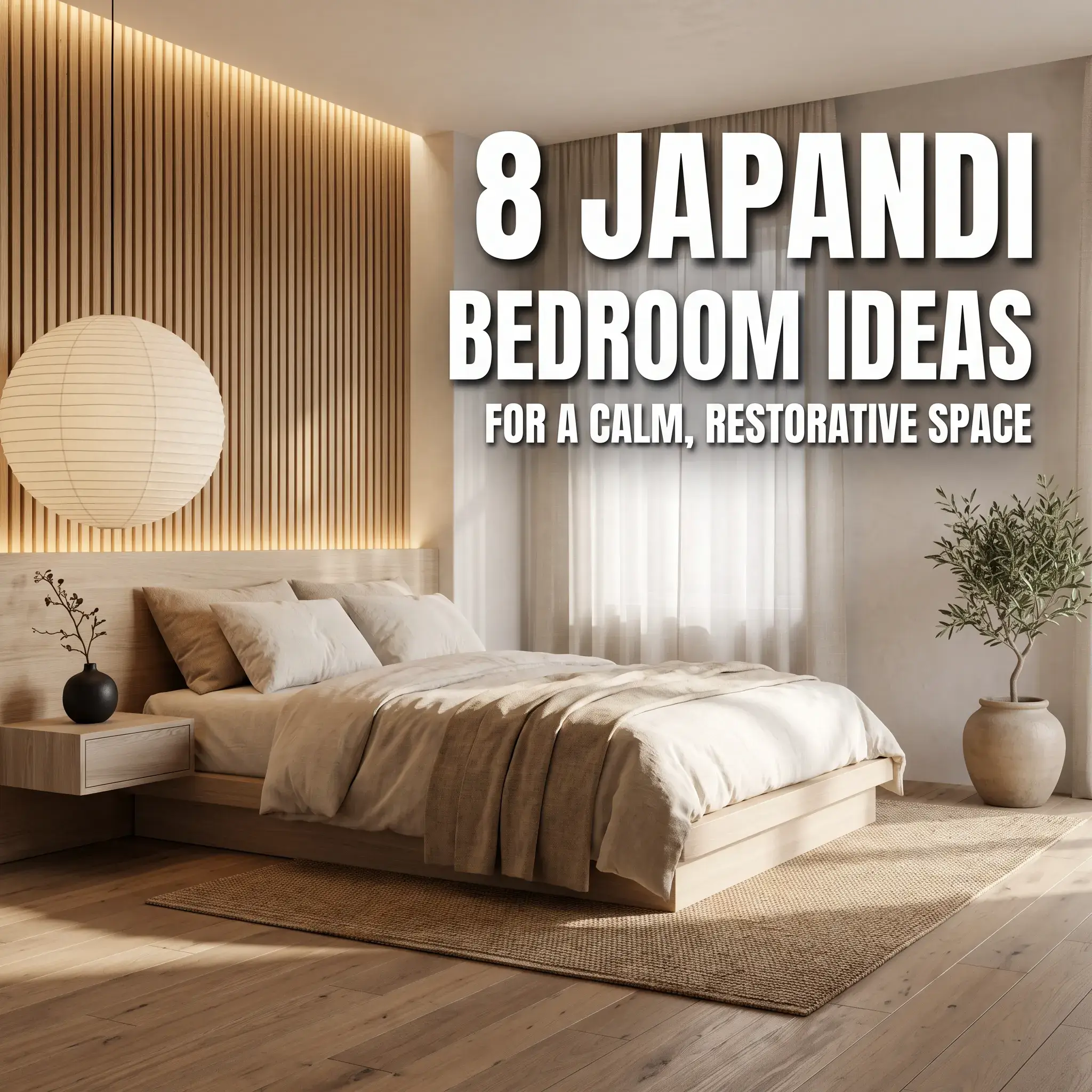
A Japandi bedroom brings together Scandinavian functional comfort and Japanese spatial restraint. It strips away surface clutter and replaces cold minimalism with warm wood grains, tactile linens, and low sightlines.
The goal is simple: quiet your visual field so your mind can rest.
Here are eight practical design ideas to help you build a balanced, serene retreat at home.
1. The Low-Profile White Oak Platform Bed
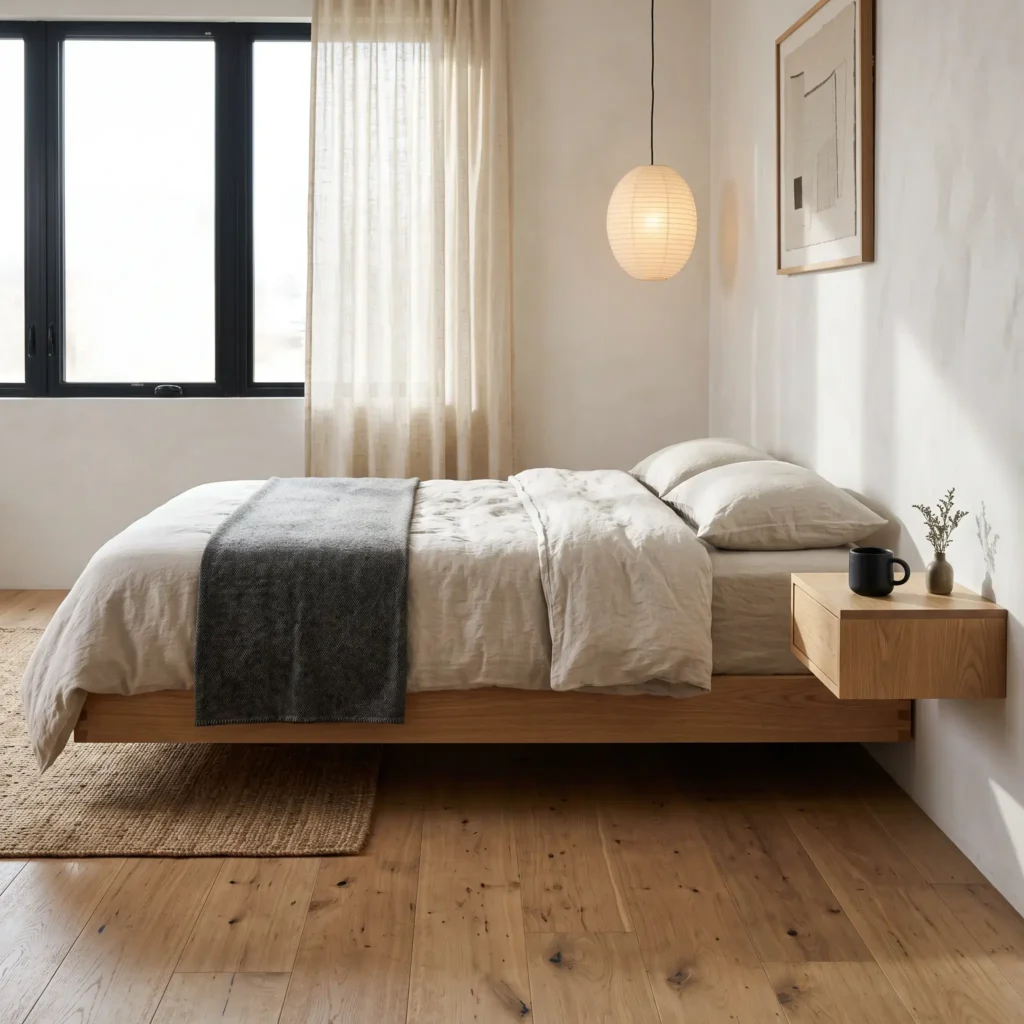
Lowering your bed height shifts the visual weight toward the floor plane. This leaves the upper two-thirds of the room open, which makes standard eight-foot ceilings feel significantly taller.
Select an untreated or clear-matte white oak frame with an inset plinth base. Skip tall, padded headboards in favor of a clean wood ledge that sits flush against the wall. Pair the frame with floating bedside shelves mounted level with the mattress. Keeping the floor visible underneath the furniture makes small rooms feel open and easy to clean.
- Featured Decor and Furniture Pieces:
- Low solid white oak platform bed frame with integrated floating side ledges
- Heavyweight stonewashed French flax linen duvet cover in sand and warm ivory
- Hand-thrown unglazed stoneware water carafe and tumbler
- Flat-weave natural jute runner rug
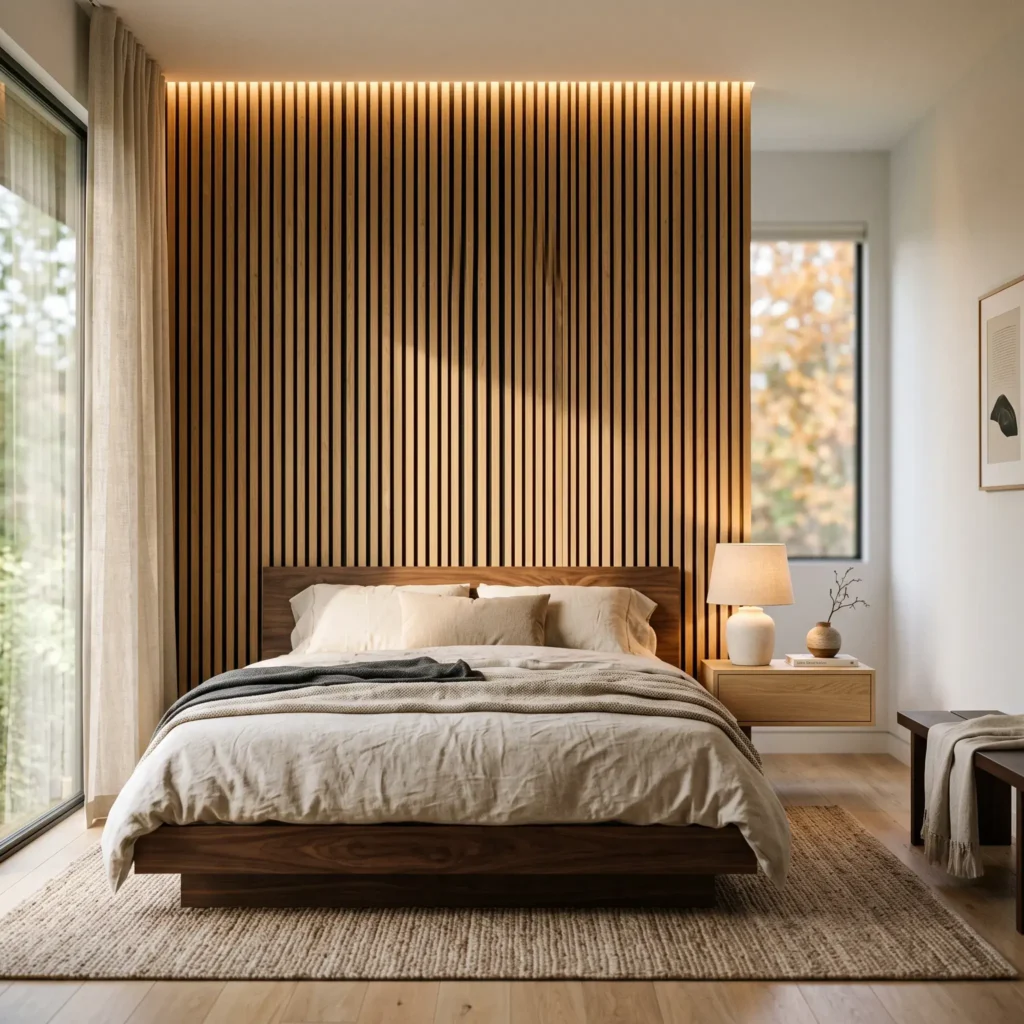
2. The Acoustic Timber Slat Feature Wall
Vertical timber slats introduce structured geometric rhythm while solving a common bedroom issue: sound echo. The open channels between the wood strips catch sound waves, creating a quiet, muffled sleep environment.
Mount three-quarter-inch ash or pale oak battens over black acoustic felt behind the bed. Run the paneling from floor to ceiling across the entire headboard wall. To keep the space balanced, leave the remaining three walls smooth and paint them in a soft mineral off-white.
- Featured Decor and Furniture Pieces:
- Wall-mounted acoustic oak timber slat panels with recycled felt backing
- Low dark walnut platform bed frame without headboard
- Organic waffle-weave cotton blanket in muted slate gray
- Cast bronze wall-mounted reading sconce with matte finish
Check out more Modern Bedroom Ideas
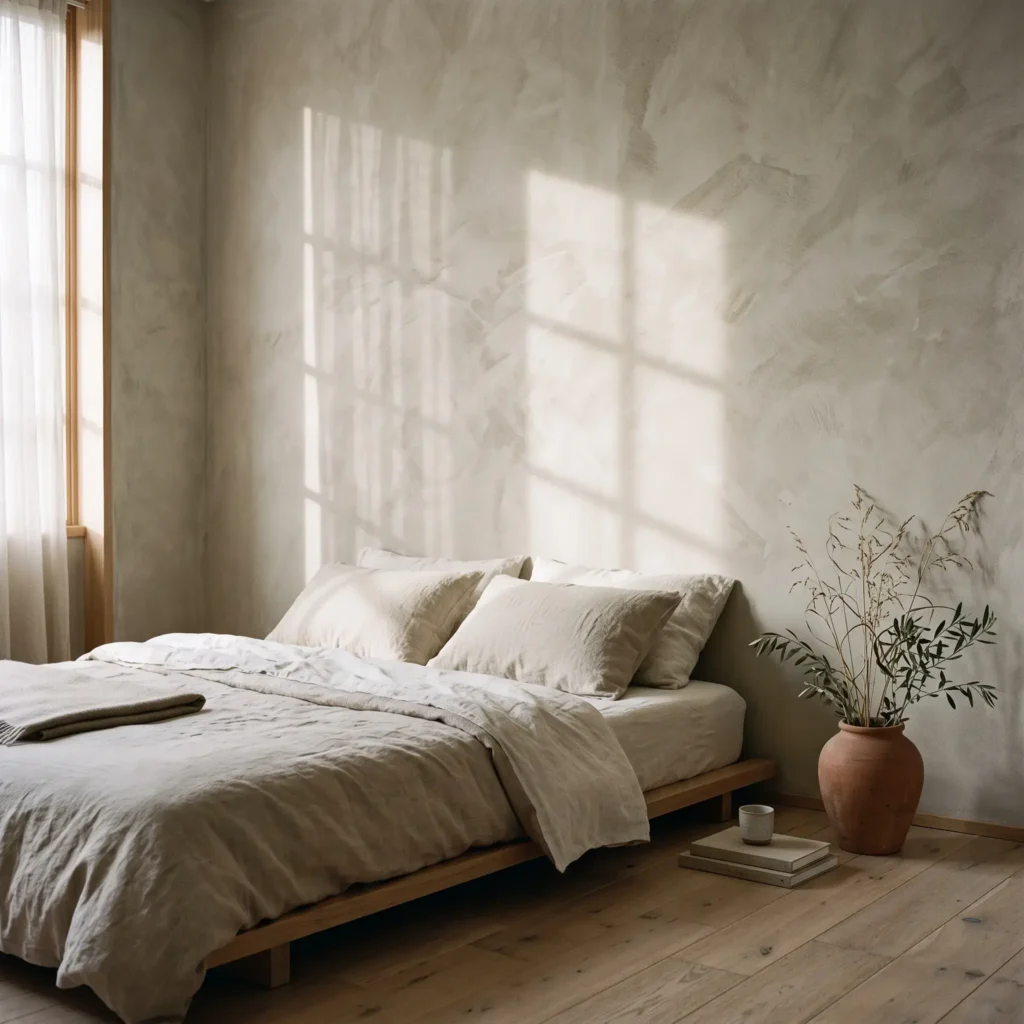
3. The Textured Limewash Mineral Wall
Standard flat latex paint reflects artificial light with a synthetic sheen. Mineral plasters and limewash paints absorb excess light, creating a soft, chalky texture that changes gently as daylight shifts through the day.
Apply a warm mineral paint or Roman clay finish in two thin coats using wide crisscross brushstrokes. Choose tones with gray and beige undertones, such as Sherwin-Williams Shoji White or Benjamin Moore Swiss Coffee. The slight tonal variations give the room depth without needing wall art or picture frames.
- Featured Decor and Furniture Pieces:
- Mineral limewash wall finish in muted off-white
- Low Japanese style solid ash bench
- Natural washed linen pillow shams in pale ecru and warm gray
- Vintage hand-coiled stoneware floor vase
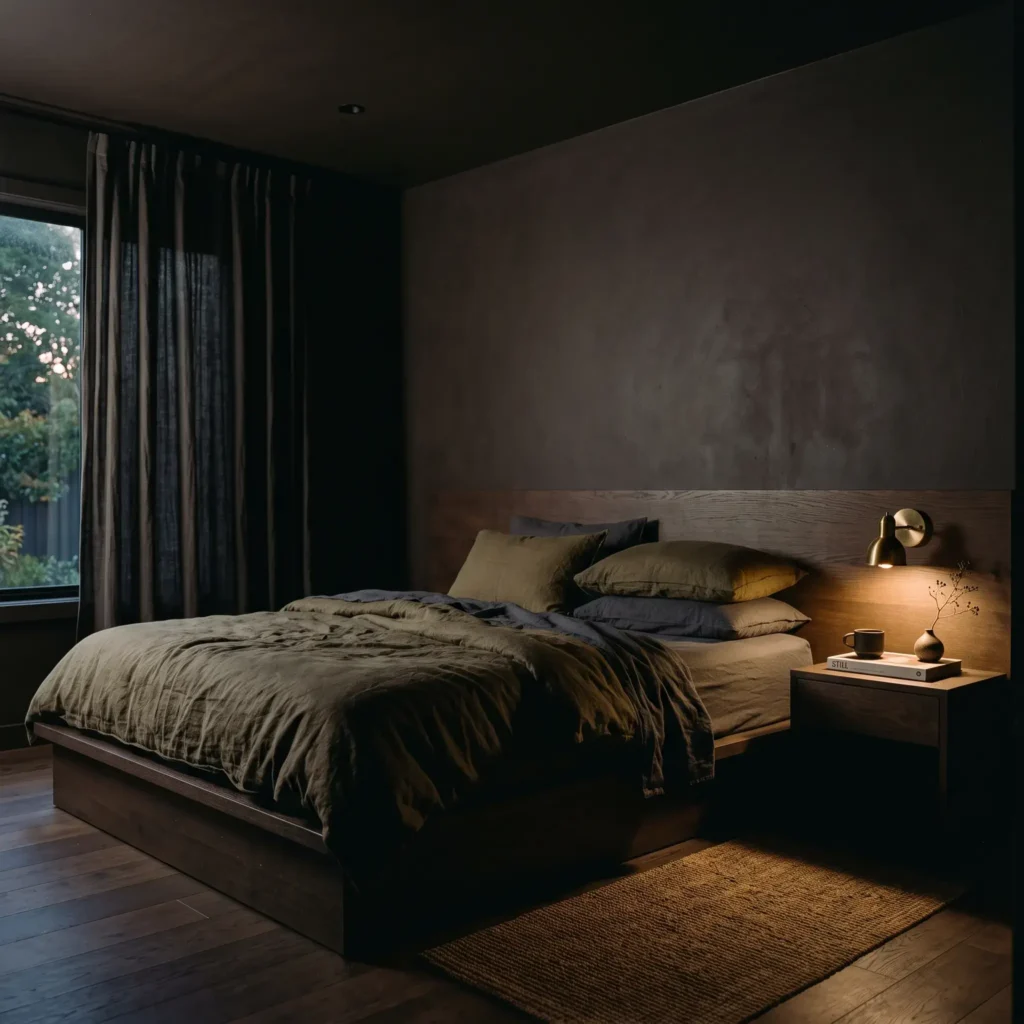
4. The Moody Dark Japandi Sanctuary
Dark Japandi moves away from pale woods and off-whites. It creates an intimate, cocoon-like atmosphere through deep charcoal, smoked oak, and warm espresso tones.
Drench the entire space, including walls, baseboards, and ceiling planes, in an earthy dark neutral like Sherwin-Williams Urbane Bronze or Benjamin Moore Silhouette. Ground the dark walls with furniture crafted from smoked oak or charred cedar. Bring in warm textiles in olive or burnt umber to prevent the dark paint from feeling cold.
- Featured Decor and Furniture Pieces:
- Smoked oak low platform bed frame
- Washed flax linen sheet set in dark olive green
- Heavy boiled-wool throw blanket in deep charcoal
- Patinated brass directional reading light
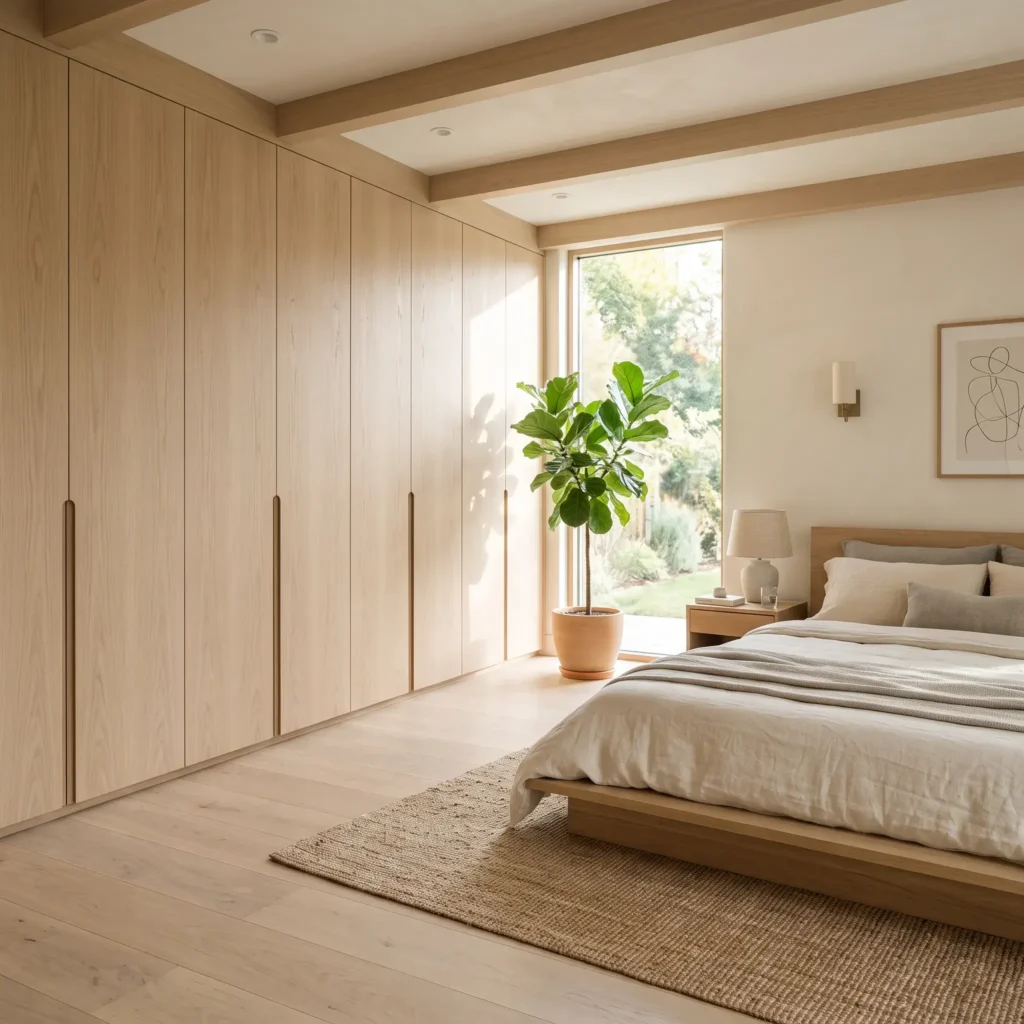
5. Built-In Wardrobes with Flush Paneling
Freestanding dressers consume valuable walking space and add unnecessary visual angles. Built-in storage creates flat wall planes that conceal daily belongings behind flush panels.
Install floor-to-ceiling wardrobes equipped with touch-latches instead of surface hardware. Paint the door fronts the exact same color and sheen as the surrounding walls, or face them in vertical oak veneer to match the flooring. Keep the horizontal tops of low dressers clear to preserve open sightlines.
- Featured Decor and Furniture Pieces:
- Custom floor-to-ceiling flat-panel wardrobes with touch-release hardware
- Low three-drawer solid birch horizontal credenza
- Low-profile paper cord bench
- Natural wool flat-weave area rug in light cream
6. The Sculptural Paper Pendant and Low Horizon Nook
Overhead recessed lights wash out natural materials with harsh glare. A paper lantern diffuses point-source light into an even, gentle glow that mimics filtered paper window light.
Hang an oversized washi paper globe low over the bed or in an empty reading corner, suspending it roughly 60 to 70 centimeters above the surface. Add a low oak lounge chair or a firm floor cushion beneath the pendant to create a dedicated reading zone away from the main bed.
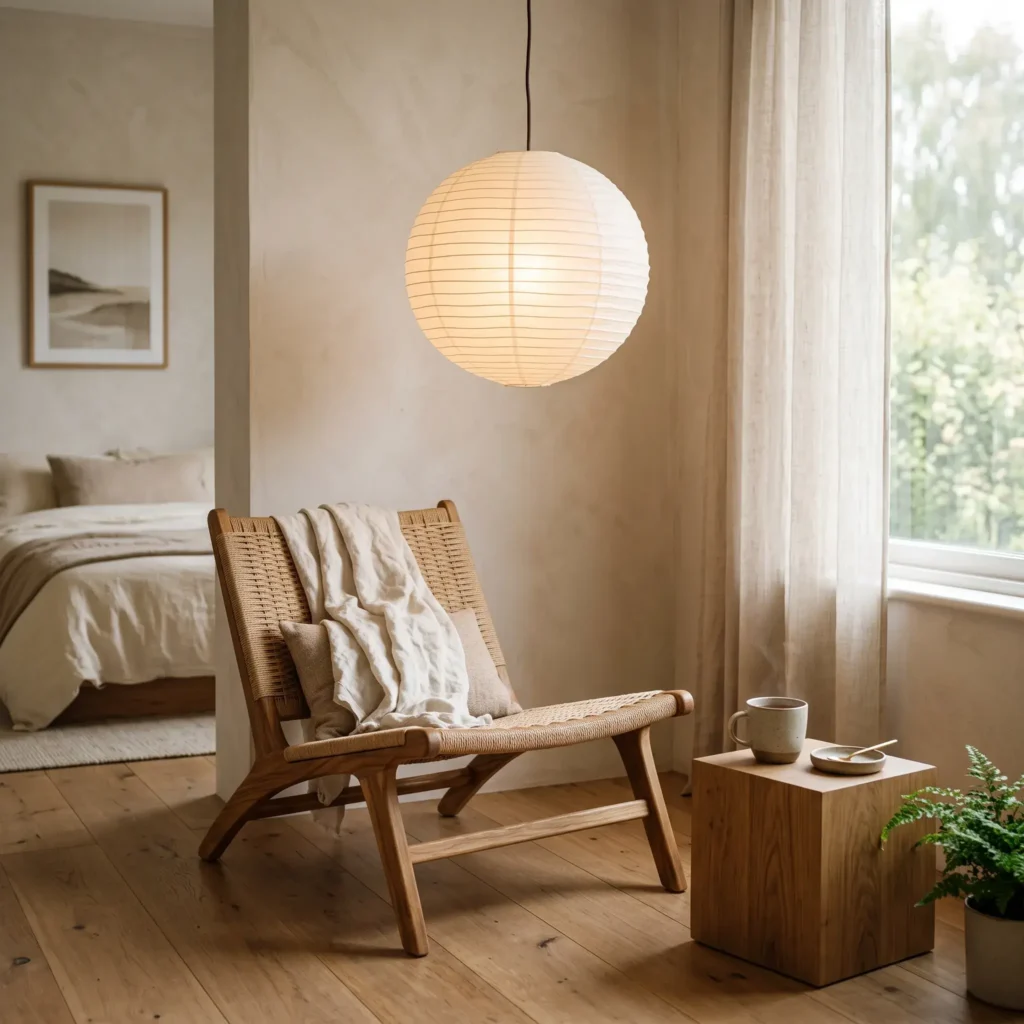
- Featured Decor and Furniture Pieces:
- Ribbed mulberry washi paper pendant light fixture with bamboo wire collar
- Hans Wegner style low lounge chair with woven paper cord seat
- Solid block oak side pedestal
- Hand-thrown stoneware ceramic mug with unglazed bottom
7. The Tatami Mat Foundation with Low Bedding
Traditional Japanese rush grass mats, known as igusa tatami, bring both texture and a subtle, sweet herbal aroma into the room. They establish a calm, level foundation underfoot.
Arrange two to four tatami mats directly over hardwood or poured concrete floors. Place a low, slatted platform or a firm natural latex mattress directly on top. Keep the bedding simple: flat-folded linen duvets, two low sleeping pillows, and no decorative bolster piles.
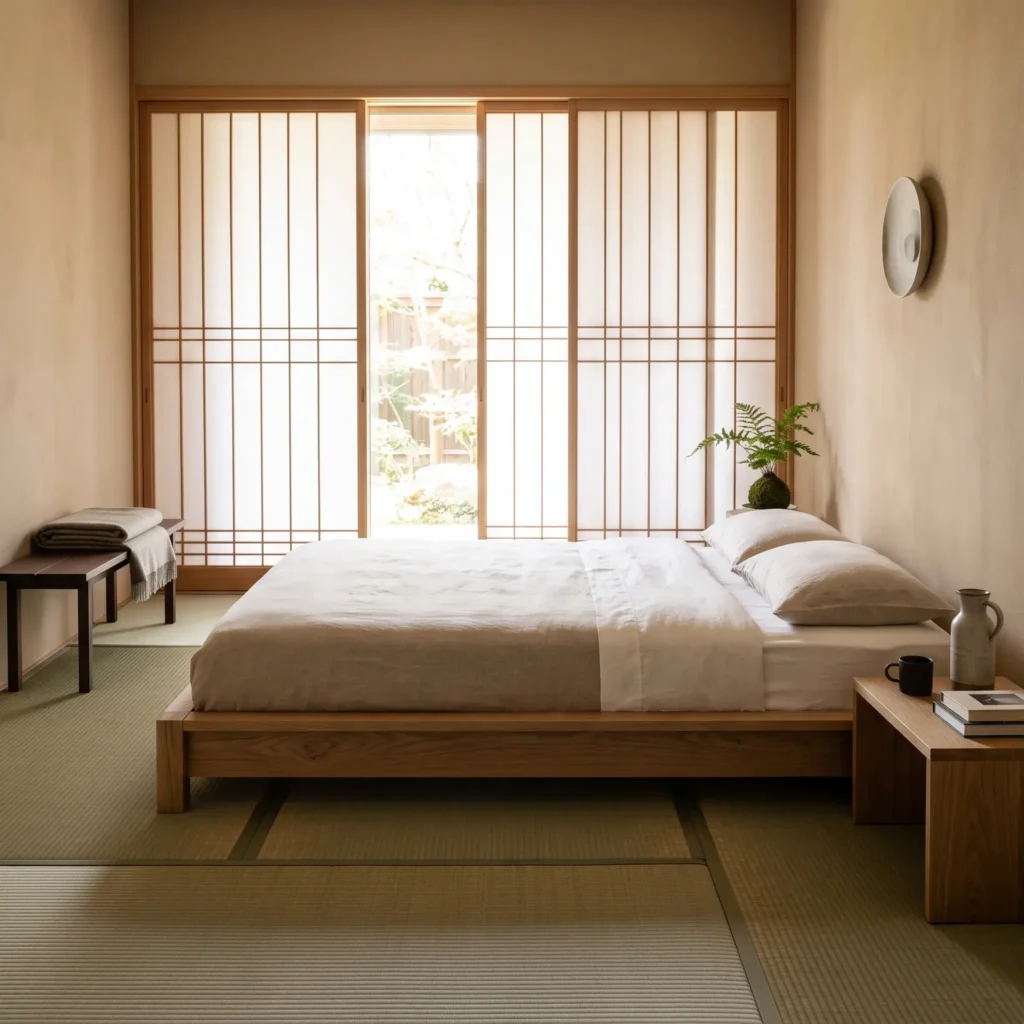
- Featured Decor and Furniture Pieces:
- Authentic Japanese woven rush grass tatami mats with black fabric borders
- Slatted roll-out cedar bed slat foundation
- Organic long-staple cotton percale sheets in unbleached ecru
- Washed linen rectangular lumbar pillow
8. The Biophilic Corner with Ikebana Branch Styling
Avoid crowding windowsills with multiple small potted plants. Grouped pots introduce visual noise that conflicts with the Japanese concept of kanso, which values simplicity through subtraction.
Place one sculptural branch or dwarf tree in an open corner. Look for plants with clear structural forms, such as a slender indoor olive tree or a potted Japanese maple. For nightstands, place a single clipped branch with interesting curves in a heavy, unglazed ceramic vase.
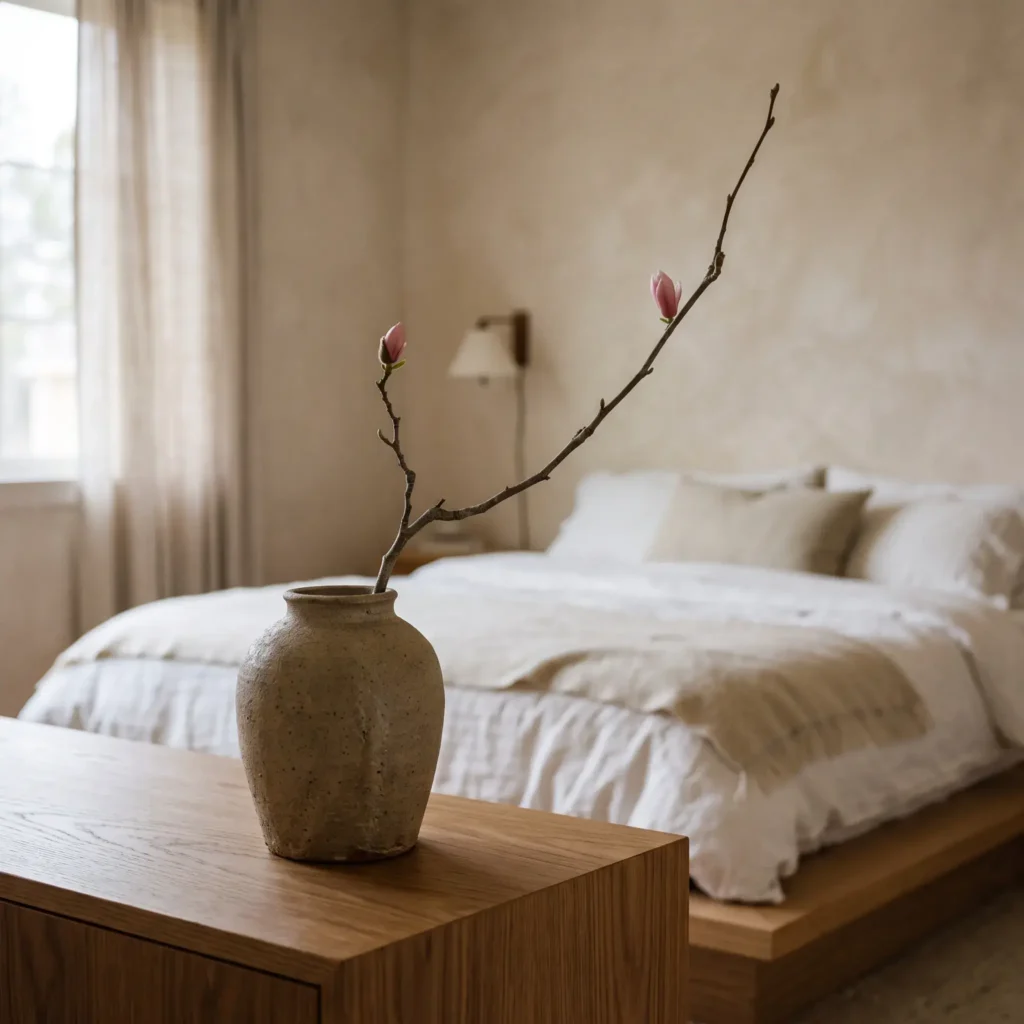
- Featured Decor and Furniture Pieces:
- Hand-built unglazed charcoal ceramic vessel
- Fresh or dried flowering quince branch arrangement
- Low horizontal solid ash credenza with slide-away doors
- Cast iron aromatic oil burner
The Two-Wood Discipline: Balancing Scandinavian and Japanese Timbers
Mixing too many wood species creates visual confusion. Japandi interiors maintain balance through a simple rule: choose one pale wood and balance it with one dark anchor wood.
- The Pale Base (70% of the room): Use Scandinavian white oak, European ash, or solid birch across large surface areas. This includes flooring planks, built-in wardrobes, and wall battens. These light woods bounce natural light deep into the room.
- The Dark Anchor (30% of the room): Use American walnut, smoked oak, or charred cedar for signature focal pieces. This includes the bed frame, accent chairs, or floating wall ledges. This dark contrast grounds the room and stops light walls from looking washed out.
Avoid woods with heavy yellow, orange, or high-gloss red finishes, such as golden oak, knotty pine, or red cherry. Look for raw, wire-brushed, or dead-matte clear sealers that preserve natural grain.
Japandi Bedroom Paint Palette: Exact Swatches and Finishes
Choose paints that absorb light rather than bounce it back into your eyes. These specific formulations provide reliable mineral undertones:
| Color Category | Brand & Paint Code | Undertone & Character | Best Placement |
|---|---|---|---|
| Warm Mineral White | Sherwin-Williams Shoji White (SW 7042) | Soft beige-gray base; eliminates harsh light glare. | Main perimeter walls and ceiling planes |
| Warm Off-White | Benjamin Moore Swiss Coffee (OC-45) | Creamy undertone with zero cold blue tint. | Trim, doors, and smaller rooms |
| Earthy Greige | Farrow & Ball Drop Cloth (No. 283) | Balanced stone and muted taupe. | Headboard recesses and accent walls |
| Subtle Sage | Benjamin Moore Raindance (1572) | Desaturated slate-green inspired by dried moss. | Guest rooms and bedding accents |
| Grounding Charcoal | Sherwin-Williams Urbane Bronze (SW 7048) | Deep brown-gray; softer than pure synthetic black. | Window mullions, bed frames, and low doors |
Always specify a flat, matte, or Roman clay finish. High-gloss and semi-gloss paints create reflective glare that disrupts a quiet atmosphere.
Lighting Strategy: Circadian Warmth Without Glare
Proper lighting shapes room mood more than decor. Avoid center-ceiling grid downlights, which cast unflattering vertical shadows over your face and bed.
- Keep Color Temperatures Between 2200K and 2700K: Cool light at or above 3000K emits shortwave blue energy that blocks melatonin release. Use 2200K amber bulbs for bedside lamps and 2700K warm white bulbs for primary paper pendants.
- Require High Color Rendering (CRI 90 or higher): High-CRI LED chips show the true depth of raw linen, earth pigments, and natural timber after dark. Cheap bulbs with low CRI values turn neutral paints into a dull, flat gray.
- Conceal LED Strips in Recesses: Install dim-to-warm LED strips behind headboard ledges or inside ceiling coves with at least an eight-centimeter recess. Grazing light across a textured plaster wall reveals rich surface variations without visible fixtures.
Room Scale Layout Rules
Adapting the Japandi aesthetic to your space requires matching furniture proportions to room dimensions:
Compact Bedrooms (Under 200 sq. ft.)
- The Strategy: Maintain floor visibility to keep the space open.
- Layout Rule: Select an ultra-low platform bed with integrated pull-out drawers on hidden castors. Replace swinging closet doors with sliding shoji-style screens or pocket doors.
- Clearance: Preserve at least 60 centimeters of clear walkway around the accessible sides of the bed frame.
Mid-Scale Bedrooms (200 to 300 sq. ft.)
- The Strategy: Balance comfortable circulation with functional storage.
- Layout Rule: Use a standard white oak platform bed centered along the main structural wall. Flank the frame with floating nightstands, leaving 20 centimeters of open wall plane below each shelf.
- Clearance: Maintain 75 centimeters of open space between the foot of the bed and opposite dressers or doorways.
Expansive Suites (Over 300 sq. ft.)
- The Strategy: Prevent large rooms from feeling cold or echoing.
- Layout Rule: Use an extended timber plinth that steps down into a low tatami lounge corner furnished with floor cushions. Add a full-width timber slat wall behind the bed to absorb room echo.
Frequently Asked Questions
What makes Japandi different from Scandinavian style?
Scandinavian design relies on pale woods, cool whites, and plush hygge layers to maximize light during Nordic winters. Japandi adds Japanese design elements: lower furniture heights, darker contrast woods like walnut, paper lighting, and wabi-sabi textures that celebrate natural imperfections.
What is the ideal bed height for a Japandi bedroom?
The top of your mattress should sit between 12 and 18 inches off the floor. Conventional American beds sit 24 to 30 inches high. Lowering the bed frame opens up vertical wall space, making ceilings feel taller and the room calmer.
How do I style a Japandi bedroom on a budget?
Start with spatial discipline instead of buying new furniture. Remove clutter from every flat surface and eliminate excessive decorative pillows. You can modify an inexpensive low pine bed frame by sanding it down and applying a clear matte sealer. Swap plastic lampshades for an affordable rice paper globe, and install sheer linen-blend curtains to soften incoming daylight.
What bedding fabrics work best for this look?
Stonewashed French flax linen and organic slub cotton work best. These fabrics have natural wrinkles and slight slub textures that honor wabi-sabi imperfection while staying breathable. Skip synthetic polyester sheets and slick, high-gloss sateen weaves.
Building a Japandi bedroom comes down to subtraction. Pick honest materials, honor empty wall space, and lower your room horizon line. When you eliminate visual noise, your bedroom becomes what it was always meant to be: a quiet sanctuary for deep, restorative rest.