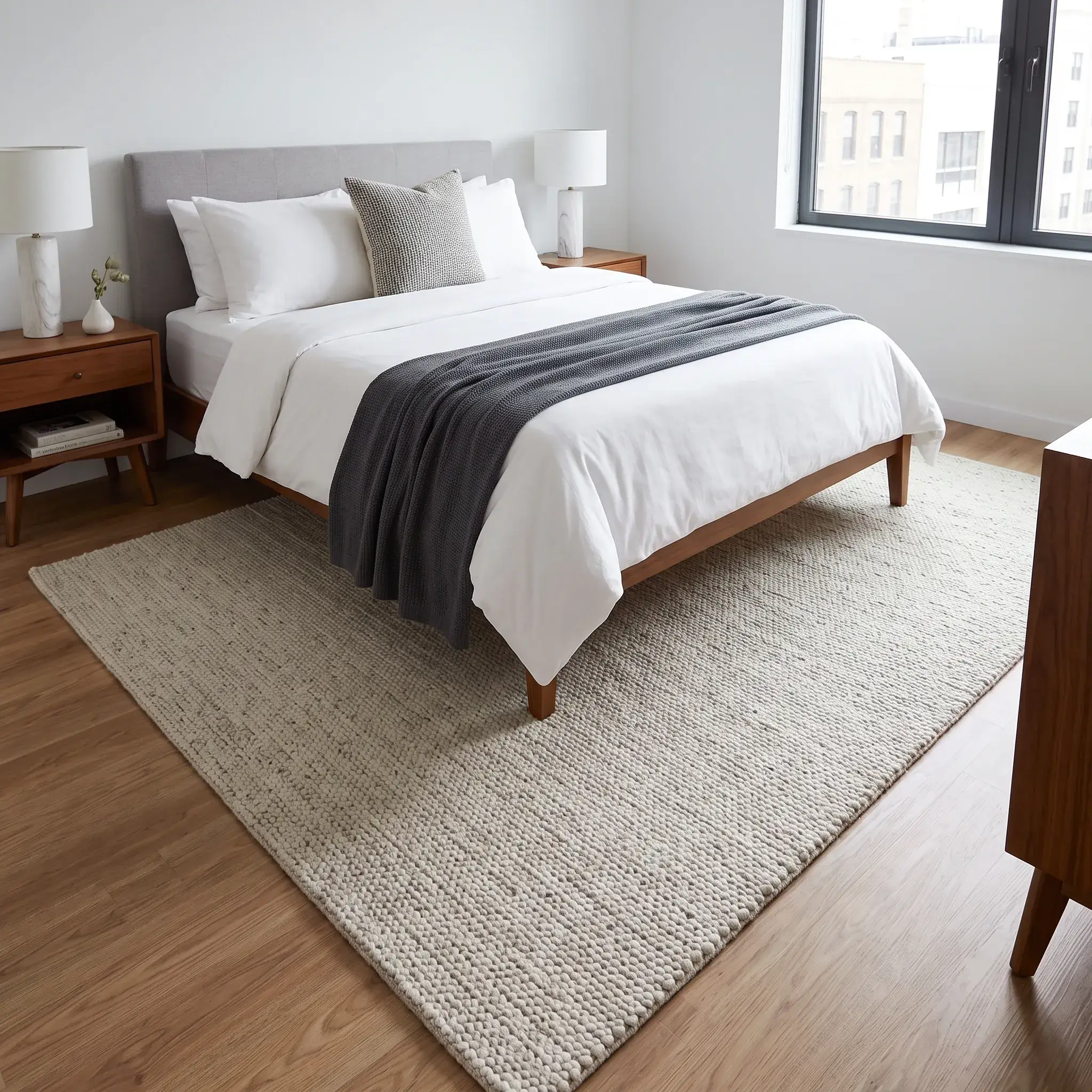
7 White Bedroom Decor Ideas That Never Feel Cold or Sterile
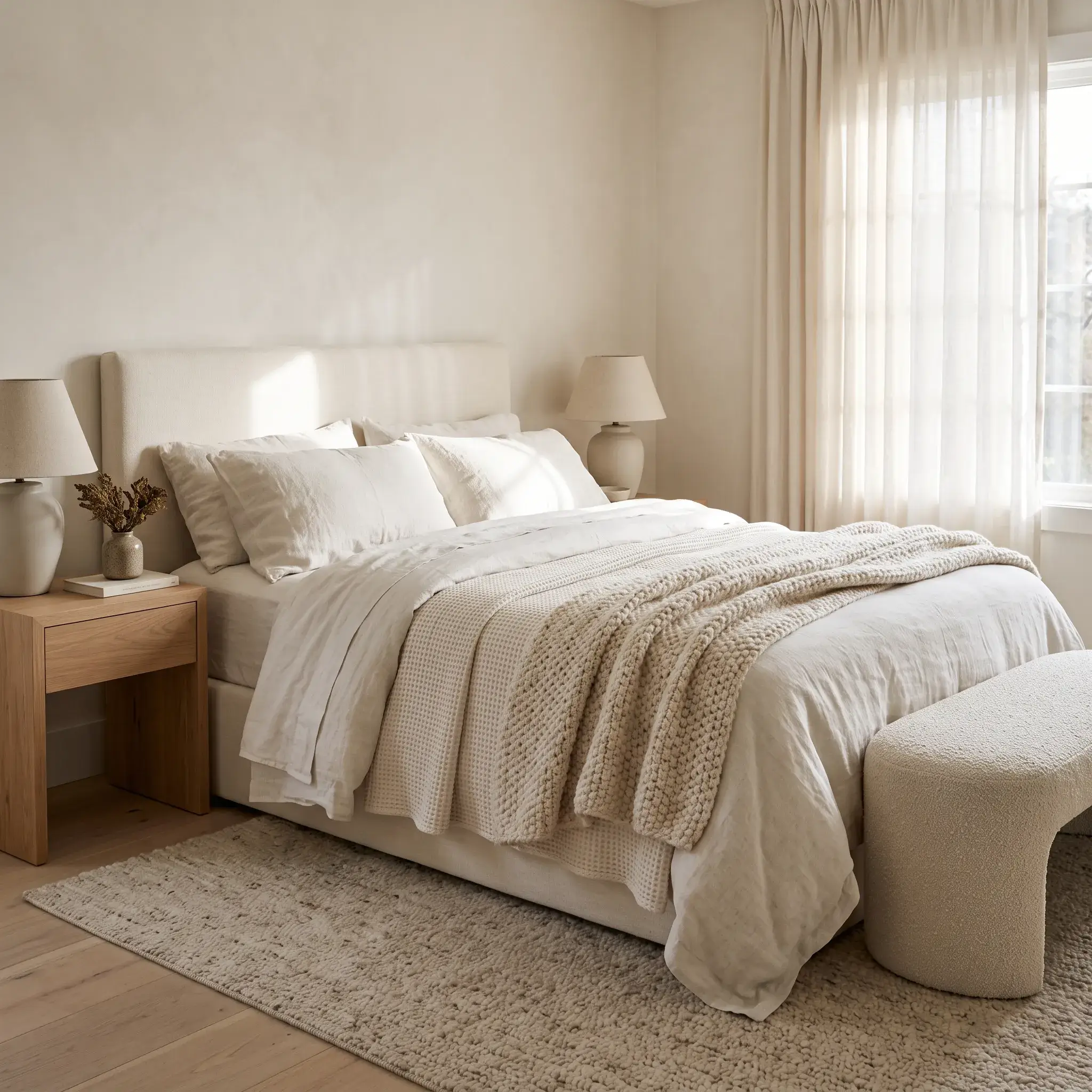
An all-white bedroom looks bright and calm in photos. In real life, painting four walls plain white and adding a flat white comforter often backfires. The room ends up feeling cold, flat, and clinical, like a hospital room.
The solution is not adding bright colors. Instead, you build depth using tactile materials, calibrated paint undertones, and warm lighting. When natural light hits different textures, it creates soft shadows. These shadows give a monochrome room rich visual depth.
Here are seven practical design concepts you can recreate at home, followed by the technical rules that keep white spaces warm and comfortable.
1. Organic Modern with Fluted White Oak and Bouclé
This design pairs chalky whites with natural wood to keep the space grounded. A fluted white oak headboard anchors the wall. It breaks up flat drywall with vertical shadow lines. A rounded bouclé bench at the foot of the bed adds nubby, curved softness that balances straight architectural lines.
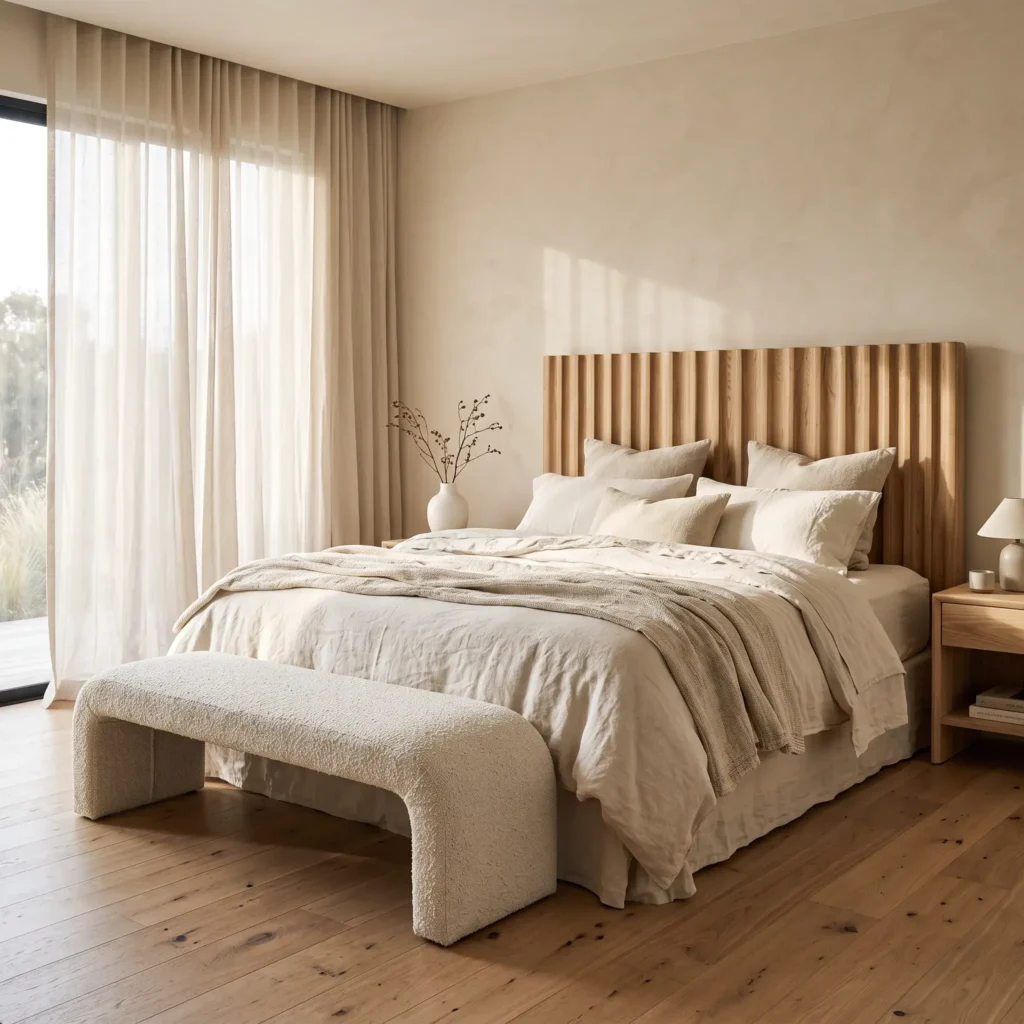
Key Products Used:
- Fluted natural white oak platform bed frame
- Cream high-pile bouclé accent bench with curved edges
- Matte off-white ceramic bedside table lamps
- Bleached ash nightstands with soft-close drawers
- Natural wool-blend low-pile area rug in warm ivory
2. The Multi-Textured Linen and Waffle-Weave Bedscape
Focus on bedding layers rather than buying new furniture. Start with crisp white cotton percale sheets. Add an off-white waffle-weave coverlet, then top it with a washed Belgian linen duvet. A chunky cable-knit wool throw across the foot of the mattress introduces weight and texture without adding bright pigment.
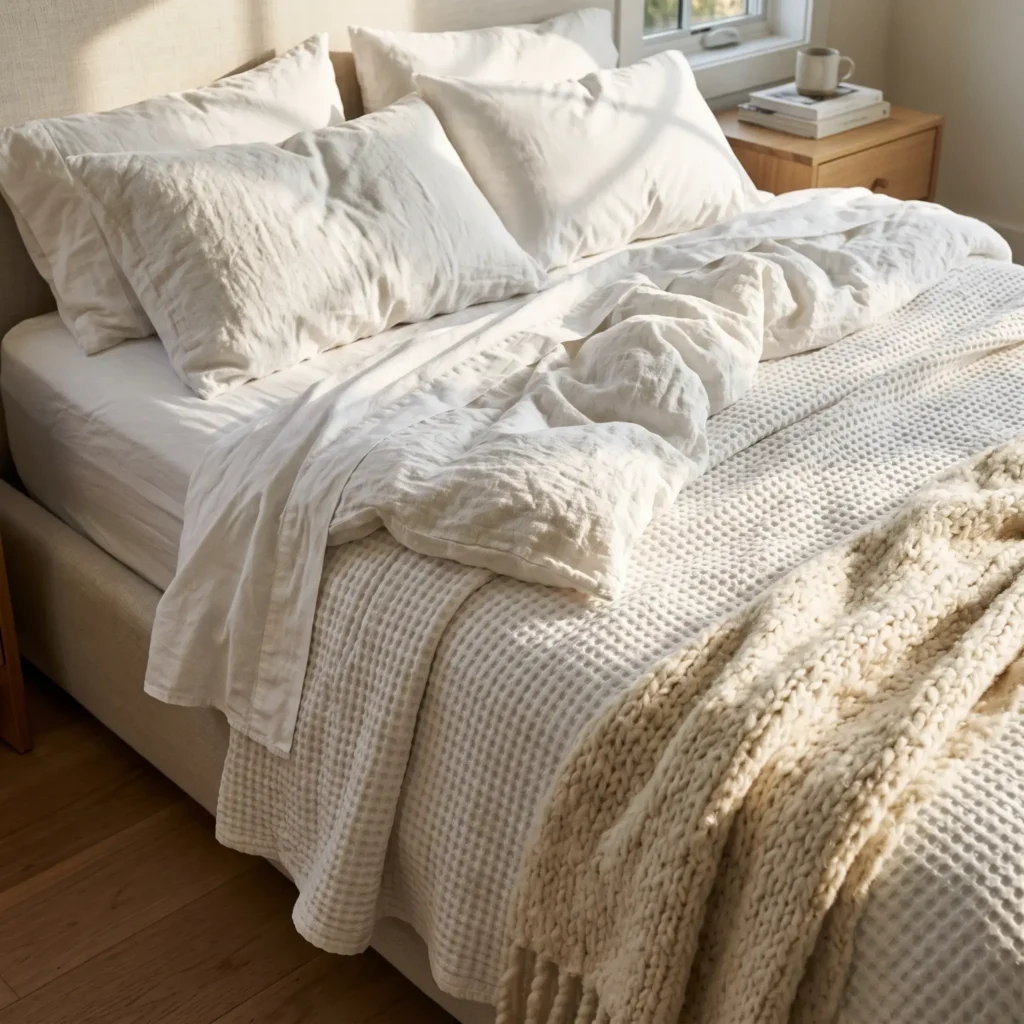
Key Products Used:
- 300-thread-count white long-staple cotton percale sheet set
- Deep-pocket cotton waffle-weave blanket in soft ivory
- Washed French flax linen duvet cover in chalk white
- Heavy-gauge hand-knit unbleached wool bed runner
- Textured raw-silk accent pillow covers in oatmeal tones
Check out more Modern Bedroom Ideas
3. Japandi Platform Setup with Cane and Lime Plaster
Japandi design combines Scandinavian comfort with Japanese spatial balance. Use an ultra-low platform bed frame made from bleached birch or pine. Finish the accent wall behind the bed in an ultra-matte limewash or Roman clay. Add woven cane webbing on nightstand doors to filter light and bring organic warmth into the room.
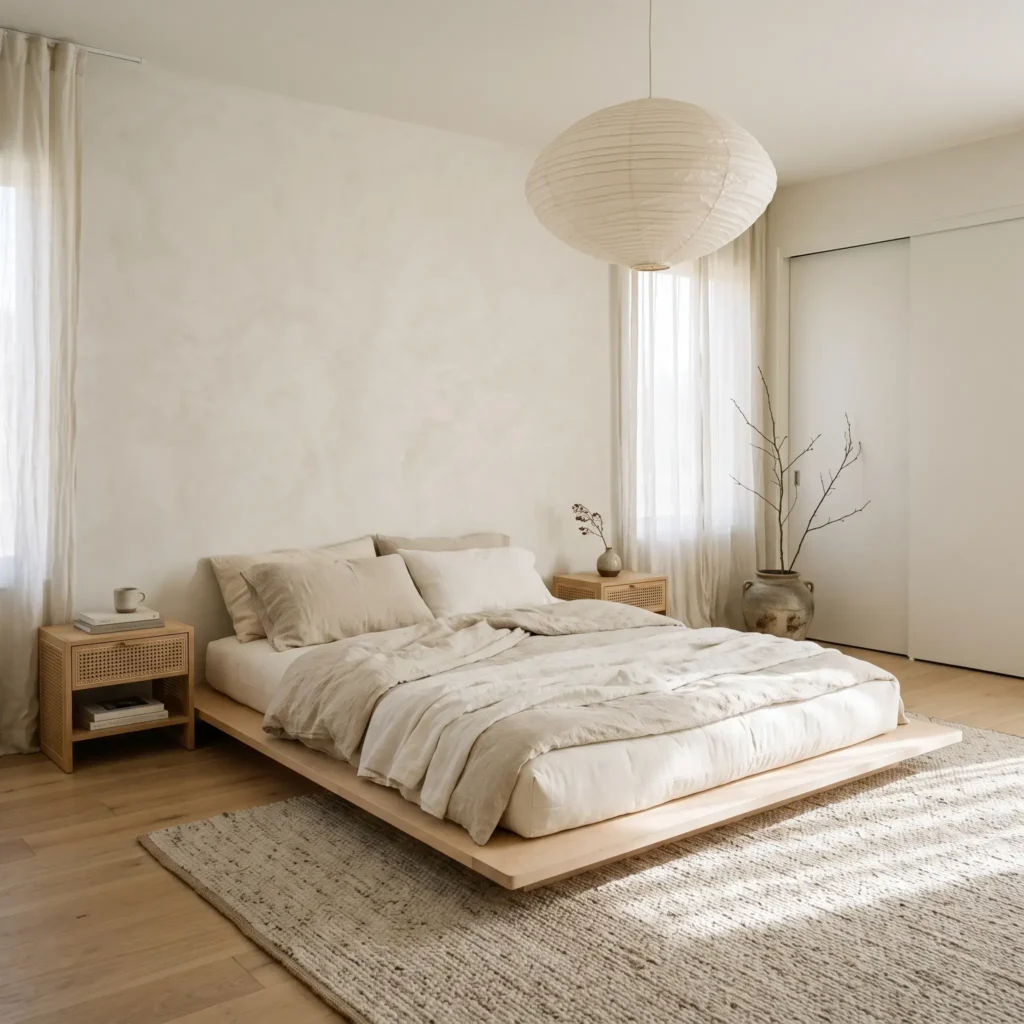
Key Products Used:
- Low-profile solid birch platform bed frame
- Natural woven cane bedside tables with brass knobs
- Textured off-white Roman clay wall finish
- Paper-lantern pendant light with ribbed bamboo frame
- Natural tatami-edge floor runner in bleached straw tones
4. Warm Monochrome with Travertine and Brushed Brass
If you prefer clean lines over rustic finishes, use natural stone and warm metals. Place honed travertine cubes as bedside tables next to an upholstered ivory bed. Mount brushed unlacquered brass sconces to the wall. The amber reflection from the brass enriches the white paint, while the natural texture in the stone keeps the room from looking synthetic.
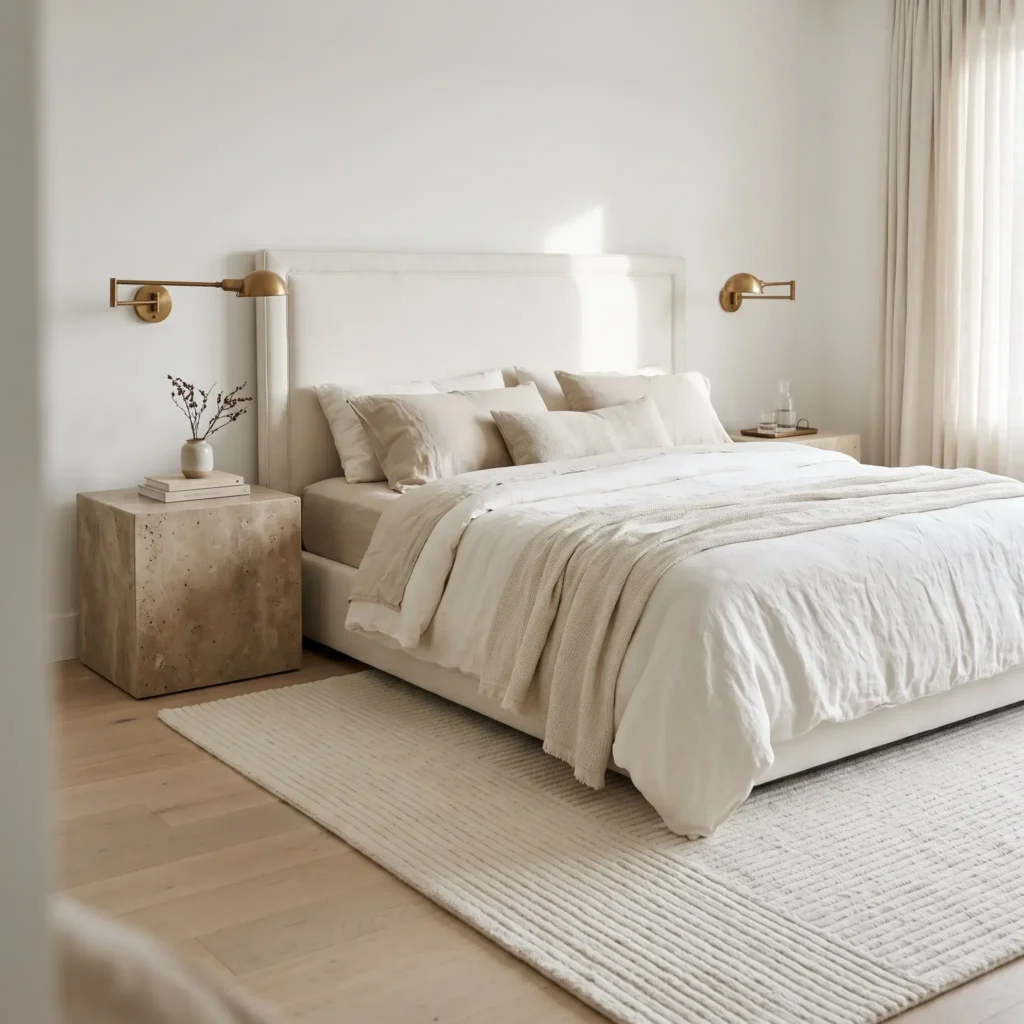
Key Products Used:
- Honed unfilled travertine block nightstands
- Tailored ivory linen upholstered headboard
- Unlacquered solid brass swing-arm wall sconces
- Off-white wool flatweave rug with subtle linear ribs
- Matte white stoneware carafe and water glass set
5. Modern Farmhouse with Shiplap and Matte Black Accents
Vertical tongue-and-groove or nickel-gap shiplap adds physical lines to white walls. Balance the pale room by introducing slim black metalwork. A thin black wrought-iron canopy bed frame or matte black bedside lamps create graphic contrast. These dark elements outline the room and make surrounding white surfaces look brighter and cleaner.
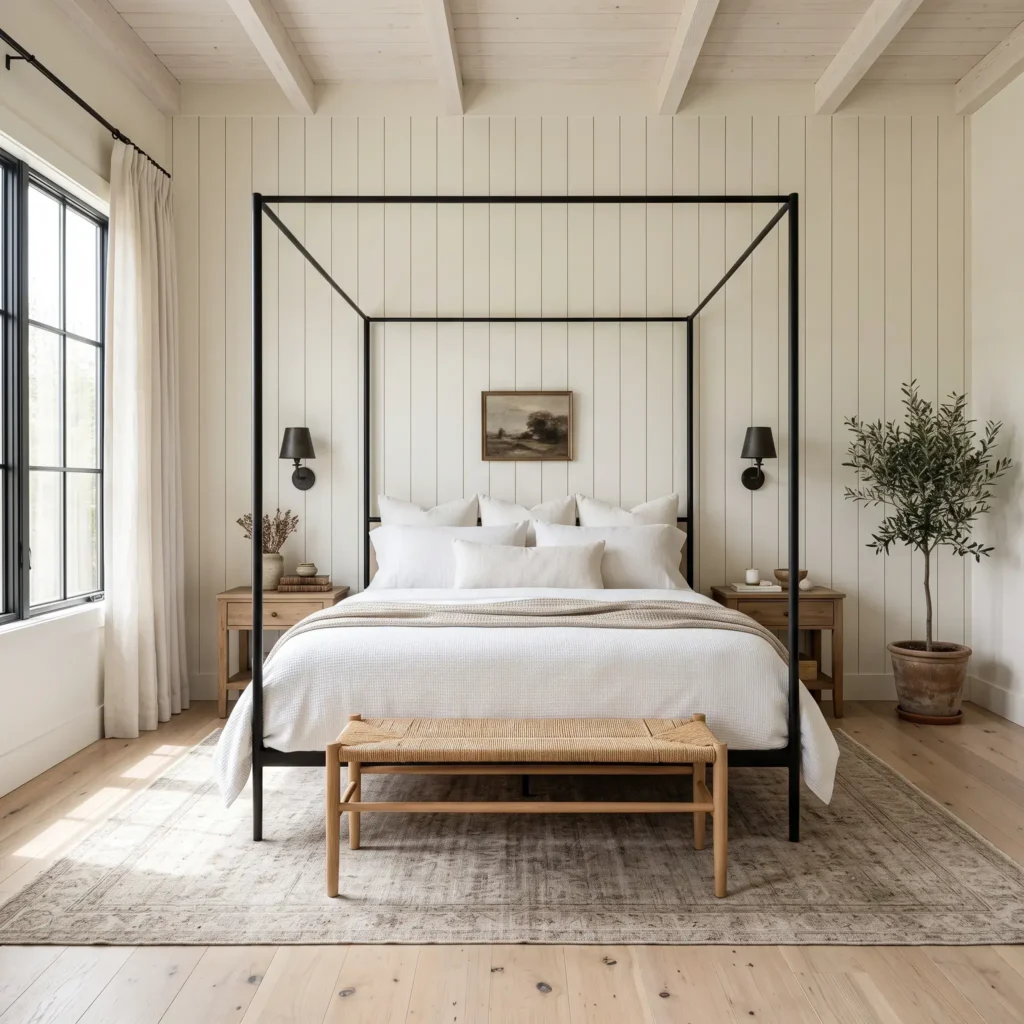
Key Products Used:
- Slim matte black iron four-poster canopy bed
- Vertical nickel-gap wall paneling painted in creamy white
- Reclaimed bleached pine wood bench
- Matte black metal swing-arm task sconces
- White matelassé diamond-stitched quilt
6. Small Studio Bedroom with Floor Mirrors and Linen Sheers
Small spaces benefit from white decor because pale walls bounce incoming daylight into dark corners. Hang unlined, ceiling-height semi-sheer linen drapes across the window wall to soften harsh sunlight. Place a tall, thin-framed floor mirror opposite or next to the window. The mirror reflects the sheer drapery, doubling the perceived depth of the room.
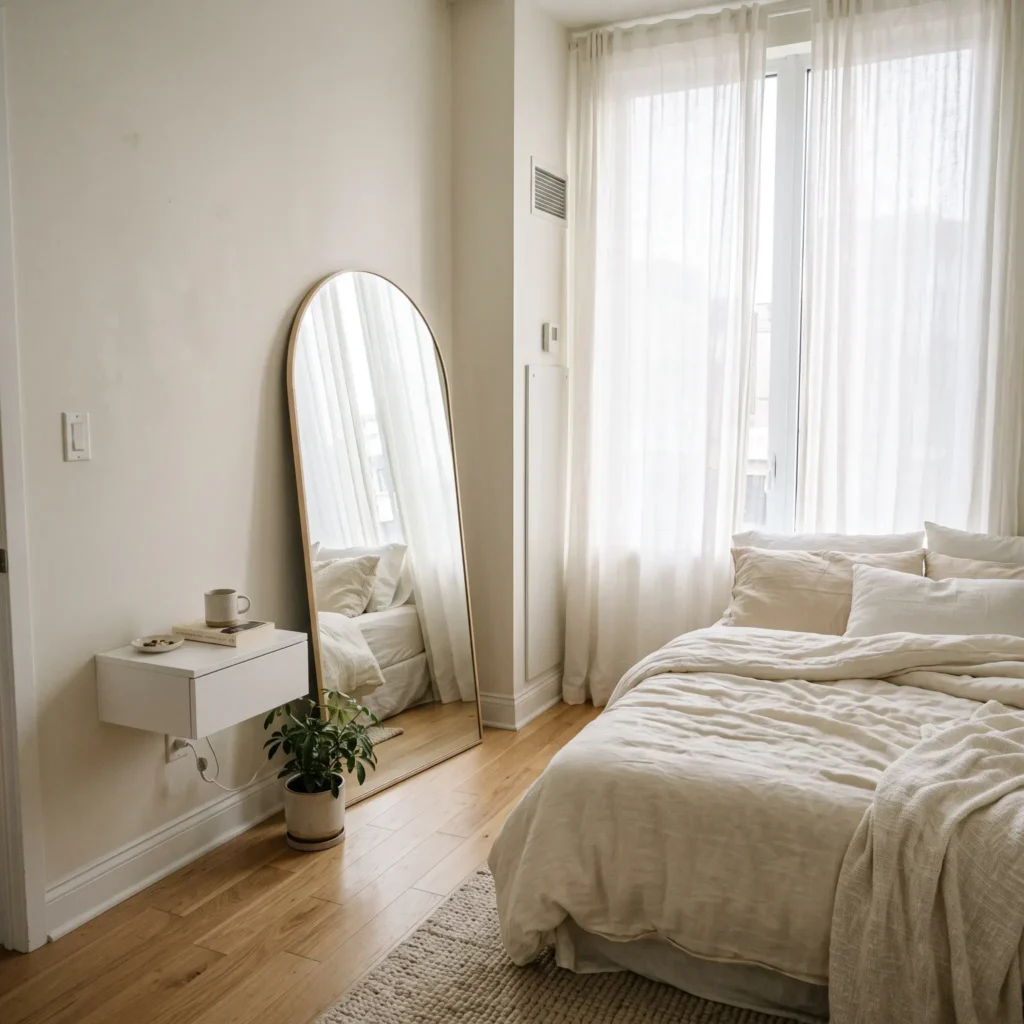
Key Products Used:
- Full-length arched floor mirror with thin light-wood rim
- Ceiling-to-floor unlined sheer white linen drapery panels
- Compact white floating nightstands with hidden drawers
- Low-sheen drum flush-mount light with fabric diffuser
- Light ivory washable cotton runner rug
7. Coastal Chalk White with Bleached Cedar and Jute
Modern coastal decor avoids bright blue nautical patterns in favor of raw beach textures. Paint walls in a soft, chalky white with gray-beige undertones. Lay a thick, coarse natural jute or bleached sisal area rug across the floor. Add weathered driftwood or bleached cedar accents for a relaxed, breezy feel.
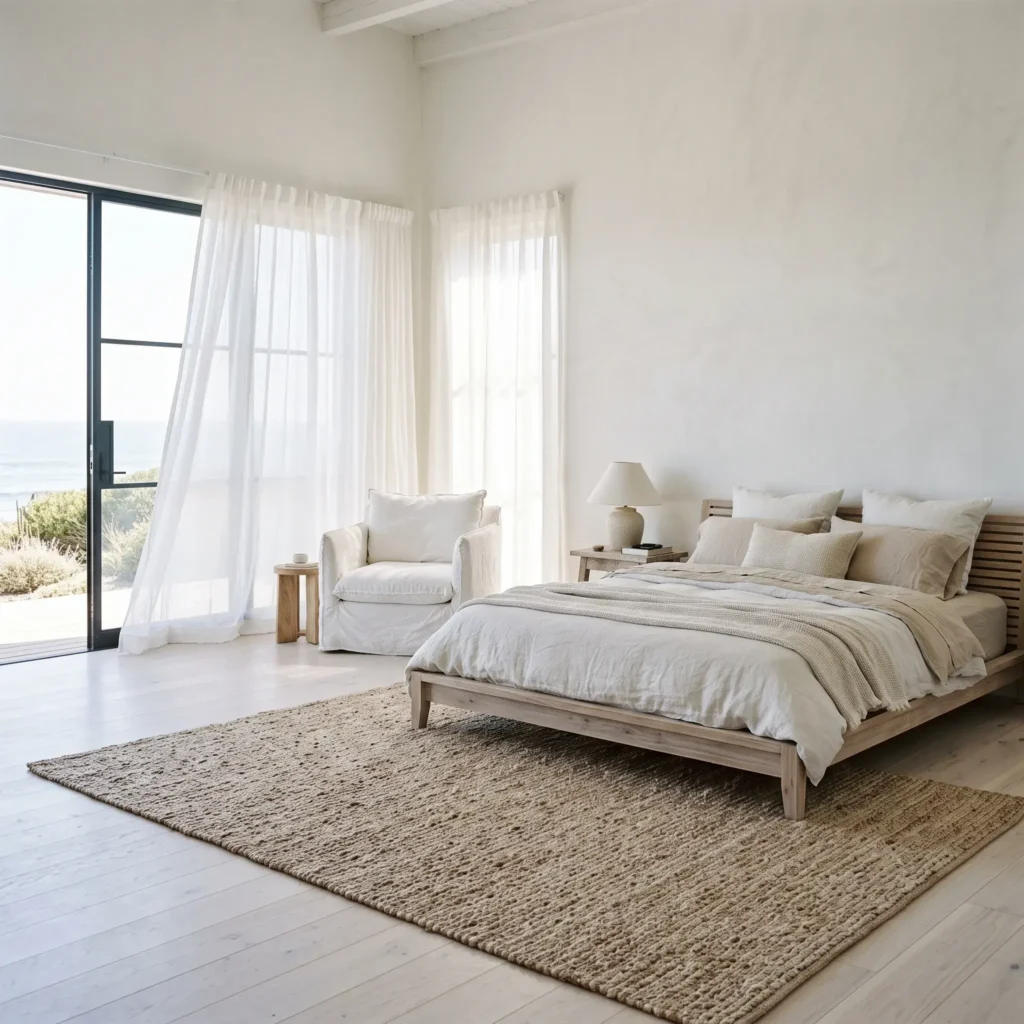
Key Products Used:
- Bleached cedar wood slatted headboard
- Natural woven bleached jute and sisal area rug
- Relaxed pre-shrunk white cotton slipcovered armchair
- White ceramic table lamp with a coarse woven rope shade
- Light gray-white fringed linen throw blanket
Paint Science: Solar Orientation and Undertones
White paint is never just plain white. Paint makers mix tiny amounts of yellow, gray, green, red, or black toner into a white base. These undertones react directly with the sunlight entering your room.
Window Direction Dictates Your Undertone
Before purchasing paint samples, check the compass direction of your bedroom windows:
- North-Facing Windows: Northern light is indirect, cool, and slightly blue. It drains warmth from rooms. Cool white paints turn dull and gray in northern light. Always choose warm whites with yellow, cream, or beige undertones to balance the cool daylight.
- South-Facing Windows: Southern rooms receive intense, warm, golden sunlight all day. Warm whites can read overly yellow or buttery in this light. Use neutral whites or whites with slight black or gray pigment to balance solar glare.
- East-Facing Windows: East light is warm and yellow in the morning, turning cool and shadowy by afternoon. Balanced warm whites work best here, preventing the room from feeling dim after noon.
- West-Facing Windows: West rooms receive dull morning light followed by fiery orange-red light in late afternoon. Avoid whites with heavy pink or red undertones, as they can glow uncomfortably orange at sunset.
The 82 to 89 LRV Rule
Light Reflectance Value (LRV) measures how much visible light a paint reflects on a scale from 0 (pure black) to 100 (pure reflective white).
For residential bedrooms, keep your perimeter wall paint between 82 and 89 LRV. Paint with an LRV above 90 causes uncomfortable surface glare in bright rooms and shows every drywall flaw. Paint with an LRV below 80 tends to absorb too much light, turning dreary in shadowy corners.
| Paint Brand and Name | Color Code | LRV | Dominant Undertone | Best Window Exposure | Watch-Out Factor |
|---|---|---|---|---|---|
| Benjamin Moore White Dove | OC-17 | 83 to 85 | Soft creamy greige | North, East | Can look dingy under harsh 4000K commercial LEDs |
| Benjamin Moore Simply White | OC-117 | 89.5 | Clean yellow-cream | North, North-West | Flashes bright yellow under intense southern sun |
| Benjamin Moore Chantilly Lace | OC-65 | 90.0 | Pure neutral, no strong tint | South, West | Casts flat, cold gray shadows in low northern light |
| Sherwin-Williams Alabaster | SW 7008 | 82.0 | Warm beige and cream | North, East | Reads distinctly tan or yellow under warm 2700K bulbs |
| Sherwin-Williams Pure White | SW 7005 | 84.0 | Soft neutral with black toner | Universal: South, West, East | Lacks strong warmth if the room has no direct sunlight |
The 5-Layer Bedscape Architecture
Because the bed takes up the largest footprint in your room, dressing it in flat cotton creates an uninviting look. Layering different textile weights breaks up reflected light and adds physical depth.
- The Base Sheet: Use 300 to 400 thread-count long-staple cotton percale. Percale offers a crisp, matte surface that sleeps cool and feels smooth.
- The Middle Coverlet: Tuck a lightweight cotton waffle-weave or matelassé quilt over the top sheet. The raised geometric weave catches shadows, creating a visible pattern across the mattress.
- The Main Duvet: Insert a fluffy duvet inside a pre-washed French or Belgian flax linen cover. Do not iron it. The natural slubbed wrinkles soften straight bed lines.
- The Foot Blanket: Fold a heavy boiled wool, cable-knit, or alpaca throw across the bottom third of the bed. This adds visual weight and grounds the lighter textiles underneath.
- The Accent Pillows: Finish the look with two accent pillows made from contrasting materials like bouclé, sheared velvet, or raw silk.
Bedroom Lighting and the Kelvin Spectrum
Artificial lighting determines how your white bedroom feels once the sun sets. Monochromatic white spaces are sensitive to color temperature. Cool bulbs turn white bedrooms into commercial clinics, while overly yellow bulbs turn crisp walls into muddy beige.
Understanding Color Temperature
- 2200K to 2700K (Warm Candlelight to Soft Incandescent): Ideal for evening relaxation. This spectrum emits low blue light, protecting your sleep cycle while casting an inviting amber glow across white textiles.
- 3000K (Clean Warm White): The ideal neutral balance. It keeps whites clean and crisp without pulling yellow or casting cold blue shadows. Great for reading lamps and overhead ceiling fixtures.
- 3500K to 5000K (Cool White to Daylight): Avoid this range in sleeping areas. These temperatures emit high blue light that disrupts melatonin production and makes white walls feel clinical.
Color Rendering Index (CRI 90+)
Always check the bulb packaging for the Color Rendering Index (CRI). Inexpensive LED bulbs with a CRI under 80 distort white pigments, casting a faint greenish-gray wash over bedding. Choose LED bulbs rated CRI 90 or higher to ensure your ivories, creams, and chalk whites display accurate, rich tones.
| Lighting Layer | Recommended Fixture Type | Color Temperature | Output Range | Purpose |
|---|---|---|---|---|
| Ambient | Fabric drum pendant, plaster flush mount | 2700K | 800 to 1,200 lumens | Soft overall room glow on a dimmer switch |
| Task | Swing-arm wall sconce, shaded table lamp | 2700K to 3000K | 300 to 600 lumens | Focused light for reading in bed without glare |
| Accent | Under-bed floor LED strip, wardrobe uplight | 2200K to 2700K | 100 to 300 lumens | Subtle illumination highlighting surface textures |
Real-World Maintenance: The Damp Re-Fitting Protocol
The main hesitation with white decor is everyday upkeep. Keeping white fabrics fresh requires smart textile choices and the right cleaning habits.
Avoid Chlorine Bleach
Never use chlorine bleach on white cotton or linen. Chlorine degrades natural plant fibers, causing them to thin, weaken, and turn an unappealing yellow over time. Instead, treat spots with oxygen-based stain removers or a paste of baking soda and gentle dish soap.
The Damp Re-Fitting Method for Slipcovers
Washing white cotton or linen furniture slipcovers is simple, but machine-drying them completely causes severe shrinkage and deep wrinkles. Professional stylists rely on the damp re-fitting method:
- Wash slipcovers on a gentle cycle in cold or lukewarm water using mild detergent.
- Tumble dry on low heat or line dry until the fabric is approximately 90 to 95 percent dry. Seams should feel cool and slightly damp.
- Pull the damp covers back over cushions and furniture frames. The damp fabric stretches smoothly over the foam corners without tearing.
- Allow the covers to finish air-drying directly on the furniture. As the fibers dry completely, they shrink slightly and self-tension, smoothing out wrinkles without an iron.
Frequently Asked Questions
Why does my white bedroom feel cold and uninviting?
Your space likely lacks texture, warm paint undertones, or low-Kelvin lighting. White walls require contrasting materials like natural oak, woven jute, linen, and wool to catch shadows. Check your light bulbs as well. If your bulbs are rated 4000K or higher, swap them for 2700K soft white bulbs to add instant warmth.
What color rug works best with white bedroom furniture?
A natural fiber rug in bleached jute, sisal, or warm ivory wool works best. Avoid bright stark-white polyester rugs, which look flat and soil quickly. Natural rugs with subtle ribs, braided patterns, or light oatmeal flecks ground the bed frame while keeping the palette neutral.
Can you mix pure white and cream in the same bedroom?
Yes, and doing so is encouraged. Layering true white with cream, ivory, and soft greige makes the room look intentional and collected. If every item in the room is the exact same shade of white, the space flattens out. Mix shades through bedding, rugs, and curtains to create subtle depth.
What is the best white paint for a bedroom with little natural light?
Sherwin-Williams Alabaster (SW 7008) or Benjamin Moore White Dove (OC-17) are top choices. Both paints carry soft creamy undertones that prevent shadows from turning dull or gray in low-light conditions. Avoid stark, pigment-free whites like Chantilly Lace in dim rooms.
How do I prevent an all-white bedroom from showing pet hair and dust?
Choose washable slipcovers made from heavy cotton duck or pre-washed linen. These fabrics feature irregular slubbed weaves that naturally camouflage dust and slight wrinkles. Use a robotic vacuum on hardwood floors and keep a lint roller inside your nightstand drawer for quick touch-ups.
Building an all-white bedroom comes down to simple material choices. Check your window exposure before selecting a paint shade with an LRV between 82 and 89. Swap flat bedding for layered percale, waffle weave, and relaxed linen. Finally, install warm 2700K bulbs with a high color rendering index. These small adjustments transform a plain white room into a restful, textural space you will look forward to returning to every night.