6 Room Rearranging and Little Decor Ideas That Cost Almost Nothing
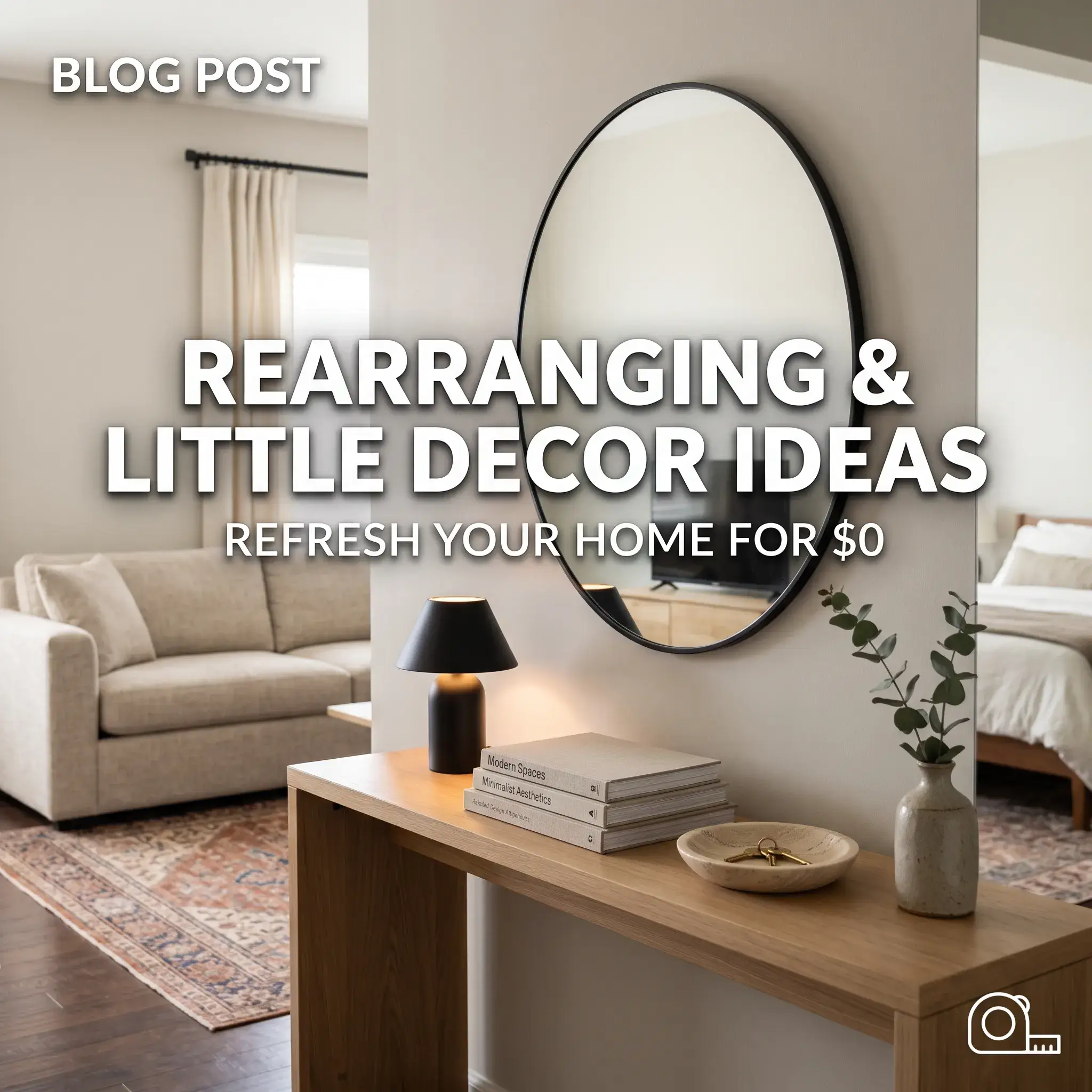
A tired room rarely needs brand new furniture. Most of the time, the space simply suffers from poor layout logic, blocked walkways, and flat surface clutter. Pushing every sofa against the wall makes a room feel static and disconnected.
Small adjustments in furniture angles, rug placement, and surface styling will instantly change how your room feels. Below are six practical, designer-backed ideas you can apply today using basic measurements and items you already own.
6 Practical Rearranging and Micro-Decor Ideas
1. Float Your Sofa and Add a Slim Console Table
Pushing your couch flat against the drywall isolates seating and wastes the center of your room. Pull your sofa out into the living area by 12 to 18 inches. This small gap creates breathing room along the wall and establishes a comfortable conversation zone.
Place a narrow console table directly against the back of the floating sofa. The console should measure two thirds to three quarters the length of the sofa. Its height should sit level with, or one inch below, the sofa back cushions. Use this surface to hold a table lamp, a stack of books, and a low ceramic dish. This setup hides the flat back of your upholstery and creates a clear walkway behind the seating area.
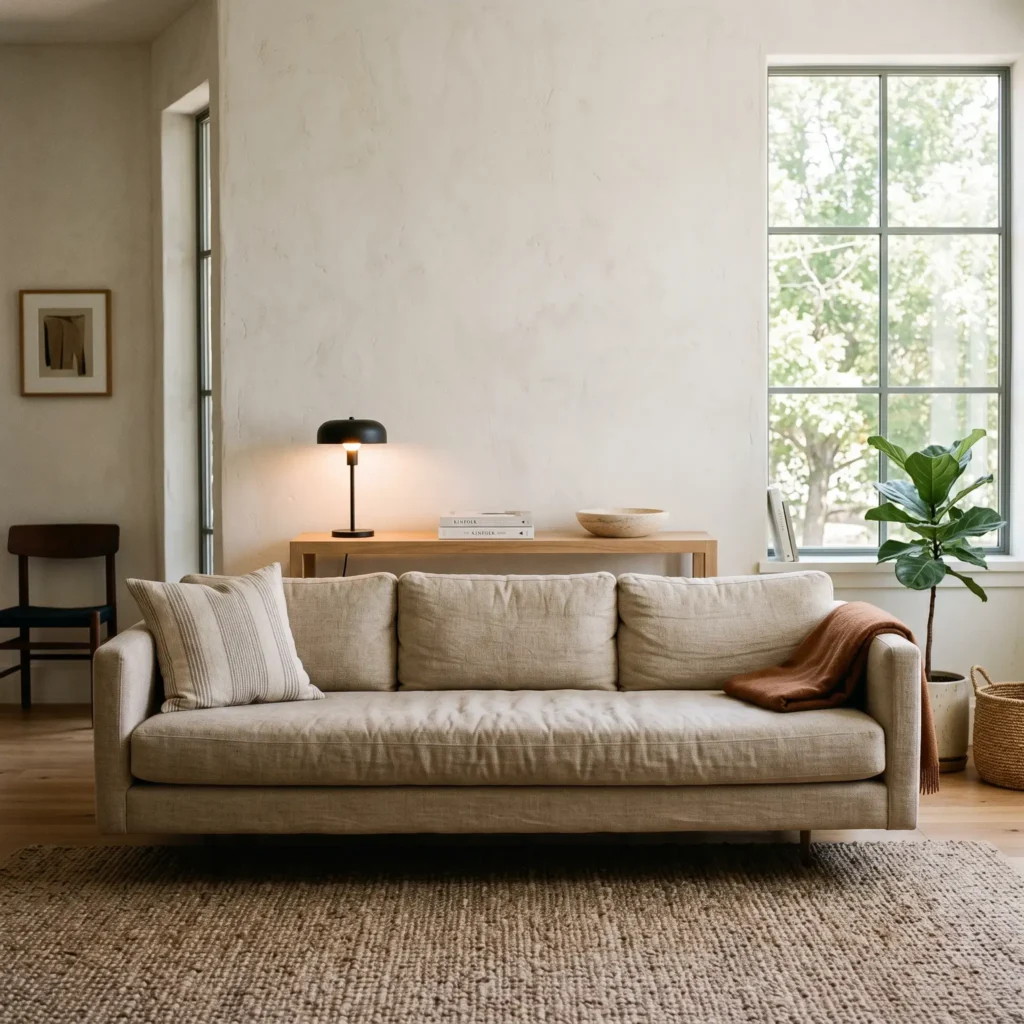
- Products Featured in This Idea:
- Slim white oak sofa console table (depth under 12 inches)
- Matte black mini accent lamp with warm white bulb
- Rectangular travertine stone catchall bowl
- Hardcover linen art monographs
2. Style Your Coffee Table with the Three-Object Rule
Flat surfaces gather random clutter when they lack visual structure. Instead of scattering remotes and coasters across your coffee table, use the Rule of Threes to create an intentional arrangement. Group three items with distinct heights and textures: one tall vertical anchor, one sculptural medium piece, and one flat base.
Use a low wooden or brass tray as your base. Place a tall ceramic vessel with a single fresh or dried branch on one side. Set a short, textured object like a ribbed candle or a round stone ball next to it. Stack two small books on the other side of the tray. The tray gathers these distinct shapes into one clean focal point that your eye reads as a single, organized unit.
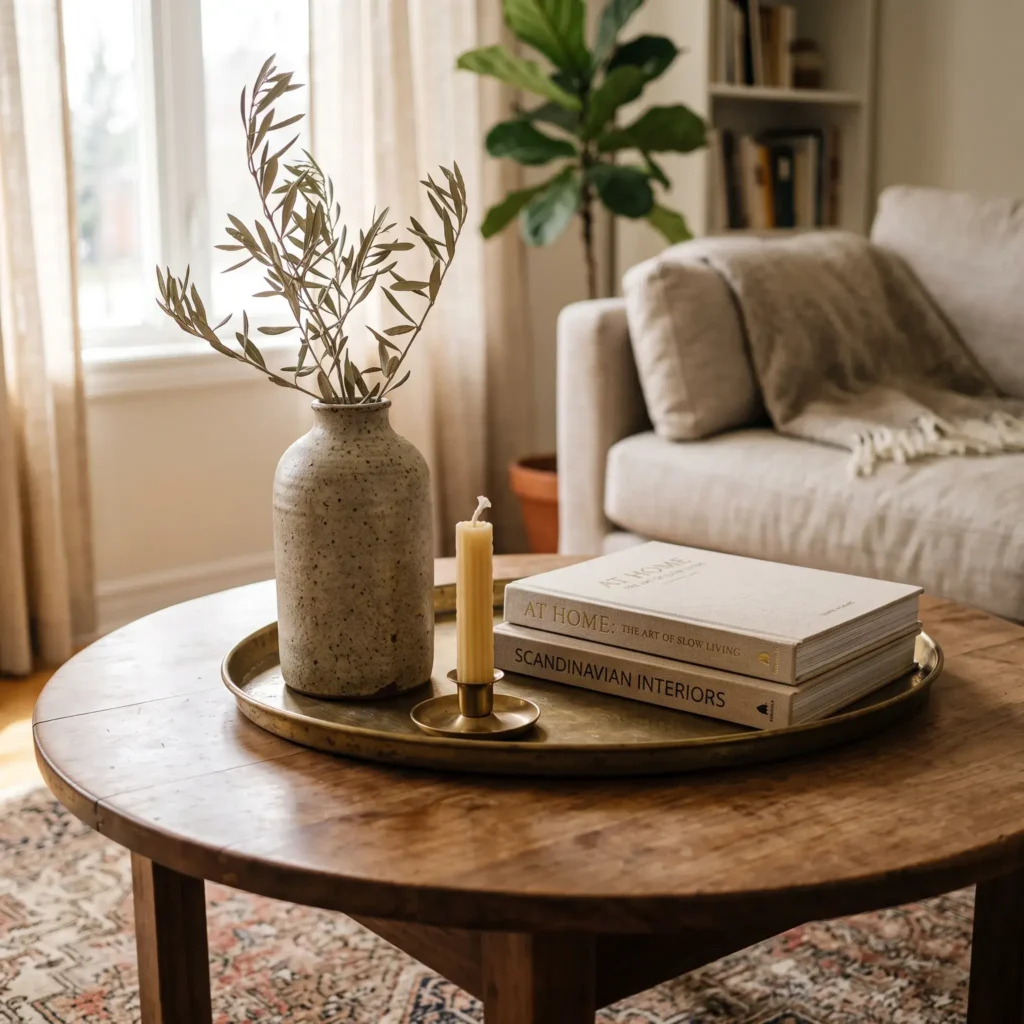
- Products Featured in This Idea:
- Round aged brass metal tray (14 inch diameter)
- Handmade rough stoneware ceramic bud vase
- Single pruned organic olive or eucalyptus branch
- Ribbed natural beeswax pillar candle
Check out more Styling Ideas
3. Shift Your Home Office Desk to the Command Position
Shoving your desk against a blank wall limits your sightline and increases visual fatigue. Staring directly into drywall for eight hours feels confining.
Pull your desk away from the perimeter. Orient it diagonally or perpendicular to your room door. Make sure a solid wall sits behind your chair while you face out toward the entrance. This layout gives you a clear view of the doorway without putting you directly in the walking path. Position the desk perpendicular to nearby windows so natural light washes across your workspace from the side, preventing screen glare.
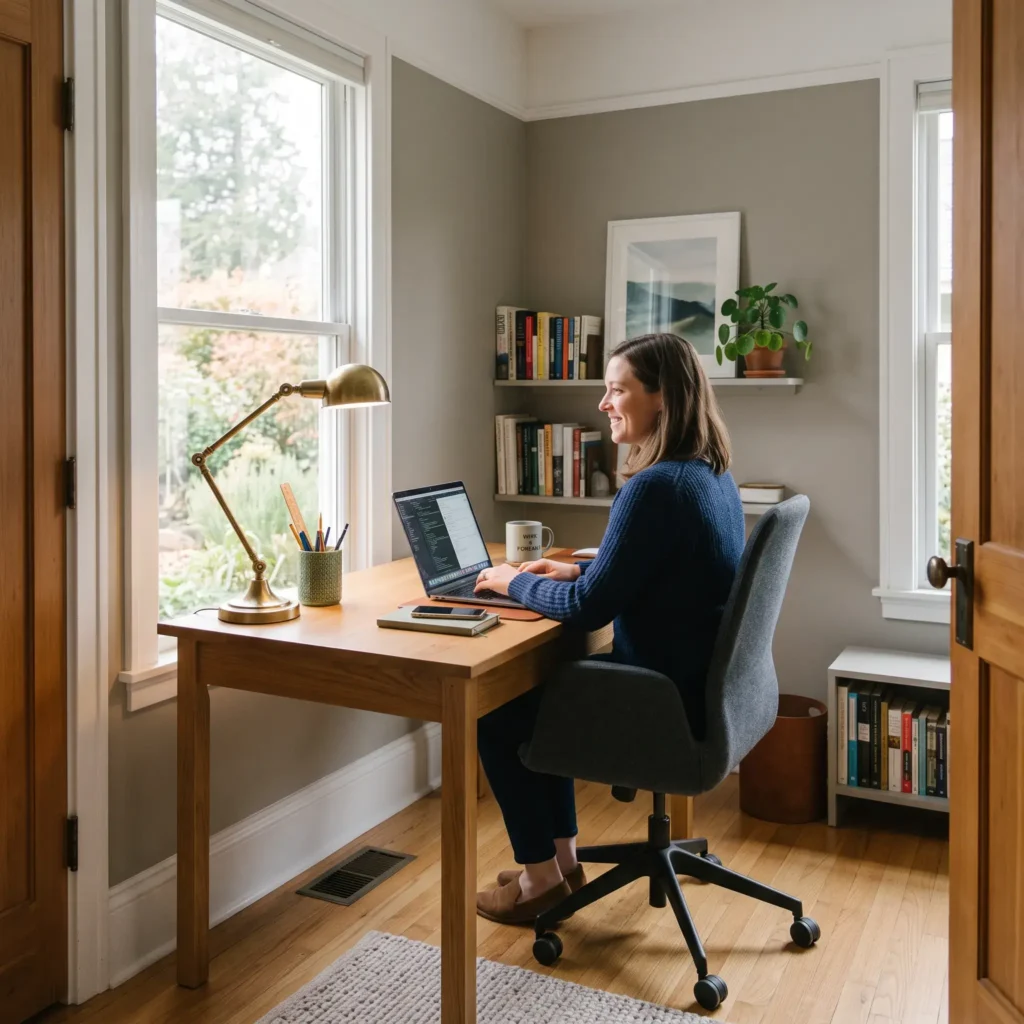
- Products Featured in This Idea:
- Solid wood writing desk with slender tapered legs
- Adjustable brass task desk lamp
- Handmade glazed ceramic pen cup
- Low-profile under-desk cable management tray
4. Pull Your Bedroom Area Rug Forward to the Two-Thirds Mark
Many bedrooms feature area rugs placed completely under the bed, hiding most of the pattern and texture under the mattress. Pushing a rug all the way against headboard walls also leaves bedside tables half on and half off the rug edge, causing tables to wobble.
Slide the rug forward so it covers only the lower two thirds of the bed frame. The top edge of the rug should stop just in front of your nightstands. This leaves your nightstands resting flat on the bare floor while extending the rug 18 to 24 inches past the foot of the bed. You gain soft padding right where your feet hit the floor in the morning, and your room instantly appears wider.
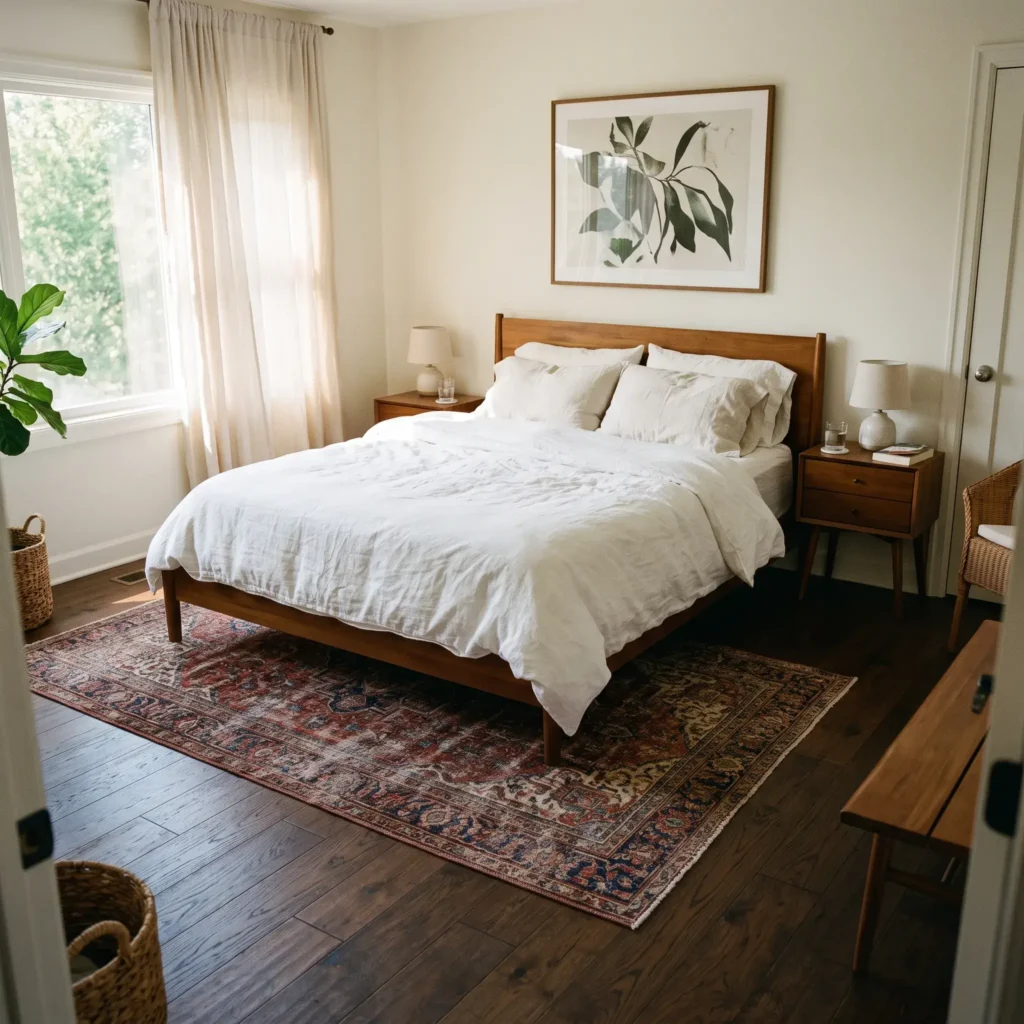
- Products Featured in This Idea:
- Low-pile vintage-wash wool 8×10 area rug
- White washed linen duvet cover and pillow shams
- Mid-century walnut bedside tables
- Textured waffle-weave accent throw blanket
5. Rehang Window Curtains High and Wide
Hanging curtain rods directly along the top edge of your window casing shrinks your room visually. It cuts off the vertical wall plane and causes stacked fabric panels to block valuable daylight along the sides of the glass.
Mount your curtain hardware 4 to 8 inches above the window trim, or just below your ceiling molding. Choose a rod that extends 8 to 12 inches past each side of the window frame. When you open the curtains, the fabric panels will hang against the drywall rather than covering the glass. This simple shift tricks the eye into seeing taller ceilings and wider windows while doubling incoming sunlight.
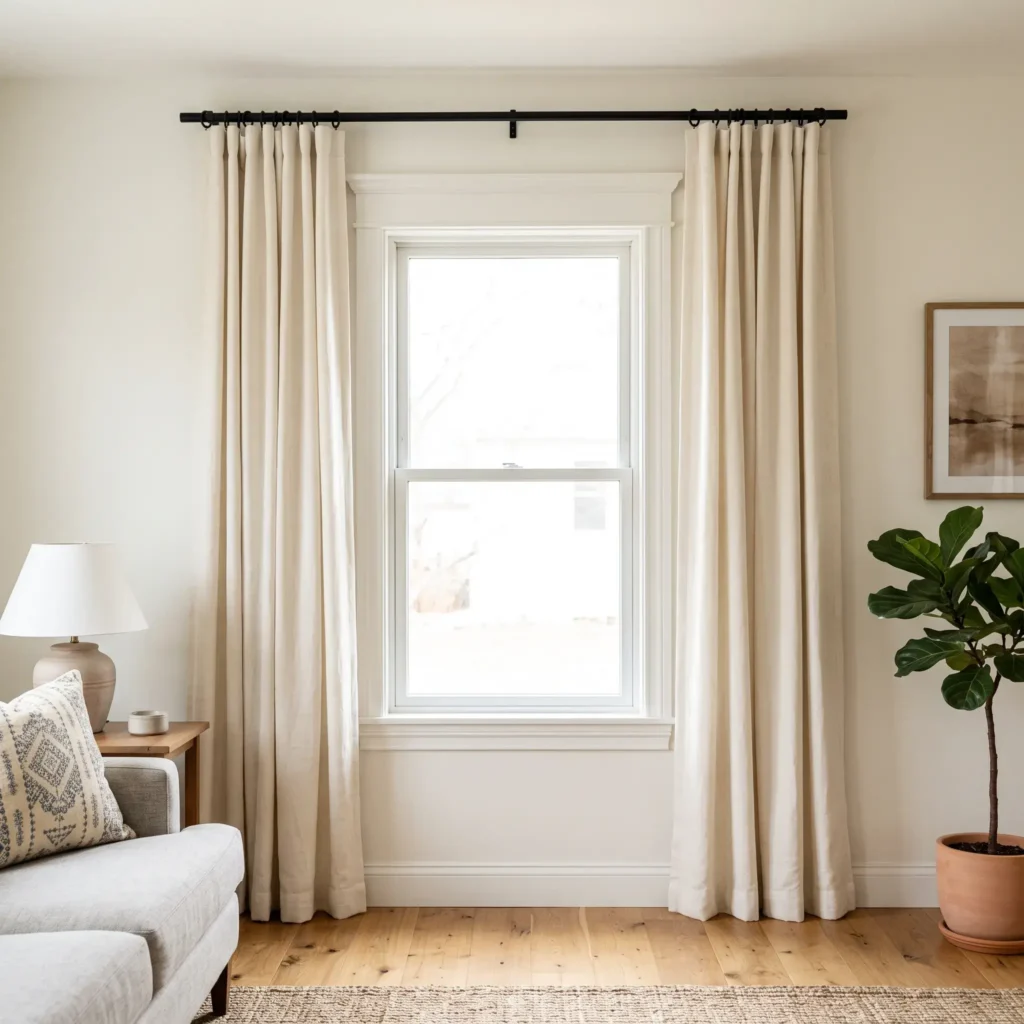
- Products Featured in This Idea:
- Matte black extendable curtain rod with simple end caps
- Heavyweight off-white linen pinch-pleat curtain panels
- Matching metal curtain rings with quiet nylon glides
6. Set Up a 12-Inch Entryway Drop Zone
Clutter builds up quickly near front doors when you lack a dedicated transition station. Even the narrowest hallway can handle a drop zone if you use strict proportions.
Choose a shallow console table with a depth of 10 to 12 inches so walking paths stay clear. Hang or lean a round mirror above the table at roughly two thirds the table width. Add a small stoneware catchall tray for keys, a ceramic vase for greenery, and a woven basket underneath for shoes. This simple setup keeps everyday essentials contained while giving your entryway an intentional, curated look.
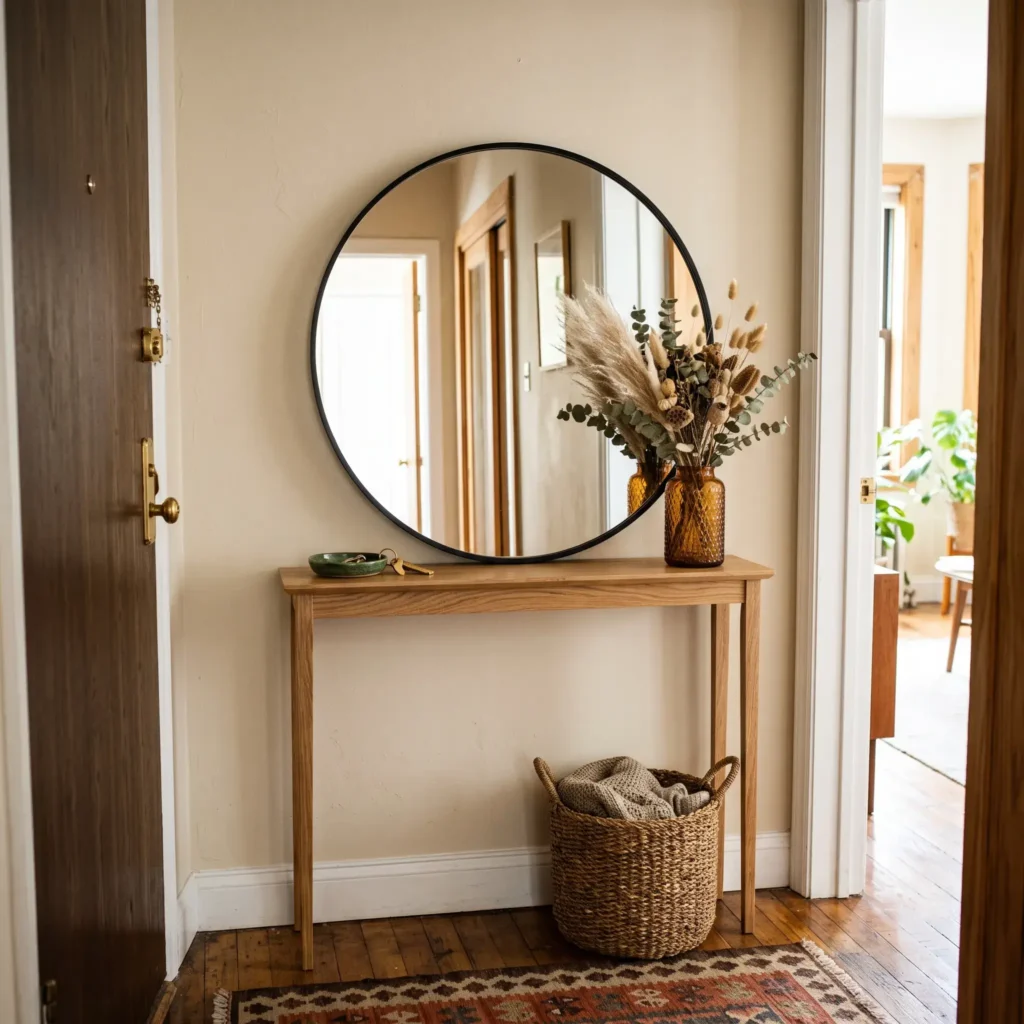
- Products Featured in This Idea:
- Slim 11-inch deep solid oak console table
- Round thin-rim metal wall mirror (24 inch diameter)
- Handmade shallow ceramic trinket bowl
- Natural woven seagrass floor storage basket
The $0 “Shop Your Home” Reset Method
You do not need to spend money to change your home environment. Over time, your brain gets used to seeing objects in the exact same spot, making your decor feel invisible. Moving pieces between rooms restores visual novelty.
Follow this simple four-step process for a zero-cost room refresh:
- Strip the Room to the Essentials: Remove every small accent, throw pillow, candle, and picture frame from your shelves and tabletops. Move them into your hallway or dining room table. Stare at your bare room for five minutes. This clears out visual fatigue and exposes your authentic floor space.
- Evaluate Your Walkways First: Walk through the room naturally. Notice where your shoulders turn or where your knees brush against furniture. Nudge accent chairs back by three inches or angle them toward a window to open up paths.
- Swap Furniture Between Zones: Take a timber stool from your bedroom corner and test it as an accent table beside your living room sofa. Move a small hallway runner into your kitchen. Shift an unused dining chair into your home office to serve as a reading perch.
- Reintroduce Decor with Intentional Gaps: Place only half of your decorative items back on display. Leave open space between groupings. Empty space gives your eyes room to rest, making your best pieces stand out.
Essential Furniture Clearance Rules
Guessing your layout often leads to bruised shins and cramped seating. Interior designers rely on exact ergonomic measurements to keep rooms functional and comfortable.
| Furniture Relationship | Recommended Clearance | Why This Measurement Matters |
|---|---|---|
| Primary Walkway | 36 to 48 inches | Allows two people to pass each other comfortably without turning sideways. |
| Secondary Walkway | 24 to 30 inches | Gives clear access around accent chairs, side tables, and corners. |
| Sofa to Coffee Table | 16 to 18 inches | Keeps your drink within reach while giving your knees enough room to sit comfortably. |
| Conversation Circle | 6.5 to 9.0 feet | Keeps conversation natural without forcing people to raise their voices. |
| Dining Chair Pull-Out | 36 inches from wall | Lets guests slide chairs out and stand up without bumping the perimeter wall. |
| Artwork Center Point | 57 to 60 inches from floor | Places the visual center of your artwork at standard human eye level. |
| Console Behind Sofa | Height: Level or 1 inch below sofa | Preserves clean sightlines over the sofa back and prevents awkward gaps. |
Build a Three-Point Ambient Lighting Triangle
Relying on a single bright ceiling fixture produces harsh downward shadows and washes out textures. Designers call this the “landlord glare.”
To make your living spaces feel inviting at night, turn off your central overhead light and build a three-point lighting triangle:
- Point 1 (High/Mid Level): Place a floor lamp or an arched reading lamp (55 to 60 inches high) in one corner of the room.
- Point 2 (Table Level): Set an accent lamp with a warm fabric shade on your credenza or sofa console table (28 to 32 inches high) on the opposite side of the room.
- Point 3 (Low Level): Add a small battery-powered accent lamp, a low under-shelf light, or a cluster of candles on a coffee table or bookcase.
Choose warm white LED bulbs rated between 2700K and 3000K. This temperature matches the warm glow of evening sunlight and creates a relaxing atmosphere across the room.
Hide Unsightly Cables and Technical Clutter
Loose cords along baseboards and tangled power strips instantly undo the work of a good furniture arrangement. You can hide electrical clutter using a few inexpensive tools:
- Paintable Cable Channels: Run surface raceways along your baseboard moldings or door frames. Paint them the exact color of your wall paint to make them blend in.
- Under-Desk Baskets: Mount a wire cable tray directly beneath your desk surface. Place your power strips and charging bricks inside the tray so zero cords touch the floor.
- Ventilated Cord Boxes: Place plastic cord-management boxes beside television consoles or nightstands. These boxes hide bulky power adapters while keeping plugs ventilated and dust-free.
Summary Checklist for Your Room Refresh
Refreshing your home comes down to smart spacing, not expensive purchases:
- Pull furniture inward to give your walls breathing room and create natural pathways.
- Use the 16 to 18 inch rule between your sofa and coffee table for comfortable reach.
- Group tabletop decor in threes using a tray to eliminate visual clutter.
- Hang curtains high and wide to maximize natural light and make ceilings feel taller.
- Build a three-point lighting triangle with warm 2700K bulbs to create cozy evenings.
Grab your tape measure, clear your flat surfaces, and move your largest anchor piece first. A balanced room layout is only a few inches away.
Frequently Asked Questions
How do I rearrange furniture in a long, narrow living room?
Avoid lining up all your furniture along the two long walls, which makes the space look like a hallway. Instead, divide the room into two distinct functional zones. Place your primary seating area at one end with a floating sofa and area rug. Set up a reading nook, a small desk, or a dining table at the opposite end. Angle an accent chair across the middle boundary to break up long sightlines.
How much space should be left between a sofa and a coffee table?
Keep 16 to 18 inches between the front edge of your sofa cushions and the edge of your coffee table. This distance gives you plenty of legroom while keeping coffee cups and books within easy reach from a seated position. In tight apartments, you can compress this gap to 14 inches.
What is the easiest way to make a room look styled for free?
Clear off every flat surface completely, including mantels, coffee tables, and bookcases. Wipe down the surfaces and put back only three items per surface using varied heights. Bring in trimmed green branches from your yard and place them in a glass jar or ceramic pitcher. The combination of clear space and natural foliage refreshes the room immediately without costing a cent.
What size rug should go under a queen-size bed?
An 8×10 foot area rug works best under a standard queen bed. Place the rug under the bottom two thirds of the bed frame, stopping just short of your nightstands. This leaves a balanced margin of roughly 20 to 24 inches of soft rug exposed on each side of the mattress and at the foot of the bed.