Front Yard Landscaping Ideas: 7 Fixes for Boring Lawns and High Water Bills
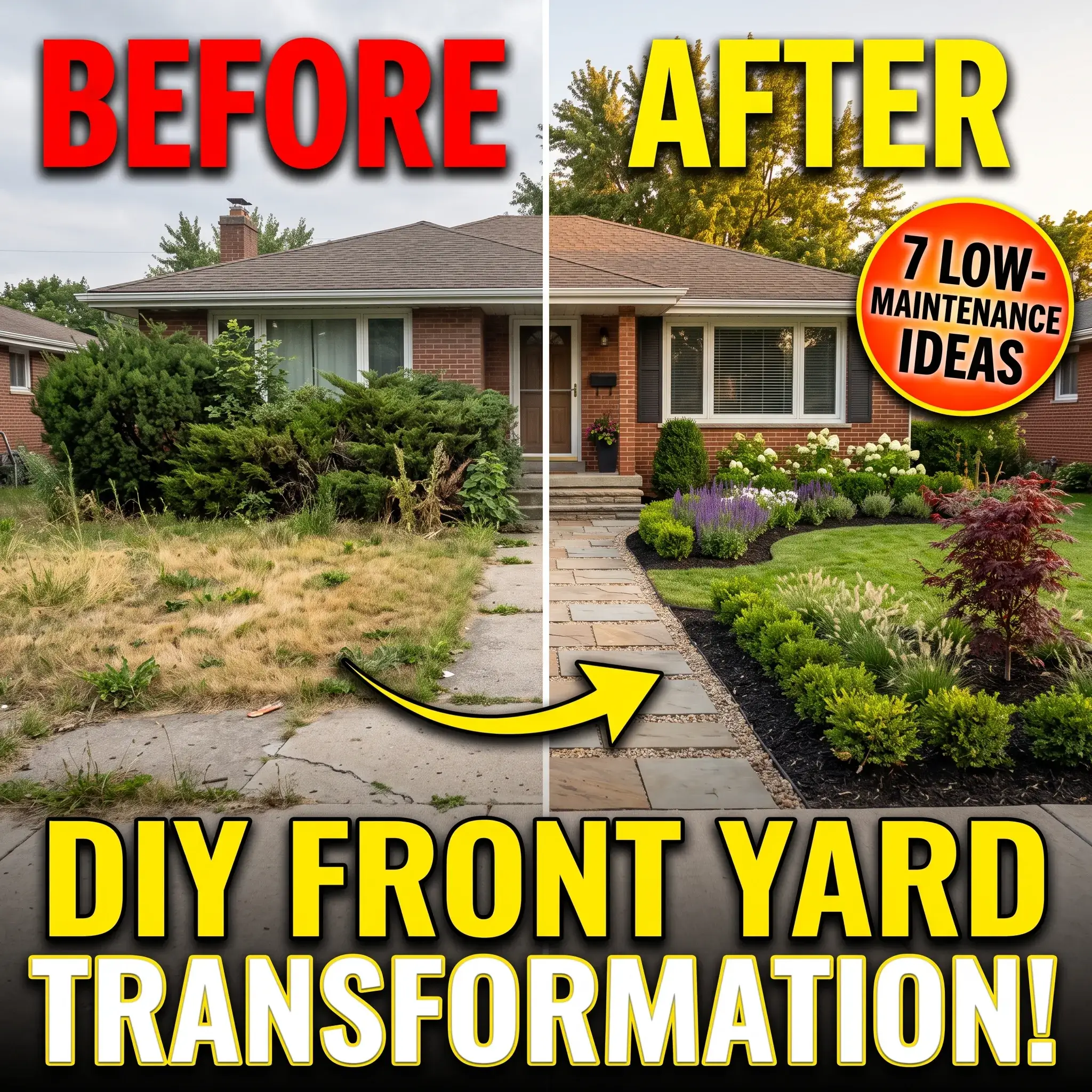
Most American front yards face the same two problems. Homeowners spend too much money watering weak turf, and outdated foundation bushes crowd the front windows. A clean, attractive yard does not require high contractor fees or constant weekend weeding. It requires a functional layout, correct plant spacing, and clear walkways that guide guests straight to your door.
Here are seven practical front yard landscaping designs. Each layout includes plant palettes, material lists, and realistic design prompts you can use to visualize your project.
7 Practical Front Yard Landscaping Ideas
1. The Low-Water Gravel and Ornamental Grass Layout
This design replaces thirsty grass with clean, textured crushed stone. It uses ornamental grasses and drought-hardy perennials to add height and color. It works well in hot or dry climates (USDA Zones 7 through 10) and cuts outdoor irrigation by up to 70 percent.
- Layout: Strip away existing sod. Lay heavy woven weed barrier fabric across the bare ground. Spread a three-inch layer of three-eighths-inch crushed basalt stone. Cut X-shaped slits through the fabric to plant perennials in clusters of three or five.
- Sun and Soil: Needs full sun (six or more hours daily). Requires gritty, fast-draining soil.
- Builder Tip: Keep gravel two inches below concrete walkways. Install rigid aluminum edging along paths to stop stone scatter.
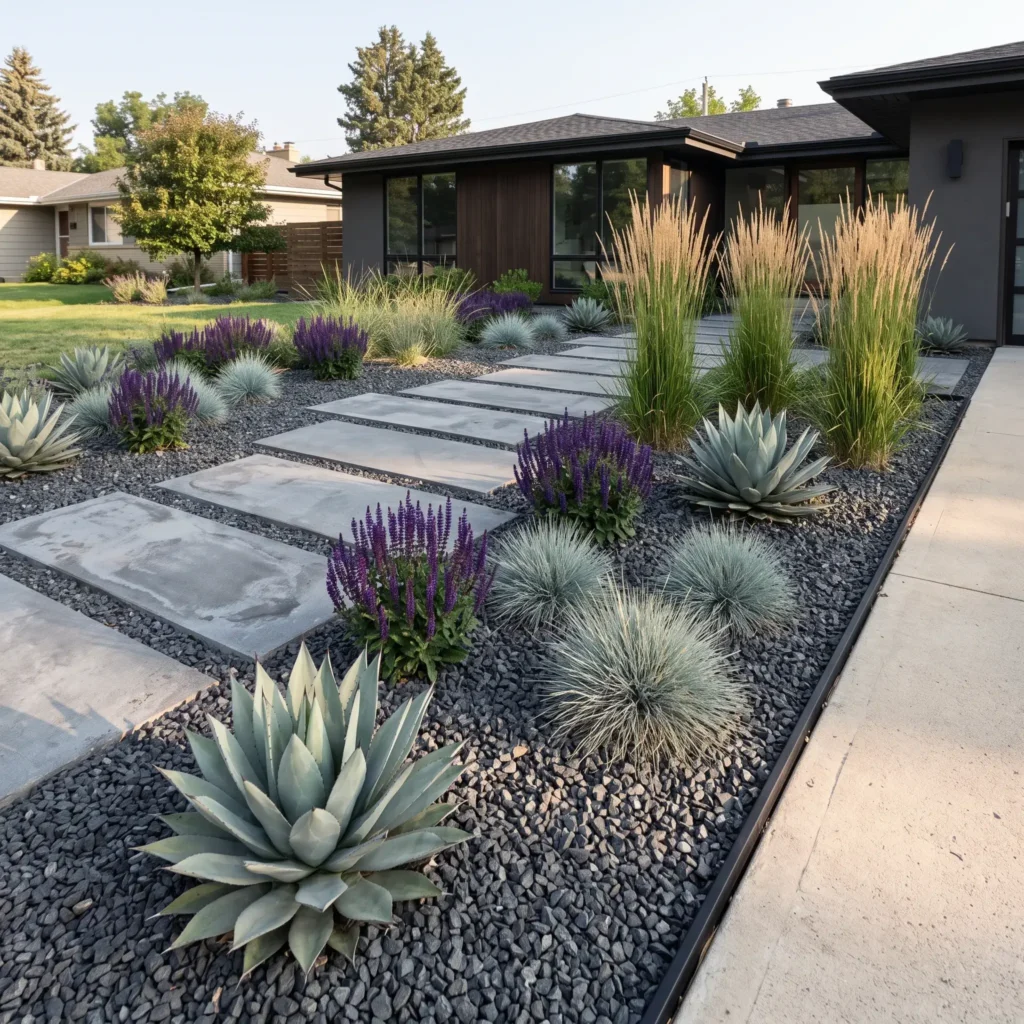
- Products and Materials:
- Crushed basalt stone (3/8-inch aggregate)
- Heavy-duty woven polypropylene ground fabric
- 4-inch black anodized aluminum landscape edging
- Karl Foerster Feather Reed Grass (Calamagrostis x acutiflora)
- Blue Fescue (Festuca glauca)
- Parry’s Agave (Agave parryi)
- May Night Salvia (Salvia nemorosa)
- 12-volt low-voltage LED directional spotlights
2. The Classic Brick and Boxwood Entry
This layout complements traditional homes such as Colonials, Cape Cods, and Craftsman bungalows. It combines formal evergreen foundation hedges with soft perennial flowers. The evergreen shrubs keep your front entry attractive through winter snow.
- Layout: Lay a curved, four-foot-wide red brick path from the driveway to the porch steps. Dig foundation garden beds eight feet deep. Place a low, trimmed boxwood hedge three feet away from the home siding. Fill the space between the hedge and path with flowering perennials.
- Sun and Soil: Partial sun to full sun (four to six hours daily). Prefers rich, well-drained loamy soil.
- Builder Tip: Never plant boxwoods directly under your roofline. Heavy rain and falling winter ice will break the shrub branches.
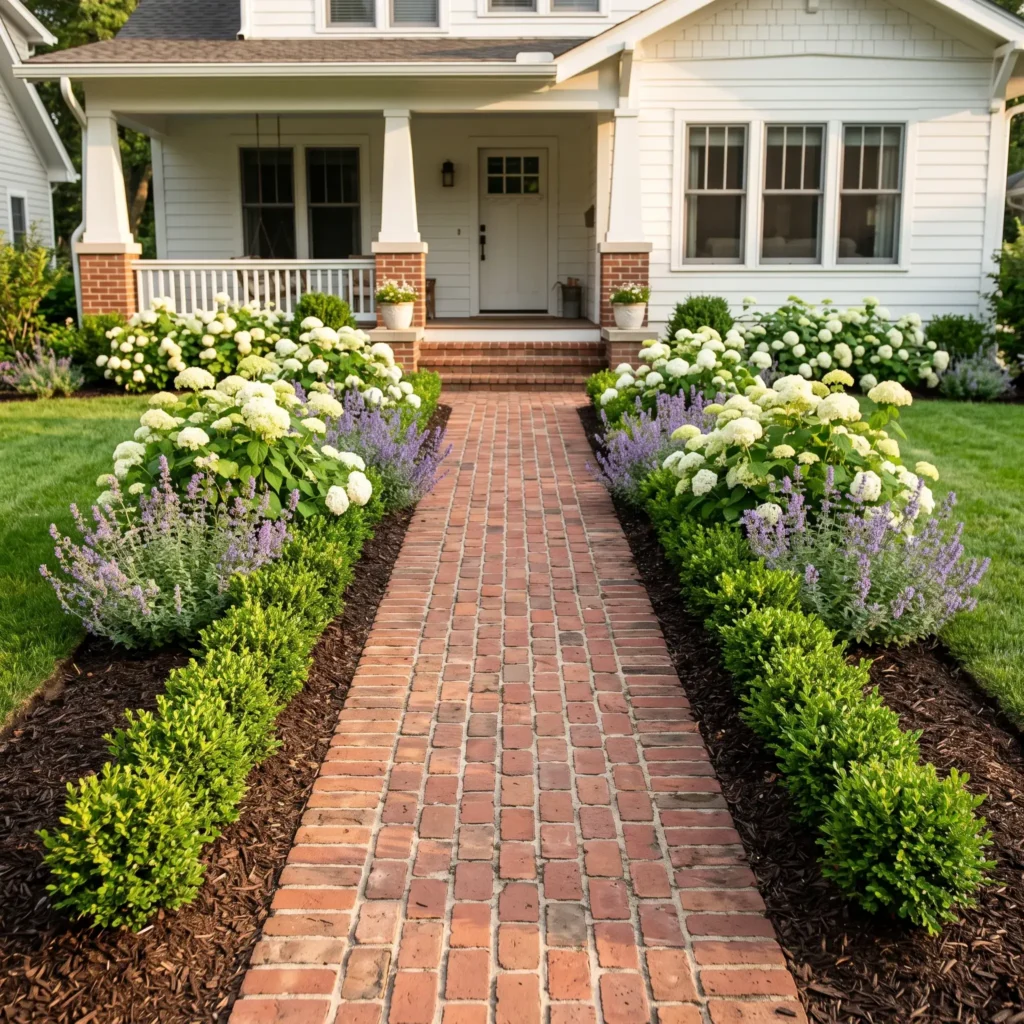
- Products and Materials:
- Heritage red clay brick pavers
- Polymeric joint sand in tan
- Double-shredded dark hardwood bark mulch
- Winter Gem Boxwood (Buxus microphylla)
- Annabelle Hydrangea (Hydrangea arborescens)
- Walker’s Low Catmint (Nepeta faassenii)
- Dwarf Korean Lilac (Syringa meyeri)
- Manual square-point spade for edge cutting
Check out more Outdoor Decor Ideas
3. The Modern Paver Walkway with Raised Planters
This design fits mid-century homes and split-level renovations. It uses wide concrete stepping pads and horizontal wood planter boxes. The geometric lines widen small yards and create an orderly entrance.
- Layout: Remove narrow builder paths. Lay large thirty-by-forty-eight-inch concrete pads spaced three inches apart. Fill joints between slabs with smooth black beach pebbles. Build two staggered horizontal cedar planter boxes (twelve inches and eighteen inches tall) along the house foundation.
- Sun and Soil: Adaptable to full sun or shade depending on plant choices.
- Builder Tip: Pour slabs over four inches of compacted crushed limestone gravel. Slabs placed over loose dirt will tilt and crack after ground freezes.
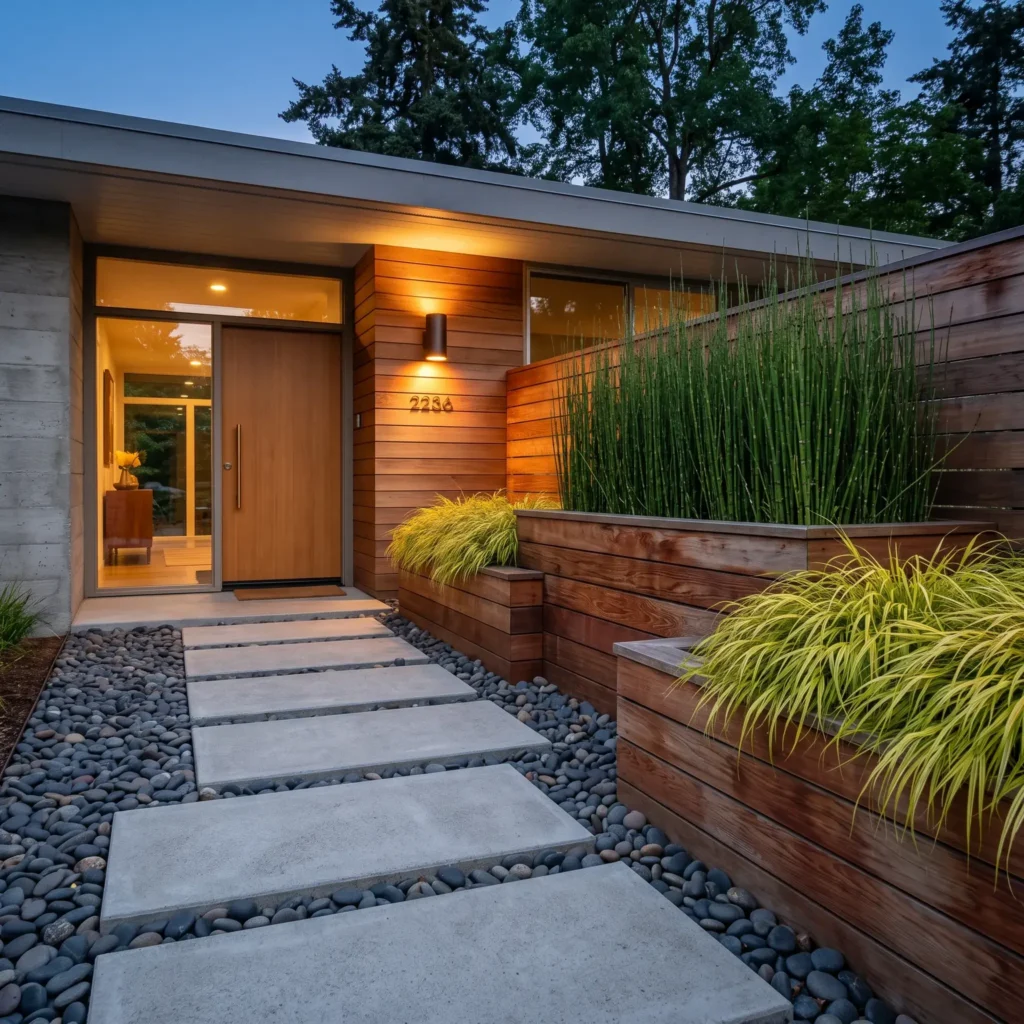
- Products and Materials:
- Cast concrete patio slabs (30×48 inches)
- Black Mexican beach pebbles (1 to 2 inch grade)
- Western red cedar lumber for planter boxes
- 45-mil rubber box lining membrane
- Horsetail Reed (Equisetum hyemale) in root-contained pots
- Golden Japanese Forest Grass (Hakonechloa macra)
- Low-voltage brass path lights with warm 2700K bulbs
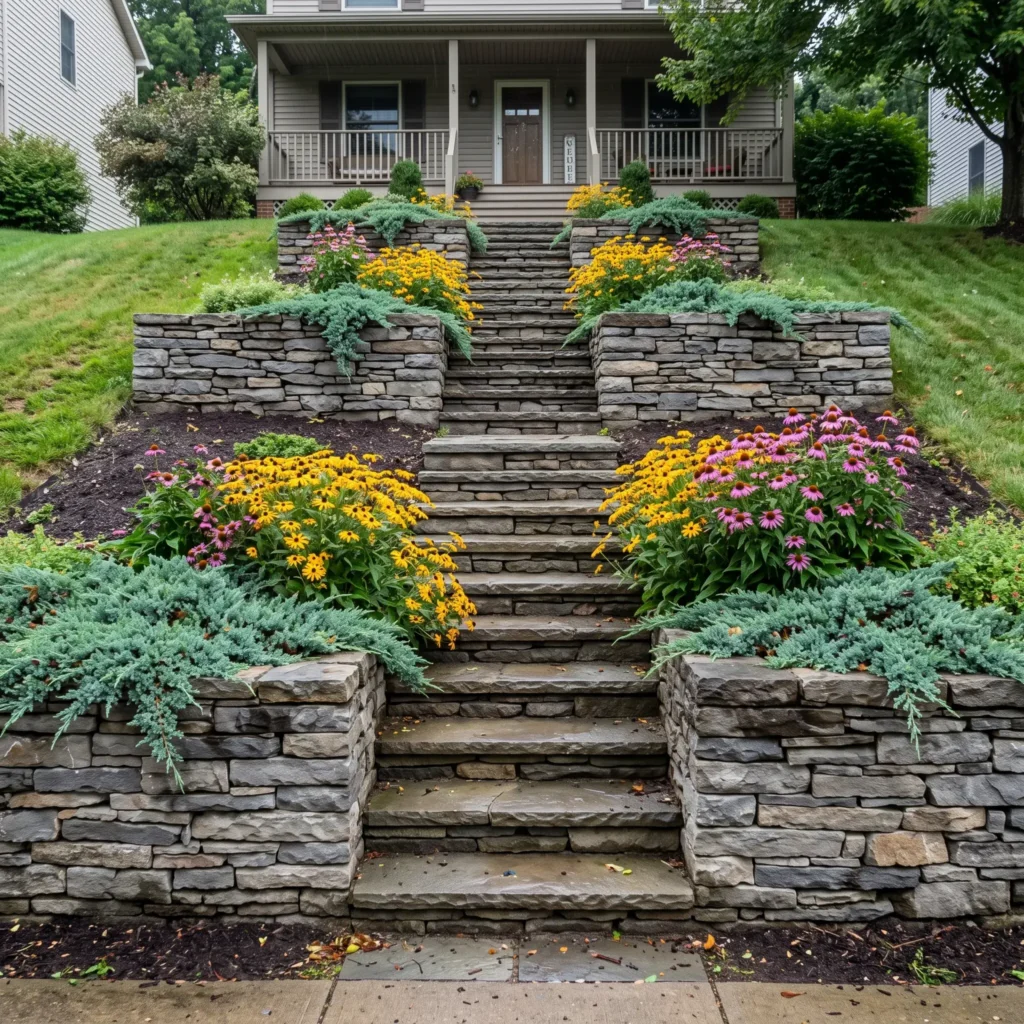
4. The Sloped Front Yard Terraced Stone System
Steep front yards cause soil erosion, exposed roots, and difficult mowing. This layout replaces dangerous slopes with two flat planting levels supported by stacked stone retaining walls.
- Layout: Split the slope into two distinct terraces. Build a lower eighteen-inch retaining wall four feet back from the public sidewalk. Build a second twenty-four-inch wall five feet behind the first tier. Fill both tiers with topsoil and compost to create level planting beds.
- Sun and Soil: Full sun to partial shade.
- Builder Tip: Every retaining wall over twelve inches tall needs a four-inch perforated drain pipe and gravel backfill. Trapped water behind a wall will push the stone blocks forward.
- Products and Materials:
- Split-face grey wall blocks or natural fieldstone
- 4-inch perforated drainage pipe with protective filter sleeve
- 3/4-inch washed drainage crushed gravel
- Non-woven geotextile drainage fabric
- Creeping Juniper (Juniperus horizontalis)
- Purple Coneflower (Echinacea purpurea)
- Goldsturm Black-eyed Susan (Rudbeckia fulgida)
- Blue Wonder Catmint (Nepeta)
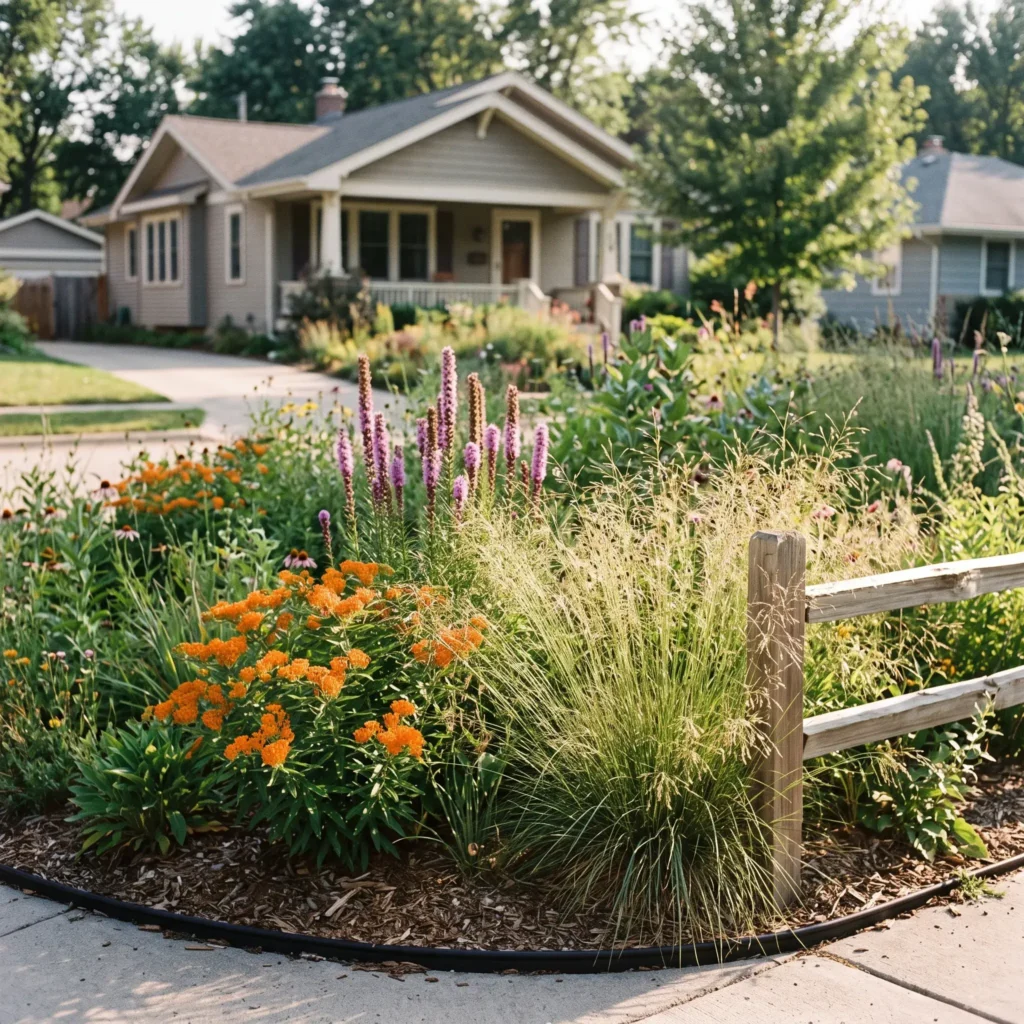
5. The No-Lawn Native Pollinator Meadow
This plan removes turf grass and replaces it with native perennials and grasses. It supports local bees and birds, eliminates synthetic fertilizer use, and removes the need for weekly lawn mowers.
- Layout: Smother existing lawn grass using overlapping layers of plain cardboard and four inches of woodchips. Dig a neat two-foot border around the perimeter filled with dark bark mulch. This border frames the tall meadow and shows neighbors the garden is deliberate.
- Sun and Soil: Needs full sun (six or more hours daily).
- Builder Tip: Group each plant species in blocks of five to seven plants. Scattered single plants look messy, but large clusters look organized and full.
- Products and Materials:
- Unwaxed corrugated cardboard sheets for lawn smothering
- Bulk organic arborist woodchips (4-inch depth)
- Two-rail cedar split-rail fence sections
- Butterfly Weed (Asclepias tuberosa)
- Blazing Star (Liatris spicata)
- Little Bluestem (Schizachyrium scoparium)
- Purple Prairie Clover (Dalea purpurea)
- Ohio Spiderwort (Tradescantia ohiensis)
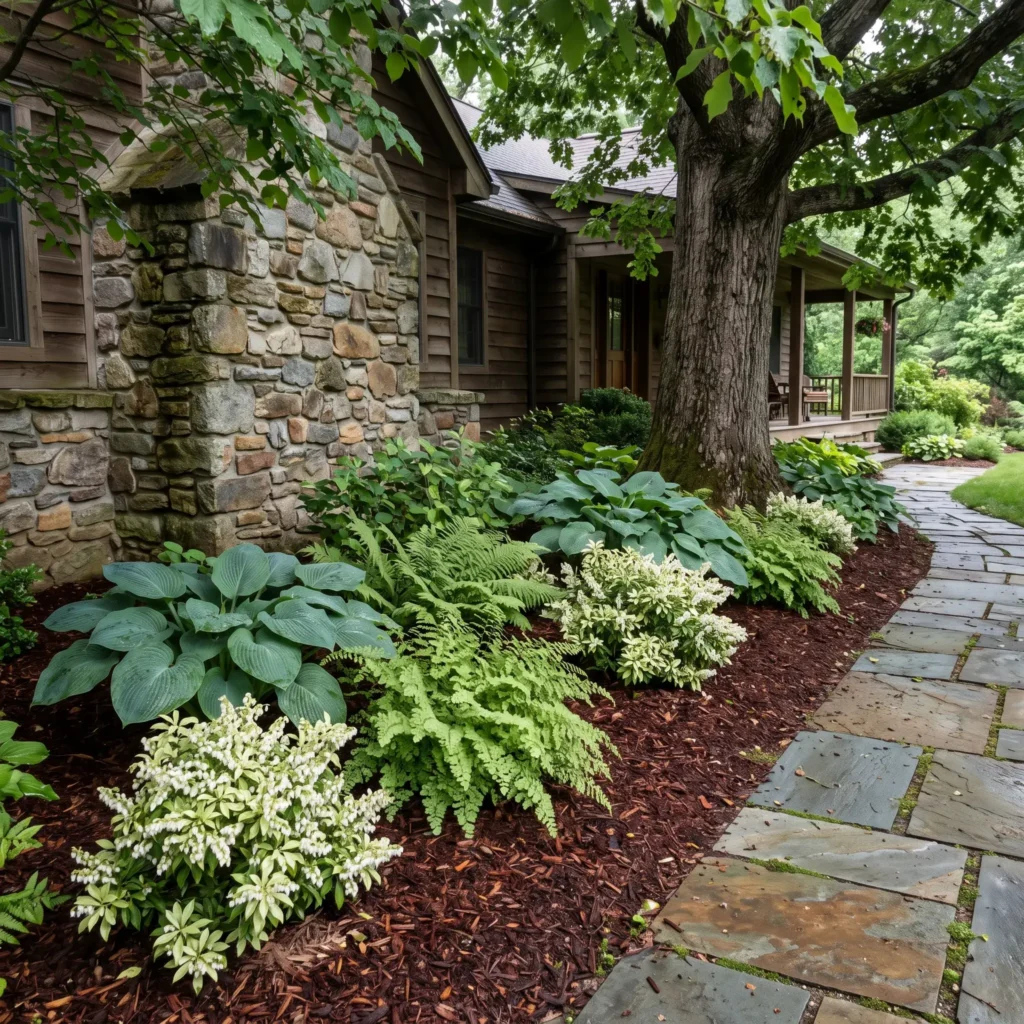
6. The Shaded Woodland Foundation Bed
North-facing homes and properties with mature trees often have thin, mossy grass. This design replaces failing turf with textured shade perennials that focus on contrasting foliage colors instead of bright sun flowers.
- Layout: Pull the planting bed out to the drip line of your tree canopy. Place tall evergreen shade shrubs between windows against blank wall space. Fill the middle area with mounded foliage plants. Edge the front with low creeping groundcovers.
- Sun and Soil: Full shade to dappled morning sun (under three hours direct sun). High organic matter soil.
- Builder Tip: Mix composted leaf mold into your native soil before planting. Woodland perennials thrive in fungal, forest-style soils.
- Products and Materials:
- Natural irregular bluestone flagstone (1.5-inch thickness)
- Hemlock or pine bark shredded mulch
- Composted leaf mold soil conditioner
- Halcyon Hosta (Hosta sieboldiana)
- Ostrich Fern (Matteuccia struthiopteris)
- Mountain Pieris (Pieris japonica)
- Japanese Forest Grass (Hakonechloa macra)
- Low-voltage landscape downlights mounted in tree limbs
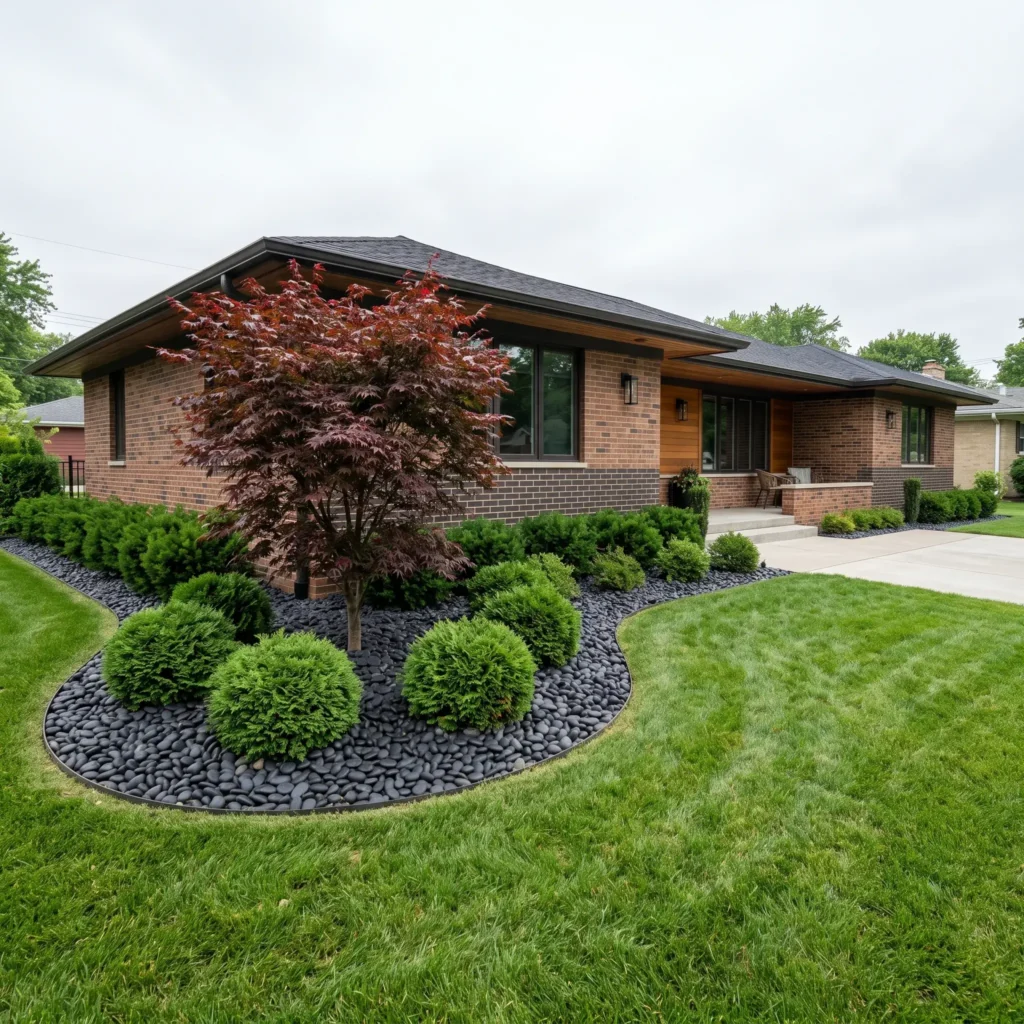
7. The Deep Curved Ranch-Style Foundation Bed
Ranch homes from the 1960s to 1980s often have long, narrow foundation beds. These narrow strips make single-story houses look flat. This layout replaces straight lines with deep, sweeping curves anchored by an ornamental tree.
- Layout: Use a garden hose to lay out smooth bed curves on your lawn. Keep beds four feet deep below front windows. Flare the corners out to ten or twelve feet wide at property edges. Plant a multi-stem ornamental tree at the widest bed curve. Fill lower areas with mounded evergreens.
- Sun and Soil: Full sun to partial afternoon shade.
- Builder Tip: Keep your ornamental tree at least fifteen feet away from sewer pipes, water mains, and house foundations to protect underground utilities.
- Products and Materials:
- Steel landscape edging (1/4-inch thick by 5 inches tall)
- Black dyed hardwood mulch or smooth river stone
- Bloodgood Japanese Maple (Acer palmatum ‘Bloodgood’)
- Mr. Bowling Ball Dwarf Arborvitae (Thuja occidentalis)
- Plum Yew (Cephalotaxus harringtonia)
- Autumn Fire Stonecrop (Sedum spectabile)
- Steel ground anchor stakes
Core Planning Rules: How to Design Your Layout
Proper spacing and functional path dimensions protect your investment and save hours of pruning later.
The 3-Tier Layering Rule
Do not plant shrubs in a single row against your foundation. Arrange plants in three staggered layers:
- Back Tier (4 to 6 feet tall): Place tall evergreens and large shrubs against bare exterior walls. Never position plants where their mature growth will cover window glass.
- Middle Tier (2 to 3 feet tall): Fill this space with flowering perennials, compact shrubs, and ornamental grasses. This tier provides seasonal color and movement.
- Front Tier (6 to 12 inches tall): Use low groundcovers and mounding perennials along the front rim. This layer softens the hard line between your mulch bed and your walkway.
Plant Spacing and Mature Spread
Always check nursery tags for a plant’s mature width, not its size in the plastic container. Space shrubs based on how large they will be in five years. If an evergreen grows four feet wide, plant the root ball at least two and a half feet away from your foundation wall. Planting shrubs too close to siding traps moisture, invites insects, and causes root rot.
Walkway Dimensions
A front walkway must fit two adults walking side by side comfortably.
- Standard builder paths measure only thirty-six inches wide, which feels cramped.
- Build primary front walkways at least forty-eight inches wide.
- For deep front yards, expand your path to sixty inches. A wider walkway creates an open feel and anchors your entrance.
Material and Installation Cost Breakdown
Material selections determine both your initial budget and your annual upkeep. The table below outlines average costs across the United States.
| Material | DIY Cost per Sq. Ft. | Pro Cost per Sq. Ft. | Maintenance Level | Useful Life | Best Location |
|---|---|---|---|---|---|
| Hardwood Mulch | $0.35 to $0.80 | $1.50 to $3.00 | High (Top-dress yearly) | 1 season | Shrub beds, moisture retention |
| Crushed Basalt / Pea Stone | $1.20 to $2.50 | $4.50 to $8.00 | Low (Rake fallen debris) | 10+ years | Modern yards, drought gardens |
| Concrete Pavers | $4.00 to $9.00 | $16.00 to $30.00 | Low (Sweep sand every 4 yrs) | 25+ years | Main entry paths, steps |
| Natural Flagstone | $8.00 to $15.00 | $28.00 to $45.00 | Low (Occasional wash) | Lifetime | Curved cottage paths |
| Sod (Bluegrass or Fescue) | $0.60 to $1.10 | $2.00 to $4.00 | High (Mow, water, fertilize) | Ongoing | Open play lawns |
| Native Groundcover Plugs | $1.80 to $3.50 | $5.00 to $9.00 | Low (Weed until established) | Permanent | Slopes, lawn replacements |
Common Front Yard Landscaping Mistakes
- Using Thin Plastic Under Gravel: Woven fabric allows water to drain into the ground. Non-porous black plastic traps puddles on top, causing foul odors and weed growth in standing dirt.
- Building Mulch Volcanos: Never pile mulch high around tree trunks. Mulch resting against bark causes fungal infections, rots the trunk base, and kills trees prematurely. Keep mulch three inches away from the wood, keeping the natural root flare visible.
- Forgetting Winter Structure: A yard built entirely of summer perennials looks empty and barren from November through March. Ensure at least forty percent of your plants are cold-hardy evergreens, ornamental grasses, or shrubs with colorful winter stems.
- Digging Without Locating Utilities: Always call 811 before digging deep foundation trenches, setting posts, or excavating for walls. Hitting a buried electrical cable or internet fiber line creates dangerous conditions and expensive repair bills.
4-Season Maintenance Checklist
Keep your plants healthy and tidy with this seasonal care plan:
Spring
- Cut ornamental grass stalks back to two inches above the ground before green shoots emerge.
- Hand-pull emerging weeds while spring rains leave the ground soft.
- Cut clean, four-inch trenches along all bed borders using a spade.
- Spread two inches of fresh shredded bark mulch across bare soil.
Summer
- Water new shrubs deeply two to three times each week rather than spraying shallow daily showers. Deep soakings force roots deep into the ground.
- Remove spent flower heads on coneflowers, salvia, and catmint to encourage mid-summer reblooming.
- Check plant stems weekly for common summer pests like aphids and spider mites.
Fall
- Plant spring-flowering bulbs such as daffodils, alliums, and tulips under your perennials.
- Rake thick leaf layers off low groundcovers to keep plants from rotting under damp piles.
- Soak all new trees and shrubs deeply before the first hard ground freeze of the season.
Winter
- Sweep heavy snow accumulations off evergreen shrub branches with a broom to stop limbs from splitting.
- Keep chemical de-icing salt off landscape beds. Salt runoff damages soil structure and burns plant roots.
- Prune dead or crossing branches on dormant deciduous shade trees.
Frequently Asked Questions
What is the cheapest way to landscape a front yard?
Focus on clean bed lines and bulk mulch. Cutting sharp four-inch trenches between your grass and planting beds costs nothing and gives an instant clean look. Order bulk woodchips from local tree removal services, which often drop arborist chips for free. Purchase young perennials in one-gallon pots or divide established hostas and daylilies from friends instead of purchasing fully grown plants.
How far out from the house should foundation beds go?
Foundation beds should extend at least six to eight feet out from your house. Narrow three-foot beds force plants against the foundation wall and look disproportionately small next to two-story walls. A deep bed lets you stagger two or three heights of plants without crowding your walkway.
What is the best lawn alternative for front yards?
The best lawn alternative depends on how much foot traffic you expect. For walkways and heavy traffic, use crushed gravel or decomposed granite. For zero-mow green foliage, creeping thyme, dwarf mondo grass, or native sedge plugs provide low green mats that never require weekly mowing.
How do I keep garden mulch from washing over the sidewalk?
Dig a clean drop-edge along your concrete path. Use a flat shovel to cut a four-inch trench right beside the path, sloping the soil back into the bed at an angle. This forms a collection channel that traps floating mulch during heavy rainstorms. In flood-prone areas, avoid light pine bark nuggets and choose dense, double-shredded hardwood mulch instead.
Getting Started on Your Front Yard
You do not need to finish your entire yard in a single weekend. Select the design above that matches your home’s exterior style. Lay out your new bed lines using a garden hose, and begin by removing overgrown shrubs.
Once your bed edges are set and your walkway is the proper width, install your plants in stages. Start with your structural back-row evergreens, then add your colorful middle perennials and front groundcovers as your budget permits.