7 Pet-Friendly Interior Design Ideas That Protect Your Style and Sanity

Living with pets often feels like a constant compromise between personal style and everyday animal messes. Muddy paws stain pale carpets. Claws pull threads from textured couches. Bulky wire crates turn open living spaces into makeshift boarding kennels.
You do not need to cover your furniture in blankets or settle for plastic pet gear. Good residential design solves biological habits through durable materials and smart casework.
Here are 7 high-end, practical interior design ideas that keep your home clean, durable, and stylish.
1. The Scratch-Proof Living Room: Performance Cut-Pile Velvet & Heathered Rugs
Cats scratch furniture to groom their claws by shedding dead outer sheaths. Looped fabrics like bouclé, chenille, and loose tweeds give claw tips an easy anchor point. Pulling those loops ruins the upholstery within weeks.
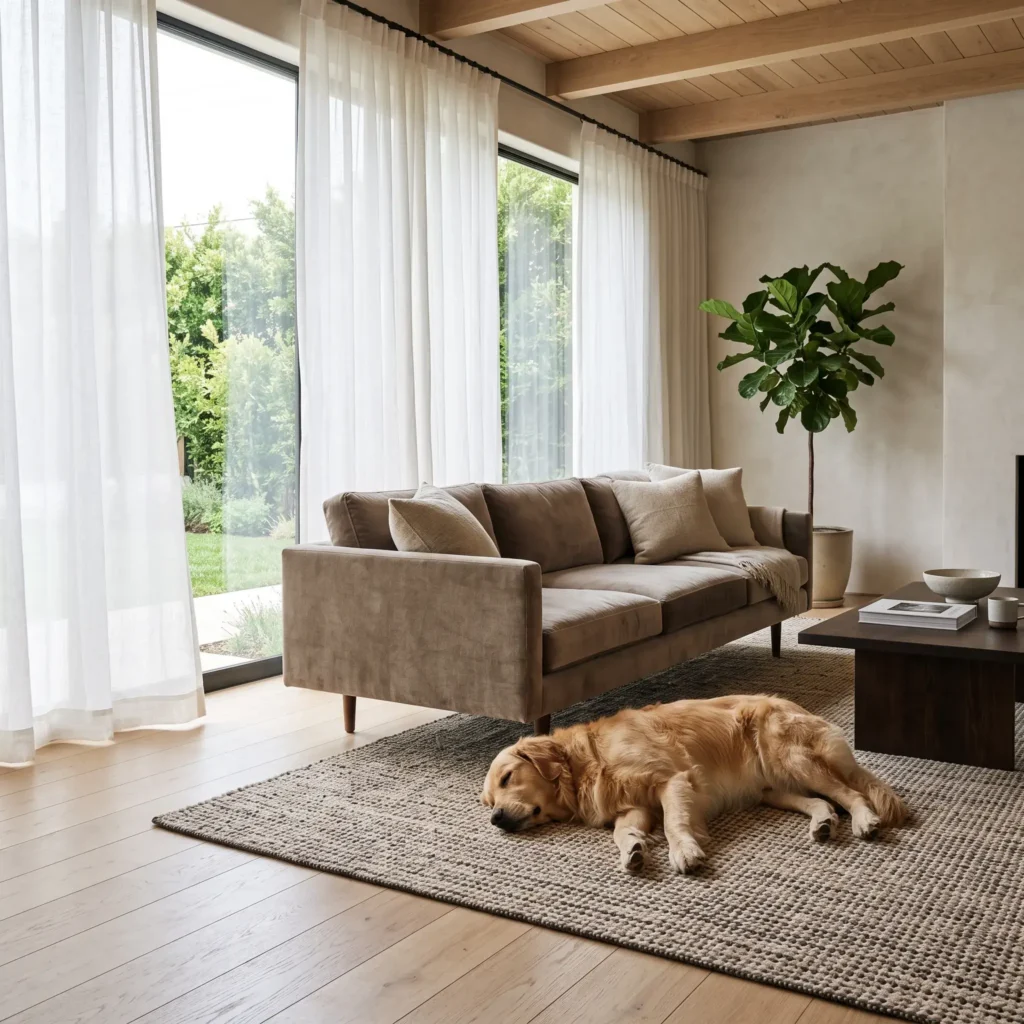
Synthetic performance velvet solves this issue. Velvet features a dense, sheared cut pile with zero exposed horizontal loops. Claw tips slide across the fabric surface without catching, which quickly discourages cats from scratching your furniture.
Pair your sofa with a low-pile, heathered flatweave rug. Selecting a rug that weaves three to five neutral yarn shades together naturally camouflages loose pet fur between vacuuming days.
Featured Products and Materials in This Design
- Sofa Upholstery: Crypton or high-denier polyester cut-pile performance velvet in taupe or warm stone.
- Area Rug: Low-profile, tight-weave polypropylene or machine-washable polyester rug with a multi-tonal heathered pattern.
- Flooring: Wire-brushed engineered white oak with a durable matte polyurethane seal.
- Window Treatments: Motorized cordless roller shades paired with linen-blend drapery panels hung one inch above the floor.
2. The Kitchen Island Feeding Suite with Integrated Pot-Filler
Water bowls sitting on the open kitchen floor create constant tripping hazards and messy splash zones. Spilled water seeps behind baseboards, leading to warped floorboards and damaged cabinetry over time.
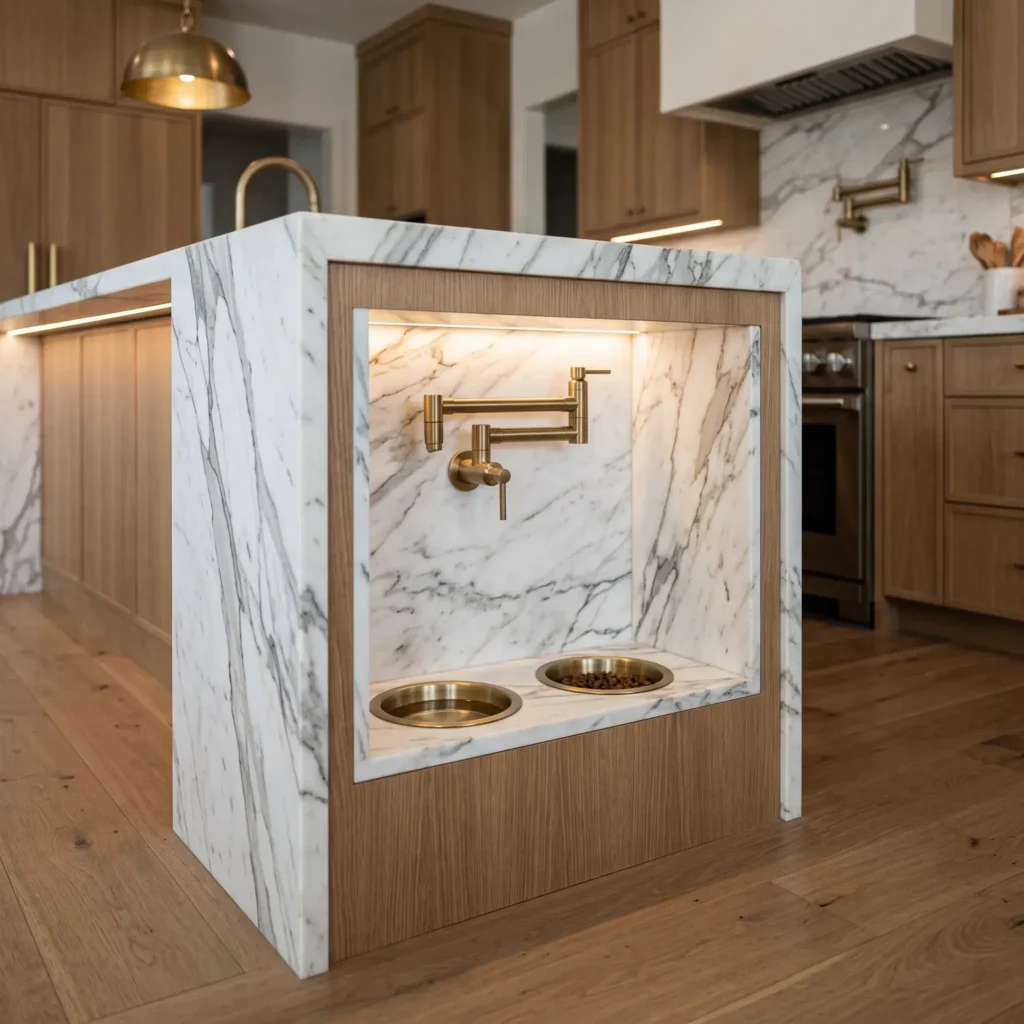
Integrate a dedicated feeding alcove directly into the end panel of your kitchen island. Line the interior walls of the niche with non-porous quartz or porcelain slab that matches your kitchen countertops.
Install a low-mounted brass pot-filler faucet directly above the water bowl. This feature lets you refill water dishes instantly at floor level without carrying heavy, sloshing bowls across your kitchen.
Featured Products and Materials in This Design
- Cabinet Niche Lining: Seamless quartz or porcelain slab to block water absorption into surrounding woodwork.
- Plumbing Fixture: Low-mount cold-water pot-filler faucet with a double-jointed swing arm in brushed brass or matte black.
- Feeding Bowls: Heavy-gauge 304 stainless steel or ceramic drop-in bowls fitted with sound-dampening silicone rim rings.
- Base Protection: Continuous stone cove baseboard around the niche perimeter to stop water runoff.
Check out more Interior Ideas
3. The Mudroom Decontamination Spa with Raised Dog Shower
Washing an active dog in a standard residential bathtub strains your back and splatters dirty water across bathroom walls. Loose animal hair also clogs standard residential plumbing lines.
Convert an entryway or laundry room into a dedicated cleaning station by installing a raised dog shower. Build a waterproofed shower basin raised 28 to 34 inches off the floor. This working height lets you wash your dog comfortably while standing completely upright.
Cover the shower walls with large porcelain tiles and use 100 percent solids epoxy grout to block bacteria, dirt, and water. Connect a commercial two-inch drain line equipped with a dual-stage stainless steel hair basket to catch loose fur before it reaches your main pipes.
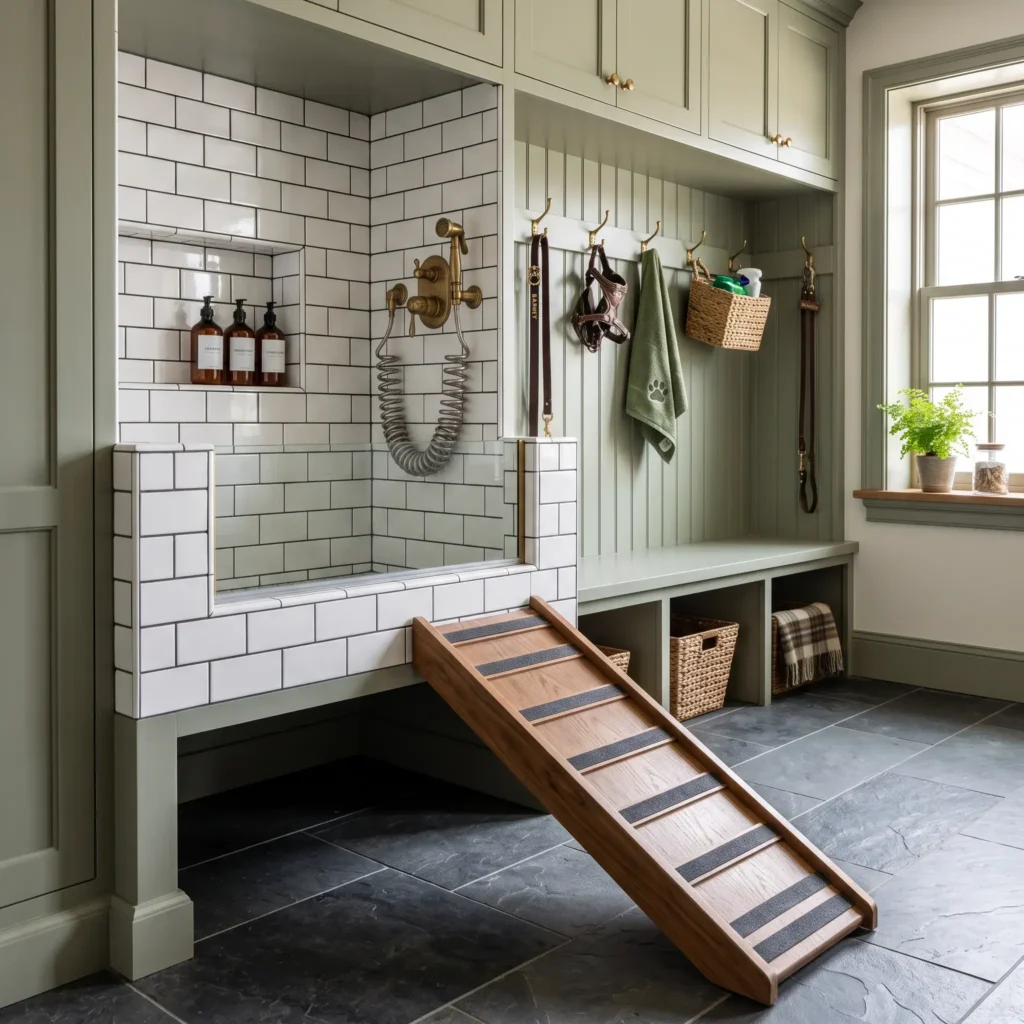
Featured Products and Materials in This Design
- Wall Tile and Grout: Large-format glazed porcelain wall tile installed with ANSI A118.3 compliant 100 percent solids epoxy grout.
- Plumbing Valves: Pressure-balancing thermostatic valve capped at 100 degrees Fahrenheit, paired with a commercial stainless steel spray wand.
- Drain Infrastructure: Two-inch commercial drain line with an integrated dual-stage stainless steel hair catch basket.
- Entry Surface: Inset aluminum frame scraper walk-off mat at the exterior doorway to catch mud and grit right at the door.
4. The Built-In Living Room Credenza Dog Crate
Traditional metal wire crates look industrial and clash with curated furniture. Placing them in room corners takes up valuable square footage and creates visual clutter.
Build your dog den directly into a custom living room media console or sideboard credenza. Frame the interior with solid hardwood and add vertical wood slats spaced two inches apart. This spacing maintains full room sightlines and airflow for your pet while keeping paws safely inside.
Hang the slatted front panel on heavy-duty bi-fold pocket door hardware. The crate functions as an open daybed during normal hours, then closes smoothly when you need to secure your dog.
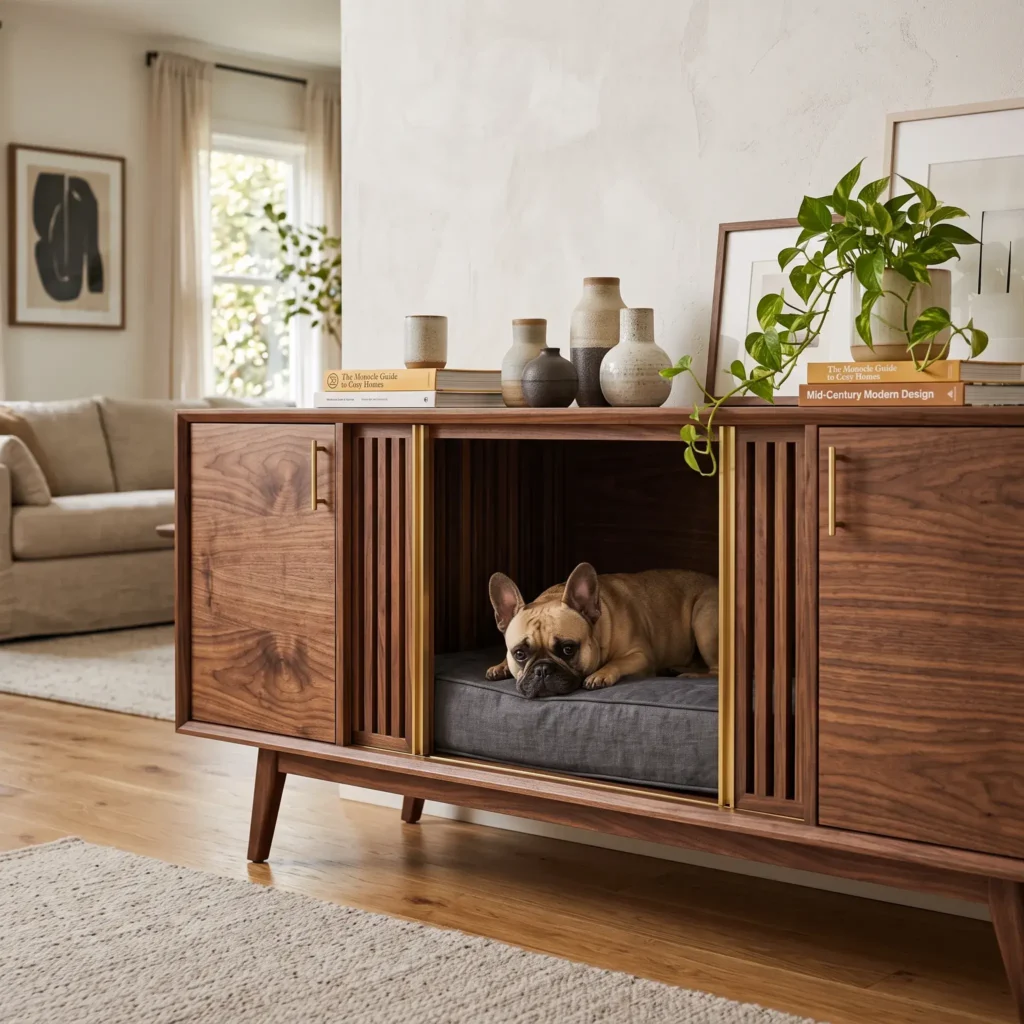
Featured Products and Materials in This Design
- Cabinet Framework: Solid American walnut or white oak millwork finished with food-safe hardwax oil.
- Door Hardware: Heavy-duty bi-fold pocket door slides that let door panels slide flush into cabinet side pockets.
- Bedding Cushion: High-density orthopedic memory foam core with a removable, water-repellent performance linen cover.
- Interior Wall Lining: Micro-perforated acoustic wood veneer panels inside the crate to soften household noise for anxious pets.
5. The Architectural Feline Superhighway in Open Bookshelves
Traditional carpet-covered cat trees shed fibers, take up floor space, and look worn out quickly. Without dedicated vertical routes, cats jump onto kitchen counters and climb window screens instead.
Incorporate high walking paths directly into your custom bookcases and wall shelving. Cut seven-inch rounded pass-through portals through the vertical divider panels of your library units.
Place your decorative books and art objects along the front section of each shelf. This layout leaves a clear, hidden walkway along the back for your cat. Fasten floating wood wall steps directly into wall studs to connect the floor to your upper shelves safely.
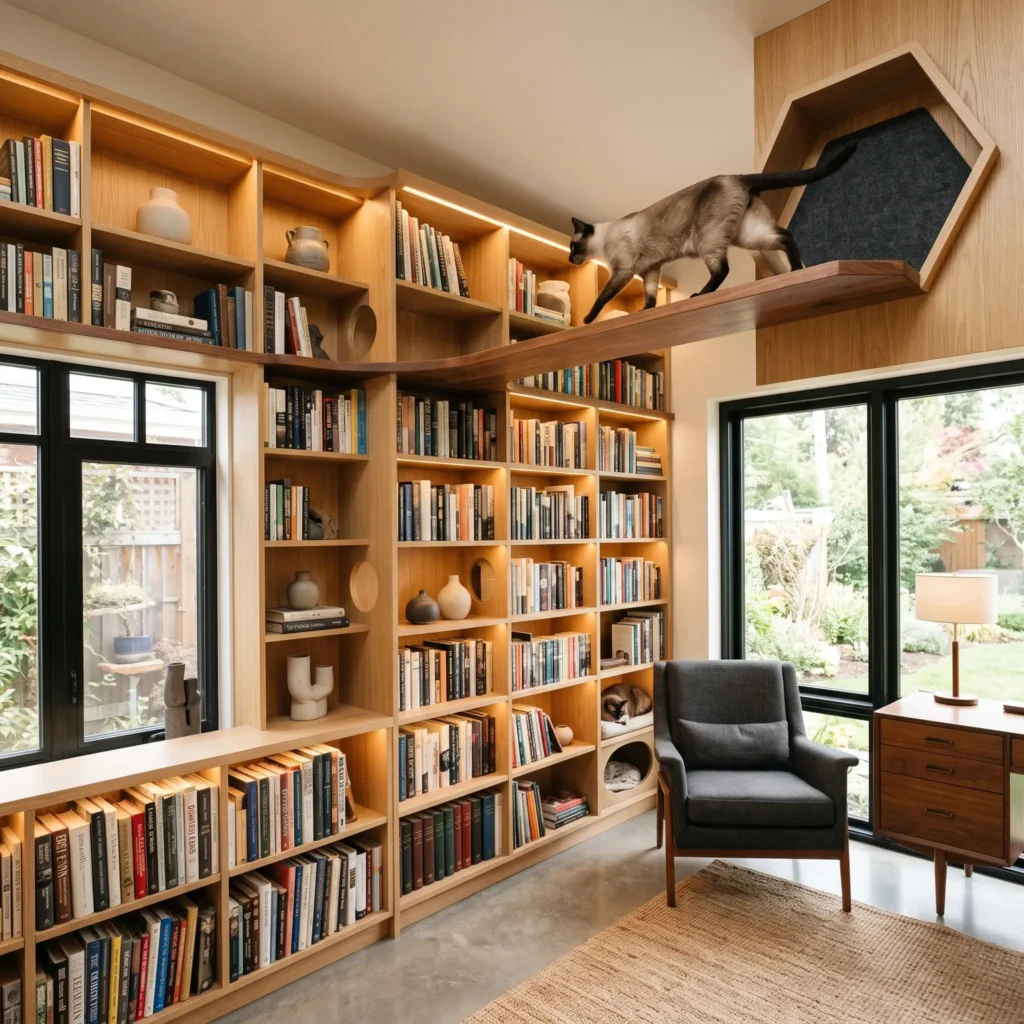
Featured Products and Materials in This Design
- Climbing Hardware: Concealed heavy-duty steel floating shelf brackets secured directly into structural wall studs.
- Traction Surface: Flush-routed wool felt pads or vegetable-tanned leather strips glued to shelf tops with low-VOC adhesive.
- Scratching Column: Structural room columns or shelving pilasters wrapped tightly in natural, unoiled Brazilian sisal rope.
- Shelving Material: Three-quarter-inch birch plywood core faced with natural hardwood veneer for high structural stiffness.
6. The Concealed Litter Station with Active Air Exhaust
Exposed litter boxes scatter clay across floors, release strong odors, and ruin the visual flow of a room. Simple closed cabinet boxes trap ammonia gas inside, which often causes cats to avoid the box and relieve themselves elsewhere.
Build a two-chamber litter station inside your laundry room or bathroom cabinetry. The cat enters through an arch cut into the cabinet side panel and steps into a small initial vestibule.
This first chamber features a floor made of a removable metal tracking grate over a slide-out tray. Walking across the grate spreads your cat paw pads, dropping loose clay down into the tray before they step onto your main floors.
Install an ultra-quiet 12-volt DC inline fan inside the cabinet wall. Vent the fan outside or through a carbon filter canister to draw odors away continuously.
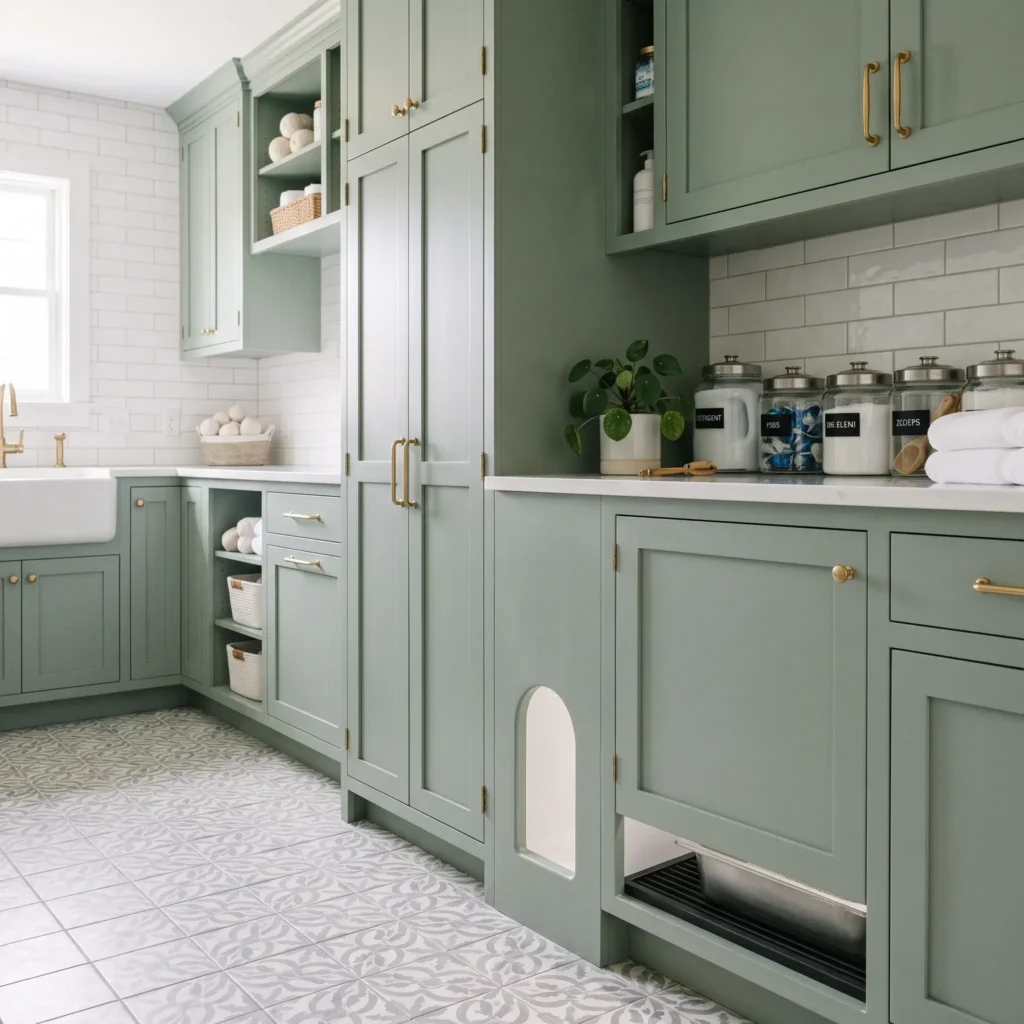
Featured Products and Materials in This Design
- Cabinet Carcase: High-pressure laminate or solid composite polymer panels sealed with silicone along all interior seams.
- Litter Pan: Anti-microbial 304 stainless steel litter pan that resists scratch marks and will not absorb urine odors.
- Litter Trap Grate: Powder-coated steel floor grate set directly over a sliding collection tray.
- Ventilation Fan: Ultra-quiet 12-volt DC brushless exhaust fan operating under 18 decibels, paired with a pelletized virgin carbon filter.
7. The Biophilic Solarium with ASPCA-Safe Botanicals
Indoor plants soften architectural lines and clean the air, but many popular houseplants are dangerous for pets. Varieties like Monstera, Snake Plants, and Fiddle-Leaf Figs contain sharp calcium oxalate crystals that cause intense mouth pain and swelling in dogs and cats.
Create a bright indoor green space using non-toxic houseplants certified by the ASPCA Animal Poison Control database. Combine Boston Ferns (Nephrolepis exaltata), Calatheas (Goeppertia), and Parlor Palms (Chamaedorea elegans) to build varied leaf heights and patterns.
Choose heavy concrete or unglazed ceramic planters with wide bases that pets cannot tip over. Cover the exposed potting soil with smooth Mexican beach pebbles to prevent pets from digging in the dirt.
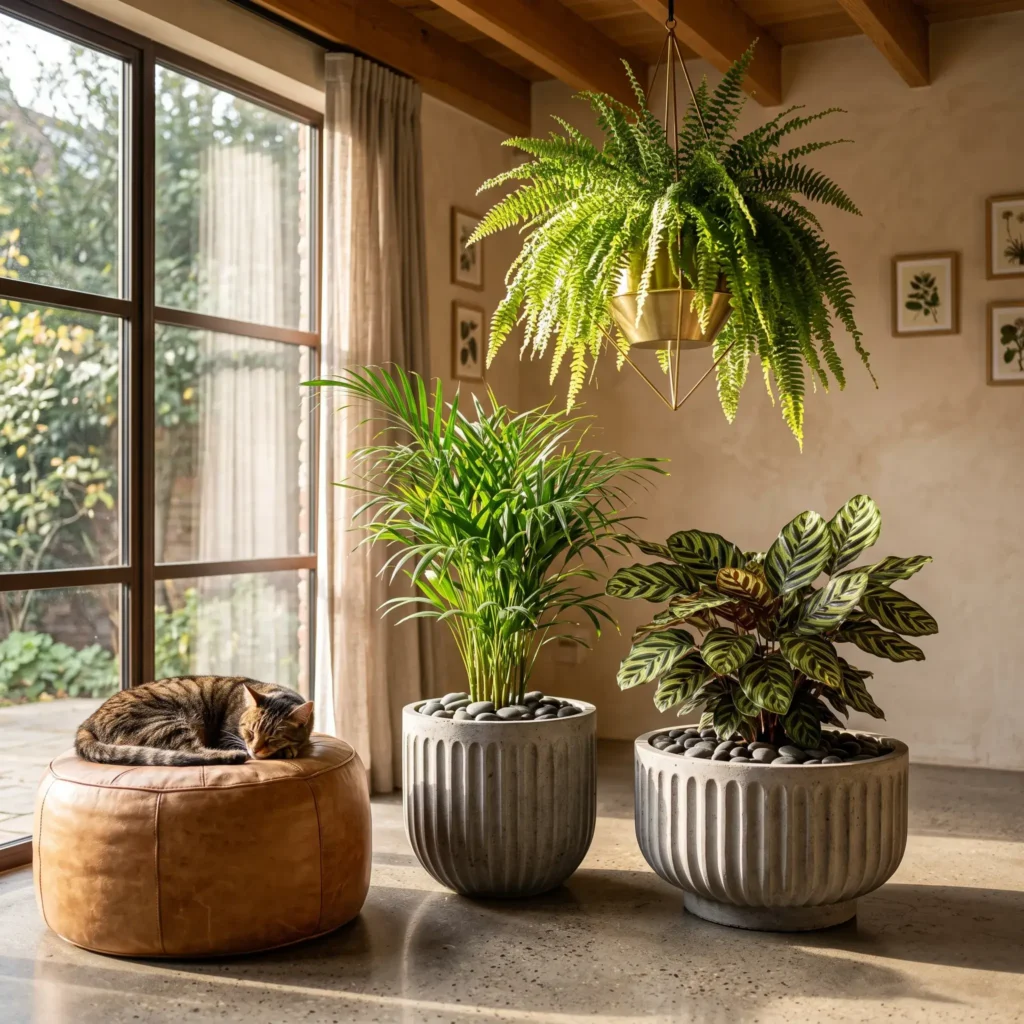
Featured Products and Materials in This Design
- Verified Safe Plants: Boston Fern (Nephrolepis exaltata), Prayer Plant (Maranta leuconeura), and Kentia Palm (Howea forsteriana).
- Planters: Bottom-weighted cast concrete, unglazed terracotta, or terrazzo floor pots.
- Soil Cover: Two- to three-inch smooth black Mexican beach pebbles or unpolished river stones.
- Ceiling Anchors: Solid brass hardware secured directly into ceiling joists with braided cotton support cords.
Pet-Proof Material Specification Guide
Selecting the right layout ideas is only the first step. You must also pair them with materials that endure daily wear, animal nails, and liquid exposure.
1. Flooring: Traction, Scratch Defense, and Liquid Mitigation
Flooring problems usually stem from two sources: slick surface coatings that cause joint stress, or porous seams that absorb urine.
When dogs walk on slick, high-gloss hardwood or polished tile, their non-retractable nails cannot grip the surface. Animals compensate by tightening their hip and back muscles to stay stable. Over time, this daily physical strain speeds up joint degeneration and spinal issues.
Choose floor tiles tested under ANSI A137.1 and ANSI A326.3 with a wet Dynamic Coefficient of Friction (DCOF) rating of 0.42 or higher. For senior dogs, select a rating of 0.50 or higher. Matte porcelain, honed slate, and textured stone provide reliable foot traction.
| Flooring Material | Scratch Resistance | Liquid & Odor Resistance | Joint Traction Profile | Best Application |
|---|---|---|---|---|
| Stone Plastic Composite (SPC) Vinyl | High (choose 20+ mil wear layer) | 100% waterproof plank core | High (embossed-in-register texture) | Busy living areas, basements, hallways |
| Porcelain Tile (Matte) | Impervious to claws | Impervious (requires epoxy grout) | Calibrated (select DCOF ≥0.42) | Mudrooms, dog showers, laundry rooms |
| Solid or Engineered Hardwood | Moderate (vulnerable to nail gouges) | Poor (acidic urine stains wood tannins) | Low to Moderate (smooth finishes slip) | Low-traffic formal rooms, upper bedrooms |
| Strand-Woven Bamboo | High (resists surface dents) | Moderate (liquids can swell joints) | Moderate (smooth factory coats lack grip) | Home offices, secondary sitting areas |
When urine reaches traditional hardwood, it runs into the small seams between planks. The uric acid reacts with the wood tannins, creating permanent dark iron-tannate stains that sanding cannot fix.
Standard Portland cement grout also acts like a sponge, soaking up urine and trapping bacteria inside the joint.
Always instruct your contractor to use 100 percent solids epoxy grout (ANSI A118.3 standard). Epoxy joints cure into a solid plastic seal that will never absorb liquids, bacteria, or lingering smells.
2. Textile Science: Cut Pile vs. Looped Weaves
Upholstery fabrics face two constant threats: claws pulling threads loose and liquid soaking into cushion foam.
| Fabric Classification | Wyzenbeek Double Rubs | Feline Claw Snag Risk | Liquid & Odor Resistance | Cleaning Method |
|---|---|---|---|---|
| Synthetic Performance Velvet | 50,000 to 100,000+ | Very Low (no loops for claws to snag) | High (dense pile slows liquid ingress) | Mild soap and water; vacuum with brush attachment |
| Crypton Performance Woven | 50,000 to 100,000+ | Low to Medium (depends on weave tightness) | Complete (integrated reverse moisture barrier) | Water-based foam cleaners or enzyme sprays |
| Distressed Pull-Up Leather | High tensile puncture strength | Moderate (nail marks blend into patina) | High (naturally repels loose fur and dander) | Wipe with damp cloth; apply yearly leather conditioner |
| Bouclé and Chenille | 15,000 to 30,000 | Extreme (loops catch claw tips instantly) | Low (liquids soak straight into internal foam) | Extremely difficult; threads unravel when pulled |
Never rely on cheap surface sprays to protect furniture. Friction from daily sitting wears these topical treatments away within months. Once liquids soak through standard fabric, they collect inside the open-cell foam cushion, trapping smells permanently.
Choose fabrics like Crypton that feature an integrated polyurethane moisture barrier laminated directly onto the backside of the textile.
3. Wall Finishes and Millwork Sheens
Pets lean against hallway walls, shake wet coats after walks, and splash water near food bowls.
- Avoid Flat or Matte Wall Paints: Flat wall paints absorb skin oils from pet fur and scuff easily. Scrubbing a flat paint leaves shiny, damaged spots on the drywall.
- Select Washable Eggshell or Satin Finishes: Use premium acrylic enamel in an eggshell or satin finish on baseboards and lower wall surfaces. These finishes wipe clean with warm water and mild soap without stripping the paint film.
- Install Protective Wood Wainscoting: In busy mudrooms and entryways, install painted wood wainscoting, beadboard, or vertical tongue-and-groove paneling up to 36 inches high. Solid millwork handles impacts and wet coats far better than standard drywall.
4. Non-Toxic Houseplants (ASPCA Verified)
Bring natural foliage into your home without risking your pets health. Always verify botanical names using Latin binomials before buying plants.
- Boston Fern (Nephrolepis exaltata): Safe for dogs and cats. Perfect for hanging brass planters or high shelving units.
- Prayer Plant (Maranta leuconeura): Safe for dogs and cats. Features striking green and burgundy patterned leaves that look great on coffee tables.
- Kentia Palm (Howea forsteriana): Safe for dogs and cats. Adds tall, architectural greenery to room corners without the severe liver toxicity found in Sago Palms.
- Baby Rubber Plant (Peperomia obtusifolia): Safe for dogs and cats. Features thick, glossy foliage that thrives on bright desks and side tables.
Frequently Asked Questions
Can you have real hardwood floors with large dogs?
Yes, if you choose hard wood species with textured finishes. Pick woods with high Janka hardness ratings like White Oak (1,360 lbf) or Hickory (1,820 lbf), and avoid soft woods like Pine or American Walnut. Select wire-brushed planks finished with a matte polyurethane coating. The textured wire-brushed surface hides light nail scratches, while smooth high-gloss floors show every scuff.
What is the best couch fabric for homes with multiple cats?
Synthetic cut-pile performance velvet and microfiber are the two top choices. These textiles feature sheared surface fibers without horizontal woven loops. Because cat claws cannot catch in the fabric, cats quickly stop scratching the furniture. Both materials also clean easily with a vacuum and resist water-based stains.
How do you stop a built-in litter box cabinet from smelling?
Never place a litter box inside a sealed cabinet without active airflow. Trapped ammonia odors will cause your cat to reject the box and eliminate on your carpets instead. Install an ultra-quiet 12-volt DC exhaust fan (under 18 dB) inside the cabinet wall, connected to an inline activated carbon filter or ducted outside. Replace plastic litter pans with stainless steel pans, because plastic scratches and absorbs urine odors permanently.
How do I hide a dog crate in an open-concept floor plan?
Incorporate the crate directly into functional furniture. Work with a cabinet maker to design a living room media console, hallway credenza, or kitchen island end-cap with an integrated slatted compartment. Space vertical wood slats two inches apart to provide proper ventilation and visibility. Use bi-fold pocket doors so you can slide the crate panels out of sight during the day.
Designing a Home That Works for Everyone
Creating a pet-friendly home does not mean living in a plain, plastic-covered house. High-end design accounts for the natural movements and habits of every family member who lives under your roof.
Address your most common problem areas first. Replace snag-prone sofa fabrics with durable cut-pile performance velvet. Upgrade porous tile grout to waterproof epoxy seals in entryways and bathrooms. Move bulky crates and feeding dishes into custom, ventilated casework.
When you build with durable materials and thoughtful architectural details, your home stays clean, organized, and beautiful every single day.