7 Practical Floating Shelf Ideas Built on Real Measurements and Weight Limits
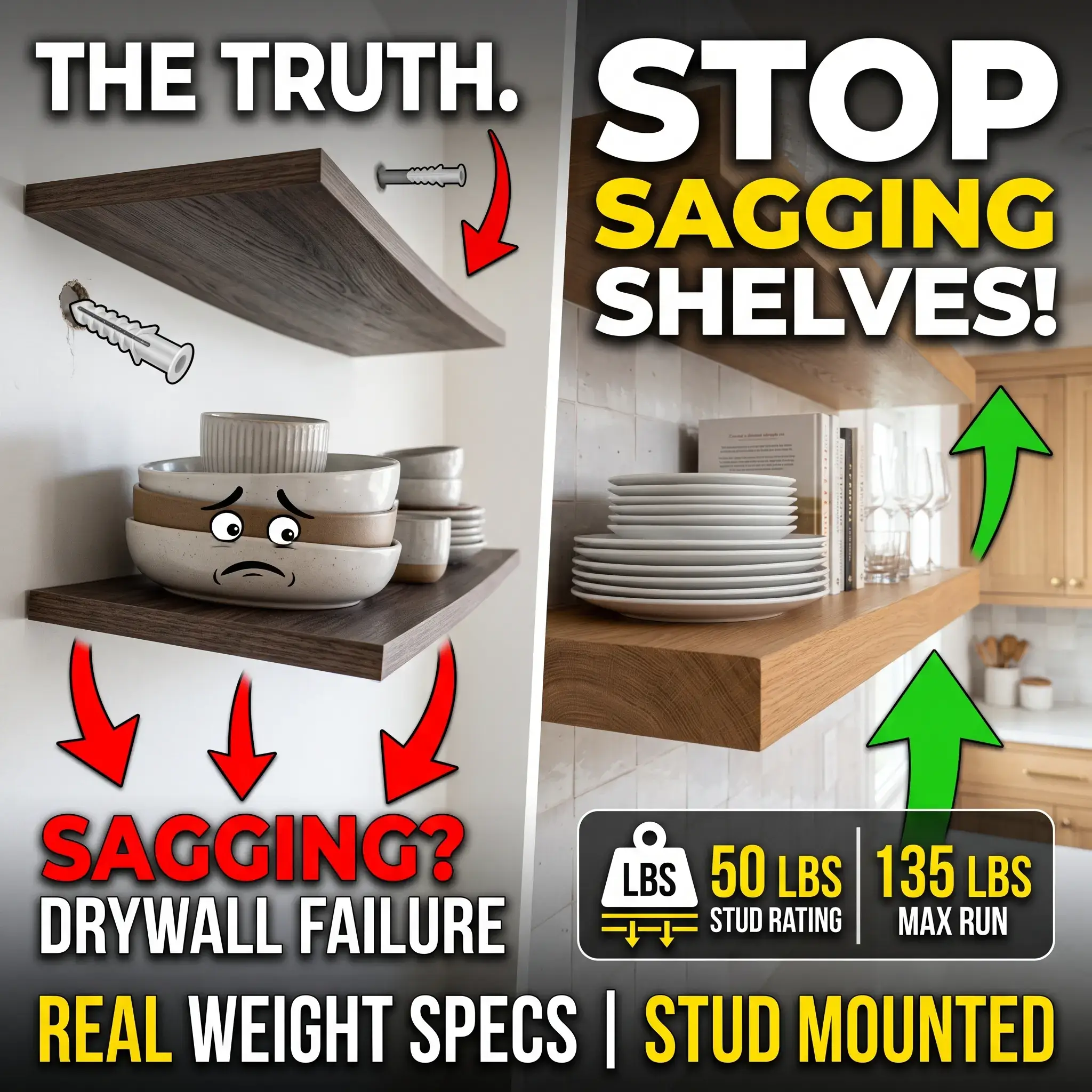
A floating shelf looks clean on a wall, but gravity works against it every second. Most wall shelves fail for two reasons: people mount them with weak drywall anchors, or they choose boards that are too narrow for daily use. A sagging shelf ruins your room design and risks breaking your dishes.
You do not need to guess your layout or wonder if your drywall will hold. Here are seven practical design ideas arranged by room, complete with exact measurements, load capacities, and styling lists you can use right away.
1. The White Oak Kitchen Dinnerware Run
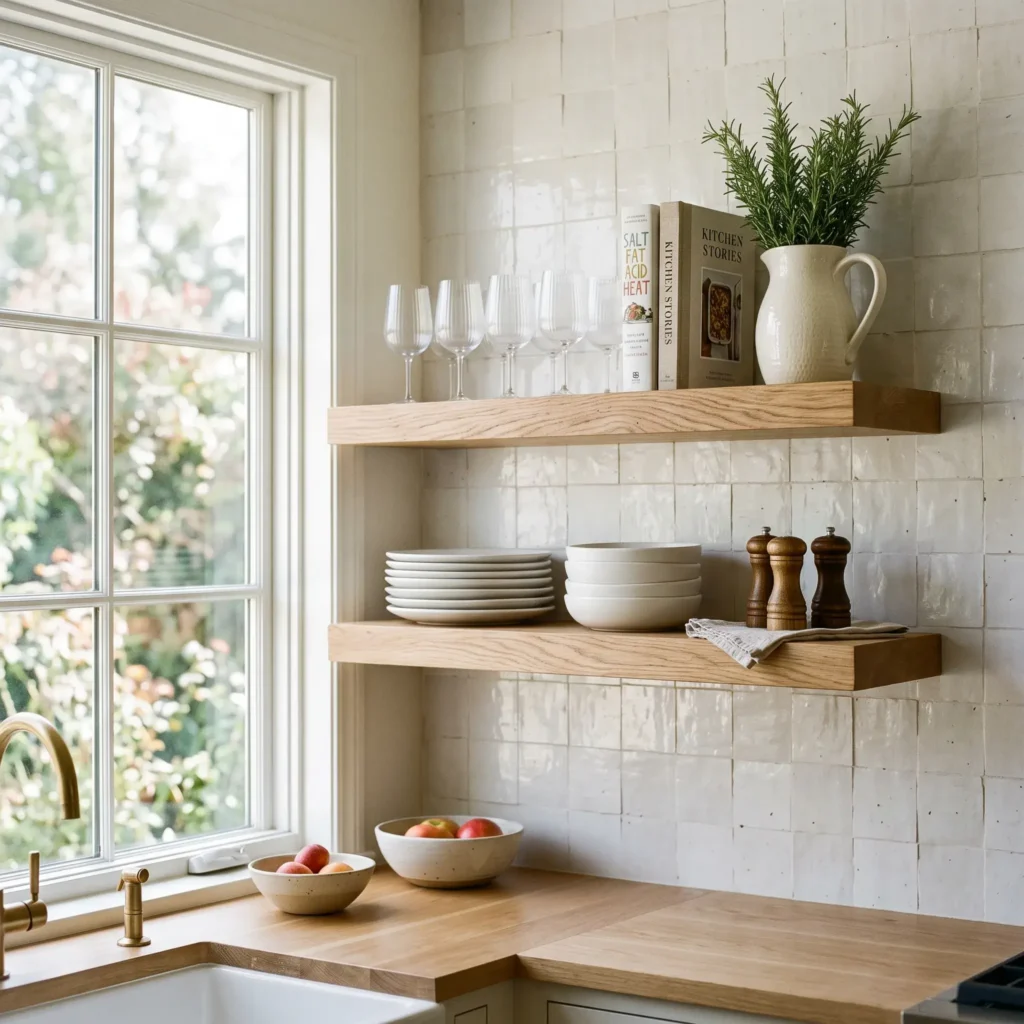
Open kitchen shelving keeps daily dishes within reach and breaks up heavy runs of closed upper cabinets. Standard dinner plates measure 10.5 inches across, so narrow decorative ledges fail here. You need deep planks secured directly into wall studs.
Specifications
- Dimensions: 11 inches deep, 2 inches thick, 48 inches long
- Material: Solid White Oak with a clear matte polyurethane finish
- Weight Capacity: 45 pounds per stud connection (135 pounds total across three studs)
- Mounting Hardware: Solid steel blind rod bracket welded to a backplate
- Recommended Height: 18 to 20 inches above the kitchen counter
- Featured Products:
- 10.5-inch matte ceramic dinner plates in warm white
- 6-inch matching stoneware bowls
- Ribbed glass drinking tumblers
- Natural beechwood salt and pepper grinders
- Stoneware utensil crock with fresh herbs
2. The Over-the-Toilet Bathroom Linen Perch
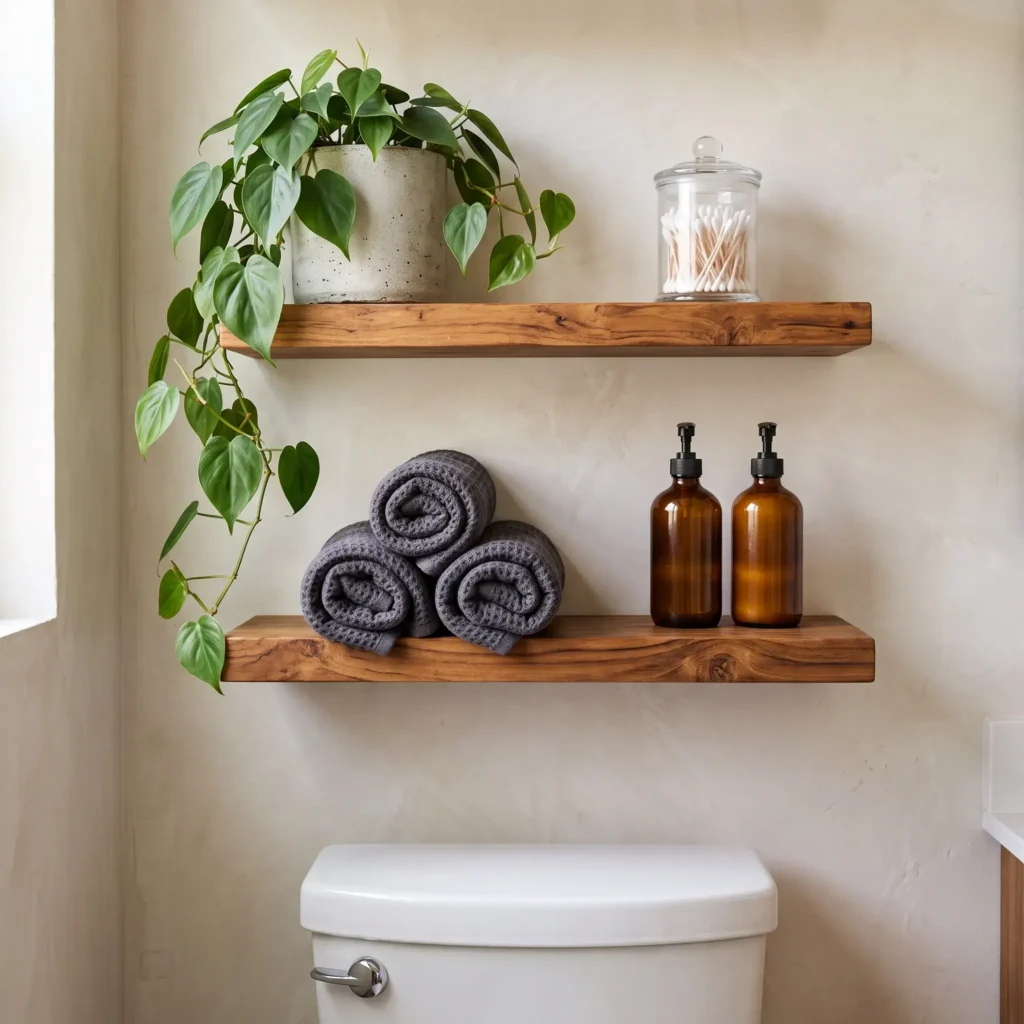
Bathrooms collect humidity and have narrow clearance paths. Installing a shelf that sticks out too far causes bumped heads when standing up. Sticking to a shallow depth keeps the walkway clear while giving you storage for clean towels and daily toiletries.
Specifications
- Dimensions: 7 inches deep, 1.5 inches thick, 28 inches long
- Material: Solid Teak or Hard Maple sealed with a moisture-resistant conversion finish
- Weight Capacity: 30 pounds total across two wall studs
- Mounting Hardware: Concealed dual steel blind rods
- Recommended Height: 12 inches above the toilet tank lid
- Featured Products:
- Waffle-knit linen hand towels in slate gray
- 16-ounce amber glass soap dispensers with black pumps
- 4-inch raw concrete planter pot
- 8-ounce glass apothecary jar with glass stopper
Check out more Interior Ideas
3. The Living Room Media Wall Frame
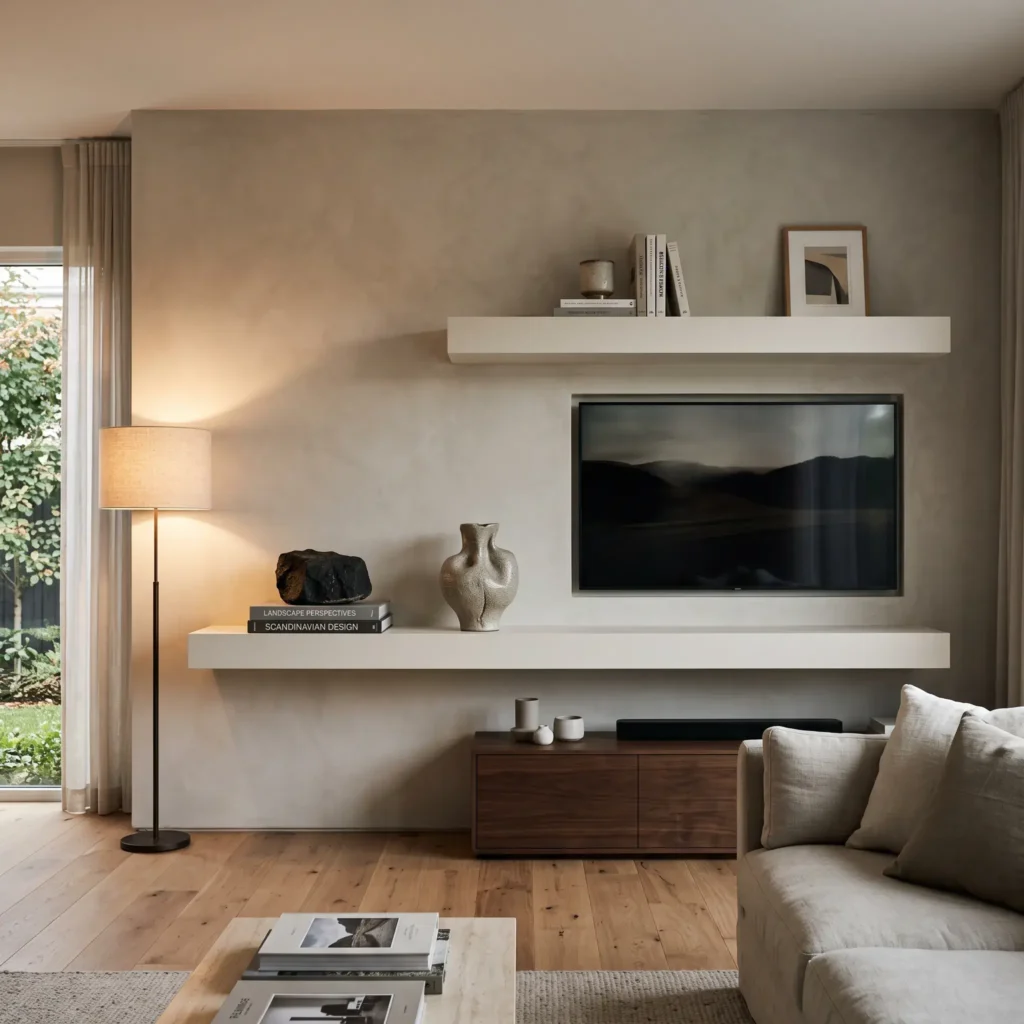
Large wall-mounted televisions can look like plain black boxes on an empty wall. Placing asymmetrical floating shelves around the screen balances the visual weight of the television without crowding the screen.
Specifications
- Dimensions: 9 inches deep, 3 inches thick, 60 inches long
- Material: Mitered maple plywood box-beam with satin off-white lacquer
- Weight Capacity: 50 pounds total load
- Mounting Hardware: Concealed continuous aluminum cleat anchored into three studs
- Recommended Height: Lower shelf mounted 8 inches to the side and below the screen
- Featured Products:
- Cloth-bound art and architecture books
- Rough black basalt stone object
- Unglazed terracotta bud vase
- Matte black wire decorative sphere
4. The Reclaimed Timber Fireplace Mantel
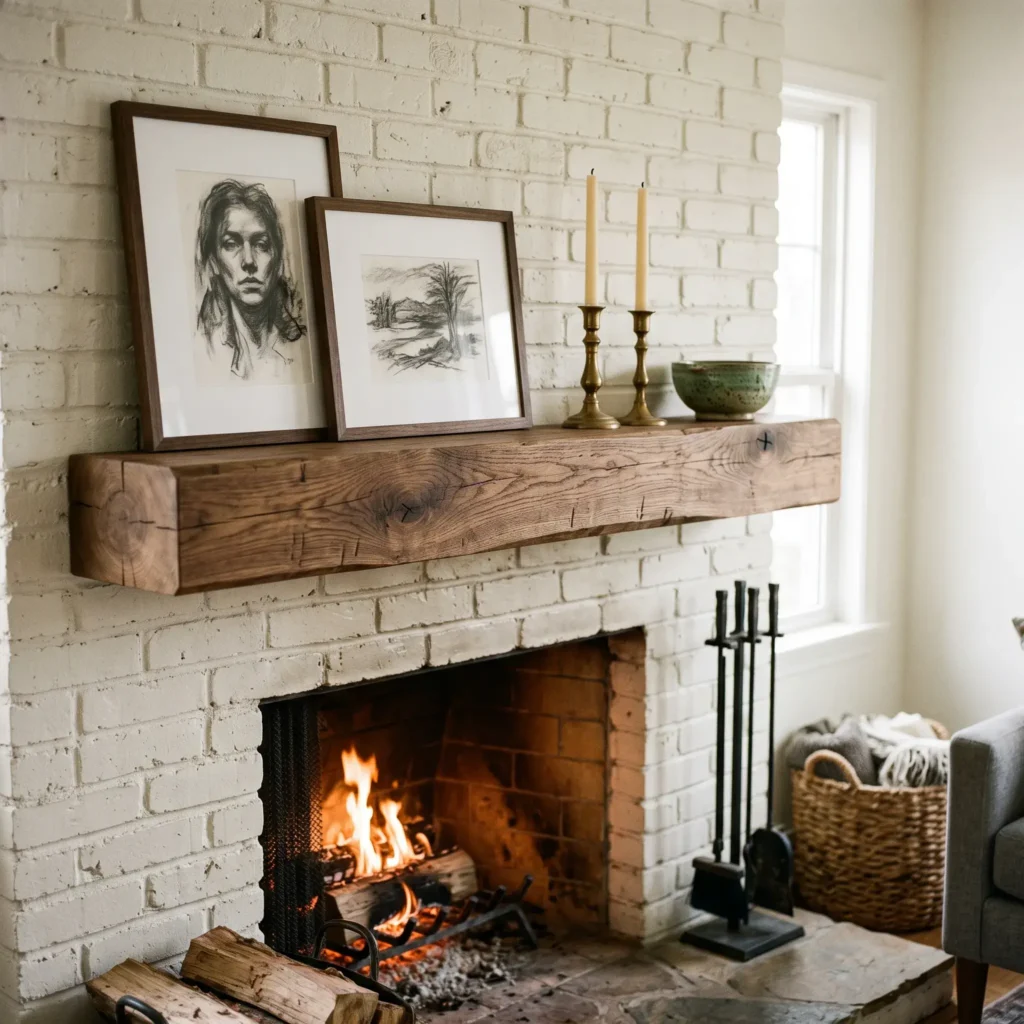
A heavy timber shelf above a fireplace draws the eye and gives you a stable base for framed prints and brass accents. This installation must withstand rising warm air and support substantial physical weight.
Specifications
- Dimensions: 8 inches deep, 5 inches thick, 66 inches long
- Material: Solid reclaimed white pine or walnut timber with sealed natural grain
- Weight Capacity: 80 pounds distributed load
- Mounting Hardware: 3/4-inch threaded steel rods anchored directly into masonry with epoxy
- Recommended Height: Minimum 12 inches above the firebox opening
- Featured Products:
- 11×14-inch thin black aluminum picture frames
- Heavy solid spun-brass taper candle holders
- Unscented 10-inch beeswax taper candles in ivory
- Low ceramic catchall dish in sage green
5. The Home Office Desk Perch and Reference Library
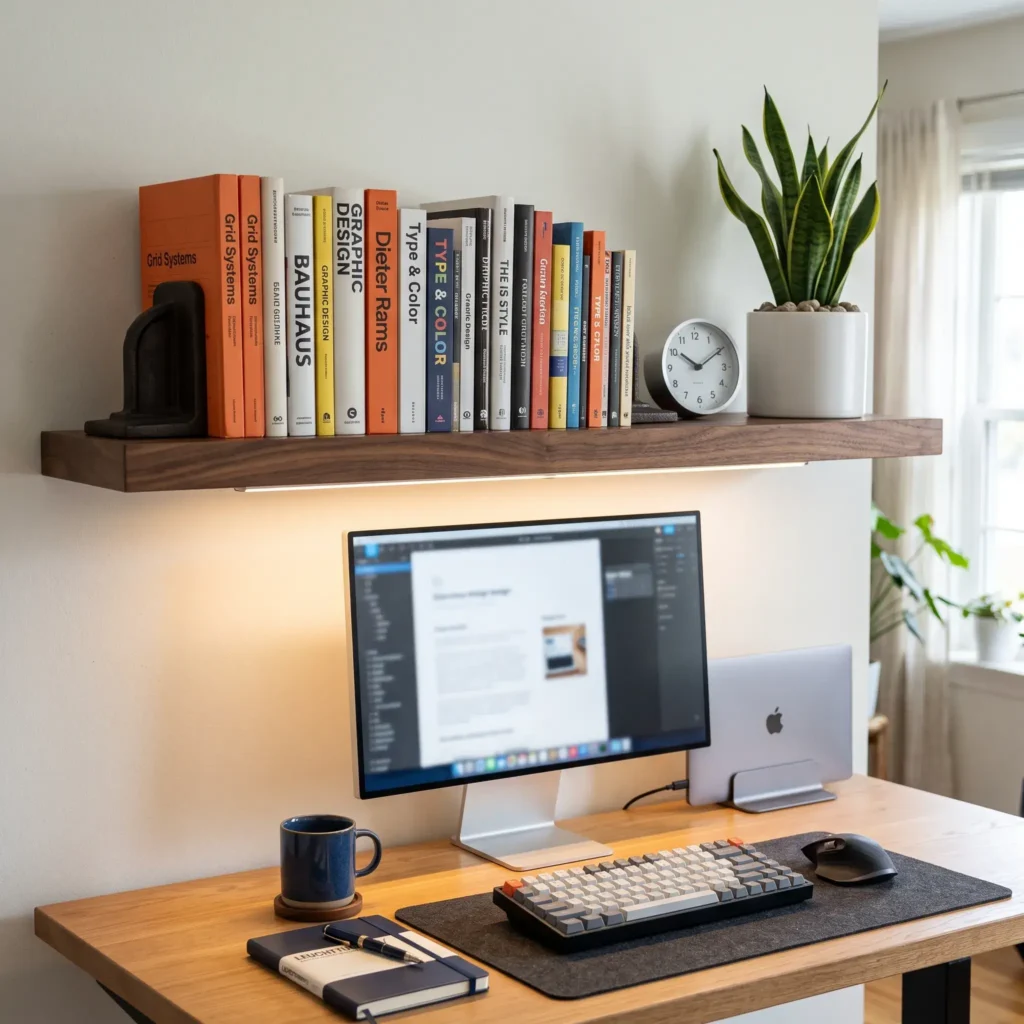
Desk surfaces get messy fast when notebooks, hard drives, and desk lamps fight for space. Deep floating shelves mounted directly above your workspace keep reference materials accessible without eating your desktop room.
Specifications
- Dimensions: 12 inches deep, 1.75 inches thick, 54 inches long
- Material: Baltic birch core with solid walnut edge banding
- Weight Capacity: 40 pounds per linear foot
- Mounting Hardware: Heavy-duty steel backplate with three 1/2-inch support pins
- Recommended Height: 16 to 18 inches above the desktop work surface
- Featured Products:
- Heavy cast iron angled bookends
- Minimalist aluminum analog desk clock
- 5-inch matte white ceramic plant pot
- Hardcover typography and architecture books
6. The Floating Bedside Table Plinth
Traditional nightstands crowd small bedrooms and make floor cleaning difficult. A floating shelf mounted right at mattress height keeps floor lines open and creates a lighter look in compact bedrooms.
Specifications
- Dimensions: 10 inches deep, 2.5 inches thick, 20 inches long
- Material: Solid Ash wood finished in a natural clear seal
- Weight Capacity: 25 pounds
- Mounting Hardware: Dual steel blind pins secured into two separate wall studs
- Recommended Height: Flush with the top of your mattress
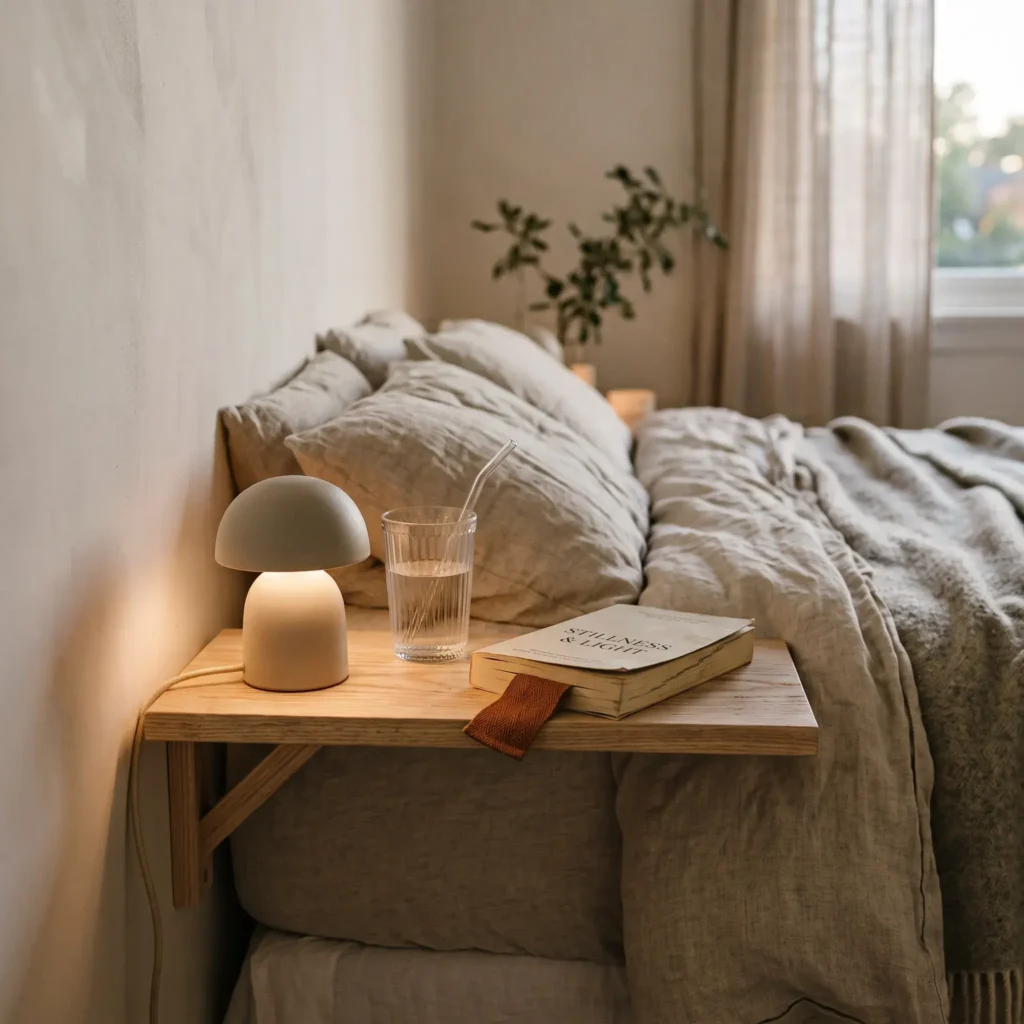
- Featured Products:
- Ceramic dome table lamp with cloth cord
- Fluted clear glass water carafe with matching tumbler
- Hardback reading journal with linen cover
7. The Sunlit Window Sill Botanical Span
Deep window casings often turn into wasted space. Running a floating shelf straight across a deep window opening gives indoor houseplants direct sunlight without blocking the view into the room.
Specifications
- Dimensions: 8 inches deep, 1.25 inches thick, sized to fit the casing
- Material: Solid Hard Maple or 1/2-inch tempered safety glass
- Weight Capacity: 35 pounds across the span
- Mounting Hardware: Side-pocket brackets fastened directly into the window jack studs
- Recommended Height: Lower third of the window opening
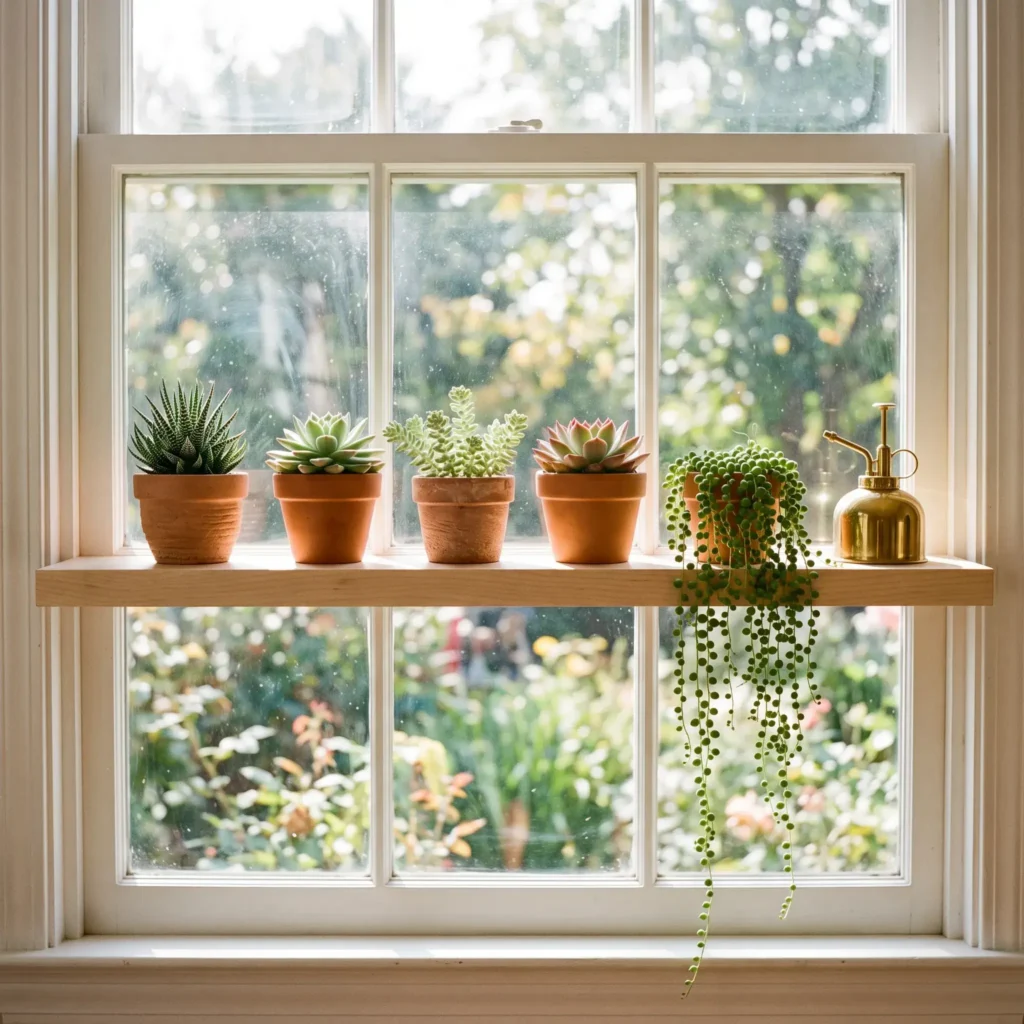
- Featured Products:
- Aged miniature terracotta pots in 3-inch and 4-inch sizes
- Spun-brass indoor mini watering can
- Assorted live succulents and trailing plants
Structural Mechanics: Why Wall Shelves Pull Forward
A standard bookcase transfers its weight straight down to the floor. A floating shelf does not. Because it has no vertical legs, it acts as a lever arm pulling outward against the wall.
When you put items on a shelf, downward weight creates a rotational bending moment:
M=F⋅dc
In this formula, F is the total weight of the items plus the shelf board. The variable dc is the distance from the wall to the center of that weight.
Shelf depth acts as your lever arm. If you put 40 pounds on a 12-inch-deep shelf, that weight exerts twice as much rotational pulling force on your top wall fastener as the same weight on a 6-inch shelf. Deeper shelves pull on screws with substantial mechanical advantage.
Safe Weight Limits Across Wall Types
| Wall Structure | Mounting Fastener | Safe Load Limit Per Stud | Maximum Recommended Depth |
|---|---|---|---|
| Wood Studs (2×4 / 2×6) | 1/2-inch solid steel blind rods into timber | 45 to 50 lbs | 12 to 14 inches |
| Poured Concrete / Brick | Steel expansion sleeve bolts | 75 to 100 lbs | 14 to 16 inches |
| Steel Studs (Light Gauge) | Steel toggle bolts through metal flange | 20 to 30 lbs | 8 to 10 inches |
| Hollow Drywall (No Stud) | Heavy-duty steel toggle bolts | 10 to 15 lbs total | 6 to 8 inches (Light items only) |
Never mount heavy book collections or ceramic dinnerware into hollow drywall using plastic push-in anchors. The forward leverage will crush the gypsum core and pull the anchors completely out of the wall. Always locate wall studs with a stud finder and drive structural screws at least 2.5 inches deep into solid wood.
Sag Prevention: Beam Deflection and Wood Selection
A sagging shelf looks bad, but it also causes round glassware to roll forward. Two mechanical rules determine whether your board stays straight over time:
- Span Length Multiplies Sag: Center sag scales to the fourth power of unsupported span length (L4). If you double the distance between support pins, your board sags sixteen times more under the same load. Keep unsupported spans between 30 and 36 inches to stop noticeable bowing.
- Thickness Stops Sag: Board stiffness scales cubically with thickness (h3). Doubling your board thickness from 1 inch to 2 inches makes the shelf eight times stiffer under the exact same weight.
The Problem with MDF and Viscoelastic Creep
Many commercial store-bought shelves use medium-density fiberboard (MDF) covered in thin laminate. MDF works fine for light knickknacks, but it suffers from severe viscoelastic creep.
Under continuous weight, the glue binders holding the compressed wood fibers together slowly stretch. In humid rooms like kitchens and bathrooms, MDF shelves will sag within a year, even when the items on them fall within the stated weight capacity.
If you plan to store books or dishes, select solid hardwoods like white oak, hard maple, or walnut. Their long, natural wood fibers resist long-term bending and keep your display level.
| Material Type | Stiffness (Modulus of Elasticity) | Max Unsupported Span at 30 lbs/ft | 5-Year Sag Risk | Moisture Resistance |
|---|---|---|---|---|
| Solid White Oak | ~1,780,000 psi | 36 to 42 inches | Very Low | High |
| Solid Hard Maple | ~1,830,000 psi | 36 to 44 inches | Very Low | High |
| Baltic Birch Plywood | ~1,300,000 psi | 30 to 34 inches | Low | Medium-High |
| Solid White Pine | ~1,200,000 psi | 28 to 32 inches | Moderate | Medium |
| Standard MDF | ~450,000 psi | 18 to 22 inches | Severe | Low (Swells easily) |
Standard Clearances for Every Room
Check these vertical and horizontal clearance standards before you mark drill holes in your wall:
- Kitchen Counters: Keep your lowest shelf 18 to 20 inches above the counter surface. This leaves space for countertop appliances like blenders and coffee machines. Use a shelf depth between 10 and 12 inches so standard dinner plates fit securely without sticking out.
- Over-the-Toilet Shelving: Leave 10 to 14 inches between the top of the toilet tank lid and the bottom shelf. Keep shelf depth to 7 or 8 inches so you do not hit your head when standing.
- Living Room Sofas: Hang shelves 8 to 12 inches above the sofa back cushion. Set your shelf run length to equal 75% to 100% of your total sofa width so the wall feels proportionate.
- Home Office Desks: Mount your first shelf 16 to 18 inches above the desk top. This leaves enough room for desktop computer monitors and keeps books within arm reach.
Curatorial Styling Rules
Crowding every inch of a shelf with small objects creates visual clutter. When items sit too close together, individual details disappear.
Use these three styling rules to keep your arrangement balanced:
1. Leave 30% to 40% Negative Space
Intentional empty space makes an arrangement look deliberate. Keep roughly one-third of the shelf surface bare. This shows off the natural wood grain, exposes the wall texture behind the shelf, and gives individual objects room to stand out.
2. Use Scalene Triangulation
Group objects in odd numbers, preferably in sets of three. Instead of choosing items of identical height, arrange them in an uneven triangle:
- One tall vertical piece: A framed sketch, a tall branch in a stoneware jug, or a slender vase.
- One mid-height piece: A textured ceramic pot, a candle holder, or a small plant.
- One low anchor piece: Two hardcover books stacked flat, or a shallow stone dish.
Place the peak of the triangle slightly off-center to create visual interest that moves the eye across the display.
3. Keep Heavy Objects on Lower Tiers
Place large, dense, dark items on the bottom shelf or near the outer edges of a run. Keep heavy art books, large ceramic bowls, and stone pots low. Reserve thin glassware, small picture frames, and slender metal candle holders for upper tiers. This layout keeps the wall feeling visually grounded.
Frequently Asked Questions
How much weight can a floating shelf hold?
A floating shelf anchored into wooden wall studs with solid steel rods holds 40 to 50 pounds per stud. A four-foot shelf fastened into three separate studs holds 120 to 150 pounds of distributed weight. If you mount a shelf into hollow drywall using toggle anchors, keep the total weight under 15 pounds to prevent wall damage.
Can you mount kitchen floating shelves into drywall without studs?
No. Stacked dinner plates, mugs, and bowls create dynamic loads between 30 and 45 pounds per linear foot. Drywall anchors cannot handle the forward rotational leverage caused by heavy dishes on an 11-inch shelf. Always screw kitchen shelving brackets directly into wooden or metal framing studs.
What is the ideal shelf depth for books?
Standard paperback and hardcover books need 9 to 11 inches of shelf depth. Large art books and photography monographs need 11 to 12 inches. Vertical spacing between shelves should measure 12 to 14 inches so books slide out without rubbing against the shelf above.
Why do floating shelves tilt down over time?
Forward tilt happens when wall fasteners pull loose from drywall, internal bracket rods bend under excess weight, or the board is made from composite fiberboard that has stretched under load. To fix this, use solid steel mounting brackets and switch from composite boards to solid hardwoods like oak or maple.
How do you conceal LED lighting under a floating shelf?
Route a channel measuring 5/8-inch wide and 3/8-inch deep along the underside of your board before installation. Press an aluminum track into that groove, install a 24V COB (Chip-on-Board) continuous LED strip inside, and clip an opal diffuser lens over the top. This produces a smooth, dot-free line of light across your counters.
Getting Started with Your Installation
A successful floating shelf project begins with structural planning before decorative styling. Measure your dinnerware or books, find your wall studs with a reliable stud finder, and choose solid hardwoods that will not bend under load. Once your brackets are anchored into wall framing, styling becomes straightforward. Keep one-third of the board surface open, arrange your accents in uneven heights, and place heavy objects on lower tiers to create a balanced, durable wall feature.