10 Interior Design Trends Shaping Modern American Homes
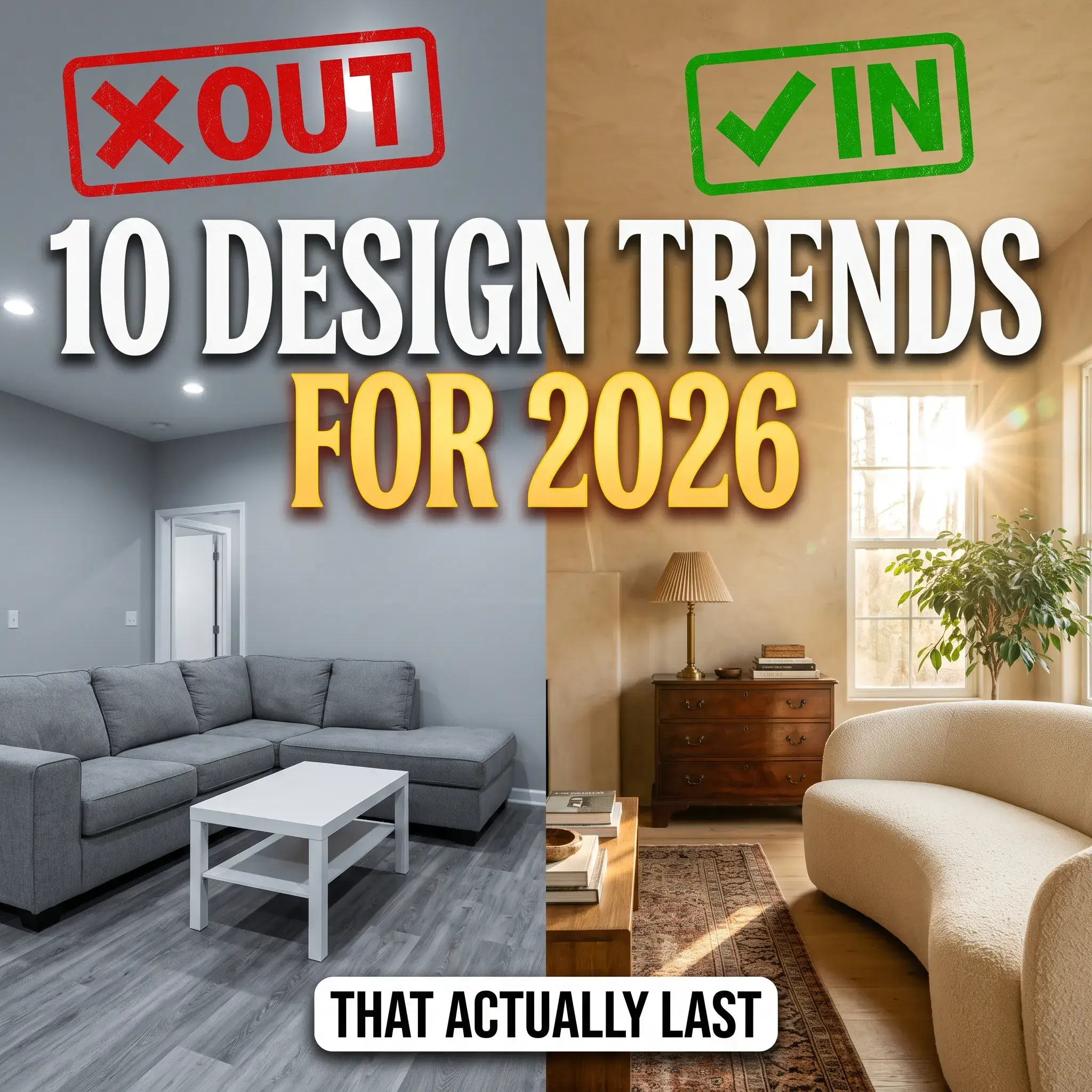
Home renovations cost too much money to risk on temporary fads. Over the past decade, builders filled houses with sterile gray flooring, all-white kitchens, and wide-open layouts that echo. Homeowners are tired of living in spaces that feel like cold hospital lobbies.
Industry data from the American Society of Interior Designers (ASID) shows a clear shift. People want warmth, quiet rooms, and natural materials that last. They want spaces with genuine character and daily comfort.
Here are the top ten design movements giving American homes warmth, privacy, and lasting value.
1. Full-Spectrum Color Drenching
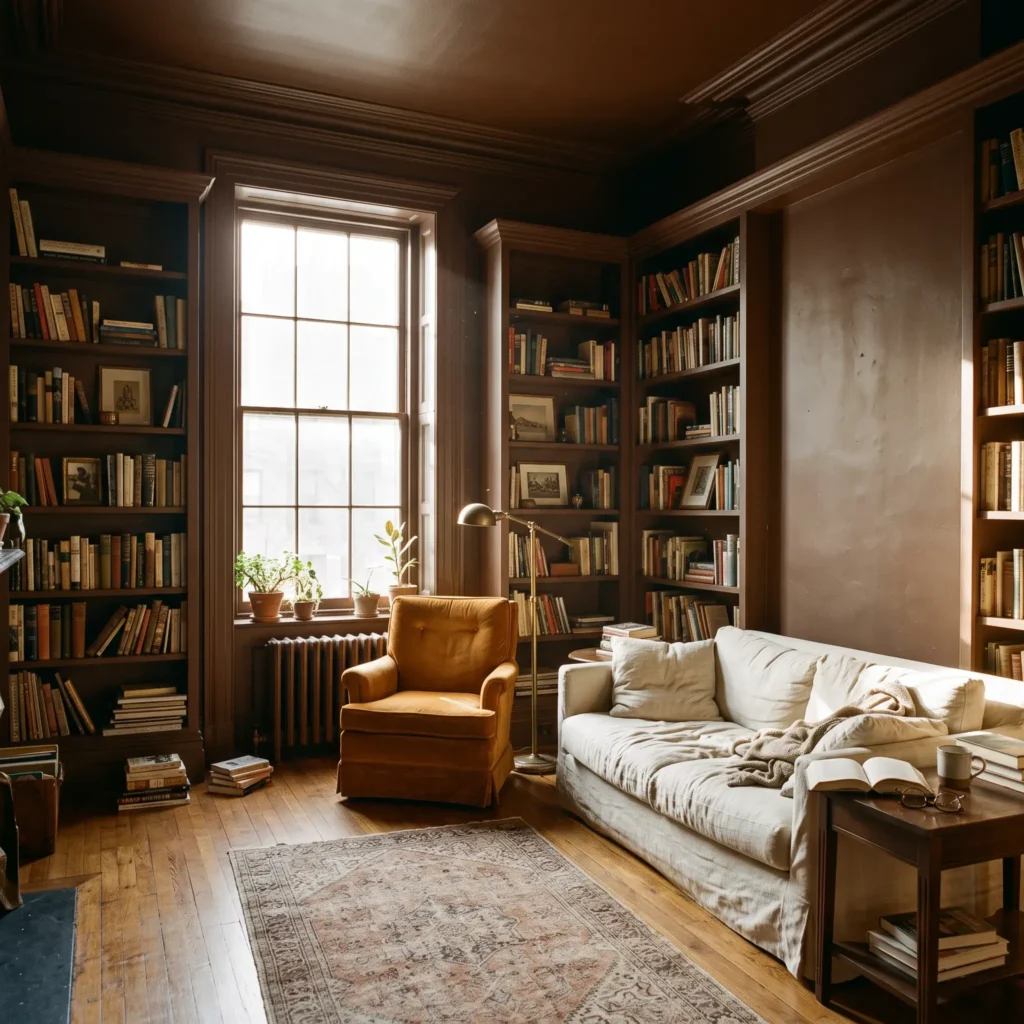
Color drenching removes the stark contrast of white ceilings, white baseboards, and painted walls. Instead, you paint every surface in a room using a single hue or close tonal variations. You coat the drywall, crown molding, window trim, doors, and heating covers with the exact same color.
Eliminating bright white trim lines softens room edges. In small powder rooms or dens, this technique makes spaces feel larger because the eye moves without interruption. In primary bedrooms, it creates a cozy, restful environment.
How to Style It
Vary your paint sheens across surfaces to give the room visual depth:
- Ceilings: Use dead flat matte paint (0 to 3 percent sheen) to absorb glare and hide drywall flaws.
- Walls: Use velvet eggshell paint (10 to 15 percent sheen) for durability and soft light reflection.
- Trim and Baseboards: Use satin paint (25 to 35 percent sheen) to resist scuffs and define woodwork.
- Doors: Use semi-gloss or lacquer paint (75 to 90 percent sheen) to bounce light into the room.
Rich earth tones perform best for this technique. Choose deep chocolate brown, moss green, warm terracotta, or midnight navy. North-facing rooms receive cool daylight, so choose pigments with warm undertones to prevent a muddy look.
Products in This Space:
- Farrow & Ball Estate Emulsion in Salon Drab (Walls and Ceiling)
- Visual Comfort Studio Functional Task Floor Lamp in Hand-Rubbed Antique Brass
- Sixpenny Neva Chair in Amber Velvet Cotton
- Loloi II Layla Area Rug in Olive and Charcoal
- Rejuvenation Solid Brass Switch Plates in Aged Brass
2. Found Luxury and Layered Antiques
Found luxury replaces the sterile look of catalog furniture sets. Homeowners no longer want living rooms that look like they were purchased from a single store delivery. Instead, they build spaces around pieces collected over decades.
Survey findings from 1stDibs show that 39 percent of interior designers prioritize layered vintage styles, while 36 percent of project furnishings are now vintage or antique. This movement values solid hardwoods, natural surface patina, and historic craft. It creates a home that feels gathered over time rather than styled overnight.
How to Style It
Balance older pieces with modern shapes so your home stays fresh:
- Anchor the room with a solid antique. A pre-1920s mahogany chest of drawers or a walnut credenza works well.
- Pair dark wood furniture with a modern, low-profile sofa upholstered in natural linen.
- Hang contemporary art above an ornate carved mirror frame.
- Display real books on open shelving rather than turning book spines backward.
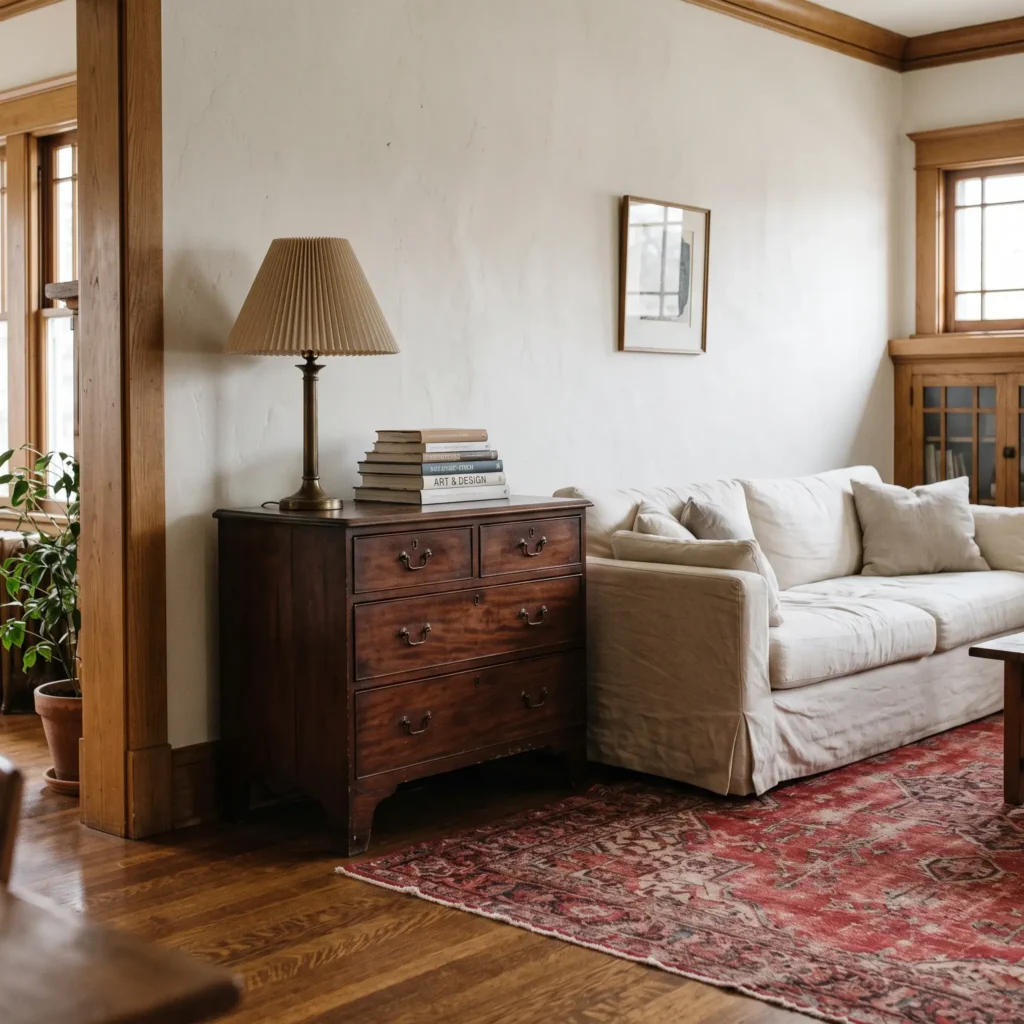
Products in This Space:
- Restoration Hardware Deconstructed 19th C. English Roll Arm Sofa in Belgian Linen
- Antique American Empire Mahogany Dresser (Late 19th Century)
- Currey & Company Jamie Young Pleated Table Lamp with Raw Brass Base
- Vintage Oushak Hand-Knotted Wool Area Rug
- CB2 Form Sculptural Ceramic Vessel in Matte Sand
Check out more Interior Ideas
3. Tactile Mineral Finishes and Lime Wash Walls
Builder-grade drywall finished with standard latex paint can look flat and synthetic under artificial light. Many homeowners are switching to mineral wall finishes like slaked lime wash, Roman clay, and Moroccan tadelakt.
These materials do more than add subtle texture. They change character as daylight shifts. Slaked lime contains mineral crystals that refract light across multiple angles throughout the day. Mineral plasters also support indoor air quality. They contain zero volatile organic compounds (VOCs) and resist mold growth naturally due to high surface alkalinity.
How to Style It
Apply mineral paints using wide, overlapping cross-hatch brush strokes to build depth without harsh lines:
- Traditional Lime Wash: Best for bedrooms, libraries, and living rooms where soft matte texture absorbs light.
- Roman Clay: Best for dining rooms and studies that need a smooth, stone-like feel.
- Moroccan Tadelakt: Best for shower stalls and wet rooms because the burnished soap finish repels water.
- Handmade Zellige Tiles: Best for kitchen backsplashes and fireplace surrounds to catch light across uneven tile faces.
Pair textured plaster walls with smooth accents like honed stone counters or crisp white oak cabinetry.
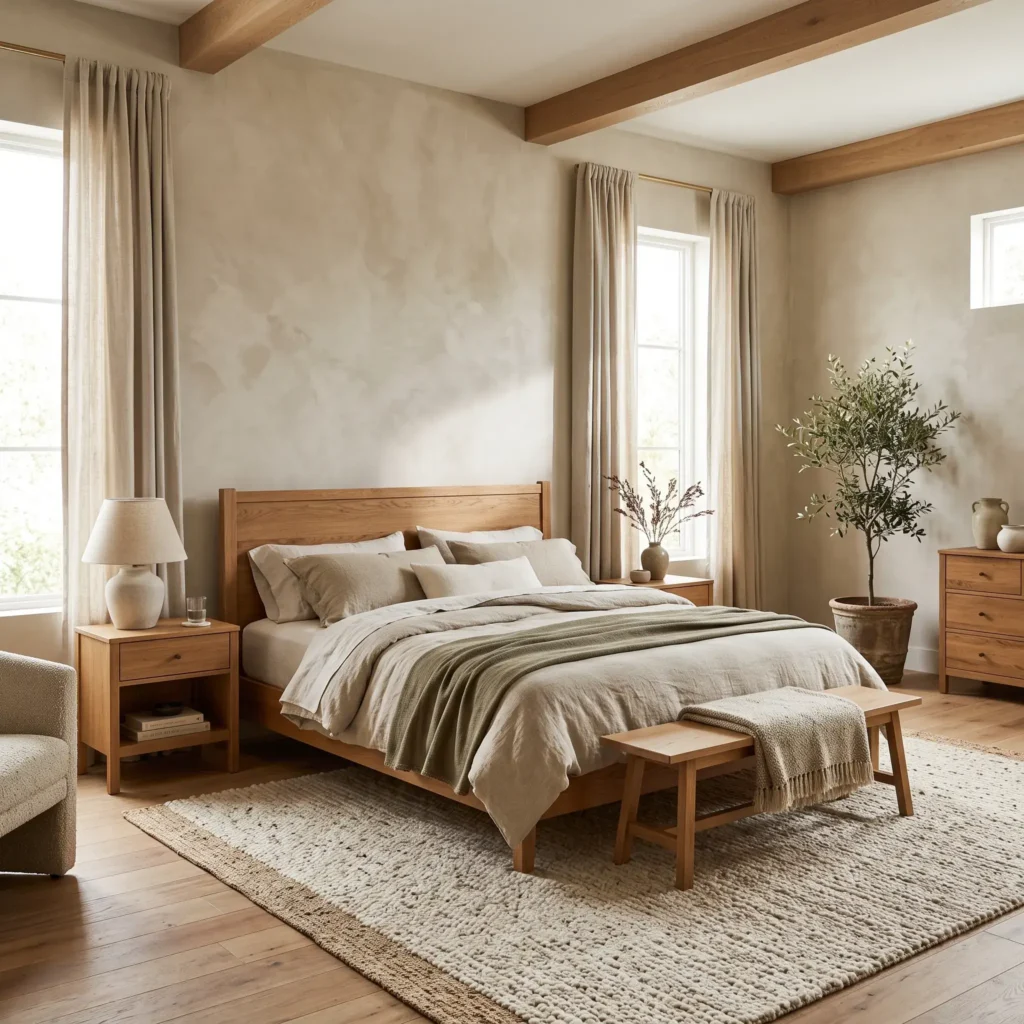
Products in This Space:
- Portola Paints Roman Clay in Table Linen
- Thuma The Bed in Natural White Oak
- Cultiver Cedar Washed Linen Duvet Cover Set
- Allied Maker Concentric Ceramic Wall Sconce
- Parachute Home Hand-Woven Wool Rug in Natural Putty
4. Curvilinear Forms and Fluid Furniture
Sharp 90-degree furniture corners are disappearing from modern floor plans. Current layouts favor rounded silhouettes, curved sofas, pill-shaped dining tables, and arched doorways.
Online search volume for curved and organic furniture has climbed by 210 percent. This preference improves physical movement through a room. Sharp rectangular sectionals often block walk paths in open layouts. Curved seating opens up perimeter floor space, guiding foot traffic smoothly from one room to another.
How to Style It
Use curved pieces to soften boxy architecture:
- Float a curved sofa in the center of your living room instead of pushing straight furniture against walls.
- Choose an oval or pill-shaped dining table for narrow dining spaces to improve walkway clearance.
- Pick upholstery fabrics with soft texture like bouclé, ribbed chenille, or boiled wool.
- Ground the seating area with a round wool rug.
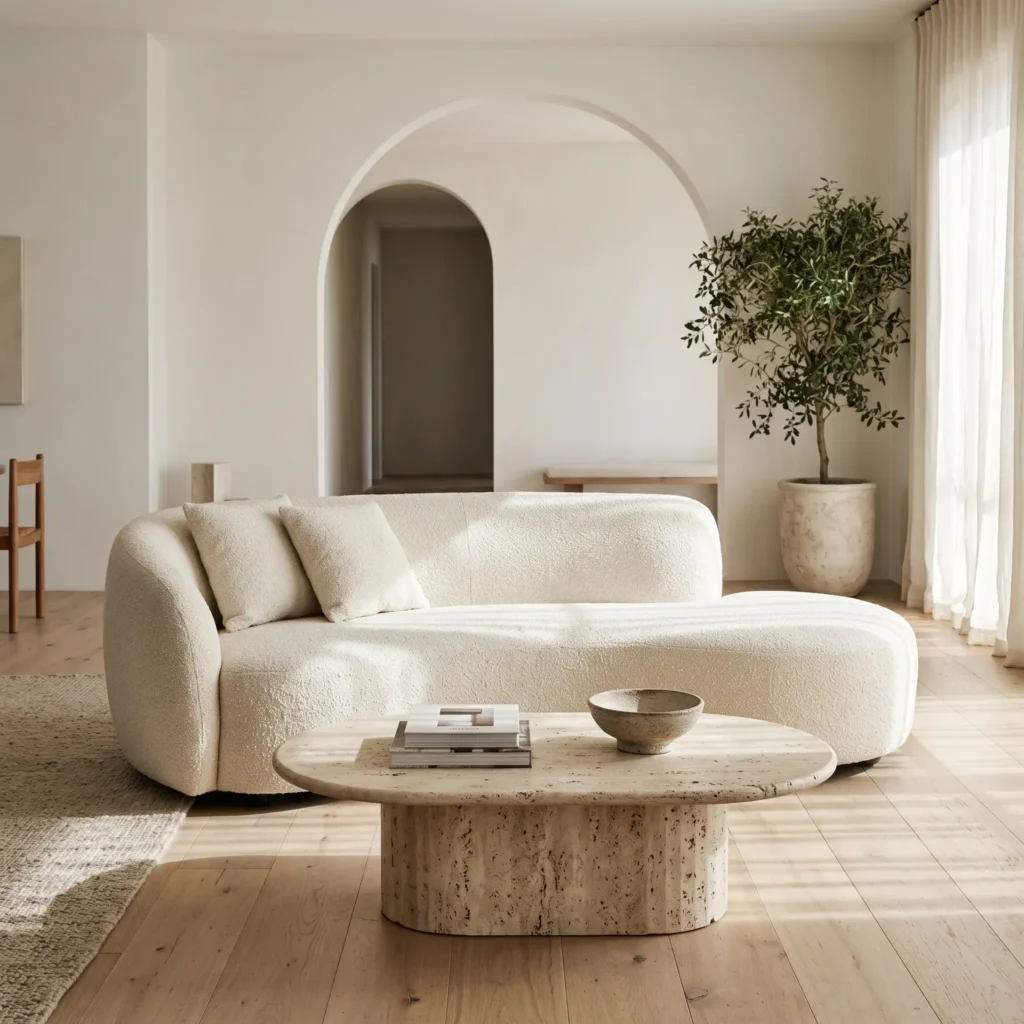
Products in This Space:
- Lulu and Georgia Amira Curved Sectional Sofa in Oatmeal Bouclé
- CB2 Horseshoe Honed Roman Travertine Coffee Table
- Crate & Barrel Arched Black Metal Wall Mirror
- Armadillo Agra Hand-Knotted Wool Rug in Pumice
- Schoolhouse Surface LED Brass Sconce
5. Broken-Plan Zoning and Reeded Glass Partitions
For years, builders tore down interior walls to create wide-open floor plans. Daily life revealed the drawbacks of that layout: noisy echoes, cooking smells traveling everywhere, and no privacy for remote work calls.
Broken-plan layouts fix these issues while keeping rooms bright and connected. Instead of solid drywall partitions, designers use industrial steel-framed glass doors, fluted glass screens, and double-sided shelving.
A fluted glass partition lets up to 80 percent of natural daylight pass through while blurring the view of countertop clutter. It cuts background noise by up to 32 decibels. Searches for secondary prep pantries and sculleries have climbed by 311 percent as homeowners move loud prep work behind dedicated doors.
How to Style It
- Install black steel pocket doors with reeded glass between your kitchen and living space.
- Use a slatted oak screen to separate an entryway from the living room without blocking airflow.
- Place a double-sided bookcase between your home office desk and family seating to reduce sound carry.
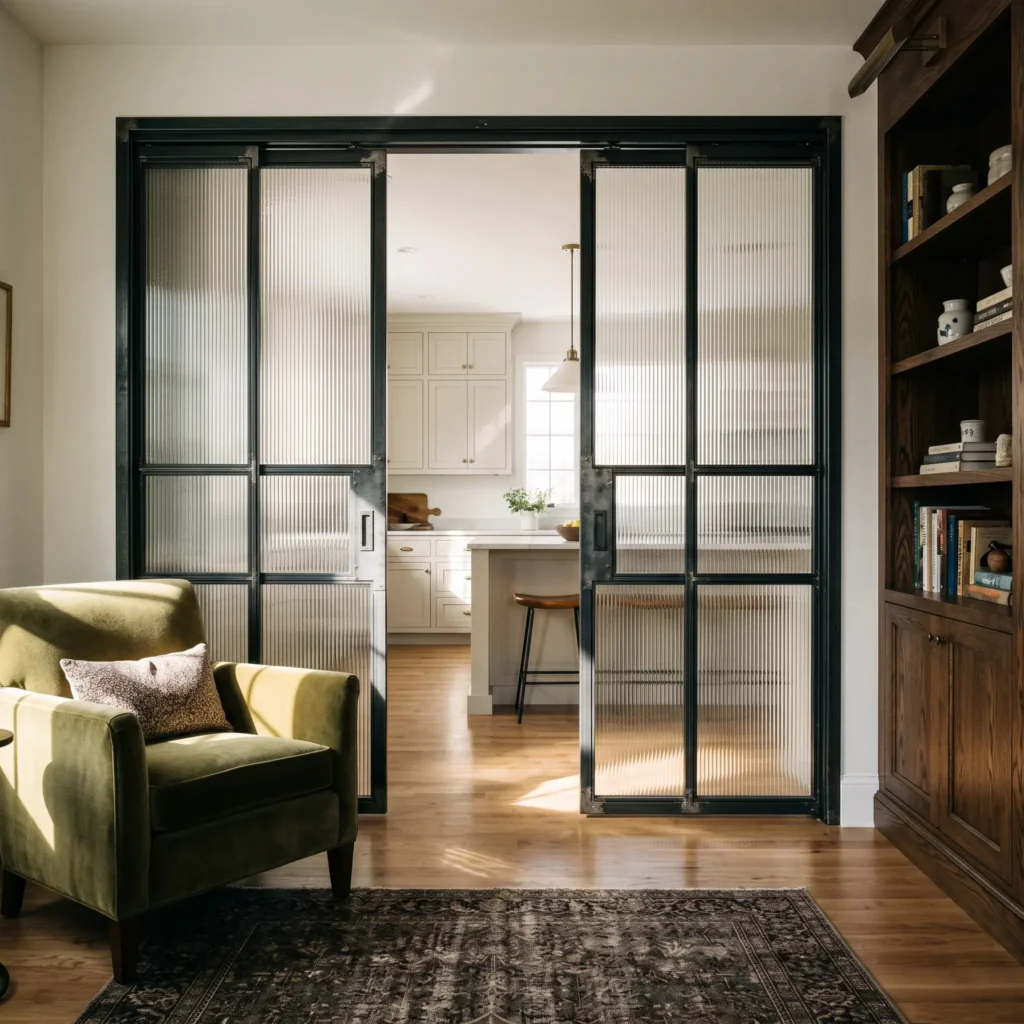
Products in This Space:
- Portella Custom Steel and Reeded Glass Interior Slider Door
- Room & Board Slim Bookshelf in Natural Walnut
- Arhaus Kipton Leather Armchair in Hand-Rubbed Olive
- Cedar & Moss Alto Surface Brass Flush Mount Light
- Chilewich Modern Striped Kitchen Runner Mat
6. Dramatic Veined Marble and Furniture-Grade Islands
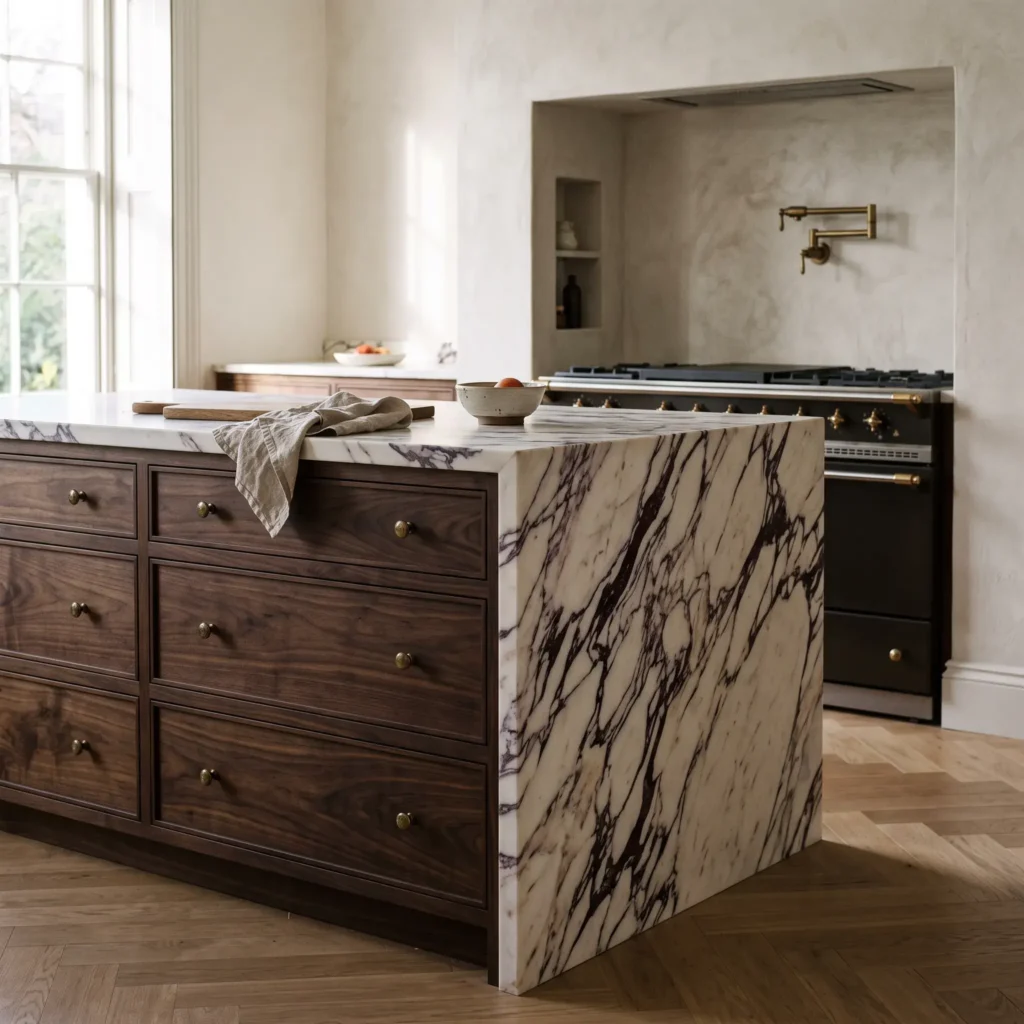
Kitchen islands are no longer plain white boxes topped with uniform quartz. Homeowners are investing in bold, natural stone slabs paired with custom furniture-grade woodwork.
Search volume for bold, colored marble has increased by 80 percent. Homeowners are selecting Calacatta Viola with its deep wine-red veining, dark green Verde Alpi, and earthy Rosso Levanto. Cabinetry is also changing. Kitchen islands now feature turned wooden feet, recessed plinths, and rich fumed oak stains that look like heirloom furniture.
How to Style It
- Balance bold stone: If your kitchen island features a heavily veined Calacatta Viola marble slab, use quiet perimeter counters like honed soapstone or Belgian bluestone.
- Choose a honed finish: Avoid high-gloss polished marble on kitchen counters. A honed or leathered finish hides water marks and small scratches far better.
- Add furniture details: Add turned wooden legs or open lower shelves to the island base so it looks like an authentic work table.
Products in This Space:
- Calacatta Viola Honed Marble Countertop Slab
- Waterworks Easton Bridge Kitchen Faucet in Unlacquered Brass
- Armac Martin Leebank Ribbed Brass Drawer Pulls
- DeVOL Kitchens Furniture-Grade Inset Walnut Cabinetry
- Serena & Lily Balboa Counter Stool in Natural Rattan and Ash
7. Warm Earth-Centric Minimalism
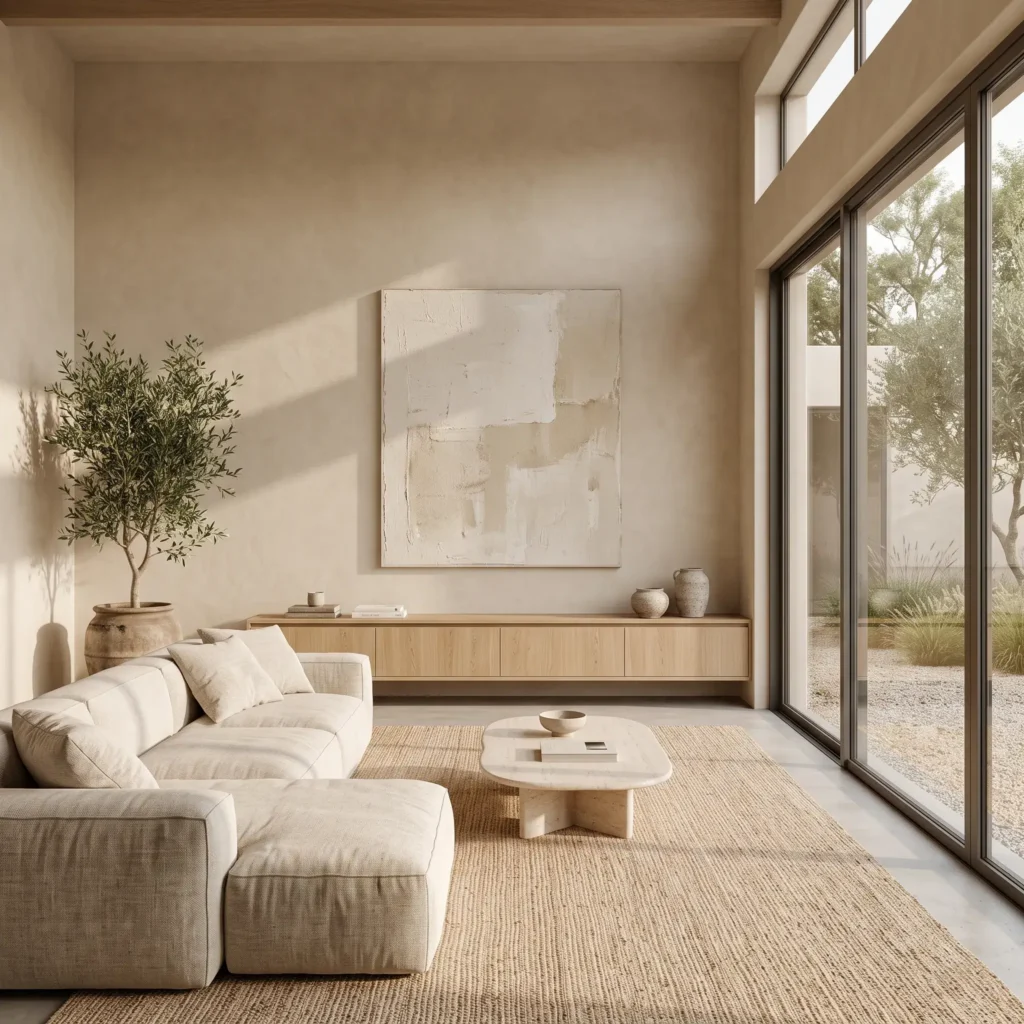
Cold blue-gray walls, shiny chrome fixtures, and glossy white cabinets are on the way out. Search volume for warm minimalism has climbed by 340 percent, while queries for cool gray palettes dropped by 62 percent.
Warm minimalism keeps the clean organization of modern design but uses grounded, nature-derived tones. The color palette focuses on mushroom, biscuit, raw umber, and warm stone. Walls feature chalky mineral coatings, while furniture uses natural white oak, unfilled Roman travertine, and slubbed linen.
How to Style It
- Use the 60-30-10 color rule: 60 percent warm taupe wall plaster, 30 percent natural oak millwork, and 10 percent dark bronze metal accents.
- Install floor-to-ceiling storage cabinets with touch-latches to hide appliances and daily clutter.
- Wash walls in indirect light by installing hidden 2700K warm LED strips inside ceiling reveals.
Products in This Space:
- Maiden Home The Muir Sofa in Oatmeal Washed Linen
- Menu Snaregade Oval Dining Table in Natural Light Oak
- Benjamin Moore Aura Interior Paint in Swiss Coffee (Matte Finish)
- Nordic Knots Grand Wool Rug in Almond
- Muuto Linear Steel Table Lamp in Burnt Orange
8. Invisible Infrastructure and Concealed Technology
Smart home systems make daily life easier, but visible screens, wires, and plastic controls can ruin a clean room design.
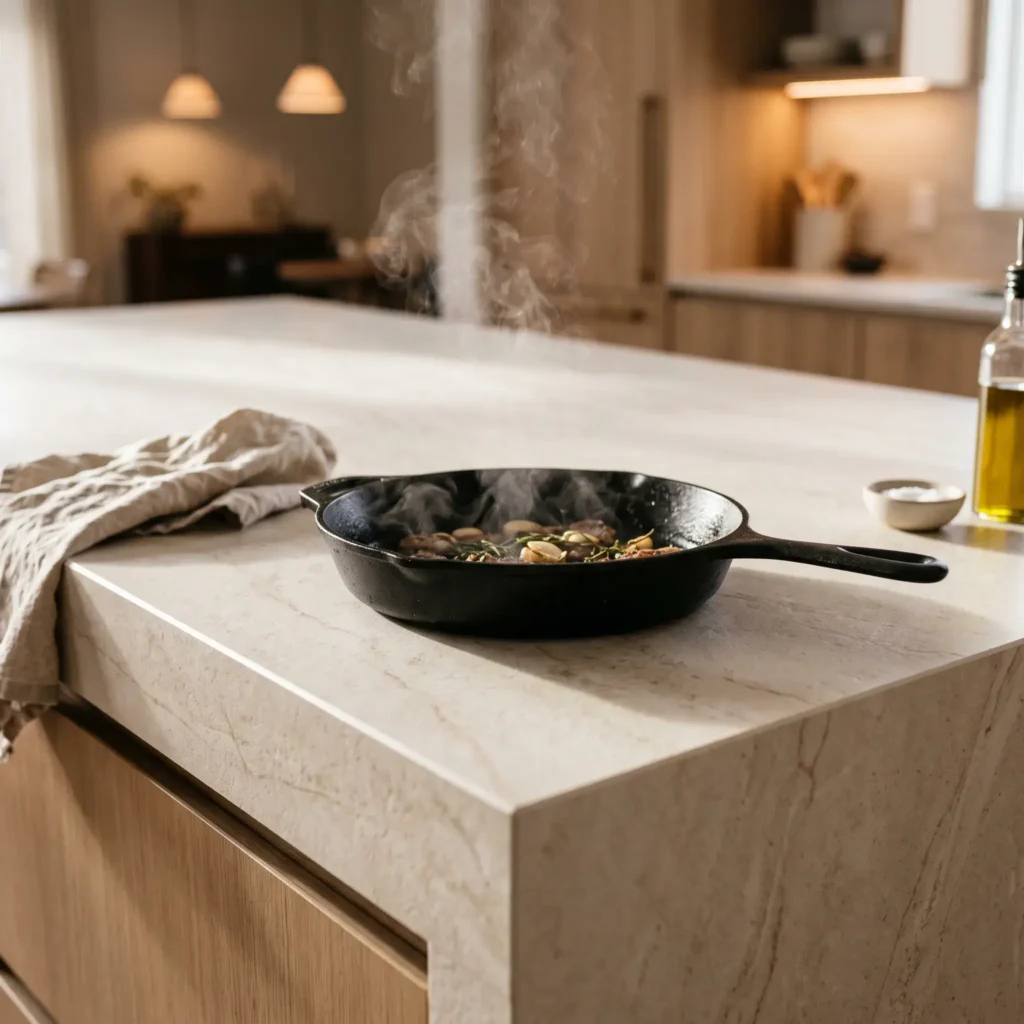
Home automation requests prioritizing concealed technology have increased by 94 percent. Equipment is now hidden flush behind building materials. Homeowners install sub-surface magnetic induction cooking coils directly beneath 20mm sintered porcelain countertops. The kitchen island serves as a clean food prep station, dining counter, and cooking surface all in one stone slab.
How to Style It
- Invisible Cooking: Install an under-counter induction unit (such as Invisacook) beneath dense porcelain stone. When turned off, the island looks like an unbroken stone prep table.
- In-Wall Audio: Install flat-diaphragm plaster-over speakers between wall studs, cover them with drywall compound, and paint over them. Sound travels through the wall without visible grilles.
- Hidden Power: Route wireless charging pucks into the underside of timber desk tops and wooden nightstands.
Products in This Space:
- Invisacook 4-Burner Sub-Surface Induction Unit
- Laminam 12mm Sintered Porcelain Stone Countertop Slab
- Amina Mobius Dual In-Wall Plaster-Over Architectural Speakers
- Samsung The Frame 65-Inch 4K TV with Custom Walnut Bezel
- Buster + Punch Solid Metal Flush Wall Outlets
9. Spa-Grade Restorative Wet Rooms
Primary bathrooms are shifting from plain utilitarian rooms into restorative recovery spaces. Search queries for home wet rooms have risen by 64 percent.
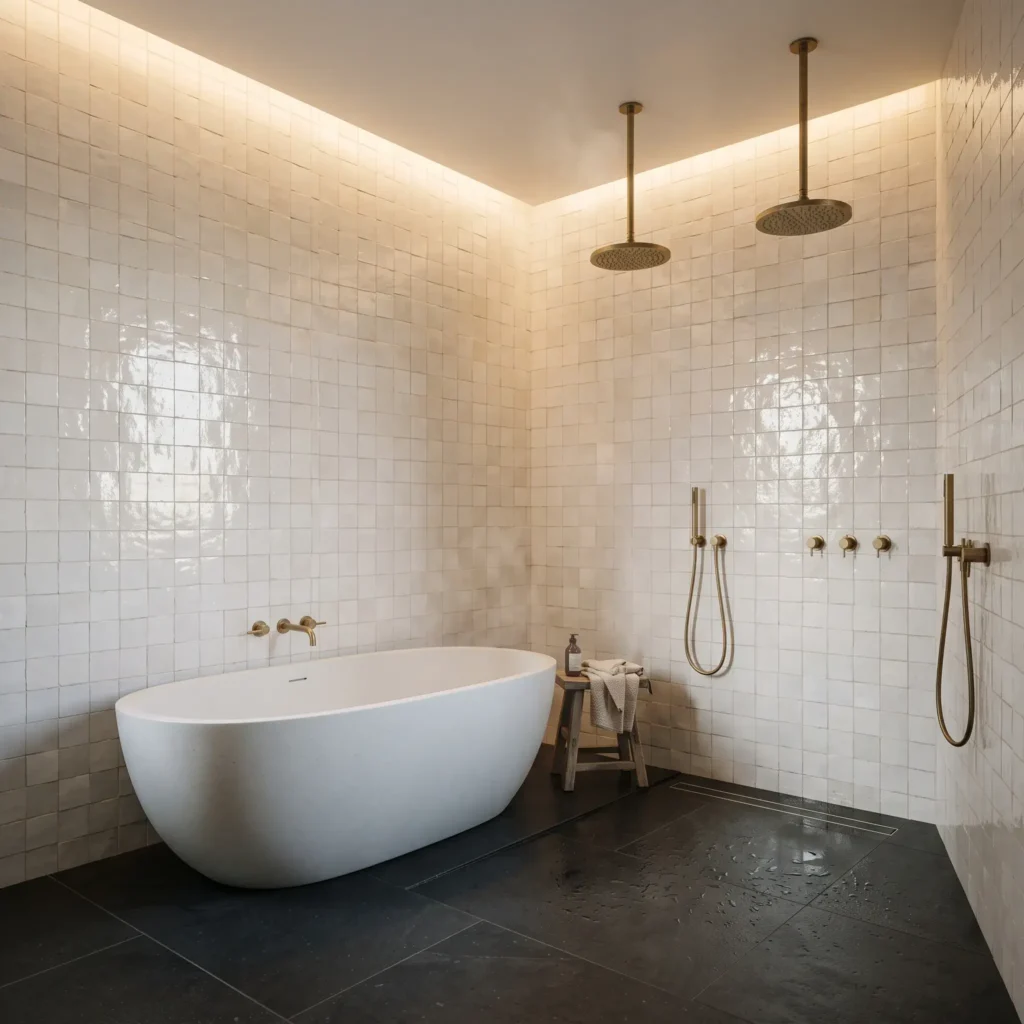
A wet room places a soaking tub and walk-in shower behind a single glass partition or waterproof threshold. This layout stops water spread, makes weekly cleaning easier, and creates a spacious, resort-quality atmosphere.
How to Style It
- Build curbless shower floors: Keep the floor level from the vanity to the shower to eliminate tripping points and open up sightlines.
- Install circadian lighting: Use dual-channel dim-to-warm LED fixtures (1800K to 4000K). Bright morning light wakes you up, while warm 1800K light at night helps you wind down.
- Use fragrant woods: Place a bench made of natural Western red cedar or Hinoki cypress inside the wet zone. Steam releases natural soothing cedar oils during showers.
Products in This Space:
- Badeloft Freestanding Stone Resin Soaking Tub in Matte White
- Kohler Purist Wall-Mount Rain Showerhead Trim in Vibrant Moderne Brushed Gold
- Cle Tile Handcrafted Moroccan Zellige Ceramic Tiles in Weathered White
- Mr. Steam Residential In-Wall Steam Shower Generator Kit
- Design Within Reach Skagerak Hinoki Wood Bathroom Stool
10. Neo-Deco Revival and Artisanal Lighting
As the centenary of the 1925 Paris Art Deco Exposition approaches, classic decorative details are returning. Modern Neo-Deco skips cold industrial fittings in favor of stepped plaster moldings, repeating arches, burled wood cabinets, and hand-blown glass lighting.
Design survey data from 1stDibs indicates that 27 percent of designers choose hand-blown Murano glass lighting, while 20 percent cite Art Deco revival as their primary design influence. Multi-tier glass chandeliers, reeded glass pendants, and heavy brass sconces serve as central room art.
How to Style It
- Hang a statement fixture: Place an oversized tiered glass prism chandelier over your dining table. It anchors the room even when switched off.
- Add stepped ceiling coving: Run stepped plaster molding around the ceiling edge to give flat drywall architectural dimension.
- Add burled wood accents: Use a burled walnut credenza, console table, or bar cart to bring rich, swirling wood grain into your entertaining area.
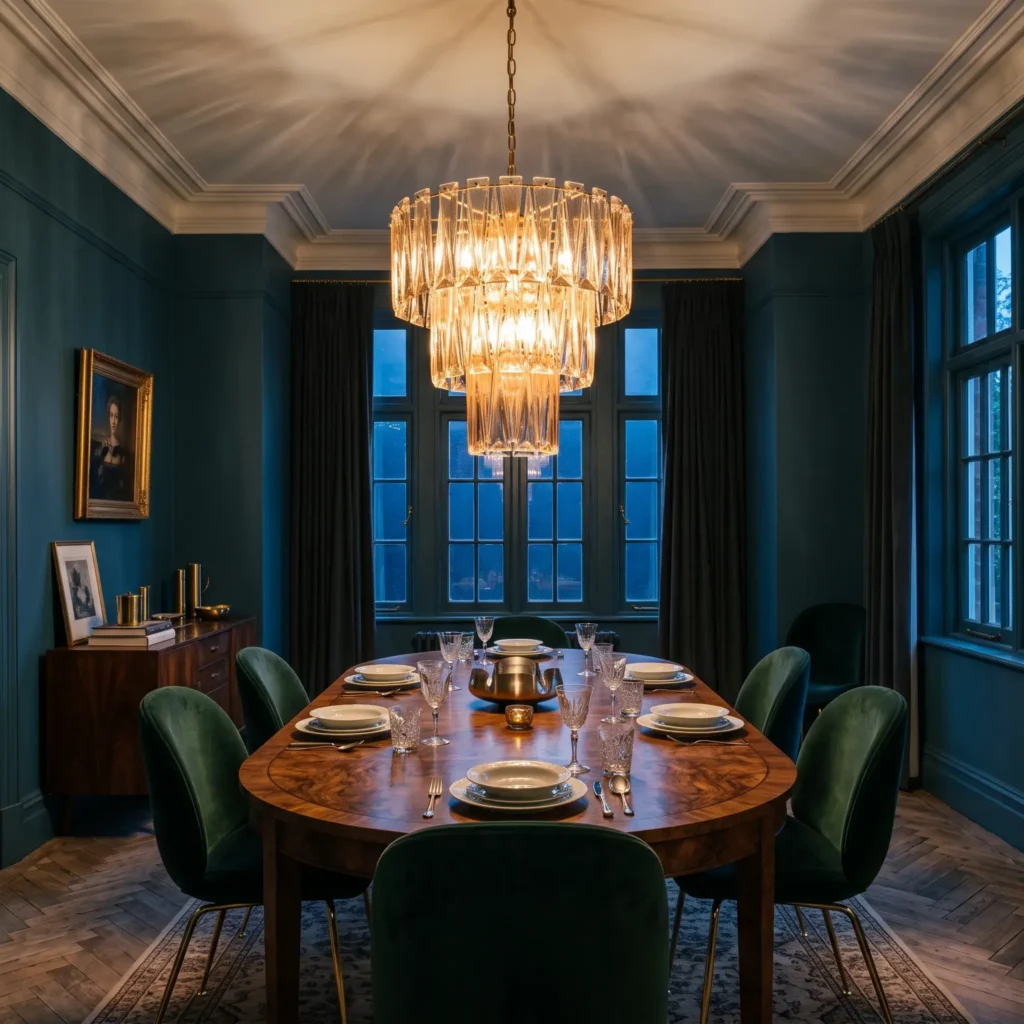
Products in This Space:
- Arteriors Home Prescott Multi-Tier Murano Glass Chandelier
- Bernhardt Interiors Deco Burled Walnut Oval Dining Table
- West Elm Crescent Swivel Velvet Dining Chairs in Forest Green
- Visual Comfort Studio Precision Brass Accent Sconce
- Anthropologie Gleaming Primrose Arched Wall Mirror
3 Outdated Trends to Retire Right Now
Before starting a renovation, take note of the styles currently losing market value:
1. The Monochromatic Cool Gray Scheme
Cool gray flooring, gray walls, and gray polyester sectionals dominated home flips for years. Today, this palette makes living spaces feel cold and uninviting. Switch to warm neutrals like biscuit, mushroom, and warm limestone.
2. Walls-Down Open Concept Layouts
Tearing down every wall leaves homes without acoustic privacy or practical storage. When someone cooks, cooking smells travel into every corner, and kitchen mess remains in view. Switch to broken-plan designs using pocket glass doors and slatted room dividers.
3. Matching Catalog Furniture Sets
Purchasing a matching bed, nightstand, and dresser set from one store strips away individual character. It makes rooms look staged. Instead, blend different design eras by pairing a modern platform bed with an antique wood dresser.
Budget vs. Investment Guide
You do not need to gut your home to use these ideas. Use this simple spending guide based on your available project budget:
Weekend DIY Projects (Under $1,500)
- Swap harsh 5000K daylight LED bulbs for 2700K warm dim-to-warm lighting.
- Color drench a small powder room or hallway using rich mineral paint.
- Replace builder-grade cabinet hardware with solid unlacquered brass pulls.
Moderate Capital Updates ($2,000 to $8,000)
- Install steel-framed reeded glass sliding pocket doors between rooms.
- Trowel authentic Roman clay plaster over a living room accent wall.
- Replace an outdated dining fixture with an artisanal tiered glass chandelier.
Major Renovation Investments ($10,000 to $40,000+)
- Build a custom furniture-grade kitchen island with honed Calacatta Viola marble.
- Construct a curbless bathroom wet room with basalt floor tile and dual rain showerheads.
- Install invisible magnetic induction cooking beneath dense porcelain kitchen counters.
Frequently Asked Questions
What interior design style is most popular right now?
Warm minimalism and color drenching lead current home renovations. Homeowners are moving away from cool grays and stark white drywall. They are choosing rich earth tones like chocolate brown, terracotta, and warm stone to create comfortable, welcoming rooms.
Is the open-concept layout outdated?
Wide-open floor plans without interior walls are losing popularity. Homeowners prefer broken-plan designs. This approach uses reeded glass doors, double-sided shelving, and pocket partitions to preserve daylight while controlling noise and cooking clutter.
How does found luxury differ from quiet luxury?
Quiet luxury focuses on neutral beige palettes, plain textures, and understated showroom furniture. Found luxury incorporates collected antiques, thrifted art, hand-made pottery, and vintage wood furniture that bring personal history into a house.
Which paint sheens work best for color drenching?
Use flat matte paint on ceilings to absorb light glare and hide drywall imperfections. Use velvet eggshell on walls for scrub resistance and soft depth. Use satin on baseboards to resist shoe marks. Use semi-gloss or high-gloss on interior doors to reflect lamp light.
Does real marble work well for busy kitchens?
Polished marble scratches and stains easily under harsh kitchen lights. However, selecting a honed or leathered matte finish helps conceal wear. Pairing a bold marble island with durable perimeter counters like soapstone gives you natural beauty with manageable upkeep.
Why are homeowners building bathroom wet rooms?
Wet rooms combine the soaking tub and walk-in shower into a single waterproofed floor area without raised shower curbs. This design maximizes square footage, removes tripping hazards, makes cleaning faster, and turns an everyday bathroom into a restorative retreat.
How to Begin Your Project
A successful home upgrade balances authentic character with everyday comfort. You do not need to adopt all ten design trends at once. Start with the ideas that solve real problems in your daily routine.
If your open floor plan feels loud and chaotic during work hours, install reeded glass pocket doors to quiet the space. If your primary bedroom feels sterile and plain, coat the walls, trim, and ceiling in a warm mineral tone, then add an antique wood dresser.
Invest your budget in building materials that age gracefully: real stone slabs, unlacquered brass that patinates naturally, and solid wood cabinetry. When you design around durable materials and quiet comfort, your home will remain inviting for decades.