
7 Cozy Fall Living Room Decor Ideas for an Elegant Seasonal Shift

Most autumn decorating guides rely on the exact same items: neon plastic pumpkins, synthetic leaf garlands, and cheap signs. By late September, these accents make a room feel cluttered rather than restful.
Real seasonal styling does not require buying disposable decorations. When late summer fades, natural afternoon daylight drops and casts a cooler, flatter gray tone across your room. To restore warmth, focus on physical textures, earthy pigments, foraged branches, and low-level ambient lighting.
Here are seven practical fall living room decor ideas built around proven design formulas, complete with exact measurements, styling instructions, and shoppable product lists.
7 Practical Fall Living Room Decor Ideas
1. The Asymmetrical Heritage Hearth
Do not drape fake plastic leaves evenly across your fireplace mantel. Symmetrical garlands look stiff and dated. Instead, build visual weight on one side and let the foliage taper across the ledge.
Place a heavy charcoal ceramic urn on the left side of your mantel. Fill it with preserved copper beech branches and magnolia leaves. Lean an antique timber or dark gilt frame against the chimney breast, then set a smaller vintage landscape painting slightly in front of it to create depth. On the right side, place three slim brass taper candleholders of staggered heights.
If your fireplace does not function, style the empty firebox. Stack split white birch logs neatly inside, or place a large woven floor basket filled with rolled wool blankets on the hearthstone.
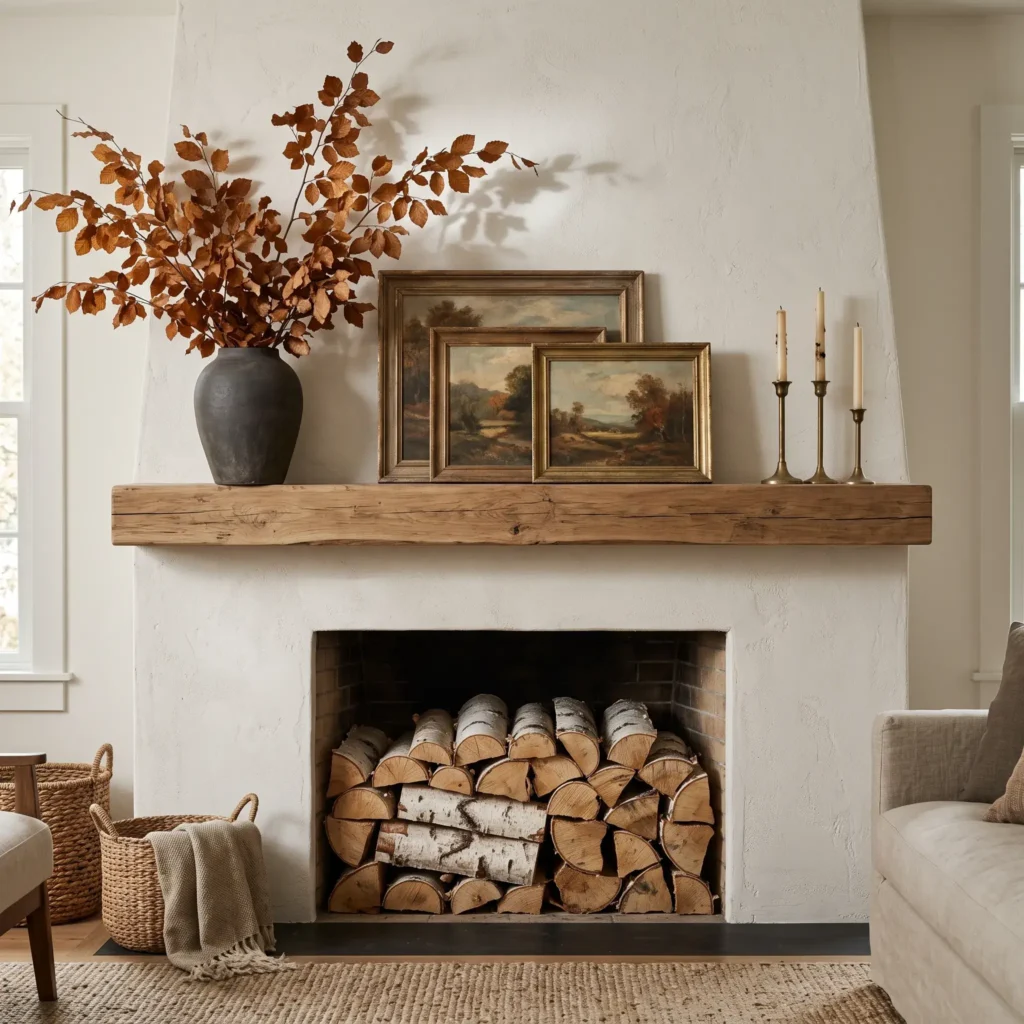
- Key Products to Recreate the Look:
- Unglazed matte charcoal ceramic urn (12 to 14 inches tall)
- Preserved copper beech or dried magnolia foliage stems
- Thrifted vintage landscape art prints in weathered timber frames
- Solid unlacquered brass taper candleholders in three heights (6, 9, and 12 inches)
- Pure beeswax taper candles in warm ivory or amber
- Kiln-dried split white birch logs
2. The 60-30-10 Textured Sofa Arrangement
Throw away matching cushion sets from big-box stores. Build depth across your sofa by combining different fabric textures and pattern scales.
Follow this simple formula across your seating:
- The Quiet Base (60%): Use solid, heavily textured fabrics like oatmeal bouclé, felted wool, or slubbed European linen. These neutral cushions provide calm visual space.
- The Supporting Pattern (30%): Add a structured, medium-scale pattern such as a brown houndstooth or muted windowpane check.
- The Statement Accent (10%): Finish with a single saturated velvet piece, such as an olive green or carnelian lumbar pillow.
Always buy pillow inserts that measure two inches larger than your pillow covers. If you have an 18-inch cover, buy a 20-inch down-alternative insert. This size gap creates internal tension, fills out the corners, and keeps cushions standing upright.
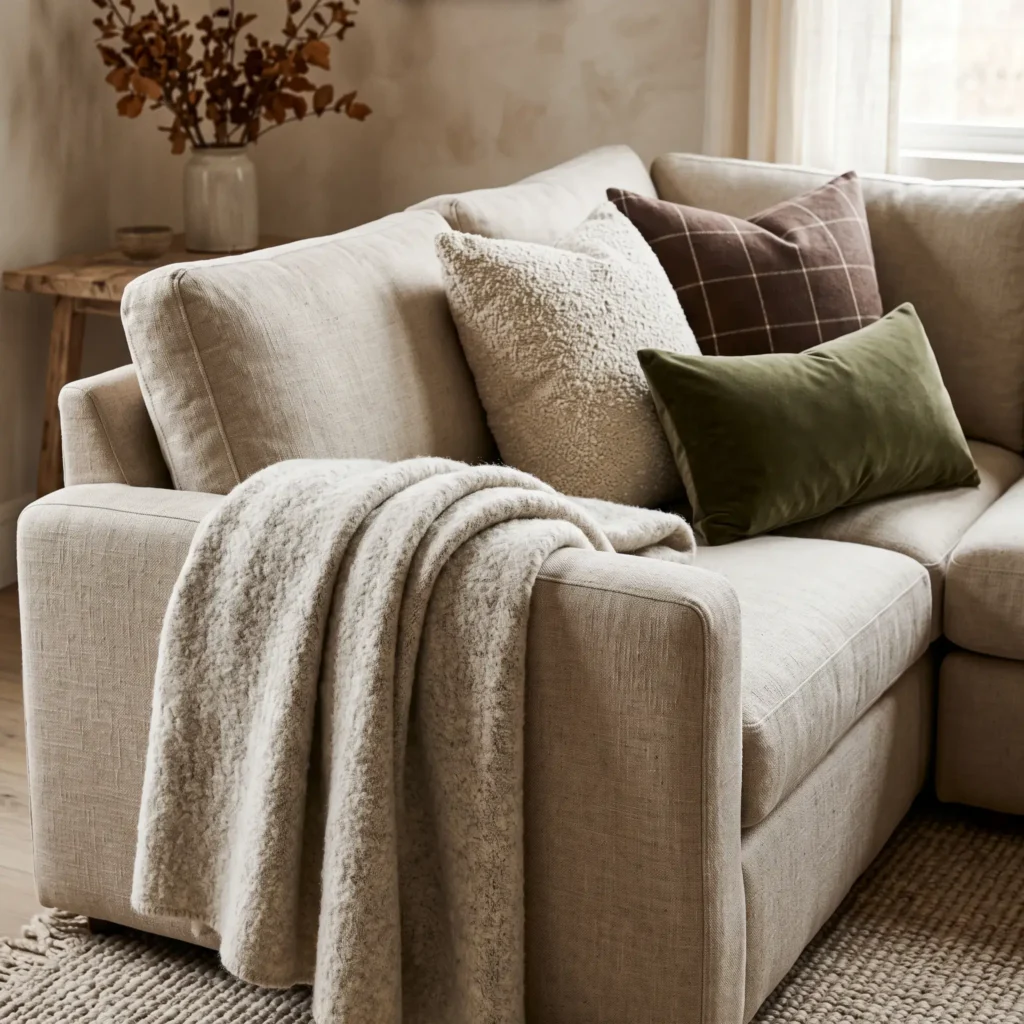
- Key Products to Recreate the Look:
- 20×20 inch cream bouclé pillow covers paired with 22×22 inch down inserts
- 18×18 inch chocolate brown windowpane wool pillow covers
- 14×22 inch olive green or rust cotton-velvet lumbar pillow cover
- Heavyweight brushed wool throw blanket with fringe
Check out more Interior Ideas
3. The Double-Layered Natural Fiber and Wool Rug
Bare hardwood and tile floors feel cold underfoot when autumn arrives. Layering two rugs insulates your living area and defines your conversational seating zone.
Start with an oversized, flatwoven natural jute or sisal rug as your base. Place a smaller, high-density patterned wool rug or vintage Turkish rug directly on top, centering it under your coffee table.
Keep an exposed border of 12 to 18 inches of natural jute around all sides of the top wool rug. If the border is narrower than 12 inches, the layout looks like a mistake. If it is wider than 18 inches, the top rug looks undersized. Place a dual-surface grip pad between the rugs to stop bunching and prevent slipping.
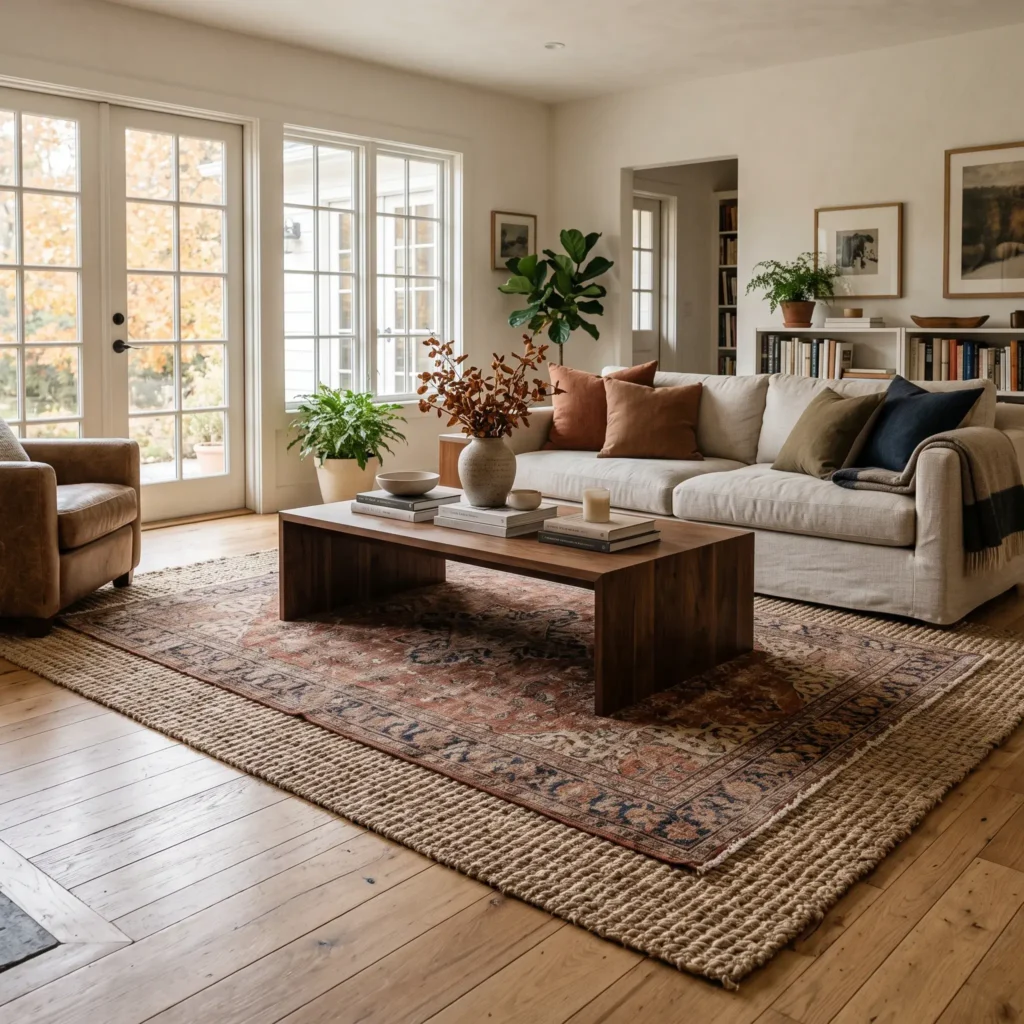
- Key Products to Recreate the Look:
- Chunky flatweave natural jute area rug (9×12 feet)
- Low-pile vintage-style wool rug in muted rust and navy (6×9 feet)
- Dual-surface non-slip rug pad
- Low solid walnut or white oak coffee table
4. The Three-Object Coffee Table Tray
Scattering small decorations across your coffee table makes the surface unusable. Place your items inside a low-rimmed tray made of dark walnut, travertine, or woven wicker. A tray keeps items contained while leaving 40 percent of the table clear for drinks and books.
Style the tray using three objects of varying heights:
- The Vertical Anchor: A rustic stoneware pitcher holding two sculptural dried branches.
- The Horizontal Anchor: Two large hardcover art or architecture books stacked flat, topped with a solid brass magnifying glass.
- The Low Tactile Piece: A small marble bowl holding whole walnuts, or a ribbed amber glass candle jar.
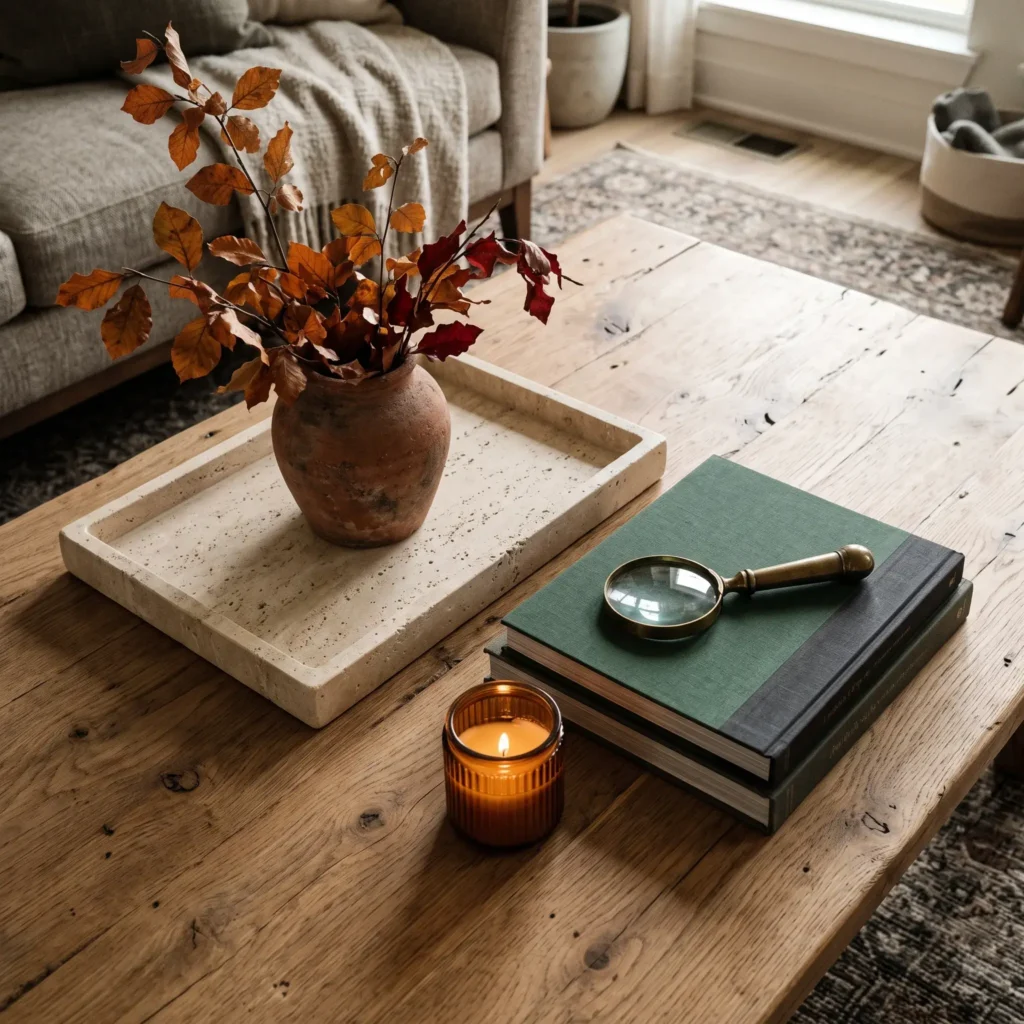
- Key Products to Recreate the Look:
- Honed travertine or walnut display tray (14 to 16 inches wide)
- Small textured terracotta bud vase
- Hardcover coffee table books focused on design or nature
- Solid brass candle snuffer or match striker
- Scented beeswax candle in an amber glass jar
5. The Heirloom Gourd and Stone Credenza
Skip standard bright orange field pumpkins. They look loud against neutral furniture. Choose heirloom squash varieties that offer dusty, muted skin tones.
Look for these three varieties:
- Lumina: Chalky white with deep grooves.
- Jarrahdale: Slate blue-gray with a ribbed profile.
- Cinderella: Flat, fluted terracotta and muted peach.
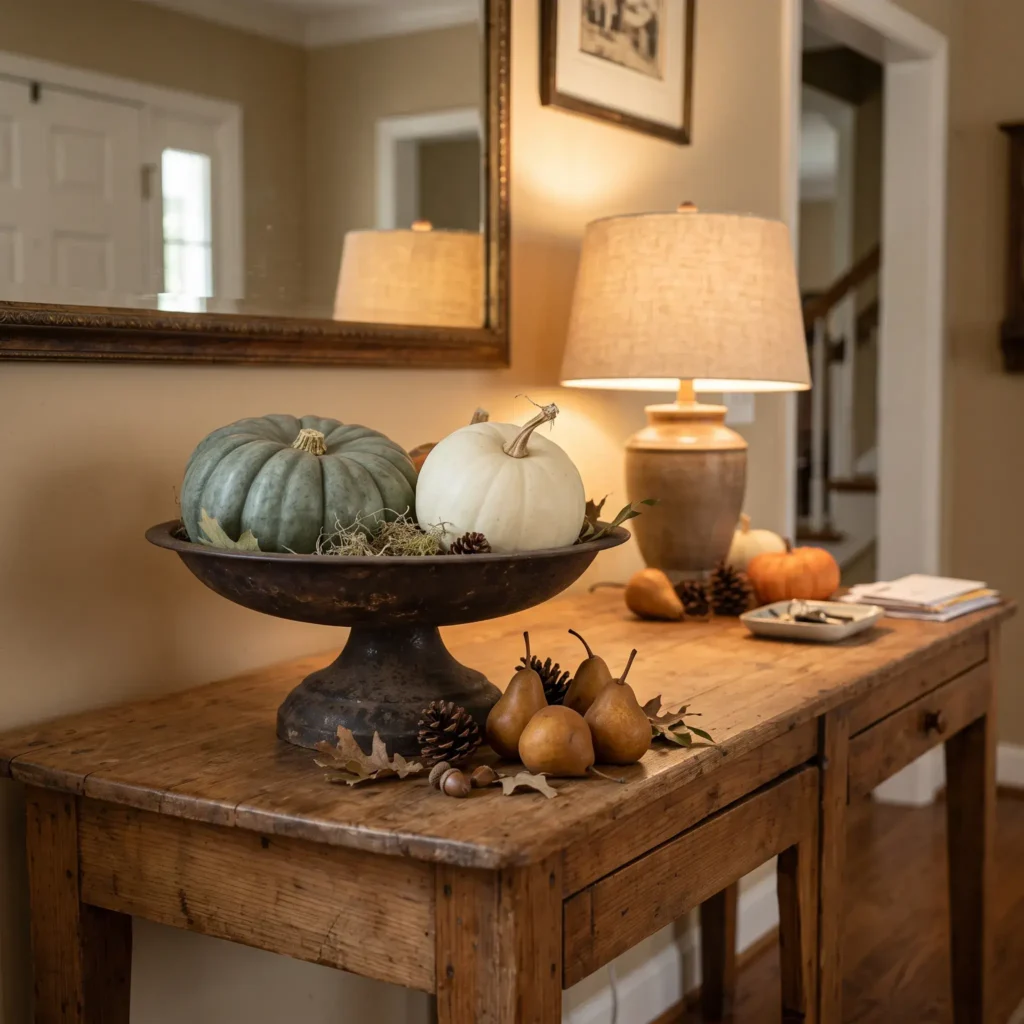
Arrange two or three squashes inside an aged cast-iron compote bowl on your credenza, console table, or wide windowsill. Scatter a few brown Bosc pears, wild pinecones, and dried lotus pods around the base. These natural colors complement neutral walls and dark wood finishes smoothly.
- Key Products to Recreate the Look:
- Real heirloom pumpkins (Lumina white and Jarrahdale blue-gray cultivars)
- Cast-iron or dark bronze pedestal compote bowl
- Fresh Bosc pears or dried botanical seed pods
- Stone or dark ceramic table lamp
6. The 2400K Low-Horizon Reading Corner
Ceiling light fixtures wash out warm autumn textures and make a living room feel cold after dark. Turn off overhead can lights. Move your light sources down to side tables and corners.
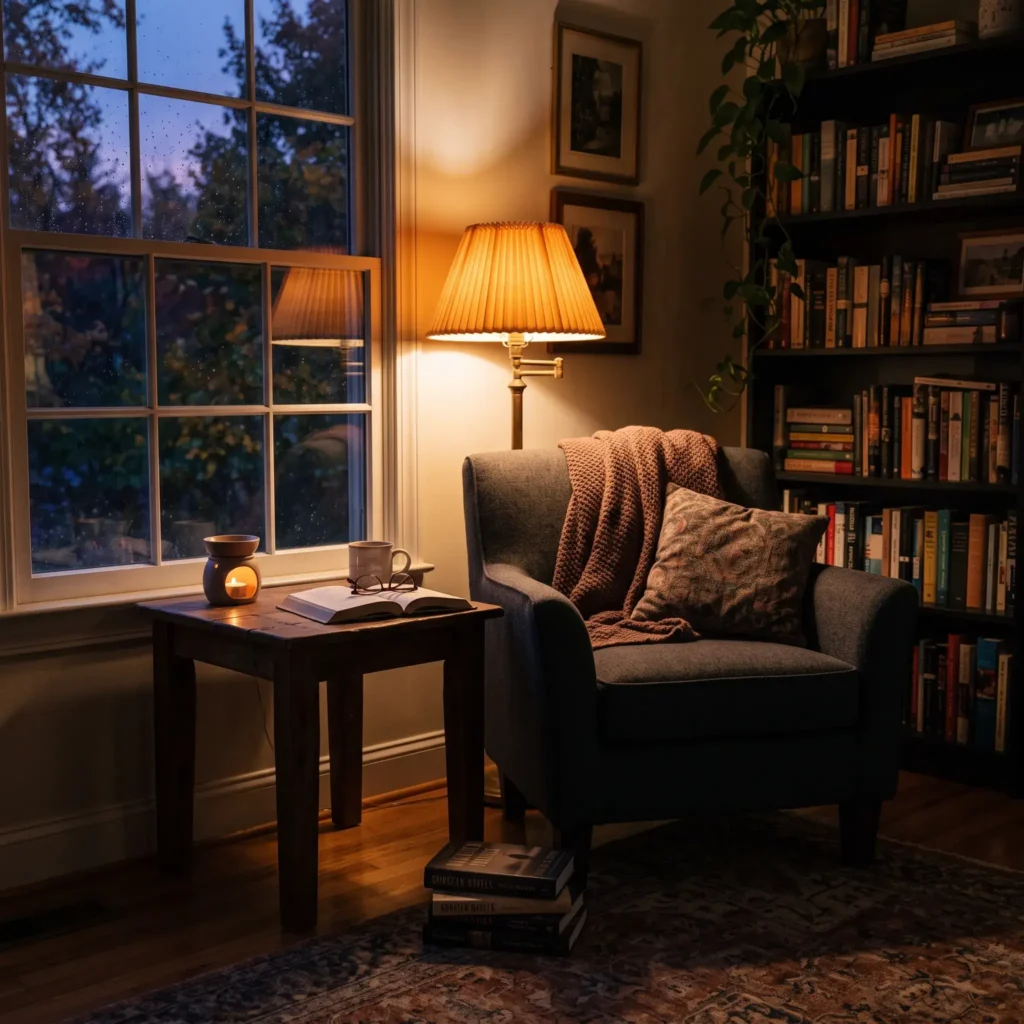
Install warm LED light bulbs rated strictly between 2200K and 2700K. This warm amber range flatters wood grain and softens heavy fabric weaves. Pair your lamps with pleated paper or heavyweight linen shades to prevent harsh direct glare.
Add an electric candle warmer lamp on a side table. These lamps use a gentle halogen bulb to melt scented jar candles from above. You get long-lasting scent without open flames or black soot.
- Key Products to Recreate the Look:
- Dimmable warm LED light bulbs (2200K to 2700K color range)
- Alabaster or ceramic table lamp with a pleated shade
- Electric top-down candle warmer lamp in matte black
- Soy candle scented with smoked cedarwood, cardamom, and clove
7. The Oversized Foraged Branch Statement
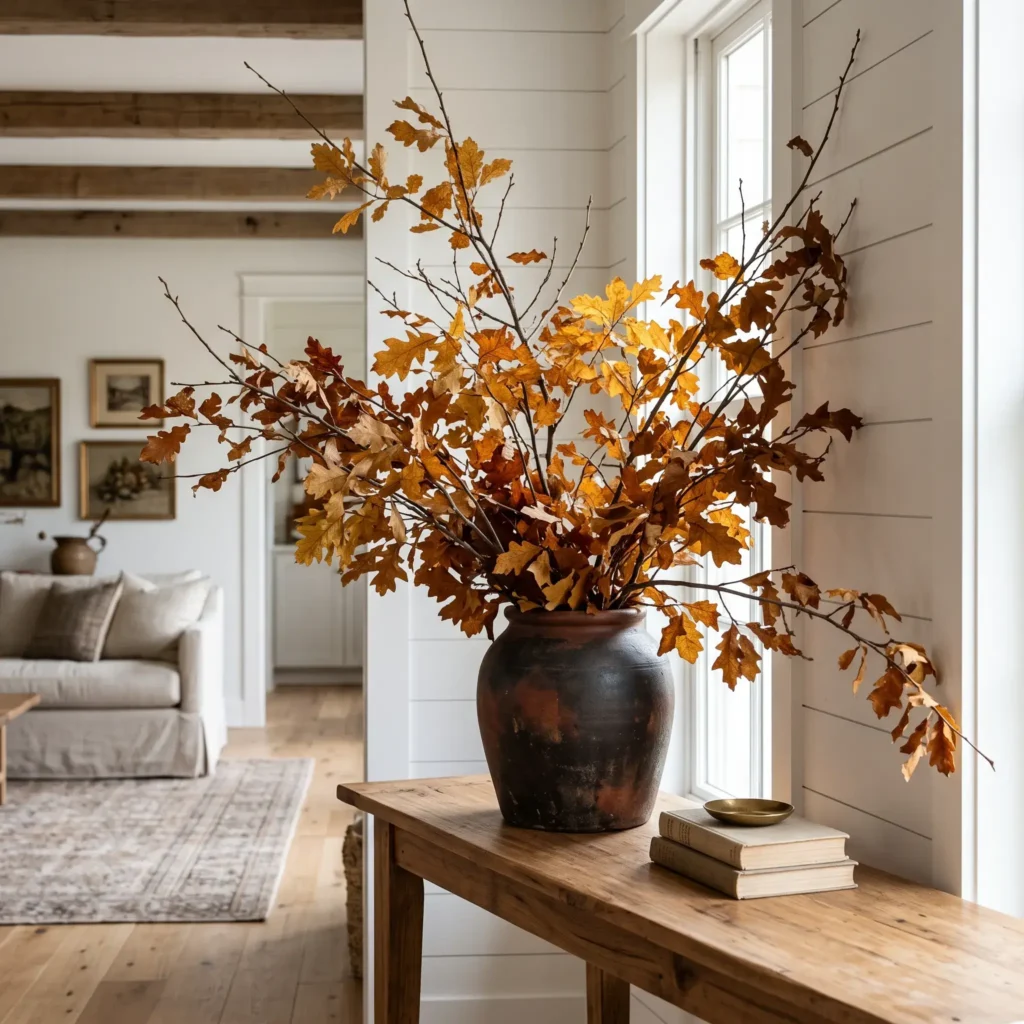
A single pitcher holding wide, dramatic tree branches creates far more presence than five small tabletop trinkets. Clip branches from local oak, sweetgum, red dogwood, or copper beech trees as their leaves shift color.
Cut your branches so their total height stands approximately 1.5 times the height of your vessel. Place them inside a heavy, wide-based ceramic urn or stone crock so the arrangement stays stable.
Before putting the branches in cool water, use pruning shears to make a one-inch vertical cut up the bottom of each woody stem. This vertical slice allows the stems to draw water efficiently, keeping leaves fresh and flexible for weeks.
- Key Products to Recreate the Look:
- Heavy handmade terracotta floor crock or stoneware vase (10-inch minimum base)
- Heavy-duty bypass garden pruning shears
- Freshly foraged oak, sweetgum, or beech branches
Foundational Color Palettes Beyond Bright Orange
Create a calm seasonal palette by borrowing tones from clay, bark, and dried fields. Use the 60-30-10 distribution rule to balance your room:
- Base Architecture (60%): Keep your walls, primary sofa, and large area rug neutral.
- Supporting Mid-Tones (30%): Introduce secondary warmth through throw blankets, accent chairs, wood tables, and drapes.
- Focused Accents (10%): Use small pops of dark velvet, aged brass hardware, and botanical arrangements.
Three Balanced Autumn Color Schemes
- Heritage Earth: Combine an oatmeal base with rust, camel, and dried ochre mid-tones. Add deep chocolate brown wood and olive green pillows. This scheme works best in homes with dark trim or warm brick.
- Architectural Neutral: Layer soft greige walls with taupe, mushroom, and unbleached linen textiles. Anchor the space using matte black iron hardware and charcoal wool accents. This palette keeps rooms light without feeling cold.
- Moody Contrast: Pair soft white walls with deep navy or washed denim upholstery. Warm up the cool blue tones using burnt copper bowls, cognac leather, and rust-toned pillows.
Soft Furnishings: Textile Weight and Drapery Guidelines
Summer living rooms rely on airy cottons and sheer linens that encourage air movement. Autumn calls for denser materials that trap heat and create visual comfort.
Replace thin cotton throws with heavy wool, corduroy, and bouclé. When hanging autumn drapes, select heavy European linen or brushed velvet.
Hang your curtain rods four to six inches above your window molding and extend them eight to twelve inches beyond the sides of the frame. This spacing lets open curtain panels sit completely clear of the window glass during the day to let in maximum light. When pulled closed at night, the thick fabric blocks cold window drafts.
The Pillow Insert Sizing Rule
Cheap polyester pillow inserts flatten out quickly and leave cushion corners sagging. Always buy high-quality down or feather-alternative inserts:
- For square covers 18 inches and larger: Buy an insert two inches larger than the cover. An 18-inch cover needs a 20-inch insert; a 20-inch cover needs a 22-inch insert.
- For lumbar cushions under 18 inches: Buy an insert one inch larger than the cover. A 12×20-inch cover needs a 13×21-inch insert.
This size difference fills out the cover seams, prevents slouching, and keeps cushions structured on your couch.
Rug Layering: Exact Dimensions and Sizing Rules
A small rug floating in the center of a living room makes the entire space look disconnected. Layering a patterned wool rug over a large natural jute rug provides insulation against cold subfloors and frames your furniture nicely.
Natural wool fibers feature a crimped texture that traps air pockets, providing insulation during colder months. Woven jute underneath adds durable texture at a low cost.
Use these dimensions to ensure your layered rugs look intentional:
| Room Size | Base Rug Size (Jute or Sisal) | Top Rug Size (Wool or Vintage) | Exposed Border | Furniture Placement |
|---|---|---|---|---|
| Small Living Room / Apartment | 8 ft × 10 ft | 5 ft × 8 ft | 12 to 18 inches | Anchor base rug under front couch legs. Center top rug under coffee table. |
| Standard Living Room | 9 ft × 12 ft | 6 ft × 9 ft | 18 inches uniform | Base rug frames seating area. Top rug defines the conversational center. |
| Open-Concept Living Room | 10 ft × 14 ft | 8 ft × 10 ft | 12 inches length / 24 inches width | Base rug spans the full living area. Top rug grounds the seating cluster. |
The Three-Phase Autumn Transition Calendar
Do not redecorate your whole living room in a single weekend. Staging updates across three phases prevents burnout and keeps your home in sync with the weather outside.
Phase 1: The Texture Swap (Late August to Mid-September)
Put away light summer items like thin pastels and bright white coastal decor. Keep your neutral base furniture as it is. Bring out chunky bouclé cushion covers, unglazed terracotta pottery, and dried pampas plumes.
Phase 2: Color and Botanical Depth (Mid-September to Late October)
Add richer secondary colors as local trees turn. Swap in velvet pillows in rust, camel, and olive green. Clip long branches of turning oak or sweetgum for large floor vases. Place real heirloom squashes on consoles and hearthstones.
Phase 3: Thermal Enclosure and Scent (Late October through November)
Prepare your home for chilly nights. Layer your wool area rug over the jute base. Switch on your 2200K amber table lamps and light beeswax tapers. Place split birch logs inside the firebox, and warm up your home with cedarwood, clove, and sweet orange aromas.
High-Impact Seasonal Updates on a Budget
Styling an inviting autumn living room does not require spending significant money on brand-new furniture.
- Swap Covers, Keep Inserts: Buy high-grade down inserts once. Swap inexpensive velvet, linen, and wool slipcovers as the seasons change. This saves money and cuts down on storage needs.
- Repurpose Wool Scarves: Fold a vintage wool tartan scarf lengthwise. Place it across your coffee table, console, or ottoman as a runner.
- Shop Architectural Salvage and Thrift Stores: Pick up solid brass candlesticks, copper bowls, and old stoneware crocks at thrift shops. Authentic, aged items bring far more character than fake-distressed decor from retail chains.
- Press Autumn Leaves: Collect fallen leaves with interesting color patterns. Press them flat between heavy books for three days, then display them in simple floating brass frames.
- Simmer Natural Citrus and Spices: Avoid chemical aerosol room sprays. Simmer sliced orange peels, cinnamon sticks, star anise, and whole cloves in a small pot of water on your stove. It fills your home with a clean, natural fall aroma.
Frequently Asked Questions
When should you start decorating your living room for fall?
Begin with light texture swaps right after Labor Day in early September. Introduce warm colors, real squashes, and branches in late September. Add layered rugs, heavy wool blankets, and firebox styling in late October when evening temperatures drop.
What are the best living room colors for fall if I dislike orange?
Use earthy neutrals such as terracotta, camel, forest olive, and chocolate brown. You can also pair deep navy and slate blue with cognac leather, unlacquered brass, and dark rust accents for a modern look.
How do I make my couch feel cozy for fall on a budget?
Buy textured bouclé and velvet pillow slipcovers instead of whole new pillows. Put down-alternative inserts sized two inches larger than the covers inside them so they stay plump. Finish by draping a heavy wool blanket over the couch arm.
How do I keep foraged branches fresh in a vase indoors?
Cut your branches at an angle with clean pruning shears, then make a one-inch vertical slit up the bottom of each stem. This split helps the branch drink water. Change the water in the vase every two to three days to keep leaves from drying out.
What is the ideal light bulb color temperature for fall decor?
Choose warm-white LED bulbs between 2200K and 2700K. Bulbs over 3000K cast a cool, sterile blue-white beam that makes warm autumn fabrics look flat. Lower amber tones highlight the natural warmth of wood, brick, and textiles.
An inviting fall living room depends on tactile fabrics, soft low-level lighting, and natural materials. By replacing disposable plastic trinkets with balanced color palettes, properly sized pillow inserts, layered rugs, and foraged branches, you create a calm space that looks beautiful all season. Pick one spot in your home this weekend, such as your coffee table or sofa, and test these formulas to start your seasonal shift.