7 Earthy Bedroom Ideas: Grounded Designs for Restful Sleep

Most modern bedrooms suffer from the same problem: harsh white paint, cool overhead lighting, and slick synthetic bedding. These artificial elements keep your senses alert and work directly against restful sleep.
An earthy bedroom solves this issue. It pulls natural textures, warm timber tones, and muted mineral pigments inside your room. Designing an earthy space does not mean packing your shelves with rustic trinkets. It means combining disciplined architectural lines with honest, tactile materials like washed French flax linen, raw travertine stone, and unsealed timber.
Here are 7 practical design concepts to help you create a grounded, restorative bedroom.
7 Practical Earthy Bedroom Ideas
1. The Low-Profile Organic Modern Platform
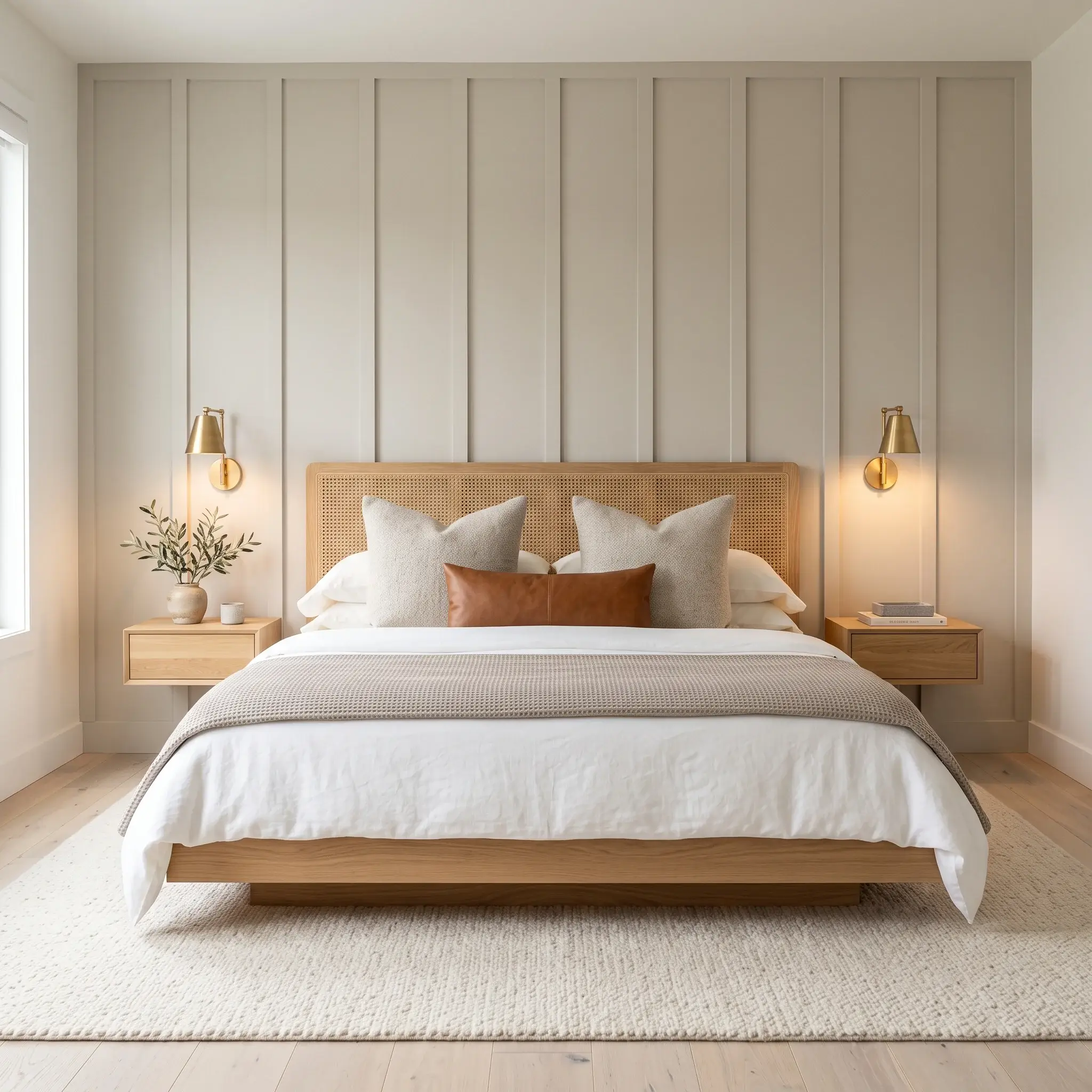
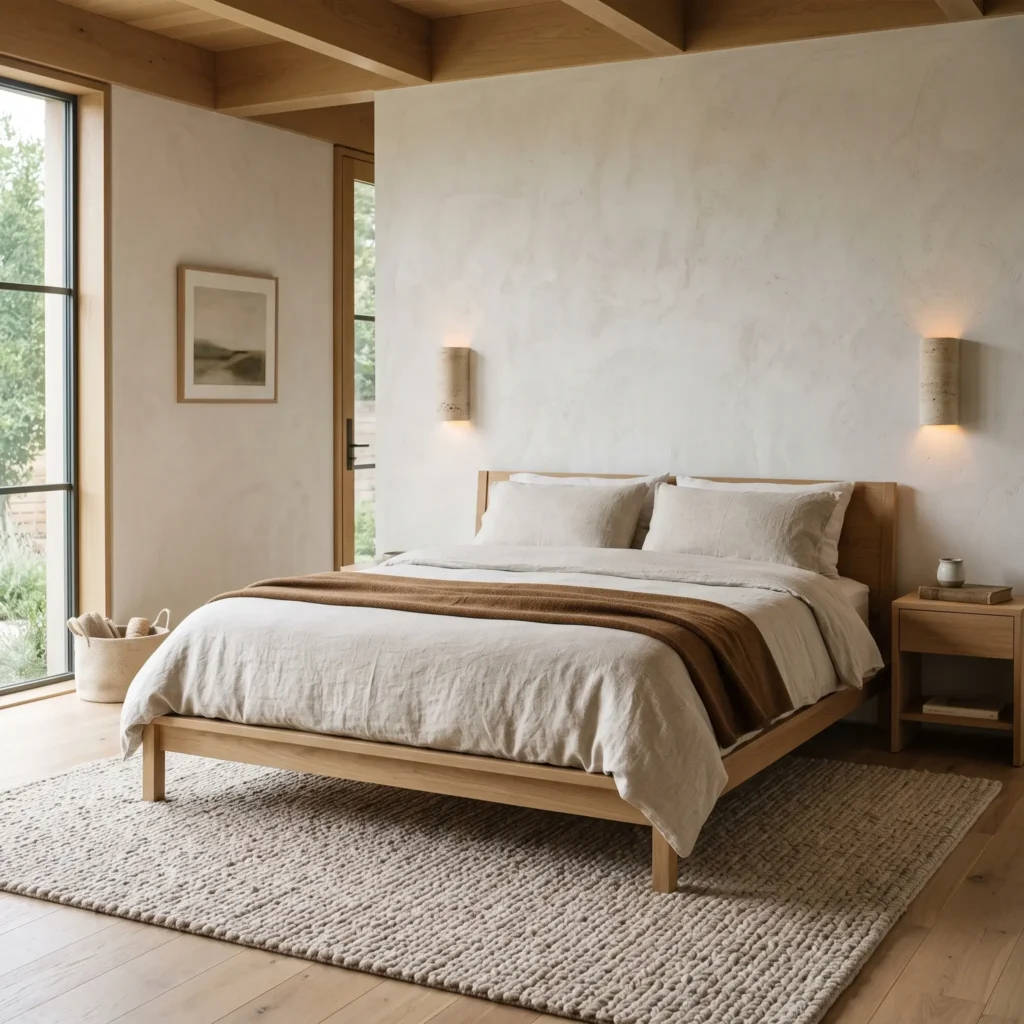
This concept lowers the visual center of gravity across your bedroom floor. Using a low solid white oak platform bed increases the distance between the mattress and your ceiling. This open vertical clearance makes average-height rooms feel expansive and breathable.
Pair the low wooden frame with rough, unpolished materials to prevent the space from looking sterile. A raw travertine sconce placed against an unbleached linen headboard gives you tactile contrast without physical clutter.
- Primary Wall Paint: Sherwin-Williams Alabaster (SW 7008), flat matte finish
- Key Accent Material: Honed, unfilled Roman travertine and white oak
- Lighting Focus: 2400K warm LED wall sconces with downward raking light
Key Products Featured
- Solid white oak low platform bed frame
- Belgian flax linen duvet set in natural oatmeal
- Hand-knotted raw wool loop area rug (8×10 ft)
- Fluted travertine cylinder wall sconces
- Solid oak round stump bedside stool
2. The Limewash and Raw Timber Sanctuary
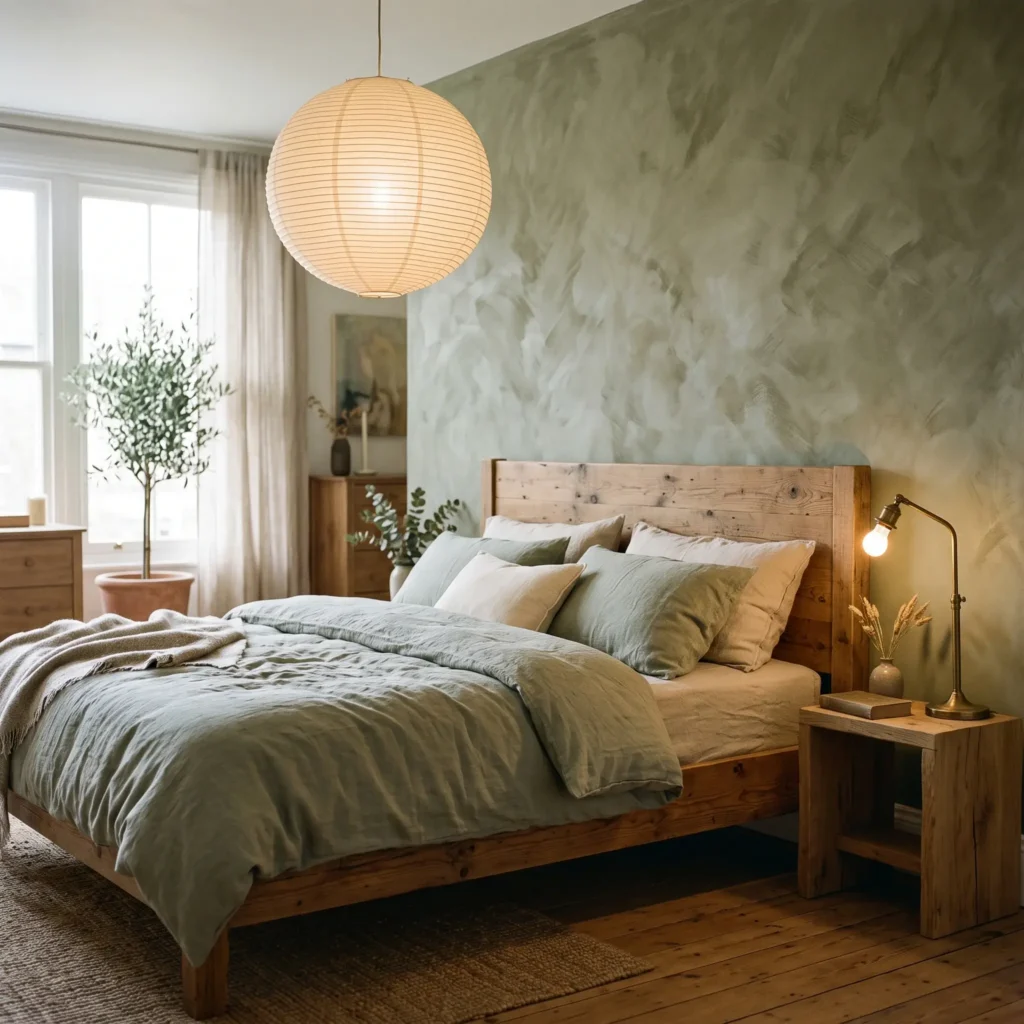
Standard acrylic latex paint creates a plastic film over drywall that bounces light uniformly. Authentic mineral limewash paint acts differently. It cures through carbonation, turning back into limestone inside the pores of the wall to create a chalky, suede-like patina.
Apply your limewash with wide cross-hatch strokes using a natural-bristle masonry block brush. Pair this cloudy mineral wall with a reclaimed pine or walnut bed frame. The natural knots and saw marks in the timber bring warmth against the soft green wall.
- Primary Wall Finish: Mineral limewash tinted in muted olive or warm sandstone
- Key Accent Material: Reclaimed timber and unlacquered living brass
- Bedding Base: Crisp long-staple cotton percale sheets topped with a washed sage linen quilt
Key Products Featured
- Mineral limewash interior paint (muted olive base)
- Reclaimed pine panel bed frame
- Washed sage green flax linen quilt
- Natural braided jute area rug
- Ribbed washi paper pendant light
Check out more Decor Styles
3. The Terracotta and Charcoal Warm Cocoon
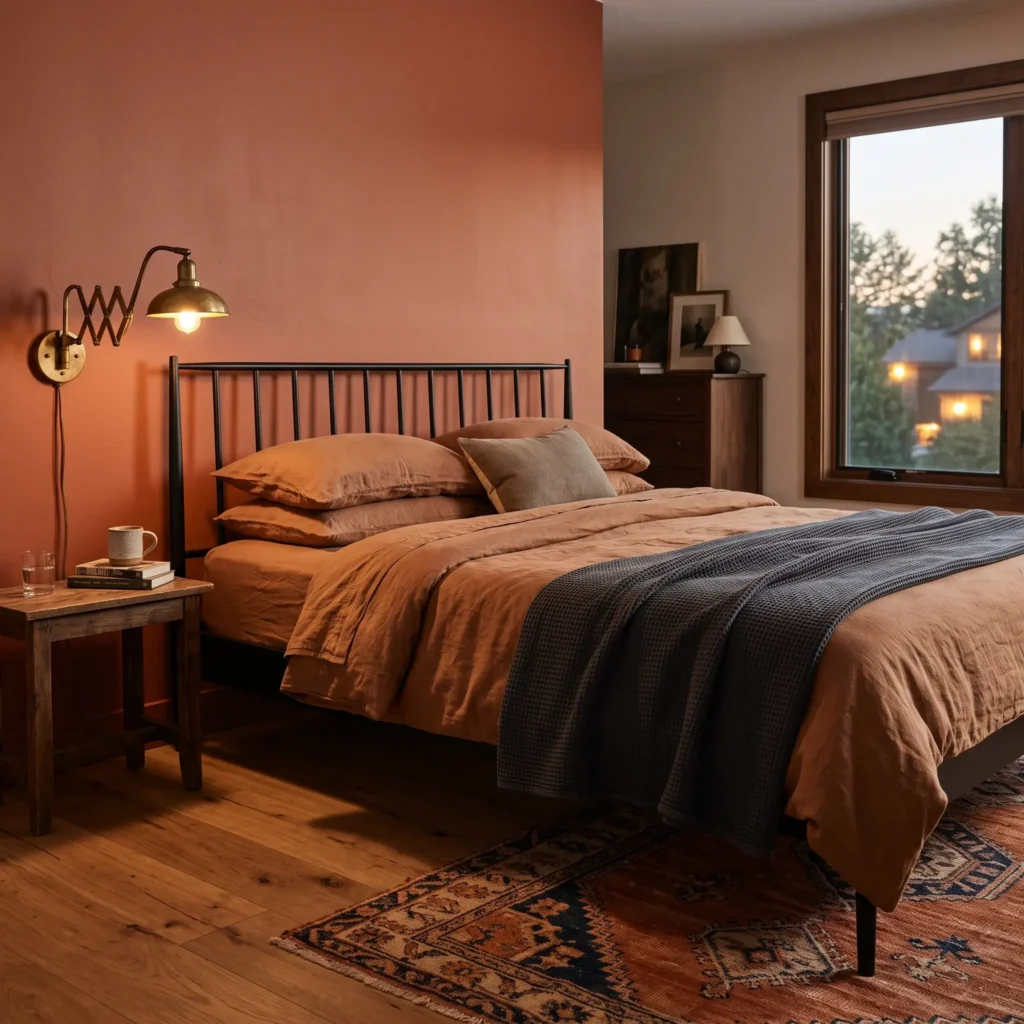
Deep mineral shades make large, chilly bedrooms feel grounded and intimate. This setup pairs sun-baked terracotta with deep charcoal wood to establish a secure, nest-like atmosphere.
Coat the wall plane behind the bed in an ultra-matte terracotta paint. Avoid bright, red-orange tones. Instead, pick a muddy earthenware shade with brown undertones. Pair this feature wall with a dark iron or charcoal-stained wood bed frame to keep the terracotta grounded.
- Primary Wall Paint: Sherwin-Williams Cavern Clay (SW 7701), flat matte finish
- Secondary Color: Sherwin-Williams Urbane Bronze (SW 7048) on trims and window casings
- Key Accent Material: Forged black iron and vegetable-dyed linen
Key Products Featured
- Matte black iron spindle bed frame
- Cinnamon and burnt terracotta washed linen duvet
- Charcoal and cream flatweave geometric wool rug
- Hand-thrown raw stoneware bedside carafe and tumbler
- Aged brass swing-arm bedside lamp
4. The Biophilic Sleep Sanctuary with Night-Oxygenating Plants
Living greenery brings color into an earthy palette, but selecting the right plant species is critical for your bedroom. Most standard houseplants absorb oxygen at night through cellular respiration.
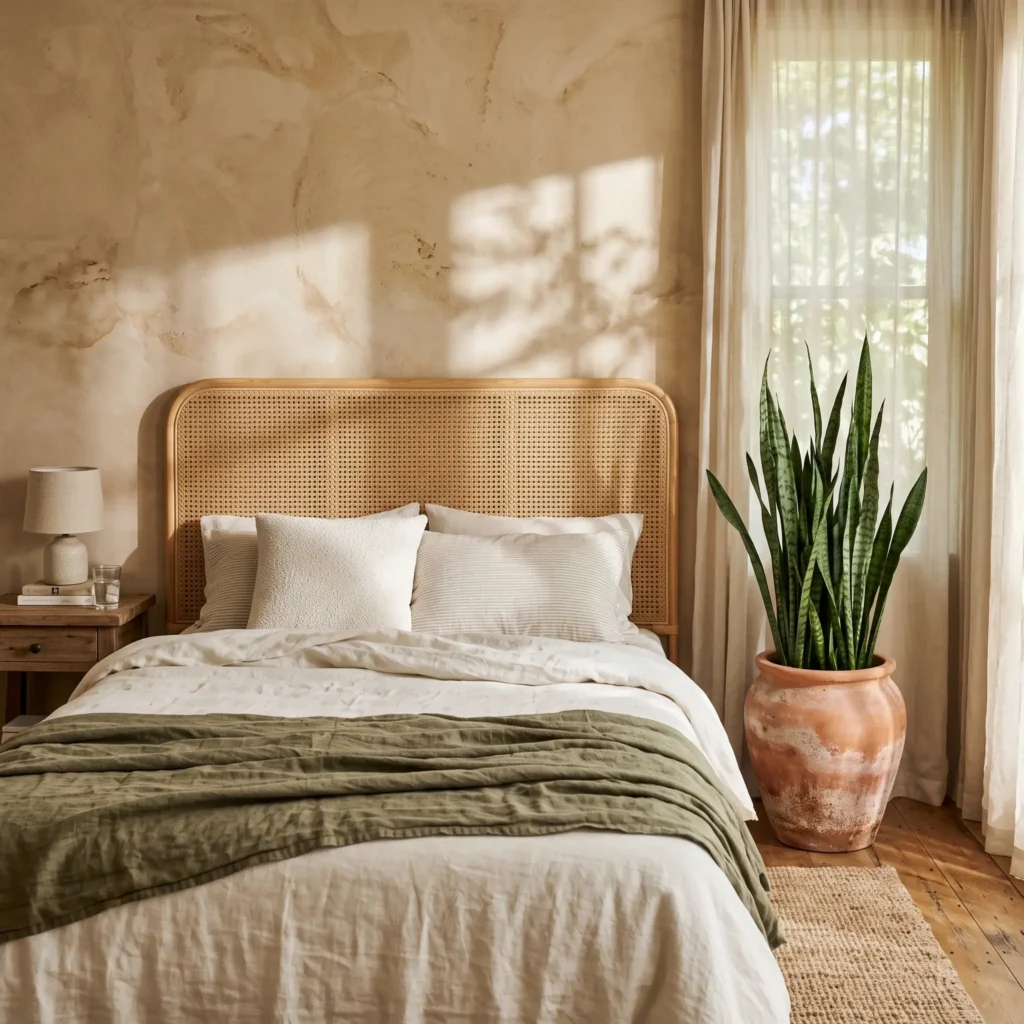
To optimize your nighttime air, pick plants that use Crassulacean Acid Metabolism (CAM). CAM plants keep their pores closed during the day and open them at night to absorb carbon dioxide and release fresh oxygen. Position an architectural Snake Plant in a raw terracotta pot near the bed, and place a glossy ZZ Plant on a nearby dresser.
- Primary Wall Paint: Benjamin Moore Manchester Tan (HC-81), matte finish
- Botanical Choices: Snake Plant (Sansevieria trifasciata) and ZZ Plant (Zamioculcas zamiifolia)
- Key Accent Material: Hand-thrown raw terracotta and woven banana-leaf baskets
Key Products Featured
- Cane and rattan arch headboard
- Hand-thrown unglazed terracotta floor planters
- Mature Sansevieria (Snake Plant) and ZZ Plant
- Ivory organic cotton percale sheets with an olive green linen throw
- Natural woven sisal floor rug
5. The Tonal Caramel and Belgian Flax Nook
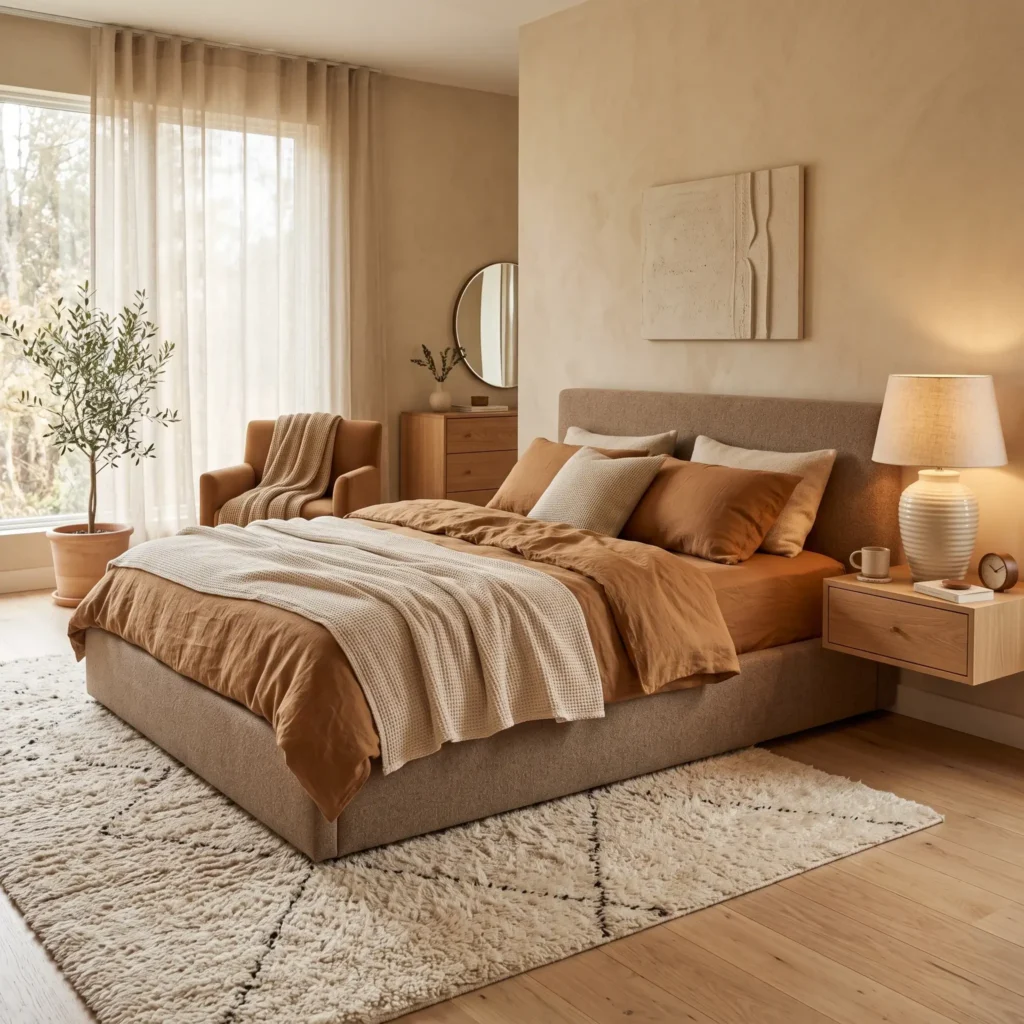
Tonal design relies on layering multiple shades of a single color family instead of using high-contrast colors. This room uses warm camel, tobacco, wheat, and unbleached cotton to create subtle depth.
Start with an upholstered camel fabric bed frame. Layer a hazelnut or caramel linen duvet cover over crisp ivory sheets. Finish the foot of the bed with a heavy alpaca wool throw blanket in rich tobacco brown to give the bed visual weight.
- Primary Wall Paint: Benjamin Moore Edgecomb Gray (HC-173), ultramatt finish
- Textile Palette: Camel, tobacco brown, wheat, and unbleached cotton
- Key Accent Material: Fluted matte ceramic and brushed warm nickel
Key Products Featured
- Camel wool upholstered platform bed
- Washed Belgian flax linen sheets in warm caramel
- Chunky alpaca wool throw blanket in deep tobacco brown
- Fluted matte cream ceramic table lamp with a natural paper shade
- High-pile Moroccan wool area rug with minimal brown lines
6. The Moody Forest Olive and Dark Walnut Alcove
If you prefer an intimate, den-like space, use deep botanical tones instead of pale beige. Deep olive green absorbs harsh reflections and turns your room into a private sanctuary.
Color-drench the room by painting your walls, baseboards, and window trim in the same dead-flat olive green. Pair this saturated backdrop with American walnut furniture. The natural chocolate tones and open grain of the walnut balance the dark green walls perfectly.
- Primary Wall Paint: Farrow & Ball Bancha (No. 298), dead-flat emulsion
- Wood Tone: American black walnut treated with a clear matte oil
- Key Accent Material: Olive cotton velvet and antique bronze hardware
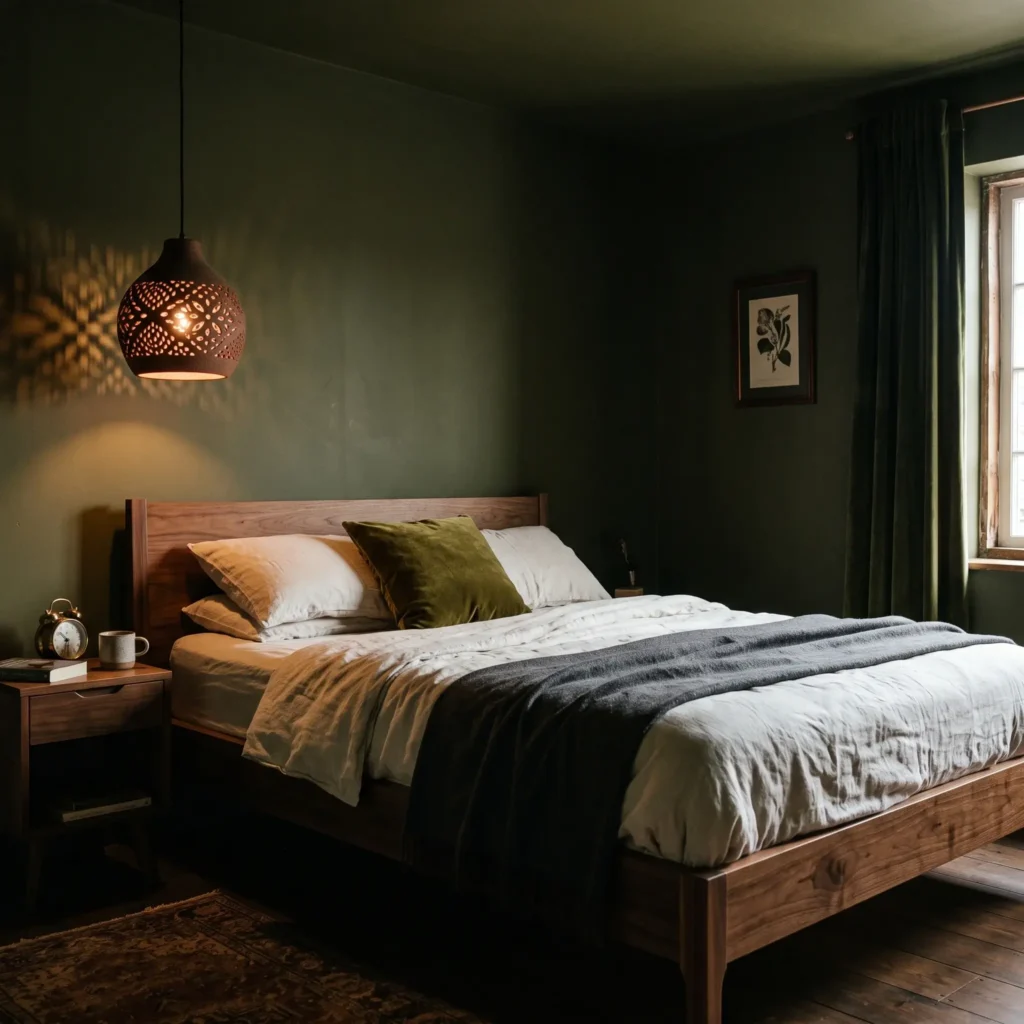
Key Products Featured
- American walnut spindle bed frame
- Matte olive green dead-flat wall paint
- Olive green velvet lumbar accent pillow
- Heavyweight flax linen sheets in bone white
- Pierced terracotta hanging pendant light
7. The Renter-Friendly Earthy Layered Space
You do not need to repaint walls or install permanent wall paneling to get an authentic earthy aesthetic. This concept uses temporary, movable layers that leave no trace when you move out.
Mount a removable peel-and-stick grasscloth wallpaper panel directly behind your headboard to add instant wall texture. Replace cold plastic bedside lamps with plug-in woven wall sconces, and run two matching jute runners down both sides of your bed instead of hauling an oversized rug into a tight rental layout.
- Focal Wall Alternative: Removable peel-and-stick woven grasscloth wallpaper panels
- Lighting Strategy: Plug-in rattan wall sconces paired with 2700K warm smart bulbs
- Floor Strategy: Twin natural-fiber runner rugs placed along the sides of the bed
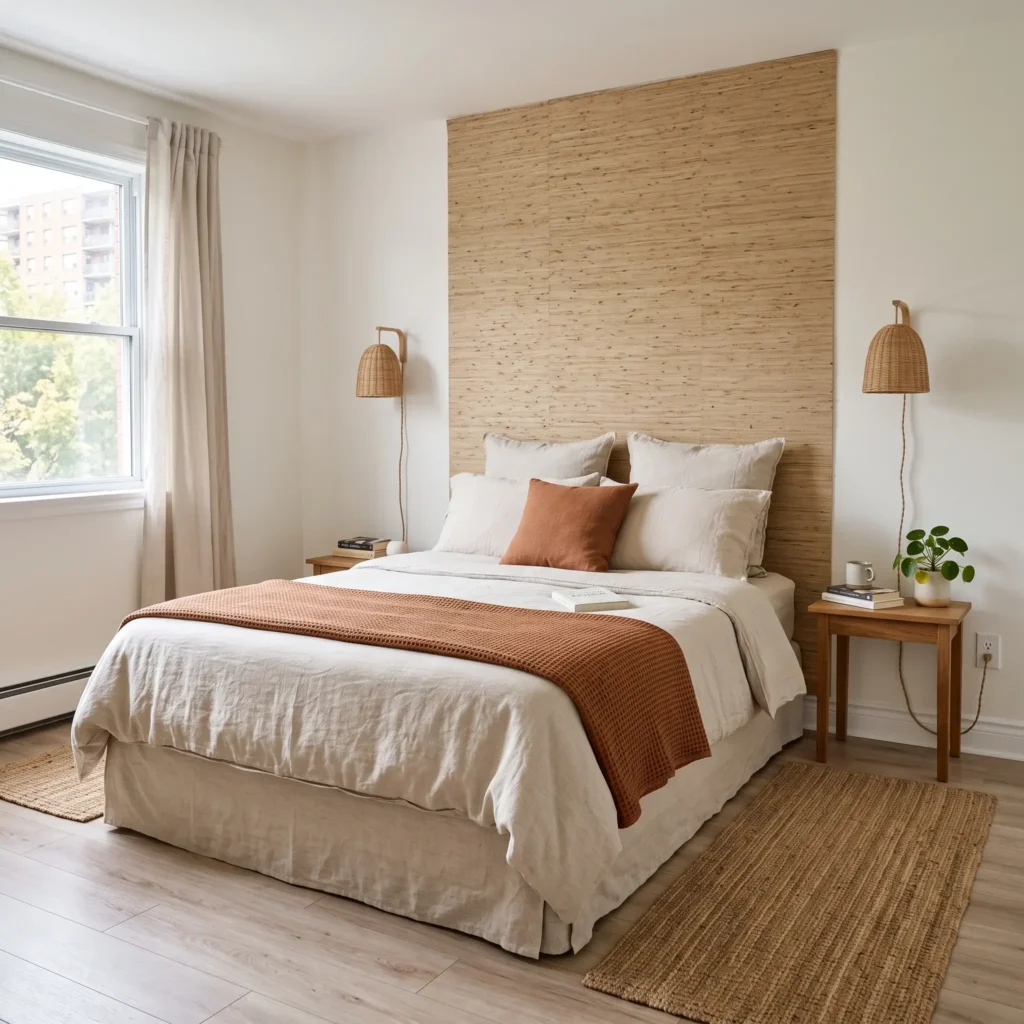
Key Products Featured
- Removable peel-and-stick grasscloth headboard panel
- Plug-in rattan swing-arm wall sconces with woven cord covers
- Rust-orange organic waffle-knit blanket
- Washed cotton duvet cover in soft oat
- Twin woven seagrass runner rugs (2.5×8 ft)
Paint Selection: Working with Natural Daylight
Earthy paint colors shift dramatically depending on the direction of your windows. A warm terracotta that looks rich in morning light can feel overwhelming under southern afternoon sun. A soft sage can turn cold and gray in a north-facing bedroom.
Use this orientation guide to match your paint undertones with your room’s natural daylight:
| Window Direction | Natural Light Character | Required Undertone Strategy | Proven Paint Recommendations |
|---|---|---|---|
| North-Facing | Cool, blue-tinted daylight all day. Shadows look cold. | Warm yellow, peach, or soft clay undertones to cancel out the blue cast. | Farrow & Ball Setting Plaster (No. 231) or Sherwin-Williams Alabaster (SW 7008) |
| South-Facing | Intense, golden light from morning until late afternoon. | Desaturated sage greens, stony taupes, and cool greiges that soften glare. | Benjamin Moore October Mist (1495) or Benjamin Moore Edgecomb Gray (HC-173) |
| East-Facing | Bright and warm at dawn, shifting to cool shade by early afternoon. | Balanced ochres and warm khakis that maintain depth after direct sun passes. | Benjamin Moore Manchester Tan (HC-81) |
| West-Facing | Dull light during the morning, followed by fiery orange glare before sunset. | Muted olive greens and earthy charcoals that temper hot golden-hour light. | Farrow & Ball Bancha (No. 298) or Sherwin-Williams Universal Khaki (SW 6150) |
Mineral Wall Textures: Limewash vs. Roman Clay vs. Venetian Plaster
Authentic earthy rooms avoid flat synthetic latex paint. Instead, they use mineral wall finishes that absorb light and create organic surface movement.
Review this comparison table to pick the right mineral finish for your bedroom walls:
| Feature | Authentic Limewash | Roman Clay | Venetian Plaster |
|---|---|---|---|
| Chemical Base | Slaked lime, water, mineral pigments | Slaked lime, clay aggregate, fine marble dust | Aged lime putty and crushed marble dust |
| Tactile Feel | Micro-textured, chalky, ultra-matte | Silky smooth, buttery, suede-like | Glass-smooth, cool, highly polished |
| Application Tool | 5-inch natural bristle masonry block brush | Flexible Japanese putty knife or plastic trowel | Stainless steel rounded burnishing trowel |
| Application Motion | Sweeping overlapping “X” cross-hatch strokes | Short, multi-directional scraping arcs | Ultra-thin skim coats with edge-burnishing |
| Ideal Room Zone | Full room envelopes and ceiling planes | Bed headboard feature walls and alcoves | Formal fireplace surrounds and accent columns |
| Durability & Repair | Easy to spot touch-up without visible seams | Requires a matte topcoat for wipeability | Requires paste wax; difficult to spot-patch |
Bedding Architecture: The 4-Layer System
Piling random decorative throw pillows on a bed creates visual clutter that works against a calming bedroom. Build an inviting bedscape using four functional layers instead:
- The Crisp Base Sheet: Start with 100% organic long-staple cotton percale in bone, ivory, or sand. Percale breathes exceptionally well and stays cool against your skin.
- The Slub Linen Duvet: Cover the bed with a washed French or Belgian flax linen duvet cover. Leave it unironed. The natural slubs and soft wrinkles bring organic movement to the room.
- The Weighted Foot Runner: Fold a heavy boiled-wool blanket or chunky cotton waffle throw horizontally across the bottom third of your mattress. This grounds the foot of the bed and provides quick extra warmth on cold nights.
- The Single Anchor Pillow: Stack your sleeping pillows flat in pairs against the headboard. Finish with a single wide lumbar pillow made of olive raw silk, camel velvet, or wool bouclé. This provides a clean focal point without the chaos of multiple accent pillows.
Circadian Lighting: Kelvin Ratings and Fixture Tiers
Standard residential light bulbs emit light between 3500K and 5000K. This spectrum contains concentrated blue wavelengths that stimulate your eyes, trigger cortisol, and suppress natural melatonin production.
An earthy bedroom needs bulbs calibrated strictly between 2200K and 2700K with a Color Rendering Index (CRI) above 90. High CRI ratings ensure your wood furniture, linen sheets, and mineral walls show their true tones instead of looking grayed out.
The Three Lighting Tiers
- Tier 1: Ambient Overhead Diffusion: Hang an oversized pendant light made from woven rattan, bamboo, or Japanese washi paper. The natural fibers scatter harsh light, creating an even, warm glow across the ceiling.
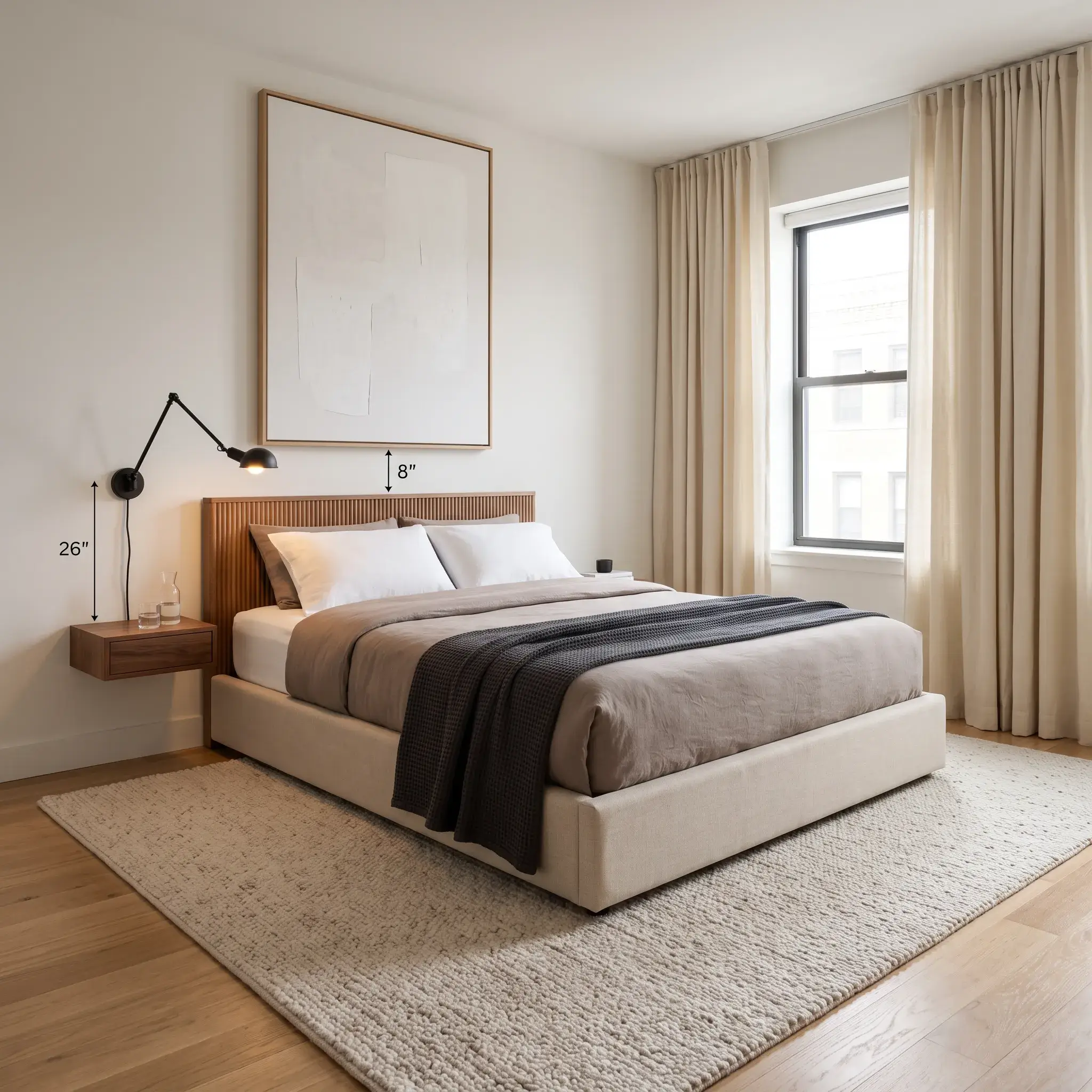
- Tier 2: Bedside Task Illumination: Install wall sconces or set ceramic lamps on nightstands. Adjust each fixture so the bottom edge of the shade sits 22 to 26 inches (55 to 65 cm) above your mattress crown. This casts reading light directly onto your book while shielding your eyes from glare.
- Tier 3: Low-Level Raking Accent Light: Place a small, low-wattage accent light on a low shelf or floor plinth near a mineral plaster wall. The low-angle beam catches the micro-textures in the limewash or clay, casting soft evening shadows that help your mind unwind.
Bedroom Layout and Area Rug Sizing Rules
A common mistake in bedroom design is buying an undersized area rug. A small rug looks like an isolated postage stamp under the bed and makes the room feel disjointed.
An earthy rug should act as a tactile anchor. It must extend 18 to 24 inches (45 to 60 cm) beyond both sides of the mattress and out past the foot of the bed.
Use this sizing table to pick the right area rug for your bed frame:
| Bed Size | Standard Mattress Footprint | Recommended Rug (Two-Thirds Rule) | Full Room Layout Rug | Resulting Border Clearance |
|---|---|---|---|---|
| Twin | 38 x 75 inches (97 x 190 cm) | 5 x 8 ft (152 x 244 cm) | 6 x 9 ft (183 x 274 cm) | Leaves 18 to 22 inches of soft landing space on each side. |
| Full / Double | 54 x 75 inches (137 x 190 cm) | 6 x 9 ft (183 x 274 cm) | 8 x 10 ft (244 x 305 cm) | Provides a balanced 20-inch step-out border. |
| Queen | 60 x 80 inches (152 x 203 cm) | 8 x 10 ft (244 x 305 cm) | 9 x 12 ft (274 x 365 cm) | Creates an optimal 24-inch border on both sides and the foot. |
| King / Cal King | 76 x 80 inches (193 x 203 cm) | 9 x 12 ft (274 x 365 cm) | 10 x 14 ft (305 x 427 cm) | Extends a full 24 inches past the bed frame and an end bench. |
Practical Space Clearances
- Walkway Clearance: Keep 24 to 30 inches (60 to 75 cm) of clear space around the sides and foot of your bed frame, as well as in front of dressers and closet doors.
- Nightstand Alignment: Your nightstand surface should sit level with, or no more than 2 inches (5 cm) below, the top crown of your mattress for easy reach.
Frequently Asked Questions
What colors define an authentic earthy bedroom palette?
An authentic earthy palette uses colors derived from natural raw materials like clay, stone, weathered soil, and dry leaves. Key foundation colors include terracotta, warm ochre, muted sage green, deep forest olive, sandstone, greige, and raw umber. These shades contain subtle brown undertones that absorb light and create a calm atmosphere.
How can I make my bedroom look earthy on a budget?
Start with your bed textiles and lighting. Swap synthetic sheets for a natural linen or washed cotton duvet in oatmeal or olive green. Add a chunky jute or wool loop runner rug next to your bed. Replace cool white light bulbs with 2400K to 2700K warm amber bulbs, and bring in a low-maintenance Snake Plant housed in an unglazed terracotta flower pot.
What is the difference between an earthy bedroom and a boho bedroom?
Bohemian bedrooms focus on bright contrasting patterns, macramé fringe, colorful prints, and dense displays of collected objects. Earthy bedrooms prioritize restraint, architectural lines, and natural material textures. Earthy design pairs clean furniture shapes with honest materials like slub linen, raw timber, and honed travertine stone, keeping visual clutter to a minimum.
Which bedroom plants release oxygen at night?
Plants that use Crassulacean Acid Metabolism (CAM) absorb carbon dioxide and release oxygen during the night. The best CAM options for bedrooms include the Snake Plant (Sansevieria trifasciata), the ZZ Plant (Zamioculcas zamiifolia), and Aloe Vera (Aloe barbadensis Miller). These hardy plants thrive in low or indirect daylight and require infrequent watering.
What light bulb temperature works best for an earthy bedroom?
Use warm-white LED bulbs rated between 2200K and 2700K with a Color Rendering Index (CRI) of 90 or higher. Harsh 4000K daylight bulbs wash out warm olive, clay, and taupe wall finishes, making them look flat or cold. A 2400K to 2700K bulb provides an amber glow that mimics natural evening dusk and supports your body’s sleep cycles.
Creating an earthy bedroom comes down to honest material choices rather than chasing short-lived decor trends. Start by addressing your room’s largest surfaces: anchor the floor with a low solid wood platform bed, soften the walls with a matte mineral paint, and layer unpressed flax linen over cool cotton sheets. By balancing warm lighting with natural textures, you build a restful space that makes winding down at night feel completely effortless.