8 Studio Bedroom Decor Pieces That Make the Room Feel Finished
A studio apartment often feels unfinished because the bed sits in plain view of your kitchen and front door. When you look at your mattress from the sofa, the room can feel like a temporary dorm room.
A studio bedroom feels finished when you establish clear visual boundaries, add vertical height to blank drywall, and layer soft textiles that absorb room echo. Standard decorating guides tell you to buy more accessories, but adding small trinkets to an open floor plan creates visual clutter.
The eight decor pieces below solve common layout issues in compact apartments. They add clear functional boundaries, improve daily lighting, and anchor your sleeping space without permanent remodeling.
1. An Intentionally Scaled Area Rug
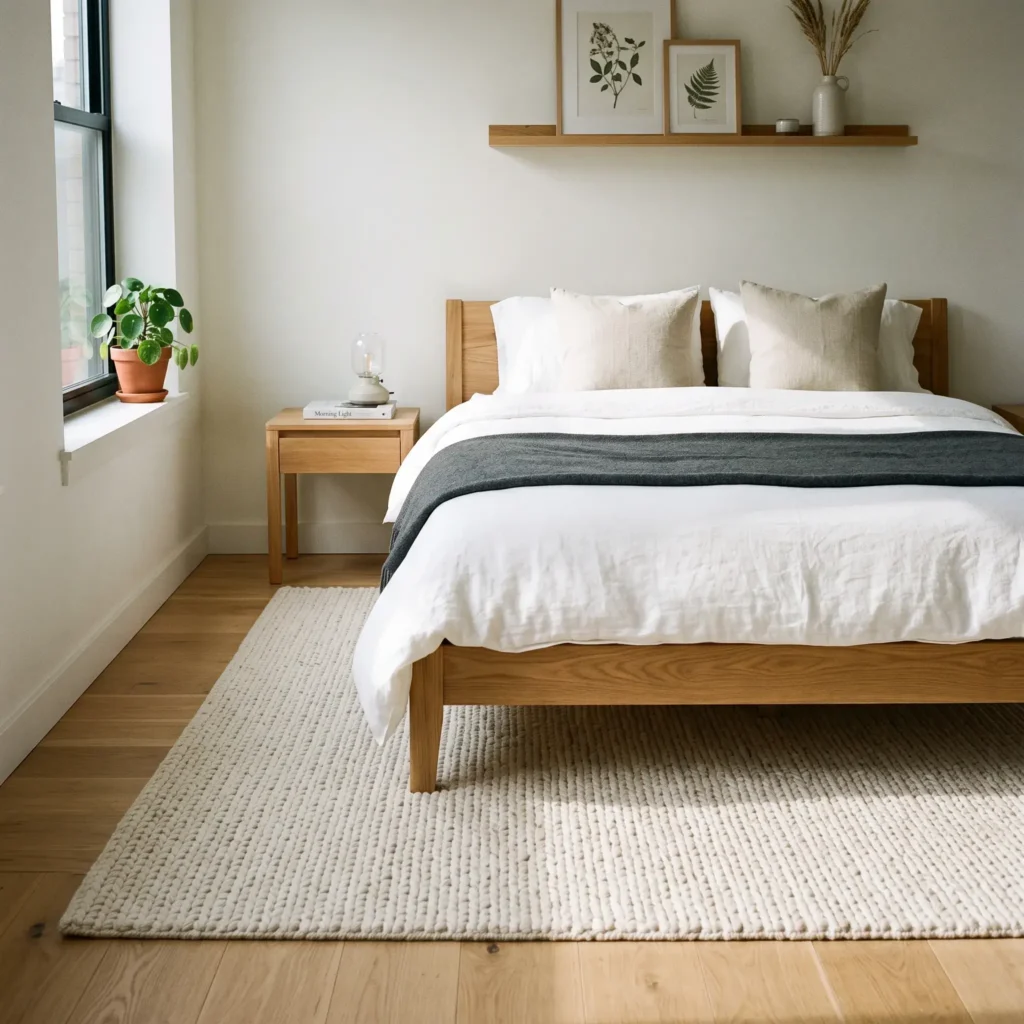
An undersized rug isolates your bed and makes your floor plan look chopped up. To make the space feel grounded, use an 8×10 foot rug for a queen mattress or a 6×9 foot rug for a full mattress. Position the rug perpendicular to the bed frame, sliding it under the bottom two-thirds of the mattress.
Ensure the weave extends 18 to 24 inches past the sides and the footboard. In a compact studio, leave an 8 to 12 inch border of bare floor between the rug edge and your perimeter walls. This compressed margin draws the eye outward, creating an optical expansion of your usable floor area while defining the sleeping boundary.
- Featured Products:
- 8×10 foot low-pile wool flatweave area rug in oatmeal
- Low-profile solid oak platform bed frame
- Washed white cotton sheet set
2. A Plug-In Swing Arm Wall Sconce
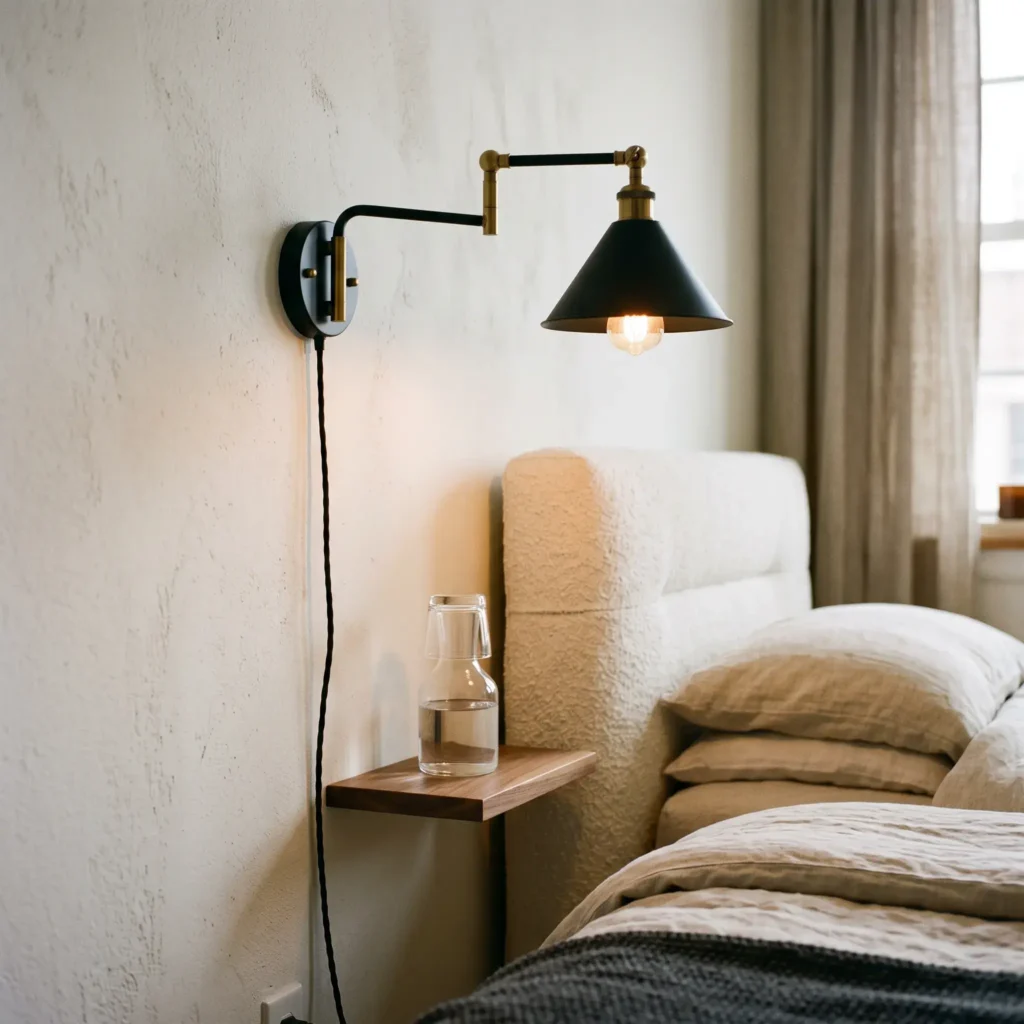
Standard bedside lamps consume valuable tabletop space on small nightstands. A wall-mounted, swing-arm sconce with a plug-in cord clears your bedside surface while introducing targeted evening light.
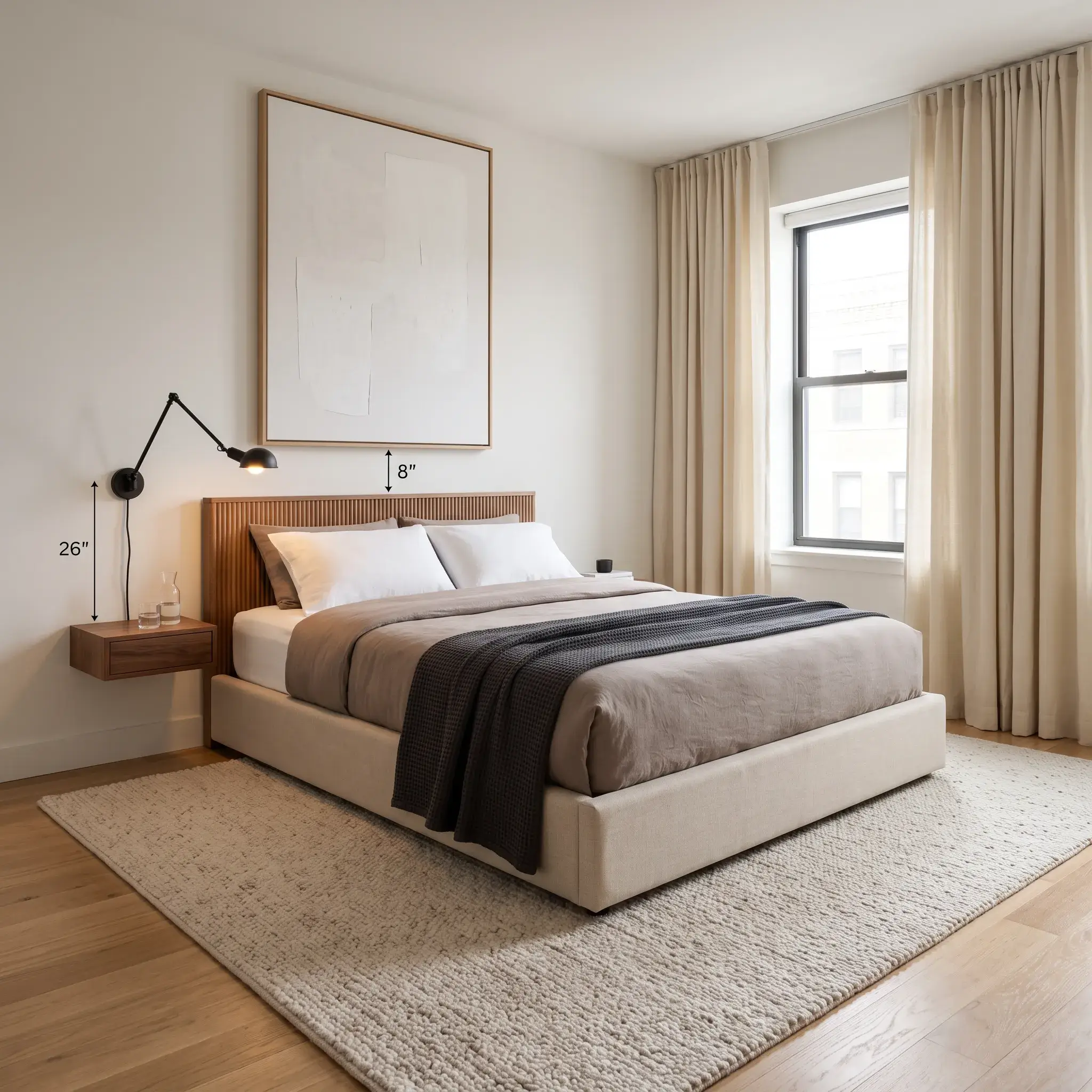
Mount the backplate center 55 to 65 inches above your finished floor. This places the light source 24 to 30 inches above the top surface of your mattress. Position the fixture 6 to 12 inches outward from the edge of your headboard. Use a 2700K warm soft white LED bulb with an inline dimmer so you can lower the bedroom light levels while keeping the living area bright.
- Featured Products:
- Matte black articulated brass swing-arm wall sconce
- 2700K warm dimmable LED bulb
- Compact floating walnut nightstand shelf
Check out more Decor Styles
3. High-Mounted, Full-Length Linen Drapery
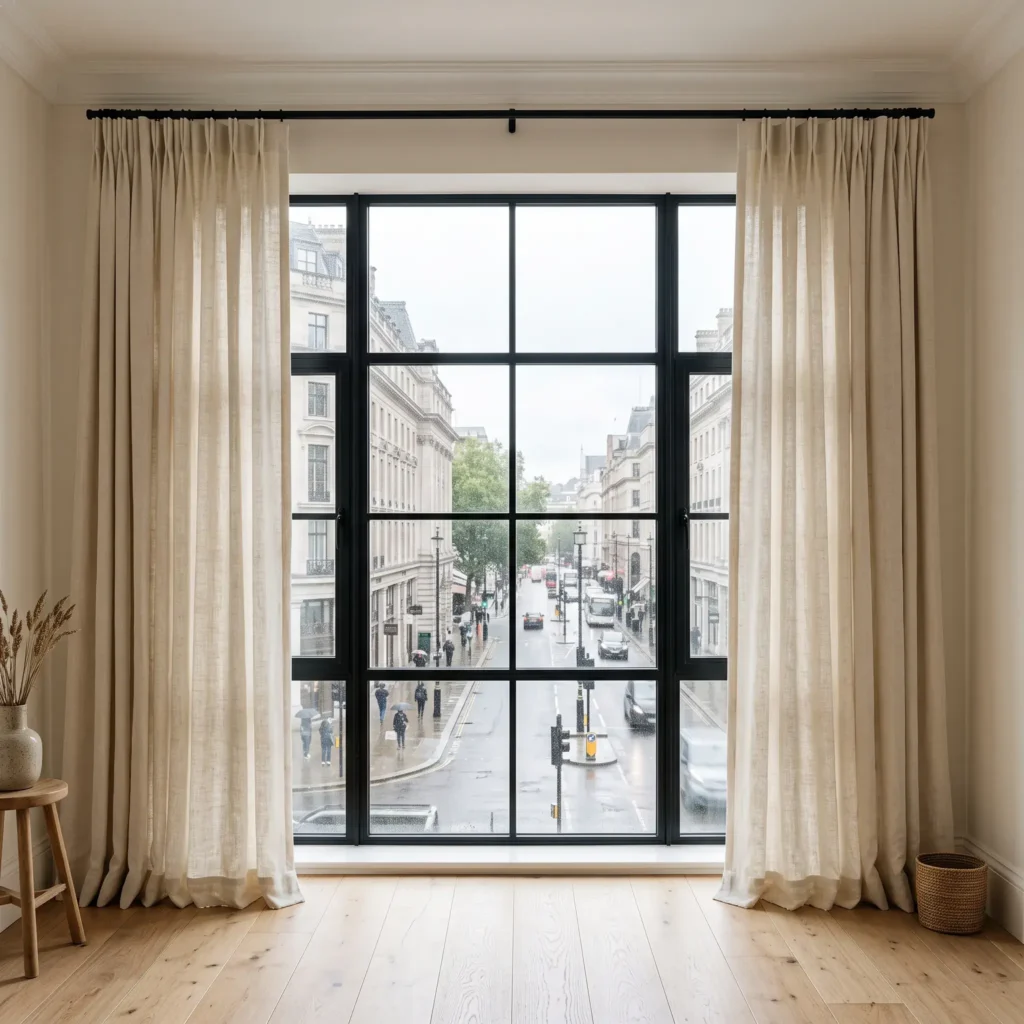
Bare window jambs or thin metal blinds make an apartment look bare and provisional. Hanging drapery hardware high and wide adds vertical height and softens hard window edges.
Mount your curtain rod 4 to 10 inches above the window frame, or place it right beneath your ceiling trim. Extend the rod 6 to 12 inches past the window molding on both sides. This clearance allows your curtain panels to stack off the window glass during the day, maximizing natural sunlight. Choose panels with a collective fabric width equal to 2.0 to 2.5 times your window width so the folds remain deep and tailored when drawn closed. Let the bottom hem lightly brush the floor.
- Featured Products:
- Heavyweight semi-sheer Belgian linen curtain panels in warm ivory
- 1-inch matte blackened iron curtain rod and matching rings
- Solid brass curtain tieback hooks
4. An Open-Back Bookcase Room Partition
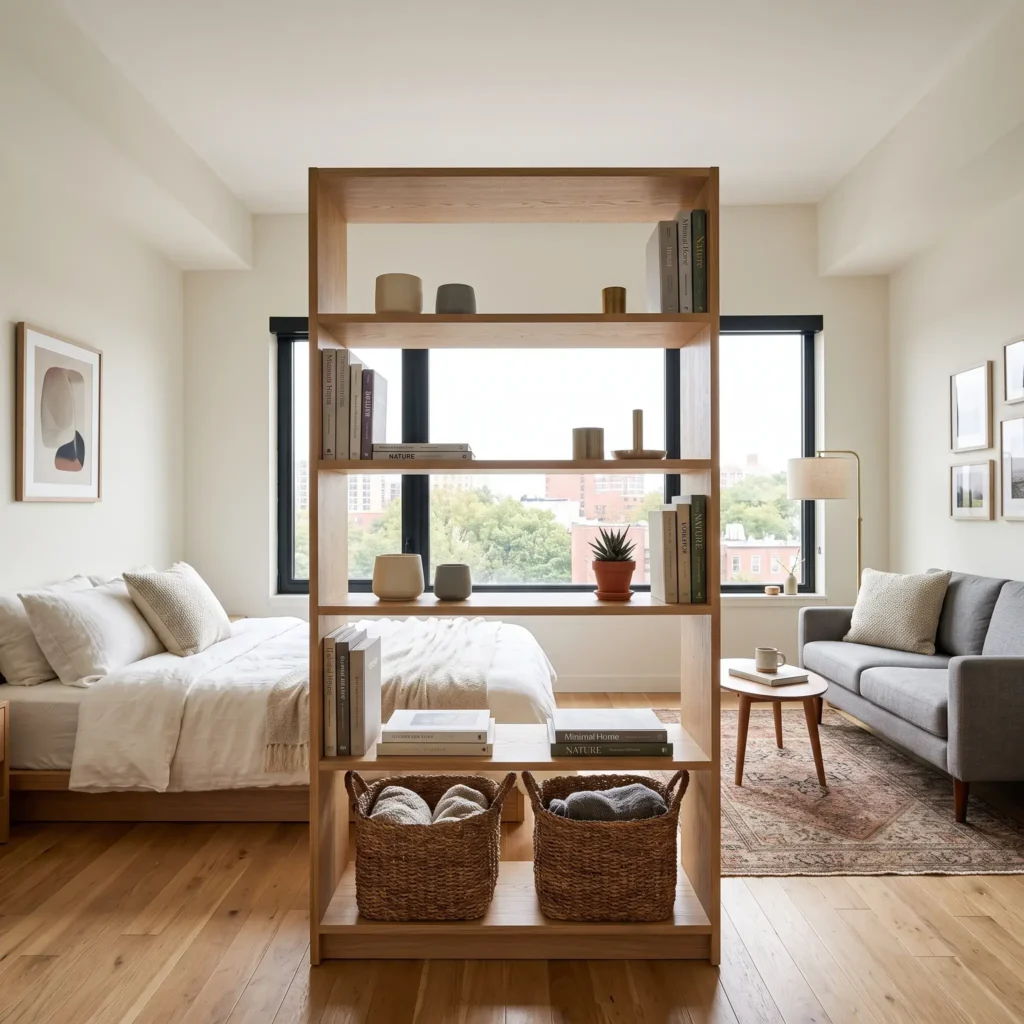
Solid partition walls or folding screens often block natural daylight and make small rooms feel claustrophobic. An open-back étagère bookcase creates a functional privacy screen while letting sunlight pass between your sleeping and living zones.
A 72 to 78 inch tall unit blocks standing sightlines to your bed from the main room. If you prefer an open sightline, a 48 to 60 inch shelf divides the floor plane while preserving sightlines across the upper ceiling volume. Maintain at least 30 to 36 inches of clear walkway space around the bookcase for comfortable room circulation.
Style the unit using the 360-degree curation method. Place heavy storage baskets and large art books on the bottom two shelves to anchor the unit. Fill roughly two-thirds of the upper shelf space, leaving the remaining one-third empty as intentional negative space for light transmission.
- Featured Products:
- 74-inch open-back metal and white oak étagère bookcase
- Woven seagrass storage baskets with handles
- Matte ceramic stoneware vases and hardbound design monographs
5. Tiered Bedding with a Contrast End Runner
Flat, unmade bedding makes an entire studio look untidy because the bed is visible from every angle. Layering structured textiles gives the mattress volume and a crisp profile.
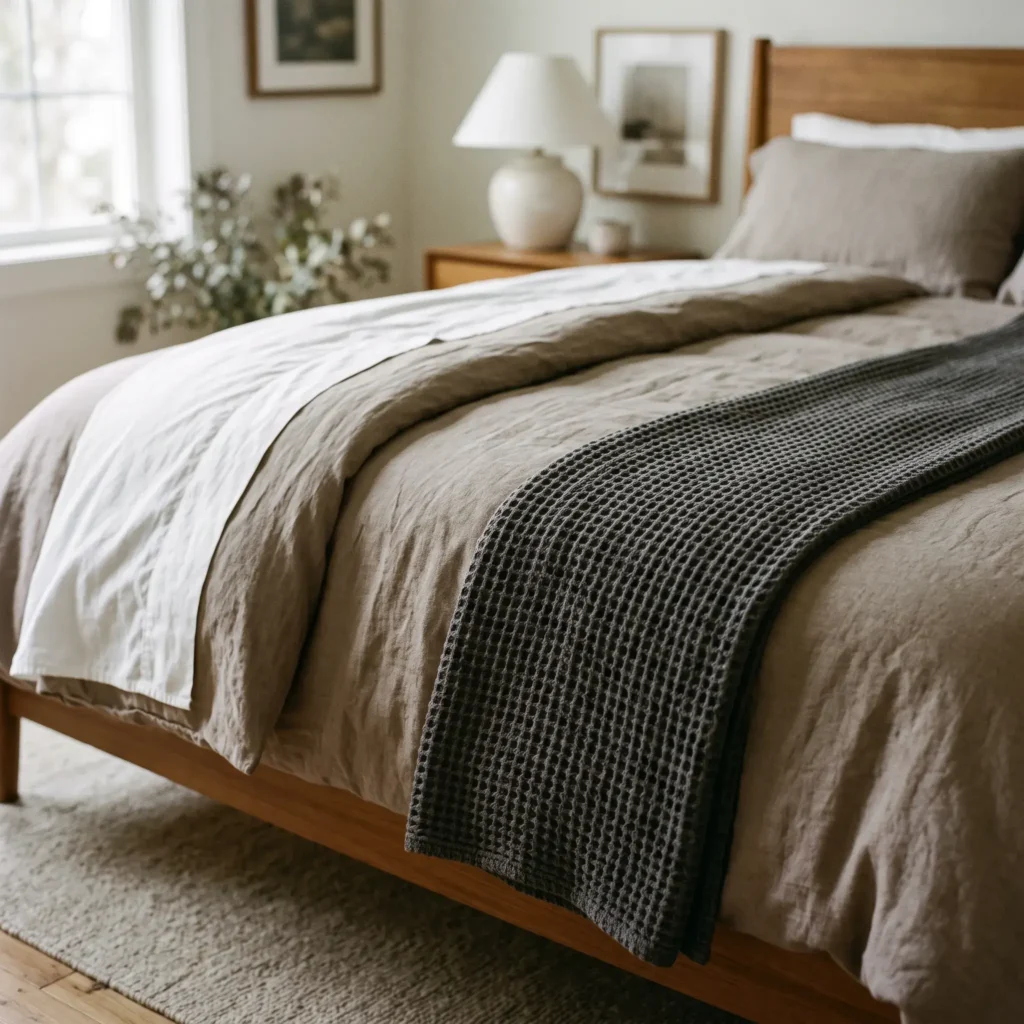
Start with breathable washed linen or cotton percale sheets, folding the flat sheet back over your quilt to expose a clean cuff. Add an oversized down-alternative duvet insert placed inside a matching cover. Fold the duvet back into thirds across the lower half of the mattress to build a horizontal shelf of soft volume.
Finish the foot of the bed with a heavy throw blanket. Select a chunky ribbed knit, washed waffle weave, or brushed wool runner. This structured layer introduces tactile weight and ties the bed’s color palette into your living furniture.
- Featured Products:
- Washed French flax linen duvet cover set in soft taupe
- Heavyweight organic cotton waffle bed runner in charcoal
- Lightweight stitched matelassé quilt
6. Proportional Decorative Pillow Arrangement
Using only two flat sleeping pillows leaves the head of your bed looking bare. A graduated pillow arrangement adds structured height and conceals gaps against your wall or headboard.
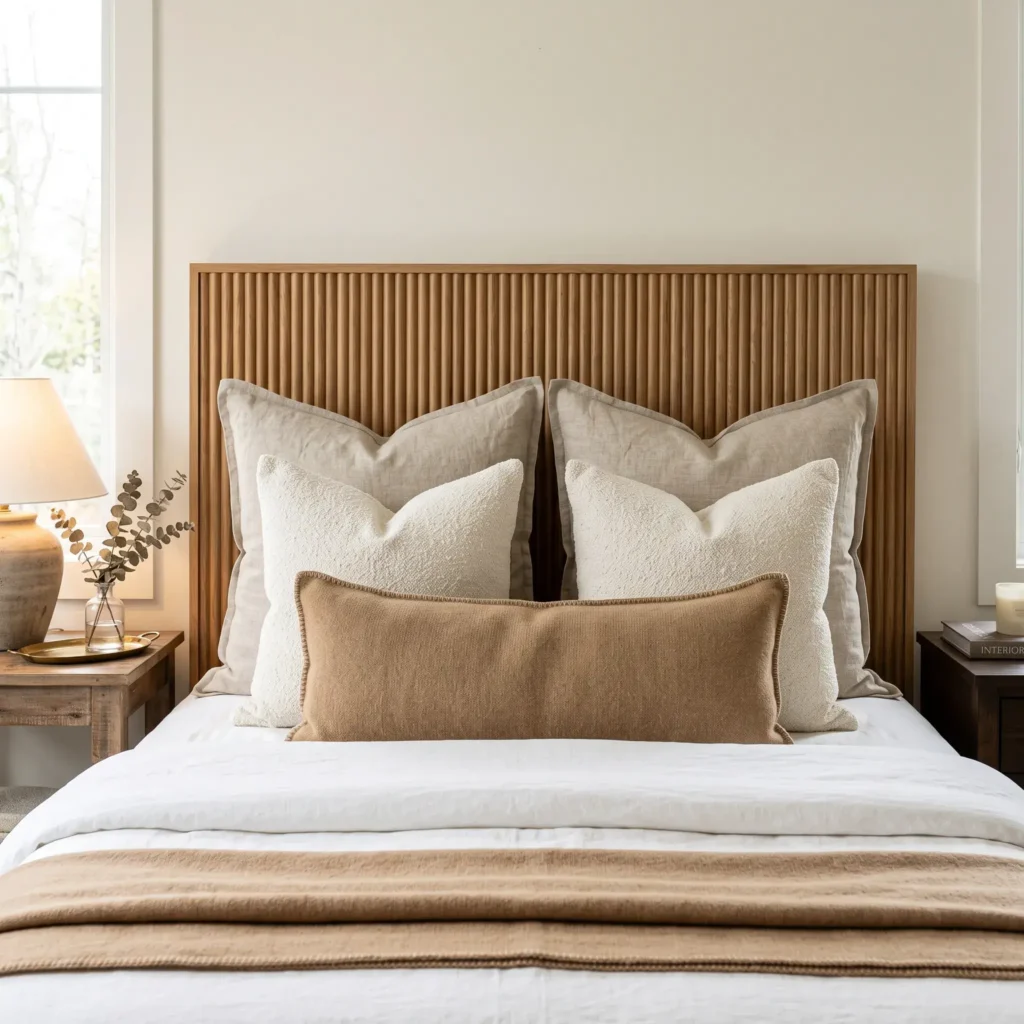
Place two 26×26 inch Euro shams against your headboard to serve as a backrest. Stack your functional sleeping pillows directly in front of the Euros. Add two 20×20 inch accent pillows in a textured fabric like bouclé, velvet, or wool. Complete the arrangement with a single 14×36 inch elongated lumbar pillow centered in the front row. The horizontal line of the lumbar pillow unifies the arrangement. Always buy pillow inserts that measure 1 to 2 inches larger than the covers to keep corners plump and firm.
- Featured Products:
- 26×26 inch washed linen Euro pillow shams
- 20×20 inch nubby bouclé accent pillow covers with down-feather inserts
- 14×36 inch textured wool lumbar pillow cover
7. An Oversized Architectural Wall Art Piece
Hanging multiple small picture frames creates a busy look on studio walls. A single large, framed art piece anchors the mattress and establishes a clean focal point.
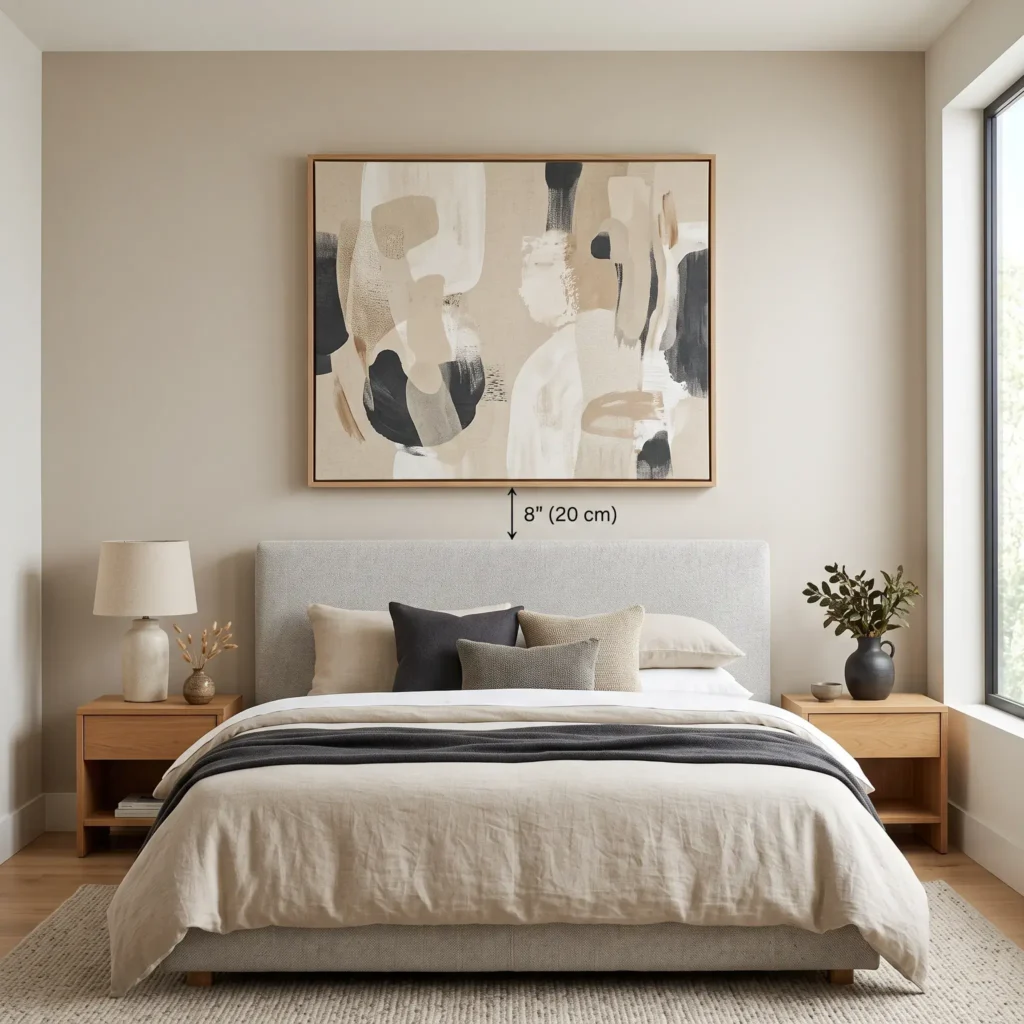
Select a framed canvas, photographic print, or line drawing measuring at least 36×48 inches. Ensure the width of the frame covers approximately 65 to 75 percent of your bed’s total width.
Hang the artwork so the bottom edge of the frame sits 6 to 10 inches above the top of your headboard or mattress. Raising the frame higher than 12 inches creates awkward separation, making the art appear disconnected from the furniture below it.
- Featured Products:
- 40×50 inch textured minimalist canvas art print
- 0.75-inch solid natural oak gallery picture frame
- Heavy-duty picture hanging hardware kit
8. A Leaning Arched Floor Mirror
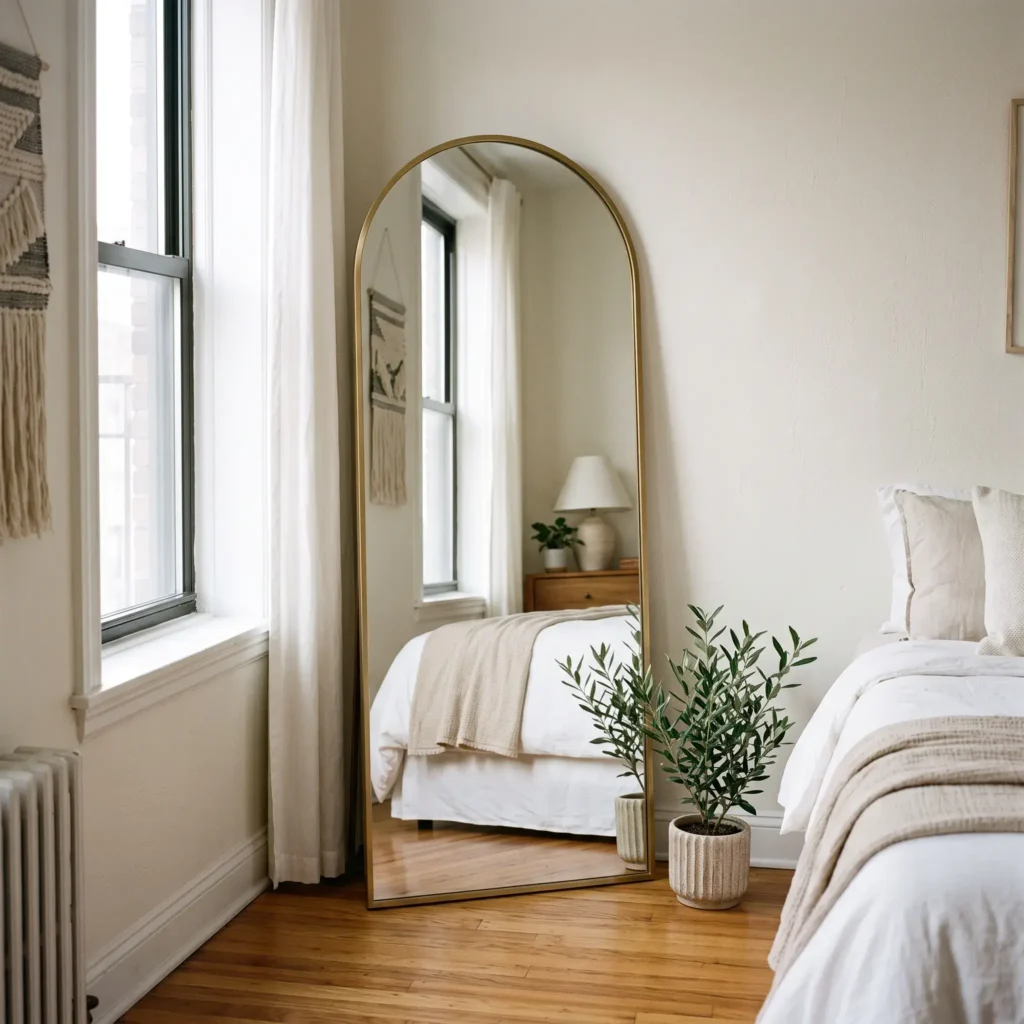
An oversized floor mirror serves as a decorative focal point while reflecting light through compact rooms. It catches outdoor light and bounces it deep into darker interior corners.
Choose a mirror measuring at least 65 to 72 inches tall with an arched or thin metal frame. Position the mirror directly opposite or perpendicular to your main window. This angle catches daylight and mirrors the outdoor view, visually doubling the perceived depth of your sleeping area. Always anchor the top bracket securely to a wall stud using safety straps to prevent tipping.
- Featured Products:
- 70×30 inch arched metal floor mirror with brushed brass frame
- Wall safety anti-tip mounting strap kit
- Fluted ceramic floor planter
Quick Comparison: Studio Bedroom Decor Pieces
| Decor Piece | Spatial Function | Ideal Placement | Key Dimension Formula |
|---|---|---|---|
| Area Rug | Micro-zones bed, reduces room echo | Bottom 2/3 of mattress | Extends 18–24 in past sides; 8–12 in floor border |
| Plug-In Sconce | Clears nightstand surface, provides task light | Beside bed frame | 24–30 in above mattress; 6–12 in lateral offset |
| Full-Length Drapery | Extends perceived wall height | 4–10 in above window frame | Panel width = 2.0x–2.5x total window width |
| Open-Back Shelf | Divides room zones while passing daylight | Perpendicular to wall | 72–78 in height for standing privacy; 30–36 in walkways |
| Tiered Bedding | Adds structural volume to central furniture | Across mattress plane | Fold duvet in thirds; drape runner along foot rail |
| Pillow Set | Conceals gaps and provides vertical backing | Against headboard | 26 in Euros + 20 in accents + 14×36 in front lumbar |
| Oversized Art | Establishes main visual focal point | Centered above mattress | Frame width = 65–75% of headboard width |
| Floor Mirror | Bounces daylight into shaded sleeping nook | Opposite window | Minimum 65–72 in tall; anchor securely to wall |
The 60-30-10 Color Rule for Open Floor Plans
A studio apartment feels cohesive when your color palette flows naturally between your bed and living furniture. Using unrelated accent colors across the same open room creates visual chaos. Interior decorators apply the 60-30-10 color rule to keep open rooms balanced:
- 60% Dominant Base: This color covers your main background surfaces. Use a neutral tone like warm white, soft greige, or pale gray on your walls, large area rugs, and primary duvet cover.
- 30% Secondary Color: This shade introduces contrast through mid-sized pieces. Use warm wood tones, medium gray fabrics, or muted earthy hues on your window drapes, upholstered headboard, and bookcase divider.
- 10% Accent Color: This tone adds personality through small, deliberate touches. Choose a deeper color, such as terracotta, forest green, or navy, and apply it to your front lumbar pillow, framed art print, and small tabletop ceramics. Repeating this single accent color across both your sleeping area and your sofa ties your entire apartment together.
3 Small Details That Make a Studio Look Unfinished
Even if you buy quality furniture, small everyday oversights can ruin your apartment’s visual flow. Address these three common problems to give your studio a clean, intentional finish:
Exposed Power Cords
Tangled charging cables and black power strips instantly make a bedroom look messy. Keep your surfaces tidy by running lamp cords through paintable wall channels. Use adhesive cable clips behind your nightstand legs to secure phone chargers out of plain sight.
Visible Under-Bed Storage Boxes
Plastic storage bins under an open bed frame make your space look like a storage closet. If your platform frame lacks built-in solid drawers, install a tailored linen bed skirt. Choose a skirt with clean corner pleats that falls straight to your floorboards, concealing your storage boxes completely.
Mismatched Lighting Temperatures
Mixing cool white light bulbs with warm yellow desk lamps creates an uncomfortable visual clash. Always check the Kelvin rating on your light bulb packaging. Standardize all your ceiling fixtures, floor lamps, and bedside sconces to a warm 2700K soft white. A uniform light temperature keeps your living and sleeping zones visually connected after dark.
Frequently Asked Questions
What size rug should I buy for a queen bed in a studio apartment?
An 8×10 foot area rug works best for a queen bed in most studio apartments. Slide the rug under the bottom two-thirds of the frame so it extends at least 18 to 24 inches past the sides and footboard. If your studio has a narrow layout, a 6×9 foot rug will anchor the bed while keeping entry doors and walkways clear.
How do I separate my bed from my living room without building walls?
Use an open-back bookcase as a room divider. A 72-inch tall shelving unit blocks views of your bed while open cubbies allow natural window light to filter through. You can also mount a ceiling curtain track with semi-sheer linen drapes, allowing you to pull the partition shut at night and tuck it away during the day.
Can I install bedside wall sconces in a rental apartment?
Yes, you can install plug-in wall sconces that secure to your drywall with small screws rather than electrical boxes. These fixtures plug directly into standard wall outlets. When you move out, simply remove the brackets and patch the small screw holes with spackle.
How high should I hang artwork above my bed?
Hang your artwork so the bottom edge of the frame sits 6 to 10 inches above the top of your headboard. If you sleep on a low platform bed without a headboard, hang the bottom edge 8 to 12 inches above the mattress surface so your pillows do not hit the frame.
Making a studio bedroom feel finished comes down to scale, lighting control, and balanced boundaries. When you anchor your floor with an appropriately sized rug, lift your drapery toward the ceiling, and separate functional zones with open storage, your studio transforms from a temporary space into a functional, comfortable home.