8 Mid-Century Modern Living Room Ideas: Authentic Layouts for Everyday Living
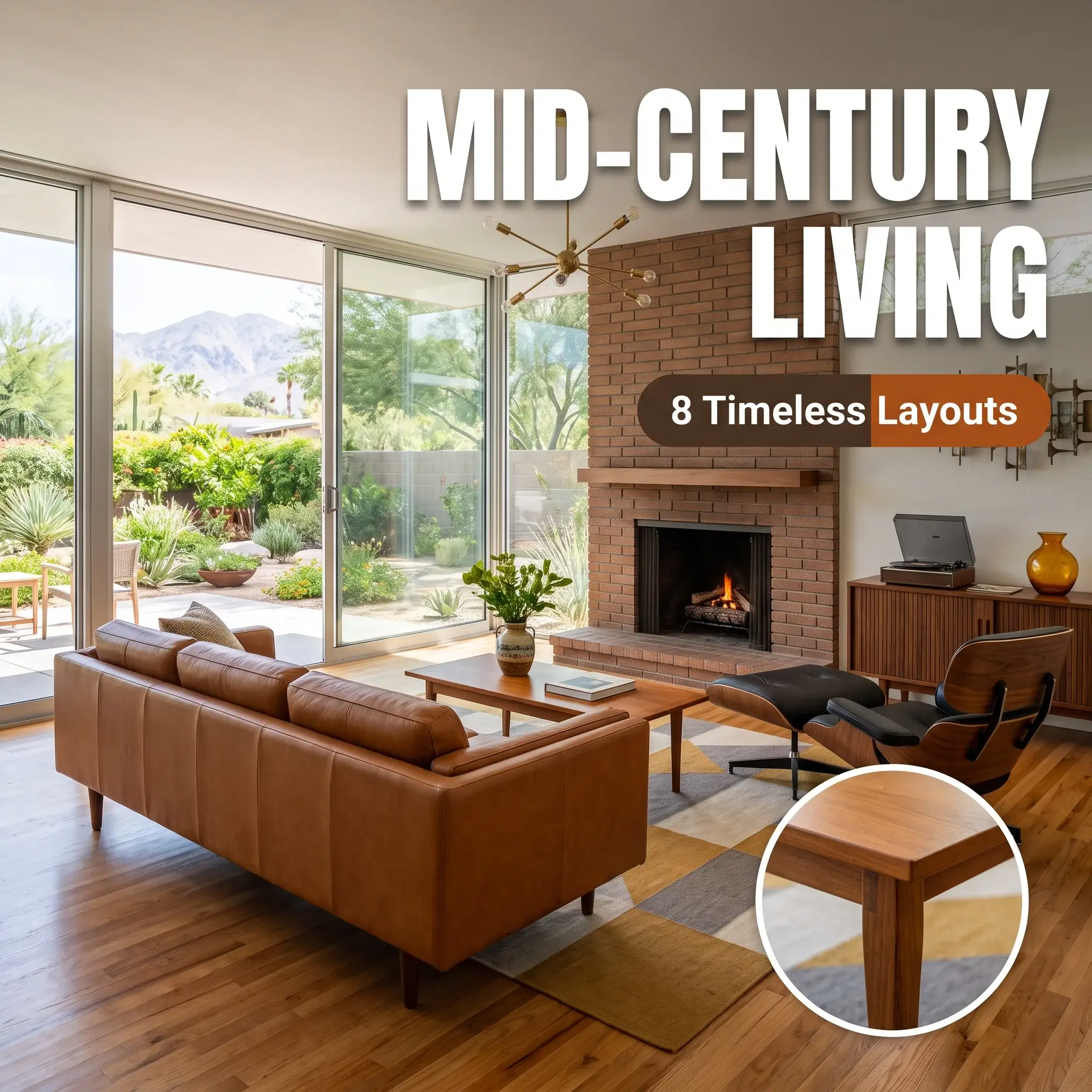
A mid-century modern living room relies on clean architectural lines, warm natural timber, and functional simplicity. Born out of the post-war building boom between 1945 and 1969, this design philosophy discarded ornate Victorian detailing. Instead, architects turned to open spaces, low furniture baselines, and a seamless connection between indoor rooms and outdoor views.
You do not need a glass-walled California pavilion to make this aesthetic work. Real mid-century modern design focuses on practical living, balanced proportions, and comfortable seating that never crowds your floor space.
8 Practical Mid-Century Modern Living Room Ideas
1. The Low-Profile Walnut and Cognac Lounge
This design centers on preserving long horizontal sightlines. Placing a tailored cognac leather sofa on eight-inch tapered peg legs exposes the floor underneath. This visually expands smaller square footage while keeping the room airy. A solid walnut credenza along one wall provides closed storage, preventing everyday visual clutter.
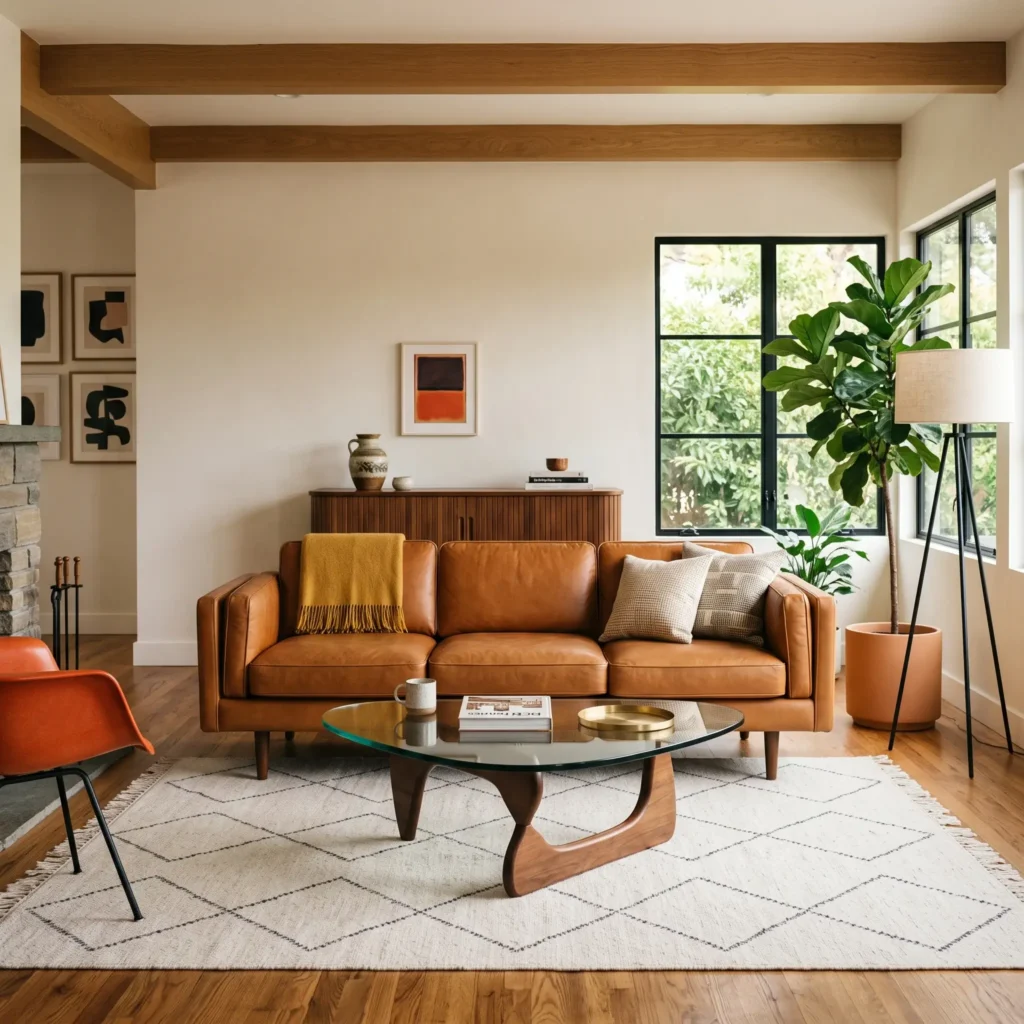
- Curated Products in This Design:
- Cognac top-grain leather sofa with tapered walnut legs
- Low-profile walnut credenza with sliding tambour doors
- Isamu Noguchi-style biomorphic glass coffee table with curved walnut pivot base
- Ivory wool geometric flat-weave area rug (8×10 ft)
- Matte black tripod floor reading lamp
2. The Sunlit Indoor-Outdoor Glass Corner
Inspired by California post-and-beam architecture, this layout uses floor-to-ceiling glass sliding doors to bring outdoor garden greenery inside. The furniture stays low to avoid blocking windows, relying on rich teak wood and warm mustard accent tones to reflect exterior daylight.
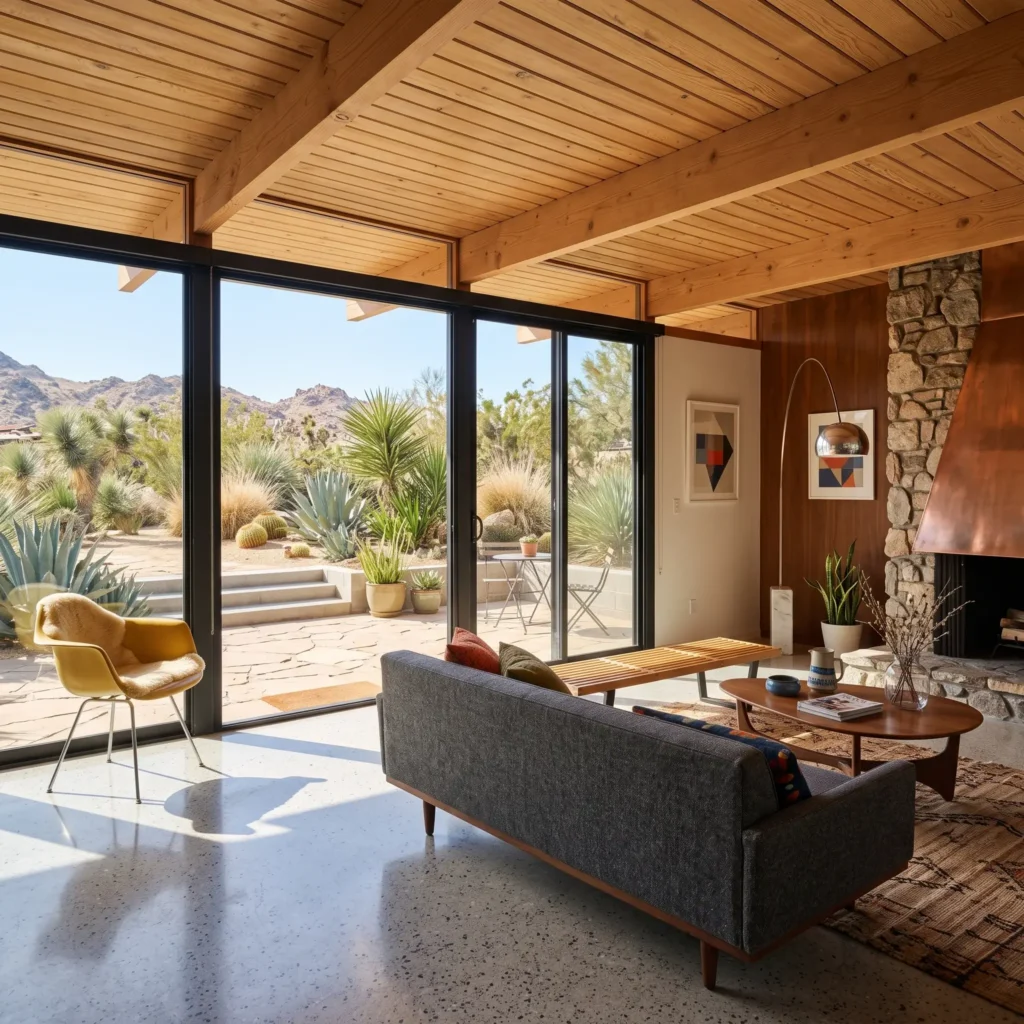
- Curated Products in This Design:
- Low-slung charcoal gray textured tweed sectional
- Molded fiberglass accent armchair in mustard yellow with chrome dowel base
- George Nelson-style slatted platform bench used as a central coffee table
- Unlacquered brass multi-arm Sputnik flush-mount ceiling light
- Sandstone terrazzo tile flooring
Check out more Living Room Ideas
3. The Textured Japandi-Mid-Century Hybrid
This room tempers the sharp geometric edges of 1950s furniture with the soft minimalism of Japandi interiors. Limewash plaster walls and light oak cabinetry replace heavy dark stains, pairing structural mid-century wire chairs with rounded bouclé upholstery.
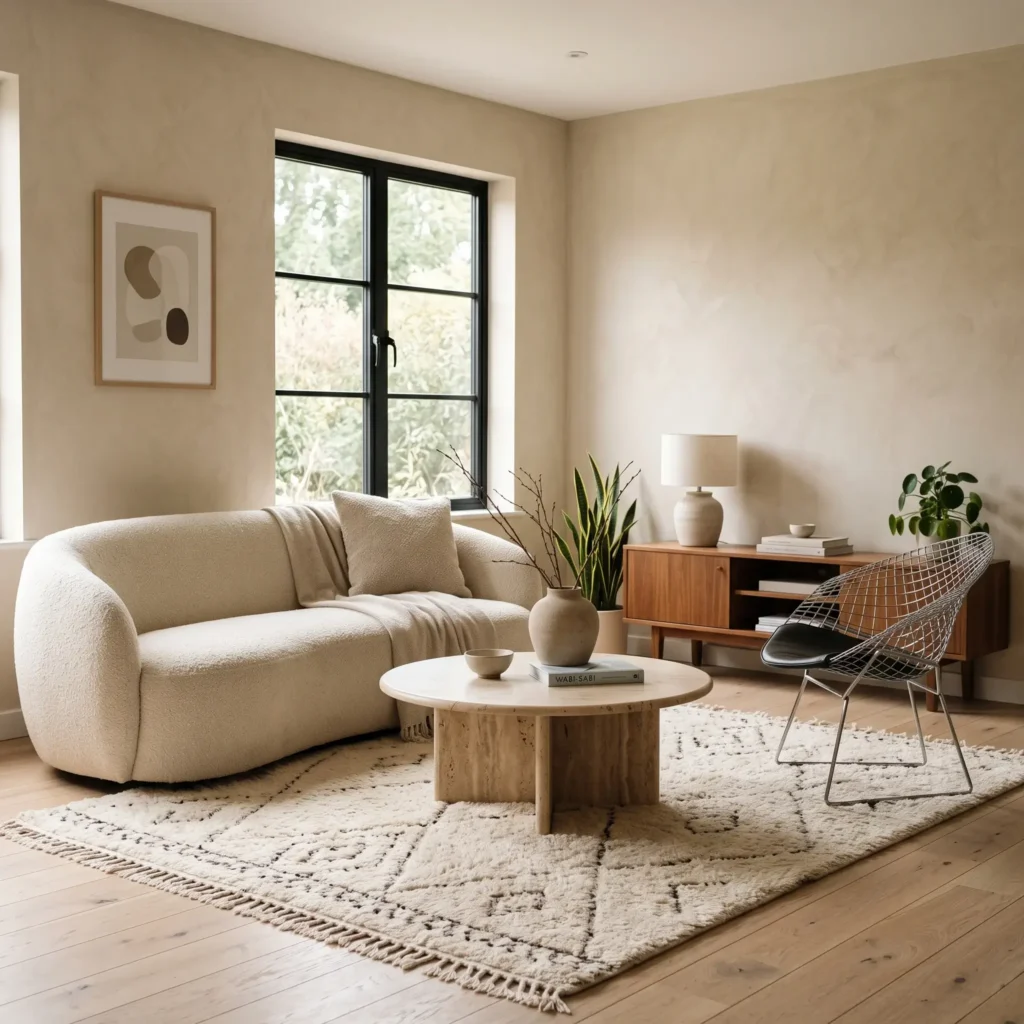
- Curated Products in This Design:
- Curved off-white bouclé three-seater sofa
- Harry Bertoia-style welded steel wire Diamond lounge chair with black leather pad
- Honed circular travertine stone coffee table
- Minimalist ribbed ceramic vase with dried botanical stems
- High-pile Moroccan wool rya rug
4. The Architectural Roman Brick Hearth Anchor
The fireplace serves as the permanent anchor in this open-concept layout. Long, narrow Roman bricks create an asymmetrical hearth wall that contrasts against smooth plaster surfaces. Floating the furniture cluster away from the walls forms a cozy conversational island.
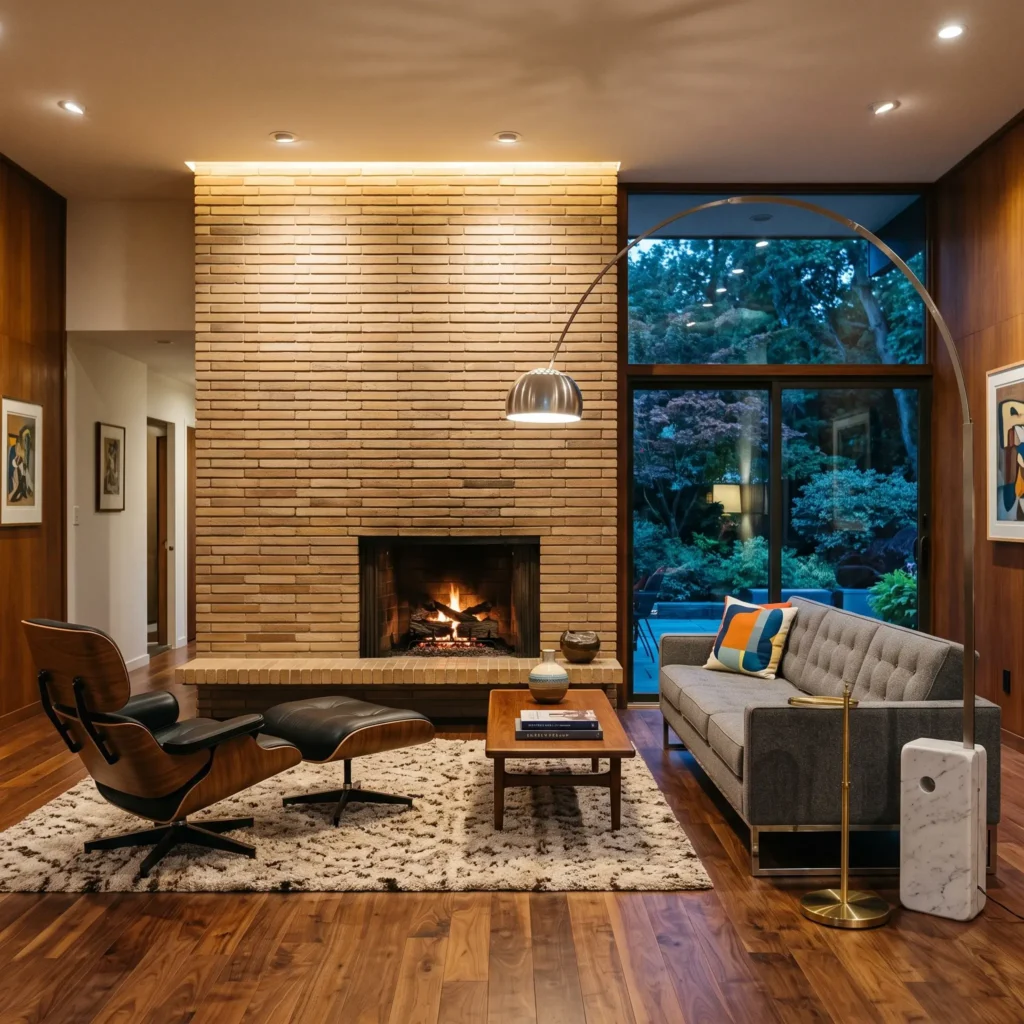
- Curated Products in This Design:
- Florence Knoll-style tufted heather gray sofa with tubular steel frame
- Molded plywood lounge chair in walnut veneer
- Floating solid cedar fireplace mantel beam
- Flos Arco-style arched floor lamp with white marble base and chrome dome
- Olive green velvet lumbar accent pillows
5. The Small-Space Apartment Layout
Tailored for compact urban apartments under 700 square feet, this design eliminates bulky floor pieces. A wall-hung shelving system utilizes vertical ceiling height for books and media equipment, while glass and slender steel legs keep sightlines clear across the entire room.
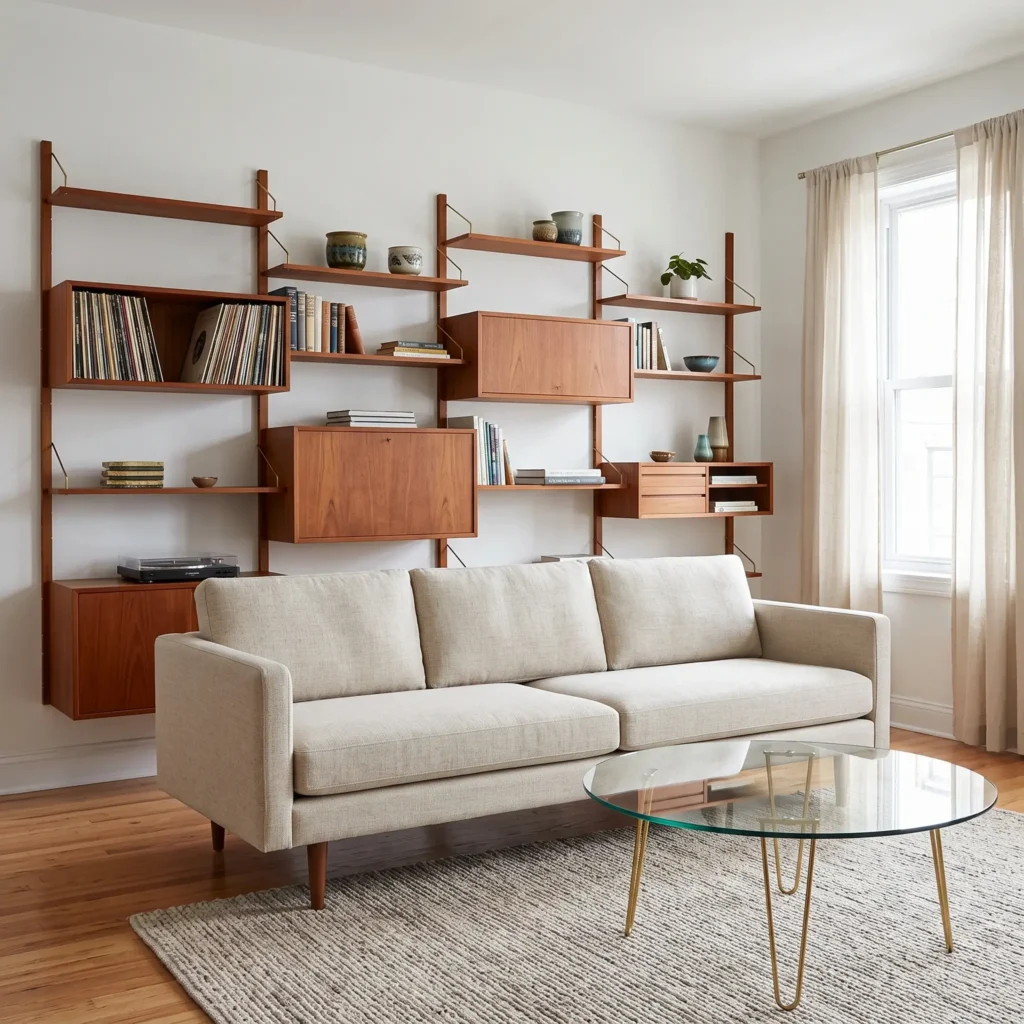
- Curated Products in This Design:
- Poul Cadovius-style wall-mounted modular teak shelving system
- Compact 72-inch apartment sofa in oatmeal linen
- Wire-base round glass coffee table
- Eero Saarinen-style white pedestal side table
- Potted snake plant (Sansevieria) in an elevated wooden stand
6. The Vintage Collector’s Curated Living Room
This space avoids modern catalog monotony by pairing authenticated vintage pieces from different mid-century manufacturers. Rich walnut veneers, exposed joinery, and patinated brass wall art establish historic character without feeling dated.
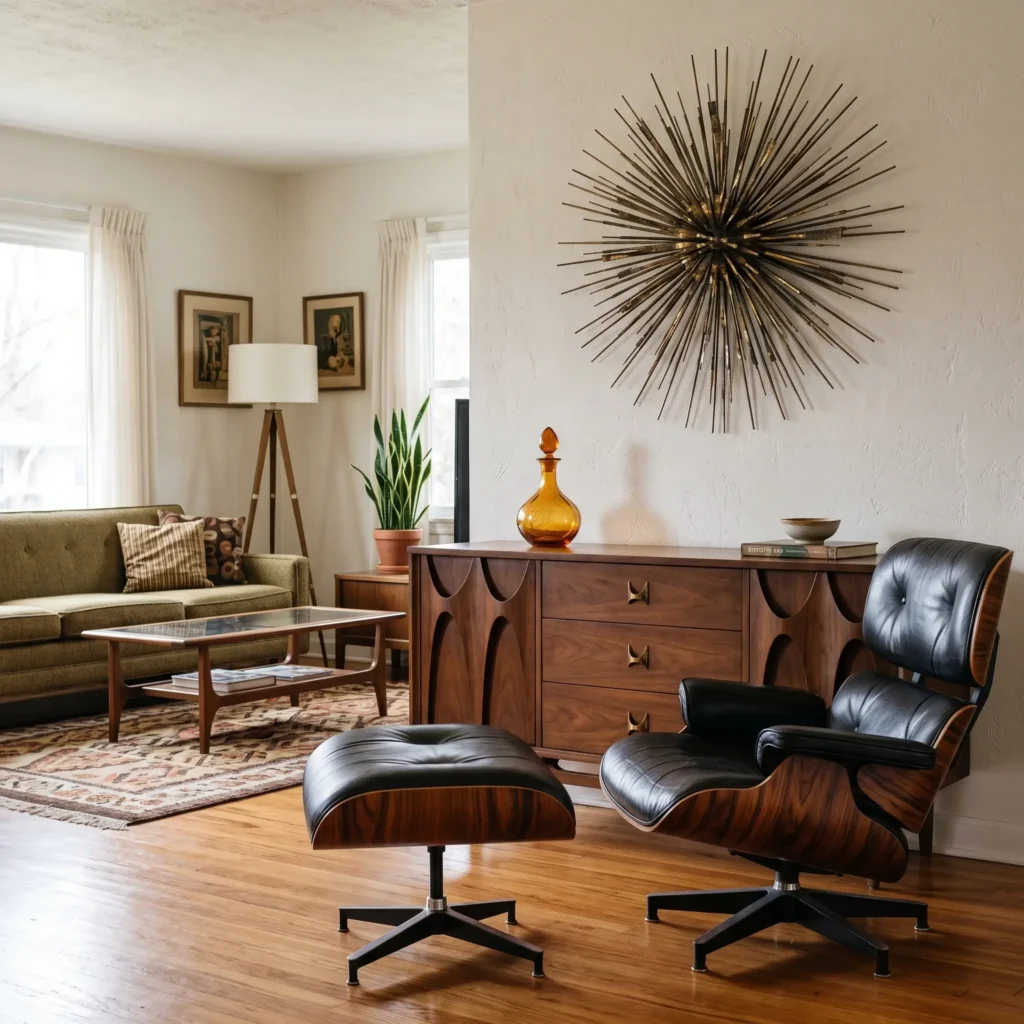
- Curated Products in This Design:
- Broyhill Brasilia sculpted walnut credenza with signature parabolic arches
- Charles and Ray Eames-style lounge chair and ottoman in black leather and palisander wood
- Curtis Jeré-style acid-etched brass sunburst metal wall sculpture
- Slubbed flax linen roman shades
- Hand-blown amber Blenko glass floor vase
7. The Earthy Botanical Sunken Seating Area
Inspired by Eero Saarinen’s famous Miller House, this layout uses subtle grade changes and rich botanical greenery to define social zones. Dropping the central seating area two steps down clears perimeter walls, allowing daylight from clerestory ribbon windows to illuminate deep corners.
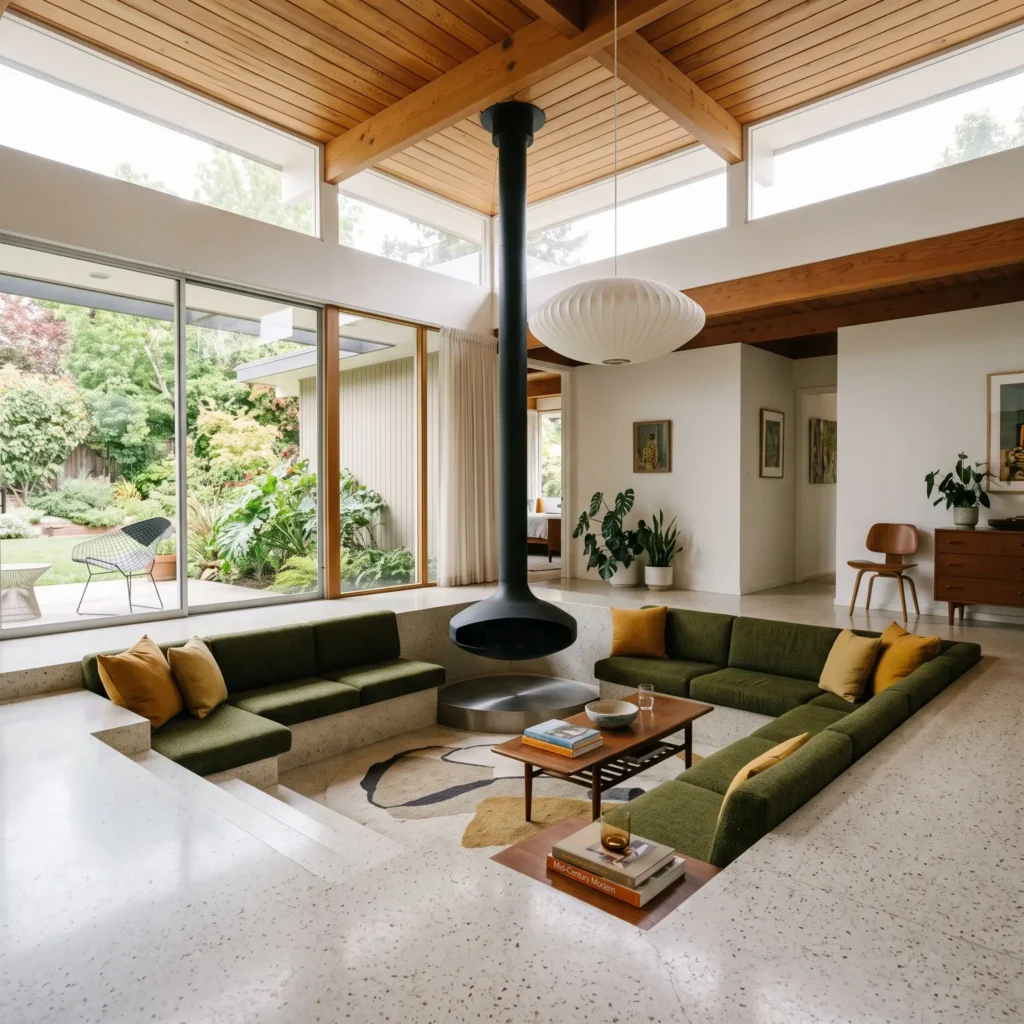
- Curated Products in This Design:
- Custom built-in sunken conversation sofa upholstered in olive moss performance velvet
- Suspended matte black cylindrical steel floating fireplace
- George Nelson-style spherical Bubble pendant light
- Split-leaf philodendron in a large unglazed terracotta floor vessel
- Ochre and terracotta patterned wool throw pillows
8. The Desert Modernist Ranch Living Room
This layout updates classic mid-century Palm Springs ranch homes. A balanced combination of white plaster walls, raw stone, and bold orange accents creates an inviting, bright social area that handles heavy everyday use.
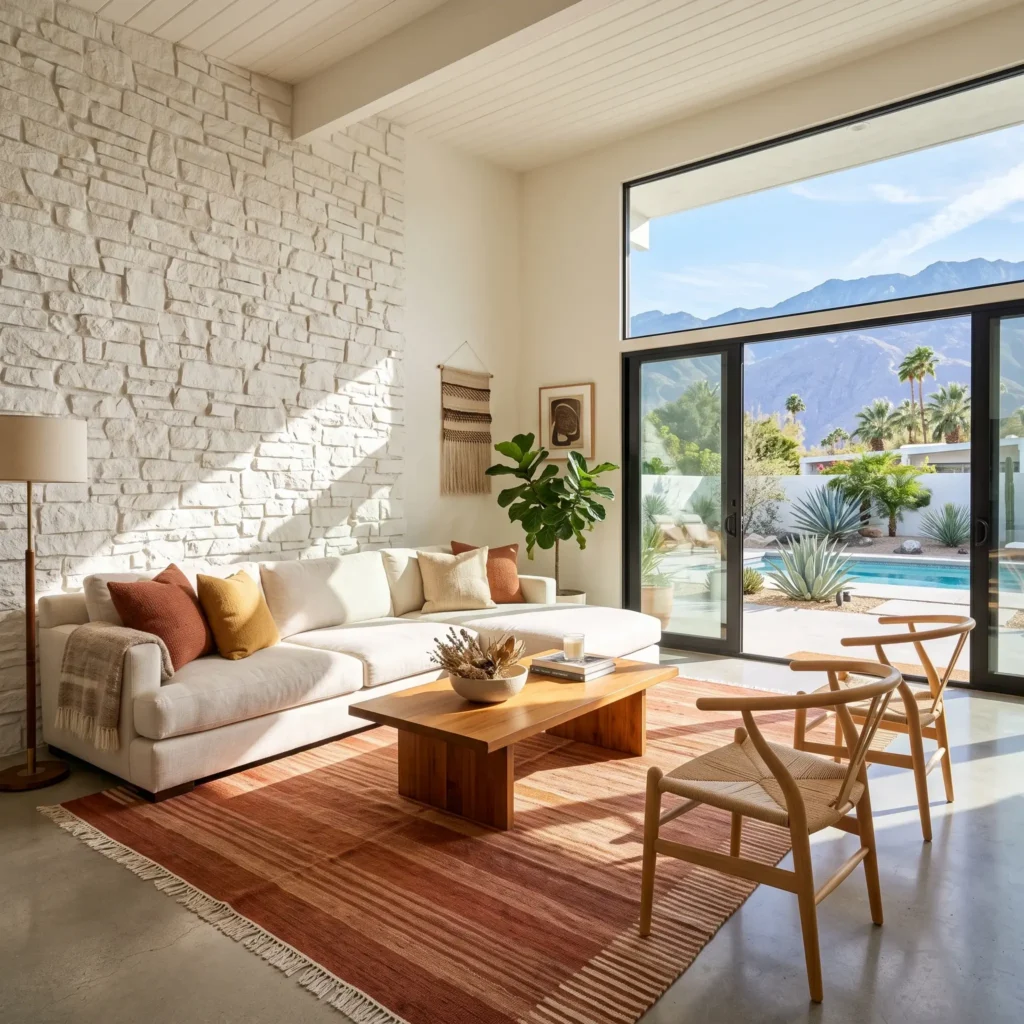
- Curated Products in This Design:
- Low-profile ivory linen sectional with exposed walnut base rail
- Pair of Hans Wegner-style Wishbone chairs in natural beech with woven paper cord seats
- Asymmetrical flagstone feature wall
- Low rectangular solid teak coffee table
- Terracotta flat-weave runner rug
Architectural Foundations: Why Mid-Century Layouts Work
Mid-century modern homes were designed from the structural framework outward. Understanding these basic principles helps you arrange furniture effectively:
Preserving the Floor Plane
Traditional Victorian and colonial living rooms relied on heavy skirted sofas and solid wood blocks that sat directly on carpets. Mid-century designers raised furniture onto slender peg, dowel, or hairpin legs. Raising furniture exposes the unbroken floor underneath. When your eyes can see the floor extending from wall to wall, rooms feel significantly larger.
Post-and-Beam Spatial Openness
Post-war architects replaced interior load-bearing walls with structural post-and-beam skeletons. This freed the living room to merge directly with dining areas and hallways. To maintain this fluid movement, keep main walking pathways between 36 and 48 inches wide. Avoid placing tall bookcases or high-back chairs where they block sightlines between adjoining rooms.
The 60-30-10 Color and Material Framework
Mid-century modern rooms rely on a disciplined color and texture balance rather than chaotic patterns:
- The 60% Canvas: Apply warm, reflective neutrals to large perimeter walls and ceilings. Avoid icy, blue-tinted whites. Warm ivory and light linen tones soften the contrast against dark wood grains.
- The 30% Secondary Layer: This layer comes from the furniture materials themselves. Deep walnut case goods, oiled teak sideboards, and rich caramel leather bring organic warmth into the room.
- The 10% Accent Pop: Confine bright vintage colors to isolated focal points. A single chartreuse armchair, a pair of persimmon pillows, or a cobalt art-glass vase provides visual energy without cluttering the room.
Wood Tones: How to Mix Walnut and Oak Without Clashing
A common decorating mistake is trying to buy every wood piece in an identical stain. This results in a flat, artificial showroom appearance. Mid-century homes naturally combined different wood species by following undertone harmony:
| Wood Species | Natural Color Cast | Ideal Room Pairing | Best Application |
|---|---|---|---|
| American Black Walnut | Deep cool brown, violet-gray undertones | White oak flooring, linen upholstery | Primary credenzas, coffee table bases |
| Burmese Teak | Warm golden amber | Polished concrete, brass accents | Dining tables, accent chair frames |
| White Oak | Neutral pale wheat | Dark walnut case goods, cognac leather | Flooring, exposed ceiling decking |
| Douglas Fir / Cedar | Warm salmon-orange | Off-white plaster, black metal | Structural roof beams, wall cladding |
The Balancing Rule: Anchor the space with one primary wood species for your largest surface, such as white oak flooring or a large walnut credenza. Then, repeat that primary tone in at least two smaller accents across the room. Secondary wood tones can be up to two shades lighter or darker, provided their underlying warmth complements the base material.
Capital Allocation: Where to Spend vs. Where to Save
Furnishing a mid-century modern living room does not require buying $6,000 museum originals. Allocate your decorating budget using this three-tier framework:
Tier 1: Primary Structural Anchors (Spend 50% to 60%)
Invest in pieces that define the room’s architecture, provide daily ergonomic support, and retain secondary market value:
- The Main Lounge Chair: An authentic licensed edition or a high-grade reproduction lounge chair (such as an Eames, Womb, or Papa Bear silhouette).
- The Storage Credenza: Look for solid-core walnut construction with dovetail joinery and smooth drawer slides. Vintage American lines like Broyhill Brasilia or Lane Acclaim offer superior durability compared to modern veneer flat-packs.
Tier 2: Everyday Functional Seating (Spend 25% to 30%)
Source sturdy, clean-lined contemporary pieces designed for daily use:
- The Main Sofa: Choose high-resilience foam cushions and commercial performance fabrics like textured tweed or tight bouclé that resist sagging.
- The Central Coffee Table: Simple geometric platforms, slatted benches, or tempered glass designs that balance durable utility with easy cleaning.
Tier 3: Tactile Accents and Vintage Bricolage (Spend 10% to 15%)
Save money by sourcing secondary decorative accessories from flea markets, estate sales, and affordable retailers:
- Lighting Fixtures: Articulated metal floor lamps, task sconces, and globe pendants.
- Textiles and Decor: Hand-loomed wool rugs, studio pottery bowls, vintage art-glass vessels, and living architectural houseplants like fiddle-leaf figs and monsteras.
Common Mistakes to Avoid
- The Time-Capsule Trap: Avoid furnishing an entire room from a single era catalog. Mixing structured mid-century walnut sideboards with contemporary linen sectionals and organic stone tables keeps the home feeling collected, comfortable, and modern.
- Pushing Furniture Against Walls: Mid-century layouts rely on floating furniture groupings. Pull your sofa away from the perimeter to anchor it over an area rug in the center of the room.
- Ignoring Room Clearance: Sculptural chairs with sprawling bases need room to breathe. Maintain at least 18 inches between your sofa and coffee table, and keep side pathways clear.
- Overusing Plastic and Chrome: Early modernism embraced industrial composites, but too much fiberglass, acrylic, and high-gloss chrome can make living rooms feel clinical. Balance sleek surfaces with tactile bouclé, nubby wool, and unvarnished timber.
Frequently Asked Questions
What defines a mid-century modern living room?
A mid-century modern living room is defined by clean lines, low-profile silhouettes, open floor plans, and minimal ornamentation. Furniture is typically elevated on peg or hairpin legs, balancing natural hardwoods like walnut and teak with post-war materials like molded plywood, metal, and glass.
How do I make a mid-century modern living room feel cozy?
To make a mid-century room feel warm and inviting, layer varied tactile fabrics. Pair sleek wooden furniture frames with high-pile Moroccan wool rugs, nubby bouclé chairs, slubbed linen drapery, and warm cognac leather. Incorporate warm-toned light bulbs (2700K) and architectural houseplants.
Can I mix mid-century modern with contemporary furniture?
Yes. Mid-century furniture pairs naturally with modern minimalist, Scandinavian, and Japandi designs. A vintage walnut credenza or an Eames-style accent chair works well alongside a relaxed contemporary slipcovered sofa and natural stone accents.
What are the best colors for a mid-century modern living room?
The standard palette begins with a neutral base of warm off-white, ivory, or pale taupe on walls. Secondary structural tones come from natural walnut, teak, and cognac leather. Energetic accent colors include ochre mustard, burnt orange, avocado green, and deep teal.
How do I choose the right rug for a mid-century living room?
Choose an area rug large enough that at least the front legs of all major seating pieces rest securely on it. Flat-weave wool rugs featuring subtle geometric shapes, solid neutral ribbed bouclé textures, or plush shags work best to anchor low-profile furniture.