8 Practical Kids Bedroom Ideas Built for Sleep, Study, and Play
Designing a bedroom for a growing child brings a real challenge. Children outgrow cartoon wall graphics and character bed sets quickly. At the same time, floor clutter from toys and school supplies can easily overwhelm a home.
A great children’s bedroom balances physical play, restful sleep, and quiet study. The secret lies in adaptable architecture. Invest in neutral, high-quality core furniture. Keep evolving interests focused on accessible accents like bedding, prints, and paint.
Here are eight functional room designs that balance daily organization, safety standards, and timeless appeal.
Idea 1: The Low-Profile Montessori Room for Toddlers
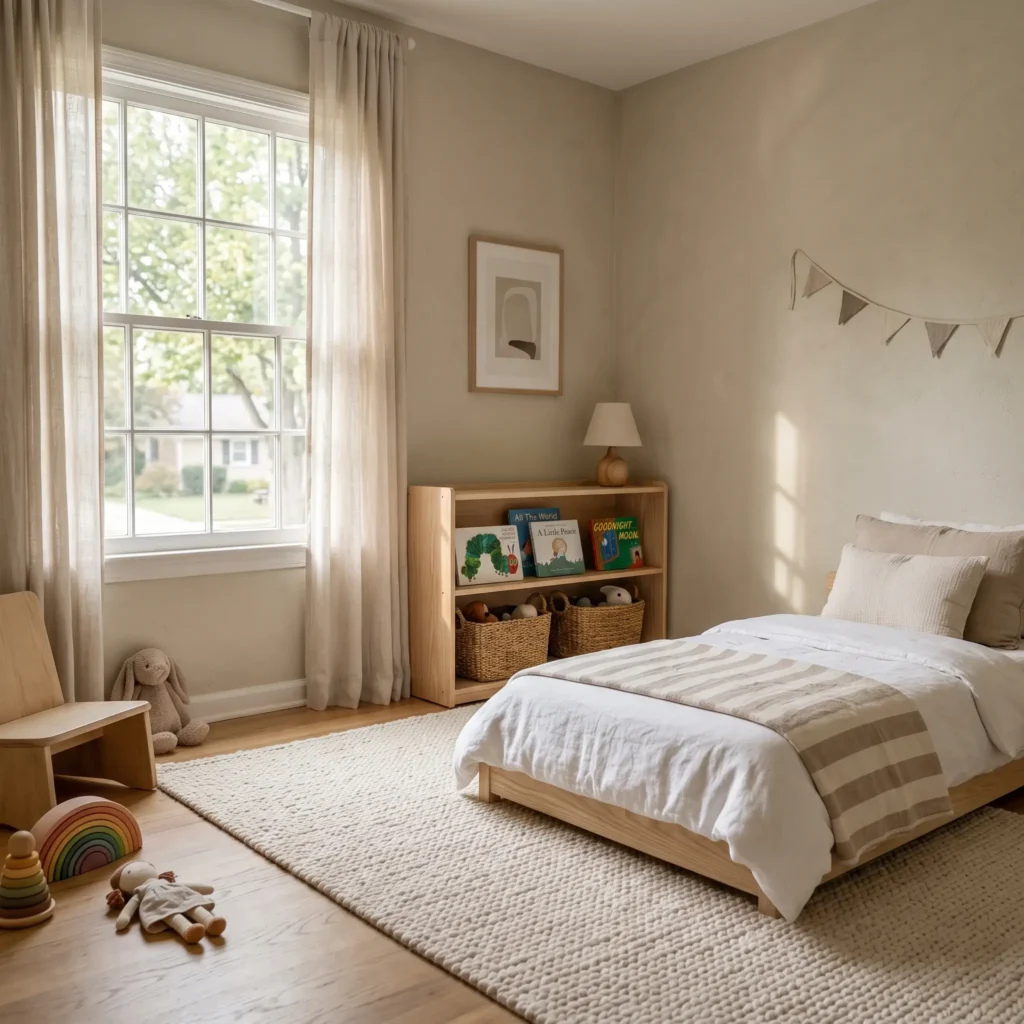
This design supports early childhood autonomy and motor development. Instead of a raised crib with railings, the room centers on a floor bed frame. Low open shelves allow toddlers to choose their own toys and put them away. Soft floor coverings protect developing balance.
- Key Products Featured:
- Solid ash wood floor bed frame (twin size)
- Low two-tier forward-facing book caddy
- Flatweave organic cotton area rug (5×8 feet)
- Coiled rope laundry and toy storage basket
- Cordless blackout Roman window shade
Idea 2: The Shared L-Shaped Bunk Room
Traditional stacked bunk beds can feel tight and limit lower bed headroom. An L-shaped corner bunk layout opens up visual space. It creates two distinct sleeping directions and leaves room underneath for a cozy reading bench or storage drawers.
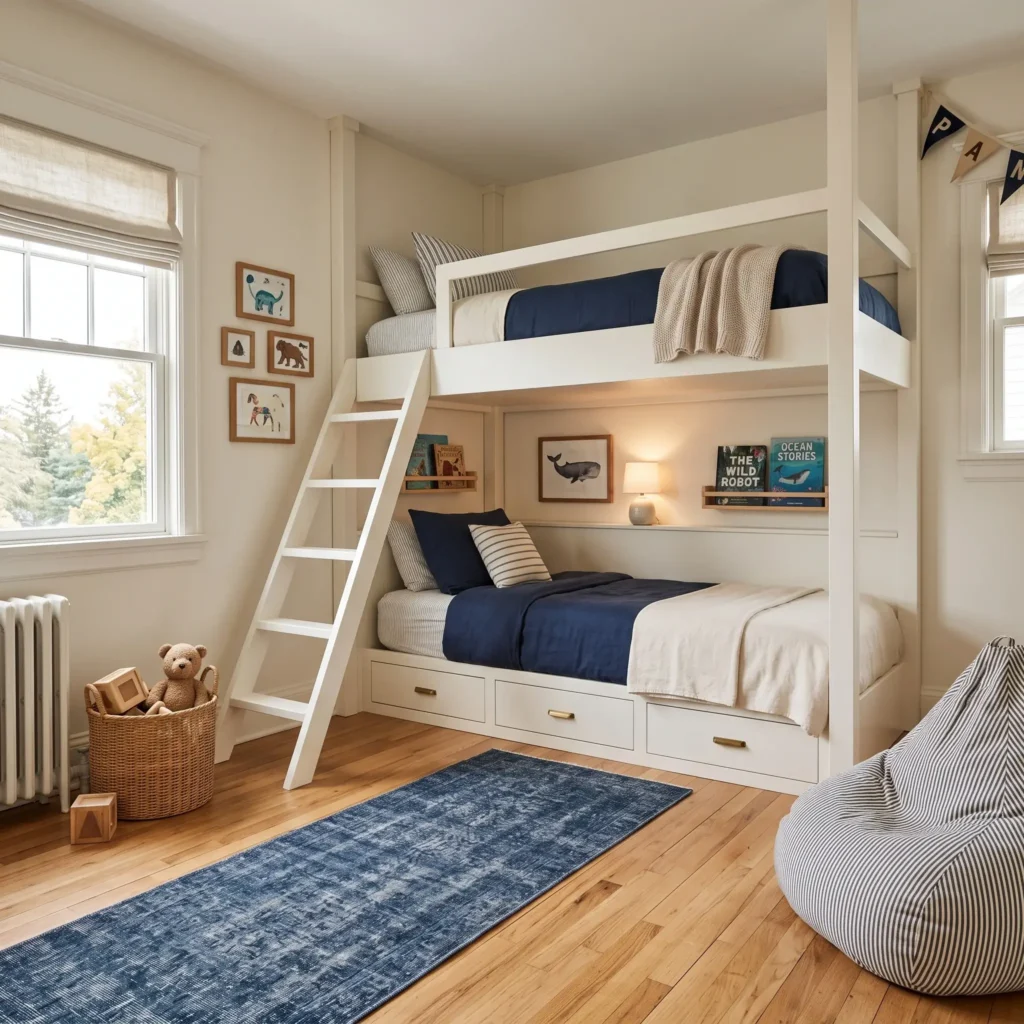
- Key Products Featured:
- L-shaped corner solid wood bunk bed frame
- Built-in base storage drawers on casters
- Cotton ticking stripe duvet covers
- Wall-mounted swing-arm brass reading sconce
- Hypoallergenic low-profile twin mattresses
Check out more Modern Bedroom Ideas
Idea 3: The Dedicated Study Nook with Loft Workstation
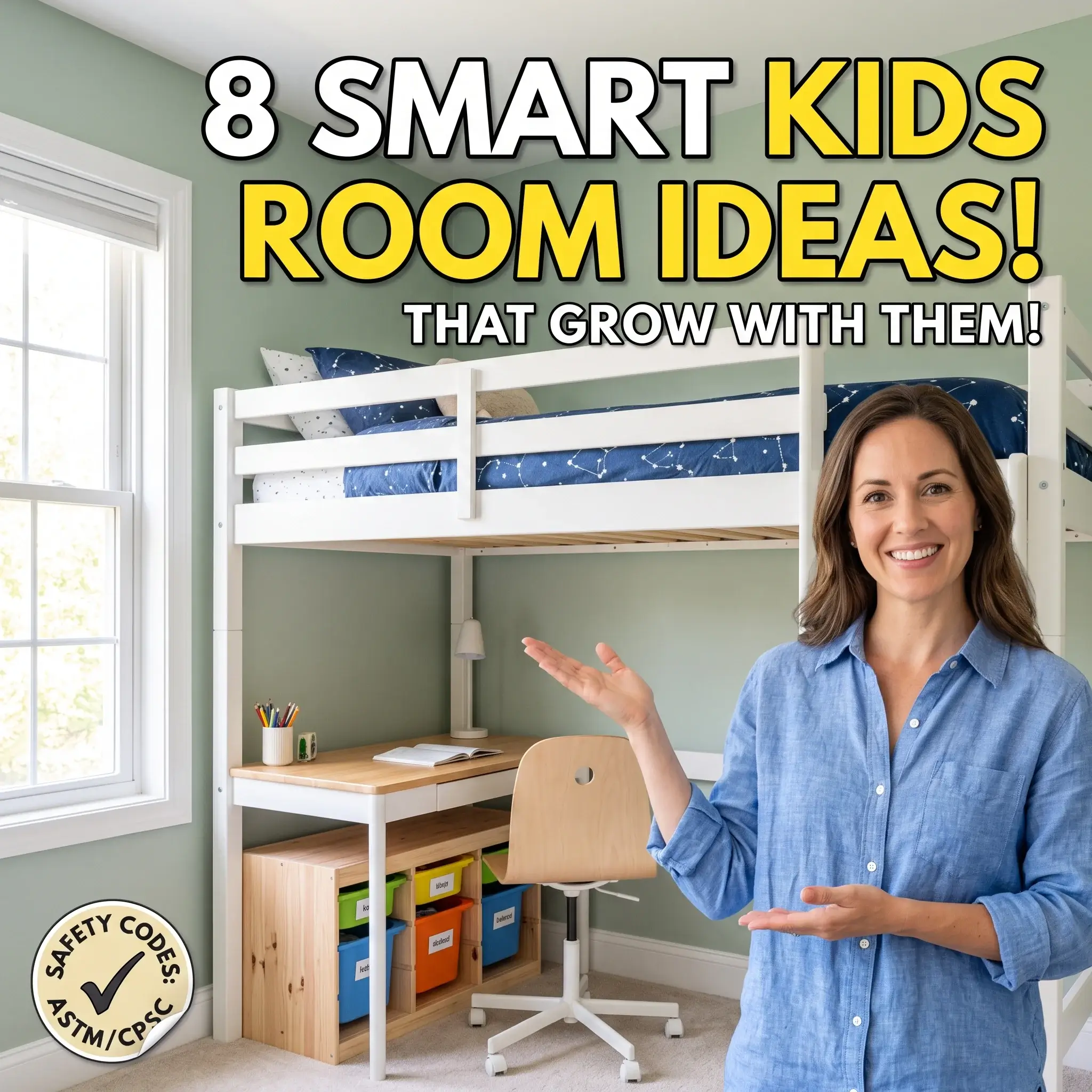
As children enter grade school, academic tasks need dedicated space away from physical clutter. An elevated loft bed lifts the mattress above the floor plane. This frees up the entire lower footprint for a full-width study desk, pinboard, and task lighting.
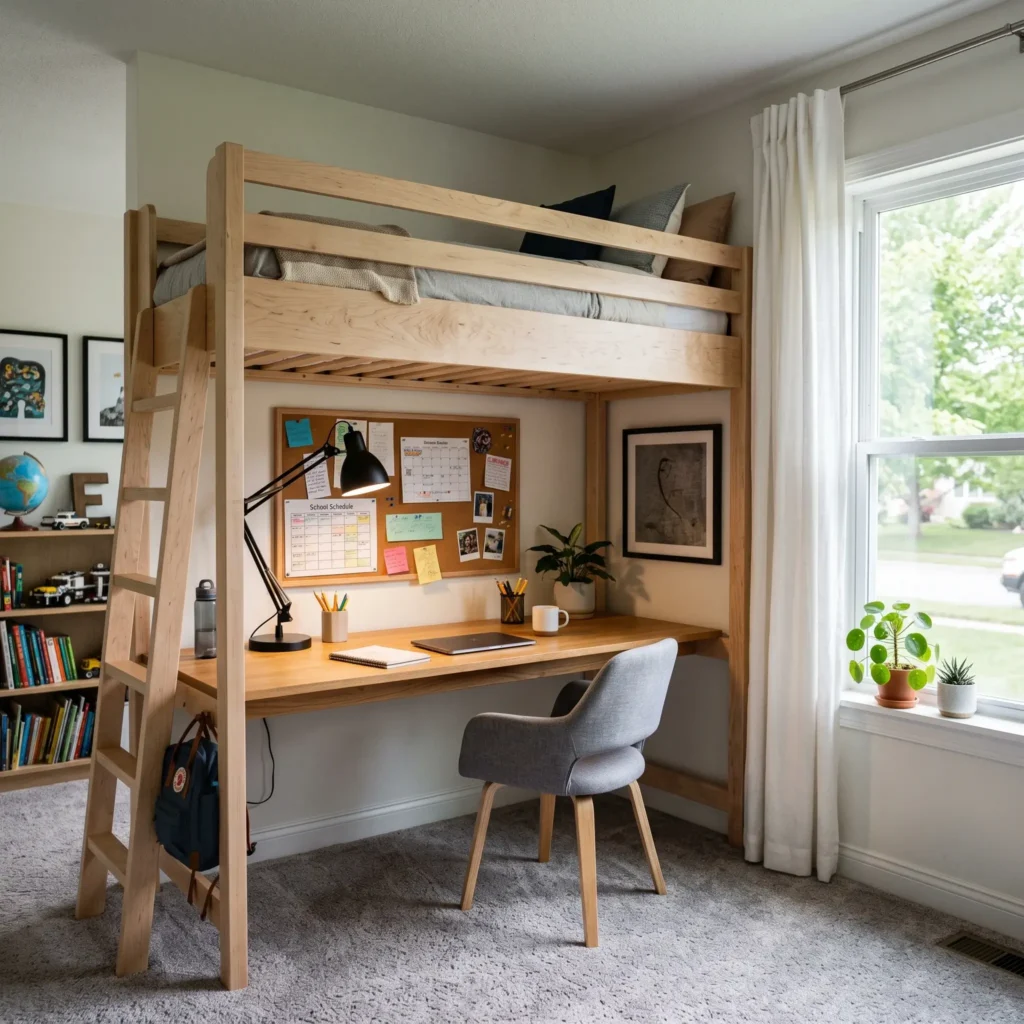
- Key Products Featured:
- High-clearance loft bed frame with angled ladder
- Integrated solid wood desk surface (48-inch width)
- Height-adjustable student task chair
- Matte black articulated metal desk lamp
- Framed linen bulletin board
Idea 4: The Earthy Biophilic Nature Retreat
Bright, saturated primary colors can overstimulate children before bedtime. This nature-inspired theme uses soothing sage green walls, raw oak casework, and botanical prints. The palette relaxes the eyes and transitions easily into teen years.
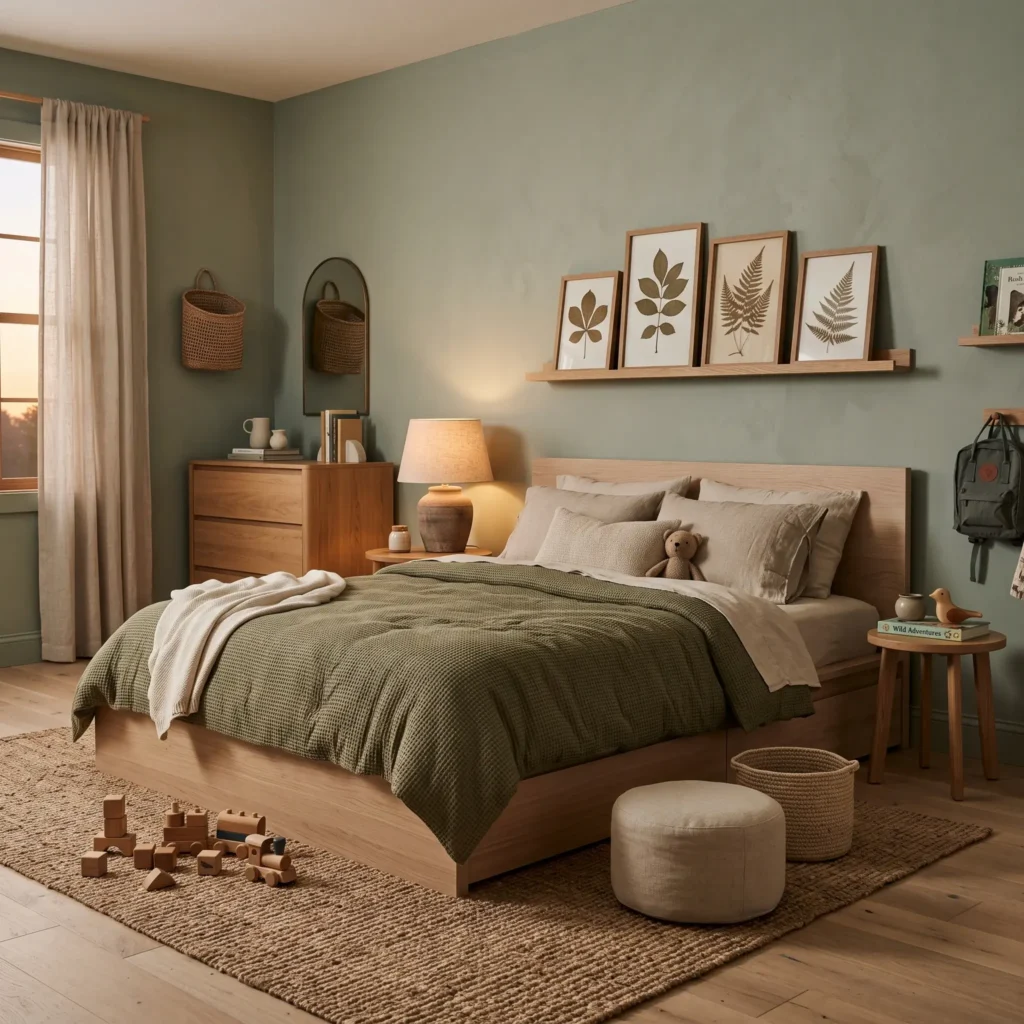
- Key Products Featured:
- White oak low platform bed frame
- Washed cotton waffle weave quilt in olive
- Floating timber picture ledge shelf (36-inch length)
- Natural fiber round braided jute rug (6-foot diameter)
- Ribbed ceramic bedside table lamp with linen drum shade
Idea 5: The Modular Play-and-Store Alcove Room
Floor clutter creates friction for parents and children alike. This room uses a dedicated wall of modular base cubbies topped with a custom wood bench. Bins slide out easily for fast toy pickup, while the top surface serves as an activity table.
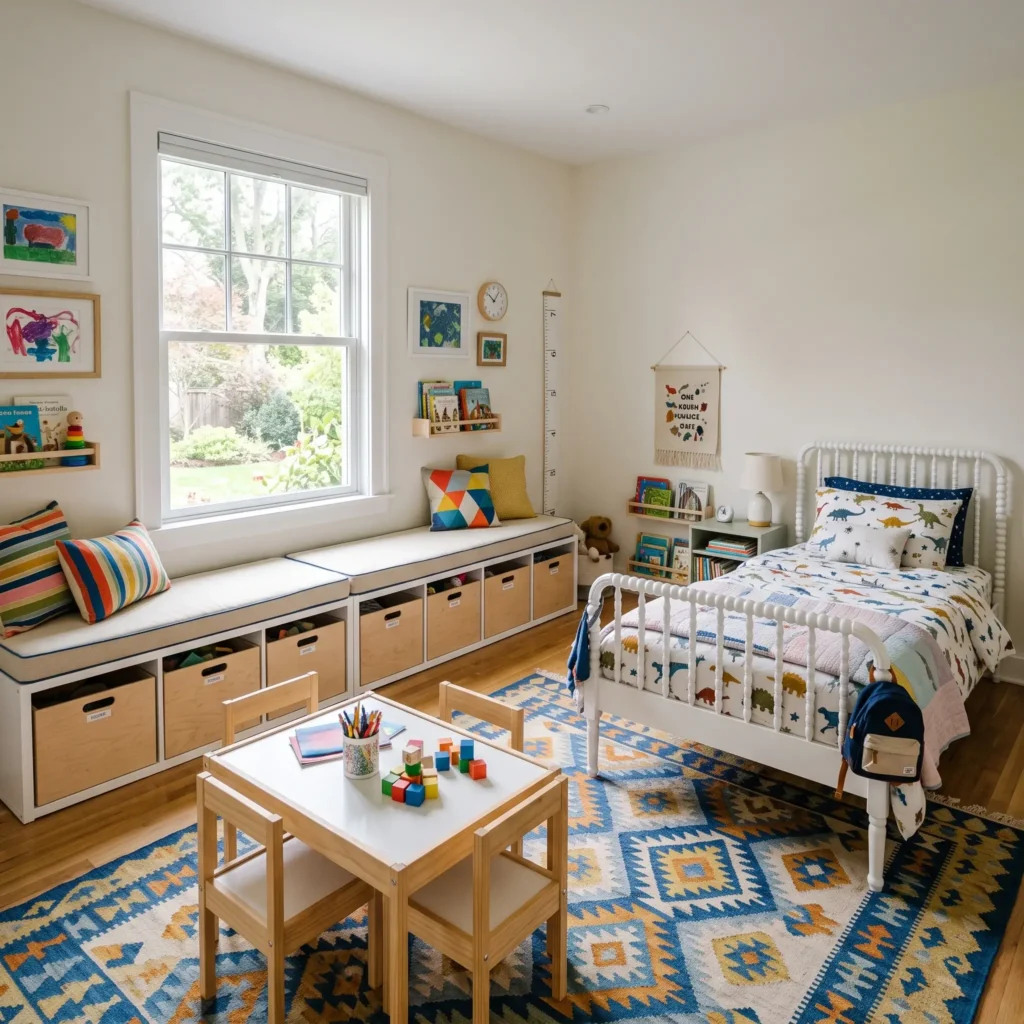
- Key Products Featured:
- Low modular storage cabinet frame
- Drop-in durable plastic toy organizer bins
- Custom box-edge bench cushion in washable canvas
- Classic white metal spindle twin daybed
- Cotton canvas storage caddy with carry handles
Idea 6: The Small-Space Shared Sibling Room with Bookshelf Divider
Sharing a single bedroom does not mean children must give up privacy. This layout places two twin beds against opposite walls. A two-sided, open-shelf bookcase serves as a functional room divider down the center.
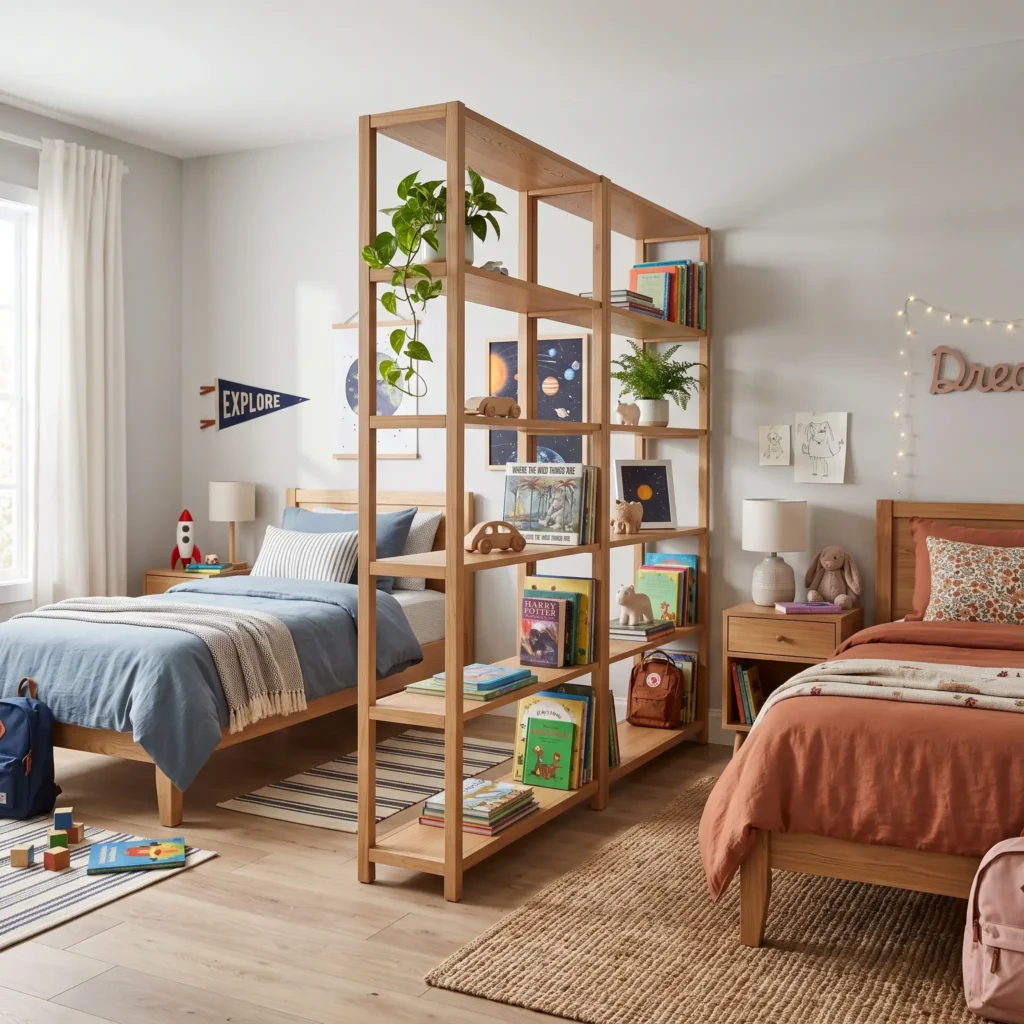
- Key Products Featured:
- Open-back cube bookcase divider (6-cube or 8-cube)
- Two matching solid pine platform bed frames
- Heavyweight linen duvet covers in contrasting earthy tones
- Clip-on flexible LED reading book lights
- Sound-dampening wool bedside floor runners
Idea 7: The Sensory-Friendly Decompression Bedroom
Designed for children who get overwhelmed by visual clutter and sound. This layout relies on color drenching, soft textures, and an enclosed sensory decompression nook. A built-in canvas reading teepee or recessed alcove provides a private retreat.
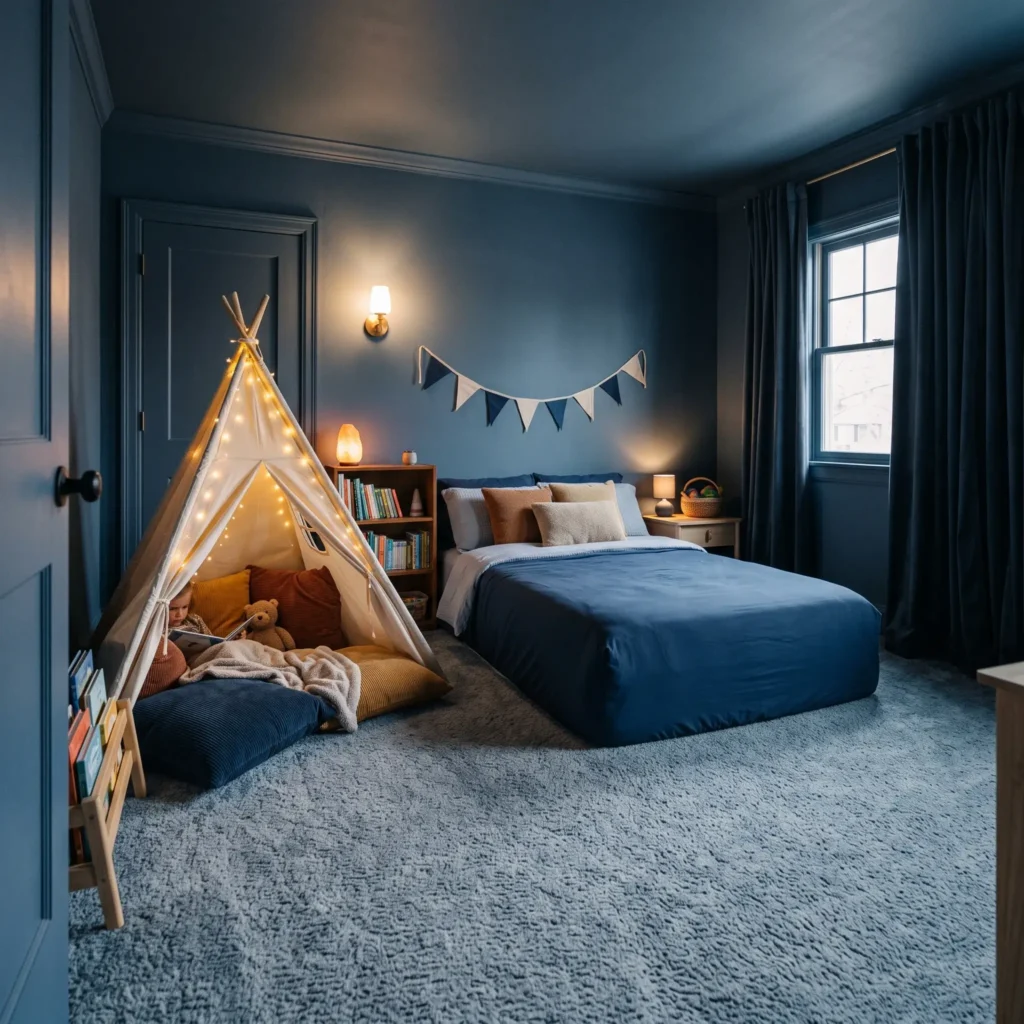
- Key Products Featured:
- Heavy canvas indoor children’s play teepee
- High-density velvet floor pouf cushions
- Heavyweight thermal blackout curtain panels
- Weighted calming blanket with washable cotton cover
- Dimmable warm LED floor strip lighting
Idea 8: The Astronomy and Night Sky Bedroom
This theme avoids temporary plastic stickers. Instead, it pairs deep navy accent millwork with warm brass fixtures and framed celestial charts. The room feels magical for an eight-year-old, yet refined enough for a teenager.
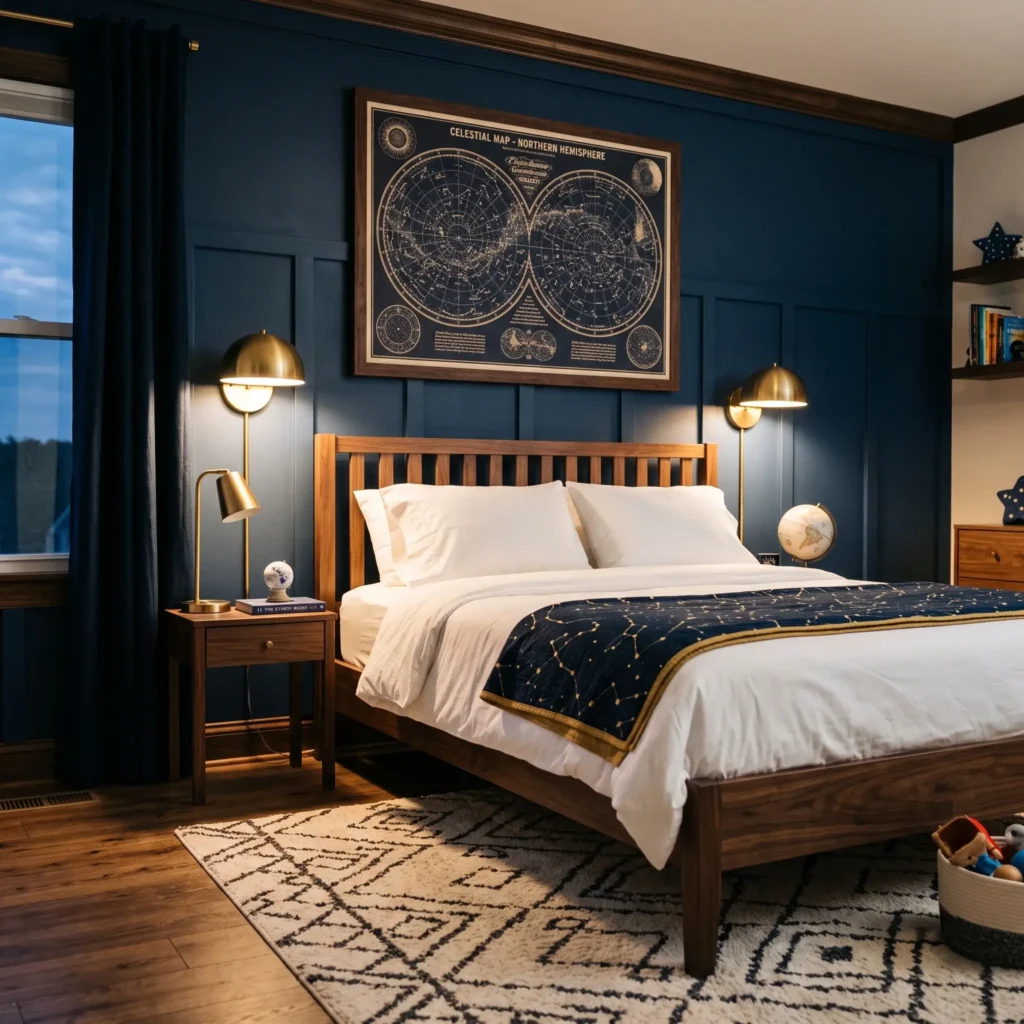
- Key Products Featured:
- Mid-century solid walnut twin bed frame
- Wall-mounted brushed brass dome sconces
- Large framed celestial chart wall art
- Navy and gold stitched decorative throw pillows
- Board-and-batten accent wall molding kit
Architectural Room Zoning: The Tripartite Layout
An unstructured layout causes functional friction. A child who studies on their bed often connects rest with academic stress. Leaving active toys right next to the mattress disrupts bedtime wind-down routines.
Interior architects use the Tripartite Layout Framework to solve this problem. This method divides the bedroom footprint into three distinct operational zones:
- The Rest Zone: Place the bed along the quietest wall of the room, away from direct sightlines to the hallway door. Keep visual patterns minimal around the headboard to signal physical relaxation to the nervous system.
- The Cognitive Zone: Position the study desk perpendicular to the window. This orientation provides plenty of indirect daylight across the desktop while preventing screen glare.
- The Kinetic Zone: Keep the open floor in the center of the room clear for active building and floor games. Place toy storage bins along this perimeter to prevent loose items from spilling into sleep and study areas.
Pediatric Workstation Ergonomics: The Rule of 90 Degrees
A study desk that does not fit your child strains musculoskeletal development. Poor posture leads to forward head lean, curved shoulders, and spinal fatigue during homework.
Apply the clinical Rule of 90 Degrees. When seated, your child’s feet must sit flat on the floor or a firm footrest. The knees should flex at a 90-degree angle. With shoulders relaxed, elbows should bend at 90 degrees directly over the desk surface. Keep reading material raised so your child does not tilt their neck downward.
| Age Group | Child Height | Desk Height | Chair Seat Height | Desktop Tilt Angle |
|---|---|---|---|---|
| Preschool (2 to 4 yr) | 33 to 41 inches | 14 to 17 inches | 8 to 10 inches | 0 to 15 degrees flat |
| Early School (5 to 8 yr) | 41 to 52 inches | 18 to 22 inches | 11 to 14 inches | 15 to 20 degrees for reading |
| Middle School (9 to 12 yr) | 52 to 62 inches | 22 to 26 inches | 14 to 17 inches | 15 to 30 degrees for drafting |
| Teen (13+ yr) | 62+ inches | 27 to 30 inches | 17 to 19 inches | 0 to 15 degrees standard |
Photobiology and Circadian Lighting Architecture
Cool white LED lighting delays sleep onset in children. The human eye uses specialized cells called intrinsically photosensitive retinal ganglion cells. These cells react strongly to blue light wavelengths between 460 and 480 nanometers, suppressing natural melatonin production.
To safeguard your child’s sleep cycles, organize bedroom lighting into four specific tiers:
- Tier 1 (General Ambient Ceiling): Use warm dimmable fixtures between 2700K and 3000K. These provide broad illumination for daytime play and quick room cleanup.
- Tier 2 (Study Task Lighting): Install focused 3000K to 3500K lamps on work desks to eliminate eye fatigue during reading.
- Tier 3 (Evening Accent Lighting): Switch to soft 2200K to 2400K indirect shelf or sconce lights one hour before bedtime to signal rest.
- Tier 4 (Nocturnal Pathfinding): Use monochromatic amber or pure red LED nightlights between 620 and 700 nanometers. Red light does not trigger melatonin suppression, helping children fall back asleep easily after waking at night.
Essential Safety Regulations Every Parent Must Check
A well-styled room must protect physical health and safety. Verify these mandatory United States safety standards before purchasing furniture:
- Dressers and Storage Units (STURDY Act / ASTM F2057-23): Federal law requires free-standing clothing storage units measuring 27 inches or taller to pass dynamic stability tests against tip-overs. Always attach included anti-tip brackets into solid wood wall studs.
- Bunk Beds and Lofts (ASTM F1427): Elevated platforms over 30 inches high require continuous guardrails extending at least 5 inches above the mattress surface. Ladder rung openings must measure less than 3.5 inches or greater than 9 inches to prevent head entrapment. Children under six must never sleep on upper bunks.
- Window Blind Cords (ANSI/WCMA A100.1-2022): Free-hanging operating cords represent a strangulation hazard. Use certified cordless spring rollers, motorized shades, or rigid wands on every bedroom window.
- Chemical Safety and Air Quality: Select Zero-VOC paints under 5 grams per liter. Confirm that composite wood desks and storage units meet EPA TSCA Title VI limits for formaldehyde emissions. Verify GreenGuard Gold or CertiPUR-US certifications for mattresses and bedding foam.
Final Recommendation
Designing a children’s bedroom is not about copying showroom trends that expire in a season. Build a functional, durable room starting from the foundation up.
Anchor the space with an ASTM-compliant bed frame and anchored storage. Establish clear zones for resting, studying, and active play. When you build with sturdy materials and adaptable layouts, the room will serve your child reliably for years to come.
Frequently Asked Questions
How can I make a small kids bedroom feel more open?
Lift furniture off the floor. Use a loft or daybed frame with open space underneath. Install floating wall shelves to draw eyes upward. Paint the walls and ceiling in a single, light neutral color to blur room boundaries.
What are the best wall paint colors for kids bedrooms?
Soft sage greens, warm creams, and desaturated blues work best. These hues lower sensory stimulation and promote restful sleep. Add bright colors through easy-to-swap accessories like pillow covers, rug patterns, and framed prints.
How do you design a shared bedroom for a boy and a girl?
Focus on gender-neutral architectural pieces in oak, white, or navy. Separate the two sides using a low storage bookcase or distinct accent rugs. Give each child their own reading light and pinboard so they have personal ownership over their space.
At what age should a child move from a toddler bed to a twin bed?
Most children transition to a standard twin bed between three and four years old. Look for signs that your toddler has outgrown their mattress length or can easily climb in and out of bed on their own.