8 Cozy Bedroom Ideas for a Stunning and Comfy Retreat

Most bedrooms fail at their main job. Harsh ceiling lights glare into your eyes. Thin synthetic sheets feel cold in winter and trap sweat in summer. Smooth drywall and bare floors bounce sound across the room, leaving the space feeling empty and exposed.
A true bedroom retreat is not about piling twenty decorative pillows on a mattress every morning. It is about calming your senses. When you combine warm lighting, sound-absorbing fabrics, and grounded colors, your bedroom signals your brain to power down.
Here are eight practical bedroom design ideas you can apply right away, followed by the exact styling measurements and science that bring them together.
8 Practical Bedroom Ideas for a Calming Retreat
1. The Color-Drenched Earth Plaster Bedroom
Traditional bedrooms place stark white ceilings and white moldings against colored walls. That sharp border forces your eyes to track every wall corner, keeping your mind alert. Color drenching solves this problem by using one continuous, warm pigment across the walls, ceiling, baseboards, and window trim.
A soft setting plaster or warm clay hue softens the room edges. Light spreads gently across the flat surfaces without harsh shadows. The entire room feels like a single protective shell.
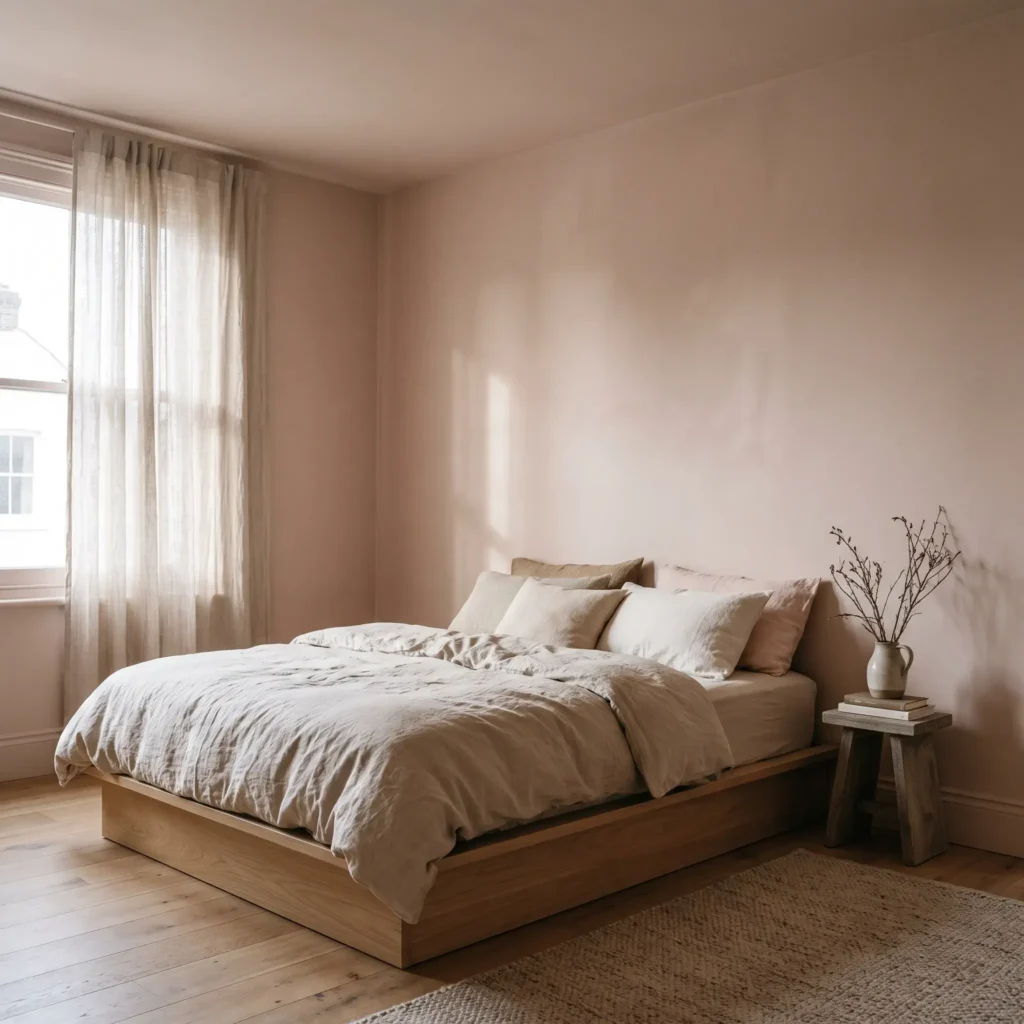
- Key Products to Recreate the Look:
- Ultra-matte interior paint in warm plaster or soft terracotta
- Garment-washed natural linen duvet set in sand or oat
- Low-profile solid white oak platform bed frame
- Floor-to-ceiling sheer linen window curtains
2. The Cloud-Weight Layered Linen Bed
A thin, flat comforter makes a bed look neglected and uninviting. Luxury hotel beds look cozy because they build physical height through distinct layers of breathable fabrics.
Start with cool cotton percale sheets directly against your skin. Add a textured waffle-weave cotton blanket tucked cleanly across the mattress. Top the bed with an oversized linen duvet filled with natural down or micro-denier polyfill. Fold the top third of the duvet down toward the footboard. This fold displays the crisp sheet hem while doubling the visual thickness of your bedding.
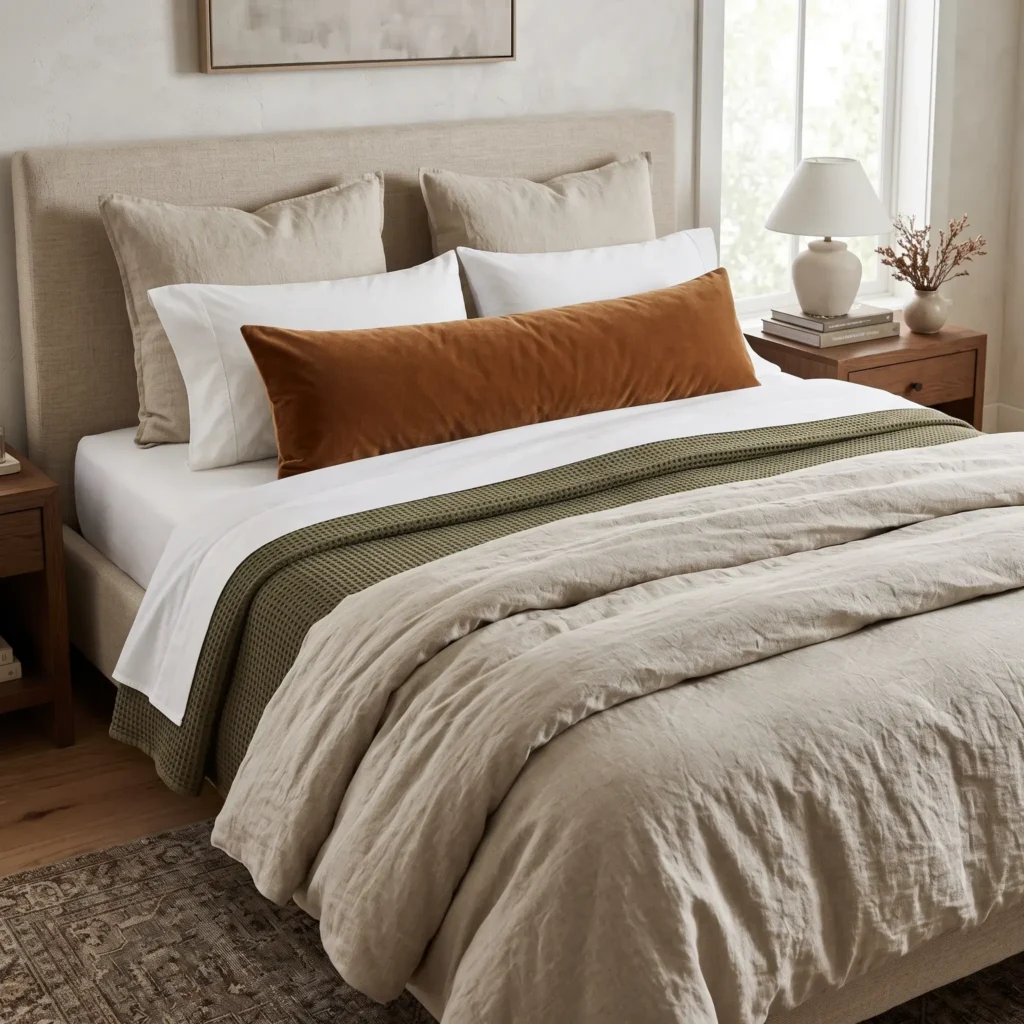
- Key Products to Recreate the Look:
- 300 to 400 thread-count long-staple cotton percale flat sheet
- Honeycomb or waffle-weave cotton mid-weight blanket
- Oversized European stone-washed flax linen duvet cover
- High-loft 13.5-tog down or down-alternative insert
- Elongated 14×40 inch velvet lumbar cushion
Check out more Modern Bedroom Ideas
3. The Low-Glare Bedside Sconce and Dimmer Setup
Ceiling flush-mount lights dump harsh white glare straight down over your bed. That high-angle illumination ruins your circadian rhythm and keeps your room looking flat.
Replace overhead fixtures with wall-mounted swing-arm sconces mounted on either side of the headboard. Position the sconces so the shade edge sits at seated eye level. Equip them with 2700K warm white LED bulbs. This setup keeps the nightstand surface clear for a book and water glass, while throwing warm pools of indirect light right where you read.
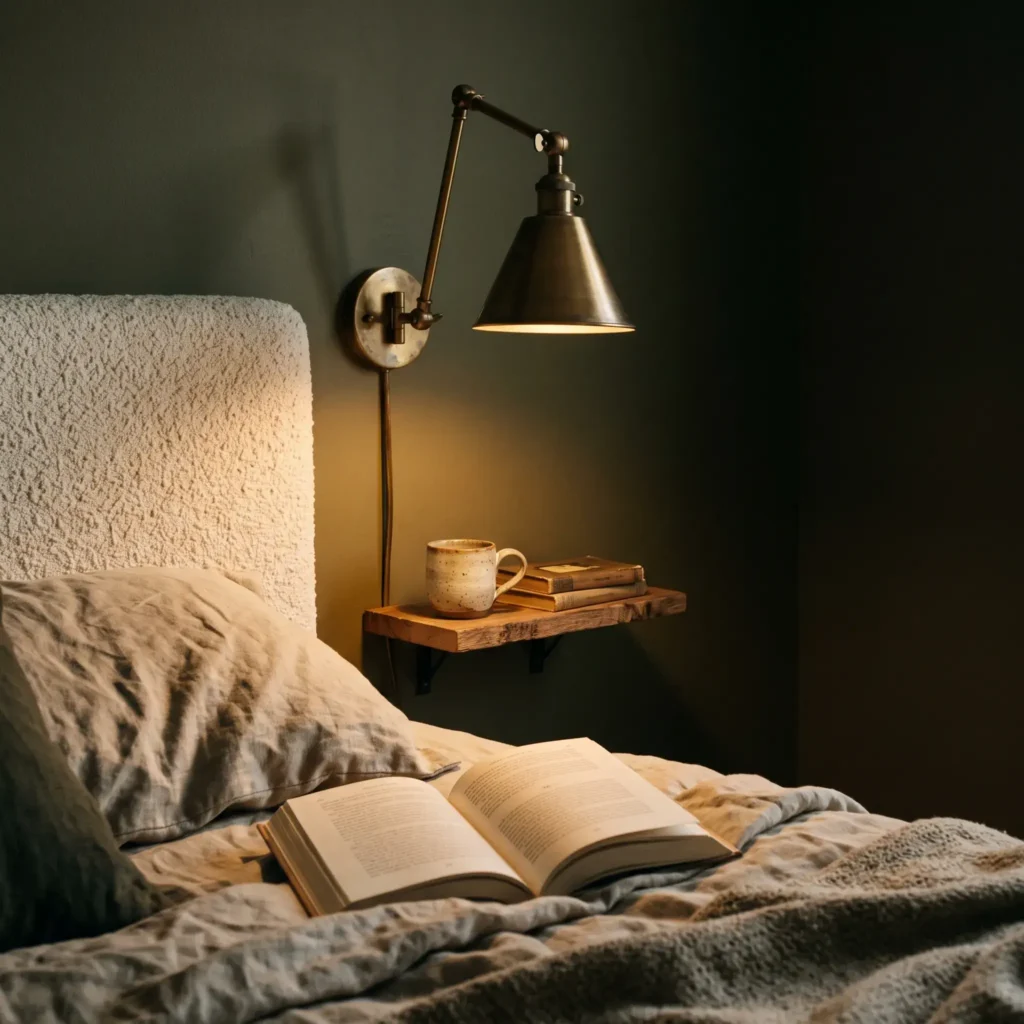
- Key Products to Recreate the Look:
- Articulating brass or matte black wall sconces with opaque shades
- 2700K dimmable warm white LED bulbs (450 to 600 lumens)
- Floating solid walnut or oak nightstand drawer
- Glazed ceramic water carafe and tumbler
4. The Sound-Softening Velvet Headboard and Wool Rug
Hard surfaces bounce sound waves around the room, causing faint echoes that keep your nervous system on edge. You can turn your sleeping area into an acoustic shield using dense, soft materials.
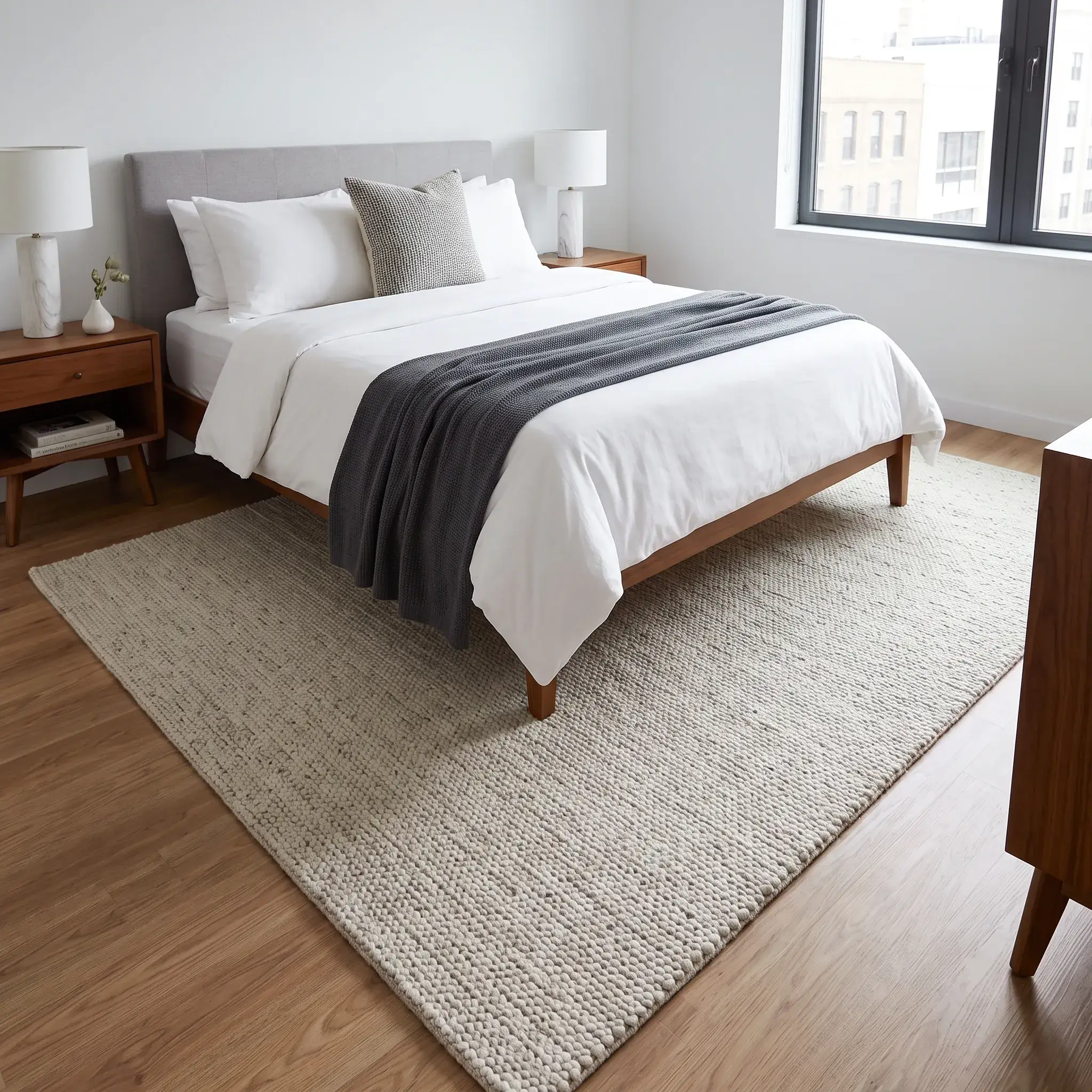
Choose a tall, deep-tufted velvet or heavy wool headboard. The thick upholstery traps high-frequency noise right behind your ears. Anchor the entire bed over a thick wool area rug. Make sure the rug extends at least 24 inches past the sides of the bed frame. Your bare feet land on plush wool every morning instead of cold hardwood flooring.
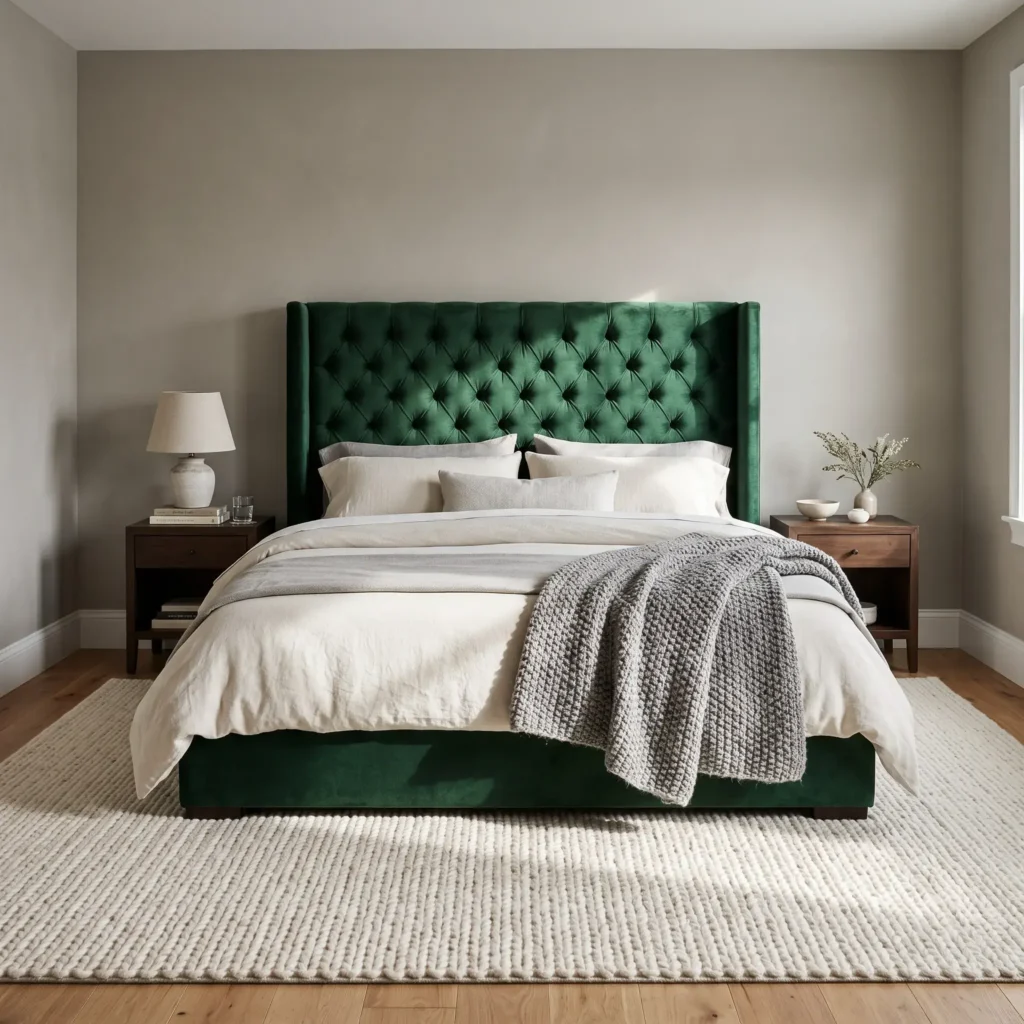
- Key Products to Recreate the Look:
- High-density upholstered velvet or heavy chenille headboard
- 8×10 or 9×12 hand-tufted 100 percent wool area rug
- Dual-density carpet underlay pad for extra floor cushion
- Boiled wool or alpaca ribbed throw blanket
5. The Built-In Window Nook and Heavy Drapes
An empty corner or bare window frame makes a bedroom feel drafty and exposed. Adding a dedicated relaxation corner gives you a comfortable place to unwind before getting under the covers.
Hang floor-to-ceiling lined drapery panels right from the ceiling track. Extend the curtain rod 10 inches past the window frame on each side. When pulled shut, the heavy linen or velvet fabric seals out winter drafts and deadens street noise. Add a curved accent chair and a small stone side table to turn that window zone into a quiet reading spot.
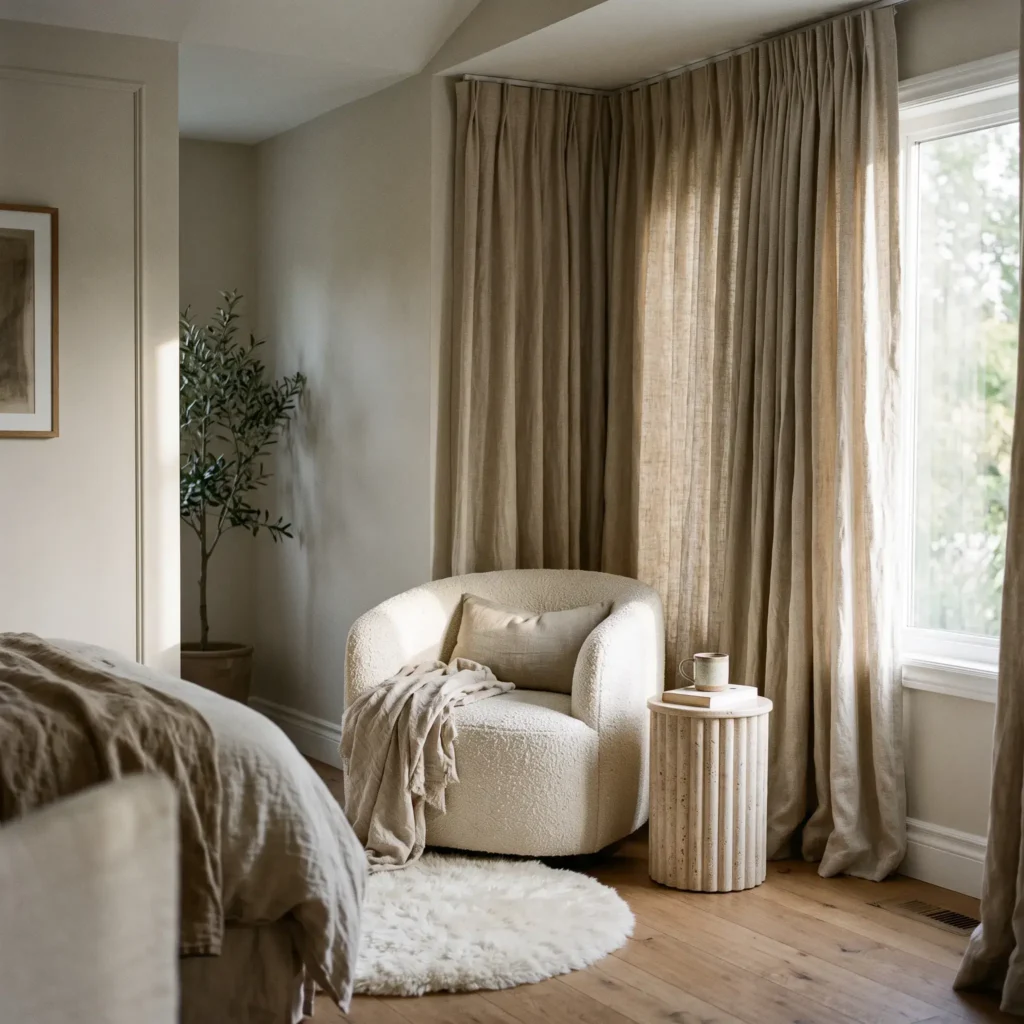
- Key Products to Recreate the Look:
- Blackout-lined heavy linen or velvet pinch-pleat drapery panels
- Ceiling-mount concealed curtain track
- Curved boucle or woven fabric barrel armchair
- Solid travertine or unlacquered timber accent drink table
6. The Textured Limewash and White Oak Sanctuary
Flat, glossy drywall can look clinical under artificial lights. Limewash paint introduces gentle variations in tone and texture, giving the walls the chalky look of old European plaster.
Pair these brushed mineral walls with natural white oak nightstands and woven paper cord details. The combination of chalky wall texture and organic wood grain adds depth without bringing in visual clutter. Keep decorative items sparse so the room feels light, peaceful, and open.
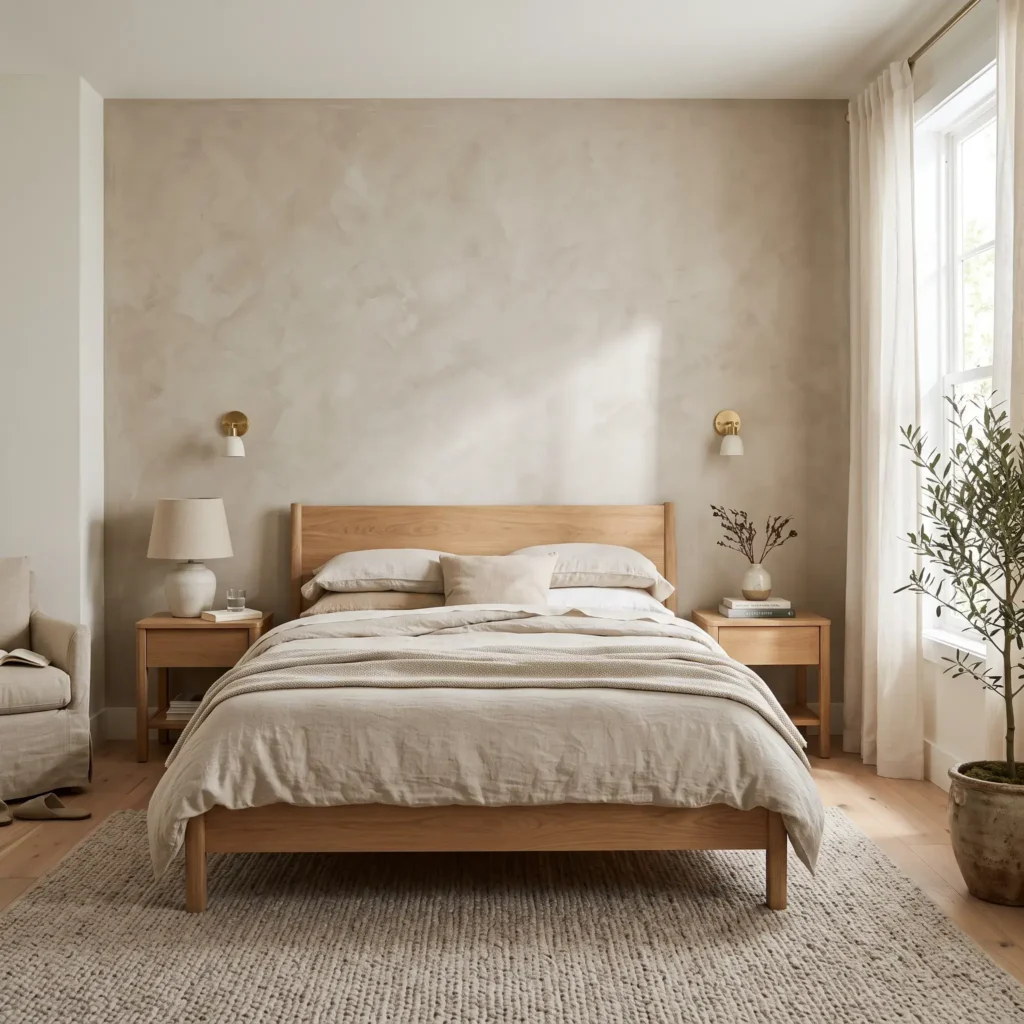
- Key Products to Recreate the Look:
- Mineral-based limewash paint or Roman clay wall finish
- White oak timber bed frame with built-in ledges
- Matte ceramic vase with dried botanical stems
- Concealed 2200K warm LED lighting strip for wall grazing
7. The Nighttime Air and Scent Sanctuary
Visual design works best when paired with olfactory calming cues. Synthetic candles made with paraffin wax release soot and artificial chemicals that can irritate nasal passages during sleep.
Set a compact cool-mist ultrasonic diffuser on your dresser, at least four feet away from your pillows. Add three drops of pure French lavender oil and one drop of cedarwood oil thirty minutes before bed. Combine this calming mist with live snake plants in unglazed terracotta pots. These plants release oxygen through the night, keeping bedroom air fresh and clean.
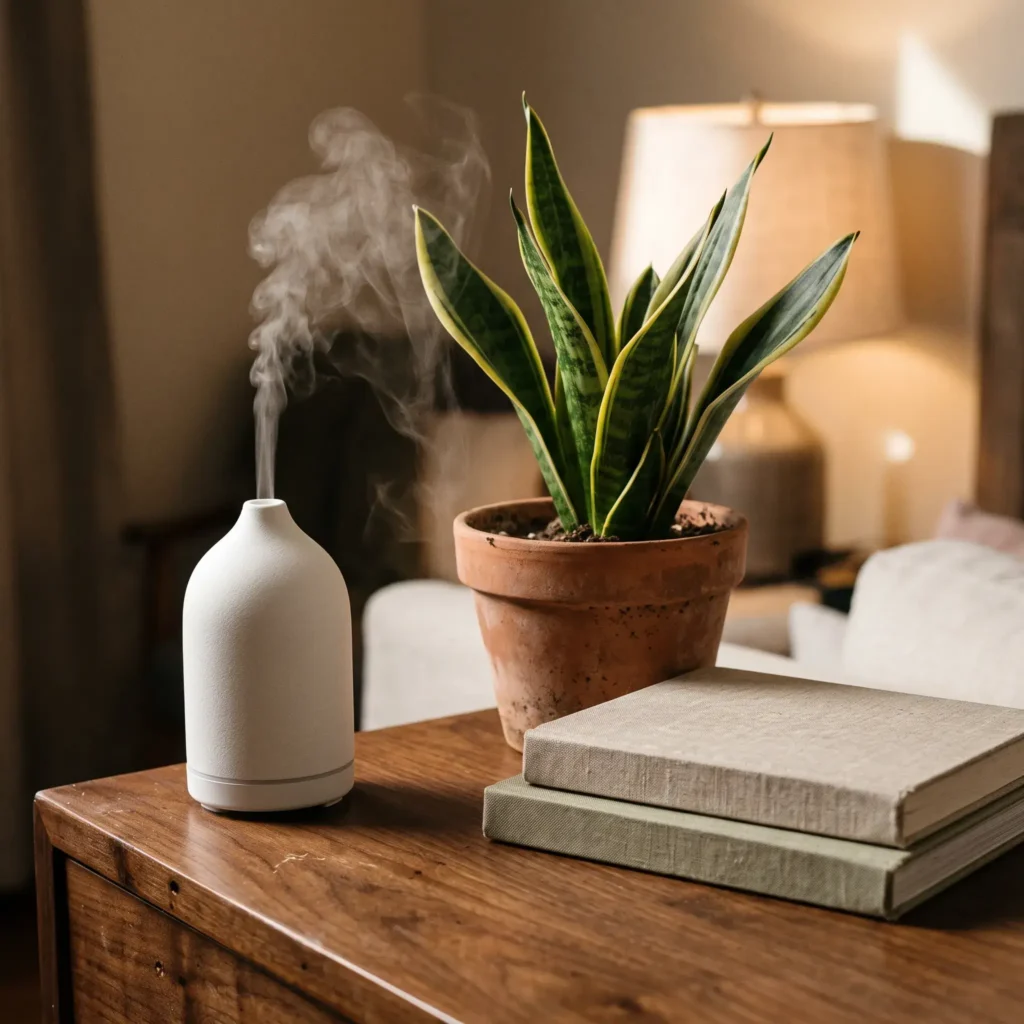
- Key Products to Recreate the Look:
- Matte ceramic cool-mist ultrasonic diffuser
- 100 percent pure French lavender (Lavandula angustifolia) essential oil
- Live Snake Plant (Sansevieria trifasciata) in natural clay pot
- Unglazed stoneware catchall tray for bedside essentials
8. The Moody Charcoal and Dark Teal Hideaway
Not everyone wants an airy, white bedroom. For light-sensitive sleepers, dark rooms offer the ultimate sense of rest. Deep charcoal, slate blue, or rich forest green walls absorb light reflections, turning the room into an intimate evening hideaway.
Balance dark paint by bringing in warm, tactile surfaces. Use unlacquered brass hardware, warm walnut nightstands, and thick waffle blankets. The dark walls fall back visually in low lamp light, while the warm bedding and wood accents take center stage.
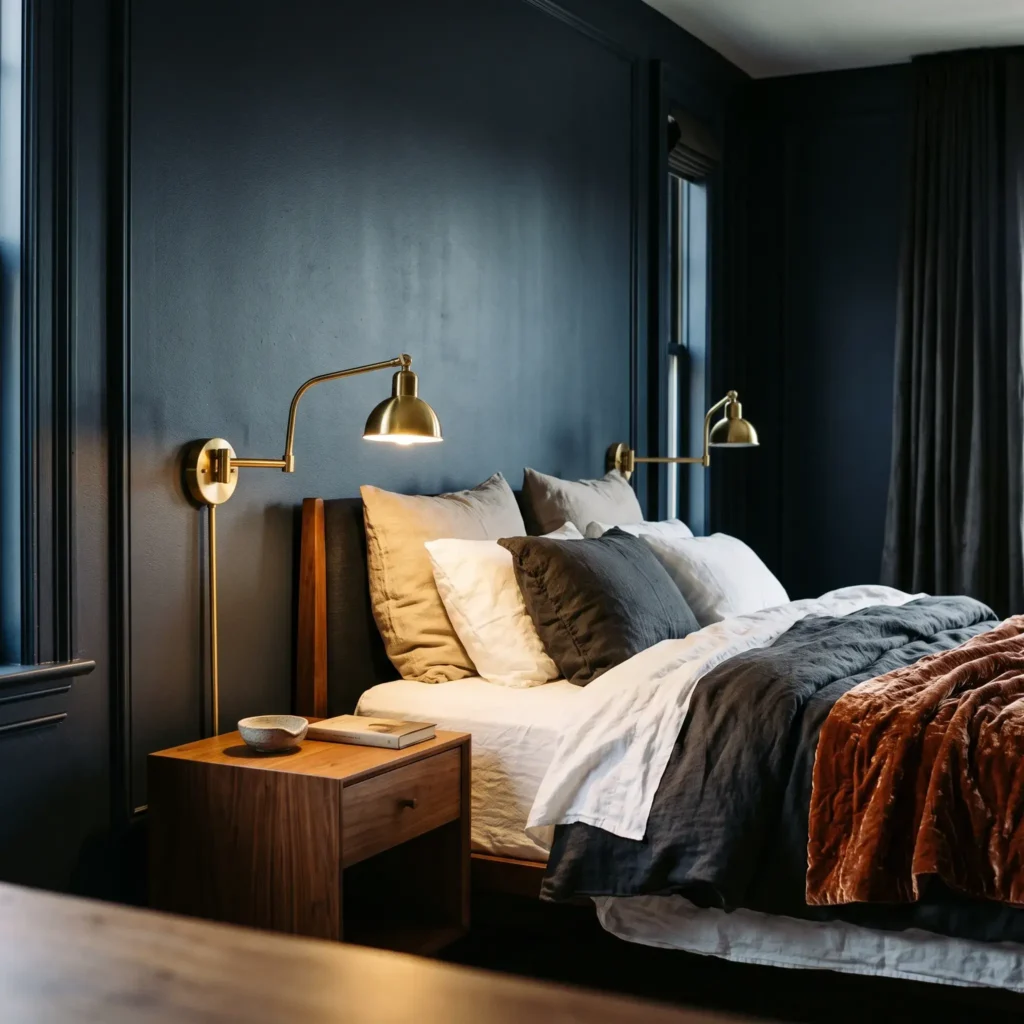
- Key Products to Recreate the Look:
- Ultra-matte paint in deep slate, rich navy, or forest green
- Contrast bedding set combining washed charcoal linen and white percale
- Solid walnut wood bedside tables
- Heavy brushed brass lighting fixtures
The Core Foundations of a Cozy Bedroom Retreat
Now that you have seen practical layouts, let us look at the design principles that make these rooms feel so peaceful. Small adjustments to your light bulbs, rug sizes, and pillow styling will make your space look intentional and tailored.
1. Bedding Architecture and the 4-2-1 Pillow Rule
A messy bed feels chaotic, but a rigid display with dozens of pillows is annoying to undo every night. Interior stylists use the 4-2-1 formula to balance daily comfort with crisp structure.
The 4-2-1 Pillow Arrangement
- Row 1 (Back Foundation): Four standard sleeping pillows. Stack them flat in pairs or prop them upright against your headboard.
- Row 2 (Middle Support): Two 26×26 inch European square shams. On king beds, increase this to three shams to fill the extra width.
- Row 3 (Front Accent): One single elongated lumbar cushion, measuring 12×36 or 14×40 inches. This single cushion centers the bed without cluttering the mattress.
The 4-Layer Bed Assembly
- The Base Sheet: Stretch a 300 to 400 thread-count cotton percale sheet drum-tight across your mattress. Place the flat sheet face-down. When you fold the top back later, the finished hem faces forward.
- The Mid-Weight Blanket: Lay a cotton matelassé or waffle-weave quilt across the flat sheet. This layer traps warm air pockets while adding visual structure across the middle third of the mattress.
- The Fluff Duvet: Insert an oversized down or microfiber comforter into a washed linen duvet cover. Pull it up to the headboard, then fold it back toward the foot by one third. This simple fold doubles the visible thickness of your duvet.
- The Foot Accent: Fold a heavy cable-knit or boiled wool throw into horizontal thirds across the foot of the bed. It anchors the bed visually and keeps your feet warm on chilly nights.
2. Setting Your Bedroom Lighting Layers
Harsh light suppresses melatonin, the hormone that helps you fall asleep. Your bedroom needs three distinct tiers of light, each serving a clear purpose.
| Lighting Layer | Best Location | Target Kelvin | Target Brightness | Purpose |
|---|---|---|---|---|
| Ambient | Ceiling drum pendant or flush glass fixture | 2700K | 800 to 1,200 lumens | Soft, room-wide light for dressing and cleaning |
| Task | Bedside wall sconces or reading table lamps | 2700K | 400 to 600 lumens | Focused reading light that avoids shining in your partner’s eyes |
| Accent Glow | Under floating shelves, headboard recess, or dresser corners | 2200K | 150 to 300 lumens | Soft, candle-like glow for pre-sleep wind-down |
Mount your bedside sconces between 24 and 30 inches above the top of your mattress. That height keeps the bulb shielded from your eyes while directing light straight onto your reading material.
3. Floor Area and Acoustic Dampening
Echoes make rooms feel cold and uninviting. Sound waves reflect off flat glass, drywall, and wooden floors. Incorporating soft furnishings dampens those echoes, making the room feel quiet and private.
Rug Sizing Rules by Bed Dimensions
- Queen Beds (60 x 80 inches): Use an 8 x 10 foot rug. Lay it perpendicular to the bed frame, stopping about 6 to 8 inches in front of your nightstands. This layout leaves a comfortable 24 to 30 inch soft walkway on both sides and past the footboard.
- King Beds (76 x 80 inches): Use a 9 x 12 foot rug. Anything smaller will look disconnected and leave high-traffic areas on cold flooring.
Headboard Materials and Sound Absorption
Different headboard materials absorb sound differently. The table below lists the sound absorption coefficient for common materials, from 0.00 for total reflection to 1.00 for total sound absorption.
| Headboard Style | Sound Absorption Rating | Core Padding | Feel and Character |
|---|---|---|---|
| Tufted Velvet or Chenille | 0.50 to 0.70 | 3-inch high-density foam | Plump, sound-dampening, and quiet |
| Padded Linen or Wool | 0.30 to 0.50 | 2-inch medium-density foam | Tailored, clean, and breathable |
| Top-Grain Leather | 0.20 to 0.30 | 1.5-inch bonded foam | Tailored look that reflects higher sound pitches |
| Solid Wood or Metal | 0.05 to 0.10 | None (solid frame) | Visually warm wood, but bounces room noise |
4. Bedroom Air and Calming Scents
Your bedroom air quality directly affects your sleep depth. Many people fill their rooms with artificial air fresheners that trigger allergies and stuffy noses.
Night-Oxygen Plants
Most houseplants release carbon dioxide at night. However, CAM plants (Crassulacean Acid Metabolism) do the opposite. They open their pores under darkness to take in carbon dioxide and release fresh oxygen.
- Snake Plant (Sansevieria): Thrives in low-light corners and needs water only every two to three weeks.
- Aloe Vera: Low-maintenance succulent that purifies air and thrives on bright windowsills.
- ZZ Plant (Zamioculcas zamiifolia): Tolerates dry bedroom air and low light levels with ease.
Natural Scents for Sleep
Use pure botanical essential oils in a cold-mist diffuser instead of burning scented candles. Look for true French lavender (Lavandula angustifolia). It contains high concentrations of linalool, a natural compound that slows heart rate and eases muscle tension. Avoid spike lavender (Lavandula latifolia), which contains camphor that stimulates your brain and makes you feel more awake.
Frequently Asked Questions
How can I make my bedroom cozy on a tight budget?
Focus on lighting and tactile accessories first. Swap harsh, cool light bulbs for 2700K warm white bulbs. Add a thick waffle-weave blanket across your existing comforter, and place a soft runner rug next to your bed. You do not need to buy all new furniture to change the feel of the room.
What paint finish makes a bedroom feel the coziest?
Choose an ultra-matte or flat paint finish. Flat and limewash paints absorb light reflections rather than bouncing them across the room. This creates a soft, chalky surface that gives wall colors rich, warm depth under evening lamps. Save satin or semi-gloss finishes for doors and window trim where scrubbability is needed.
Should an area rug go all the way under the nightstands?
No. An area rug looks best when it stops about 6 to 8 inches in front of your bedside tables. This leaves the front legs of your nightstands flat on the floor, preventing furniture wobble. It also lets the rug extend farther past the foot of the bed where you walk.
What is the best bed sheet material for warm sleepers?
Choose 100 percent long-staple cotton percale or washed French flax linen. Percale uses an open one-over, one-under weave that lets air circulate easily, keeping your skin cool. Linen wicks away body moisture while providing a relaxed, lived-in drape. Avoid synthetic microfibers, which trap body heat against your mattress.
How do I stop my bedroom from feeling dark and gloomy when using rich paint colors?
Balance deep wall colors with warm lighting points and light-toned textiles. Pair deep olive, navy, or terracotta walls with bone-white linen bedding, unlacquered brass sconces, and light oak furniture. This contrast prevents the room from feeling closed in, keeping it intimate and inviting.
Building Your Own Restorative Space
You do not need to remodel your entire home to create a welcoming bedroom. Begin with the surfaces you touch and see every day.
Switch out glaring overhead bulbs for warm 2700K task lamps. Lay a soft, thick rug over cold floorboards. Fold a textured quilt across the foot of your bed. By addressing lighting, acoustics, and fabrics, you can turn a plain bedroom into a peaceful sanctuary that helps you rest deeply every night.