Stop Sitting in Uncomfortable Corners: 8 Warm, Layered Reading Nook Ideas That Work
Most reading nooks look beautiful in photos, but they fail during real use. You sit down with a book, and within twenty minutes your lower back aches. The cushion compresses into hard plywood. The overhead light creates a harsh glare on the page. The synthetic throw blanket makes you sweat without keeping you warm.
A great reading space requires more than a random chair and a folded blanket. It requires the right balance of physical support, low-glare lighting, and tactile fabrics that invite you to rest.
Here are eight practical reading nook designs built around warm, layered textures, followed by the exact measurements and styling rules you need to build your own.
8 Practical Reading Nook Ideas With Warm Textures
1. The Sunlit Bay Window Bench
This design turns an architectural window alcove into an all-day reading bench. It combines a thick linen base cushion with heavy wool accents to balance the cool outdoor light.
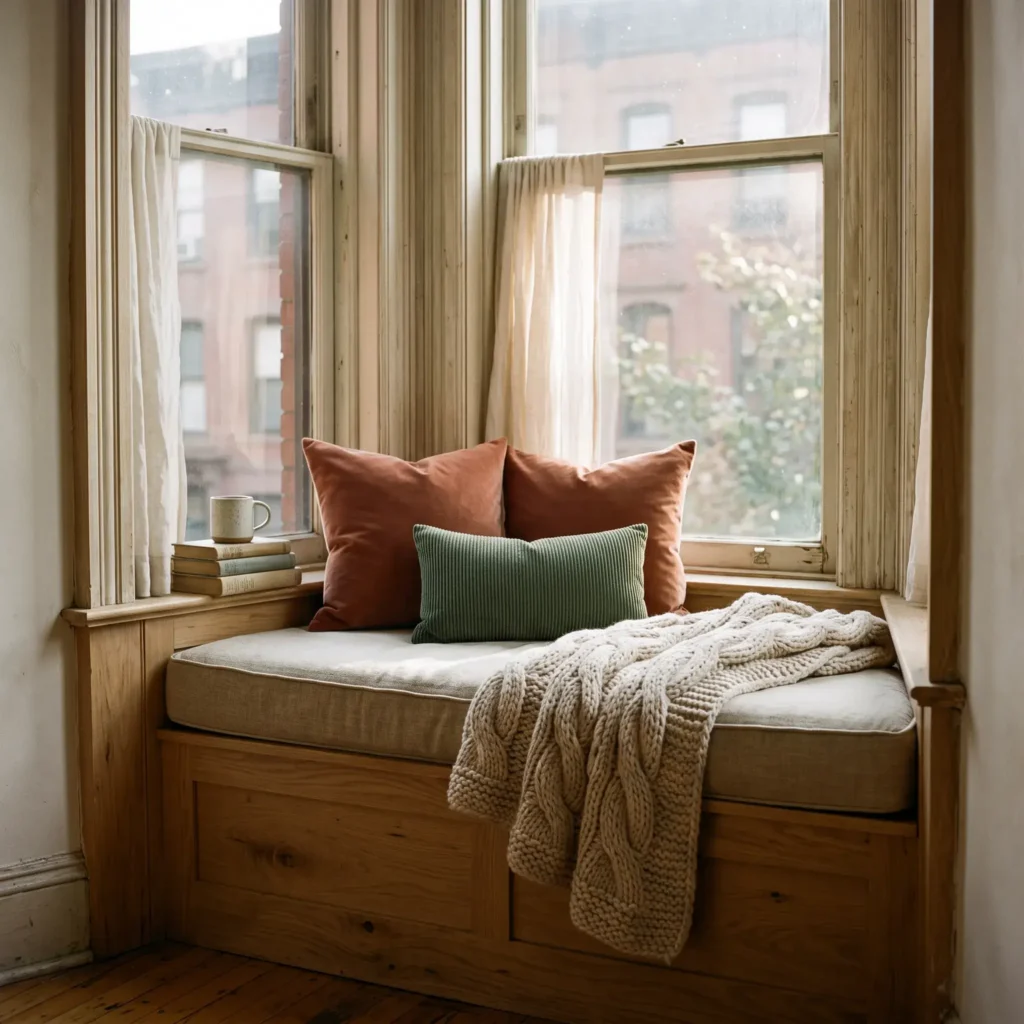
- Products Used in This Design:
- Custom 4-inch high-density foam bench cushion wrapped in ivory Belgian linen
- 20 by 20 inch washed velvet throw pillow covers in burnt terracotta
- 14 by 24 inch ribbed corduroy lumbar pillow in camel
- Chunky merino wool knit blanket in oatmeal
- Semi-sheer Belgian linen window drapes
2. The Repurposed Reach-In Closet Alcove
This concept strips out old closet doors to create a recessed reading sanctuary. Deep, saturated paint and stacked cushions turn a small void into a cozy retreat.
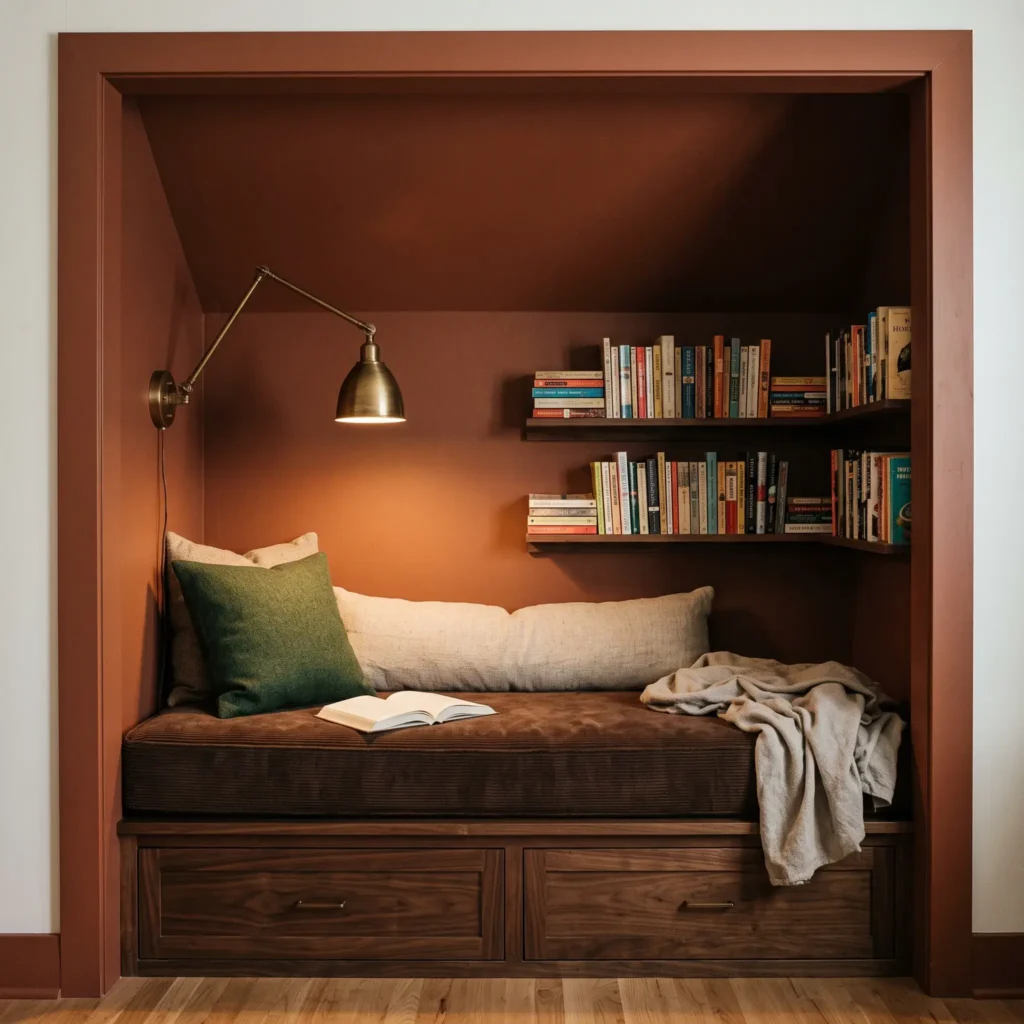
- Products Used in This Design:
- 3/4-inch walnut face paneling and soft-close drawer storage
- Custom box-edge seat cushion in heavyweight ribbed corduroy
- Vintage-finish unlacquered brass swing-arm wall sconce
- Deep green boiled wool accent cushion
- Floating solid walnut picture ledges for book displays
Check out more Decor Styles
3. The Under-Stairs Architectural Niche
This idea reclaims the triangular space beneath a staircase. It pairs warm wood paneling with leather and wool to create a private cabin feel inside a modern home.
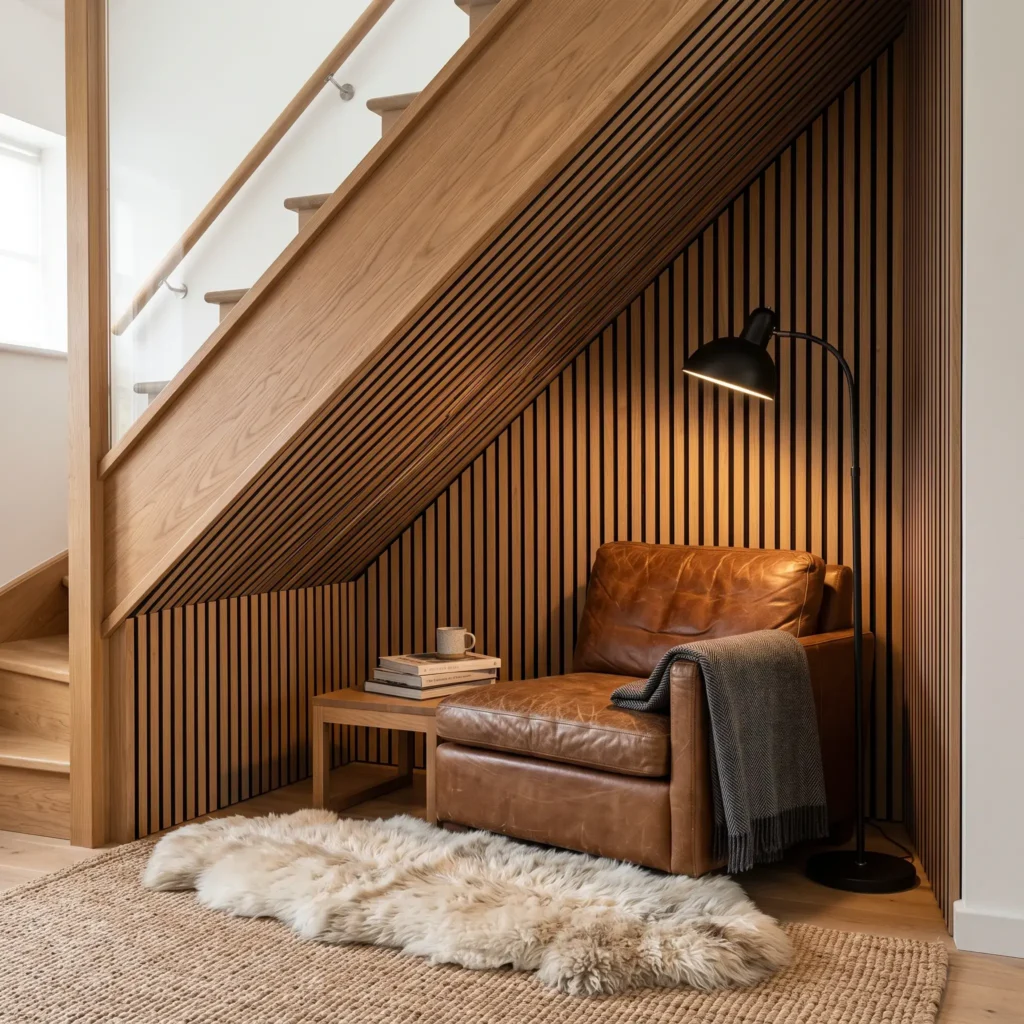
- Products Used in This Design:
- Cognac saddle-leather lounge armchair with angled backrest
- White oak vertical acoustic wall slat panels
- Charcoal herringbone pure wool throw blanket
- Genuine Icelandic long-wool sheepskin rug
- Matte black adjustable task floor lamp
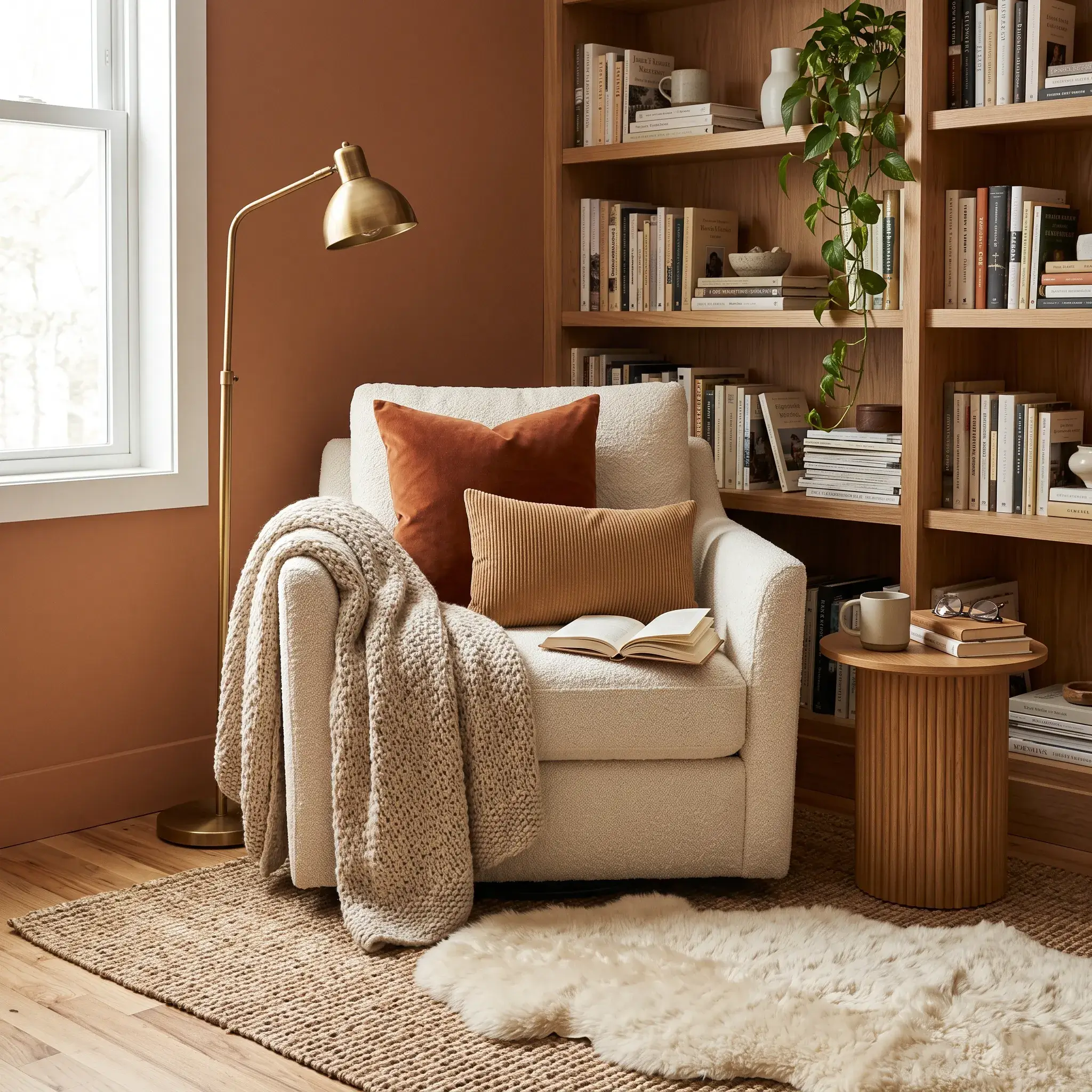
4. The Earthy Living Room Corner
This layout carves out a quiet reading zone in a busy living room without requiring structural changes. It relies on a high-friction bouclé chair and layered rugs to define the space.
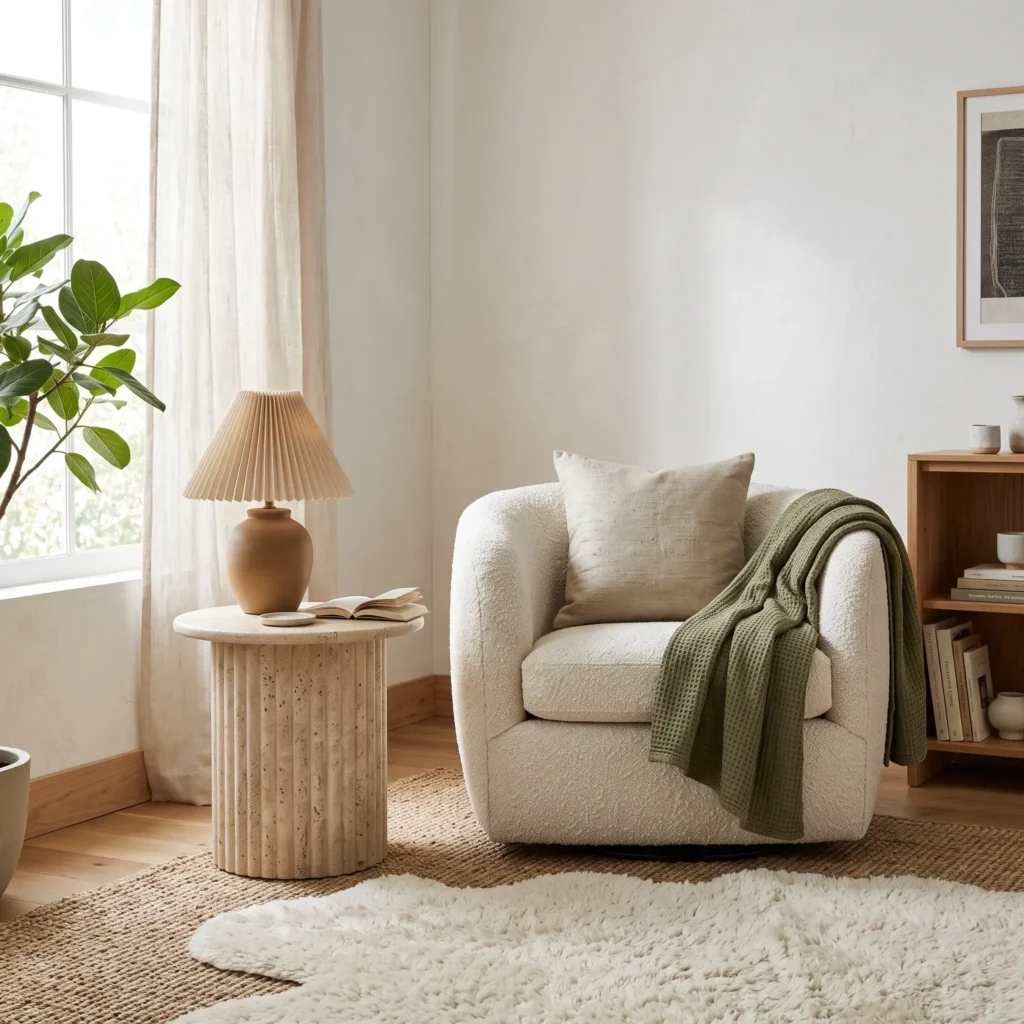
- Products Used in This Design:
- Curved barrel reading armchair in textured wool bouclé
- 100% washed linen waffle-weave throw in moss green
- Honed travertine fluted side table
- Heavy-duty bleached jute area rug
- Small plush Berber wool accent rug
5. The Low-Profile Floor Cushion Cocoon
Ideal for apartments and rental spaces, this setup skips heavy furniture entirely. It uses oversized French-tufted floor mattresses and layered floor textiles to create a relaxed reading nest.
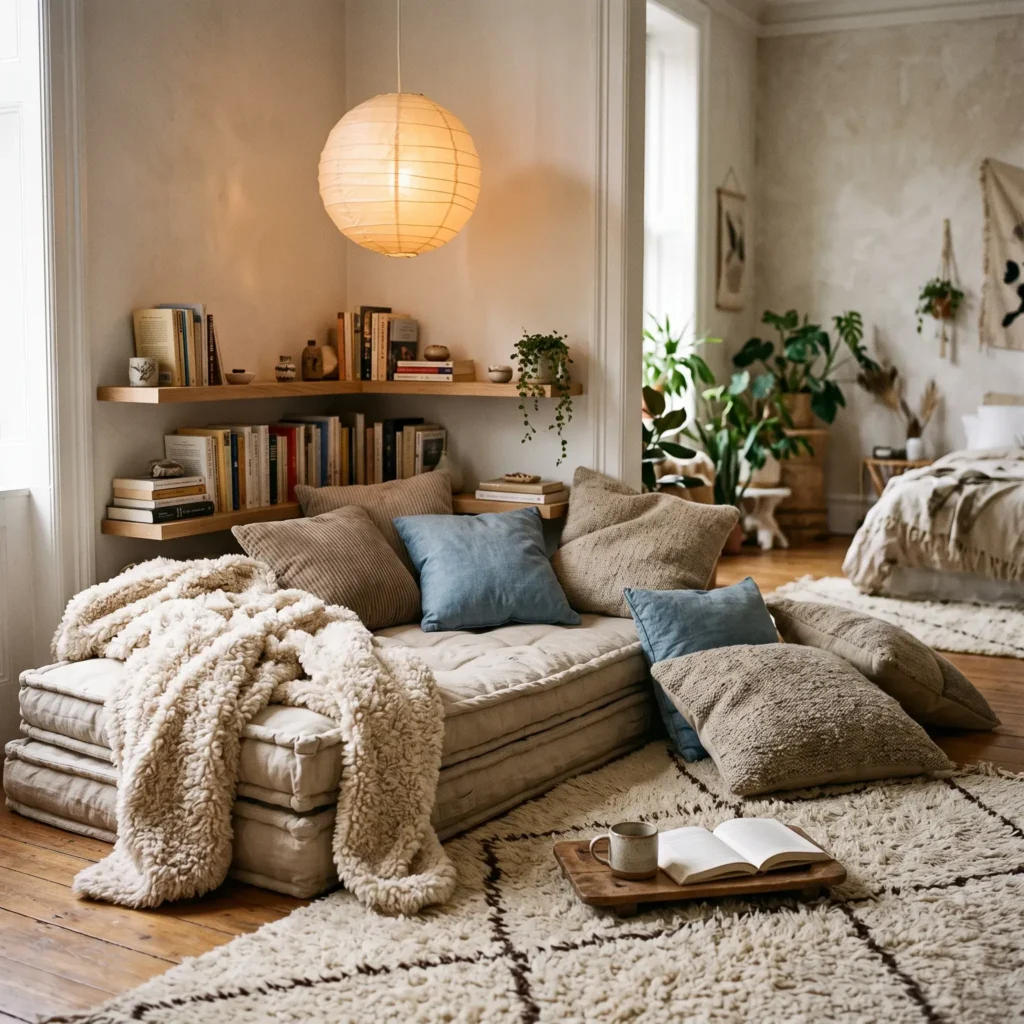
- Products Used in This Design:
- French-tufted cotton canvas floor mattress (30 by 75 inches)
- Heavy faux-shearling fleece blanket in cream
- Hand-knotted Moroccan high-pile wool area rug
- Washed chambray and velvet square floor pillows
- Wabi-sabi paper lantern pendant light with warm LED bulb
6. The Moody Library Bookshelf Alcove
This layout sandwiches a deep armchair directly between floor-to-ceiling bookshelves. It uses dark wood and corduroy to create an immersive, quiet reading zone.
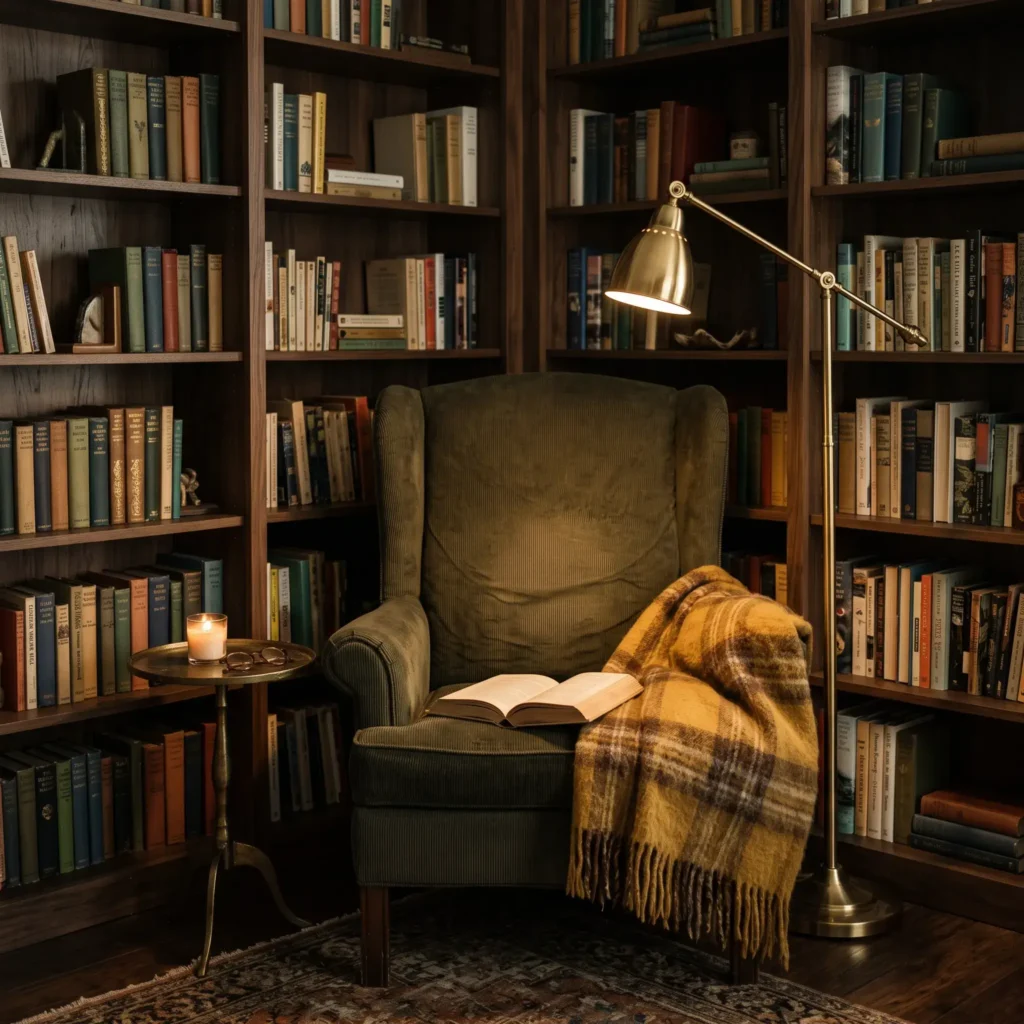
- Products Used in This Design:
- High-back wingback armchair in forest green corduroy
- Floor-to-ceiling dark walnut modular bookshelves
- Classic brass finish adjustable pharmacy reading floor lamp
- Alpaca wool plaid throw blanket in mustard and charcoal
- Solid brass small pedestal drink table
7. The Scandinavian Window Niche
This design prioritizes light reflection, soft natural fibers, and clean lines. It uses pale oak and unbleached sheepskin to keep the space bright yet tactile during dark winter afternoons.
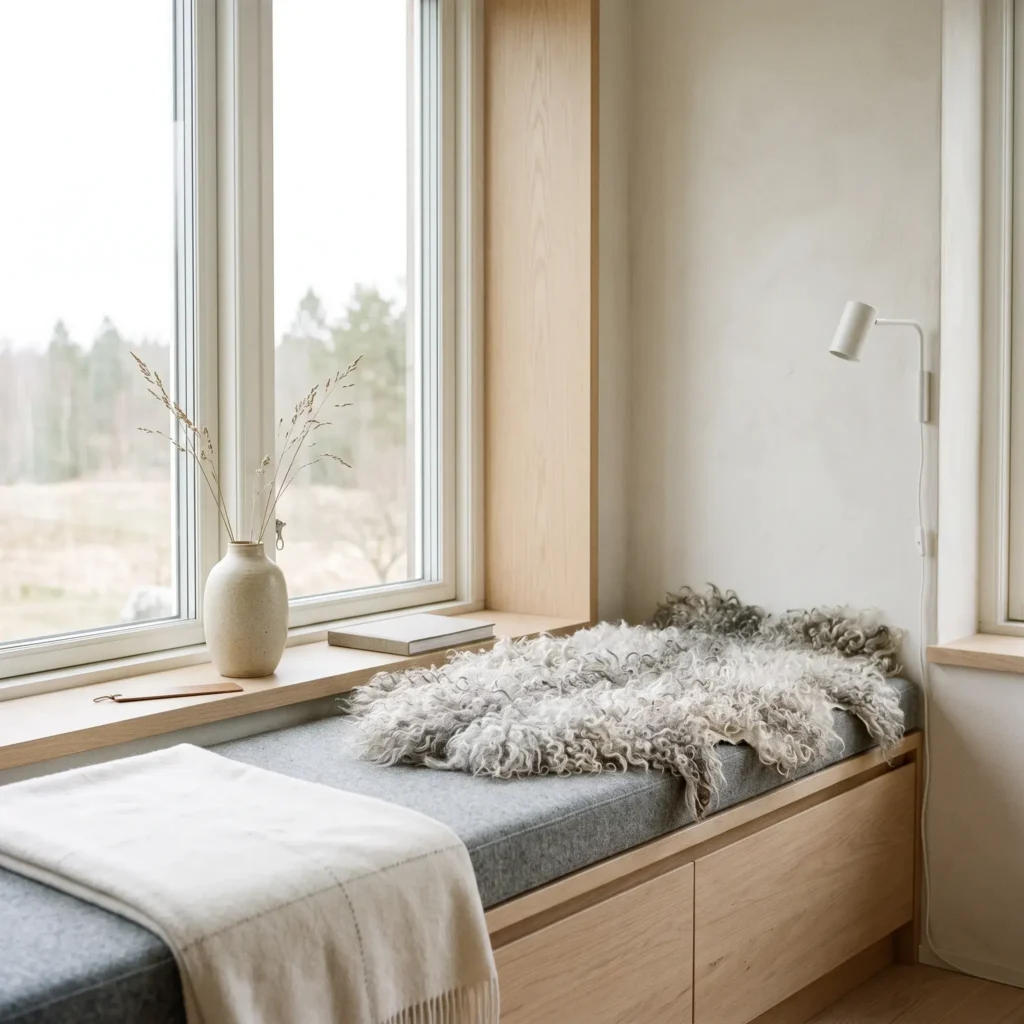
- Products Used in This Design:
- Solid white oak bench platform with natural matte wax finish
- Tailored bench cushion in heather grey wool felt
- Curly natural Gotland sheepskin pelt
- 100% pure cashmere throw blanket in natural cream
- Minimalist Scandinavian wall-mount task light
8. The Small Studio Daybed Alcove
This design serves a double purpose for tight layouts. It works as a wide lounger by day and a secondary bed by night, using firm bolsters to define the seating depth.
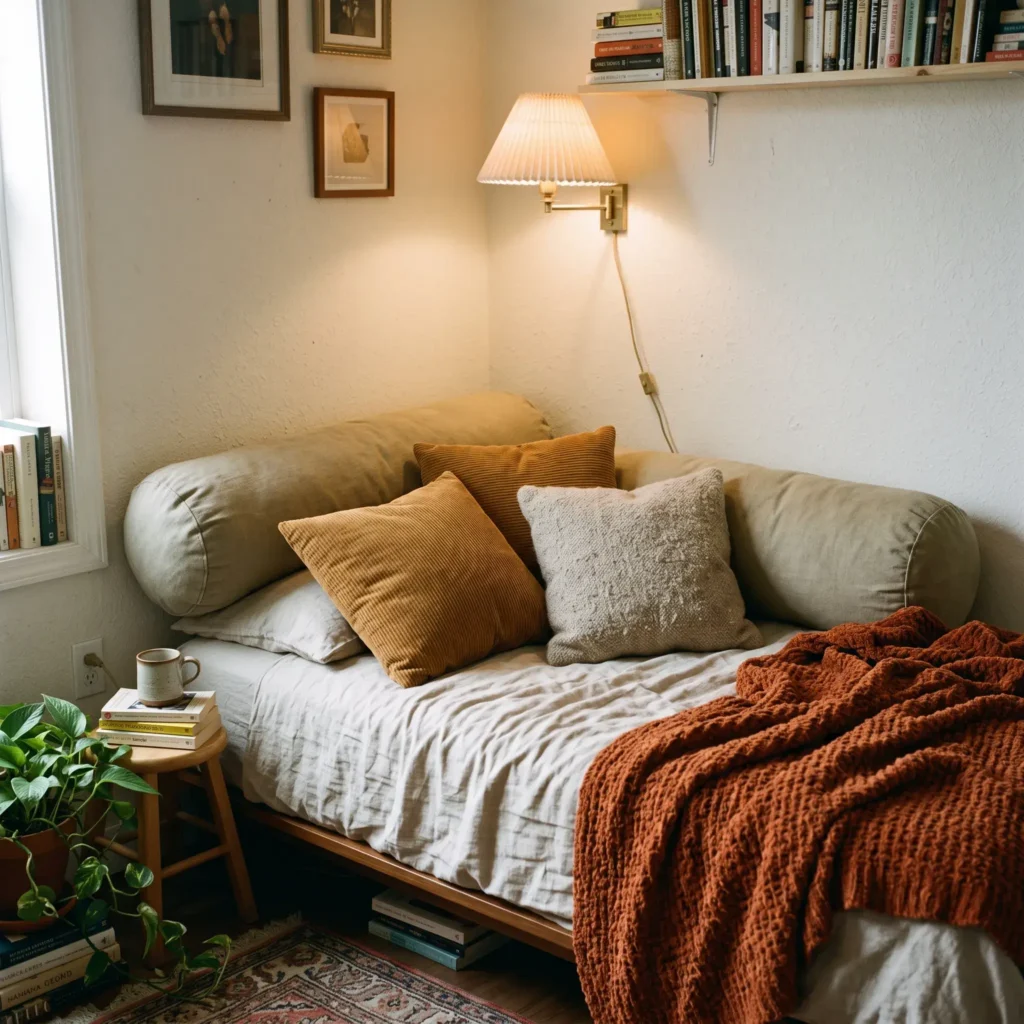
- Products Used in This Design:
- Low-profile twin daybed platform in solid birch
- Heavy cylindrical linen canvas bolster pillows (9-inch diameter)
- Pure washed flax linen duvet and sheet set
- Heavy chenille fringe throw blanket in burnt amber
- Hanging plug-in wall light with pleated parchment shade
The 70-20-10 Haptic Ratio for Layering Textures
Piling random blankets onto a chair often makes a space look messy rather than styled. Interior designers balance visual weight and tactile comfort by following a clear ratio.
| Layer Percentage | Material Classification | Example Fabrics and Surfaces | Functional Role |
| 70% Foundation | Low-sheen architectural base | Matte drywall, flatweave jute, natural oak or walnut millwork | Prevents harsh light reflections and grounds the room visually |
| 20% Structure | Medium-friction upholstery | Looped wool bouclé, heavy unbleached linen, ribbed corduroy | Provides physical grip and resists fabric abrasion |
| 10% Accents | High-relief tactile pieces | Chunky merino knits, Icelandic shearling, brushed brass hardware | Delivers immediate tactile warmth at points of physical contact |
How to Apply the Ratio
- Set the 70 Percent Base: Paint the walls in a flat or lime-wash finish. Lay down a low-profile jute or flatweave wool rug. This keeps the background quiet and prevents visual competition.
- Select the 20 Percent Seating Fabric: Choose a durable, textured upholstery fabric for your main bench or chair. Looped wool bouclé, corduroy, or heavy Belgian linen will stop you from sliding down while reading.
- Finish With 10 Percent Accents: Add one or two items with distinct surface textures. A chunky cable-knit blanket or a real sheepskin pelt adds sensory comfort right where your hands and feet land.
Seating Ergonomics: Dimensions That Prevent Back and Neck Fatigue
A reading nook must support human body mechanics. When a seat lacks proper support, muscles in your neck and lower back tighten, forcing you to stop reading early.
| Seating Component | Upright Bench Seat | Lounging Daybed | Ergonomic Armchair |
| Usable Platform Depth | 18 to 20 inches | 22 to 26 inches | 20 to 24 inches |
| Finished Seat Height | 16 to 18 inches | 16 to 18 inches | 16 to 18 inches |
| Backrest Pitch | 95 to 100 degrees (with pillows) | 100 to 105 degrees (with bolsters) | 100 to 115 degrees (fixed frame) |
| Armrest Elevation | 8 to 9 inches (bolster support) | 8 to 10 inches (side millwork) | 8 to 10 inches (integrated arm) |
| Cushion Foam Core | High-density foam (3 to 4 inches) | High-resilience latex (4 to 5 inches) | High-density foam over coil springs |
Key Measurements Explained
- Finished Seat Height (16 to 18 Inches): Measure this from the floor to the top of the cushion while someone sits on it. This height allows your feet to rest flat on the floor, which relieves pressure behind your knees.
- Seat Depth (18 to 20 Inches for Upright, 22 to 26 Inches for Lounging): An 18-inch depth keeps your lower back firmly against the backrest. If you prefer curling your legs up, expand the platform depth to at least 22 inches.
- Backrest Pitch (100 to 115 Degrees): An upright 90-degree angle pushes your spine forward. Anything past 115 degrees strains your neck as you look down at a book. An angle between 100 and 115 degrees opens the chest and supports the lumbar curve.
- Armrest Elevation (8 to 10 Inches Above Compressed Seat): Proper armrest height supports your elbows so your neck and shoulder muscles do not have to hold up the weight of your book.
The Cushion Sandwich Technique
Low-density foam flattens out under your sit bones within months. This rotates your pelvis backward and causes lower back pain.
For built-in benches and daybeds, use a three-part cushion assembly:
- The Core: A 3-inch base of high-resilience polyurethane foam rated at 30 to 35 kg/m³. This prevents bottoming out.
- The Comfort Layer: A 1-inch top layer of medium-density memory foam or natural latex. This relieves pressure points at your hips.
- The Casing: A channeled duvet wrap filled with duck down or microfiber. This provides a soft surface feel without losing structural support.
Lighting Science: Eliminating Eye Strain and Page Glare
Reading in poor light forces your eye muscles to contract continuously, leading to headaches and fatigue. Harsh overhead lights also ruin the cozy atmosphere of the space.
| Lighting Metric | Target Specification | Functional Purpose |
| Color Temperature | 2700K (Warm White) | Highlights natural wood and warm textiles; avoids blue-light circadian disruption |
| Lumen Output | 400 to 600 lumens | Delivers crisp, readable page contrast without blinding reflection |
| Color Rendering Index | 90 CRI ($R_a$) or higher | Renders page tones and fabric colors faithfully without muddy green tints |
| Task Illuminance | 300 to 500 lux on the page | Eliminates squinting and eye fatigue across long reading sessions |
| Ambient Background | 80 to 150 lux in the room | Prevents pupil strain when shifting your gaze away from the bright page |
Fixture Placement Rules
Mount an adjustable swing-arm sconce or place a floor lamp 42 to 48 inches above the floor. Position the bulb behind and slightly to the side of your non-dominant shoulder. This directs light across your lap without casting shadows from your head or hands.
Color Drenching for an Enclosed Sanctuary
Many homeowners paint small alcoves stark white to make them feel larger. In practice, pure white walls expose harsh corners and make small spaces feel cold.
Color drenching solves this problem by using a single paint color across the walls, trim, baseboards, window frames, and ceiling.
Why Color Drenching Works
- Softens Room Boundaries: Eliminating white trim lines removes sharp visual breaks. The walls recede, creating an enveloping, cocoon-like atmosphere.
- Reduces Harsh Light Bounce: Saturated mineral paint absorbs scattered light bounce and creates gradual shadows across textured fabrics.
Best Colors for Reading Nooks
- Terracotta and Raw Clay: Natural red and brown undertones keep the nook warm under both morning daylight and artificial evening lamps.
- Deep Olive and Forest Green: These natural shades lower visual fatigue and help you unwind after a long day.
- Warm Ochre and Camel: These tones mimic low-angled afternoon sunlight, making them an ideal choice for rooms with cold northern light exposure.
- Deep Espresso and Plum Slate: These rich dark tones turn small niches into moody, jewel-box spaces that absorb stray room light.
Use a dead-matte or flat sheen (under 5 percent gloss) on the walls and ceiling to scatter light evenly. Use a satin or eggshell finish on wood trim and shelves to resist scuffs without creating glare.
Joinery and Shelving: Safe Structural Loads for Heavy Books
Books generate substantial dead weight:
- Standard paperbacks weigh 4 to 10 pounds per 10-inch run.
- Hardcover books weigh 6 to 12 pounds per 10-inch run.
- Oversized art volumes reach 15 to 20 pounds per 10-inch run.
Standard floating shelves installed with simple plastic drywall anchors often pull free from the wall over time.
Safe Shelf Construction Guidelines
- Anchor Into Wall Framing: Drill directly into wooden wall studs using heavy-duty blind steel rods. This installation holds 25 to 30 pounds per shelf run safely.
- Shelf Depth: Build shelves 10 to 12 inches deep. This depth fits oversized books and bookends without overhang.
- Vertical Spacing: Leave 11 to 14 inches of vertical clearance between shelves to fit tall volumes.
- Mounting Height: Position your lowest floating shelf between 42 and 56 inches above the floor. This keeps books within easy reach of a seated reader while leaving ample headroom when standing up.
Layered Rugs and Acoustic Dampening
Hardwood and tile floors reflect sound waves, creating tiny echoes that make a home feel noisy and distracting. Layering heavy textiles on your floor helps trap sound and keeps your feet warm.
The Two-Layer Rug System
- The Base Rug: Place a dense, flatweave rug made of jute, sisal, or tight-loop wool on the floor. It should extend at least 12 to 18 inches beyond the front and sides of your chair or bench to anchor the reading area.
- The Accent Topper: Layer a soft, high-pile rug on top at an angle right where your feet rest. A thick Icelandic sheepskin pelt or a plush Moroccan wool rug provides immediate warmth underfoot.
These thick, porous fibers absorb high-frequency sound, reducing room reverberation and creating a quiet pocket for reading. Use a dual-sided natural felt rug pad underneath to prevent slipping and protect the flooring below.
Frequently Asked Questions
How do I prevent layered blankets and pillows from looking messy?
Stick to the 70-20-10 rule. Limit your setup to two or three pillows in distinct sizes, such as two 20-inch square pillows and one lumbar bolster. Fold one chunky blanket neatly across the seat or armrest rather than tossing multiple throws into a pile.
What is the most durable fabric for an everyday reading chair?
Tightly woven wool bouclé, heavy unbleached linen, and high-wale cotton corduroy offer excellent durability and natural stain resistance. Avoid light-duty synthetic weaves, which pill quickly under daily friction.
How can I make a cozy reading nook on a small budget?
Focus on textiles and lighting rather than custom cabinetry. Layer a secondhand armchair with a washed linen pillow and a heavy thrifted wool blanket. Add a 2700K warm LED bulb to an inexpensive thrifted lamp, and set a small flatweave rug under the chair to define the space.
What is the best seat height for someone with knee or back pain?
Keep the finished seat height between 17 and 18 inches, including cushion compression. A low seat under 15 inches forces the knees above the hips, which puts pressure on the lower spine and makes standing up difficult.
Can I build a cozy reading nook in a room without windows?
Yes. Rely on warm color drenching in rich tones like terracotta or deep olive, and use layered warm-white lighting. Pair a 2700K task lamp with concealed warm LED strip lights behind floating shelves to create an inviting, private space.
A well-crafted reading nook combines proper biomechanics, warm fabrics, and balanced lighting into an intentional retreat. Choose a quiet corner or alcove in your home. Build your seating foundation to the correct height and depth, balance your fabrics with the 70-20-10 ratio, and add a warm 2700K light. These simple adjustments will give you a dedicated space where you can read comfortably for hours.