9 Moody Green Bedroom Ideas: Paint Colors, Decor & Lighting Guide
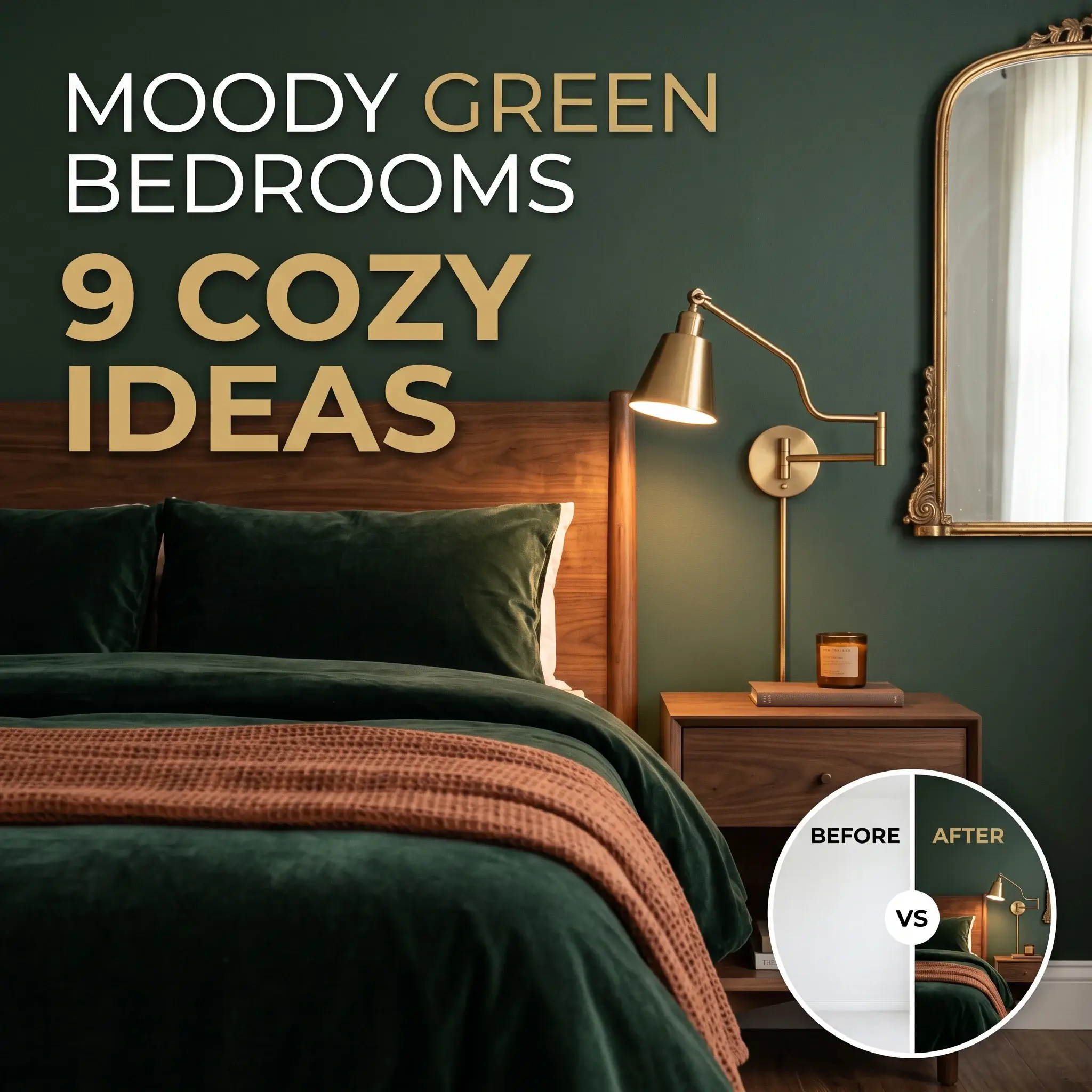
A dark, saturated bedroom creates a quiet sanctuary at the end of the day. Deep green draws from historic paneled studies, botanical conservatories, and quiet woodland paths. It softens the hard edges of a room, resting the eyes and encouraging deep sleep.
Many homeowners hesitate to commit to dark green because they worry the room will feel cold, dingy, or small. That issue rarely comes from the green paint itself. It happens when lighting temperatures, paint undertones, and furniture textures clash.
Here are nine practical ideas to design a balanced, moody green bedroom that feels warm, intentional, and inviting.
1. Modern Heritage: Deep Forest, Walnut, and Raw Brass
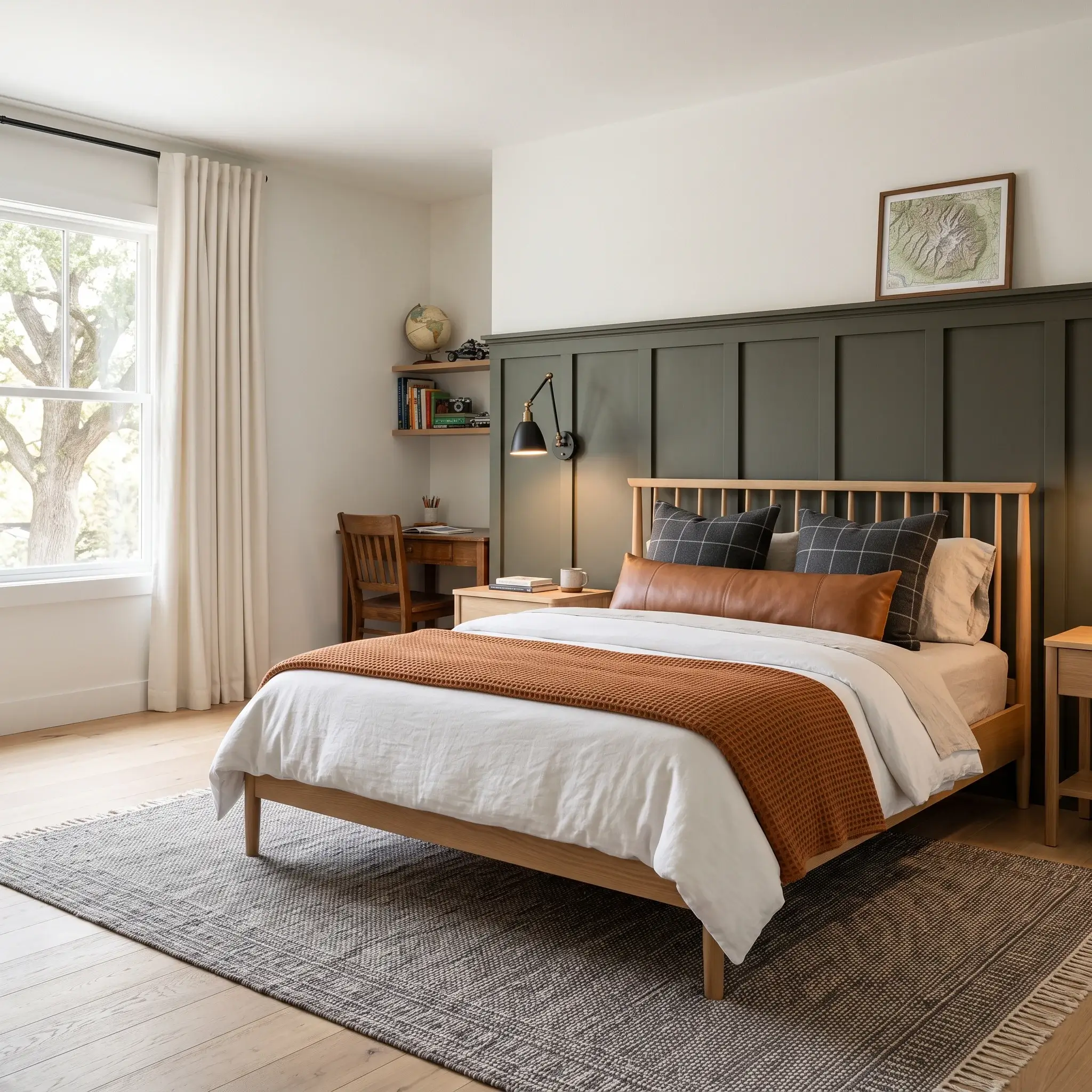
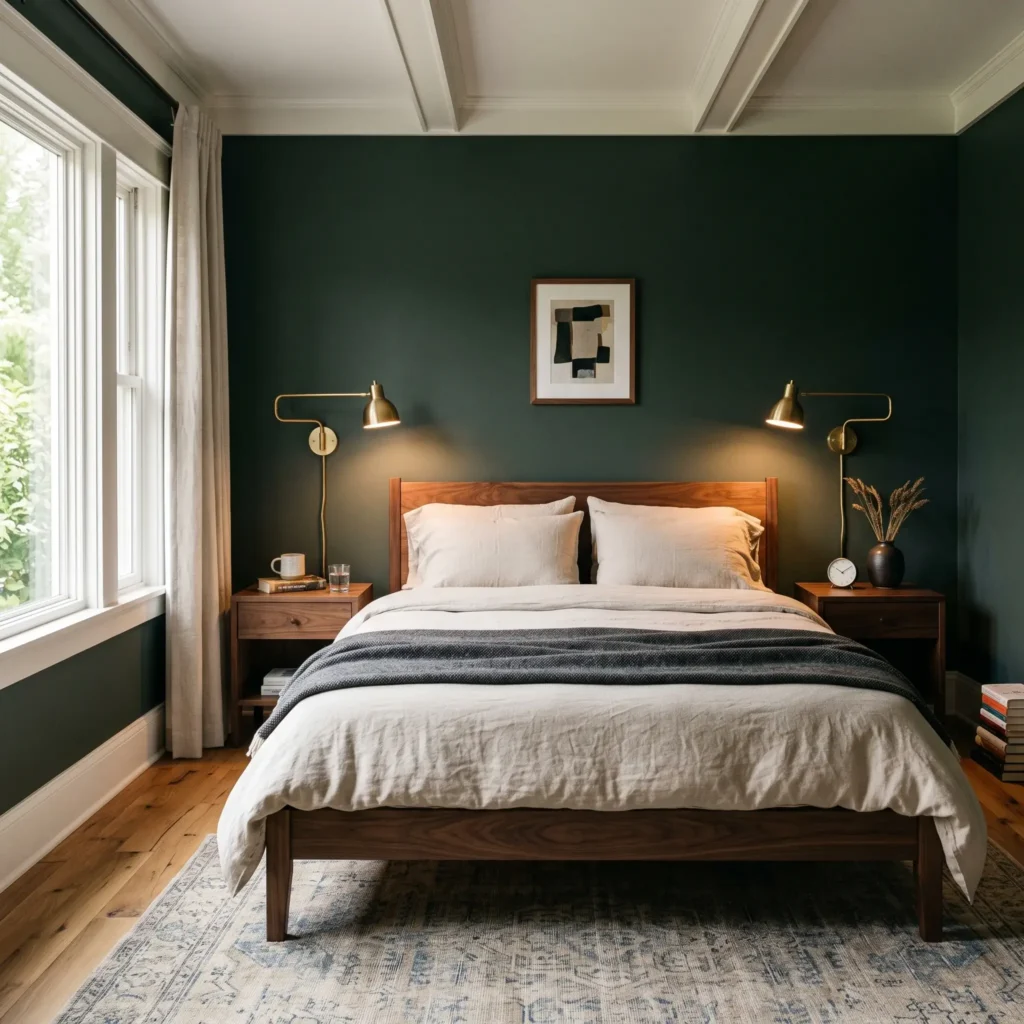
Paint the perimeter walls in a historic forest green with an ultra-matte finish. Anchor the center of the room with a solid American black walnut platform bed. The red-brown grain of walnut balances the deep green backdrop without high-contrast shock.
Mount articulated raw brass reading sconces on both sides of the bed. Unlacquered brass contains natural golden tones that echo candlelight. Over time, the metal develops a gentle patina that complements dark walls. Dress the mattress with washed off-white linen sheets, a light charcoal coverlet, and an alpaca throw blanket.
- Featured Decor & Product List:
- Solid American black walnut platform bed frame
- Pair of wall-mounted unlacquered brass swing-arm reading sconces
- Washed Belgian flax linen duvet cover set in warm oatmeal
- Boiled wool throw blanket in charcoal gray
2. The Earthy Olive Retreat: Moss Tones, Terracotta, and Flax
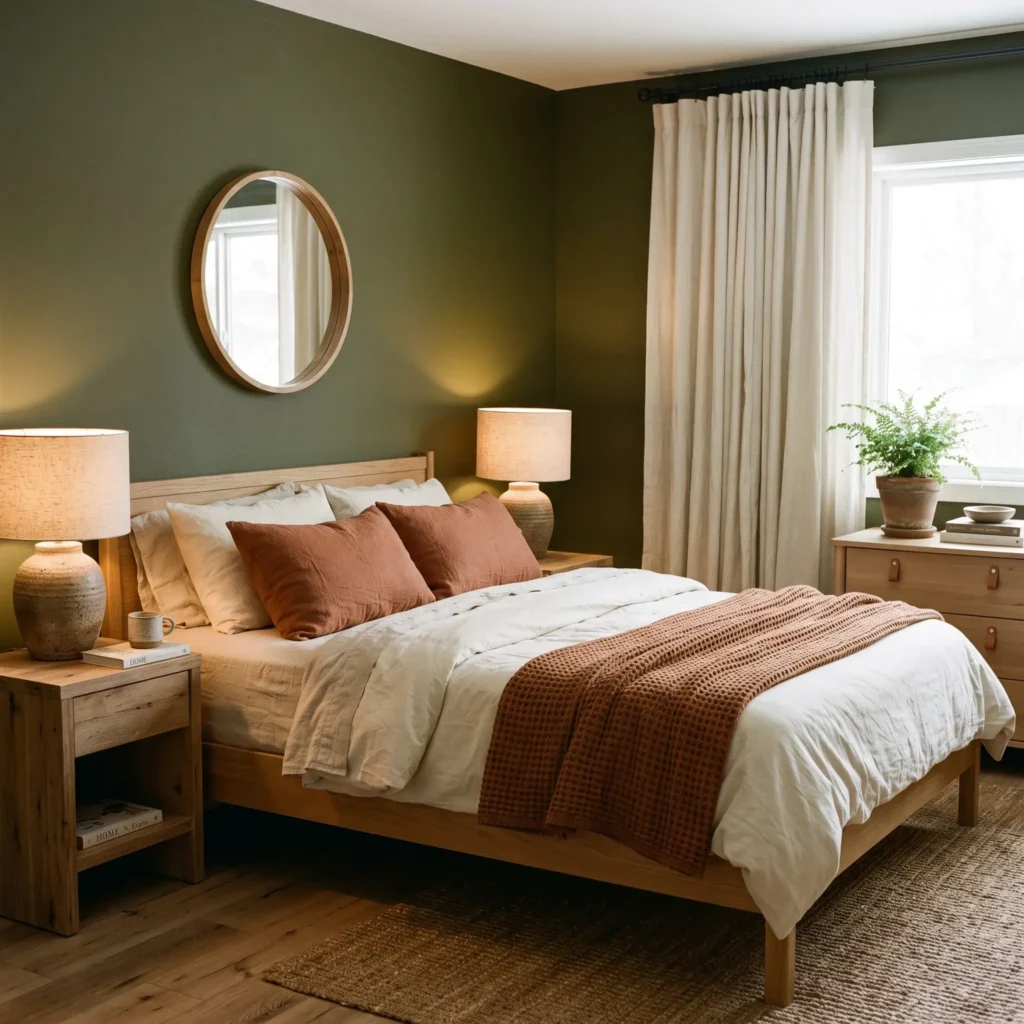
Olive and moss greens carry heavy yellow, brown, and umber undertones. These warm pigments neutralize the chilly, blue-tinted daylight typical of north-facing bedrooms.
Pair saturated olive walls with iron-oxide accents like terracotta, rust, and burnt sienna. Hang floor-to-ceiling unbleached linen drapes right below the ceiling molding to soften the window frames. Style the bed with an ivory cotton quilt, rust-colored linen Euro shams, and a waffle-weave cinnamon blanket. Add textured ceramic bedside lamps with parchment shades to cast a warm glow across the nightstands.
- Featured Decor & Product List:
- Washed French linen pillow sham set in terracotta rust
- Handcrafted textured ceramic table lamp with paper shade
- Custom-length pinch-pleat linen drapery panels in unbleached ivory
- Heavy organic cotton waffle blanket in spiced cinnamon
Check out more Decor Styles
3. Full Architectural Color Drenching: Floor to Ceiling Green
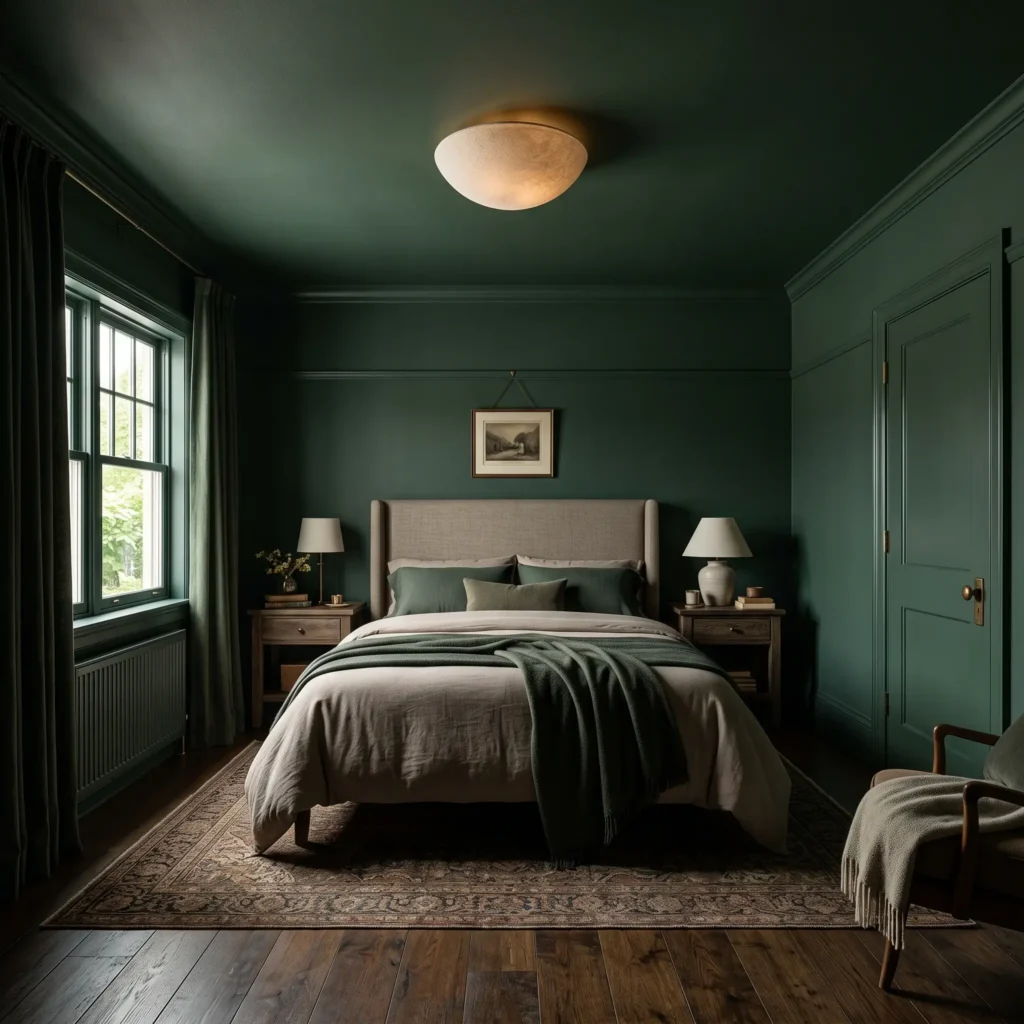
Color drenching wraps walls, doors, baseboards, window casings, and the ceiling in a single paint family. Traditional white trim cuts a room into visible segments. Wrapping every surface in one shade dissolves those hard boundary lines, making compact bedrooms feel calm and unified.
Choose a desaturated, smoky bronze-green. Paint the drywall and ceiling in a dead-flat or chalky emulsion to stop harsh light bounce. Use the exact same color on the baseboards, doors, and window trim, but switch to a satin or semi-gloss finish. That small difference in sheen defines architectural lines through shadow rather than a jarring white border.
- Featured Decor & Product List:
- Tailored upholstered headboard in performance taupe linen
- Matte black solid brass interior door levers
- Minimalist plaster ceiling flush-mount fixture with milk glass shade
- Faded vintage wool runner rug with sage and biscuit tones
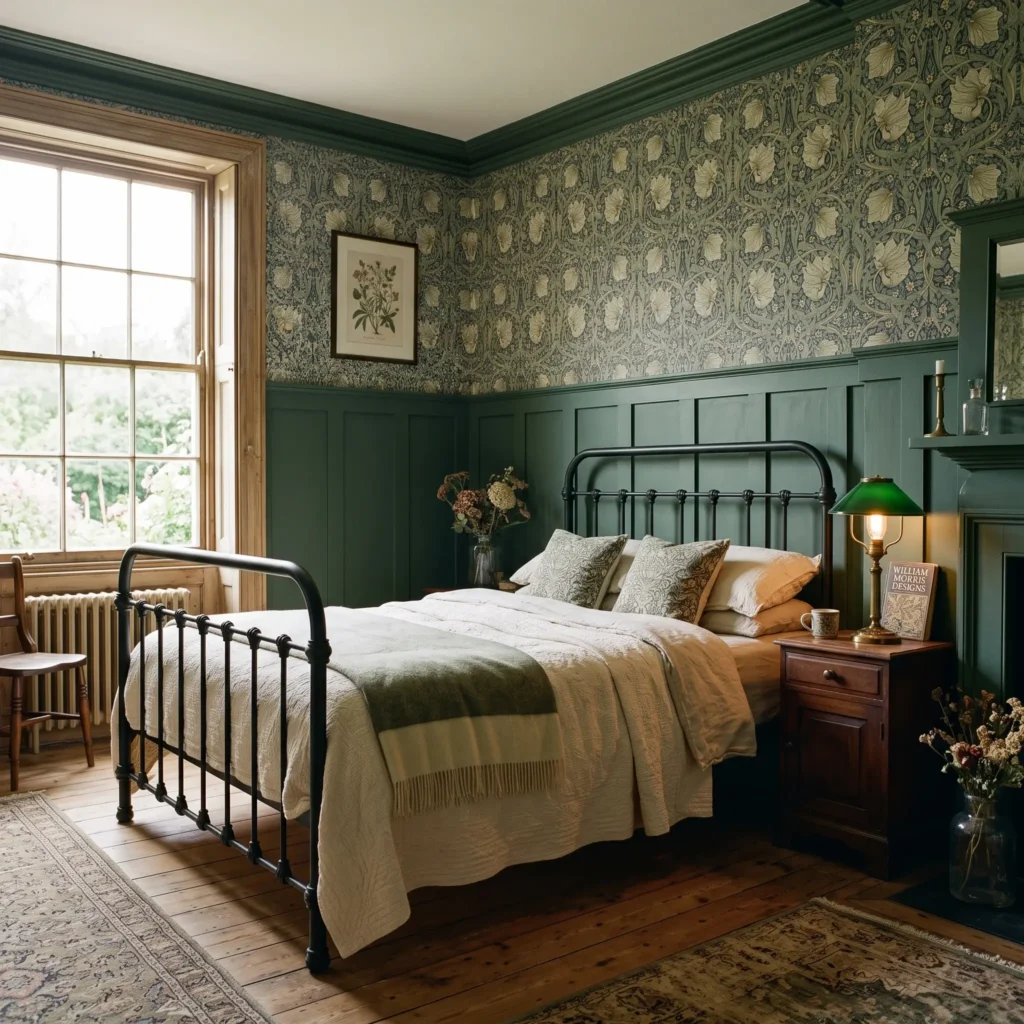
4. Victorian Revival: Dark Woodwork and Botanical Wallpaper
Large, dark walls sometimes need visual rhythm to keep from feeling flat. Installing classic wall paneling adds physical shadow lines that shift throughout the day.
Run board-and-batten or raised-panel wainscoting across the lower two-thirds of the walls. Paint the woodwork in a deep forest tone with a subtle satin sheen. Cover the upper third of the wall in historic botanical wallpaper with sage, moss, and muted sepia foliage. The dark wainscoting grounds the bed frame, while the wallpaper adds depth and historic character above the headboard.
- Featured Decor & Product List:
- Traditional black wrought-iron spindle bed frame
- Botanical foliage peel-and-stick wallpaper roll
- Solid brass adjustable banker’s task lamp
- Restored antique mahogany one-drawer nightstand
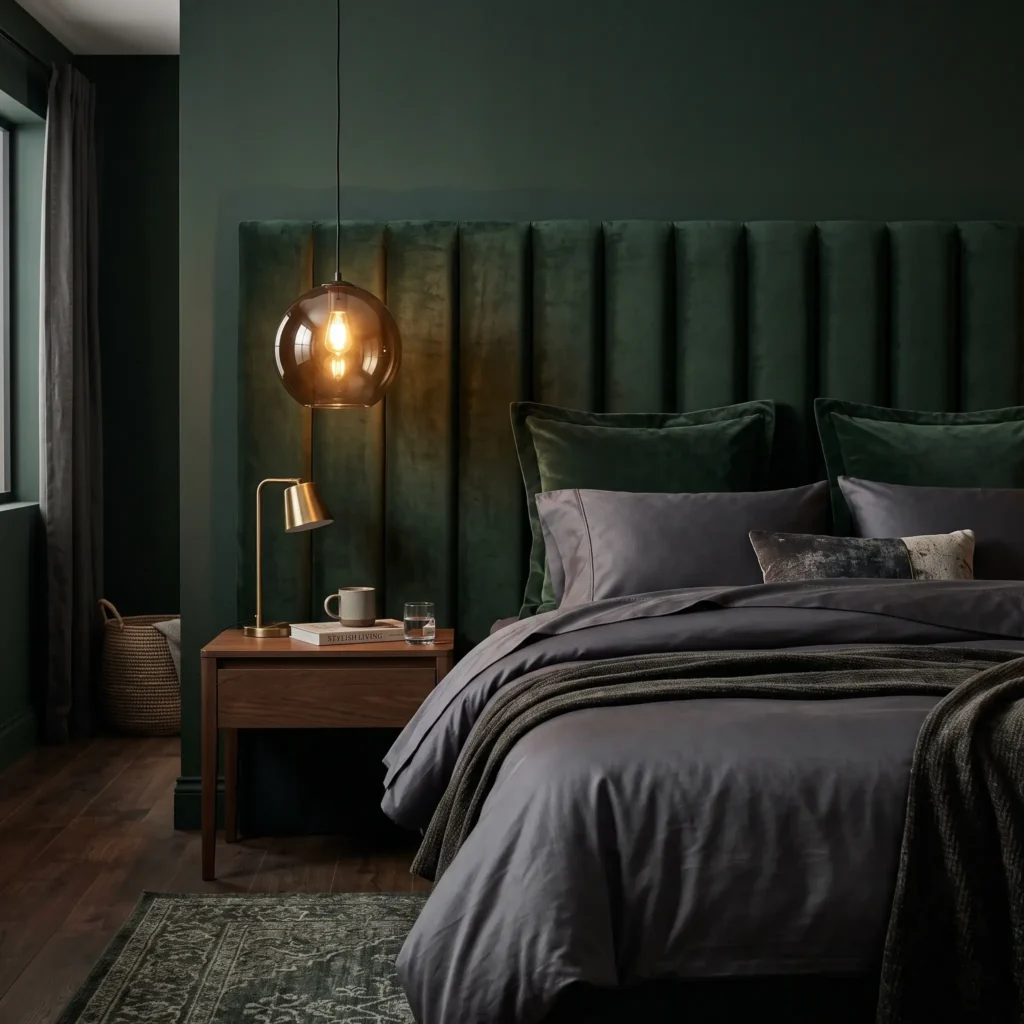
5. Jewel-Tone Emerald: Velvet and Smoked Glass
If your aesthetic leans sleek and modern, choose a deep green with indigo and cyan undertones. These cool-biased greens feel crisp, dramatic, and tailored under evening lamplight.
Paint the accent wall in a deep blackened emerald. Position a channel-tufted velvet headboard in rich forest green against the wall. Hang smoked-glass globe pendants beside the bed instead of traditional table lamps. The tinted glass softens bulb glare while casting warm light rings across the velvet headboard. Dress the bed in smooth charcoal cotton sateen to finish the modern hotel look.
- Featured Decor & Product List:
- Channel-tufted vertical velvet headboard in dark forest green
- Hand-blown smoked glass globe pendant light
- 400-thread-count washed cotton sateen sheet set in charcoal
- Round cast aluminum bedside drink table in blackened bronze
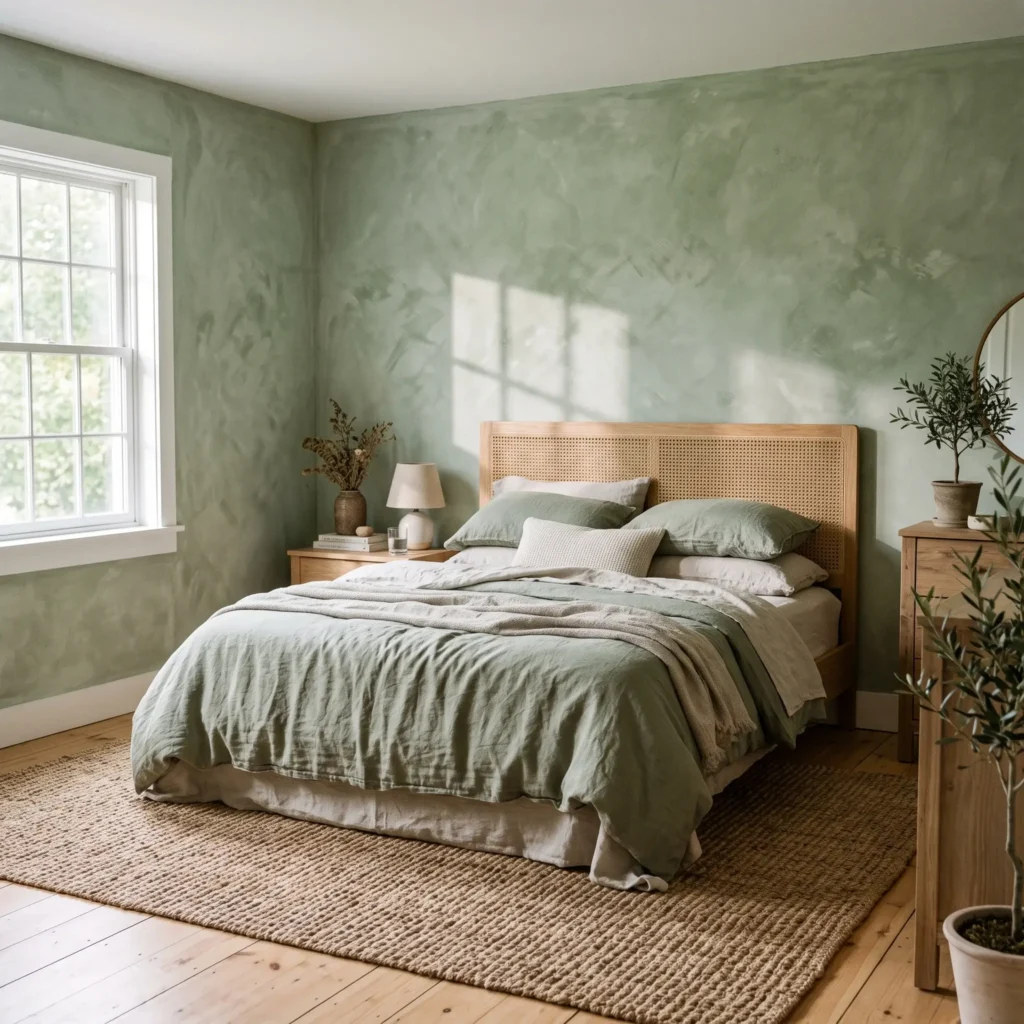
6. Tactile Limewash: Chalky Mineral Walls and Natural Cane
Standard latex paint can look synthetic under direct daylight. A natural mineral limewash finish gives walls organic texture, movement, and a weathered stone appearance.
Brush an olive-tinted mineral limewash across bare drywall using broad cross-hatch strokes. As the slaked lime absorbs carbon dioxide, it cures into a mottled, chalk-like surface. Pair this textured wall treatment with woven textures like a natural cane headboard, woven jute rugs, and washed linen duvet covers. The tactile surfaces diffuse daytime sunlight, keeping dark walls soft rather than stark.
- Featured Decor & Product List:
- Solid white oak bed frame with woven cane headboard
- Chunky braided natural jute area rug (8×10 foot)
- Mineral interior limewash paint in soft khaki-moss
- Garment-washed pure linen duvet cover in faded sage
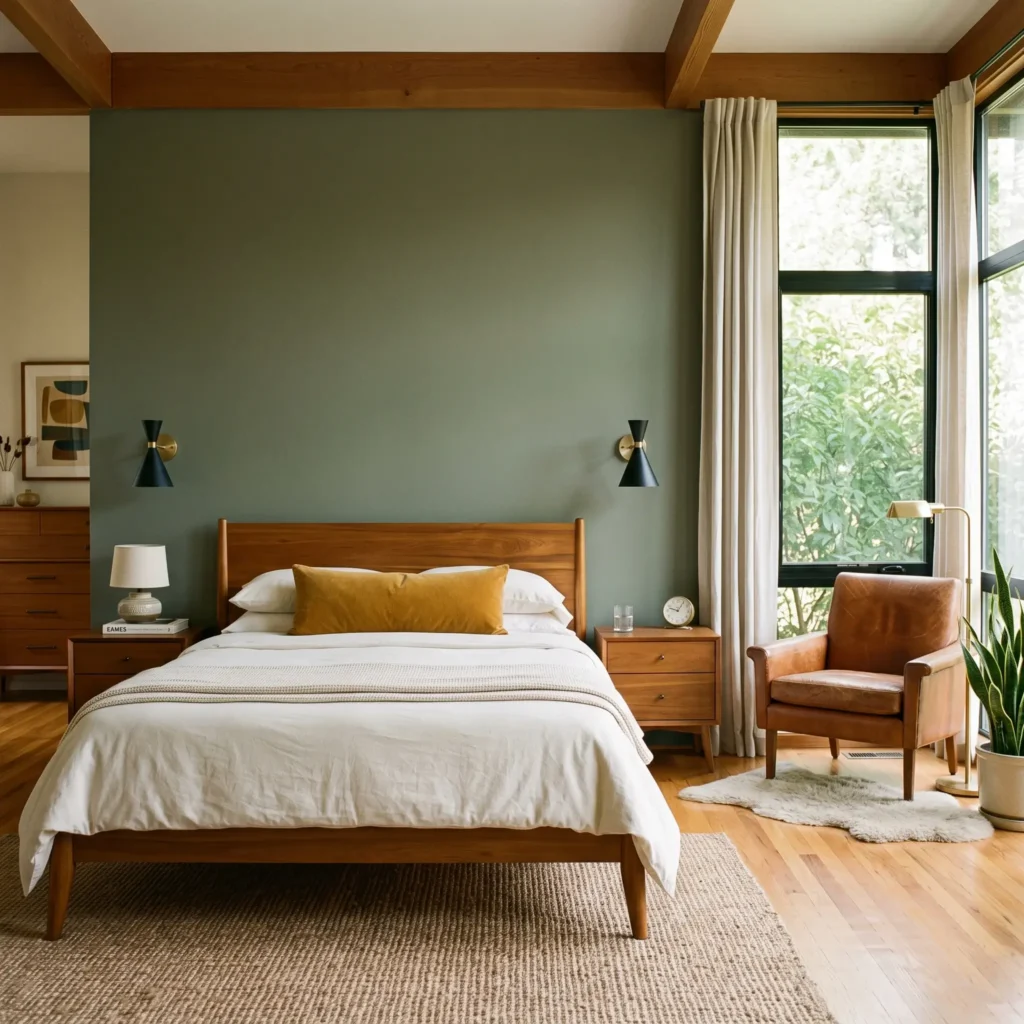
7. Mid-Century Forest: Rich Teak, Walnut, and Caramel Leather
Mid-century furnishings bring clean lines and warm wood tones to dark green interiors. The golden-orange grain in teak and walnut balances deep wall colors naturally.
Paint your walls in a desaturated, slate-tinted forest green. Center a low-profile teak platform bed with angled tapered legs on the main wall. Add wall-mounted sconces with matte black cone shades and brass swivel joints. Complete the room with an authentic cognac leather reading chair, a mustard-yellow velvet accent pillow, and off-white bedding.
- Featured Decor & Product List:
- Low-profile mid-century platform bed in acorn teak finish
- Top-grain caramel cognac leather accent lounge chair
- Matte black cone shade wall sconces with brass swivels
- Square cotton velvet pillow cover in golden mustard
8. The Weathered Guest Suite: Soft Blue-Gray Green Smoke
If you want a cozy atmosphere without deep near-black tones, pick a mid-tone green with strong slate and gray components. These balanced shades shift character gracefully as the sun moves across the house.
A weathered blue-gray sage works well in secondary bedrooms, guest rooms, and low-ceiling layouts. In early morning light, the walls show a calm sage-gray cast. In evening lamplight, the color deepens into a warm, protective envelope. Pair the walls with warm antique white trim, an iron farmhouse bed, and faded wool rugs.
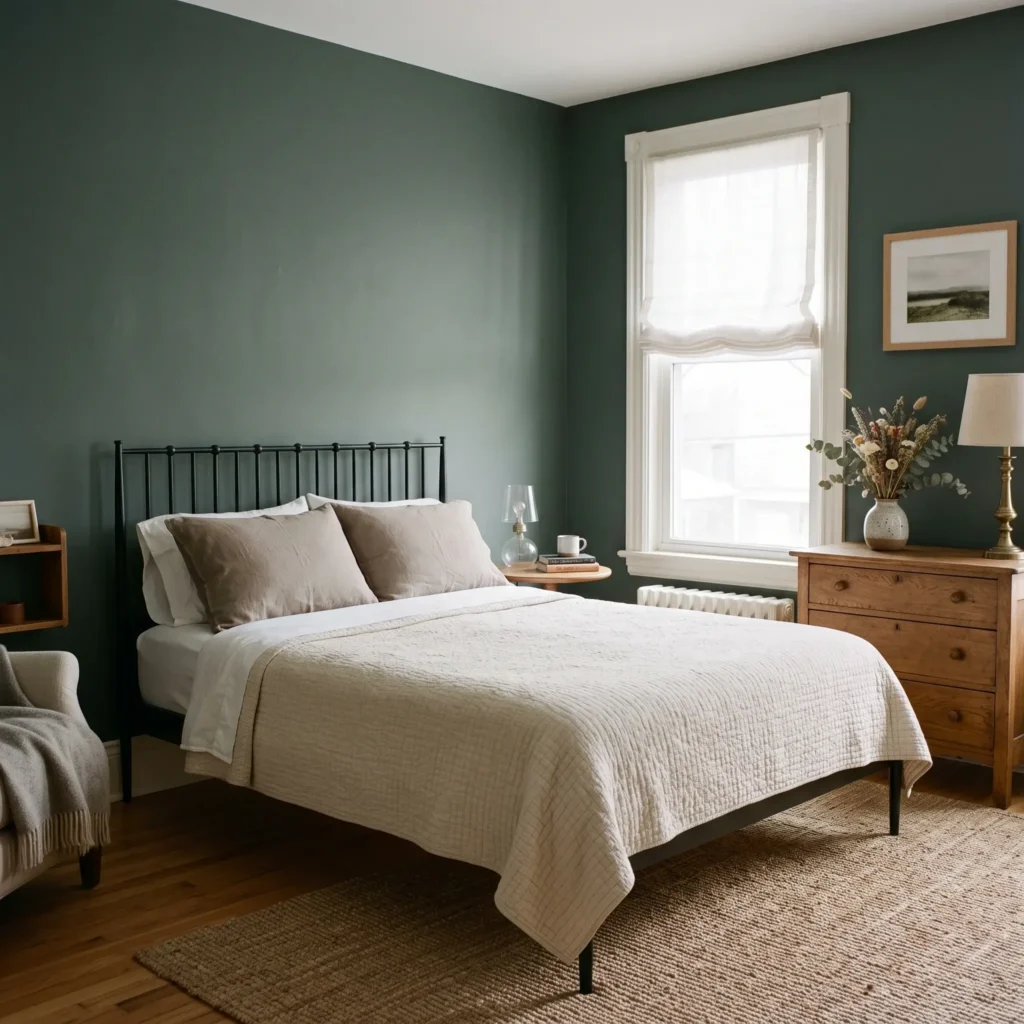
- Featured Decor & Product List:
- Farmhouse style black iron spindle bed frame
- Reversible stitched quilt set in warm ivory and stone
- Solid oak three-drawer dresser with antiqued bronze pulls
- Hand-poured soy wax bedside candle in amber glass
9. Dark Cottagecore: Moss Walls, Warm Pine, and Floral Patterns
Cottagecore design does not have to rely on pale pastels. A dark moss green background grounds romantic floral textiles, keeping them charming rather than overly sweet.
Paint the bedroom in an earthy moss tone. Place an antique honey-pine dresser against the wall and hang an antiqued giltwood mirror above it. The mirror catches lamplight and bounces it across dark corners. Dress the bed with small-print floral pillow shams, a washed taupe quilt, and a chunky knit olive throw. Use pleated fabric lampshades on bedside lamps to cast soft, diffused pools of light.
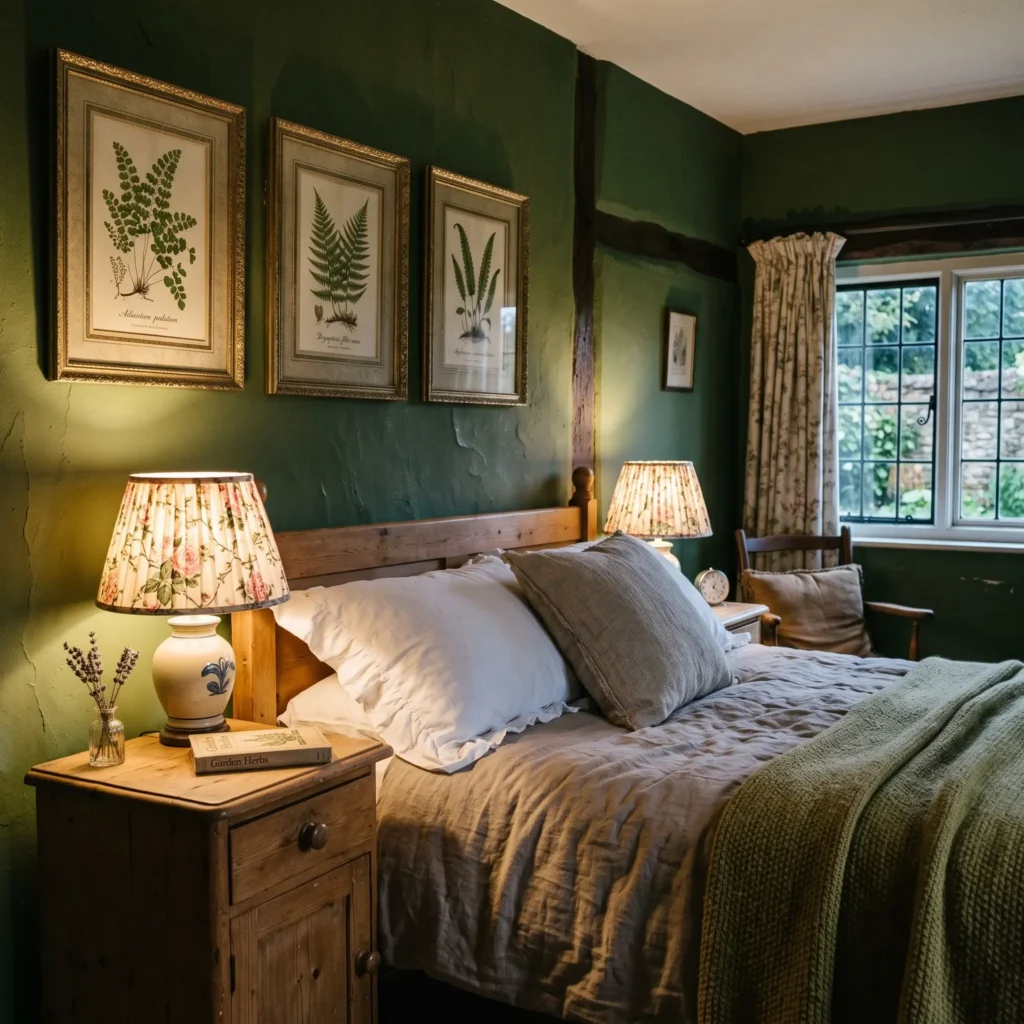
- Featured Decor & Product List:
- Small ceramic table lamp with gathered pleated floral shade
- Set of three framed vintage botanical prints in gilded wood frames
- Heavy linen ruffle-edge pillowcases in natural flax
- Reclaimed honey-toned pine one-drawer bedside table
How to Choose the Right Moody Green Paint: Undertones & LRV
Selecting paint from a small paper swatch often leads to surprises on full-sized walls. Deep green formulas react noticeably to shifts in natural and artificial light.
The most reliable metric to check is the Light Reflectance Value (LRV). The LRV scale runs from 0 (absolute black light absorption) to 100 (pure white light reflection). Moody greens typically register between an LRV of 3 and 15. Formulations under 10 reflect very little usable light. They require intentional artificial lighting to show their real color.
- Benjamin Moore Essex Green (HC-188): LRV ~3.5. Heavy black base with subtle olive-gray undertones. Best for formal primary suites and traditional moldings.
- Farrow & Ball Studio Green (No. 93): LRV ~4.0. Obsidian black foundation that reveals emerald flares under direct daylight. Best for south-facing bedrooms and bold trim.
- Benjamin Moore Salamander (2050-10): LRV ~5.7. Cyan-black foundation with indigo and teal undertones. Best for contemporary feature walls and evening-focused rooms.
- Sherwin-Williams Ripe Olive (SW 6209): LRV 6.0. Warm yellow-brown and moss undertones. Best for north-facing spaces that need earthy warmth.
- Sherwin-Williams Pewter Green (SW 6208): LRV 12.0. Desaturated slate gray base with sage undertones. Best for transitional suites with balanced daylight.
- Benjamin Moore Vintage Vogue (462): LRV 11.5. Smoky bronze and charcoal undertones. Best for relaxed suites and textured plaster walls.
- Farrow & Ball Green Smoke (No. 47): LRV 19.0. Weathered blue-gray and heritage sage. Best for small bedrooms, guest rooms, and cozy retreats.
Window Orientation: How Sunlight Changes Green Paint
Before painting your walls, watch how daylight moves through the room. Natural light changes color temperature based on the cardinal direction of your windows.
- North-Facing Bedrooms: North windows pull in indirect daylight with a cool, slate-blue tint throughout the year. Cool emeralds and teal greens can look like chilly concrete gray in this exposure. Select warm, olive greens built with yellow and umber pigments, such as Sherwin-Williams Ripe Olive. The warm undertones balance the cool daylight naturally.
- South-Facing Bedrooms: South-facing windows bring in warm, golden light all day long. This bright light can wash out pale sage tones, but it supports deep, black-tinted greens. Benjamin Moore Salamander and Farrow & Ball Studio Green thrive in south-facing rooms, showing complex undertones without looking gloomy.
- East-Facing Bedrooms: Morning light starts warm and bright, but afternoons turn shadowy and cool. Medium-depth colors like Sherwin-Williams Pewter Green adapt well across bright mornings and dim afternoons.
- West-Facing Bedrooms: Soft morning light transitions into strong, low-angle golden sunlight by late afternoon. Balanced greens with neutral bases, like Benjamin Moore Essex Green, absorb that intense sunset light without looking harsh or overly bright.
The 3-Tier Lighting Formula for Dark Green Bedrooms
A dark green bedroom should feel cozy, not dim. Because dark paint absorbs up to 95% of incoming light, you cannot rely on a single central ceiling fixture to illuminate the entire room.
Distribute your lighting across three distinct vertical levels:
- Ambient Tier (Soft Overhead Diffusion): Avoid clear glass globes and bare bulbs that cast harsh downward glare. Choose ceiling fixtures with pleated linen shades, milk-glass globes, or paper lanterns that scatter light evenly across the ceiling.
- Task Tier (Eye-Level Bedside Lighting): Place bedside reading lights roughly 42 to 48 inches from the floor so they sit at eye level when you sit up in bed. Use opaque metal or dense parchment shades that direct light down onto your book rather than straight into the room.
- Accent Tier (Focused Architectural Highlights): Dark surfaces absorb light, so use small accent fixtures to add depth. Mount a low-wattage brass picture light above framed wall art, or set a small spotlight behind a floor plant to cast soft leaf patterns across the green paint.
Lighting Specifications to Follow:
- Color Temperature (CCT): Use bulbs strictly between 2400K and 2700K (Warm White). Cool bulbs (3500K to 5000K) cast an institutional blue hue that drains warmth from dark walls, making green paint look muddy.
- Color Rendering Index (CRI): Choose bulbs rated at 90+ CRI. High-CRI bulbs contain the full spectrum of red wavelengths, allowing deep green pigments to show their true depth at night.
Bedding Combinations That Balance Dark Walls
Dark walls need contrasting, layered textiles so the bed remains the welcoming focal point of the room. Build your bedding upward using complementary textures and tones.
- Base Layer: Start with washed Belgian linen or smooth cotton percale sheets in warm ivory, cream, or antique oatmeal. Avoid optical bright white sheets, which create an uncomfortably stark, clinical contrast against deep green walls.
- Middle Layer: Add a medium-weight quilt or waffle-weave blanket in soft stone, faded sage, or warm greige. This middle tone bridges the gap between pale sheets and saturated perimeter walls.
- Top Accent Layer: Fold a plush duvet in charcoal or deep moss at the foot of the bed. Finish the look with two textured accent shams and a wool throw in terracotta, rust, or mustard ochre to add rich, grounding warmth.
Frequently Asked Questions
Does painting a bedroom dark green make it look smaller?
Dark green does not automatically make a room feel cramped. When applied across all four walls and the trim, dark green softens corners and perimeter lines. Because your eyes cannot clearly locate where the walls end and the ceiling begins, the boundaries recede, creating a quiet, protective space.
What bedding colors pair best with dark green walls?
Warm ivory, oatmeal, cream, and washed flax greige serve as the best base sheet colors. For accent pillows and throws, choose warm earth tones like terracotta, rust, burnt orange, mustard yellow, or soft blush. Avoid stark optical white, which looks harsh against saturated dark walls.
Should you paint the bedroom ceiling dark green?
Yes. Painting the ceiling in the exact same color and finish as the walls creates a seamless color-drenched look. If your ceilings are under eight feet tall and you worry about overhead weight, have your ceiling paint mixed at 50% strength of the wall color, or pick the next lighter shade on the paint strip.
What metal finishes look best in a dark green bedroom?
Unlacquered raw brass, antiqued gold, and oil-rubbed bronze pair naturally with dark green. The warm yellow-gold undertones in brass balance the cool tones of green paint, reflecting warm points of light into the room. Polished chrome and shiny nickel can read as cold and harsh against deep forest tones.
How do you keep a dark green bedroom from feeling like a cave?
Prevent the cave effect with layered warm lighting, varied surface textures, and warm timber furniture. Use 2700K warm-white bulbs across bedside lamps and sconces, hang an antiqued mirror to bounce light, and use warm hardwoods like American walnut or white oak to ground the space.