7 Nightstand Setups That Do Not Look Like a Pile of Stuff
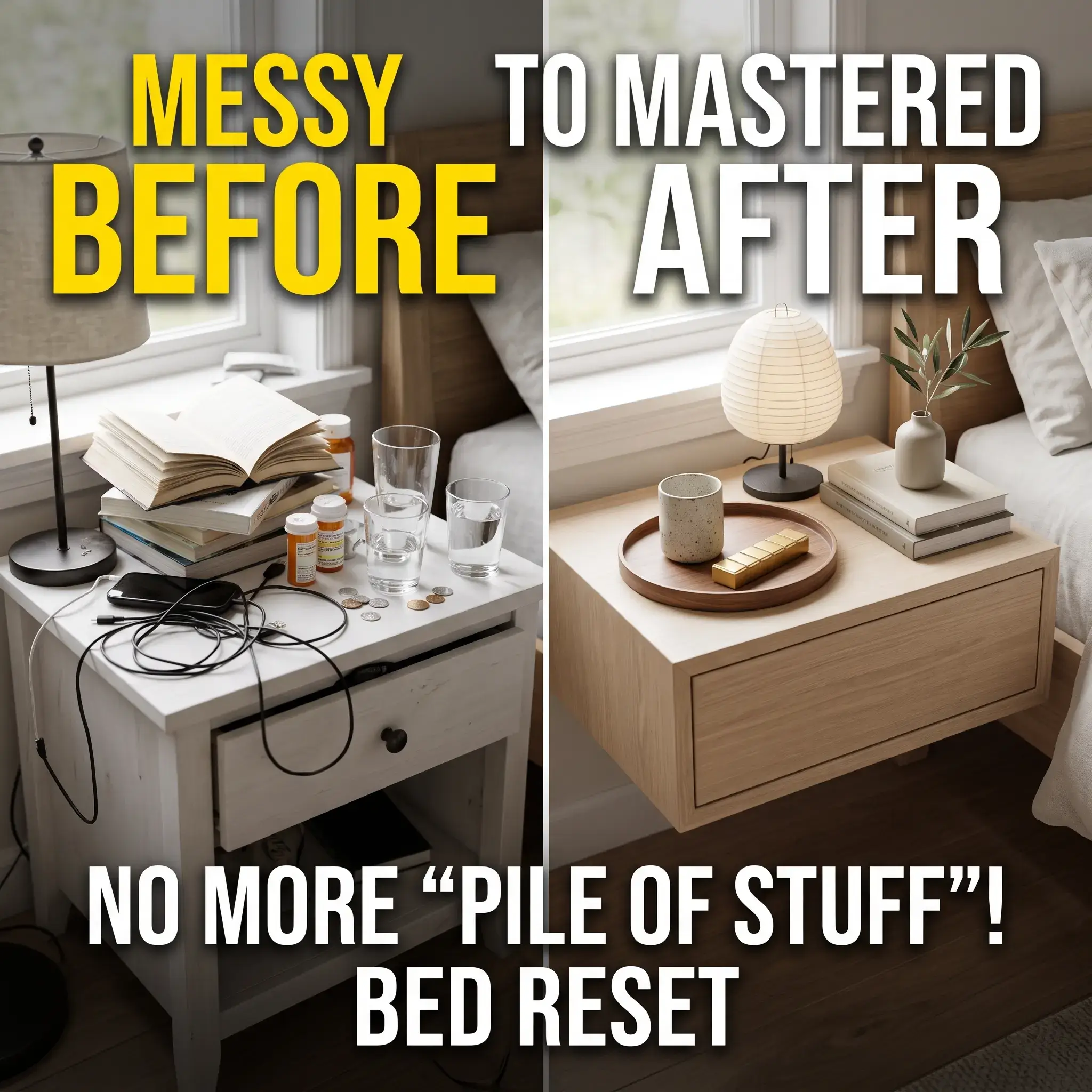
Bedside tables collect daily junk faster than almost any other surface in the home. Within two or three days, a clean tabletop turns into a tangled mess of charging cords, water cups, loose receipts, and plastic pill bottles.
This mess happens for a clear reason. Most people treat the tabletop as an open landing zone rather than a purposeful transition space. When a surface lacks visual borders and built-in cable storage, clutter spreads naturally across the open wood.
You do not need to live like an extreme minimalist to fix this issue. You only need a practical setup that supports your actual nightly habits while keeping small items contained.
Below are seven functional bedside setups designed to stay orderly every day. Each layout features a styling formula, a complete product list, and a detailed visual prompt to guide your bedroom design.
7 Practical Bedside Setups That Stay Clean
1. The Floating Cantilever Box
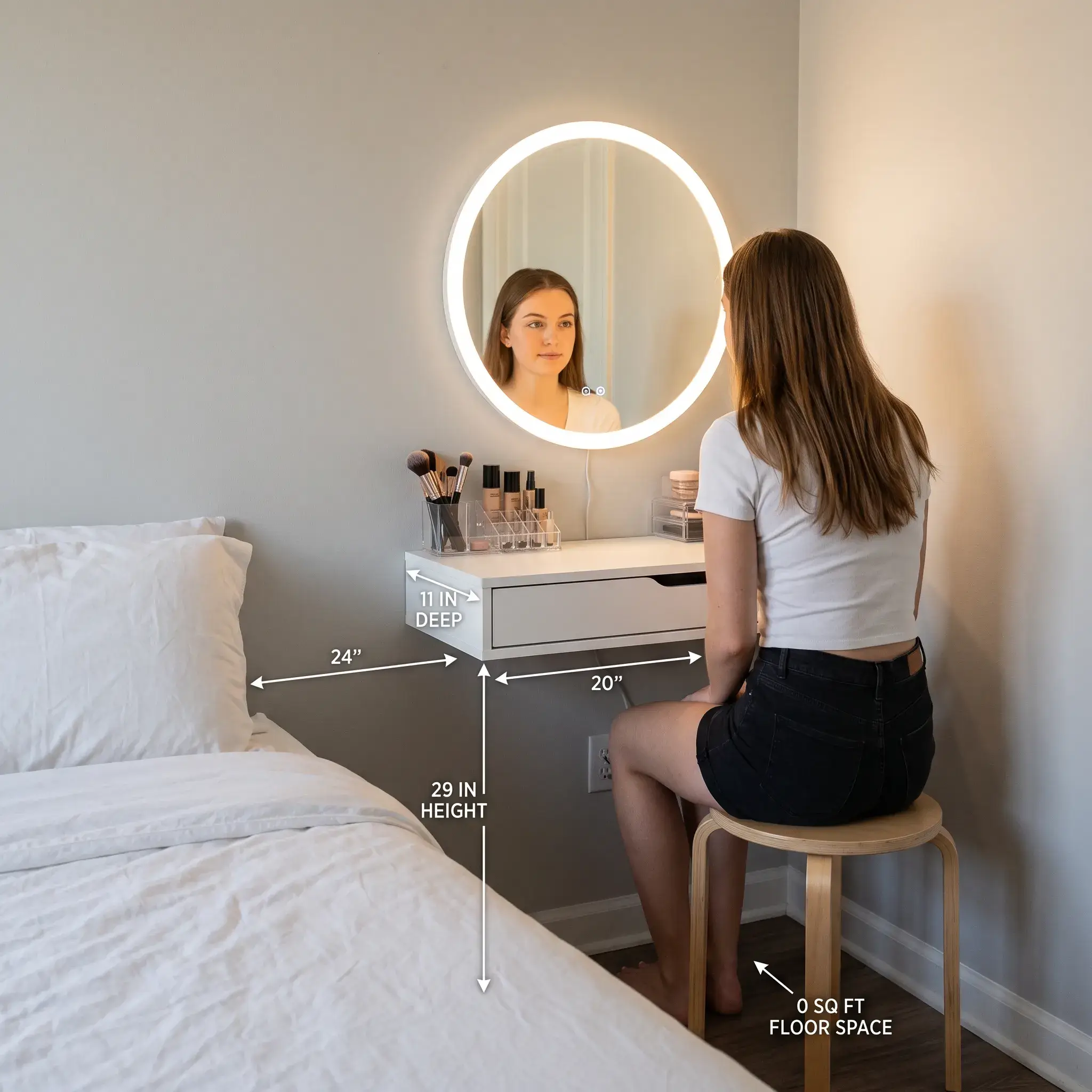
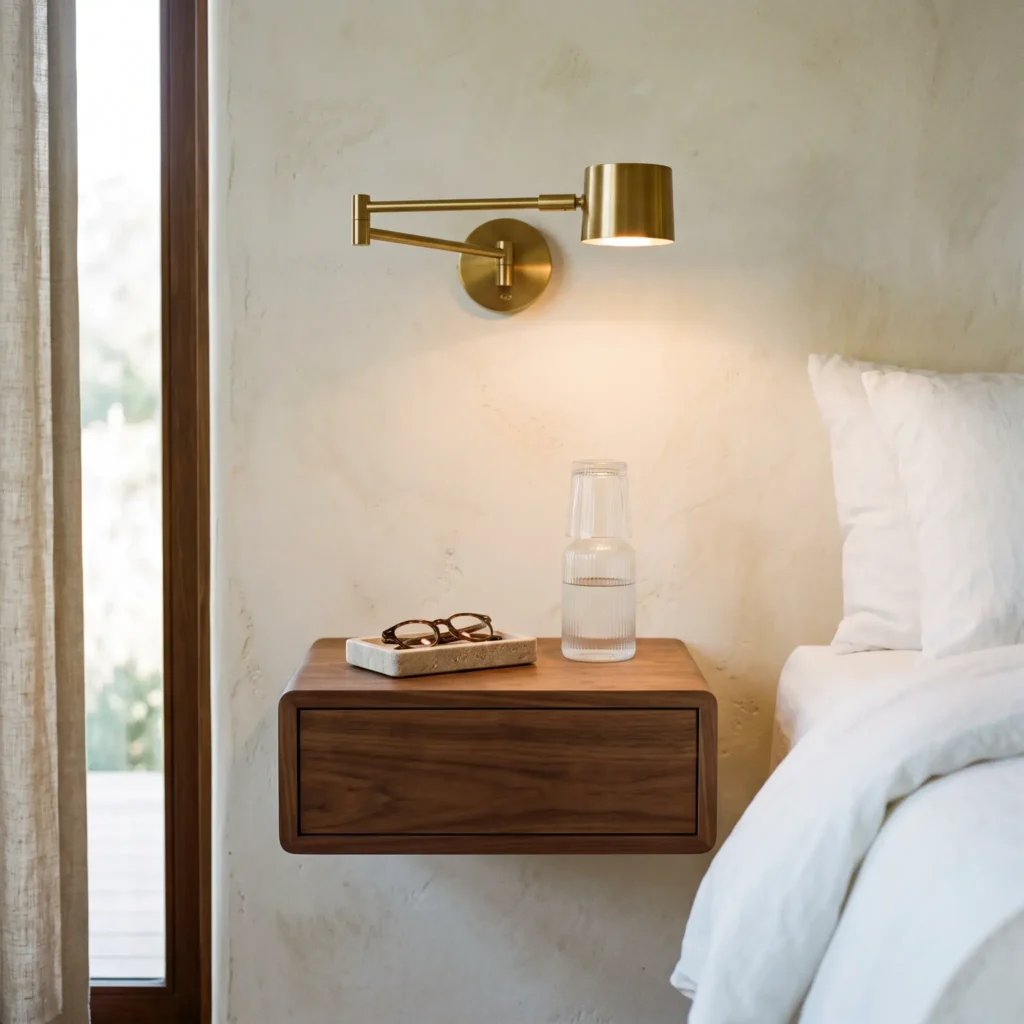
This layout suits small urban bedrooms and studio apartments where open floor space makes a room feel larger. It uses a wall-hung drawer box paired with a wall sconce. Mounting both the table and the light clears the entire floor area, eliminating heavy visual clutter.
- Best for: Studio apartments, small bedrooms, and clean modern rooms.
- The core rule: Keep the top surface 70 percent empty. Store all small personal essentials inside the single pull-out drawer.
Products Used in This Setup:
- Wall-mounted walnut floating nightstand with one soft-close drawer
- Hardwired brass swing-arm wall sconce with a matte white metal cone shade
- Honed travertine stone catchall tray measuring 6 by 9 inches
- Ribbed glass bedside water carafe with an inverted drinking tumbler lid
- Small matte ceramic ring dish
2. The Concealed Cable Tech Hub
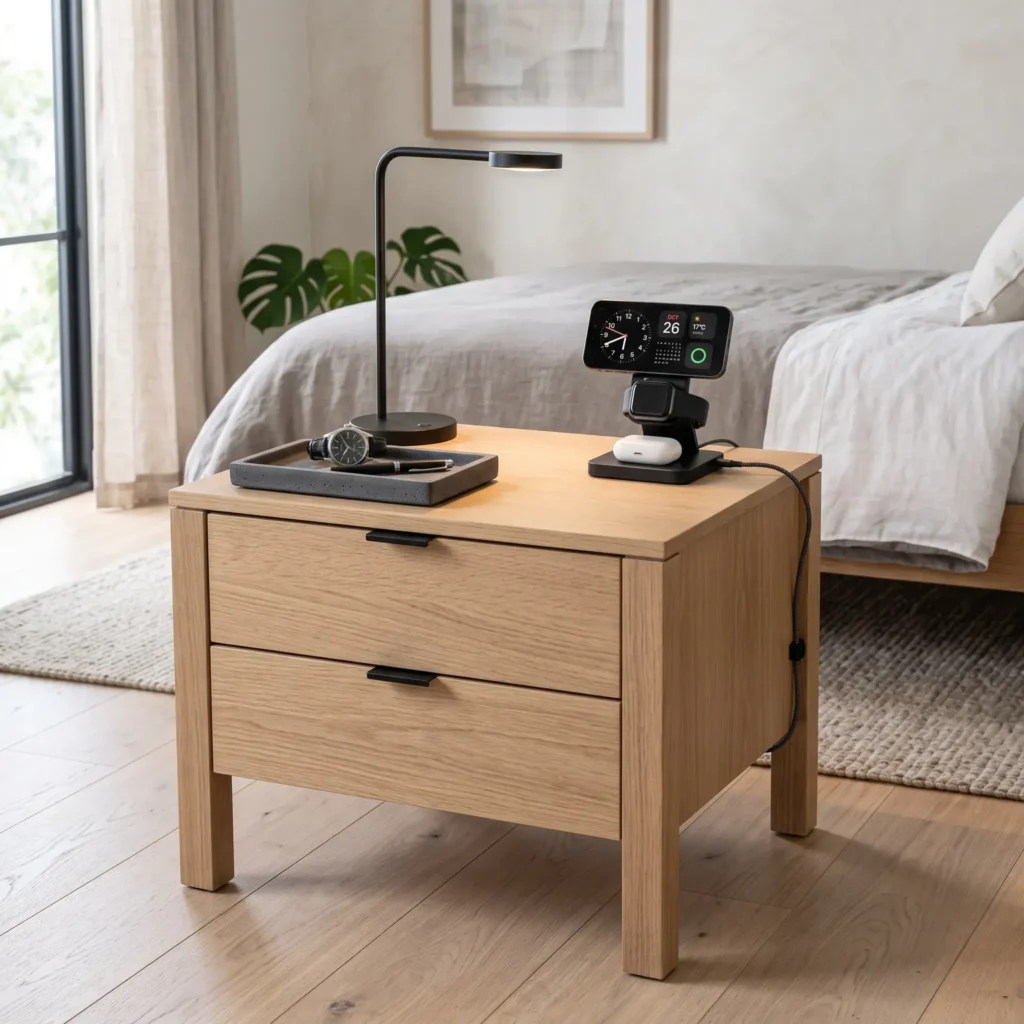
Smartphones, smartwatches, and wireless earbuds create an ugly nest of wires on open nightstands. This setup moves all charging hardware to the back edge. A single weighted multi-device charging stand holds your electronics, routing one neat power cord down the rear table leg.
- Best for: Multi-device users, busy professionals, and modern tech lovers.
- The core rule: Keep only one charging stand visible on top. Store all extra cables and adapters inside an organized drawer.
Products Used in This Setup:
- Two-drawer white oak nightstand with built-in rear cord cutouts
- Matte black 3-in-1 magnetic wireless charging stand
- Charcoal woven braided power cable with adhesive rear furniture clips
- Slender black metal LED task lamp with a built-in touch dimmer base
- Cast concrete valet dish for keys and pocket items
Check out more Decor Styles
3. The Analog Wind-Down Station
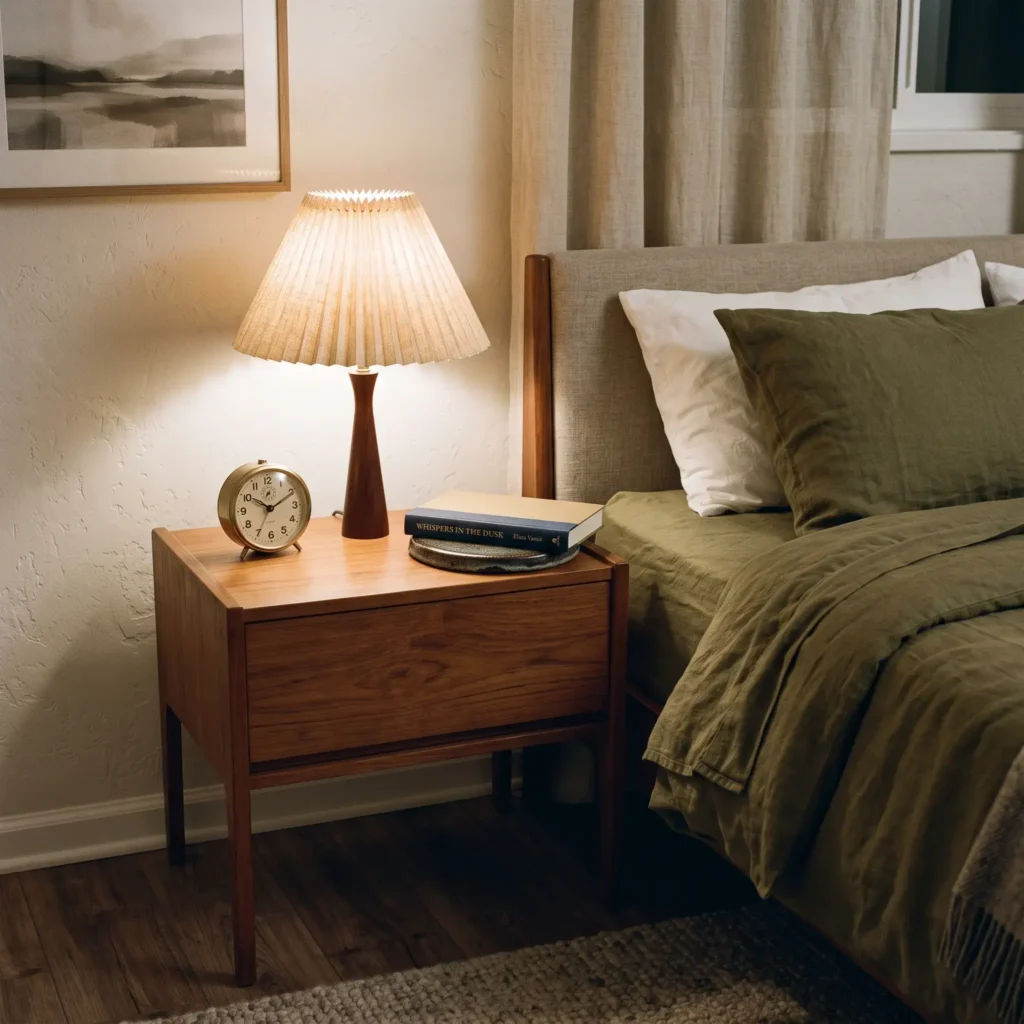
Bright screens and flashing notification lights disrupt healthy sleep patterns. This setup removes all screens from the bedside perimeter. In their place, it uses tactile analog objects that promote mental calm before you turn off the lights.
- Best for: Light sleepers, wellness fans, and screen-free bedrooms.
- The core rule: Zero screens on the tabletop. Charge your phone across the bedroom or inside a shut drawer.
Products Used in This Setup:
- Mid-century modern teak bedside table with tapered wooden legs
- Solid brass analog alarm clock with a silent sweep second hand
- Pleated fabric shade table lamp with a ceramic base and a warm 2700K bulb
- Heavy sandstone absorbent beverage coaster
- Solid walnut lidded storage box for earplugs and lip balm
4. The Curated Reader’s Perch
Avid readers often build tall stacks of half-read books that slide into floor clutter. This design establishes a strict boundary: two books maximum on the main surface. These flat books serve as a pedestal for small items, while secondary titles move to an open lower shelf.
- Best for: Book lovers, students, and active evening readers.
- The core rule: Follow the two-book limit on the top surface. Return finished volumes to your bookcase before starting new ones.
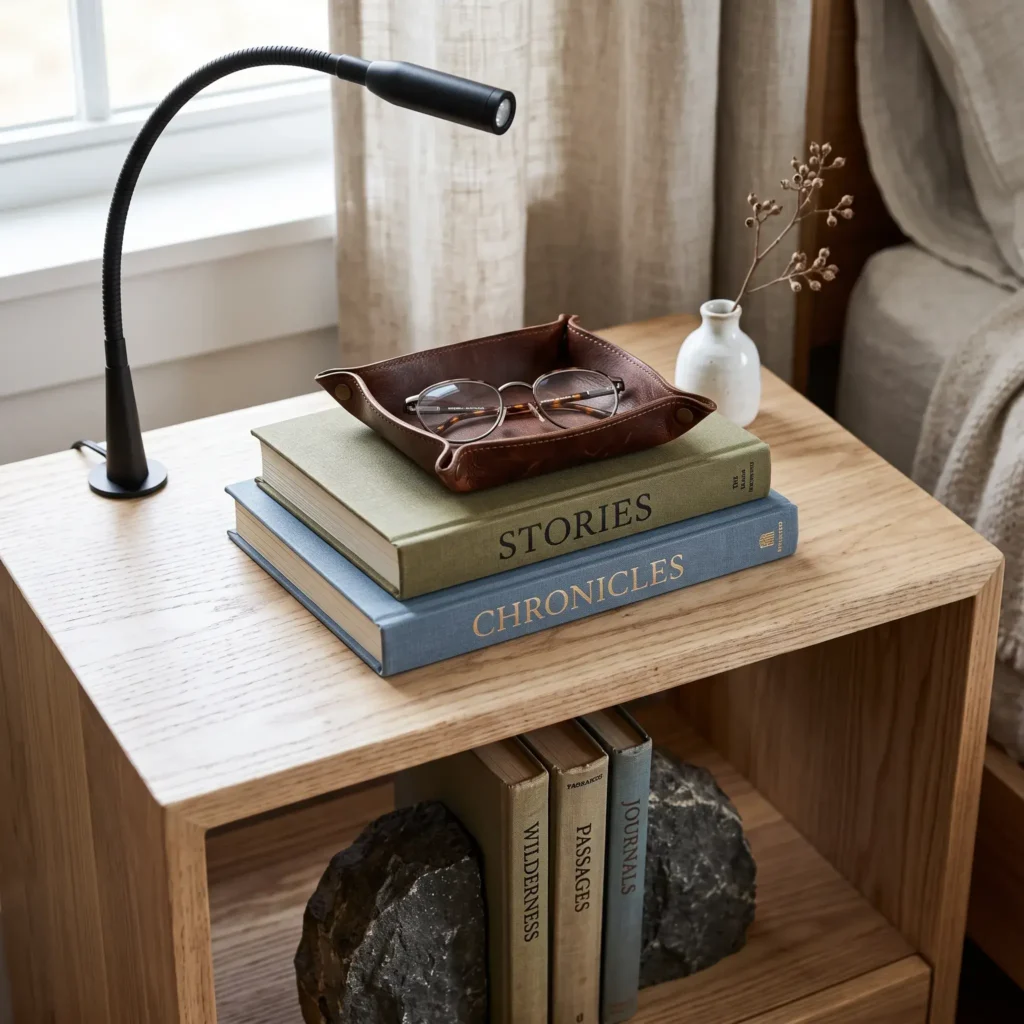
Products Used in This Setup:
- Open-shelf solid ash nightstand with one shallow upper drawer
- Two selected hardcover books laid flat horizontally
- Dark brown saddle-leather valet tray placed on top of the books
- Slim brass bookmark and acetate reading glasses
- Miniature ceramic bud vase with a single dried olive branch
5. The Warm Japandi Tray Vignette
Small items look messy when scattered over an open table. When you place those same items inside a small tray, your eyes view them as a single neat group. This setup uses organic textures to build visual order.
- Best for: Lovers of Japandi, Scandinavian, and warm organic bedroom decor.
- The core rule: Everything on the table must sit inside the tray boundary or serve as the light source.
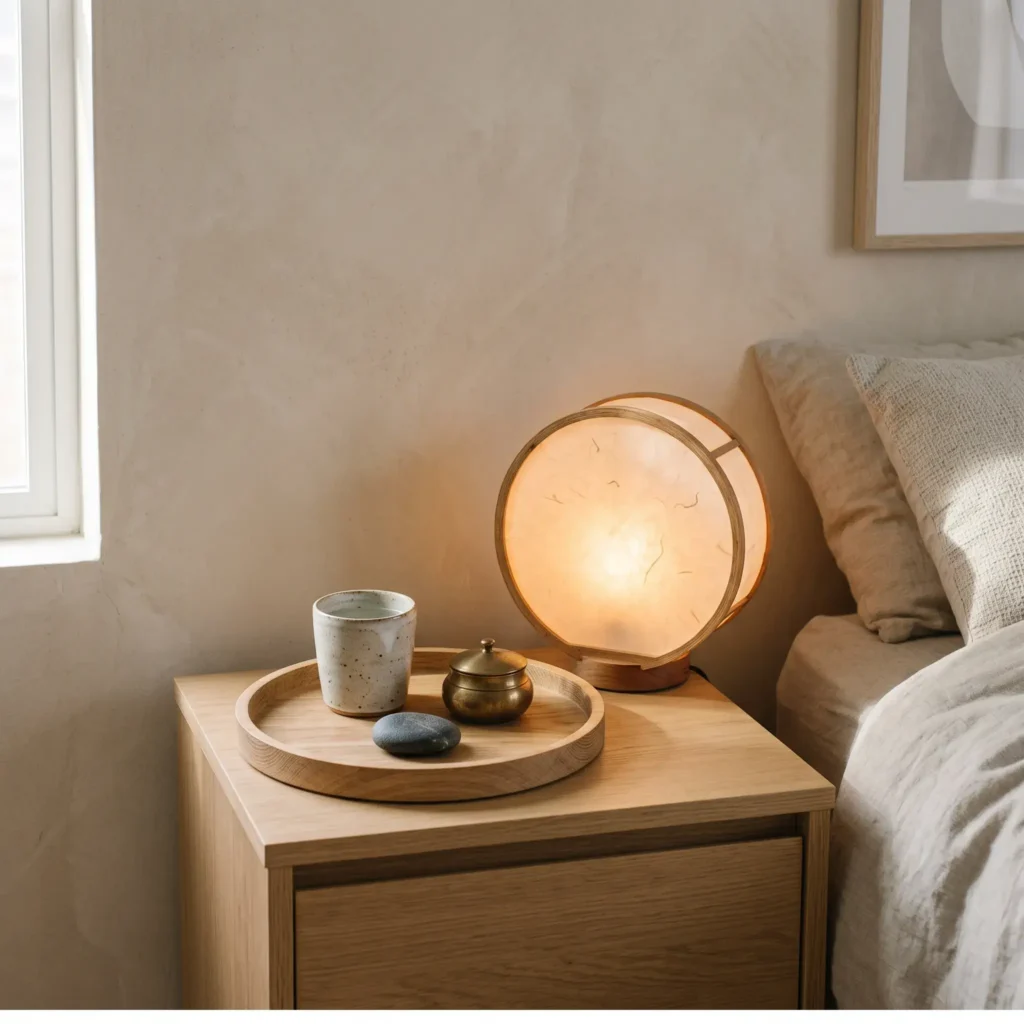
Products Used in This Setup:
- Light bleached oak nightstand with slatted drawer fronts
- Round rimmed bleached ash wood tray with a 10-inch diameter
- Hand-thrown speckled stoneware water cup
- Machined brass daily pill container
- Paper lantern style table lamp with a dark cast iron base
6. The Ventilated Health and CPAP Suite
Medical devices like CPAP machines look clinical on standard bedside tables. Loose tubing, power bricks, and plastic water tanks can dominate the room. This setup integrates sleep medical gear into custom lower cabinetry, leaving the top surface completely clear.
- Best for: Individuals using CPAP therapy, medical devices, or sound machines.
- The core rule: The machine sits below mattress level on a pull-out slide. The top tabletop remains reserved for relaxing items.
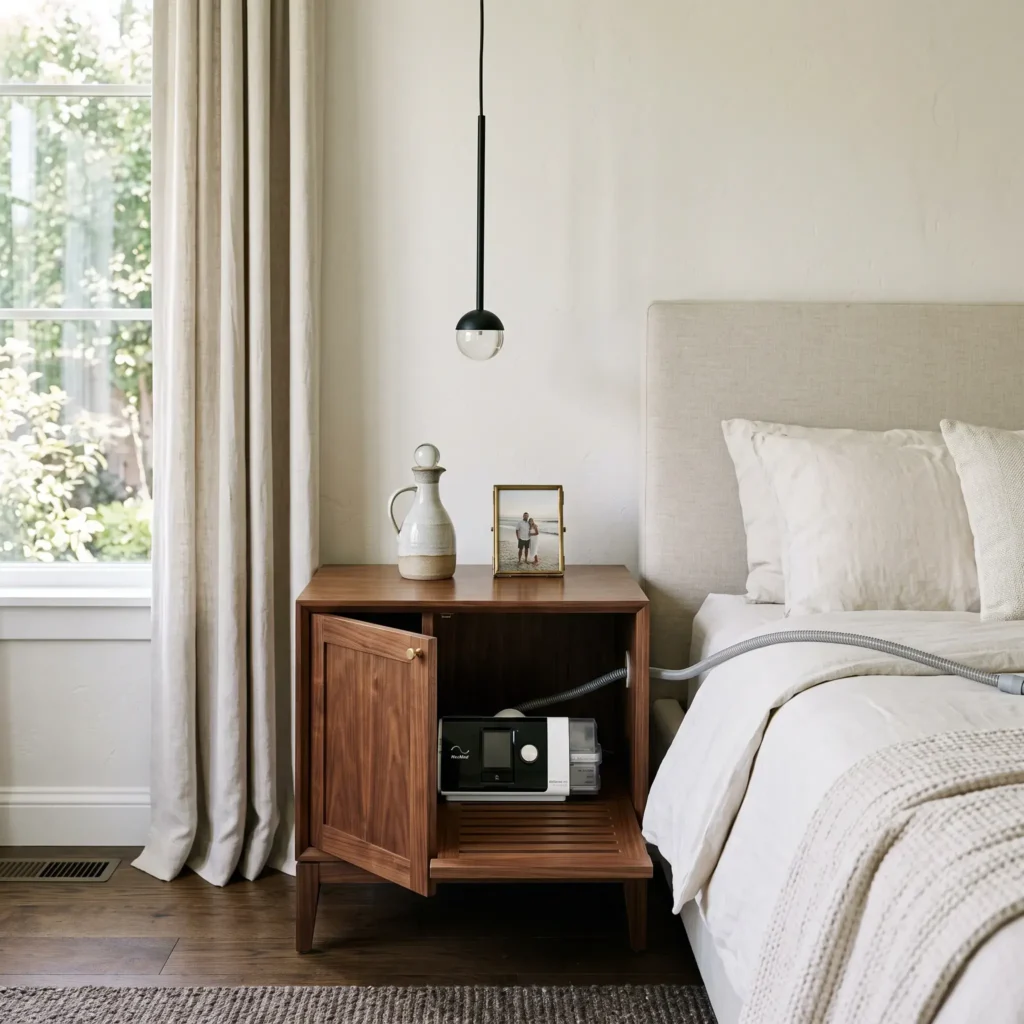
Products Used in This Setup:
- Closed-door nightstand with rear ventilation louvers and side hose cutouts
- Heavy-duty full-extension lower drawer slide for quick water refills
- Ceiling-mounted pendant light hanging above the nightstand
- Small matte ceramic drink coaster and stoneware water carafe
- Small framed family photo in a narrow walnut frame
7. The Double-Drawer Hotel Commode
Boutique hotels feel relaxing because they keep surfaces clean while providing hidden storage below. This layout pairs a wide chest with deep drawers, using internal dividers to tuck away daily items.
- Best for: Master bedrooms, couples, and people who need generous storage.
- The core rule: Divide the drawers inside. Keep only three items on the top surface.
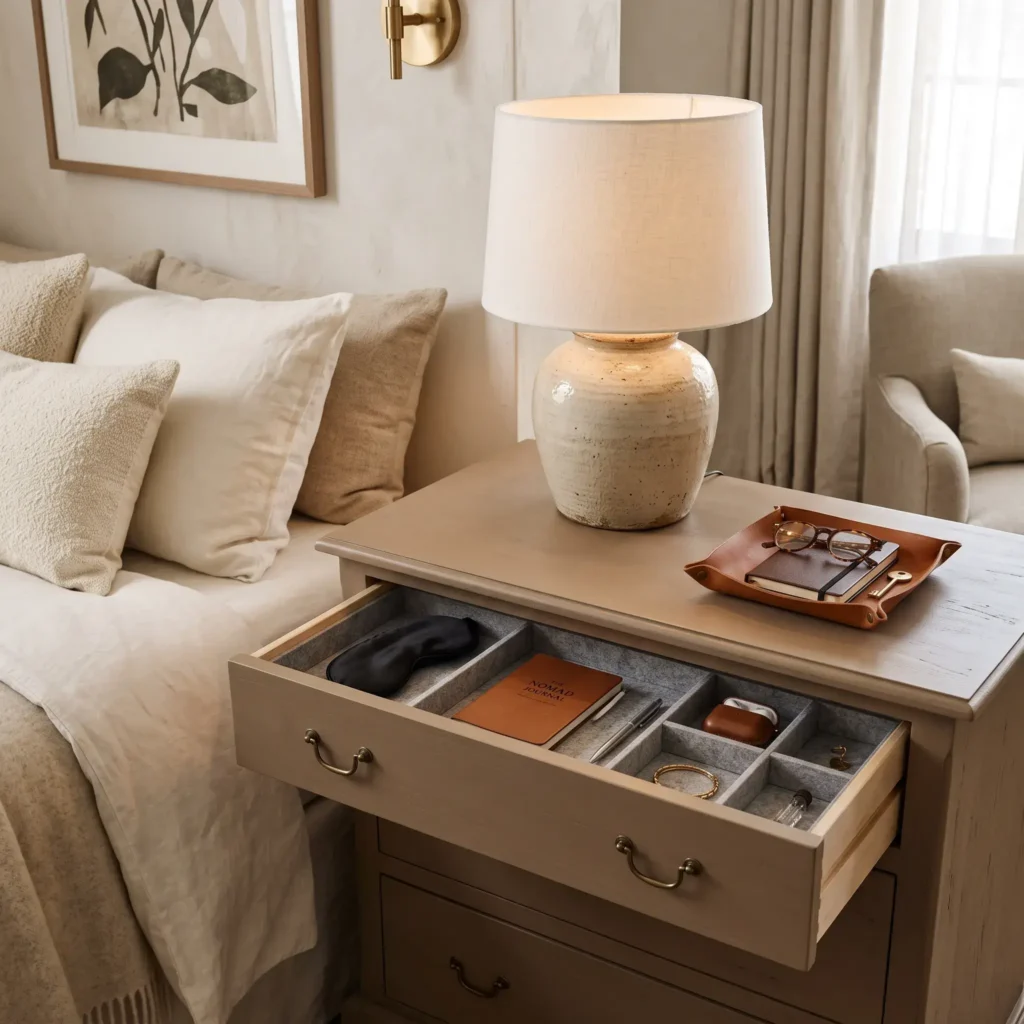
Products Used in This Setup:
- Two-drawer painted wood commode with solid brass drawer pulls
- Felt-lined modular drawer divider inserts
- Wide ceramic table lamp with an off-white linen drum shade
- Small square saddle-leather valet dish
- Lidded marble jar for watches and jewelry
Why Bedside Tables Collect So Much Clutter
Bedside mess is rarely a personal character flaw. It is a predictable outcome of poor spatial design.
When your bedroom furniture lacks clear containment borders, daily carry items land on whatever flat surface sits nearby.
The Science of Bedside Clutter
The nightstand sits right beside your headrest. It is the final physical object you see before falling asleep. It is also the first visual image you see when you wake up.
Neuroimaging research from the Princeton Neuroscience Institute shows that physical clutter competes directly for bandwidth in your visual cortex. When unrelated objects crowd your sightline, your brain spends constant energy tuning them out. This ongoing visual processing prevents your body from shifting into a deep, restful state.
Research from the UCLA Center on Everyday Lives of Families revealed that home clutter raises evening cortisol levels. Unsorted receipts, tangled cables, and loose medication bottles signal unfinished work to your mind.
Clearing this small tabletop removes those silent daily stressors. It signals environmental closure to your nervous system, allowing you to wind down smoothly each evening.
Ergonomic Rules: Getting the Measurements Right
Many bedside tables fail because their dimensions clash with the bed frame. A table that is too tall or too narrow creates daily physical annoyance, which leads directly to surface mess.
Mattress Height and Clearances
Matching your nightstand height to your mattress is the foundation of practical bedroom styling:
- Tabletop Height: Position the top surface level with or within two to five inches below your mattress crown. This usually lands between 24 and 27 inches from the floor. A surface higher than your mattress makes it easy to spill drinks in the dark. A table that is too low forces awkward bending from bed.
- Bed Clearance: Leave a clear space of 3 to 6 inches between the nightstand and the edge of your bed frame. This buffer allows duvets and blankets to hang down without knocking items onto the floor.
- Room Walkway: Maintain 36 inches of clear walking space between bedside furniture and nearby walls or closets. This keeps the room accessible and lets drawers open fully.
Nightstand Scale by Bed Size
| Bed Size | Recommended Table Width | Maximum Lamp Base Size | Best Furniture Style |
| Twin / Daybed | 16 to 20 inches | Under 25% of surface area | Open-leg table with one small drawer |
| Full / Queen | 20 to 26 inches | Up to 30% of surface area | Two-drawer chest or wall-hung box |
| King / California King | 28 to 38 inches | Up to 33% of surface area | Three-drawer commode or wide storage credenza |
The 33 Percent Lamp Rule
An oversized lamp base takes away valuable tabletop area very quickly.
Make sure your lamp base covers no more than one-third of the total surface area. In addition, the widest point of your lampshade should never stick out past the edges of the table.
Position the bottom rim of the lampshade level with your seated eye height. This delivers focused reading light without shining bright bulbs directly into your eyes or your partner’s face. If your table is compact, mount a swing-arm sconce to the wall instead.
Three Visual Rules for Nightstand Styling
Styling a bedside surface is not about buying cheap knickknacks. It is about organizing daily necessities so they look intentional and function effortlessly.
1. The Gestalt Law of Common Region
In environmental psychology, the Gestalt Law of Common Region explains how the human mind groups visual elements. Items contained within a shared boundary look like one single unit.
If you toss reading glasses, a watch, a phone, and a lip balm directly onto an open table, your brain registers four separate items. If you place those same items inside a small stone or leather tray, your brain reads them as a single design piece. A shallow tray creates an unmistakable boundary that keeps small essentials together.
2. The Triadic Elevation Profile
Items of the same height create a flat, boring display that looks like clutter. Organize your nightstand across three distinct height tiers:
- The High Anchor: A tall lamp, a wall-mounted light, or a slim branch in a vase that draws the eye upward.
- The Mid-Level Bridge: An analog alarm clock, a small framed picture, or an upright water carafe.
- The Low Base Plane: A shallow valet dish or two flat books that anchor the lower space.
3. The Strict 4-Item Quota
Set a hard limit: never keep more than four items on the main tabletop surface. A dependable four-item formula includes:
- One dedicated light source
- One hydration item, such as a water carafe with a glass lid
- One catchall tray for your daily carry belongings
- One optional personal piece, like a reading book or a small plant
Store everything else inside an organized drawer or another room.
How to Hide Cables and Power Supplies
Loose power wires create immediate visual disorder. You can hide electrical clutter using three straightforward strategies.
In-Drawer Charging Outlets
Placing your chargers inside an upper drawer removes cords from view completely.
Avoid running ordinary household extension cords into a closed drawer. Lithium-ion batteries create heat while charging, which introduces a fire risk in sealed spaces.
Instead, install an ETL-listed hardware system made specifically for furniture, such as a Docking Drawer kit. These units feature built-in safety thermostats that automatically cut off power if the internal temperature exceeds safe limits. They also feature rear articulated cable arms that protect wires from bending as you open and close the drawer.
To prepare a drawer for an outlet kit, follow these requirements:
- Ensure your cabinet has at least two inches of empty utility space behind the drawer box.
- Plug the kit into a standard wall outlet located behind the furniture.
- Connect the articulated cable arm to prevent cord pinching during drawer movement.
- Place rubber or felt drawer inserts inside to keep charging devices steady.
Sub-Surface Drawer Organization
Drawers without dividers quickly turn into messy junk bins. Divide your upper drawer into practical sections using bamboo, felt, or acrylic inserts:
- Front Zone: Keep daily personal essentials here, such as reading glasses, lip balm, and sleep masks.
- Rear Zone: Place concealed charging pads, cords, and power bricks in the back section.
- Lower Drawers: Save deeper bottom drawers for journals, spare blankets, and secondary books.
Clean Surface Cord Routing
If you cannot install in-drawer power, use a compact multi-device charging stand. A single 3-in-1 magnetic stand replaces three separate cords with one neat plug.
Place the charging stand near the back corner of your nightstand. Use self-adhesive silicone clips to secure the power cord down the rear side of the table leg, keeping it completely hidden from view.
Bedside Cabinet Guidelines for CPAP Users
Continuous Positive Airway Pressure (CPAP) machines are vital for restorative sleep, but their hoses, filters, and tanks can look clinical on top of a nightstand.
You can hide medical equipment inside a bedside cabinet by following four design rules:
- Follow the Gravity Drainage Rule: Medical guidelines recommend setting your CPAP machine below your sleeping head height. Keeping the machine below your mattress uses gravity to prevent water condensation inside the hose from draining back toward your mask.
- Add Ventilation Openings: CPAP motors produce heat and need fresh airflow. If you house your unit inside a closed cabinet, choose doors with open slats or cut ventilation holes into the rear panel to prevent overheating.
- Cut a Side Hose Port: Drill a smooth two-inch opening into the cabinet side panel facing your mattress. Run the air tubing through this port so you can close the cabinet door fully while using the unit at night.
- Use a Full-Extension Slide: Mount the machine on a heavy-duty sliding shelf inside the cabinet. This allows you to pull the machine forward easily for morning water refills without unplugging wires or pulling out hoses.
The 60-Second Daily Reset Routine
Even the most beautiful setup will collect clutter without a short daily routine. You do not need long cleaning sessions. You only need two quick resets each day.
The Evening Reset (30 Seconds)
- Place your glasses, watch, and jewelry straight into your valet tray.
- Attach your phone to its charging stand or tuck it inside the top drawer.
- Shut the drawer completely before turning off your reading light.
The Morning Reset (30 Seconds)
- Take used water glasses and mugs to the kitchen sink when you get up.
- Use a one-in, one-out rule for reading material. When you finish a book, move it back to your primary bookshelf.
- Straighten the items inside your catchall tray so your bedroom feels calm when you return.
Final Thoughts
A great bedside table does not require an empty showroom aesthetic. It requires a practical layout that supports your nightly habits while controlling visual clutter.
Start by clearing your tabletop completely. Check your mattress height to make sure your table sits at an accessible level. Add a single catchall tray to organize small items, route your charging wires out of view, and move personal supplies into an organized drawer.
By setting clear borders for your belongings and giving your everyday essentials dedicated storage spaces, your bedside table will stay an inviting, restful retreat every night.
Frequently Asked Questions
How tall should my nightstand be compared to my mattress?
Your nightstand should sit level with or two to five inches below the top of your mattress. This height lets you reach for a water glass or set down a book easily without bending awkwardly or knocking items over in the dark.
How do I hide messy cords on an open-leg nightstand?
Fasten self-adhesive silicone cord clips along the back of the rear furniture leg. Run a braided cord that matches your wall or furniture color straight down the leg to the wall outlet. This keeps the wire hidden behind the table frame.
What should you do if your nightstand has no drawers?
Use a decorative lidded container and a small catchall tray. Store medications, lip balm, and cables inside the lidded box to hide visual clutter. Keep your watch and reading glasses inside the open tray.
How many items should sit on a nightstand?
Limit the tabletop to three or four items. A standard functional setup includes one reading lamp, one catchall tray for small essentials, one water carafe, and one personal item like a novel or small plant.
Why do open water glasses make a nightstand look messy?
Open glasses collect dust overnight and spill easily if bumped in the dark. Mismatched mugs and plastic bottles also create messy visual noise. Replace them with a dedicated glass or ceramic water carafe topped with an inverted drinking tumbler.