Cozy Bedroom Storage Ideas: 8 Ways to Organize Without the Plastic Look
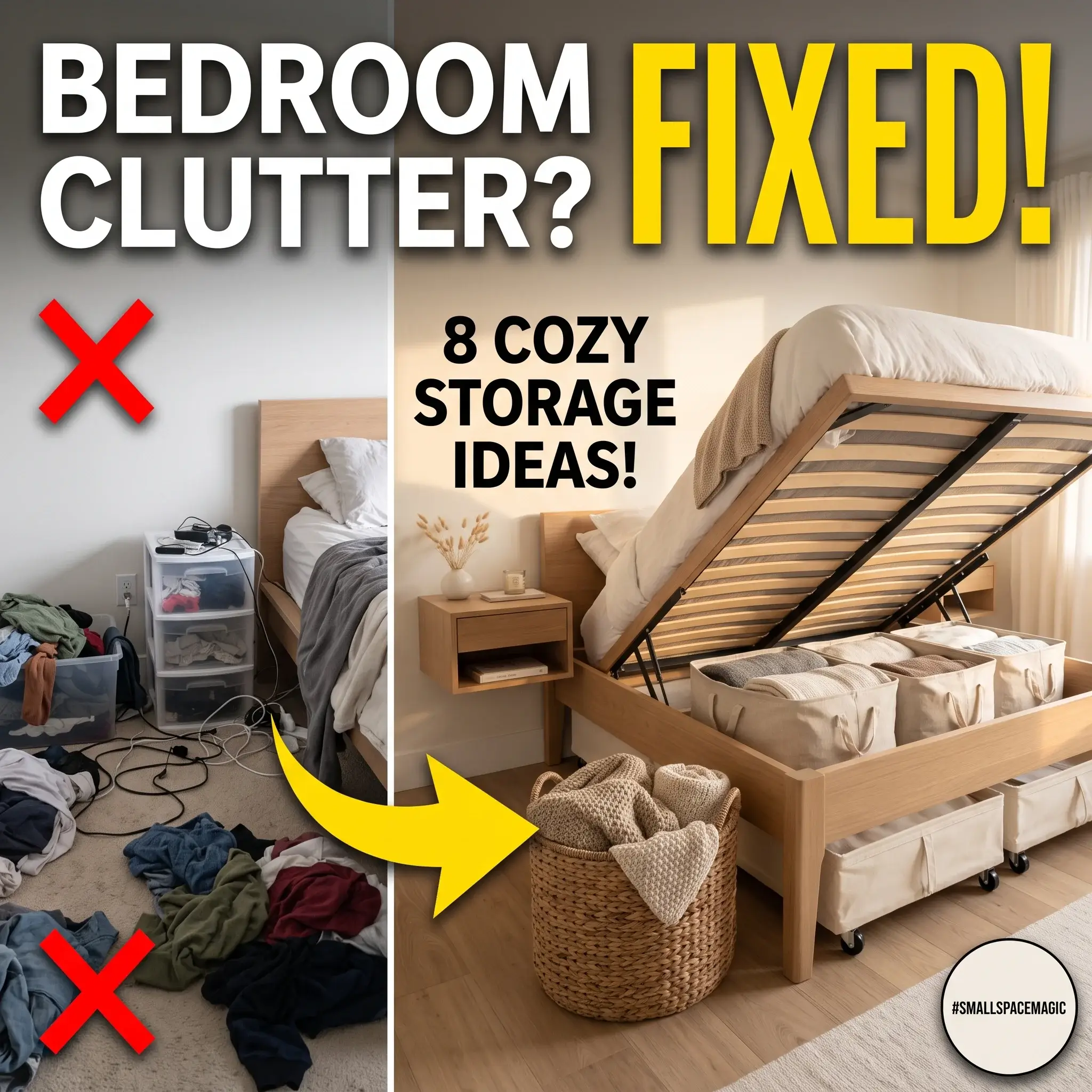
Waking up to a chaotic bedroom raises your stress before your feet hit the floor. When clothes pile on accent chairs and nightstands vanish beneath charging cords, the room stops feeling like a restful retreat.
Standard home organization advice often pushes clear acrylic boxes, wire racks, and cold plastic bins. While these containers hold items, they turn a warm sleeping space into a sterile stockroom. A calming bedroom requires containment that works with your decor. Natural wood grains, woven plant fibers, tailored upholstery, and hidden compartments clear your floor plan while keeping the room warm and welcoming.
Here are 8 practical storage setups designed to maximize your bedroom’s footprint while creating a restful, tactile space.
1. The Hydraulic Lift Platform Bed
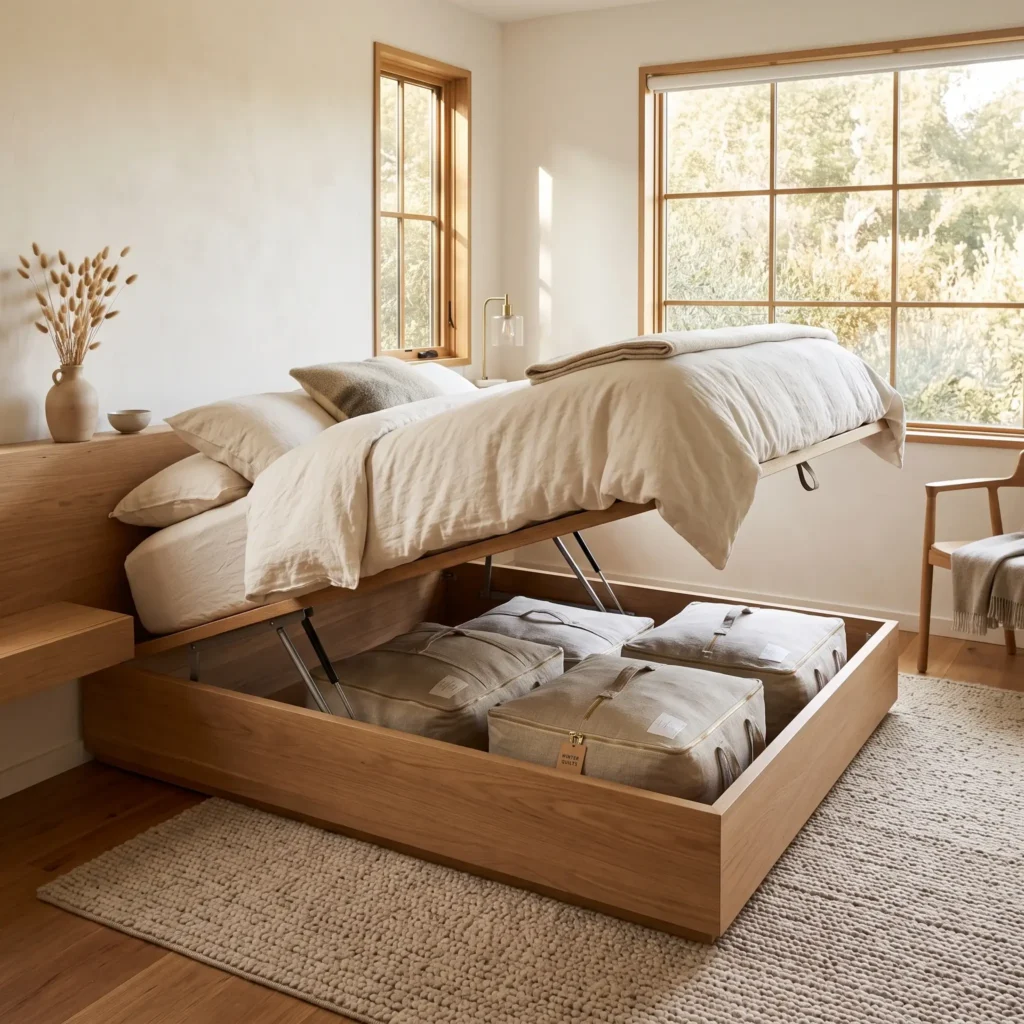
- Featured Products to Source:
- Gas-lift hydraulic storage bed frame in natural white oak (Queen or King)
- Structured breathable linen bedding storage bags with zipper closures
- Washed Belgian linen duvet set in natural flax
Why It Works
The bed footprint takes up the largest amount of floor space in any bedroom. A hydraulic gas-lift bed lets you claim that entire footprint as dust-free storage without needing open floor space around the perimeter.
Unlike traditional beds with pull-out side drawers, a lift bed elevates vertically from the foot or side on pressurized pistons. This means you can place the bed directly against a wall or tight beside bedside tables without blocking access. The open cavity beneath holds bulky items that rarely fit in standard dressers, such as winter down duvets, extra pillows, and hard-sided luggage.
- Best used for: Off-season clothing, heavy quilts, extra bed pillows, and travel bags.
- Clearance needed: Zero lateral floor clearance. You only need vertical ceiling clearance to raise the mattress.
- Cozy design tip: Choose a frame finished in natural white oak, walnut, or wrapped in textured fabric rather than cold metal.
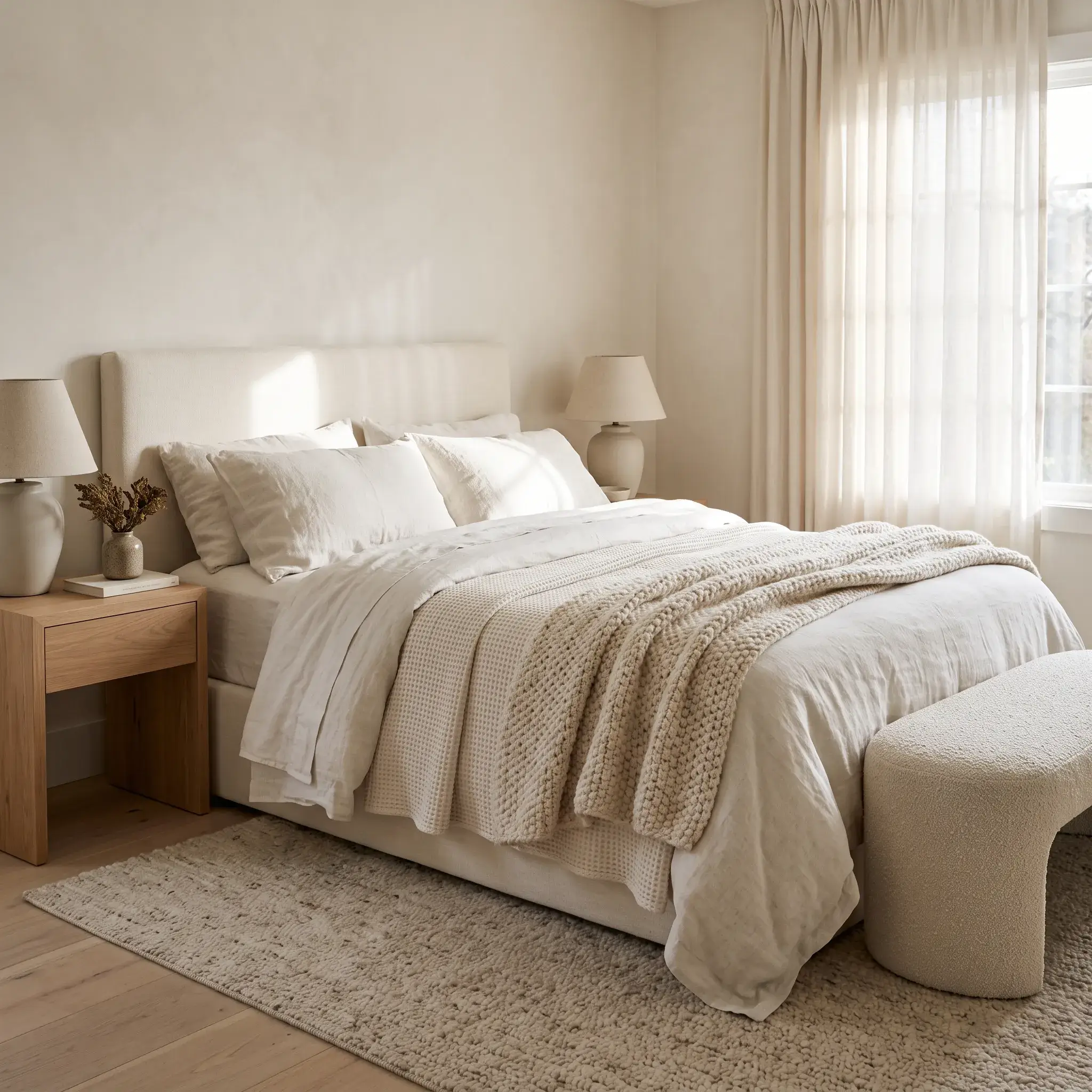
2. The Textured Bouclé Storage Bench
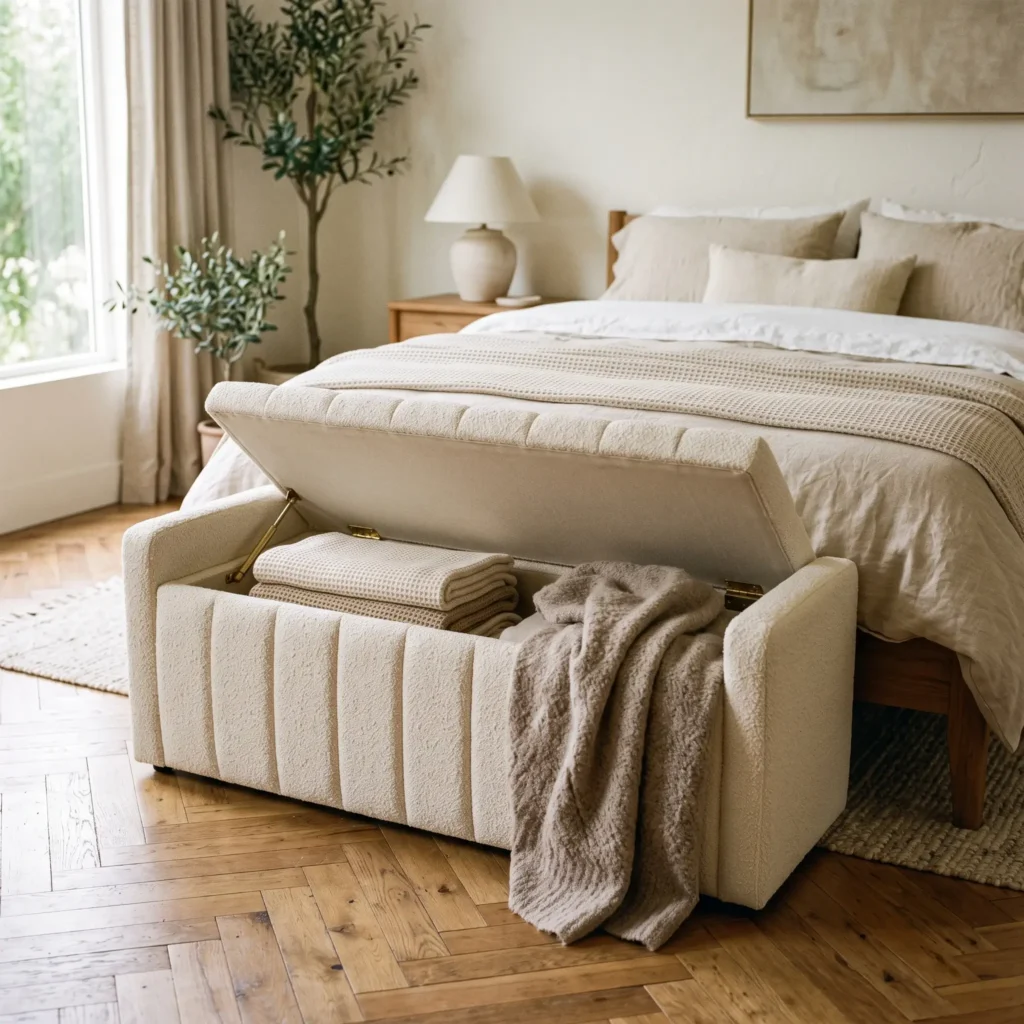
- Featured Products to Source:
- Upholstered storage ottoman bench in cream bouclé or wool blend with safety-stop hinges
- Chunky hand-knit wool throw blanket in warm taupe
- Honeycomb waffle-knit cotton bed throw in oatmeal
Why It Works
Placing a storage bench at the foot of your bed establishes a visual boundary that frames the bed while adding soft texture to the room. It gives you a dedicated spot to sit while putting on shoes and provides immediate access to daily extra layers.
A well-constructed bench keeps extra throw pillows and evening quilts off the floor when you peel back the duvet at night. Look for models with slow-close safety hinges to prevent loud slamming and protect fingers.
- Best used for: Daily accent pillows, folded quilts, and reading blankets.
- Clearance needed: Allow at least 24 inches of walkway space between the edge of the bench and the opposite wall or dresser.
- Cozy design tip: Select nubby bouclé, natural flax linen, or ribbed corduroy upholstery to balance the flat surface of your duvet cover.
Check out more Modern Bedroom Ideas
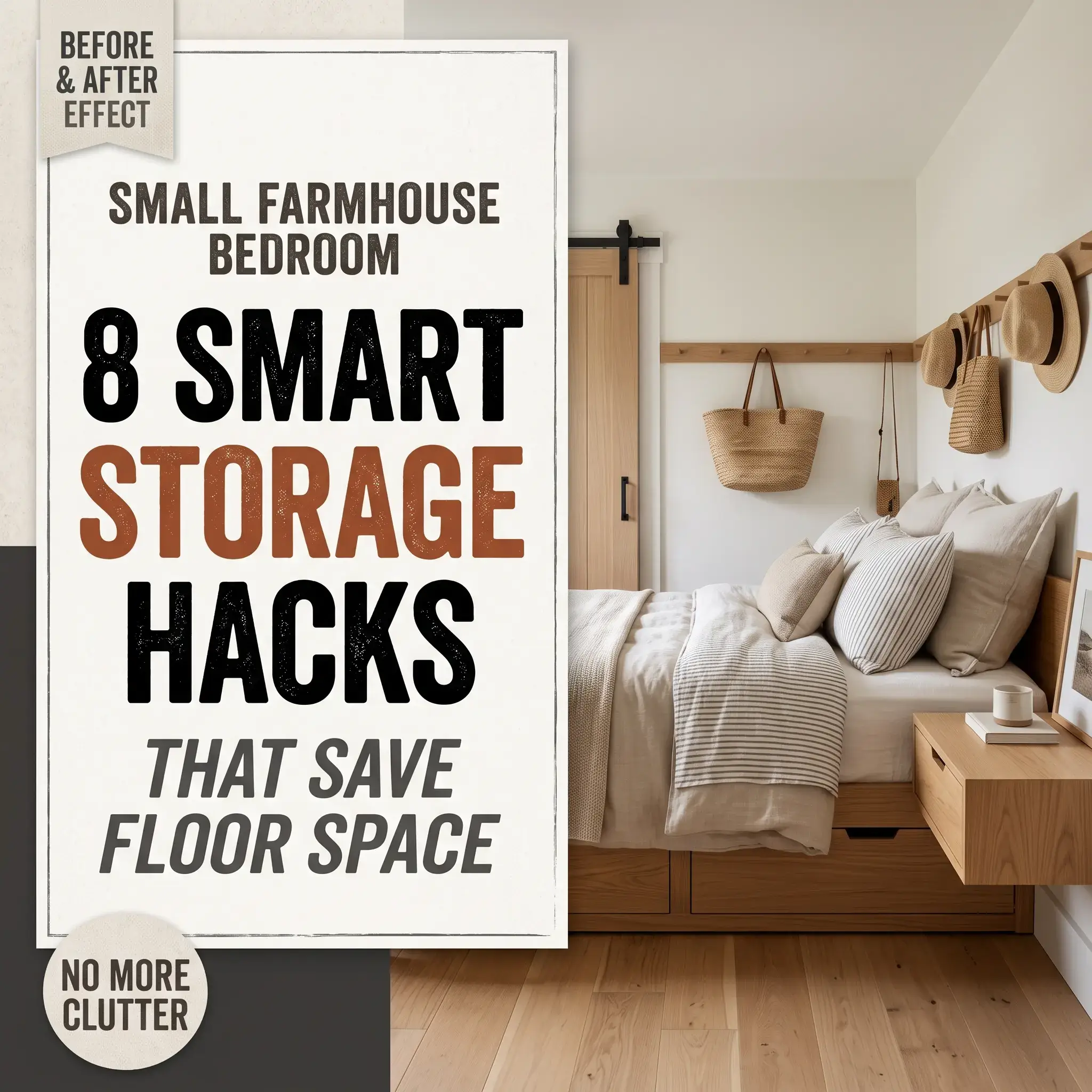
3. The Continuous Shaker Peg Rail
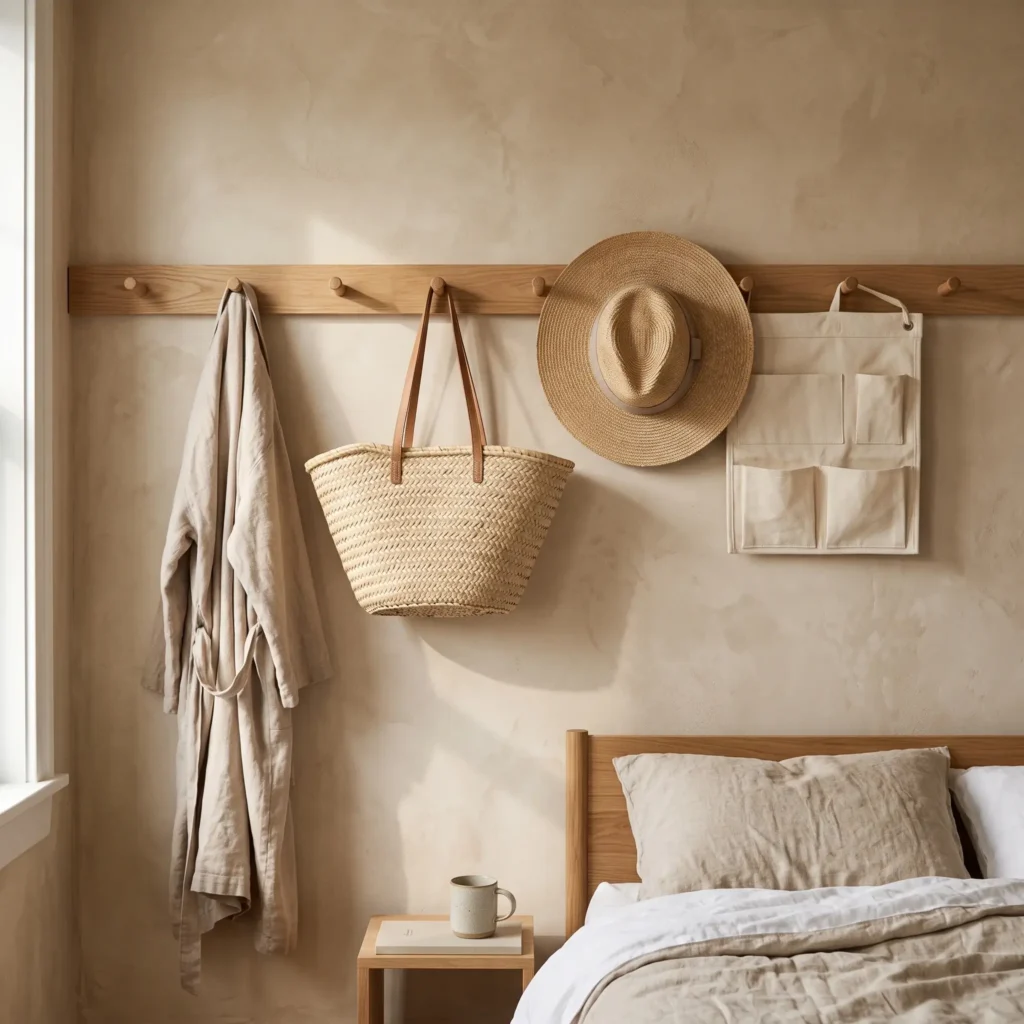
- Featured Products to Source:
- Solid white oak or ash Shaker peg rail (6-inch peg spacing)
- Heavyweight washed linen bathrobe in oat or charcoal
- Handwoven straw market tote with flat leather handles
- Hanging canvas pouch organizer for small accessories
Why It Works
The Shaker peg rail is an 18th-century design that remains one of the most practical storage tools for small spaces. Mounted at eye level along an empty wall or behind the bedroom door, it creates a clean horizontal line that draws the eye across the room.
Instead of tossing clothes onto an accent chair, you can hang worn garments, hats, canvas totes, and extra robes directly on the pegs. It acts as open, usable storage that keeps items off the floor while displaying beautiful textiles as functional wall art.
- Best used for: In-between clothes (items worn once that are not ready for the wash), sleepwear, hats, and laundry totes.
- Clearance needed: Zero floor space. Extends roughly 3 to 4 inches from the wall plane.
- Cozy design tip: Run the rail along the entire length of a short accent wall rather than hanging a small 3-peg board. Painting the rail the exact same color as your wall creates a seamless architectural finish.
4. The Built-In Headboard Ledge with Hidden Cable Routing
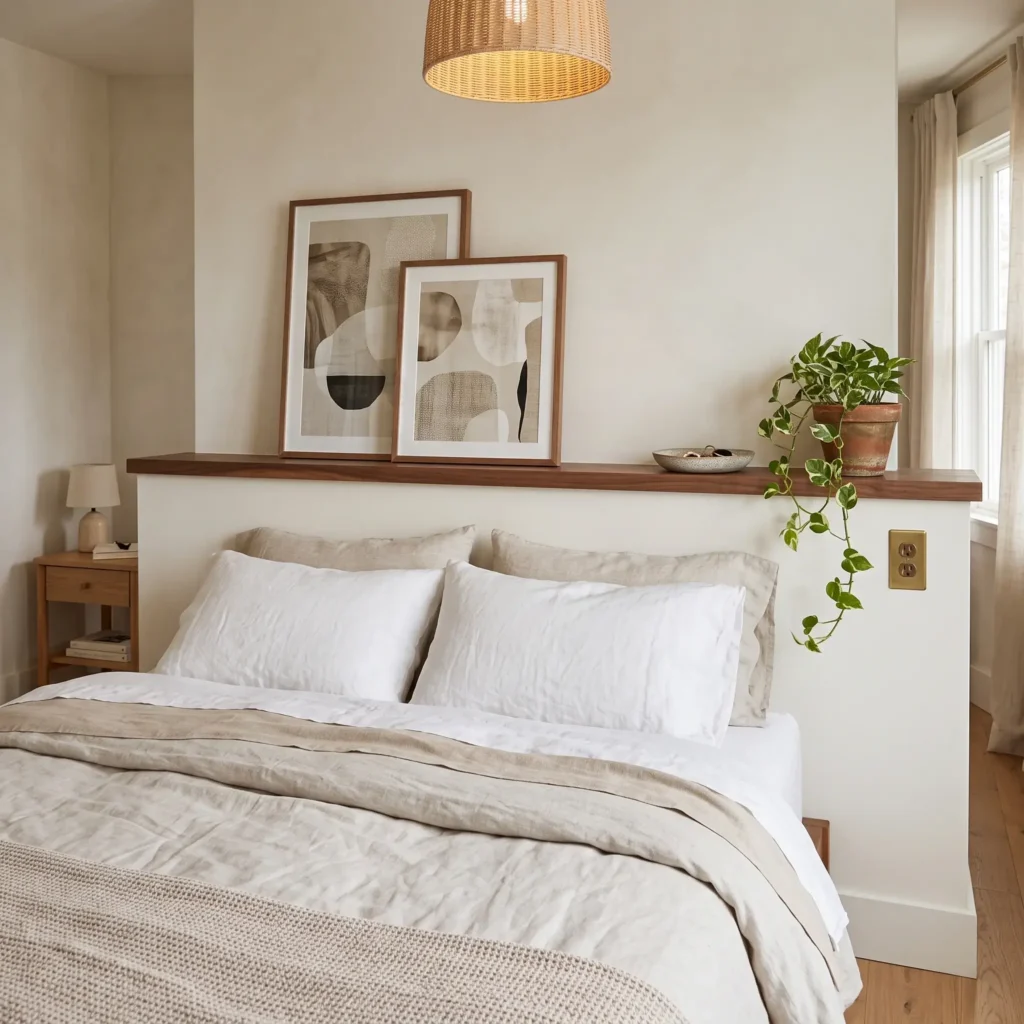
- Featured Products to Source:
- Solid American black walnut or white oak wood capping plank (6 to 8 inches deep)
- Hand-thrown stoneware catchall dish for jewelry and glasses
- Flush-mount low-profile brass outlet plates with integrated USB-C ports
Why It Works
Bulky bedside tables often crowd narrow rooms and turn into cluttered surfaces covered in charging cords, water glasses, and stacks of books. A shallow wall bump-out behind the headboard replaces nightstands entirely.
By building out a simple stud wall 6 to 8 inches deep behind your bed frame, you create a continuous shelf that runs the full width of the room. The hollow interior cavity of the ledge hides electrical conduits, extension cables, and charging bricks. You can plug your phone and reading lights into recessed outlets, keeping your sleeping zone completely free of cord clutter.
- Best used for: Bedside reading books, eyeglasses, framed family photos, and discrete phone charging.
- Clearance needed: Takes up 6 to 8 inches of room depth behind the bed, but saves 18 to 24 inches on both sides of the bed by eliminating traditional side tables.
- Cozy design tip: Install a hidden warm LED light strip (2400K to 2700K) under the lip of the wood cap to cast a soft downward glow onto the headboard.
5. Cantilevered Floating Nightstands with Cord Inlets
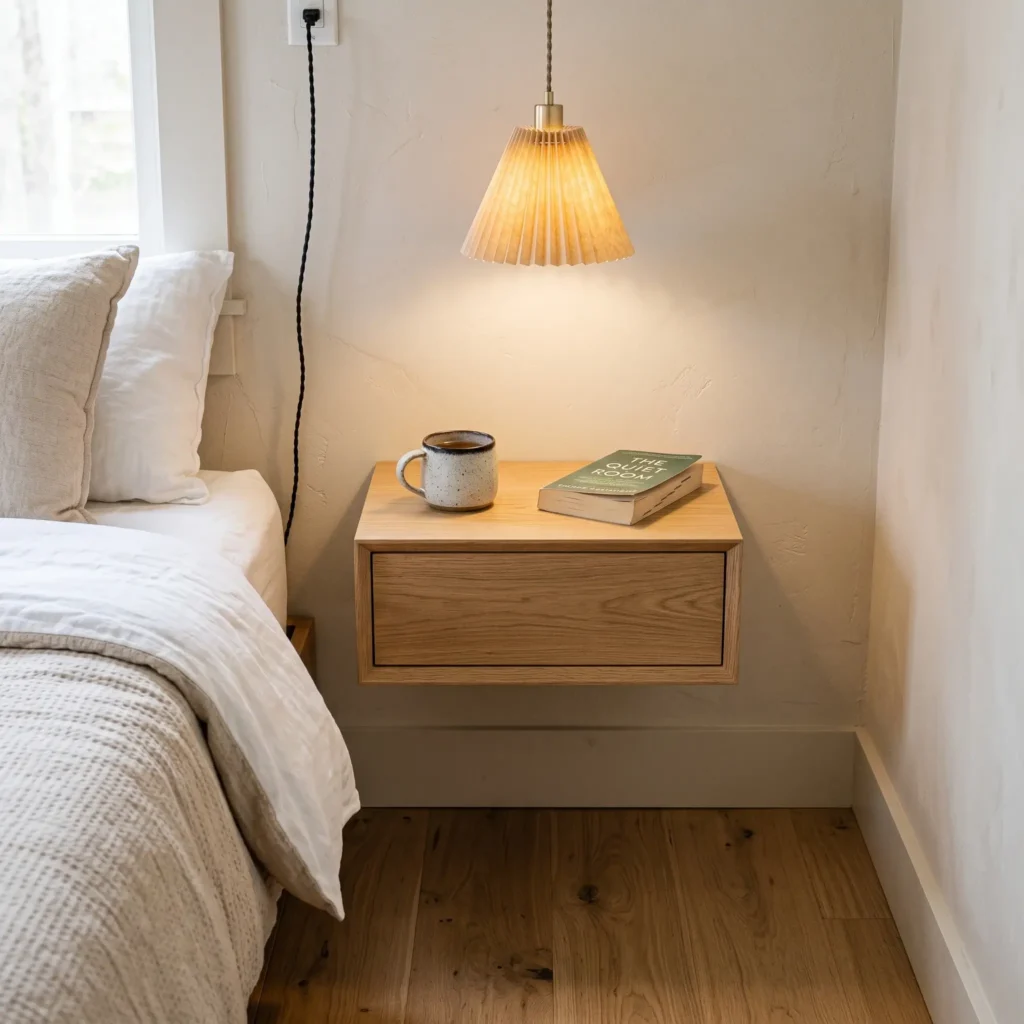
- Featured Products to Source:
- Wall-mounted floating single-drawer nightstand in solid white oak
- Drawer interior organizer tray lined with dense gray wool felt
- Hanging bedside cord pendant light with natural paper or linen shade
Why It Works
When you can see the floor extend all the way to the baseboards, your brain perceives the bedroom as larger than it really is. Standard four-legged nightstands break up that floor plane and gather dust bunnies around their feet.
A wall-mounted cantilevered nightstand keeps your bedside essentials within arm’s reach while leaving the floor completely open. Choosing a model with a single closed drawer lets you hide lip balms, hand creams, and cables out of sight. You can run phone chargers through a small grommet in the back of the drawer to create a hidden bedside charging station.
- Best used for: Sleep masks, chargers, personal journals, and daily reading glasses.
- Clearance needed: Wall space of roughly 14 to 18 inches wide beside the mattress.
- Cozy design tip: Line the inside of the nightstand drawer with natural wool felt or thin cork sheets. This stops items from rolling around and dampens the clicking sound of watches or glasses set down late at night.
6. Natural Fiber Baskets for High-Capacity Blanket Containment
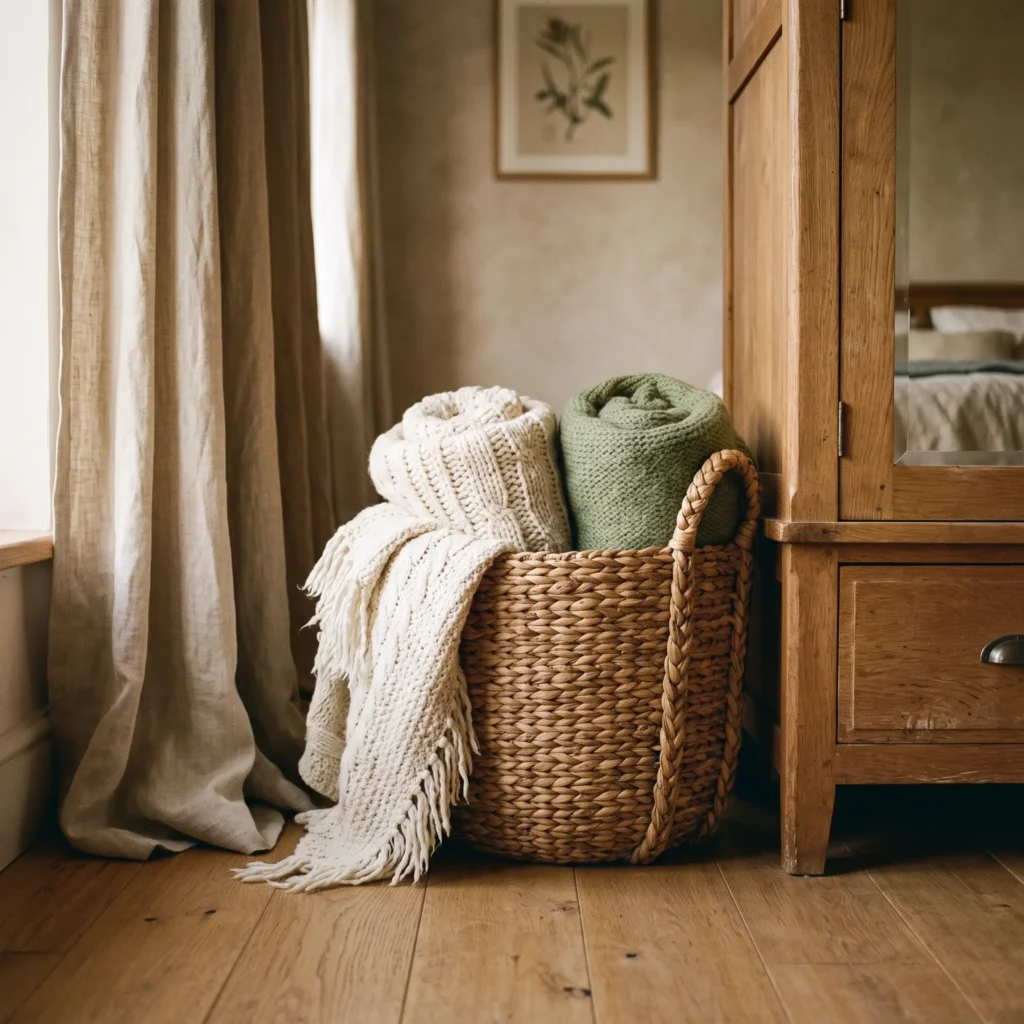
- Featured Products to Source:
- Heavy-gauge woven water hyacinth or seagrass floor basket with sturdy handles (18-inch diameter)
- Chunky moss-green ribbed knit wool blanket
- Natural unbleached linen floor-length window curtains
Why It Works
Not every storage solution needs to be hidden behind cabinet doors. Natural plant fibers—like water hyacinth, rattan, and split seagrass—introduce earthy texture and organic curves that soften the rigid, square lines of bedroom walls and furniture.
An oversized woven floor basket functions as a flexible drop zone for bulky items. It gives you a fast, zero-effort place to toss extra blankets and decorative pillows during your morning routine, preventing the dreaded clothes pile from migrating to your mattress.
- Best used for: Bulky winter throws, weighted blankets, and spare floor cushions.
- Clearance needed: An unused corner or 18-inch patch of floor beside a wardrobe or window.
- Cozy design tip: Avoid thin wire or plastic storage baskets that create harsh acoustic reflections. Thick, fibrous baskets absorb sound waves, helping keep your room quiet and restful.
7. Breathable Under-Bed Canvas Trunks on Rubber Casters
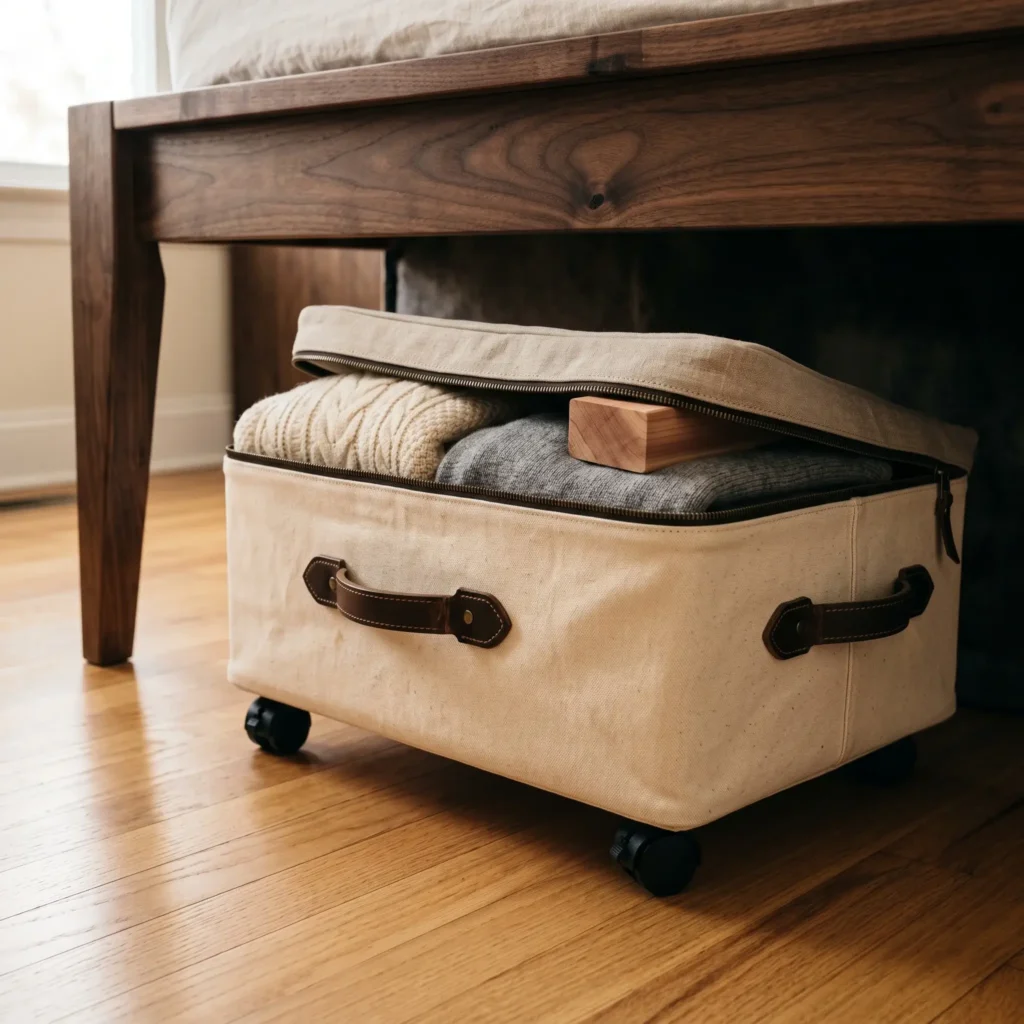
- Featured Products to Source:
- Structured unbleached cotton canvas under-bed storage boxes with heavy-duty metal zippers
- Natural aromatic red cedar storage blocks to deter pests
- Low-profile smooth-rolling rubber caster wheel kits
Why It Works
If your bed frame has open space beneath it, sliding bins underneath is the easiest way to add storage without spending money on new furniture. However, packing sweaters and bedding into airtight plastic storage tubs can trap ambient moisture, leading to musty odors, mildew, and fiber breakdown in delicate wool and down.
Structured containers made from heavy cotton canvas or washed linen allow air to pass through naturally while blocking out dust. Upgrading your bins with smooth rubber casters lets you roll them out silently across hardwood floors without scratching the polyurethane finish.
- Best used for: Folded knitwear, off-season wardrobe rotations, and spare sheets.
- Clearance needed: 6 to 10 inches of vertical under-bed height.
- Cozy design tip: Skip synthetic chemical mothballs. Toss two or three kiln-dried red cedar blocks or dried lavender sachets inside each canvas trunk to keep textiles fresh and naturally protect against fabric pests.
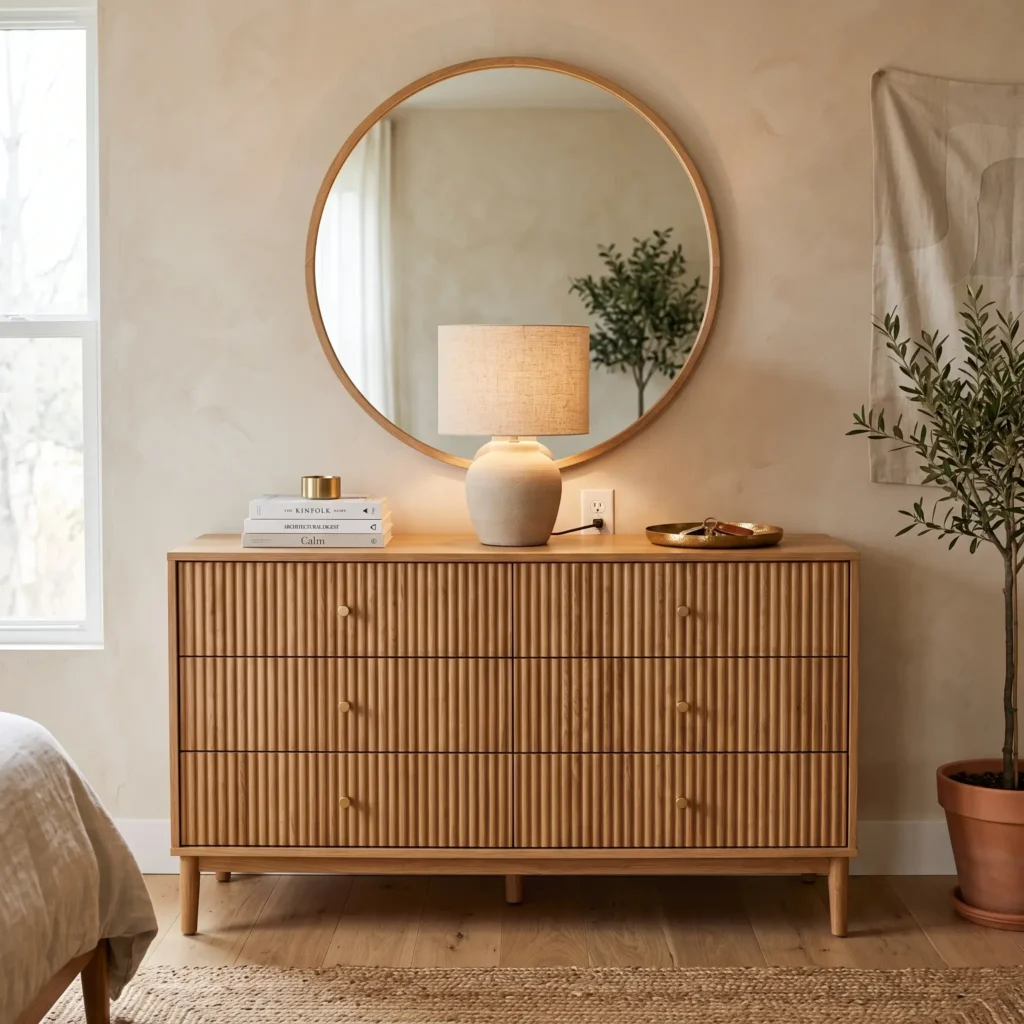
8. Fluted Wood Credenzas with Tactile Drawer Fronts
- Featured Products to Source:
- Reeded or fluted white oak 6-drawer low horizontal dresser
- Ceramic table lamp base with natural textured linen drum shade
- Brushed brass cabinet hardware knobs
- Circular solid wood-framed wall mirror (36-inch diameter)
Why It Works
Tall, flat-front dressers can feel heavy and boxy in a small bedroom, dominating the room and making walls feel closer than they are. A low, wide credenza with fluted or reeded wood drawer fronts breaks up that visual bulk.
The vertical wood slats create subtle shadows that add depth and movement to the wall plane. Because the credenza stays lower to the ground, it leaves open wall space above for a mirror or framed artwork, reflecting natural daylight deeper into the room.
- Best used for: Folded jeans, daily clothing, workout gear, and jewelry trays.
- Clearance needed: Minimum 36 inches of clear floor depth in front of the dresser to allow full drawer extension while standing comfortably.
- Cozy design tip: Swap standard metal dresser pulls for warm unlacquered brass, turned wood, or vegetable-tanned leather tabs to bring another layer of tactile warmth into your hand each morning.
Practical Storage Comparison: Which Solution Fits Your Space?
Before buying storage furniture, measure your available floor clearances. Choosing the wrong mechanism can block walkways and make a compact room feel cramped.
| Storage Solution | Footprint Required | Usable Storage Capacity | Best Stored Items | Key Installation Consideration |
|---|---|---|---|---|
| Hydraulic Lift Bed | Same as mattress base | Very High (up to 95% of bed footprint) | Luggage, winter quilts, off-season clothing | Requires vertical clearance to raise mattress; heavy to move during room re-arrangements. |
| End-of-Bed Storage Bench | 48 to 60 inches wide by 16 to 20 inches deep | Moderate | Throw pillows, extra blankets, slippers | Needs at least 24 inches of walkway space between bench and opposite wall. |
| Shaker Peg Rail | Zero floor space; 3 to 4 inches wall depth | Moderate (vertical hanging) | Robes, hats, bags, in-between clothes | Must be securely anchored into wall studs to support heavy winter coats and full bags. |
| Floating Nightstand | 14 to 18 inches wide; zero floor space | Low to Moderate (single drawer) | Sleep essentials, charging cords, small books | Requires secure drywall anchors or stud mounting; weight capacity usually capped at 25-30 lbs. |
| Woven Floor Basket | 16 to 20-inch round floor diameter | Moderate | Chunky blankets, cushions, laundry | Needs open floor corner; natural fibers require regular dusting with a soft brush attachment. |
| Breathable Canvas Trunks | Fits under bed (6 to 10 inches height needed) | High | Folded sweaters, spare sheets, seasonal wear | Measure the exact vertical clearance under your bed rails before ordering containers. |
| Fluted Wood Credenza | 55 to 65 inches wide by 18 to 20 inches deep | Very High | Folded wardrobe, jeans, accessories | Requires 36 inches of clearance in front of drawers to open fully and walk past. |
The Science of Visual Rest: Why Bedroom Clutter Causes Stress
Organizing your bedroom is not just about keeping the floor tidy. It directly changes how your brain unwinds at the end of the day.
A landmark study by the Center on Everyday Lives of Families at UCLA tracked homeowners in their living spaces and tested their salivary cortisol levels throughout the day. Cortisol is the body’s primary stress hormone. In a healthy cycle, cortisol peaks shortly after waking and slopes downward throughout the evening, signaling your nervous system to prepare for deep sleep.
The UCLA researchers found that people who described their homes as cluttered, chaotic, or full of unfinished projects had a flattened cortisol slope. Their stress levels failed to drop in the evening, keeping their nervous systems in a state of low-grade alert.
Neuroscientists at the Princeton Neuroscience Institute found a clear mechanism for this through brain imaging. When your visual field is filled with unrelated objects—like dirty clothes, exposed tangled cords, and crowded dresser tops—those items compete for neural representation in your visual cortex. Your brain works continuously to filter out that background noise, leading to mental exhaustion.
By using closed storage solutions finished in warm, organic textures, you hide that visual clutter. Your visual field stays clean, helping your nervous system power down for restorative sleep.
The 70/30 Closed-to-Open Rule for Restful Bedrooms
To build a bedroom that feels warm rather than clinical, follow the 70/30 storage rule:
- 70% Closed Storage: Keep 70% of your belongings completely hidden behind opaque doors, smooth drawer fronts, and textured fabric covers. This contains everyday clutter, socks, folded t-shirts, and power cords where they cannot trigger cognitive fatigue.
- 30% Open Storage: Dedicate 30% of your room’s surfaces to open, intentional display. This includes floating wood shelves, the top of your credenza, or a shallow headboard ledge.
When styling your open surfaces, incorporate the Japanese design principle of ma (intentional negative space). Leave roughly 20% to 30% of each shelf or tabletop completely empty. Instead of lining books end-to-end like a library shelf, display a small grouping: two stacked hardcovers, an unglazed ceramic vessel, and a small trailing plant. That empty space lets the eye rest, making the entire room feel larger and more serene.
How to Protect Stored Bedding and Clothing from Dust and Odors
Tucking spare textiles out of sight only works if they emerge clean, fresh, and ready to use. Closed compartments under beds and inside deep wardrobes require simple care to protect delicate fibers:
- Ditch the plastic dry-cleaning bags: Plastic film traps ambient humidity and off-gases chemicals that break down natural linen and wool. Always unpack garments and store them in breathable fabric covers.
- Wash textiles before long-term storage: Body oils and invisible perfume residues attract fabric pests like clothes moths (Tineola bisselliella). Always wash or dry clean quilts and sweaters before packing them away for the season.
- Use kiln-dried cedar instead of mothballs: Synthetic mothballs leave behind harsh chemical smells that linger in fabrics for weeks. Place natural red cedar rings or blocks in your storage containers. Sand the cedar blocks lightly with fine-grit sandpaper once a year to refresh their natural pest-repelling aromatic oils.
- Air out your under-bed boxes twice a year: When the seasons change, pull out your storage boxes, open the lids, and let them sit in fresh room air for an afternoon. This balances internal moisture levels and keeps stored bedding smelling clean.
Create Your Calming Bedroom
Transforming your bedroom into a restful retreat does not require a complete architectural renovation. Start with one high-impact change: replace a cluttered open nightstand with a floating drawer, slide a pair of breathable canvas storage trunks beneath the bed rails, or hang a warm wood peg rail to clear clothes off your accent chair.
By choosing storage pieces made from warm hardwoods, woven natural fibers, and quiet fabrics, you can tuck away daily clutter while creating a space that feels deeply restorative every time you step through the door.
Frequently Asked Questions
How do I add storage to a very small bedroom without making it look crowded?
Focus on vertical wall planes and multi-use furniture. Replace four-legged bedside tables with wall-mounted floating nightstands to expose more floor area. Choose a hydraulic gas-lift bed frame, which claims the full footprint under your mattress without needing floor space on the sides to pull out drawers. Finally, mount a continuous Shaker peg rail to hang everyday robes and canvas totes, keeping items off accent chairs.
Which is better for a small bedroom: a storage bed with drawers or a hydraulic lift bed?
A hydraulic lift bed is almost always better for small or narrow bedrooms. Pull-out drawers require 18 to 24 inches of clear floor space on each side to extend fully, meaning you cannot place nightstands or benches near the bed. A hydraulic lift bed elevates vertically within its own footprint, requiring zero side clearance while offering roughly 30% more usable interior storage capacity.
What are the best materials for cozy storage containers?
Choose natural, tactile materials that absorb sound and soften hard architectural lines. Handwoven water hyacinth, split rattan, and braided seagrass baskets work best for floor storage and deep shelves. For drawer interiors and under-bed containers, choose unbleached cotton canvas, heavy flax linen, or dense wool felt. Avoid smooth plastic bins, which reflect light and create a cold, clinical look.
How can I hide messy charging cables near my bed?
Select nightstands with built-in cord management or closed top drawers. You can drill a small, clean pass-through hole in the back panel of a floating drawer and mount an adhesive power strip inside. This lets you plug in your phone, smartwatch, and tablet entirely out of sight, leaving the top surface clear for a reading lamp and a cup of water.
How do I prevent dust from gathering in under-bed storage?
Avoid open-top bins or flat plastic trays. Use under-bed storage trunks with heavy-duty zipper closures made from tightly woven cotton canvas or linen. The tight fabric weave blocks settling dust bunnies while letting air circulate around your stored blankets, preventing stale odors.