Tired of Pet Clutter Ruining Your Home? 6 Intentional Design Ideas That Work
You love your dog or cat, yet you likely feel daily visual exhaustion in your living room. A bright rubber bone sits on your wool rug. A bulky metal cage blocks the hallway. Water splashes across a warped plastic mat by the kitchen cabinets.
Wanting a clean, balanced living space does not make you a bad pet parent. You do not need to choose between a sterile museum and animal-induced chaos.
Intentional living with pets means you stop treating their gear as an unwelcome intrusion. Instead, you integrate their physical and behavioral routines directly into your floor plan. When you design around animal instincts using durable materials and smart millwork, pet supplies stop feeling like clutter. They become natural extensions of your living space.
6 Practical Ideas for an Intentional, Pet-Friendly Home
Here are six visual setups that solve daily pet friction while protecting your home aesthetic.
Idea 1: The Slatted White Oak Crate Credenza
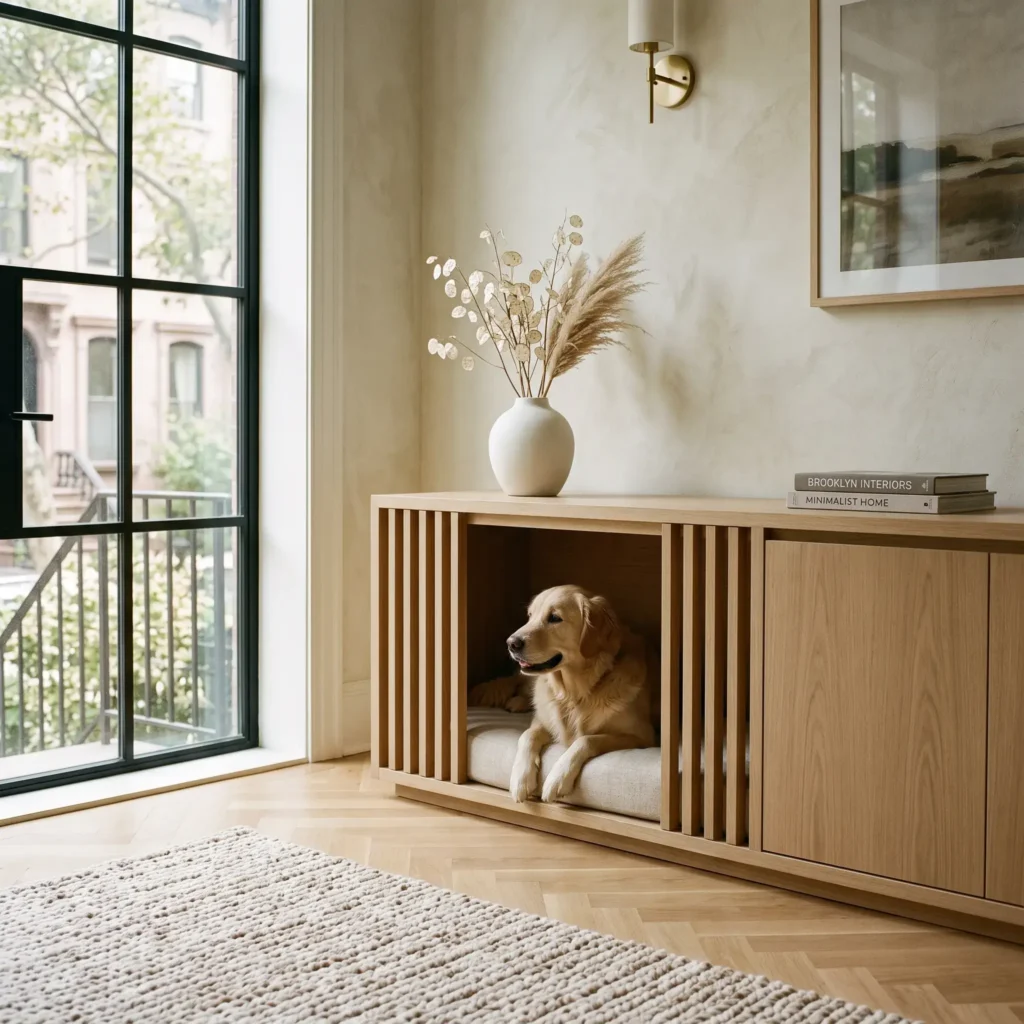
Standard wire crates introduce industrial coldness into a living room. This design embeds a sleeping den inside a functional media console or accent sideboard. Vertical wood slats allow continuous airflow and clear sightlines, which calms your dog while keeping the room visually quiet.
- Product List for This Setup:
- Custom or retrofit white oak sideboard with 1-inch vertical slatted doors
- Heavyweight natural linen dog mattress with an internal waterproof liner
- Recessed matte black hardware with magnetic soft-close latches
- Low-profile ceramic catchall tray for grooming tools placed on the upper console surface
Idea 2: The Concealed Low-Profile Kitchen Feeding Station
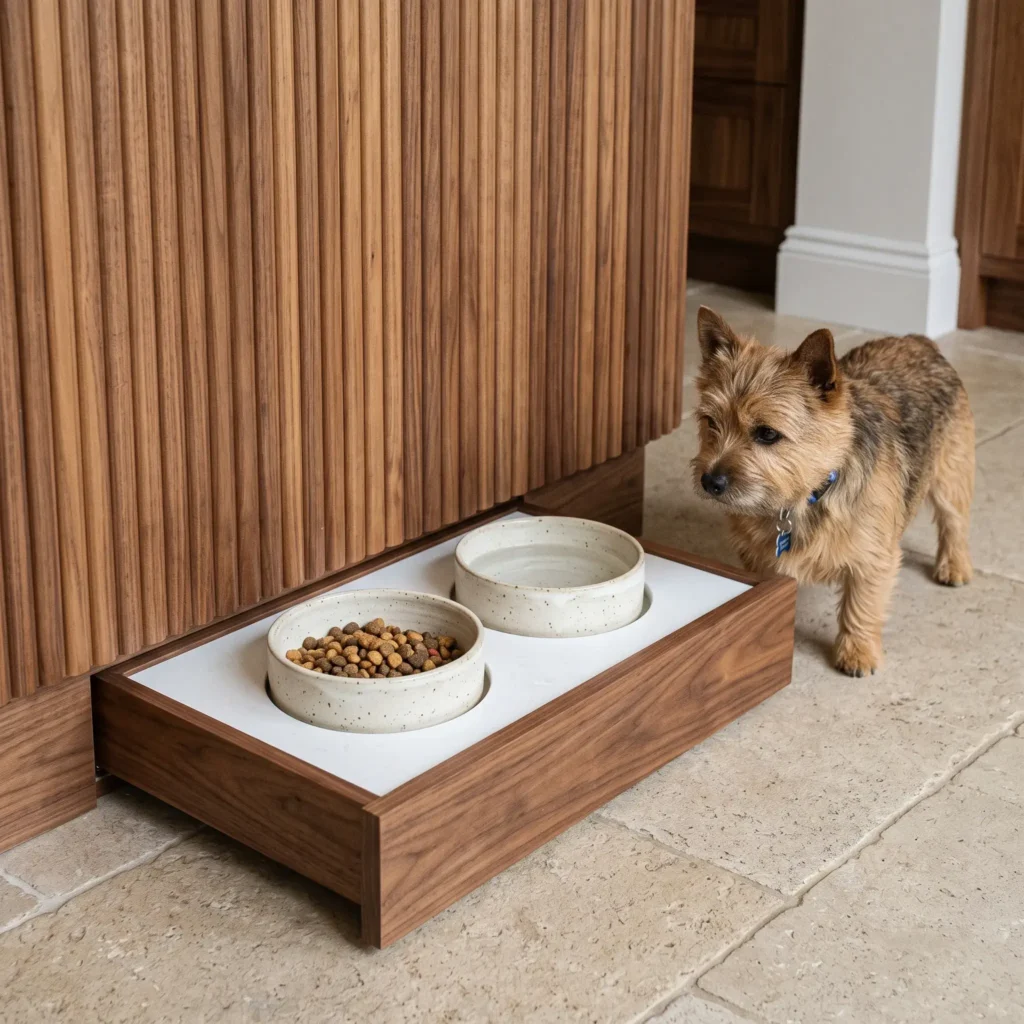
Loose bowls on the kitchen floor cause spills, collect dust, and create tripping hazards. This setup uses a flush-mount toe-kick drawer built into the base of a kitchen island. The drawer rolls out smoothly during meal times and slides away when empty.
- Product List for This Setup:
- Heavy-duty, push-to-open bottom drawer slide hardware
- Heavy unglazed stoneware food and water bowls
- Custom cut marine-grade sealed birch or quartz drawer insert
- Food-safe silicone drip mat tailored to the drawer interior
Check out more Interior Ideas
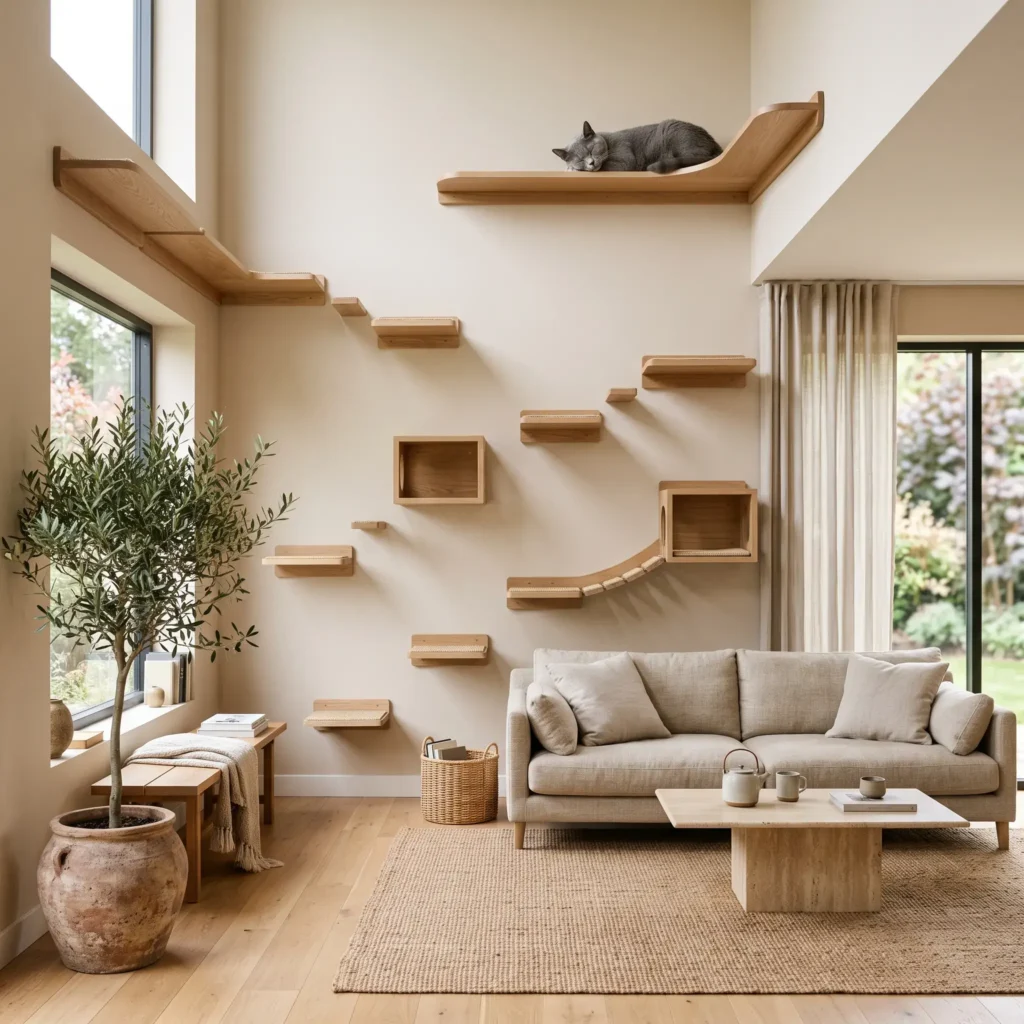
Idea 3: The Sisal and White Oak Feline Superhighway
Traditional carpet-covered cat trees shed fibers, collect dander, and ruin wall sightlines. This concept treats vertical climbing as architectural wall art. Floating solid oak ledges line the wall, accented with flush-inlaid sisal mats to give your cat high-traction climbing paths.
- Product List for This Setup:
- Floating solid white oak shelves with heavy-duty hidden steel brackets
- Inlaid low-pile natural sisal tread pads
- Wall-mounted vertical scratching column wrapped in un-dyed marine-grade rope
- Wall-mounted curved wool felt lounging perch
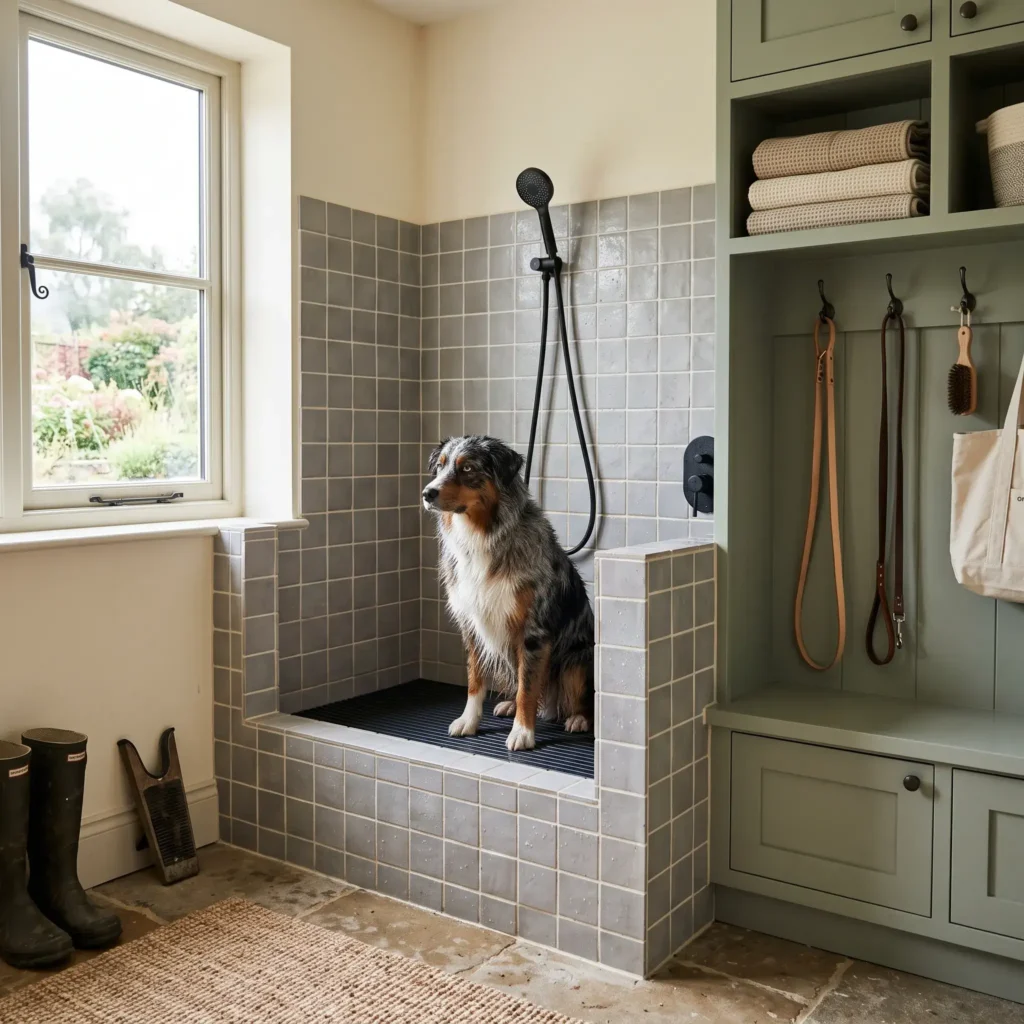
Idea 4: The Mudroom Transition and Wash Station
Outdoor walks bring wet paws, mud, and street debris into your clean living zones. A dedicated transition station in your mudroom or entryway stops mess at the door. An elevated wash basin lined with non-slip mosaic tile saves your lower back and keeps dirty water contained.
- Product List for This Setup:
- Small-format matte porcelain mosaic floor tiles with dense grout lines
- Wall-mounted matte black thermostatic hand shower with flexible hose
- Solid brass utility hooks for leashes, raincoats, and drying towels
- Ventilated lower utility drawer for grooming brushes and microfiber towels
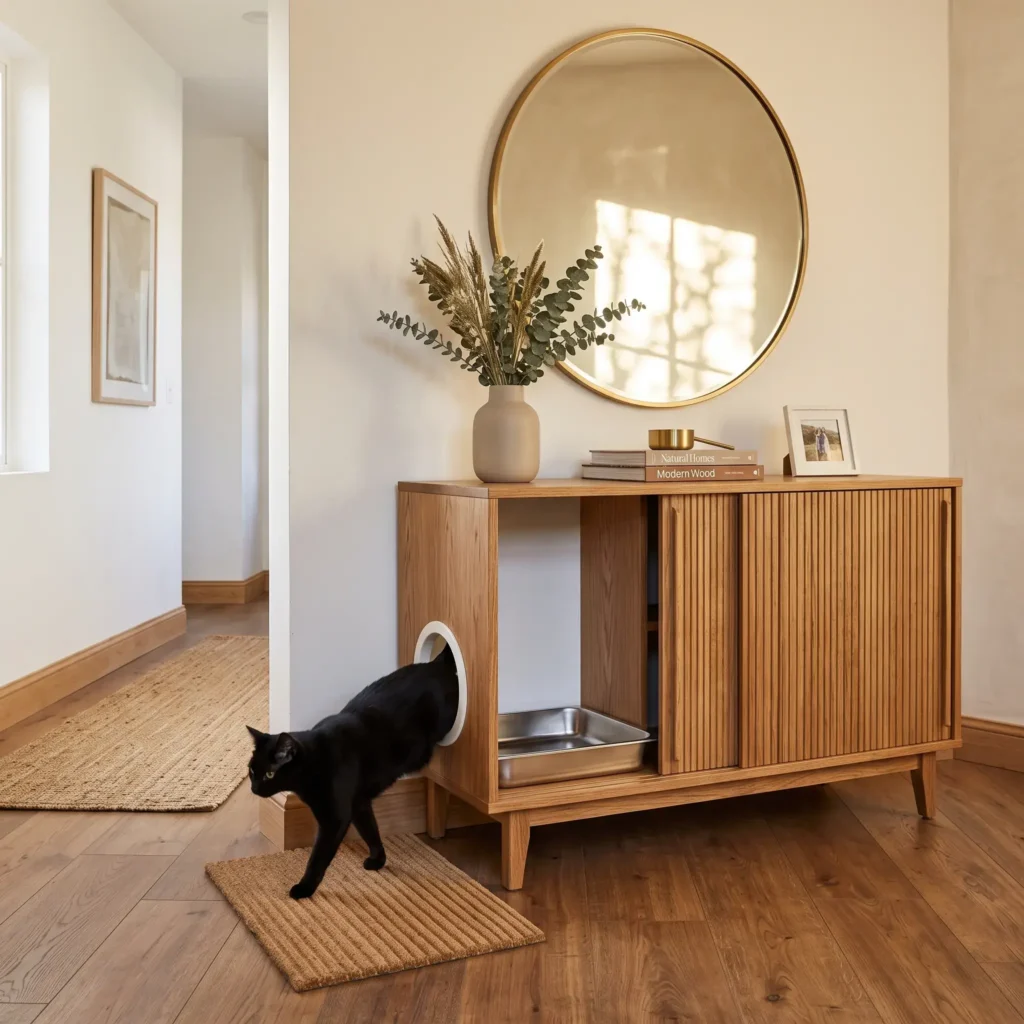
Idea 5: The Dual-Entry Vented Litter Enclosure
Placing a plastic litter tray in an open room ruins visual peace and spreads dust. This setup converts a modern credenza into a quiet, hygienic feline restroom. Internal baffle walls trap scattered litter grains, while rear air louvers maintain fresh airflow.
- Product List for This Setup:
- Mid-century style credenza with vented slatted cabinet doors
- Stainless steel high-sided litter pan to prevent odor absorption
- Internal ribbed silicone tracking runner
- Low-voltage interior carbon filter air fan
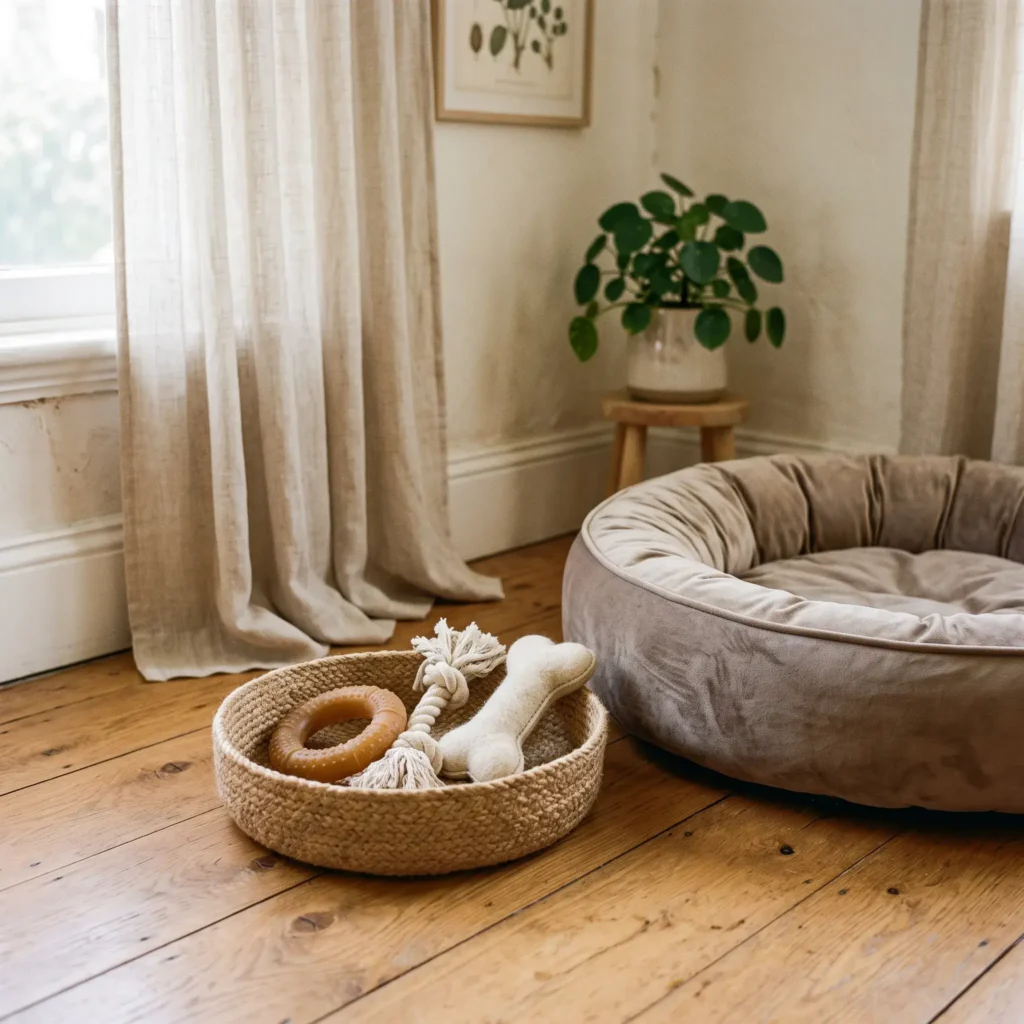
Idea 6: The Low-Rim Woven Toy Basket and Active Rest Hub
Overflowing plastic storage bins force your pet to dig, tipping everything onto the floor. A low-profile, heavy woven basket lets your dog pick one toy without making a mess. Place it next to a structured floor cushion that matches your sofa fabric.
- Product List for This Setup:
- Shallow, heavy-gauge braided seagrass or wool felt basket with reinforced handles
- Furniture-grade round pet cushion upholstered in high-durability performance velvet
- Three to four curated toys made from un-dyed canvas and natural rubber
- Washable organic cotton inner protective liner
Material Selection: The Architecture of Durability
Balancing beauty and pet ownership starts with the materials you choose for your home. Selecting surfaces that resist claws, moisture, and fur keeps your space looking pristine without covering furniture in sheets.
| Material | Claw & Wear Resistance | Maintenance Effort | Best Architectural Application |
| Synthetic Cut Velvet | High (No exposed loops) | Low (Fur lifts easily) | Primary living room sofas and sectionals |
| Crypton Performance Weave | High (Built-in moisture barrier) | Low (Stain resistant) | High-traffic bench cushions and chairs |
| Open Linen or Bouclé | Low (Loops snag quickly) | High (Traps undercoat hair) | Low-traffic, strictly pet-free rooms |
| Wire-Brushed Matte Oak | Moderate to High | Low (Hides micro-scratches) | General living area floors and casework |
| Unglazed Porcelain Tile | Maximum | Low (Resists heavy washing) | Mudrooms, entryways, and feeding zones |
The Physics of Fabric Weave
Many homeowners choose textured bouclé or open-weave linen for their sofas, only to find the fabric ruined within months.
Open weaves feature loose horizontal threads. When a cat or dog steps on the cushion, their claws catch these structural loops, pulling them out. Fur also works its way deep between the loose fibers, making vacuuming difficult.
Instead, select fabrics with a dense, vertical cut pile, such as commercial-grade performance velvet or tightly woven microfibers. Because velvet has no exposed surface loops, claws slide right off without catching. Shed fur sits loosely on the fabric surface. You can remove it with a single pass of a rubber lint comb or a vacuum brush.
Millwork Finishes and Light Reflection
High-gloss polyurethanes act like mirrors. They highlight claw marks, dust, and natural coat oils.
When choosing wood flooring, tables, or built-in cabinets, specify matte, satin, or wire-brushed finishes. Low-sheen finishes diffuse ambient light across the surface. Minor scratches blend into the natural wood grain instead of catching your eye.
Choose rounded bullnose edges for low coffee tables and console plinths. Soft edges protect running pets from head bumps and prevent corner veneer chipping during rough play.
The 3-Color Harmony Rule
Pet products look messy when they introduce bright, clashing colors into a balanced room.
Limit every pet accessory to three base colors already in your room. If your living room uses oatmeal, natural walnut, and matte black, select pet items in those exact shades. A stone-colored bed, a walnut bowl stand, and black hardware instantly look like deliberate decor choices.
Feeding Stations: Balancing Cabinetry with Canine Anatomy
Built-in drawers and sleek raised stands make kitchens look clean. However, your pet’s physical anatomy must dictate how and where they eat.
The Purdue Study on Raised Feeders
For decades, design blogs suggested that raised bowls were healthier for all large dogs. Veterinary science paints a different picture.
Research led by Dr. Larry Glickman at Purdue University studied the risk factors of Gastric Dilatation-Volvulus (GDV), commonly known as bloat. Bloat occurs when a dog’s stomach fills with gas and twists, cutting off blood supply.
The Purdue study revealed that eating from raised bowls increased the risk of bloat by approximately 110% in large and giant deep-chested breeds, including Great Danes, Standard Poodles, and Irish Setters. The higher angle causes dogs to swallow excess air while gulping food.
If you share your home with a deep-chested breed, keep food bowls at ground level:
- Install low-profile toe-kick drawers that roll out flat against the floor.
- Use slow-feed stoneware inserts to reduce eating speed.
- Slide the drawer flush into the kitchen plinth between meals to protect sightlines.
When to Raise Food Bowls
Raised bowls serve a genuine medical purpose for older pets. Canines suffering from spinal arthritis, hip dysplasia, or cervical disc problems struggle to bend down to the floor. Lowering their head causes pain and places heavy stress on degenerative joints.
For senior dogs with mobility issues, build a feeding niche into the side of a cabinet run, set exactly to the animal’s mid-chest height.
The Hydration Rule
Never place water bowls inside a closed drawer. Pets need continuous, unrestricted access to fresh water throughout the day.
Set up a dedicated hydration nook lined with waterproof quartz or stone. Pairing this station with a pot-filler faucet makes daily water changes simple and keeps spills off wood floorboards.
Feline Architecture: The Jackson Galaxy Sightline Principles
Designing for cats requires understanding their territory instincts. Ethologist Jackson Galaxy categorizes cats into two behavioral profiles:
- Tree Dwellers: Cats who feel confident and secure only when perched high above the floor, where they can scan the entire room.
- Bush Dwellers: Cats who prefer low, sheltered spots under sofas, chairs, and low tables.
Building the Cat Superhighway
Tree dwellers need continuous vertical movement. When a cat feels trapped on the floor, they often develop stress behaviors, such as scratching door frames or spraying furniture.
Create a cat superhighway using floating timber shelves that match your wall trim. The highway must offer an unbroken loop through the room. Your cat should be able to climb up one side, cross the space, and descend without touching the floor.
Always recess low-pile wool carpet or sisal inserts into shelf surfaces. Bare, polished wood causes paws to slip during fast jumps, leading to joint injuries.
The Problem with Concealed Litter Furniture
Hiding a litter box inside a cabinet looks great to humans, but poor execution can harm your cat.
Cats have an olfactory system far more sensitive than ours. Sealed cabinets trap ammonia fumes, moisture, and dust. If air does not circulate, the space smells overwhelming to your cat, leading to litter box avoidance and accidents on your rugs.
Follow these rules when building or buying a litter cabinet:
- Sizing: The interior must measure at least 1.5 times the length of your cat from nose to tail base, allowing easy turning without whiskers touching the walls.
- Dual Exits: Provide two openings so another pet cannot corner the cat inside.
- Continuous Airflow: Install passive rear louvers, slatted door panels, or a quiet, low-voltage exhaust fan to vent moisture outside.
- Separation: Never place litter furniture near food and water stations. Cats refuse to eat near elimination areas.
The 4-Job Toy Rotation System
A living room scattered with twenty chew toys looks chaotic. More importantly, it bores your dog.
Canines quickly habituate to items left out permanently. When a toy sits on the carpet for days, it loses value and becomes background noise. Bored dogs often turn their attention to baseboards, rugs, and table legs.
Use a structured toy rotation system to keep your floor clear and your dog engaged:
The 4 Functional Categories
Divide your pet’s play collection into four distinct functional jobs:
- Chew: Durable natural rubber rings or nylon bones that satisfy jaw pressure and reduce cortisol. Keep one in the active basket.
- Chase: Vulcanized rubber balls or fetch ropes used for active bonding. Keep one active; store the rest away.
- Solve: Silicone puzzle mats and treat dispensers that provide mental exercise. Bring these out for short, supervised sessions, then wash and put them away.
- Hold (The Comfort Anchor): A soft plush or canvas toy your dog carries around or sleeps beside. Do not rotate this item. Animals use comfort toys as emotional security anchors; taking them away can trigger separation anxiety.
The Sunday Swap Routine
Keep only four toys in your dog’s accessible floor basket. Store eight to twelve reserve toys inside an opaque, closed cabinet.
Every Sunday, rotate two toys from the floor back into the cabinet, and bring out two fresh ones. Spend five minutes playing with the reintroduced toys. This simple routine restores novelty and keeps your living room floor clean all week.
Biological Stain Removal: Breaking the Uric Acid Cycle
Nothing breaks the calm of a home faster than pet odors. Many homeowners try baking soda, scented carpet sprays, or vinegar. These quick fixes fail because they do not address the chemistry of pet waste.
Why Traditional Cleaners Fail
Mammalian urine contains water-soluble urea salts, yellow urochrome pigments, and insoluble uric acid.
Standard household cleaners lift pigments and wipe away urea, removing the initial ammonia smell. However, the uric acid dries into durable crystals that bond to carpet backing and wood grain.
These crystals are hygroscopic, meaning they absorb moisture from humid air. When summer humidity arrives, the crystals rehydrate and release sulfurous smells months after the original accident. Because a dog’s nose is thousands of times more sensitive than ours, they smell these reactivated crystals and mark the spot again.
Never use steam cleaners or hot water on pet accidents. Heat denatures urine proteins, fusing them permanently into synthetic carpet fibers.
The Bio-Enzymatic Cleaning Steps
Permanent odor elimination requires bio-enzymatic cleaners. These solutions contain targeted bacterial enzymes that break down uric acid crystals into harmless water and carbon dioxide:
- Blot Firmly: Press dry microfiber towels down on fresh stains to soak up liquid. Never scrub back and forth, as friction forces urine deeper into floorboards and underlayment.
- Saturate Generously: Pour an enzymatic solution over the area, extending three inches beyond the visible edges to match the liquid spread beneath the surface.
- Control Moisture and Dwell Time: Cover the wet spot with a clean, damp towel. Enzymes require moisture to break down organic matter. Leave the towel in place for 30 minutes on fresh spots, or 24 hours on old stains.
- Air Dry Naturally: Never blow-dry the spot. Temperatures above 113°F (45°C) kill the active enzymes, stopping the cleaning action before it finishes.
Entryway Transition Zones: Technical Wash Basin Specifications
A well-planned entryway stops dirt, moisture, and shedding coats from reaching your primary living spaces. If you plan to renovate or build an entryway wash station, use these trade specifications to keep the space functional and safe:
| Parameter | Specification | Functional Purpose |
| Basin Interior Width | 36 to 42 inches | Allows medium to large breeds to turn around comfortably |
| Basin Interior Depth | 24 to 28 inches | Fits standard cabinet runs while containing water spray |
| Elevated Basin Height | 18 to 24 inches from floor | Protects caregiver ergonomics; eliminates lower back bending |
| Ground-Level Basin Height | 2 to 4 inch lip with gentle ramp | Accommodates senior pets unable to step over high edges |
| Surround Tile Height | Minimum 48 inches | Shields drywall from heavy water shake-off and damp fur |
| Wet Tile Friction Rating | Dynamic Coefficient of Friction ≥ 0.42 | Prevents paw slips on wet tile surfaces |
| Floor Tile Format | Small-format unglazed mosaic | Dense grout joints create mechanical traction for wet pads |
| Drainage System | 2-inch commercial drain with dual-basket trap | Captures loose shedding hair before it blocks plumbing lines |
| Water Control Valve | Thermostatic mixing valve | Prevents accidental scalding during temperature shifts |
Frequently Asked Questions
How do I stop my dog’s toys from taking over the living room?
Set a strict limit of four accessible toys placed in a single, shallow, open-rim basket made from heavy seagrass or wool felt. Store the rest of your pet’s toys inside a closed cabinet. Rotate two toys every week to maintain your dog’s interest without adding items to the floor.
What is the most durable sofa fabric for homes with pets?
Commercial-grade synthetic performance velvet and Crypton fabrics offer the best durability. Velvet features a dense vertical cut pile with no exposed loops, preventing claws from catching and pulling threads. Shed fur stays on the surface, making it easy to wipe away with a damp cloth or vacuum.
Where should I place pet feeding bowls in a small apartment?
The best location is inside a kitchen island or base cabinet toe-kick drawer. The drawer slides out flat against the floor during meal times and rolls flush into the baseboard when finished. Keep fresh water accessible in an open, stone-lined corner at all times.
Can cat wall shelves look good in a modern living room?
Yes. Choose floating solid wood shelves with concealed mounting brackets that match your room trim or window millwork. Inlay natural wool or un-dyed sisal pads directly into the wood surfaces to provide safe paw traction while maintaining clean architectural lines.
Designing an intentional home with pets does not require hiding your love for them behind closed doors. When you choose materials built for real wear, respect your pet’s natural instincts, and use thoughtful storage systems, your living space stays calm, beautiful, and welcoming for everyone who lives there.