8 Quiet Luxury Interior Design Ideas for a Timeless, Calming Home
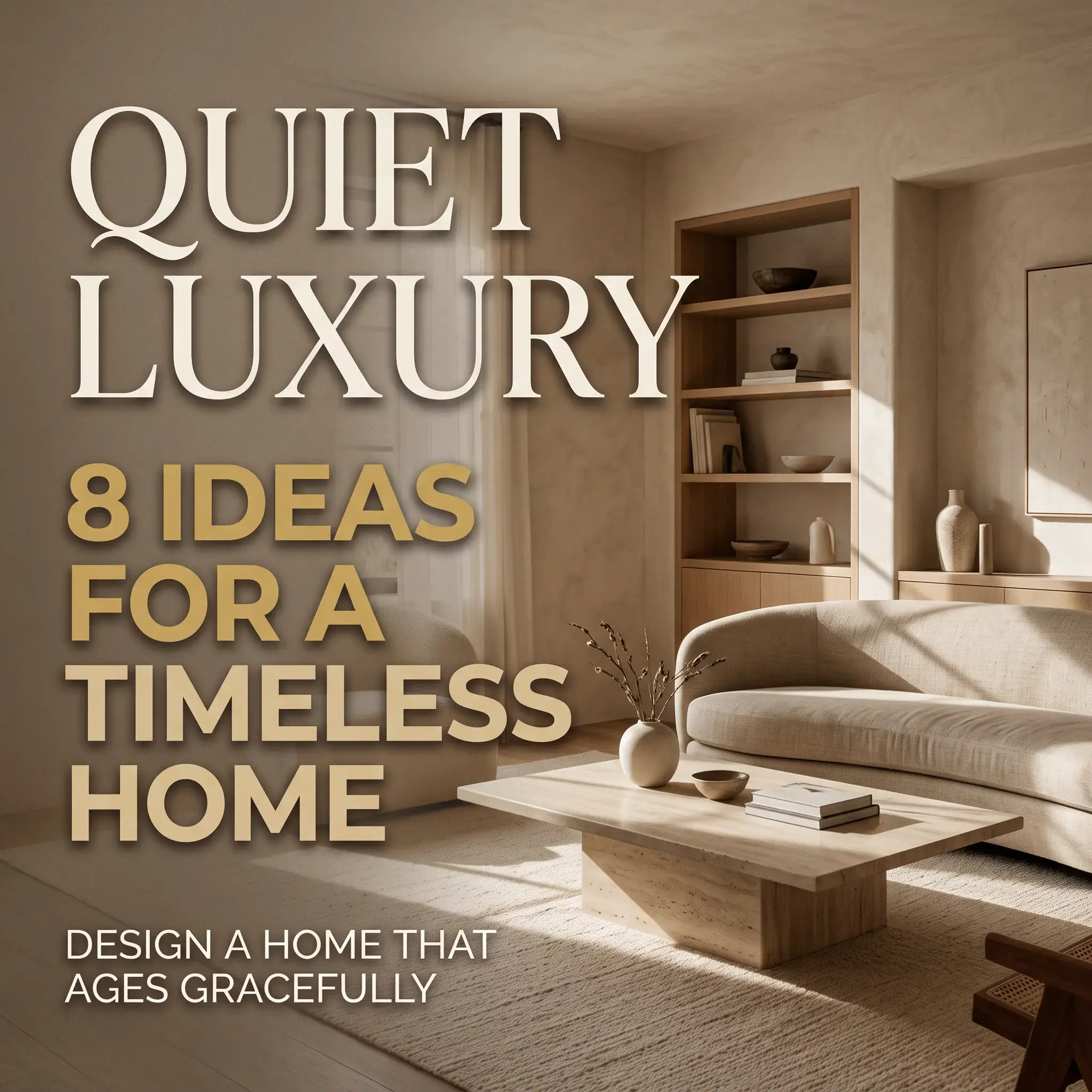
Many homes look expensive yet feel cold. Polished marble floors bounce harsh glare. Synthetic drywall paint looks flat and plasticky. Mass-produced furniture wears out within two seasons. When you fill a room with high-gloss finishes, the space feels like a staged showroom instead of a personal retreat.
Quiet luxury solves this problem. It strips away flashy logos, loud patterns, and artificial shine. Instead, it relies on natural textures, solid materials, and precise architectural lines. The result is a calm, grounded home that feels restful and looks better as it ages.
Here are eight practical design ideas you can apply to your own home, followed by the architectural rules that make them work.
8 Practical Quiet Luxury Interior Design Ideas
1. The Honed Travertine Living Anchor
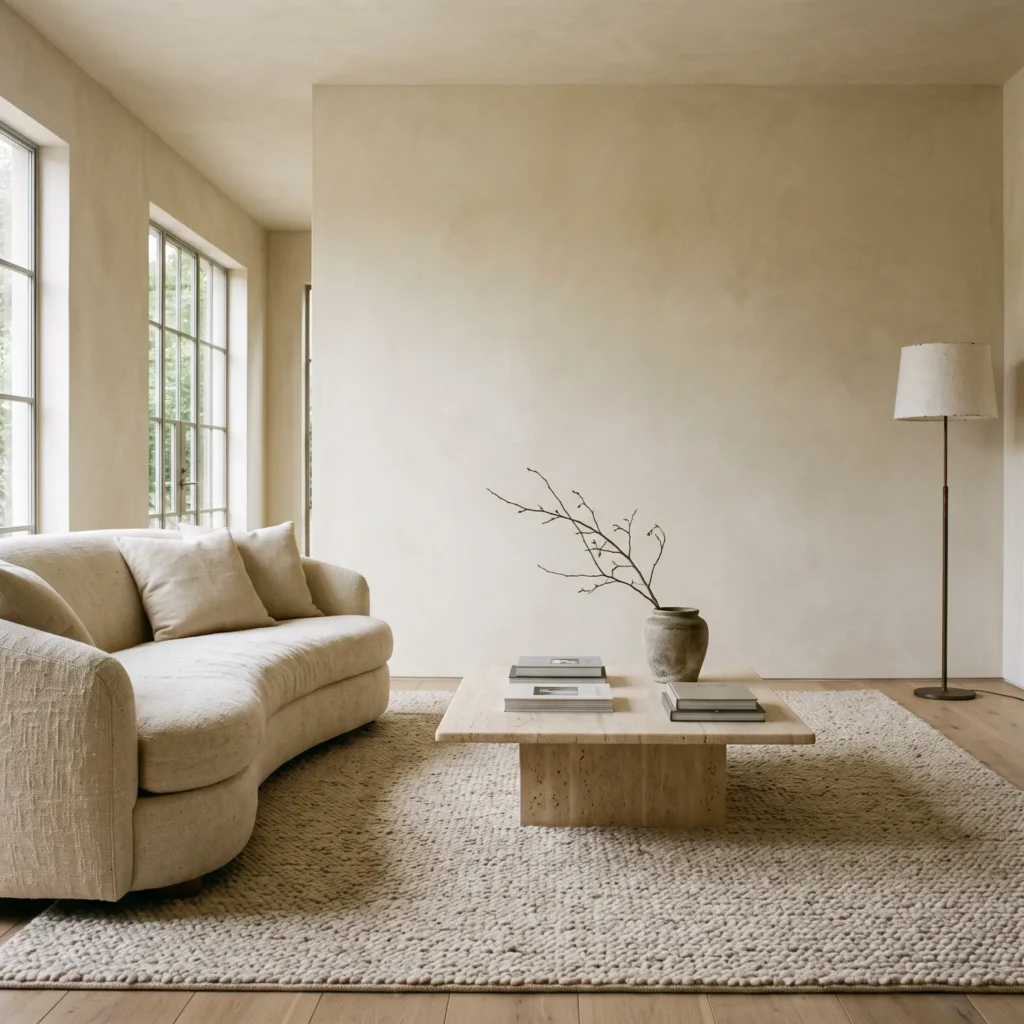
Center your living space around matte, tactile materials rather than glossy surfaces. A low-profile coffee table made of honed Roman travertine absorbs daylight instead of bouncing glare into your eyes. Pair it with an organic, gently curved sofa upholstered in textured Belgian linen. Ground the layout with a large, un-dyed wool rug that extends past the edges of the furniture. Keep the main wall behind the sofa completely bare to let natural light define the room.
- Key Products and Materials:
- Honed Roman travertine or Pietra Serena stone coffee table with an open-pore finish
- Curved three-seat sofa upholstered in heavyweight slub linen or dense wool bouclé
- Hand-knotted, un-dyed New Zealand wool rug in a dense flat-weave
- Rift-sawn white oak side tables finished with matte hardwax oil
2. The Concealed Architectural Scullery
Keep your main kitchen island calm and free of cooking mess. Build your central island from a solid block of Taj Mahal quartzite with mitered waterfall edges. Use floor-to-ceiling cabinetry in rift-sawn white oak with integrated pocket doors. These pocket doors slide out of view to reveal small appliances, coffee machines, and prep sinks, then close completely flat when you finish. This design hides daily clutter while highlighting clean wood grain.
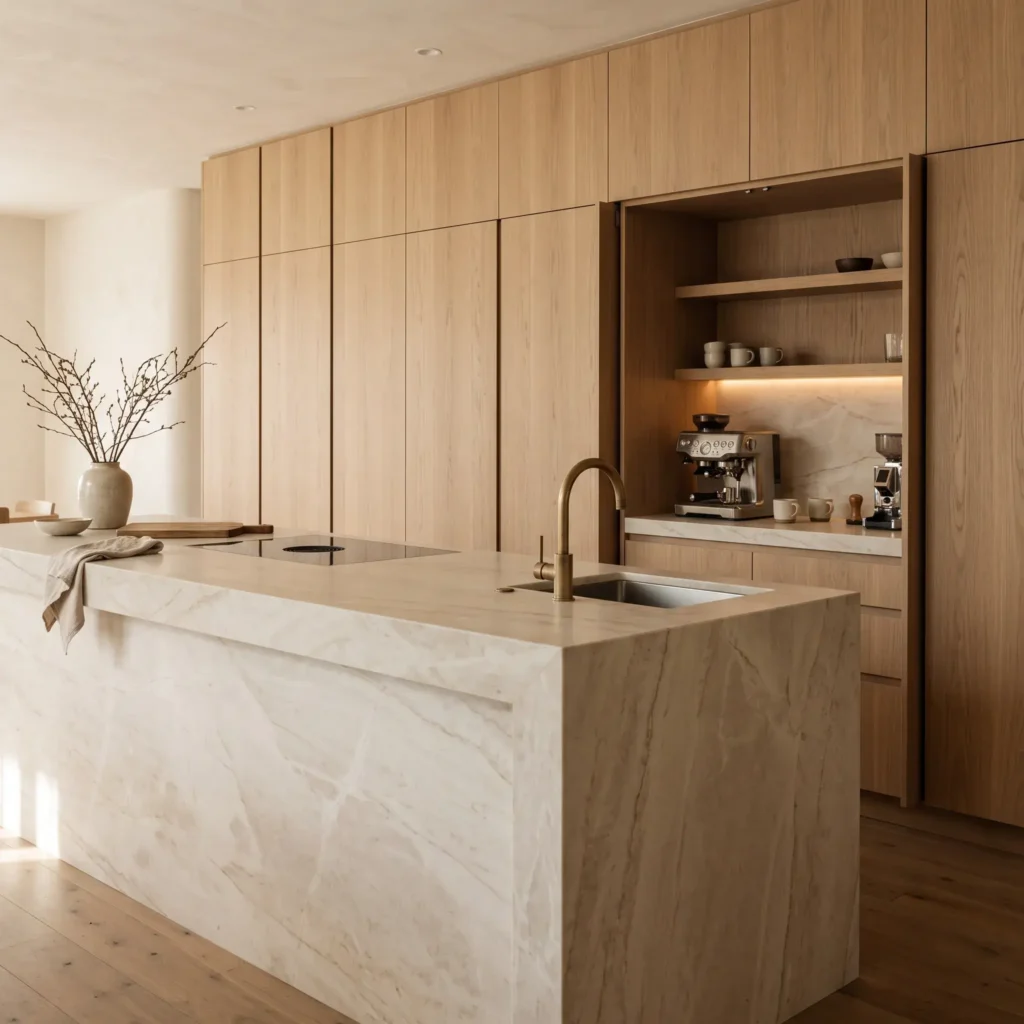
- Key Products and Materials:
- Taj Mahal quartzite or dense limestone slabs with a leathered finish
- Full-height rift-sawn white oak cabinet fronts with 2 mm reveal gaps
- Bi-fold pocket door hardware systems by Blum or Hawa Concepta
- Under-mount single-basin sink carved from matching slab stone
- Unlacquered living brass gooseneck kitchen faucet
Check out more Interior Ideas
3. Breathable Mineral Bedroom Sanctuary
Replace standard flat drywall paint with slaked limewash or Roman clay. These natural mineral coatings absorb ambient sound and diffuse light into a chalky, suede-like texture. Build an upholstered headboard that spans the full width of the wall in washed Belgian linen or brushed wool. Install hidden LED light strips behind the headboard to wash the mineral wall with warm 2200K light at night. Keep visible electronics, charging cords, and televisions completely out of sight.
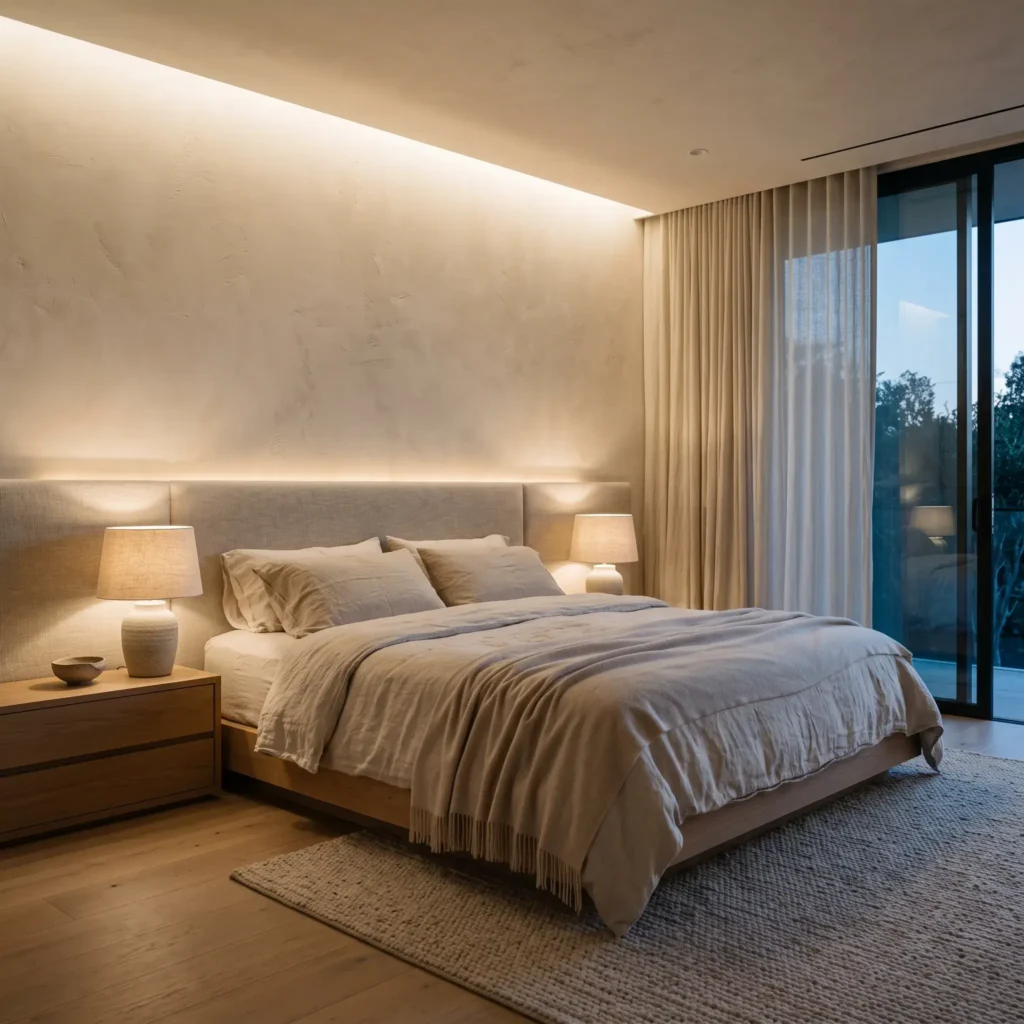
- Key Products and Materials:
- Slaked lime paint or Roman clay wall finish in warm ecru or chalk
- Custom low-profile platform bed with wall-to-wall linen-upholstered headboard
- Heavyweight washed linen duvet cover and flat sheets in raw oat tones
- Hand-combed alpaca or cashmere bed throw in charcoal or raw umber
- 2200K warm white LED strip lighting with high color rendering (95+ CRI)
4. The Monolithic Spa Wet Room
Eliminate busy tile grout lines by wrapping your bathroom in a continuous waterproof surface. Apply seamless Moroccan tadelakt plaster, fine microcement, or large-format honed limestone slabs across the walls and floor. Float a carved stone vanity above the floor, and run a concealed LED light strip underneath. Install wall-mounted plumbing fixtures in unlacquered brass or brushed platinum to keep your countertops clear and easy to clean.
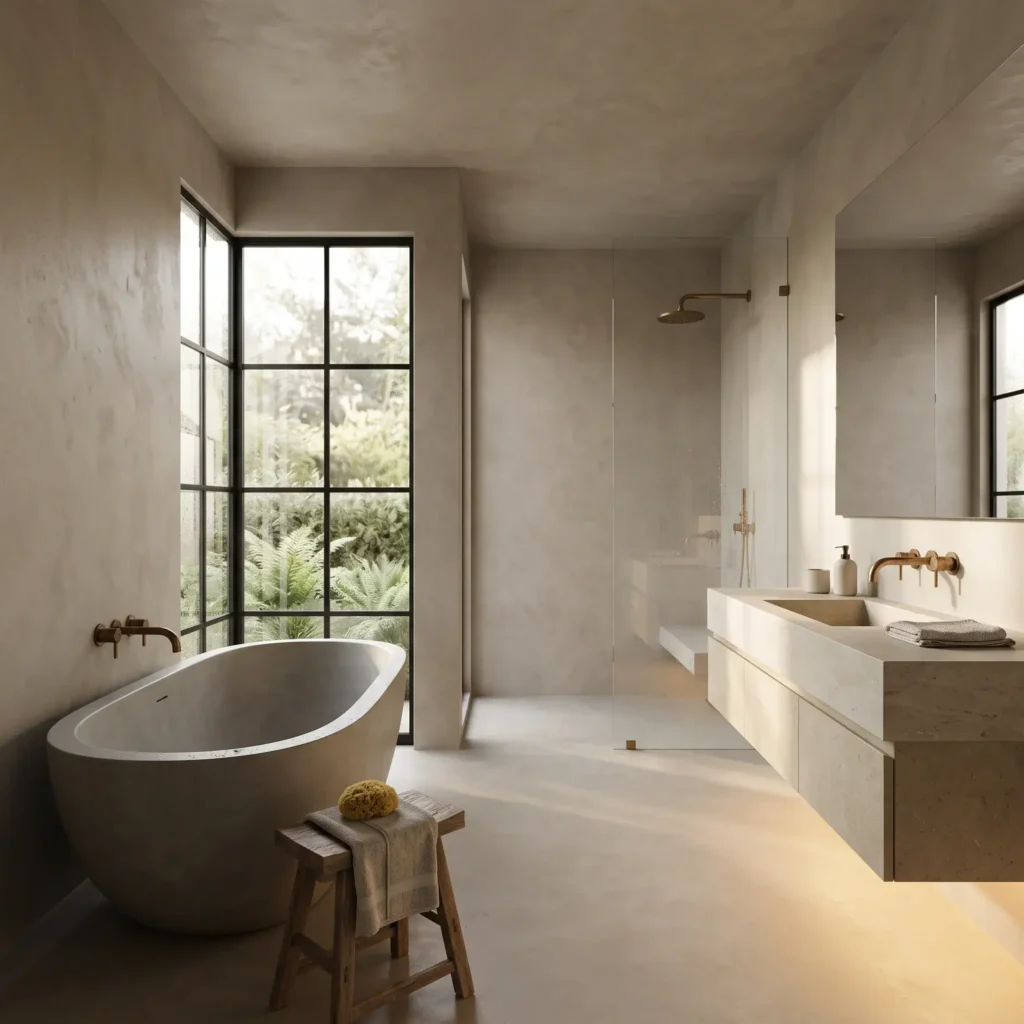
- Key Products and Materials:
- Moroccan tadelakt waterproof plaster or continuous microcement in greige
- Freestanding matte composite resin or carved limestone soaking tub
- Wall-mounted thermostatic bath mixers and spout in brushed platinum or unlacquered brass
- Cantilevered vanity carved from a solid block of honed limestone
- Recessed frameless glass shower screen with integrated slot floor drain
5. Recessed Shadow-Line Architecture
Skip traditional surface baseboards and decorative trim. Frame your doorways with 9-foot full-height flush doors that match the exact finish of your walls. Use 1/2-inch recessed aluminum shadow lines along the floor where drywall meets your floorboards. This detail makes your walls look as if they float slightly above the floor. Treat wide-plank European white oak floors with open-pore hardwax oils instead of shiny polyurethane sealers.
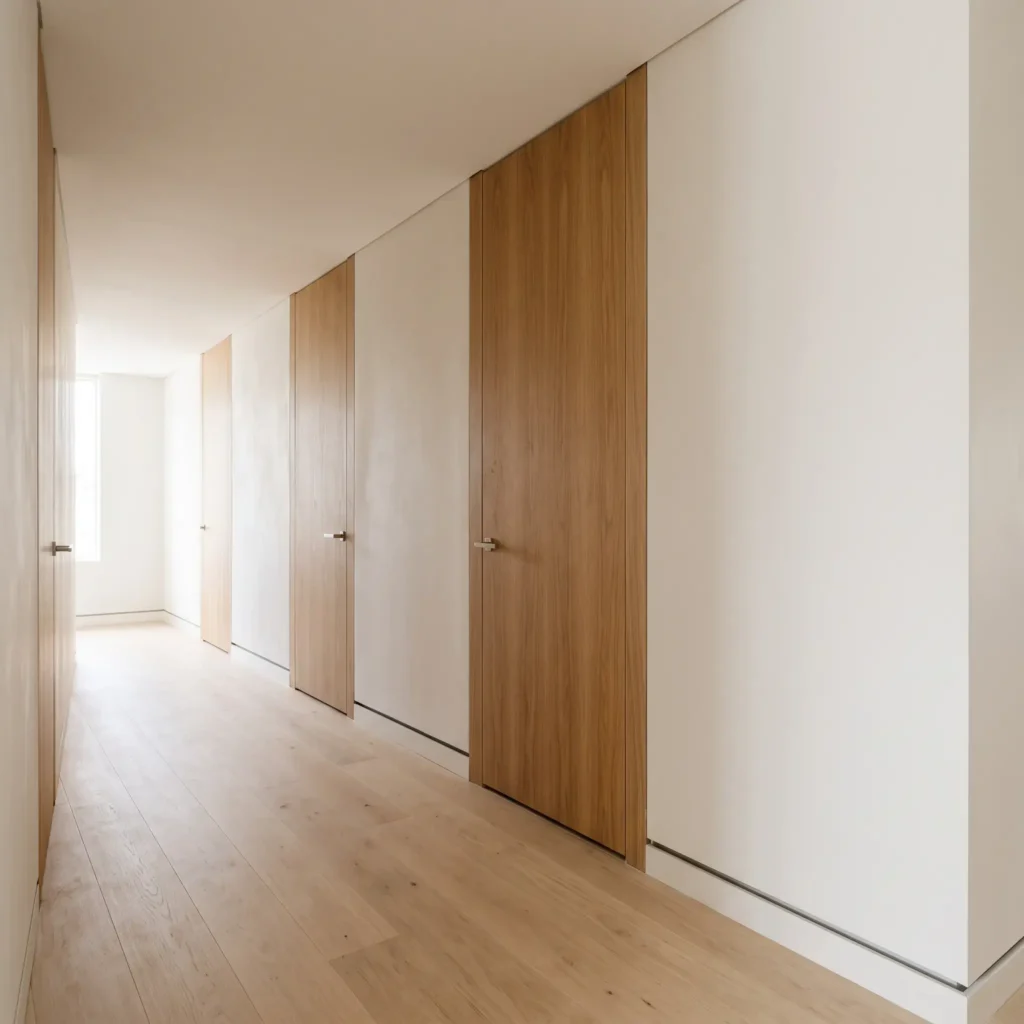
- Key Products and Materials:
- Recessed aluminum baseboard reveals from Fry Reglet or EuroKraab
- Floor-to-ceiling flush interior doors with concealed 3D-adjustable hinges
- Magnetic architectural door latches without visible strike plates
- Wide-plank (8 to 10 inch) European white oak flooring, live-sawn
- Matte plant-based hardwax wood oil by Rubio Monocoat or Osmo
6. The Single-Object Vignette
Avoid cluttering console tables and open shelving with groups of small decorative accessories. Use the rule of scale: display one substantial, well-crafted piece with plenty of open space around it. Place a single antique earthenware vessel or hand-carved timber bowl on a low floating credenza. Add one natural, asymmetrical branch instead of colorful florist bouquets. This setup creates visual balance and lets the material texture stand out.
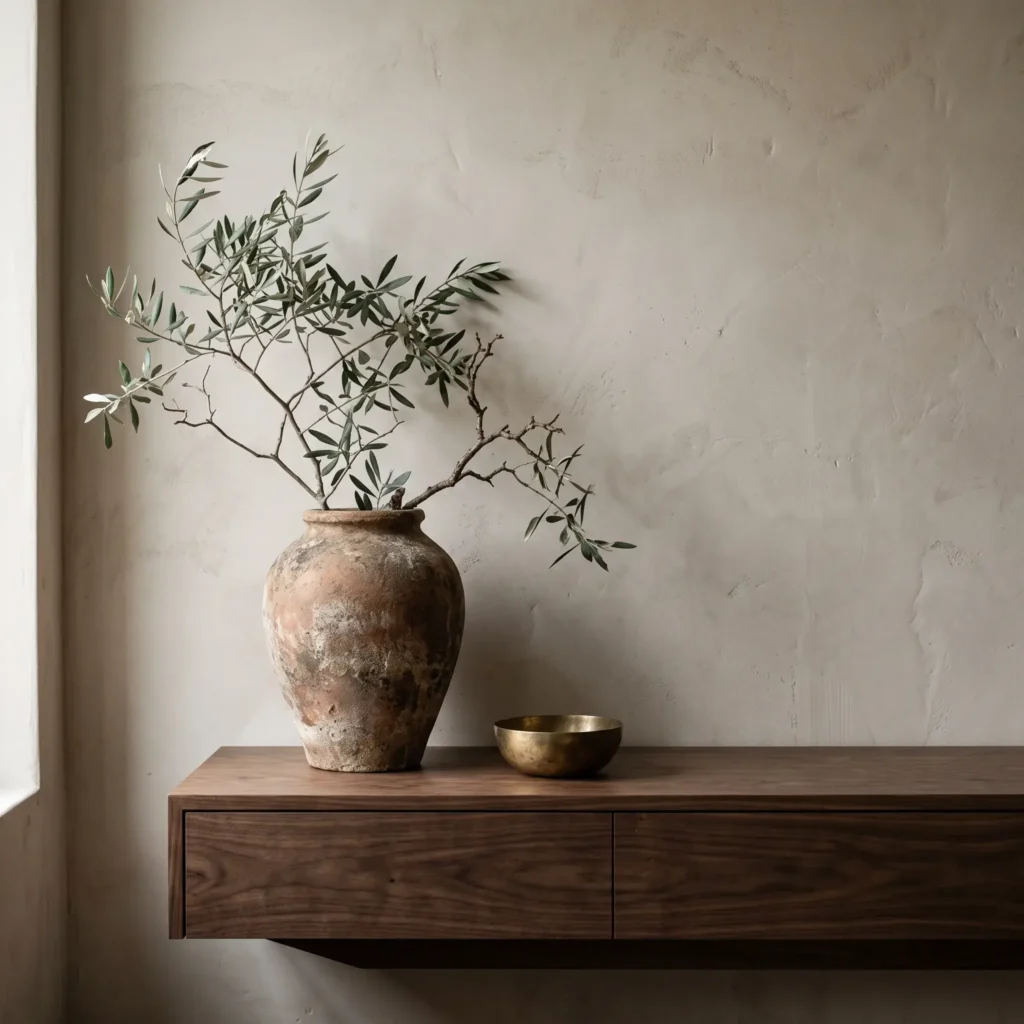
- Key Products and Materials:
- Antique rustic terracotta urn or wood-fired stoneware vessel
- Floating wall-mounted credenza in dark oiled walnut
- Single structural branch cut from olive, quince, or magnolia trees
- Small hand-poured beeswax candle in a cast-iron dish
- Framed original charcoal sketch on raw linen canvas
7. Indirect Grazing Sconces and Zero-Glare Lighting
Turn off harsh recessed ceiling spotlights that create shadows and wash out room textures. Light your spaces using three distinct heights: ceiling coves, wall sconces, and low table lamps. Mount narrow-beam wall sconces 4 inches from your textured plaster walls. This shallow angle rakes across wall surfaces, catching small plaster ridges and casting soft shadows. Choose bulbs with a warm 2200K to 2400K color temperature for evening relaxation.
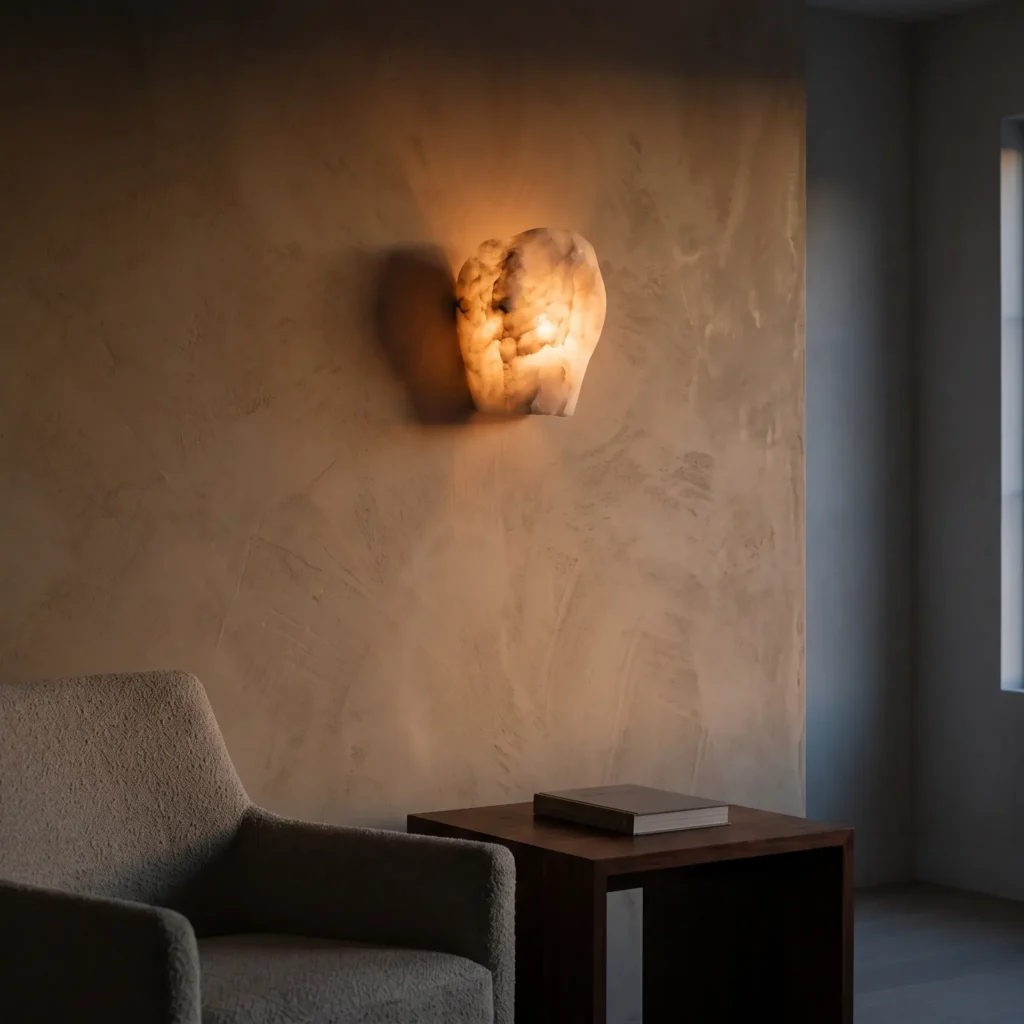
- Key Products and Materials:
- Carved natural alabaster stone or spun brass wall sconces
- Fabric-shaded accent table lamps with unglazed ceramic bases
- Warm-dim LED bulbs that shift from 2700K down to 1800K
- Concealed plaster-in ceiling cove LED light channels
- Light fixtures with 95+ Color Rendering Index (CRI) and 80+ R9 red values
8. The Textured Low-Contrast Dining Space
Dine without formal stiffness. Pair a solid quartersawn oak or dark walnut dining table with slipcovered chairs in heavy Belgian linen. Instead of an ornate glass chandelier, hang an oversized washi paper or fabric pendant light low over the table. The paper shade softens light across faces and food without casting harsh shadows. Ground the space with a low-pile wool rug that easily handles chair movement.
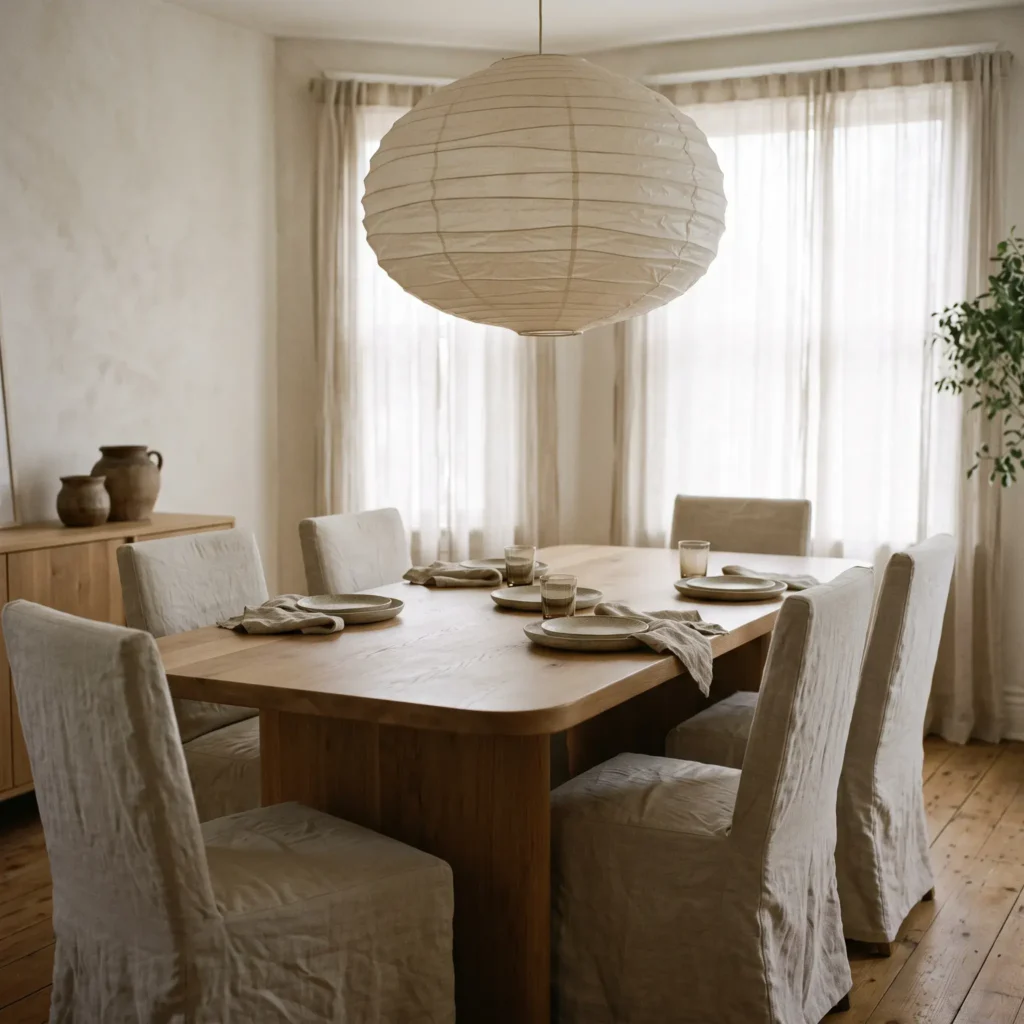
- Key Products and Materials:
- Solid quartersawn oak or walnut dining table with rounded bullnose edges
- Linen-slipcovered dining chairs with removable, washable covers
- Oversized washi paper or silk lantern pendant, such as Akari light sculptures
- Matte ceramic tableware with unglazed exterior rims
- Flat-weave wool and jute blended area rug
The Core Philosophy: Why Quiet Luxury Outlasts Fast Trends
Quiet luxury combines European modernism with the Japanese philosophy of wabi-sabi. Wabi-sabi finds beauty in natural aging, raw textures, and subtle wear. European modernism insists on balanced proportions and honest construction. Designers like Axel Vervoordt, Vincent Van Duysen, and Rose Uniacke bridge these two disciplines. They set centuries-old reclaimed timber against clean architectural walls.
Fast design trends rely on constant novelty. They push bright accent walls, shiny hardware, and trendy patterns that tire the eye within months. Quiet luxury takes the opposite approach. It removes visual noise so your senses can rest. Your home stops acting as a stage for visitors and becomes an enduring sanctuary for daily living.
The Three Structural Pillars
- Material Truth: Real stone, solid timber, and untreated metals that develop an organic patina over time.
- Visual Restraint: Concealed hardware, flush doors, and generous negative wall space that give the eye a place to rest.
- Sensory Balance: Warm 2200K to 2700K lighting, sound-dampening mineral plaster, and textured textiles that soften room acoustics.
Material Authenticity: Honed Surfaces and Living Finishes
Every surface you install should reveal its true composition. Quiet luxury avoids imitation laminates, printed quartz patterns, and clear plastic coatings.
Honed Stone Over Polished Slabs
Polished marble produces harsh glare and shows every smudge or water drop. Honed, leathered, and bush-hammered finishes offer a matte surface that absorbs natural light. Travertine, dense limestone, and Calacatta Viola marble bring physical weight into a room. When ordering stone, specify thick slab edges with mitered aprons to display structural mass.
Hardwax Oils Over Polyurethane
Clear polyurethane coats trap wood under a shiny plastic layer. This plastic film blocks the natural wood grain and scratches easily. Use plant-based hardwax oils instead. These oils soak directly into the pores of oak and walnut. The wood grain remains open and soft to the touch, keeping its natural timber scent.
Living Metals Over Sealed Chrome
High-gloss chrome fixtures look cold and corporate. Choose unlacquered brass, dark patinated bronze, or brushed platinum. Because these metals carry no synthetic clear-coats, they react with your hands and ambient air. Over months and years, they develop darker hollows and brighter handling marks, creating a natural history of touch throughout the home.
The Mineral Color Strategy: Layering Depth Without Glare
Painting an entire room in flat, synthetic beige does not produce quiet luxury. Monochromatic rooms painted with standard latex often look dull and uninspired. Authentic quiet luxury uses mineral pigments that shift in tone as daylight moves across the sky.
- The Foundation Base: Start with mineral neutrals such as chalk, raw sand, putty, and warm ecru. These shades coat your largest surfaces, including walls and ceilings.
- Transitional Mid-Tones: Layer in oatmeal, weathered stone, greige, and mushroom across large furniture pieces, rugs, and heavy drapery. These tones bridge your light walls with darker accents.
- Grounding Dark Accents: Add deep, earth-derived colors like raw umber, tobacco brown, muted slate blue, and aged sage. Apply these through walnut cabinets, iron hardware, and decorative ceramics. These dark anchors keep light rooms from looking washed out.
Avoid standard latex paint. Latex seals drywall behind a smooth plastic film that flattens natural light. Slaked limewash and Roman clay penetrate the surface, leaving tiny micro-textures that catch daylight and soften shadows.
Hidden Engineering and Architectural Tolerances
Visual calm requires strict construction discipline. When you remove ornamental moldings and trim, bad framing and uneven drywall have nowhere to hide.
Flush Doors and Concealed Frames
Standard interior doors use surface casings and visible hinges that disrupt flat walls. Quiet luxury uses full-height doors that run 9 to 10 feet up to the ceiling. These doors sit on hidden aluminum frames mortised directly into the wall studs. With 3D-adjustable hidden hinges and magnetic latches, the door sits completely flush with the drywall when closed.
Recessed Baseboard Shadow Reveals
Instead of nailing wood baseboards over wall-to-floor junctions, installers place a 3/8-inch or 1/2-inch aluminum shadow reveal profile at the base. This profile creates a clean architectural shadow line along the floor. This detail requires Level 5 drywall finishing, with wall flatness held within 1/16 inch over 6 feet.
Invisible Technology Integration
Modern homes need audio, screens, and ventilation, but these elements should never disrupt clean sightlines:
- Invisible Audio Transducers: Install planar speakers flush into wall studs and skim over them with finish plaster. Sound travels directly through the wall surface without visible metal grilles.
- Linear Slot Diffusers: Replace stamped metal air conditioning grilles with narrow linear architectural slots hidden inside ceiling coves.
- Motorized Hidden Displays: Recess televisions inside custom millwork behind automated art panels or silent lifts.
Architectural Comparison Matrix
| Feature | Conventional High-End Build | Stark Industrial Minimalism | Quiet Luxury Architecture |
|---|---|---|---|
| Primary Palette | High-contrast stark whites, polished gold, jet black | Cool monochromatic grays, industrial white, raw steel | Low-contrast warm neutrals (chalk, putty, mushroom, umber) |
| Wall Treatment | Standard sheen latex, printed vinyl wallpaper | Unfinished industrial concrete, stark flat paint | Slaked lime, Roman clay, breathable Venetian plaster |
| Surface Reflectivity | High-gloss specular shine and mirrors | Flat uniform matte with cold undertones | Diffused, light-absorbing micro-textures |
| Baseboards | 4-inch to 6-inch surface-nailed wood molding | Omitted entirely or raw caulk joint | Recessed 3/8-inch aluminum shadow line |
| Interior Doors | 6’8″ cased doors with exposed pin hinges | Standard commercial flush doors | 9’–10′ full-height frameless doors with concealed 3D hinges |
| Wood Finishes | High-gloss clear polyurethane sealants | Bleached white or dark stained veneers | Quartersawn solid oak or walnut with penetrating hardwax oils |
| Audio & Tech | Wall-mounted soundbars and speaker grilles | Exposed black electronics and wiring | Plastered-over invisible planar transducers |
Curatorial Styling: The Art of Restraint
Styling a quiet luxury space is about subtraction. Do not buy pre-packaged decor sets from big-box stores. Instead, curate items slowly over time.
- Tension Through Material Contrasts: Set a coarse, wood-fired ceramic bowl on a silky, honed travertine table. The rough surface of the clay highlights the smooth finish of the stone.
- Scale Over Numbers: One large, hand-carved wood trough anchors a sideboard far better than five small decorative picture frames. Big objects bring calm; small objects create visual clutter.
- Mix Antiques with Modern Lines: Pair an authentic 18th-century rustic walnut stool with a clean, low-slung modern sofa. The worn timber brings history and warmth into the room, keeping clean architectural lines from feeling sterile.
- Architectural Greenery: Skip dense, colorful floral bouquets. Place a single architectural branch of olive or quince into a heavy stoneware vase. The natural, bending branch softens geometric walls without cluttering the view.
Frequently Asked Questions
Is quiet luxury just another word for warm minimalism?
No. Warm minimalism focuses on decluttering, functional spaces, and simple geometry using accessible pale woods. Quiet luxury goes further by investing in custom architectural detailing, rare stone, living unlacquered metals, and invisible engineering like shadow reveals and flush doors.
How can I make my home look quietly luxurious on a budget?
Start by removing visual clutter. Swap cheap, shiny cabinet pulls for solid unlacquered brass hardware. Paint your walls with breathable mineral lime paint instead of standard latex. Replace synthetic polyester throws with washed linen and wool textiles, and shop estate sales for real antique wood side tables.
What are the best paint colors for quiet luxury interiors?
Look for mineral-based paint colors with warm, earthy undertones. Excellent choices include Farrow & Ball’s Drop Cloth, School House White, and Dead Salmon, or Benjamin Moore’s Swiss Coffee cut to 75% strength with an ultra-flat finish. Avoid cold, blue-based whites and shiny satin sheens.
Why do quiet luxury interiors avoid polished marble?
Polished marble has a glass-like shine that bounces artificial light and creates glare. It also highlights water spots, dust, and scratches. Honed or leathered stone absorbs light, feels soft under your fingers, and gains a natural patina that looks better with age.
What lighting color temperature works best for this style?
Keep your daytime residential lighting at 2700K warm white to render stone and wood accurately. For evening relaxation, drop lighting down between 2200K and 2400K to mimic candlelight, reduce blue light exposure, and create a calm, restful atmosphere.
Creating Your Own Calming Space
Building a quiet luxury interior is not about spending money on visible brand names. It is about choosing materials that stand the test of time, reducing visual clutter, and paying attention to architectural details.
Start small. Pick one room in your home. Remove decorative knick-knacks you do not love. Replace harsh overhead spotlights with warm, low-level lamps. Switch out shiny plastic finishes for honest wood, linen, and honed stone. Over time, you will create a quiet sanctuary that brings daily ease and enduring comfort.